Political experts weigh in on the first presidential debate

Political scientists share their thoughts on the performances from the former and current presidents

ROCKFORD, Ill. (WIFR) – The first presidential debate of the 2024 election year captured the internet by storm. Many comments about President Joe Biden’s health, Former President Donald Trump’s golf skills and the banter held between the two were main topics on social media.

Whether watchers were tuning in for entertainment purposes or to stay up with the news, political scientists say the debate will affect the performance of both candidates in November.

“It’s definitely going to affect the way people view President Biden and Former President Trump,” said Rock Valley College Political Science professor Maureen Lowry. “We’ve had the benefit of seeing them both in office so I think Americans already have a handle on how they can perform in capacity as presidents.”

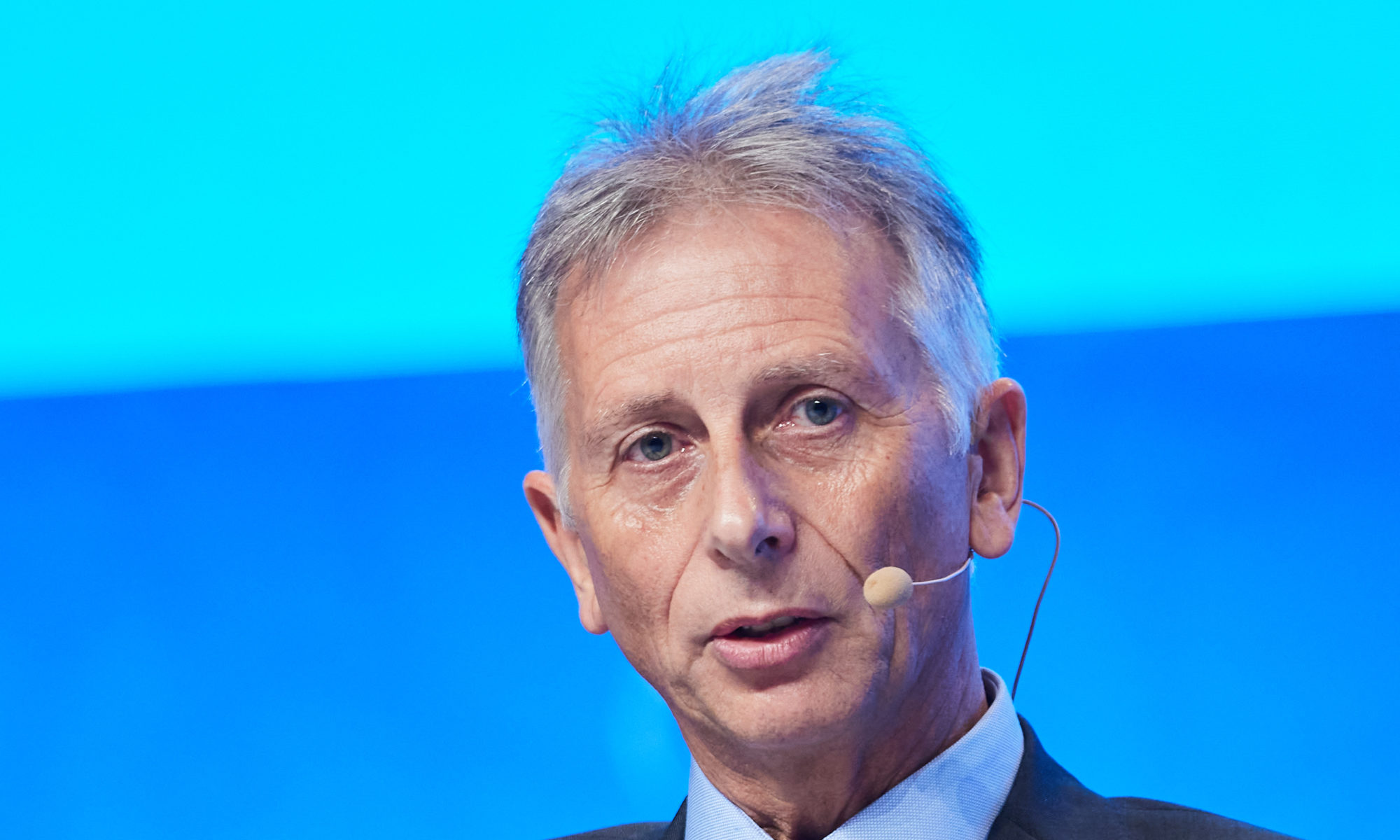
Americans and watchers across the world were in shock from the performance of Biden and Trump. Former Swedish Prime Minister Carl Bildt said on X, that the debate was, “Fairly disastrous. That’s the only way to sum it up.”

Rockford University political science professor Bob Evans shared that the debate made him feel as if there was no one worth voting for in this election.

“Nobody inspired me,” he said. “Nobody made me feel like ‘that’s the person I’m going to ring doorbells for and knock on doors and vote for.’ It was a turnoff.”

New sources such as CBS, AP News and PolitiFact fact-checked claims and statistics said by both Trump and Biden. Both suffered remorse for making false and misleading comments that put their legal stances at risk. Lowry suggests in addition to the news rules that were set in place for this debate, a real-time fact-checker should be present to hold candidates accountable for their statements.

“The public absolutely gets misled. You know, have a fact check in real-time, it absolutely can be done. There are real-time transcripts rolling and real-time reporters that say no, the accurate information is actually this and provides links to the evidence and the data and that’s a critical importance.”

Other websites that fact-checked the debate are CNN, The Guardian, BBC, ABC News and many other sources.

Lowry and Evans share they hope both candidates will be more prepared for the next presidential debate. They anticipate Independent candidate Robert F. Kennedy Jr. to be more viewed as a candidate after the debate on Thursday.

Both professors suggest potential voters remain up to date with current politics and stay informed on their candidate of choosing.

Read the article on the website of 23WIFR

https://www.wifr.com/2024/06/29/political-experts-weigh-first-presidential-debate/

More Sudanese ‘could die from starvation than bullets.’

Jun 26, 2024: Abdalla Hamdok, former prime minister of Sudan, has called for urgent action in the country, where more than 25 million face famine and hunger, nearly 10 million are internally displaced and there is “suffering beyond imagination”.

In an exclusive interview with The National, Mr Hamdok, chairman of the Co-ordination of Civilian Democratic Forces (Taqaddum), warned that “people could die from hunger and starvation more than from bullets”.

He also spoke about “so many battles all over the country” as the army and the paramilitary Rapid Support Forces wage war. He stressed that the fighting in El Fasher, the capital of North Darfur that has been under siege for weeks, represents a “catastrophe beyond imagination”, but he added that El Fasher cannot be seen in isolation from the rest of the country.

Mr Hamdok was in Oslo recently as part of discussions to mediate an end to the war in Sudan, where he spoke to The National about the need for a political solution in the country. He explained that “the Sudan crisis of today is not new; the first war in Sudan started in 1955, just before independence, and it continued in protracted wars”.

“Two million people died in the civil war, the genocide in Darfur [killed] over 300,000, according to estimates of the UN, many [died] in the Nuba Mountains and South Kordofan, to the point where nobody knows even how many died in that war, » he said. However, he believes the difference with the current conflict is that “it started in the centre and quickly engulfed the entire country”.

Mr Hamdok served as prime minister between 2019 and the end of 2021, taking office shortly after long-time president Omar Al Bashir was removed by the Sudanese armed forces (SAF) amid protests, and had been keen to see a civilian leadership take hold. He is adamant the current government in Sudan, led by Gen Abdel Fattah Al Burhan is not a legitimate one.

On October 25, 2021, Gen Al Burhan, who leads the armed forces, broke with a civilian-military coalition charged with transitioning Sudan to full civilian rule. Mr Hamdok described the move as a “coup” and went on to say that “there is no military path to victory by either side, whether it is SAF or RSF. And it is extremely important for this to be concluded through political dialogue that will address the root causes of the war: issues of marginalisation, underdevelopment and fixing the ills of the country which lasted for close to 70 years”.

The former prime minister spoke of the “paradox” of Sudan not having a permanent constitution since 1956. “We are ruled with temporary constitutions … close to 60 years of military rule messed up the country and we want to put an end to this … we’d like to see this war as the last one.”

However, with the armed forces and RSF waging war, with arms and external support fuelling the conflict, an end to the violence in incredibly difficult to get to. Mr Hamdok explained that “the only assured way of putting pressure [on the generals], besides the leverage that can be exercised on them by neighbours and by the international community, is by the Sudanese people themselves”. Mr Hamdok, with a coalition of civilian leaders, is calling for the “widest possible front against the war … if [it] managed to unite the civilian landscape and political space, civil society, people in all walks of life and affiliations against the war, the moment both sides realise that there is no hiding place, and enough is enough, let us cut our losses and stop this war today”.

Mr Hamdok says he is working to create this front under the banner of Taqaddum, a coalition formed in October 2023 to create pressure on the warring parties and develop civilian governance structure.

The first meeting was held in Addis Ababa and was followed by an “establishment conference” last month involving 600 participants. “We were pleasantly surprised … the majority came from grassroots organisations” and it led to the establishment of a “non-partisan taskforce” to continue working.

He aims to galvanise internal Sudanese communities and those in the diaspora, in addition to mobilising regional and global public opinion, against the war. “When we fought the dictator of Al Bashir for 30 years, the diaspora played an important role … there was a huge and rich solidarity campaign across the globe and we want to rekindle and bring that spirit back”. He stressed that Taqaddum is born out of a belief that “if we are not united, we are not going to get anywhere”.

While seeking to be the “largest alliance possible of political forces”, Mr Hamdok adds “we also do not claim that we are the only force in town, we are appealing to others and accepting them with open arms”. Some of those who attended the conference were armed groups such as the Sudan People’s Liberation Movement-North, led by Abdelaziz Al Hilou, which led to criticism from some civilian groups.

“It was the climax of the meeting, because SPLM-North is an armed group that has never worked directly on politics, » Mr Hamdok said, in response to the criticism. « Their presence in the meeting actually gave them an opportunity to be able to link to other groups, to talk to people whom they would never have been able to even shake hands with … that assisted in having an environment where a lot of ice melted because of just the meeting and shaking hands and ability also to engage and discuss differences and also discuss the different issues religion, state, citizenship issues of marginalisation because of whether it is ethnicity, race, culture, everything.”

He said his door is open to anyone willing to work for a political solution in the country. “We don’t want to put conditions, but we are saying anyone who agrees to a democratic dispensation, to civilian rule, and is against the war, is welcome.”

Mr Hamdok has also been criticised for meeting the head of the RSF, Gen Mohamed Dagalo, in Addis Ababa in January, especially as the RSF face allegations of war crimes, as are SAF. Mr Hamdok responded to the controversy around the meeting by explaining that he and Taqaddum leaders wrote to Gen Al Burhan and Gen Daglo last December to request a meeting.

“Hemedti [Gen Dagalo] responded, we met him early this year and we signed with him the Addis Declaration, which is a fantastic document, on how to stop the war, on the protection of civilians, and it has very broad principles of preserving the unity of the country, one army and all issues”.

But Gen Al Burhan did not respond to the invitation for talks. “In fact, when the meeting [with Gen Dagalo] concluded, Al Burhan contacted me saying, how can you meet with the rebels? I told him we wrote to you and we’re happy to meet you any time soon, » Mr Hamdok said. That meeting has not happened, in part because Gen Al Burhan has insisted on meeting in Port Sudan, but Mr Hamdok has refused, explaining: “Port Sudan is in a far corner of the country, if you were operating from the State House in Khartoum, I would come to see you tomorrow”.

Mr Hamdok’s preference is to meet outside Sudan, on neutral ground.

His message to Gen Al Burhan is: “Let us cut our losses. And let us stop the suffering of our people. You are a de facto government today, although not recognised by many people because of the coup, not only the war, and Sudan is still suspended by the African Union.” Mr Hamdok stressed that “the African Union suspends any country that has a government that has come to power in an unconstitutional takeover. And what Al Burhan did in 2021 was an unconstitutional takeover of power. And that’s why they’re suspended from the African Union … and from that time onwards, there is no legitimate government, with all its complications”.

As for the role of the Muslim Brotherhood in Sudan, Mr Hamdok said the group “ruled the country for over 30 years; they were well entrenched in the state institutions, but more so in the security apparatus, the army, police and intelligence”. His criticism of the Muslim Brotherhood was clear as he said: “You cannot talk about a democratic dispensation when one party controls the [security] sector, it is the recipe for disaster.”

In his eyes, a viable solution would be “to restructure this institution and dismantle the one-party state, in the interest of a nation-state”. Mr Hamdok is advocating a re-establishment of state institutions based on a national constitution. He explained that after the removal of Al Bashir, there was an effort to eliminate Islamist control of the state, in addition to recovering stolen assets “and that is probably one of the reasons why they fought and plotted the coup, because there was a check on their power whether in the military or economy”.

Sudan has suffered from external interference by powers near and far. Mr Hamdok stressed that “our interests as Sudanese can only be served by the region and the international community working towards stopping any intervention in our internal affairs” and added that “we do not want to see our country as a ground for proxy wars … we have no interest in fighting wars of others”.

Mr Hamdok called on regional and international powers “to help us create an environment for the civilian political process to address this, anything beyond this is counterproductive, it will not resolve the war”. He added that “no amount of weapons supplied by any side will help them win … there is no victory. The biggest question is what is victory on the corpse of your own people; this is senseless”.

Asked about foreign interference in Sudan, Mr Hamdok said “the new element in the Sudanese conflict is the Iranian factor, the Houthis are supported by them and the proximity from the Red Sea to Port Sudan” is playing a role. Iran had strong ties with Al Bashir. Mr Hamdok said Iran’s involvement in Sudan stopped “for a while” after Al Bashir was toppled, but “they have re-established that relationship with the war”.

He went on to say that, with Iranian influence in the east of the Red Sea through the Houthi rebels in Yemen, “I guess they wanted to establish a base in the west. This is part of their strategy in the entire region. They have affiliates all over, from Iraq to Syria and Hezbollah, all this seems like a circle. So I guess that probably is the motive for them to be present in Sudan, and maybe an entry point to the continent”.

Saudi Arabia and the US mediated talks in Jeddah in an effort to bring an end to the war in Sudan. « We were very hopeful, they started on the right track but very quickly they stopped and we are not getting anywhere, » Mr Hamdok said. “One of the things probably which was not perceived right from the beginning was the issue of the structure of it. There were all good intentions by Saudi Arabia in the US, but it could have achieved better results if it was expanded a little bit by having, for instance, Egypt and the UAE present, which happened when they went to Manama.”

He went on to say that “for Jeddah to succeed, we need to revisit the actors, you need to have people who could have leverage on both sides”.

Mr Hamdok dismissed reports about the UAE having a nefarious role in Sudan, amid allegations of its support for the RSF. Responding to a question about the UAE’s role, he said “the UAE has always been supportive of Sudan, and there is a lot of links and ties in the history”. Mr Hamdok spoke at length of how the Sudanese community has grown in the UAE and sees the country as a “force for good in Sudan”. He added: “We look forward to not only the UAE but Saudi Arabia, Qatar, Kuwait, to help us rebuild Sudan when this war stops”.

He remarked that “the world has changed” and the only way to develop in the future will be for “productive investment, which creates a win-win situation for both sides”.

Mr Hamdok stressed the importance of countries paying attention to Sudan and working to end the war. He lauded the International Humanitarian meeting that took place in Paris last April organised by France, Germany and the EU. He said the meeting “came at the right time, as we Sudanese felt that our cause was neglected by the world … it was an excellent meeting”.

A number of states and organisations, including the African Union, League of Arab States, IGAD, Saudi Arabia, UAE, Egypt, US, Kenya, Norway and others committed to a ‘declaration of principles’ calling for an end to the war and urging “all foreign actors to cease providing armed support or materiel to the warring parties and to refrain from undertaking any action which would heighten tensions and fuel the conflict”.

Read the article on the website of Genocide Watch

https://www.genocidewatch.com/single-post/hamdok-warns-more-people-could-die-from-starvation-than-bullets-in-sudan

L’avenir de l’Europe dépend maintenant de la France

Berlin – Bien que le principe d’égalité des 27 États membres de l’Union européenne soit inscrit dans les traités, il existe en réalité d’énormes différences entre eux. Les deux plus grands d’entre eux et les plus importants du point de vue économique, l’Allemagne et la France, sont également deux des membres fondateurs de l’UE.

Read the entire article on the website of Project Syndicate

https://www.project-syndicate.org/commentary/france-far-right-government-could-do-lasting-damage-to-european-project-by-joschka-fischer-2024-06/french

Sarah Al-Amiri : UAE Space Agency launches National Space Academy to develop national cadres


DUBAI, 15th November, 2023 (WAM) — The UAE Space Agency has announced the launch of the National Space Academy, with the support of the National Space Fund, on the sidelines of the Dubai Airshow.

The Academy aligns with the UAE Space Agency’s long-term vision and strategic goals to promote sustainability of the national space programmes and foster human resource development.

The Academy aimed at enhancing young Emiratis’ expertise in space science and technology, adhering to the most rigorous international standards. By equipping these individuals with world-class knowledge and skills, the Academy seeks to empower them to make significant contributions to the thriving success of the UAE Space Programme.

The National Space Academy is poised to revolutionise acquiring and enriching space-related knowledge among Emirati youth. This pioneering initiative provides a unique environment fostering innovation by seamlessly integrating cutting-edge academic research practices and hands-on practical experience.

The academy strives to expedite knowledge transfer to aspiring professionals in the space industry through various workshops and activities.

The Academy will contribute to enhancing entrepreneurship, a key pillar of the UAE’s economic renaissance and comprehensive development. By creating more job opportunities to meet the growing demand for specialised jobs in the knowledge economy, transforming ideas and innovations into successful projects, and promoting innovation and competitiveness, the academy will contribute to supporting the UAE government’s objectives of growing a knowledge-based economy.

Sarah Al Amiri, Minister of State for Public Education and Advanced Technology, Chairwoman of the UAE Space Agency, said, “The AED3 billion National Space Fund was established to support the country’s space sector. It works under the umbrella of the UAE Space Agency towards finding solutions to finance and facilitate the development of space activities and the development of the UAE space sector.

« Emirati youth are our main force and drive in the comprehensive development renaissance, and they are the future leaders for achieving sustainability in the UAE’s space sector. By developing their skills through the National Space Academy, they can acquire the knowledge and skills necessary to work in the space industry to be pioneers in this field. Through this, we can achieve our ambitions for the future and utilise our skills and capabilities in space exploration and development.”

Al Amiri added, “The academy will reinforce the commitment to achieving scientific progress and sustainable development in our society, in addition to offering a unique model in converting theoretical knowledge to practical experiences, to qualify graduates to contribute to the national space sector effectively.”

Lire l’article complet sur le site de WAM.

«La préparation aux pandémies est dans l’avantage de tous les régimes politiques»

Les 194 membres de l’Organisation mondiale de la santé (OMS) ont prolongé d’un an les négociations en vue d’un traité international pour lutter contre les pandémies. Alors que la menace d’une nouvelle pandémie augmente, les tensions internationales ne facilitent pas la signature d’un nouvel accord.

«La prochaine pandémie n’est qu’une question de temps», a alerté le directeur de l’OMS, Tedros Adhanom Ghebreyesus, au terme de l’Assemblée mondiale de la santé, le 1er juin. Quatre ans après le Covid-19 qui a paralysé les économies du monde entier et fait 7 millions de morts, les 194 pays membres de l’OMS peinent toujours à s’entendre sur un accord mondial pour prévenir et endiguer les futures pandémies.

Début juin, face à l’absence d’un consensus dans les délais impartis, l’Organisation mondiale de la santé (OMS), basée à Genève, a décidé de prolonger les négociations d’un an. Des points de frictions persistent, notamment sur la propriété intellectuelle, le partage d’informations sur les agents pathogènes et l’accès équitable aux vaccins et autres équipements médicaux.

La pandémie n’a pas seulement révélé la fragilité d’un monde globalisé, mal préparé face à un tel défi, mais elle a aussi mis en lumière des inégalités entre pays riches et pauvres. Les premiers pays à avoir eu accès aux vaccins étaient ceux qui les produisaient, comme l’Europe, les Etats-Unis, la Chine et la Russie. En 2023, seul un tiers des personnes vivant en Afrique avait reçu une vaccination complète, contre près de 70% en Amérique du Nord, en Amérique du Sud et en Asie.

Une course contre la montre

Si les négociations piétinent, le temps, lui, presse. La menace d’une prochaine pandémie est réelle, et elle augmente, alertent les experts. Depuis fin mars, le virus de la grippe aviaire H5N1, surveillé de près par l’OMS, a infecté pour la première fois des vaches laitières aux États-Unis. Ces contaminations inédites interrogent sur la possible transmission du virus aux humains.

«La souche H5N1 n’est pas nouvelle; elle a plus de 25 ans, tempère Antoine Flahault, directeur de l’Institut de santé globale à l’université de Genève et invité de Géopolitis. On sait qu’elle peut aussi atteindre l’homme et être extrêmement virulente». Depuis 2003, plus de 900 cas chez les humains ont été dénombrés par l’OMS – la moitié sont décédés peu de temps après l’infection.

«Le virus ne se transmet pour l’instant pas d’homme à homme, mais entre oiseaux, précise le médecin épidémiologiste. A présent, des bovins sont atteints en Amérique du Nord, et même leur lait est contaminé. Des chats, et probablement des humains, peuvent être contaminés par ce lait (non-pasteurisé, ndlr.).»

A ce jour, la cause derrière l’infection des vaches d’élevage est peu comprise. Certains suspectent une transmission par les mamelles au moment de la traite, tandis qu’une récente étude pointe vers une potentielle contamination par les voies respiratoires. «C’est difficile de savoir s’il y a une transmission entre mammifères. Si c’est le cas, le virus aura franchi un pas de plus vers une contamination redoutée entre humains», ajoute-t-il.

Le 11 juin, l’Union européenne a annoncé avoir commandé 665’000 doses d’un vaccin prévenant la transmission de la grippe aviaire à l’humain, alors que plusieurs nouvelles infections humaines ont été rapportées aux Etats-Unis, au Mexique et en Australie. La grippe aviaire n’est toutefois pas le seul virus surveillé par l’OMS, qui a dressé une liste des pathogènes préoccupants et qui se prépare même à une maladie inconnue, baptisée «maladie X». «C’était le cas de la pandémie du coronavirus, commente Antoine Flahault. Il pourrait y avoir l’émergence d’un virus qu’on ne connaît pas, qui n’a jamais infecté l’homme auparavant et qui, par mutation, devient transmissible entre hommes.»

Une seule santé, une seule planète

La transmission de maladies infectieuses d’animaux aux humains – nommées zoonoses – préoccupe. D’après une étude dans Nature (2022), le réchauffement climatique, la déforestation et le commerce d’espèces protégées exacerbent ce risque. Dans la forêt tropicale du Yucatán, au Mexique, dans une zone où les contacts potentiels entre animaux et humains sont plus probables en raison d’une forte déforestation, des scientifiques de l’Université nationale autonome du Mexique traquent des agents infectieux susceptibles de provoquer de nouvelles pandémies.

Une recherche qui fait écho aux objectifs du programme «une seule santé» (One Health), lancé par l’OMS, qui vise à prédire les futures pandémies, en prenant en compte les interactions entre l’environnement, les hommes et les animaux.

«70% des nouvelles maladies infectieuses viennent des animaux, souligne Antoine Flahault. On a qu’une seule santé: celle de la planète, des hommes et des animaux. Si on néglige une des trois, on aura des retours de boomerang.» Pour lui, il est nécessaire de former des scientifiques et des praticiens, notamment des médecins et vétérinaires. «Il faut qu’on puisse travailler ensemble, converger nos points de vue, et parfois les confronter, pour faire avancer les dispositifs et surtout pour mieux prévenir des grandes pandémies comme le Covid-19», avance-t-il.

Dans un climat international tendu

L’élaboration d’un accord international est un processus réputé long et compliqué, d’autant plus que le contexte international tendu met le multilatéralisme à rude épreuve, avec l’émergence des guerres en Ukraine et au Proche-Orient. Pour Antoine Flahault, les tensions géopolitiques actuelles ne devraient pas freiner les discussions, à l’instar de l’éradication de la variole, initiée pendant la guerre froide

«En 1958, en pleine guerre froide, l’URSS a proposé un projet de résolution pour éradiquer la variole à l’Assemblée mondiale de la santé, rappelle Antoine Flahault. Vingt ans plus tard, en 1979 à Genève, l’OMS déclarait l’éradication totale de ce virus qui a tué 300 millions de personnes au 20ème siècle.»

Et d’ajouter: «La préparation aux pandémies est dans l’avantage de tout le monde, quels que soient les régimes et opinions politiques. Cela transcende toutes les cultures.»

Les négociations se poursuivront d’ici 2025. Entre-temps, des avancées ont vu le jour au bout du lac avec l’adoption de plusieurs amendements au Règlement sanitaire international (RSI), un cadre juridiquement contraignant pour répondre aux urgences de santé publique. La notion d’une «urgence pandémique», pouvant être déclarée par le Directeur général de l’OMS, a ainsi été approuvée début juin.

Read the article on the website of Swiss Info

https://www.swissinfo.ch/fre/geneve-internationale/la-pr%C3%A9paration-aux-pand%C3%A9mies-est-dans-lavantage-de-tous-les-r%C3%A9gimes-politiques/80671752

Protection de l’environnement dans La Mé: Patrick Achi engage les populations dans un projet vert

Le Conseil régional de La Mé veut inscrire la question de la protection de l’environnement, notamment des forêts classées de la réserve naturelle de Mabi-Yaya, au nombre de ses priorités. Cette information émane de Patrick Achi, président du Conseil régional de La Mé, qui l’a soulignée le mardi 11 juin 2024 à Adzopé, lors de l’atelier de restitution du projet Plan vert régional de La Mé.

Ce projet a pour objectif de protéger ces importants espaces naturels et de garantir ainsi la biodiversité dans la région. « Pour l’avenir de nos enfants protégeons nos forêts, pour l’avenir de la biodiversité et de la vie et pour faire de la Mé, la première destination verte de Côte d’Ivoire, combattons la destruction de nos forêts. », a indiqué l’ex-Premier Ministre Patrick Achi en présence des chefs traditionnels, de représentants d’association de femmes, de jeunes et d’experts.

Le Président du Conseil régional de La Mé s’est par ailleurs félicité de l’engagement de toutes les couches sociales de la région en faveur de la cause de l’environnement.

Avec ce projet, la région de La Mé emboite ainsi le pas au gouvernement dans sa politique relative à la préservation des sols et de l’écosystème agricole afin de développer une agriculture vivrière et garantir à cette région la souveraineté alimentaire. In fine, il s’agit de contribuer au renforcement de la position de La Mé dans cette quête pour l’autosuffisance alimentaire au plan national.

Le Plan vert régional envisage également de faire une promotion accrue de l’agroforesterie et de lutter contre l’orpaillage clandestin et la pratique de l’agriculture dans les forêts classées et les parcs qui sont des actes d’agression contre l’environnement et les forêts.

Dadié Félicité, Secrétaire général 2 de Préfecture, représentant le Préfet du département d’Adzopé, a pour sa part invité les participants à cette rencontre à échanger leurs expériences pour améliorer la gestion et la préservation de la réserve naturelle de Mabi-Yaya.

Cet atelier a été organisé par le Conseil régional de La Mé avec l’appui de la Banque Mondiale, la GIZ, l’EFI et l’Union Européenne. Il vient renforcer les initiatives du Conseil régional en faveur de l’environnement qui sont entre autres les états généraux de la forêt organisés en 2018 et l’élaboration d’un schéma régional d’aménagement et de développement du territoire de la région.

Après s’être s’accordés sur le processus de mise en route du plan vert de la région de La Mé à la suite de cet atelier, les participants ont planché sur les enjeux prioritaires du Projet ainsi que ses objectifs stratégiques.

Read the article on the website of Abidjan.net

https://news.abidjan.net/articles/731906/protection-de-lenvironnement-dans-la-me-patrick-achi-engage-les-populations-dans-un-projet-vert

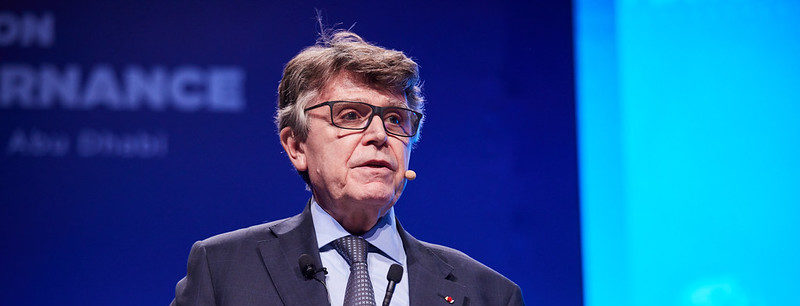
Thierry de Montbrial, était l’invité de la matinale Radio Classique – Le Figaro

Chaque matin, à 8h12, suivez en direct l’édito de Guillaume Tabard (Le Figaro) ainsi que l’interview de David Abiker (Radio Classique). Ce jeudi 20 juin, l’invité de 8h15 était Thierry de Montbrial, président fondateur de l’IFRI

Listen to this interview released by Le Figaro TV

https://video.lefigaro.fr/figaro/video/thierry-de-montbrial-est-linvite-de-la-matinale-radio-classique-le-figaro/

Jean Pisani-Ferry : « La France envoie au monde le signal d’un pays en désarroi »

LA TRIBUNE DIMANCHE – Les marchés s’affolent… Pensez-vous que cela va durer?

JEAN PISANI-FERRY – Nous vivons un bouleversement politique considérable, les turbulences que connaissent les marchés ne vont pas se calmer tout de suite. Évidemment, ce ne sont pas les marchés qui font la politique et dictent nos choix. Mais ils imposent une contrainte de cohérence. Si les marchés jugent que notre politique – quelle qu’elle soit dit une chose et fait son contraire, ils ne suivront pas. Et nous pourrions connaître ce qu’a vécu le Royaume-Uni avec Liz Truss, la Première ministre qui n’a pas pu appliquer son programme. Même si, contrairement aux Anglais, nous ne risquons pas de crise du change car l’euro nous protège.

Est-ce que l’on risque une crise de la dette ?

L’indicateur le plus synthétique est le spread [l’écart de taux d’emprunt] entre l’Allemagne et la France. Il est actuellement à 80 points de base, contre 50 avant les élections. Ce n’est pas dramatique, mais le signal est là. La France est très endettée aujourd’hui. Et donc très soumise à l’appréciation des marchés.

Read the interview on La Tribune.

Covid-19 : « Cette nouvelle vague pourrait bien venir perturber les JO », alerte le Pr. Antoine Flahault

En cette mi-juin 2024, les contaminations et hospitalisations liées au Covid-19 sont en hausse et laissent entrevoir l’émergence d’une nouvelle vague estivale.

Le Covid-19 va-t-il venir jouer les trouble-fêtes lors des JO de Paris ? Si la situation est bien différente des premières vagues de contaminations en ce mois de juin 2024, il est fort probable que la France connaisse une explosion de cas dans les semaines à venir, du fait du brassage des populations et de l’émergence d’un nouveau variant d’Omicron, prévient auprès d’actu.fr le professeur Antoine Flahault, épidémiologiste et directeur de l’Institut de santé globale de l’Université de Genève, par ailleurs auteur du livre Prévenez-moi !.

Actu : D’après les données dont vous disposez, pouvons-nous confirmer une hausse des cas ces derniers jours/semaines ?

Antoine Flahault : Oui, les signaux précoces apportés par la surveillance des eaux usées (qui permet de détecter la charge virale dans la population, à défaut de test qui ne sont plus que rarement utilisés) montrent depuis plusieurs semaines une augmentation de la circulation du SARS-CoV-2 en France et dans d’autres pays européens comme le Royaume-Uni et le Portugal.
Nous n’avons pas beaucoup d’informations sur les variants prédominants en France. Au Portugal, plus des deux-tiers des cas chez lesquels les séquences du virus ont pu être identifiées sont dus à un nouveau sous-variant d’Omicron appelé KP.3, dont on ne sait pas encore grand-chose. Je ne serais pas surpris d’apprendre qu’en France le même sous-variant s’impose aussi.

Lire l’entretien sur Actu.fr.

Vol inaugural d’Ariane 6 le 9 juillet : « C’est le retour de l’Europe dans la course spatiale », se réjouit le PDG du CNES

Après de multiples retards liés au Covid et à des problèmes techniques, le premier vol de la fusée européenne Ariane 6 est enfin annoncé.

« C’est le retour de l’Europe dans la course spatiale », s’est réjoui mercredi 5 juin sur franceinfo Philippe Baptiste, président-directeur général du Centre national d’études spatiales (CNES) alors que la date du vol inaugural d’Ariane 6 est prévue le 9 juillet prochain. Initialement prévu en 2020, le décollage d’Ariane 6 a été reporté à maintes reprises en raison de la pandémie de Covid-19 et des difficultés techniques.

« Ariane 6 revient dans la course. Le carnet de commandes est archi plein. Il y a plus de 30 lancements qui sont déjà commandés sur Ariane 6 », a-t-il précisé. Philippe Baptiste assure « que tout le monde est très, très content d’avoir un compétiteur qui revient aujourd’hui face à la solution qui devient quasi hégémonique d’Elon Musk » avec Space X.

Franceinfo : C’est le lancement à ne pas rater ?

Philippe Baptiste : C’est fondamental ! L’Europe revient dans la course. Le programme a du retard. Depuis un an, l’Europe n’avait plus d’accès à l’espace. C’était simplement très, très embêtant pour ne pas dire dramatique. On est très, très heureux évidemment d’avoir cette date à laquelle on croit et qui va arriver maintenant, très vite. C’est le retour de l’Europe dans la course spatiale. Cette capacité d’accès à l’espace est absolument fondamentale. Vous n’avez pas de spatial si vous n’avez pas de lanceur, si vous n’avez pas de fusées qui vous permettent d’accéder à l’espace. Ma priorité, c’est évidemment le retour en vol d’Ariane et l’arrivée en particulier de ce nouveau lanceur Ariane 6 qu’on attend tous avec beaucoup d’impatience.

Vous avez mis l’accent aussi sur l’environnement. Comment fait-on pour décarboner les lancements spatiaux européens à Kourou ?

Il y a énormément de travaux qui sont déjà menés. Nos priorités, c’est d’abord de décarboner la base progressivement. C’est installer des panneaux photovoltaïques, c’est demain de produire de l’hydrogène vert, produire des carburants verts, directement issus de la biomasse. C’est un travail de long terme. Ça ne va pas se faire en un claquement de doigts. Ce sont des investissements qui sont conséquents, mais c’est aussi du temps. Il faut aussi convaincre, il faut expliquer… Mais effectivement c’est une des priorités, on est très, très mobilisés sur cette feuille de route de la décarbonation.

Elon Musk, le milliardaire à la tête de SpaceX, a taclé Ariane 6 disant qu’une fusée qui n’est pas au moins en grande partie réutilisable n’a pas d’avenir. Que lui répondez-vous ?

La question de la réutilisabilité est évidemment une question clé. Il est très clair que l’Europe et nous aussi, collectivement, on n’a pas assez cru dans cette technologie. Il faut maîtriser cette technologie. On a lancé depuis quelques années plusieurs programmes qui vont permettre à la France, au CNES et à l’Europe aussi, d’accéder à cette technologie de la réutilisabilité. Pour autant, ce n’est pas l’alpha et l’oméga. Ça dépend de vos besoins.

Aujourd’hui, c’est absolument clé pour Elon Musk parce qu’il doit répondre à ses propres besoins qui sont de lancer de très, très, très nombreux satellites de télécommunications en orbite basse pour Starlink. Dans ce cas-là, vous avez besoin d’avoir des cadences infernales et vous avez absolument besoin d’un lanceur réutilisable. La question est un petit peu différente pour nous aujourd’hui en Europe, à tort ou à raison. Aujourd’hui, je n’ai pas à commenter SpaceX.

Tout le monde est très content d’avoir un compétiteur qui revient aujourd’hui face à la solution qui devient quasi hégémonique d’Elon Musk.

Vous vous inscrivez dans un duel direct avec SpaceX ?

Non, ce n’est pas une question de duel. Aujourd’hui en Europe, tant d’un point de vue économique, que d’un point de vue de la souveraineté, on a besoin d’avoir une autonomie d’accès à l’espace. C’est une priorité pour la France et pour l’Europe. On est extrêmement engagés là-dessus.

L’Agence spatiale européenne vient de lancer un programme de soutien d’entreprises européennes pour développer un vaisseau, d’abord de fret, peut-être un jour un « habité ». L’Europe en a-t-elle les moyens ?

On développe un cargo, c’est-à-dire qui n’est pas habité. Ce n’est pas un développement à la mode classique. On l’a déjà beaucoup fait. La question, c’est comment est-on capable de faire des cargos avec des capsules qui sont capables de faire l’aller-retour entre la Terre et la station spatiale ou les stations spatiales futures ? On veut les faire pas chers. C’est ça qui est fondamental. On veut faire ça avec des coûts qui sont extrêmement bas. Pour ça, on change radicalement notre manière de faire. La France est très allante sur le sujet. En particulier, on veut avoir de l’achat de services, c’est-à-dire donner aux industriels une très grande liberté, une très grande autonomie et une très grande responsabilité. Nous, on est là évidemment pour les aider et consolider leur business plan, c’est-à-dire leur garantir qu’à la fin, on va bien leur acheter du service.

On peut faire bien et pas cher ?

J’en suis absolument convaincu. On a tous les industriels en Europe qui sont capables de le faire aujourd’hui. On a des talents absolument incroyables dans le spatial. On a une ambition qui est extrêmement forte. Il faut y aller maintenant. Il faut démontrer qu’on est capable à la fois de continuer ce qu’on a fait, mais de nous renouveler profondément.

Read the article on the website of Franceinfo

https://www.francetvinfo.fr/economie/aeronautique/vol-inaugural-d-ariane-6-le-9-juillet-c-est-le-retour-de-l-europe-dans-la-course-spatiale-se-rejouit-le-pdg-du-cnes_6586296.html

Nuclearelectrica and Canadian Nuclear Partners sign framework agreement for Cernavoda NPP Unit 1 refurbishment project

Nuclearelectrica (SNN) and Canadian Nuclear Partners (CNPSA) have signed a long-term framework agreement to provide Project Management Organization (PMO) services for the preparation and implementation of the Cervavoda Nuclear Power Plant Unit 1 refurbishment project in Romania.

This framework agreement has an approximate value of 240 million EUR and represents an essential step in the completion of the Cernavoda Unit 1 refurbishment in compliance with the established development stages. Under the agreement, CNPSA, a subsidiary of Laurentis Energy Partners (Laurentis), will support SNN by providing:

  • Project management services
  • Technical assistance
  • Consulting services
  • Training specific to CANDU plant refurbishment, and
  • Organization and coordination of Unit 1’s commissioning, up to its return to commercial operation

The Framework Agreement builds on an earlier agreement signed between SNN and Laurentis, through CNPSA, in 2021 to develop a conservation program for reactor water systems during refurbishment.

Ontario Ministers Todd Smith and Stephen Lecce, Romanian Energy Minister Sebastian Burduja, and Canada’s Ambassador to Romania, Gavin Buchan, along with representatives from CNPSA, SNN, Laurentis, and Ontario Power Generation, were on hand for the June 11 signing ceremony in Bucharest.

“The world is watching as Ontario continues to deliver multi-billion-dollar CANDU nuclear refurbishment projects on time and on budget” said Ontario Minister Todd Smith. “We’re ready to support our allies, leveraging all that experience and expertise to support the refurbishment of Cernavoda NPP Unit 1 so it can continue to deliver reliable and clean energy for generations to come, and provide continued energy security.”

“With increasing geopolitical volatility, it is clear that countries around the world are looking for stable democratic energy partners that offer clean, reliable and affordable energy — and Ontario is once again answering that call,” said Ontario Minister of Energy and Electrification Stephen Lecce. “We are proud to partner with Romania to deliver this major refurbishment that is going to support energy security in Europe while creating new economic opportunities for workers in both of our countries.”

“We are looking forward to working with CNPSA to further advance the refurbishment of Cernavoda NPP Unit 1. Highly professional and robust project management, with combined Canadian and Romanian experience, will enable Romania to benefit from clean, safe, and reliable energy for another 30 years beyond 2029” said Cosmin Ghita, CEO of Nuclearelectrica. “Romania and Canada have been working together for more than 50 years in the nuclear industry and they continue to do so by fostering strategic projects to advance energy security, decarbonization and economic development.”

“We are proud to partner with SNN to provide the leading-edge PMO services needed to successfully carry out this large-scale project, which will ensure a long-term reliable and affordable source of clean electricity for the people and industries of Romania” said Jason Van Wart, CEO of CNPSA. “We are pleased to leverage our decades of experience with Canadian-made CANDU technology to help deliver the Unit 1 refurbishment project on time and on budget and demonstrate how Canadian nuclear experts can support clean energy projects in other parts of the world”.

Read the article on the website of The Diplomat

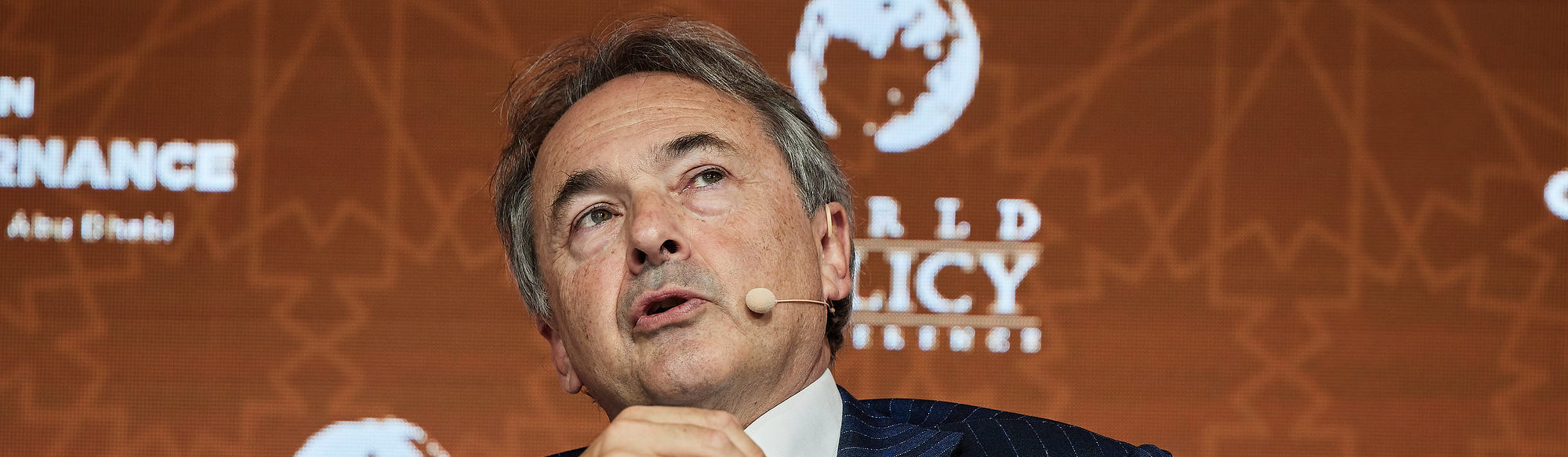
Libération d’otages israéliens : un «tournant symbolique» qui conforte temporairement la position de Netanyahu, estime Gilles Kepel

Au lendemain de la libération de quatre otages israéliens à Gaza, Gilles Kepel, auteur de « Holocaustes » aux éditions Plon, était l’invité du Grand Rendez-vous Europe 1/CNews/Les Échos dimanche. Pour le professeur des universités, il s’agit d’un « tournant symbolique ».

L’armée israélienne a annoncé avoir libéré samedi lors « d’une opération spéciale » quatre otages d’un camp de réfugiés dans le centre de la bande de Gaza : Noa Argamani, 26 ans, Almog Meir Jan, 22 ans, Andrey Kozlov, 27 ans, et Shlomi Ziv, 41 ans, tous les quatre « enlevés » sur le site du festival de musique electro Nova, lors de l’attaque sans précédent menée sur le sol israélien par le Hamas le 7 octobre, qui a déclenché les hostilités, selon l’armée. Une opération considérée comme « un tournant symbolique » dans le conflit par Gilles Kepel, professeur des universités, auteur de « Holocaustes » aux éditions Plon, invité du Grand Rendez-vous Europe 1/CNews/Les Échos dimanche.

« Ça montre que Benjamin Netanyahu […] a quelque chose à mettre sur la table, la libération de quatre otages. Il y a eu des scènes de liesse en Israël hier », a-t-il indiqué au micro d’Europe 1. D’après le professeur des universités, cette libération conforte la stratégie militaire du Premier ministre israélien, sous pression à l’étranger et en interne. « Cela conforte sa position, en tout cas temporairement, au moment où le président Biden a insisté pour qu’il y ait une feuille de route visant à la cessation des combats », a-t-il déclaré.

Un conflit qui concerne « le monde entier et plus précisément, le président et candidat Biden »

Alors que les efforts diplomatiques pour arracher une trêve piétinent, le secrétaire d’État américain Antony Blinken est attendu la semaine prochaine en Israël, en Égypte, au Qatar et en Jordanie, pour « promouvoir une proposition de cessez-le-feu » présentée récemment par le président Joe Biden, selon Washington. D’après Gilles Kepel, ce conflit pourrait avoir une incidence sur le résultat de l’élection présidentielle américaine qui aura lieu le 5 novembre prochain.

« Ce conflit n’est pas seulement le conflit au Moyen-Orient, il concerne le monde entier. Il concerne plus précisément le président et candidat Biden. Car pour la première fois sans doute dans l’histoire des États-Unis, sauf peut-être pendant la guerre mondiale, un enjeu de politique intérieure est majeur pour l’élection ou la réélection ou non du président Biden », a analysé Gilles Kepel au micro d’Europe 1.

L’armée américaine annonce la reprise d’une aide humanitaire

Samedi, la livraison d’aide humanitaire à Gaza a pu reprendre via la jetée temporaire américaine. Les États-Unis ont ainsi pu livrer 500 tonnes d’aide humanitaire. L’armée américaine a aussi réfuté des informations de presse faisant état d’un soutien américain aux opérations de libération des otages.

Read the article on the website of Europe 1

https://www.europe1.fr/international/liberation-dotages-israeliens-un-tournant-symbolique-qui-conforte-temporairement-la-position-de-netanyahu-estime-gilles-kepel-4251781

Gouvernance mondiale, Ukraine, Union européenne : Quo vadis ?

Politique étrangère, vol. 89, n° 2, été 2024

La révolution technologique du dernier xxe siècle, les chocs de 2001 et 2007-2008, ont encadré les illusions occidentales de la mondialisation heureuse.

Le système international, désormais, se fragmente. Cet éclatement rend problématique le développement d’une gouvernance mondiale qui devrait, avant tout, se préoccuper des défis de sécurité. En Europe, la guerre d’Ukraine risque d’emporter l’Union européenne dans un emballement dangereux, que symbolise la tentation de nouveaux élargissements.

Thierry de Montbrial, membre de l’Académie des sciences morales et politiques, est le fondateur et président de l’Institut français des relations internationales. Il est également fondateur et président de la World Policy Conference.

Article publié dans Politique étrangère, vol. 89, n° 2, été 2024.

https://www.ifri.org/fr/publications/politique-etrangere/articles-de-politique-etrangere/gouvernance-mondiale-ukraine-union

D’anciens physiciens du CERN inventent une technologie qui réduit de 80 % la radioactivité des déchets nucléaires

Transmutex, cette entreprise suisse a développé une solution innovante pouvant réduire le volume des déchets nucléaires de 80 %. Une technologie révolutionnaire qui pourrait changer le paysage énergétique mondial.

Le devenir des déchets nucléaires est incertain, raison pour laquelle leur gestion est, depuis des années, au cœur des préoccupations environnementales. En France, par exemple, on dénombre environ 1 200 producteurs de déchets radioactifs et plus de la moitié de ces déchets provient de l’industrie électronucléaire, selon l’Andra. Dans le monde, approximativement 10 000 m3 de déchets de haute radioactivité et 200 000 m3 de déchets à faible et moyenne radioactivité sont produits chaque année. Face à cette problématique, la société Transmutex, basée à Genève, a développé une technologie innovante permettant d’atténuer leur impact environnemental, en utilisant une variété de matériaux combustibles tels que le thorium.

Un procédé basé sur la transmutation

La technologie mise au point par Transmutex n’est nul autre que la transmutation, visant à convertir des éléments radioactifs en leurs isotopes ou en d’autres éléments complètement différents. Les anciens scientifiques du CERN ont utilisé un accélérateur de particules et un assemblage combustible sous-critique pour transformer le thorium, un métal légèrement radioactif que l’on trouve dans les sols et les roches, en un isotope de l’uranium. Cet accélérateur, relié à une usine de fission nucléaire, permet de traiter immédiatement l’uranium nouvellement généré afin qu’il ne produise pas de déchets hautement radioactifs, contrairement à l’uranium utilisé dans les centrales nucléaires. Selon Transmutex, il offre plusieurs avantages par rapport aux réacteurs nucléaires autonomes traditionnels. Petite anecdote, ce serait l’ancien directeur général du CERN (Conseil Européen pour la Recherche Nucléaire), Carlo Rubbia, qui aurait imaginé en premier cette technologie innovante.

Une technologie permettant de réduire efficacement les déchets nucléaires à vie longue

Selon la Nagra (Société coopérative nationale pour le stockage des déchets radioactifs), cette technologie développée par Transmutex pourrait réduire le volume des déchets nucléaires de 80 % et leur période radioactive à moins de 500 ans. L’agence nationale suisse l’a déjà examiné minutieusement et est arrivée à une conclusion selon laquelle, elle représente une avancée significative dans la gestion de ce type de déchets. Ce procédé innovant pourrait jouer un rôle crucial pour l’avenir de l’énergie propre et durable, surtout dans le contexte actuel où l’on est constamment en quête de solutions durables et sûres pour gérer l’énergie nucléaire. Toutefois, selon la société genevoise, il y a des défis à relever, surtout en termes de coût. Il semblerait que construire cet accélérateur de particules à proximité de chaque centrale pourrait s’avérer très couteux.

Des levées de fonds pour accélérer la recherche et le développement de l’accélérateur de particules

Pour accélérer le développement de sa technologie révolutionnaire et son déploiement à l’échelle mondiale, Transmutex a procédé à des levées de fonds, depuis 2020. Elle a obtenu un financement de plus de 20,6 millions d’euros auprès de l’Union Square Ventures et de Steel Atlas, deux fonds de capital-risque basés à New-York. La société suisse a reçu un large soutien dans la réalisation de cette solution énergétique nucléaire plus sûre, plus propre et plus durable. Celle-ci a attiré un grand nombre d’investisseurs, pour ne citer que Verve Ventures, FONGIT, HCVC, AlleyCorp, House Of Ventures, Presight Capital, etc. Pour information, la société Transmutex a été créée en 2019 par Franklin Servan-Schreiber. Composée d’anciens physiciens du CERN, elle s’est donnée pour mission de révolutionner l’énergie nucléaire.

Read the article on the website Neozone

President Kagame’s Impactful Participation at the World Economic Forum Special Meeting in Riyadh

President Kagame’s Vision for Africa’s Development Shines at WEF Special Meeting

President Paul Kagame recently showcased Rwanda’s remarkable progress and emphasized the importance of collaboration and inclusive growth during his participation at the World Economic Forum special meeting in Riyadh, Saudi Arabia. As a key panelist discussing “A New Vision for Global Development,” President Kagame highlighted Rwanda’s successful recovery journey driven by investments in human capital and innovative solutions. He underscored Africa’s positive growth trajectory and the need for global engagement to leverage the continent’s potential for economic advancement.

  1. Rwanda’s Resilience and Sustainability Initiatives: President Kagame’s discussions with the IMF’s Managing Director, Kristalina Georgieva, underscored Rwanda’s pioneering efforts in climate change initiatives. The country’s collaboration with the IMF through the Resilience and Sustainability Trust sets a precedent for sustainable development in Africa.
  2. Strategic Partnerships for Technological Advancement: President Kagame’s meeting with Prime Minister Anwar Ibrahim of Malaysia focused on deepening cooperation in key sectors like technology and education. Such partnerships exemplify Rwanda’s commitment to embracing technological advancements for economic growth.
  3. Africa’s Position in Global Affairs: President Kagame’s advocacy for Africa’s growing importance on the global stage highlighted the continent’s collective efforts towards economic progress. His call for the world to recognize Africa as a vital player in international politics and economy signifies a shift in global perspectives towards the continent.

Conclusions:

In conclusion, President Kagame’s active participation at the WEF special meeting not only showcased Rwanda’s development success but also emphasized the significance of collaboration, sustainable initiatives, and strategic partnerships for economic growth. His advocacy for Africa’s role in global affairs reflects a broader trend towards recognizing the continent’s potential and the need for inclusive, equitable development strategies in today’s interconnected world.

Read the article on the website of Africa24

https://africa24.it/en/2024/06/05/president-kagames-impactful-participation-at-the-world-economic-forum-special-meeting-in-riyadh/

Renaud Girard : « Guerre d’Ukraine, du rééquilibrage au cessez-le-feu ? »

CHRONIQUE – Alors que la nouvelle aide américaine éloigne l’hypothèse d’un effondrement militaire de l’Ukraine, Joe Biden serait bien avisé de se servir de la nouvelle position de force que lui a accordée le Congrès pour ouvrir des discussions avec la Russie sur un éventuel cessez-le-feu.

Une nouvelle fois, l’Amérique a sauvé l’Ukraine. En votant, le 21 avril 2024, une résolution allouant à Kiev une aide gigantesque de 61 milliards de dollars – soit le double du budget militaire annuel total de la Pologne -, la Chambre des représentants a, sur le court terme, donné un formidable remontant au moral de la population ukrainienne. Elle était en effet déçue par l’échec de l’offensive de son armée sur trois fronts à l’été 2023, et même inquiète après la victoire russe de février 2024 à Avdiivka, ex-ville forteresse ukrainienne située au nord-ouest de Donetsk, qui menaçait une route russe cruciale pour l’approvisionnement terrestre de la Crimée.

À moyen terme, l’aide américaine – qui a toutes les chances d’être rapidement approuvée par le Sénat et promulguée par le président – rééquilibrera une situation militaire qui était en train de tourner à l’avantage des Russes. Ces derniers, après avoir repoussé victorieusement les attaques mécanisées ukrainiennes de 2023 grâce aux fortifications…

Read the entire article on the website of Le Figaro Vox
https://www.lefigaro.fr/vox/monde/renaud-girard-guerre-d-ukraine-du-reequilibrage-au-cessez-le-feu-20240423

L’Ukraine durcit le ton contre les hommes en âge de conscription se trouvant à l’étranger

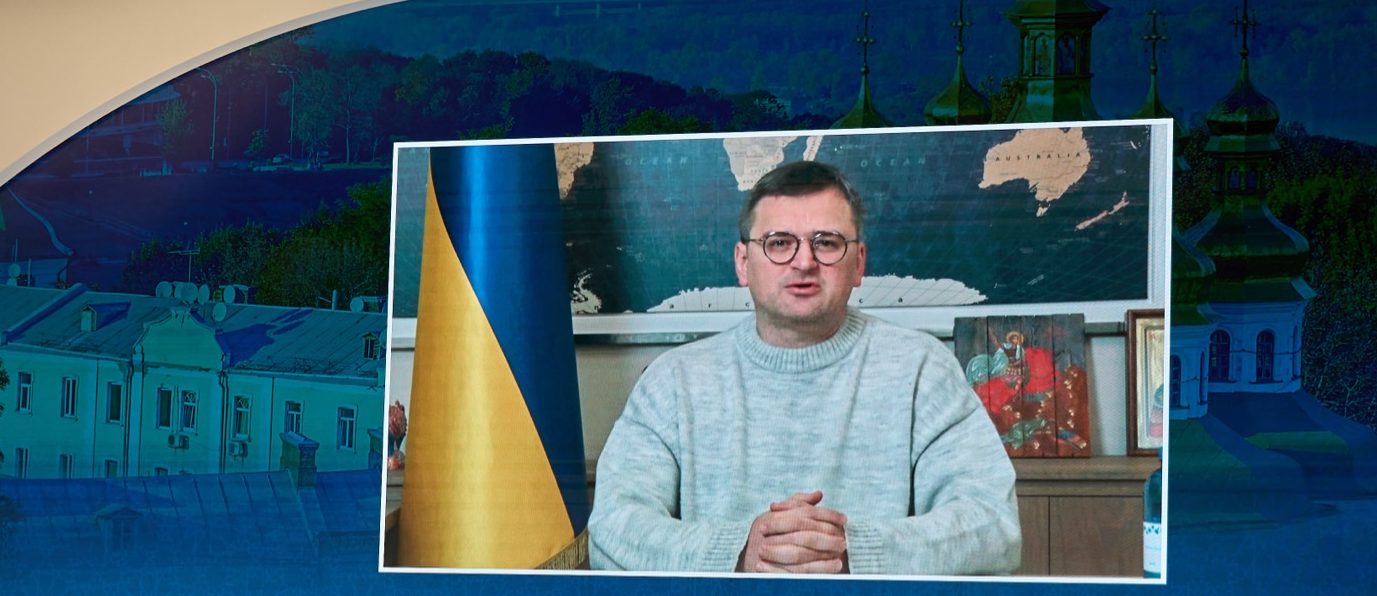
“Le fait de séjourner à l’étranger ne dispense pas un citoyen de ses devoirs envers la patrie”, a rappelé mardi le ministre ukrainien des Affaires étrangères Dmytro Kouleba sur X. Le gouvernement a par conséquent décidé que les consulats ne fourniraient plus de services aux hommes en âge de conscription.

M. Kouleba affirme que la protection des droits et des intérêts des citoyens ukrainiens à l’étranger a toujours été et reste une priorité pour le ministère des Affaires étrangères, mais “dans le même temps, dans les circonstances de l’agression à grande échelle par la Russie, la principale priorité est de protéger notre patrie de la destruction”. Il est donc inacceptable, ajoute-t-il, que les hommes en âge de conscription se rendent à l’étranger sans se soucier de la survie de leur État.

Selon le ministre des Affaires étrangères, les citoyens séjournant à l’étranger ont également des devoirs à remplir. C’est pourquoi il a pris une série de mesures visant à rétablir une équité entre hommes en âge de conscription, qu’ils se trouvent en Ukraine ou en dehors du pays. Les consulats ne fourniront par exemple plus de services aux hommes en capacité de servir leur patrie et ne les aideront qu’à rentrer en Ukraine.

Avec ces nouvelles mesures, M. Kouleba veut s’assurer que davantage de personnes rejoignent les rangs de l’armée ukrainienne, actuellement confrontée à une pénurie de nouvelles recrues.

Read this article on the website of 7 sur 7

https://www.7sur7.be/monde/lukraine-durcit-le-ton-contre-les-hommes-en-age-de-conscription-se-trouvant-a-letranger~a548239d/?referrer=https%3A%2F%2Fwww.google.com%2F

Georgia not ready for EU, says ruling party

The pronouncement comes as tensions fray between Tbilisi and Brussels over a ‘Kremlin-inspired’ foreign agent law.

Georgia is unlikely to join the European Union any time soon, despite having been granted candidate status last year, the chairman of the country’s ruling party said on Saturday.

“Last December, we became a candidate country. The next step is joining,” Irakli Garibashvili told reporters on Saturday. “Today, we are not ready to become a member country.”

Despite widespread protests, the Georgian Dream politician and former prime minister defended a controversial new bill that would label NGOs, campaign groups and media outlets that receive more than 20 percent of their funding from abroad as agents of foreign influence. Critics say the legislation would drive a wedge between Georgia and the West and stifle opposition in the same way similar rules have in Russia.

“If we are told that tomorrow we will become a member of the EU, then it will be possible to very easily cancel it, revise, transform or adopt a new one,” Garibashvili said.

At the same time, he claimed that “there is no consensus a country can become a member of the EU today” because the bloc “is not ready for enlargement and it will take time and these next steps depend on many things.”

The EU has told Georgia the proposals, which have brought thousands onto the streets in protest in recent weeks, are incompatible with European values and should be withdrawn, while Washington branded the “Kremlin-inspired” legislation as an attack on civil society.

When the European Commission granted Georgia candidate status last year, it set out specific steps needed for the South Caucasus country to be admitted as a full member, including tackling political polarization and strengthening human rights protections. According to the bloc’s top diplomat, Josep Borrell, passing the foreign agent law, as well as the government’s new proposals cracking down on LGBTQ+ rights, “would negatively impact Georgia’s progress on its EU path.”

A December 2023 poll conducted by the National Democratic Institute found that 79 percent of Georgian respondents supported their country’s EU membership ambitions.

Read the article on the website of Politico

https://www.politico.eu/article/georgia-not-ready-eu-membership-georgian-dream-irakli-garibashvili-russian-law-agent-bill-protest-tbilisi/

The Gaza War Goes Global

The escalating war in the Middle East must be understood in a broader context. The fact that the Iranian regime felt emboldened to risk a direct strike on Israel attests to a changing world order in which Western power is increasingly open to challenge.

BERLIN – With Iran’s drone and missile attack on Israel on the night of April 13, the war in the Middle East has taken on a new dimension. For years, the conflict between Iran and Israel had been a “shadow war” in which both sides avoided direct military strikes on each other’s territory. Instead, the conflict reached furtively into the streets of Tehran, where there have been assassinations of Iranian nuclear scientists and engineers, and into war-torn areas of Syria, Lebanon, Yemen, and Gaza. In those hot spots, the so-called Axis of Resistance – comprising Hezbollah (in Lebanon), Hamas (in Gaza), and the Houthis (in Yemen) – receives extensive support in the form of Iranian money, weapons, and training.

The current war started on October 7, 2023, when Hamas launched an attack on Israel that claimed 1,200 lives and 253 hostages. Israel soon hit back, and the war has been raging in Gaza ever since. As a result of the Israel Defense Forces’ campaign to eliminate Hamas once and for all, more than 30,000 Palestinians have been killed, and the enclave has been laid to waste.

Despite these horrors and the appalling conditions in Gaza, the war is the latest chapter in a bloody conflict that Israelis and Palestinians have been fighting over the same stretch of land for almost 80 years. By contrast, Iran’s direct attack against Israel represents something new. To launch a strike from Iranian territory, rather than operating through proxies, is to invite retaliation against Iran itself. The Iranian regime either must feel very sure of itself, or is under enormous pressure to make a show of strength, even if that means risking “open war” not only with Israel but also with the United States.

The immediate trigger was Israel’s April 1 strike on an Iranian consulate building next to Iran’s embassy in Damascus, where several members of the Iranian Revolutionary Guard Corps, including two high-ranking commanders, were killed. Though these were hardly the first casualties of Iran’s “shadow war” in Syria and Lebanon, the Iranian leadership nonetheless felt compelled to respond.

True, Iran did reportedly let the US know through informal channels that its counterattack was imminent, and no one was particularly surprised when it came. Nonetheless, the implications of the move are profound. The war is no longer an Israeli-Palestinian one over the same stretch of land; it has been regionalized – even globalized.

Looming ominously in the background is the potential threat posed by the Iranian nuclear program. Given the latest developments, this existential threat to Israel is becoming less hypothetical by the day. Will Iran take the final steps to cross the nuclear threshold, and does the mere possibility increase the odds of a war with Israel and the US? That is now the big question for the entire region.

Moreover, we know that Iran’s aims extend beyond achieving regional predominance. The regime would welcome the replacement of the US-led international order by a more multipolar system in which great and emerging powers compete. To command a powerful position in this new international order will require nuclear weapons, access to state-of-the-art technology, and an end to the economic isolation implied by far-reaching Western sanctions. All this now looks to be within reach through its deepening ties with China, Russia, and parts of the Global South.

Iran’s theocrats know that they are in a fraught position domestically. Large-scale protests led by women, young people, and ethnic minorities (in Kurdistan and Baluchistan, for example) have discredited the regime, as has rampant corruption among the ruling elite. The country’s aging leadership no longer has any legitimacy; it is merely surviving through outright repression. But while relying on truncheons and bullets may work for a while, it is hardly a recipe for long-term success.

In geopolitical terms, however, the situation is completely different. Iran’s theocratic regime is among the big winners of the transition away from the US-led world order. According to the International Atomic Energy Agency, Iran’s nuclear program has advanced further than ever, putting it on the threshold of enriching enough weapons-grade uranium for a bomb. One also should assume that Iran has the technological know-how to build a nuclear warhead and the systems for delivering it.

In an increasingly favorable geopolitical landscape, Iran’s marriage of convenience with Russia and China is of paramount importance, not least because it will allow the regime to escape its decades-long international isolation. As new and emerging powers seek to develop new multilateral structures beyond the reach of Western hegemony, Iran will almost inevitably benefit.

The war in the Middle East must be understood in this broader context, which also includes Ukraine and Taiwan. We are witnessing increasingly bold and ambitious efforts to topple the old Western-led order through any means necessary – even outright war.

Gilles Kepel : « L’attaque du 7 octobre a marqué un tournant dans l’ordre mondial »

Dans son livre Holocaustes. Israël, Gaza et la guerre contre l’Occident (Plon), le politologue Gilles Kepel estime que le conflit entre Israël et le Hamas constitue un choc qui prend l’allure d’une guerre planétaire et a plus fracturé les sociétés occidentales que les attentats du 11 septembre 2001.

Dans votre livre, vous écrivez que l’attaque du Hamas contre Israël du 7 octobre 2023 est un moment de bascule. Pourquoi ?

« Elle marque un tournant dans le conflit israélo-palestinien et un autre dans l’organisation de l’ordre mondial, plus important que les attentats du 11 septembre 2001 qui n’avaient pas fracturé autant les sociétés occidentales. L’opération terrifiante du Hamas a fait voler en éclats le sentiment que l’État d’Israël était un refuge pour les Juifs. Le Premier ministre Benjamin Netanyahou joue sa survie politique car il porte la responsabilité personnelle de ne pas avoir empêché Israël de subir…

Read the entire article on the website of L’Alsace

https://www.lalsace.fr/defense-guerre-conflit/2024/04/06/gilles-keppel-l-attaque-du-7-octobre-a-marque-un-tournant-dans-l-ordre-mondial

Anwar Gargash slams exploitation of Gaza war to incite instability in Jordan

Official highlights Jordan’s role as voice of reason in supporting Palestinian cause.

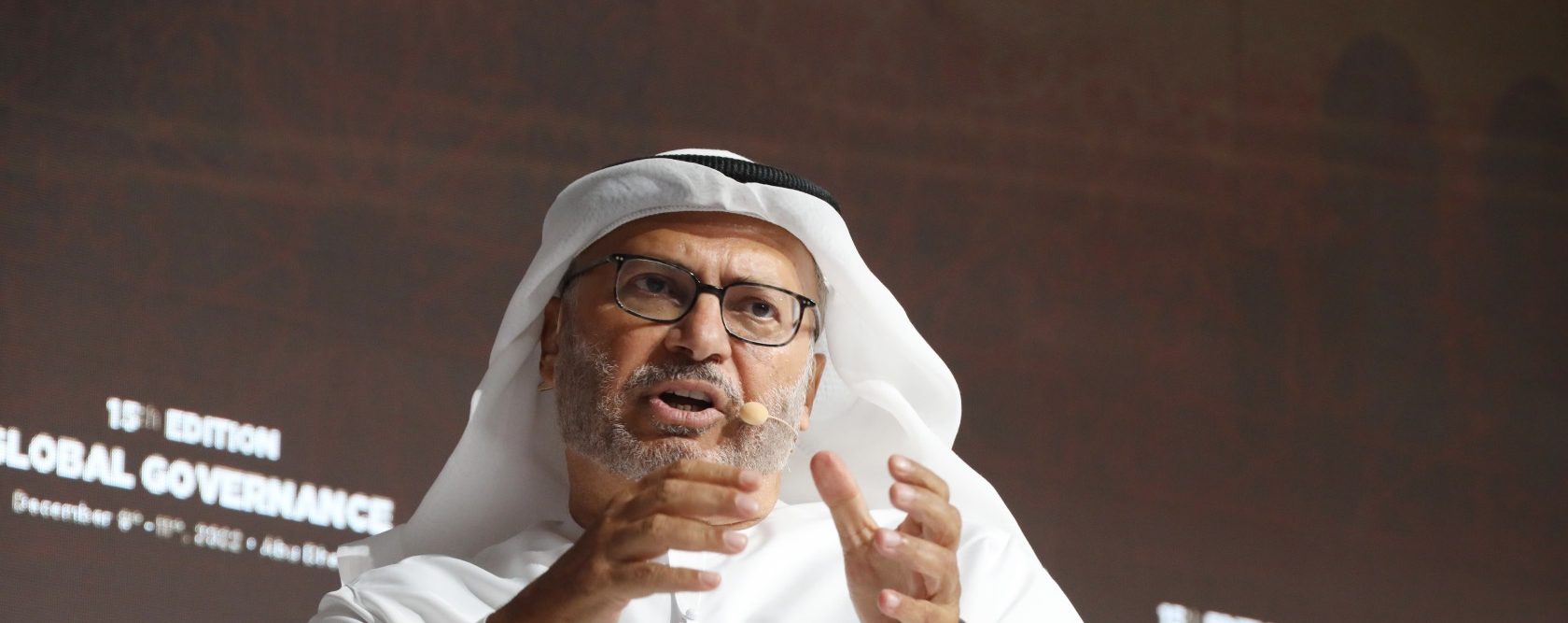
Dubai: Dr. Anwar Mohammed Gargash, Diplomatic Adviser to the UAE President, underscored the unacceptability of leveraging the Israeli aggression on Gaza to instigate instability in Jordan, emphasising that such actions are detrimental to the interests of the people of Gaza.

Dr. Gargash emphasised Jordan’s historical role as a voice of reason and influence in supporting the Palestinian cause.

“Jordan has always been a rational and influential voice in supporting the Palestinians and exploiting the Israeli aggression on Gaza to incite people and instigate instability in the Kingdom is totally unacceptable and does not serve the people of Gaza. The conflicts waged by certain organisations against the Arab state do not represent the legitimate rights of the Palestinian people nor defend their rights,” Dr. Anwar Gargash said in a statement on X.

What’s happening in Jordan?

Activists in Jordan called for further protests on Sunday after days of demonstrations against the war and Jordan’s peace treaty with Israel that have brought thousands onto the streets.

Jordan, where nearly half the population is of Palestinian origin, has seen regular rallies in Amman and elsewhere in solidarity with Gaza since Israel’s military onslaught in response to Hamas’s unprecedented October 7 attack.

Recent protests have seen rare clashes between demonstrators and security forces in the capital and in Jordan’s largest Palestinian refugee camp.

The group Jordanian Youth Gathering urged people to return later Sunday to the Israeli embassy in Amman “to support the resistance in Gaza and demand the cancellation of the Jordanian Israeli peace treaty and cut all ties with Israel”.

Peace treaty with Israel

In 1994, Jordan became the second Arab country, after Egypt in 1979, to sign a peace treaty with Israel.

“No to a Zionist embassy on Jordanian territory”, read one banner at Saturday’s embassy protest, where people have gathered every evening since the holy Muslim month of Ramadan began more than two weeks ago.

Security forces said on Sunday they had arrested a number of protesters 20 kilometres (12 miles) north of Amman at the Beqaa refugee camp.

Public security spokesman Amer Al Sartaawi said in a statement a “number of rioters” were arrested after “acts of rioting and vandalism, setting fires, and hurling stones at vehicles on the public road”.

Beqaa camp, home to more than 100,000 Palestinians, is one of six camps set up to house the influx of refugees fleeing the West Bank and Gaza Strip during the Arab-Israeli war of 1967.

Jordan has 2.2 million people who have been registered by UNRWA, the UN agency for Palestinian refugees.

Many have been granted Jordanian citizenship.

Hamas’s October attack on Israel resulted in the deaths of 1,160 people, mostly civilians, according to an AFP tally of official Israeli figures.

Israel responded with a relentless military campaign that has so far killed 32,782 people, mostly women and children, according to the health ministry in Hamas-run Gaza.

Read this article on the website of Gulf News

https://gulfnews.com/uae/government/anwar-gargash-slams-exploitation-of-gaza-war-to-incite-instability-in-jordan-1.101956753

Political and socioeconomic effects of Reconstruction in the American South

After the American Civil War, Black people in the South were granted new political and civil rights, only for such gains to be reversed within a few decades by white supremacists. This column studies how dramatic institutional change in the Reconstruction era affected the political and socioeconomic outcomes of Black people in the American South. Reconstruction led to higher education, literacy, occupational status, and property ownership among the Black population. But changing laws and rules alone was not enough. The organised power of the state, including military power, was needed to enforce the legal changes.

One of the most prominent research agendas in political science and economics concerns the impact of institutions on comparative economic development. This literature can be traced back to the pioneering work of Nobel laureate Douglass North, including Davis and North (1971), North and Thomas (1973), North and Weingast (1989), and North (1990). These early studies laid the foundations for the seminal works of Sokoloff and Engerman (2000), who emphasise the impact of factor endowments on political and economic development, and Acemoglu and Robinson (2008), who contributed to our understanding of institutions by distinguishing between de jure and de facto political power.

In recent work (Frieden et al. 2024), we study how dramatic institutional change interacted with factor endowments in the American South during the Reconstruction era. In the aftermath of the Civil War, the victorious Union embarked on a massive social experiment. A million formerly enslaved adult men gained the right to vote, while many former Confederates were disenfranchised. Tens of thousands of federal troops occupied the former Confederacy, and nearly a thousand offices of the Freedmen’s Bureaus were set up across the region (Figure 1) to assist freed people in securing their political and legal rights, as well as to provide educational and social services. Eyewitness accounts suggest that this federal presence was important in securing the rights of the formerly enslaved. As one observer put it, “[t]he wrongs increase just in proportion to the distance from the US authorities” (White 2017: 69).

Black people, who made up a significant portion of the population of the South, took enthusiastic advantage of their new political and civil rights. The enfranchisement of freedmen in the former Confederacy led to the electoral dominance of the Republican Party, which was firmly committed to guaranteeing the legal and civil rights of freed people. This also resulted in the election of well over a thousand Black politicians, including many at the local and state level who were responsible for setting local policy and enforcing the law (Foner 1988). Freedmen’s Bureau offices helped to establish 4,300 schools that were educating 250,000 formerly enslaved children by 1870.

After the Hayes-Tilden agreement following the 1876 election, federal troops gradually returned to their barracks. Within a few decades, white supremacists reversed the political gains made by Black people and their white allies with a combination of extra-legal terror, legal manipulation, and fraud.

How did this massive political change affect the lives of Black people in the South? Did these major political reforms have an impact on the social and economic opportunities available to freed people? Did enfranchisement, political engagement, and civil rights – however transitory – lead to Black socioeconomic advances in the South? And did these changes, if any, persist after Reconstruction policies were largely reversed?

We use the location of federal troops and Freedmen’s Bureaus across Southern counties as an indicator of the intensity of Reconstruction, and the county’s cotton suitability as an indicator of the presence of an anti-Reconstruction planter elite. We then look at the political and socioeconomic outcomes for Black Americans in the former Confederacy to answer questions about the short- and longer-term consequences of Reconstruction.

We find that a greater federal presence during Reconstruction was associated with more Black political engagement, including higher Black voter registration, more votes for the Republican Party, and more Black office holders at the state and local levels. This effect was less pronounced in areas dominated by cotton plantations. Using data from the 1880 census, we find that areas that had a greater federal presence exhibited higher levels of school attendance by Black youths aged 6–16. We also find that the Black populations of these counties had higher literacy, average occupational status, and agricultural position – that is, a higher percentage in high-status/pay occupations (e.g. professions, managers, skilled craftsmen) and a lower percentage in low-status/pay occupations (e.g. farm labour). This effect, too, was less pronounced in cotton plantation regions.

We then use data from the 1900 and 1910 censuses to see if these effects were persistent. Again, we find that in counties where there had been a greater federal presence during Reconstruction, Black citizens were more likely to have higher-skilled/paid occupations, were more likely to be home and farm owners, and less likely to be share tenants nearly a quarter of a century after the end of Reconstruction. And, yet again, these effects are lessened in cotton plantation areas.

We further assess the mechanism that might have been at play in explaining our results. We find that greater Republican majorities and more Black local office holders in a county in the1870s led to higher local property tax rates – an effect that was reduced in cotton plantation areas. Previous work has shown that the election of Black politicians was associated with higher tax revenues and higher Black literacy rates and land tenancy (Logan 2020, Suryanarayan and White 2021). We believe that higher tax rates led to greater investment in local education during the Reconstruction period, and indeed they were associated with a higher proportion of Black children attending school. This investment led to long-term benefits for the formerly enslaved. Despite the concerted – and, ultimately, successful – effort by white supremacists to disenfranchise Blacks through all manner of legal and extra-legal tactics, the educational gains made during Reconstruction were less reversible and, as a consequence, had a lasting positive on Black socioeconomic achievement.

Our findings strongly suggest that the major institutional changes put in place during Reconstruction had many of the positive effects intended by their architects. Reconstruction facilitated, for a time at least, Black political empowerment. Combined with a strong federal presence, political empowerment had important and lasting socioeconomic effects. Black people and their allies in the former Confederacy were able to massively expand Black children’s access to education and to facilitate access to occupational and professional opportunities from which they had previously been excluded. Although white supremacists eventually reversed the enfranchisement of most Black men, the socioeconomic impact of the advances achieved during and after Reconstruction endured for decades.

The evidence presented here is very strongly in line with the proposition that political-institutional reforms to expand the franchise, especially to disadvantaged segments of the population, lead to improvements in the lot of those newly empowered. An important implication of the Reconstruction experience, however, is that formal institutional change is not enough to ensure long-term institutional change. At one level this is obvious, since the franchise was eventually stolen back by white supremacists. More to the point, the presence of federal troops and the Freedmen’s Bureau had a powerful impact on political and socioeconomic outcomes; it took the power of the state to enforce the rights enumerated by formal legal changes. This suggests an important amendment, even corrective, to a simple – perhaps naïve – focus on institutions and institutional change as in and of themselves catalysts of political and socioeconomic change. In the Reconstruction context, institutional reform required the support of military might and dedicated government officials.

Another important corrective to the purely institutional view is that the underlying economic structure of the region affected the impact of the institutional changes. Counties in the cotton plantation zone lagged well behind the rest of the South, so much so that in some of our analyses being in a cotton region negated the impact of Black political engagement and federal presence. This is consistent with much of the secondary literature, which typically characterises cotton plantations as enclaves within which the planter elite could exercise major pressure on Black workers and could often manipulate local institutions to produce desired political results almost at will. The production structure affected social and political power and could in some instances overcome institutional change.

Reconstruction and the federal presence had direct, important, and long-lasting positive effects on a whole range of Black socioeconomic outcomes, including schooling, literacy, occupational status, and property ownership. The evidence we present demonstrates the profound and lasting impact that changes in political institutions can have on both political and socioeconomic outcomes. However, it also suggests some cautionary notes. First, it makes clear that changing institutions – laws and rules – is not sufficient to overcome historical disadvantages and entrenched opposition. In the case of Reconstruction, it took the organised power of the state – including military power, in ways that mattered at the very local level – to make meaningful and lasting change possible. Second, it makes clear that the underlying economic structure of an area can have a powerful impact on its susceptibility to reform. More specifically, the effects of political-institutional change can be stymied or blocked by entrenched interests, such as the cotton planter elite represented in the South. We believe that all these lessons remain relevant and are of profound interest and value, today.

Read this article on the website of Vox EU

https://cepr.org/voxeu/columns/political-and-socioeconomic-effects-reconstruction-american-south

Quand la France et l’Allemagne se chamaillent, Poutine jubile

OPINION. Berlin et Paris doivent parler d’une même voix et régler leurs différends loin de la scène publique car ils font sinon le jeu de la Russie, écrit l’ancien ministre allemand vert Joschka Fischer, inquiet de l’affaiblissement de l’Union européenne.

La relation franco-allemande a toujours été compliquée et n’a jamais été dénuée de conflits ou de tensions. Tout le monde comprend que la coopération entre ces deux pays clés de l’Union européenne est nécessaire et dans l’intérêt de l’ensemble du bloc. Ils n’ont cependant jamais complètement surmonté leur rivalité actuelle – et historique.

L’une des raisons est que la France et l’Allemagne sont aussi fortes l’une que l’autre, mais dans des dimensions différentes. Au cours de ces sept dernières décennies d’unification progressive de l’Europe, l’Allemagne, bien que divisée entre 1945 et 1990, était un pays économiquement puissant mais diplomatiquement timide. La France, en revanche, pouvait faire valoir ses forces militaires et culturelles et une tradition ininterrompue de puissance européenne. Après la défaite de l’Allemagne lors de la Seconde Guerre mondiale, Charles de Gaulle a tenu à affirmer pleinement la confiance retrouvée de la France.

Read the entire article on the website of Le Temps
https://www.letemps.ch/opinions/debats/quand-la-france-et-l-allemagne-se-chamaillent-poutine-jubile

Finance verte : « Notre épargne est un bulletin de vote qui construit le monde de demain »

Les financiers Bertrand Badré et François Faure appellent, dans une tribune au « Monde », à l’introduction d’un principe démocratique dans la gestion de l’épargne, afin de mieux refléter la préférence sociale pour un avenir durable.

Vous pouvez partager un article en cliquant sur les icônes de partage en haut à droite de celui-ci.
La reproduction totale ou partielle d’un article, sans l’autorisation écrite et préalable du Monde, est strictement interdite.
Pour plus d’informations, consultez nos conditions générales de vente.
Pour toute demande d’autorisation, contactez syndication@lemonde.fr.
En tant qu’abonné, vous pouvez offrir jusqu’à cinq articles par mois à l’un de vos proches grâce à la fonctionnalité « Offrir un article ».

https://www.lemonde.fr/idees/article/2024/03/22/finance-verte-notre-epargne-est-un-bulletin-de-vote-qui-construit-le-monde-de-demain_6223525_3232.html

« Si tu veux faire rire Dieu, parle-lui de tes plans », dit le proverbe. Combien de gérants de fonds ont vu leurs plans déjoués par le Covid-19, la guerre en Ukraine ou le retour de l’inflation ; comment prendre en compte, dans les allocations d’actifs, le danger Trump, les tensions autour de Taïwan, la poussée des extrêmes droites en Europe ? Ces crises multiples sont pour certaines imprévisibles, et pour la plupart échappent à toutes les législations, en défiant parfois la raison. Nous sommes contraints de les affronter comme des poussées tectoniques.

Mais d’autres faits – le réchauffement climatique, l’effondrement de la biodiversité, la raréfaction des ressources naturelles – sont connus : sur ceux-ci les Etats, les entreprises, les consommateurs et la finance peuvent agir. Ces faits-là nous obligent à une transformation de nos modes de vie : devenir plus sobres et plus solidaires. Nous n’avons pas le choix, nous sommes embarqués, comme le disait en son temps le philosophe Emmanuel Mounier (1905-1950).

A la racine de ces faits, il y a évidemment la question de la quête du profit, indispensable aux investissements pour la transformation de l’économie et défini par les normes comptables internationales. A quelques exceptions près, les entreprises labellisées B Corp, soit la plupart des grandes entreprises cotées, ne sont pas des entreprises à mission. Elles sont calées sur l’objet social de l’entreprise, qui est le profit pour les actionnaires. La responsabilité fiduciaire des représentants des actionnaires est la défense de leurs intérêts financiers. C’est l’orthodoxie.

Le profit n’est qu’un moyen

Mais nous voyons bien qu’il y a déconnexion entre cette orthodoxie et le réchauffement climatique. Un profit qui ne prend pas en compte ces contraintes est un faux profit, car il soustrait de l’argent au corps social et à la nature, sans se préoccuper de leur pérennité.

Une responsabilité fiduciaire « responsable » a donc deux faces : celle de l’objet social des entreprises (entreprises à mission) et celle des investisseurs à la recherche d’un rendement associant des critères de durabilité.

Read the entire article on the website of Le Monde

https://www.lemonde.fr/idees/article/2024/03/22/finance-verte-notre-epargne-est-un-bulletin-de-vote-qui-construit-le-monde-de-demain_6223525_3232.html

The Indo-Pacific strategy’s fatal blind spot

Read the article on the website of The Globe and Mail

https://www.theglobeandmail.com/opinion/article-the-indo-pacific-strategys-fatal-blind-spot/

EU council adopts raw materials act, but some say targets are ‘too ambitious’

The act sets targets, timelines and new risk assessment mandates.

After a year of deliberation, the EU’s council announced today the formal adoption of the Critical Raw Materials Act (CRMA).  Peter Handley, deputy director of the European Commission, told Mining Magazine…

Read the entire article on the website of Mining Magazine
https://www.miningmagazine.com/europe/news-analysis/4187159/eu-council-adopts-raw-materials-act-targets-ambitious

Renaud Girard : « Comment s’arrêtent les guerres contemporaines ? »

CHRONIQUE – À l’heure où ni l’Ukraine ni la Russie n’imaginent d’autre issue que la victoire, une réflexion à la lumière des exemples du passé s’impose pour envisager la fin de la guerre.

Dans une interview à la télévision suisse, diffusée le 9 mars 2024, le pape François a réitéré son appel à une paix en Ukraine. Il a appelé les belligérants à « avoir le courage de négocier » et a rappelé qu’il y avait de nombreux acteurs « prêts à jouer le rôle de médiateurs, par exemple la Turquie ».

Au mois de mars 2022, il y avait eu à Istanbul des négociations approfondies entre Russes et Ukrainiens et un compromis avait été pratiquement atteint. C’était une neutralisation de l’Ukraine assortie de garanties de sécurité internationales, un statut d’autonomie pour le Donbass et le report à vingt ans de la question de la Crimée.

Il y a encore un flou historique sur les raisons pour lesquelles l’accord n’avait finalement pas été signé.

Read the entire article on the website of Le Figaro

https://www.lefigaro.fr/vox/monde/renaud-girard-comment-s-arretent-les-guerres-contemporaines-20240312

Hubert Védrine : « Il faut rétablir le rapport de force en Ukraine »

À l’occasion de la publication de son nouvel ouvrage, Grands Diplomates, l’ancien ministre des Affaires étrangères analyse les derniers développements de la guerre en Ukraine.

Depuis le début de la guerre en Ukraine, les alliés tiennent une position : soutien à l’Ukraine, mais pas de cobelligérance. N’est-on pas en train de franchir la limite qui sépare les deux ?

Sans minimiser la France, elle n’est pas seule dans cette affaire. Depuis le début de la guerre, c’est la ligne Biden qui est suivie : empêcher Poutine de gagner, sans se laisser entraîner dans une guerre contre la Russie. Fondamentalement, cela n’a pas changé. La question qui se pose, aujourd’hui, est de savoir ce qu’il faut faire si les Russes risquent de l’emporter. Dans ce contexte, il n’est pas anormal qu’un certain nombre de leaders européens, dont le président Macron, alertent l’opinion pour qu’elle prenne conscience des enjeux.

Read the entire article on the website of Famille chrétienne

https://www.famillechretienne.fr/42468/article/hubert-vedrine-il-faut-retablir-le-rapport-de-force-en-ukraine