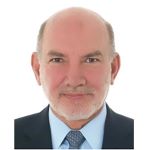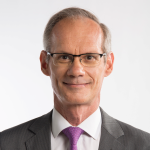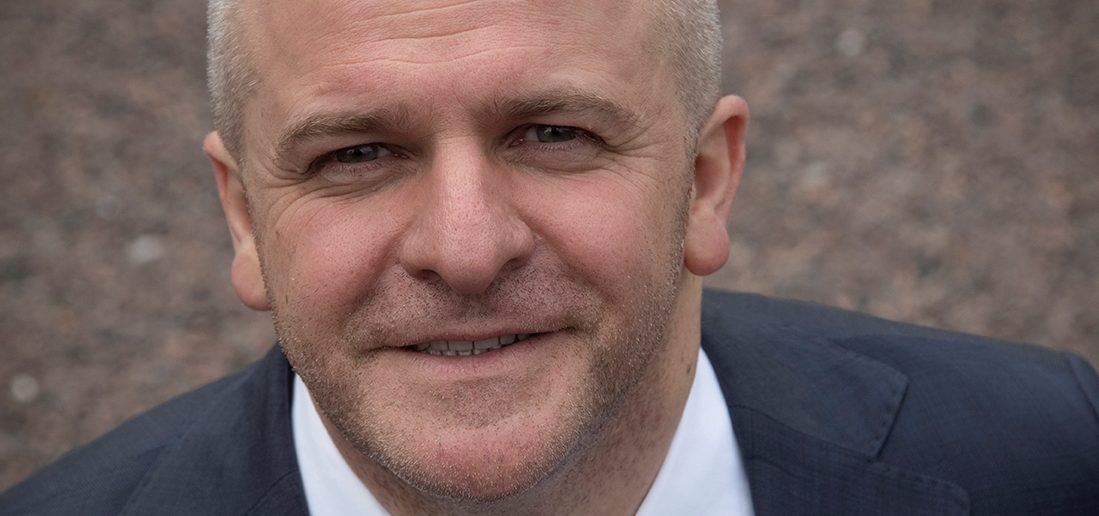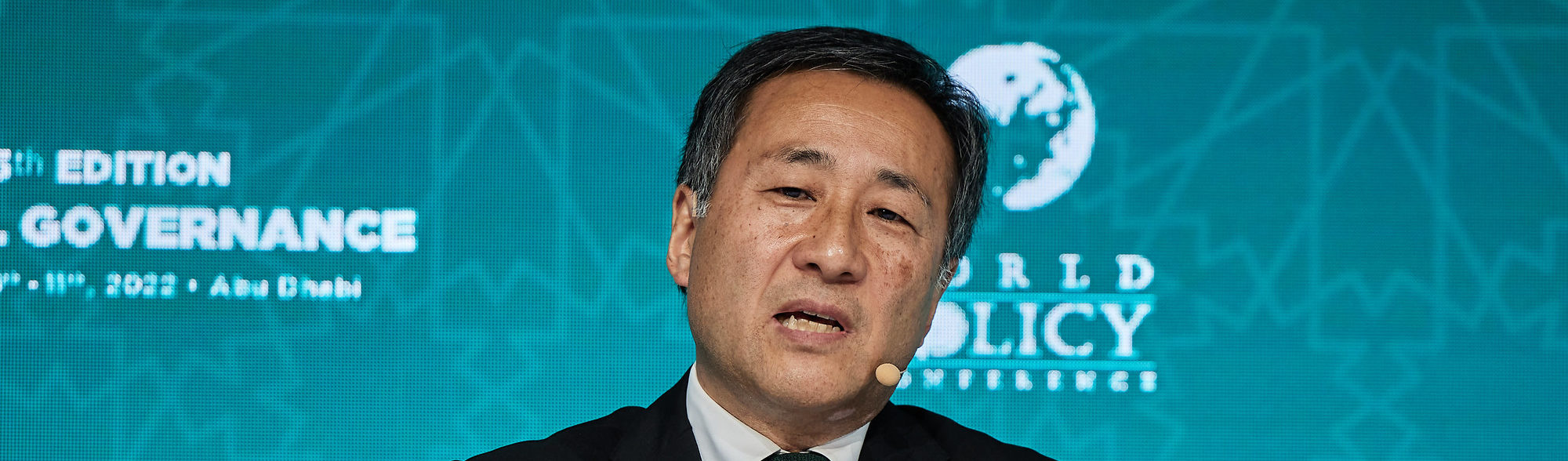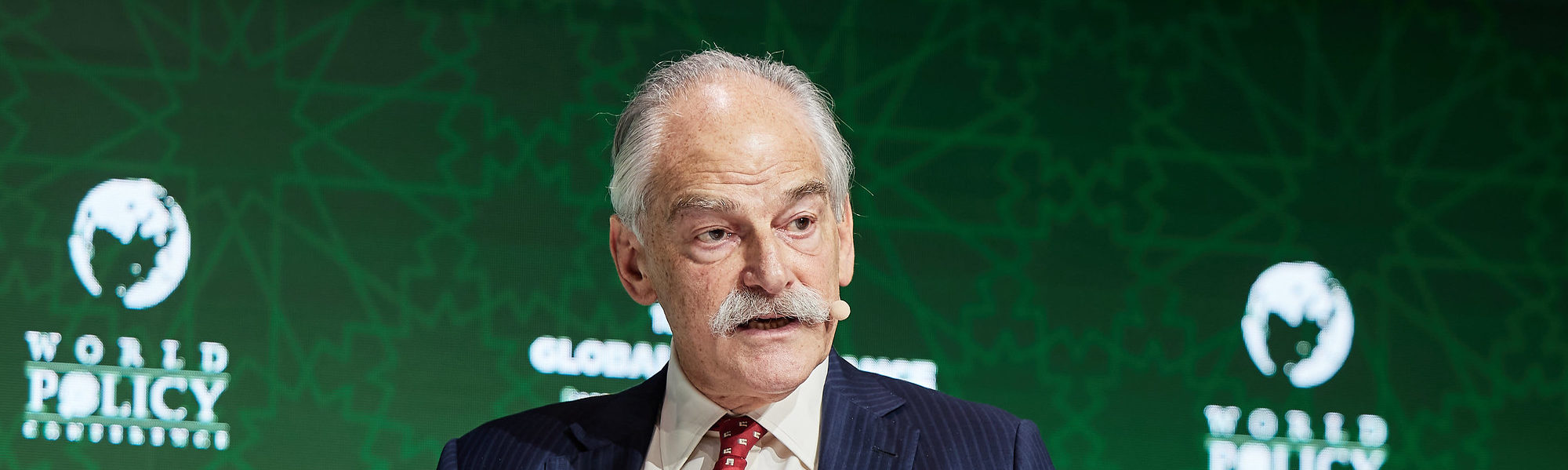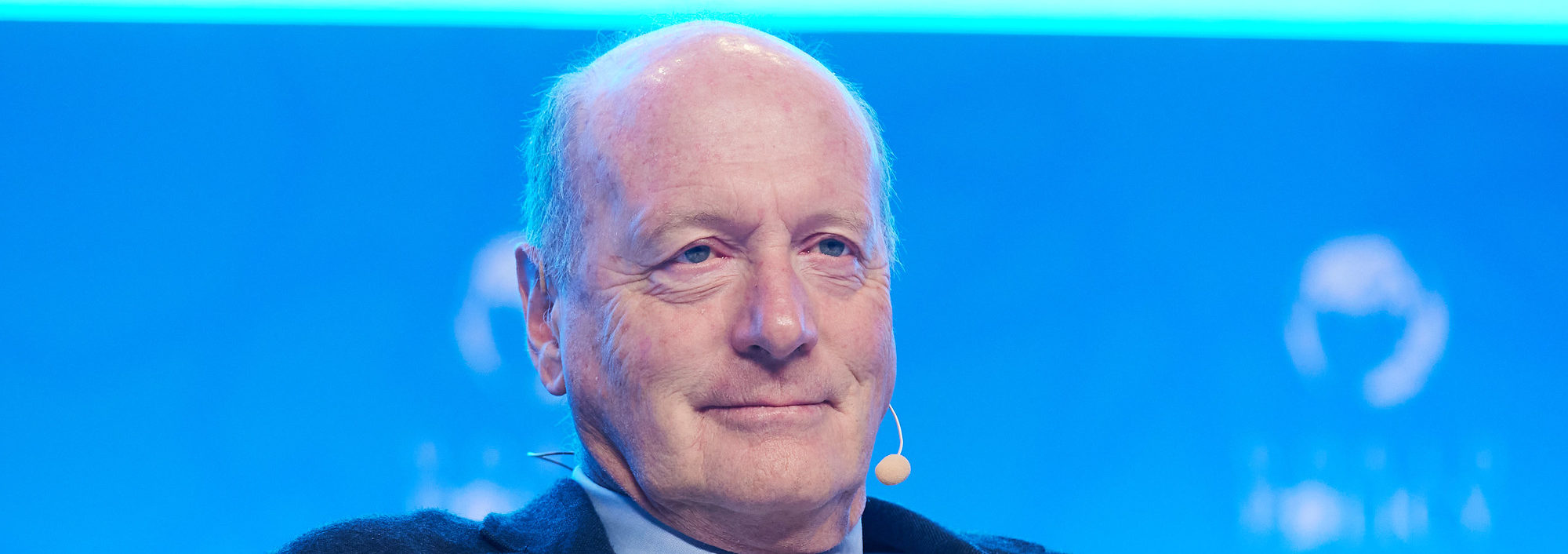
Directeur de la stratégie du Centre national d’études spatiales (CNES). Jean-Marc ASTORG est un expert des questions spatiales avec près de 40 ans d’expérience au CNES (agence française de l’Espace) qui lui ont permis d’avoir une connaissance approfondie du secteur spatial en France et dans le monde, dans tous les domaines : lanceurs, satellites et segment sol. En tant que directeur de la stratégie du CNES, il participe activement à l’adaptation du centre et de l’écosystème spatial français au nouvel environnement créé par le New Space.
Nicolas Terraz
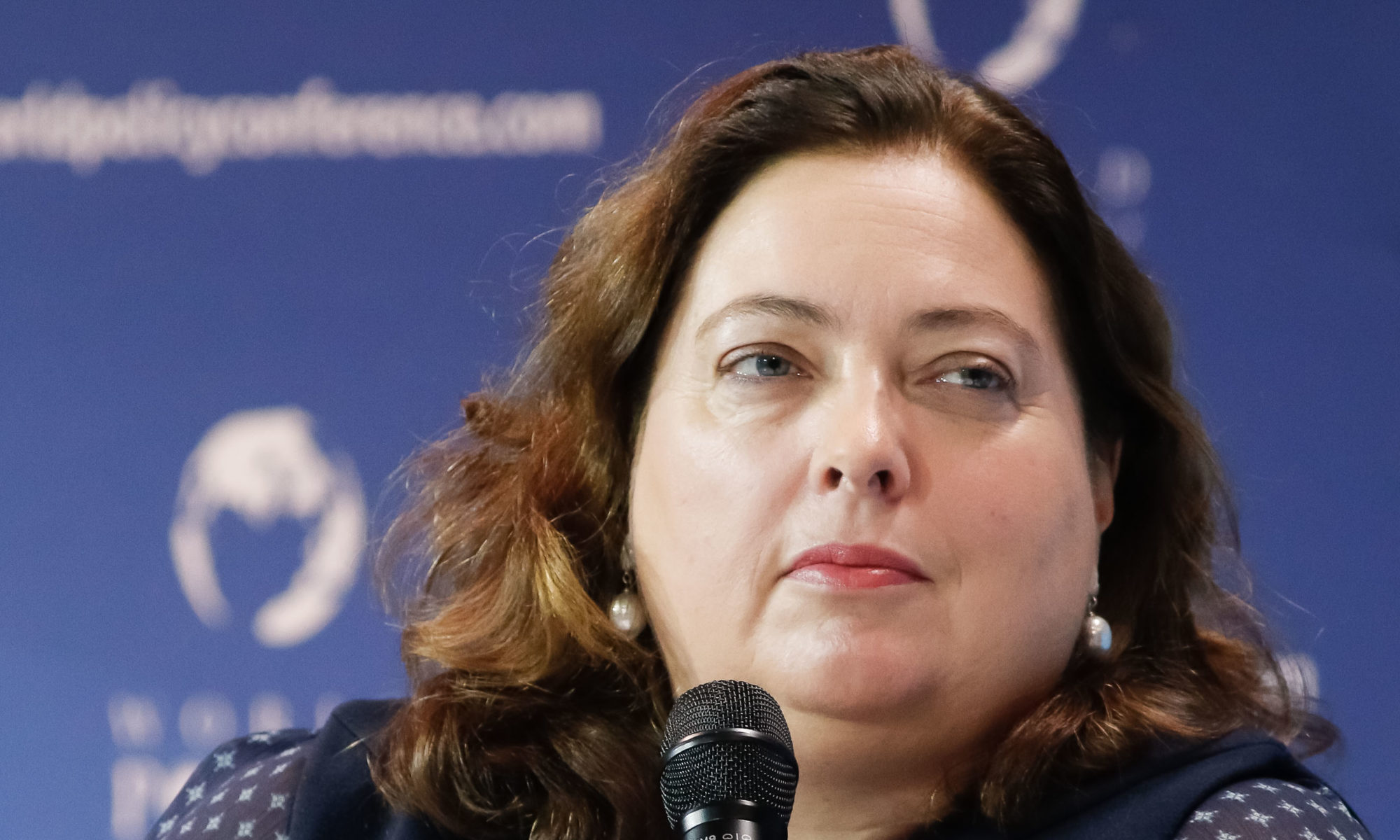
Directeur général Exploration-Production et membre du Comité Exécutif, TotalEnergies, depuis le 1er septembre 2021. Nicolas Terraz commence sa carrière aux ministères de l’Industrie (1994-1997) et de l’Équipement, des Transports et du Logement (1997-2001) avant de rejoindre TotalEnergies en 2001. Après plusieurs postes en France et au Qatar, il est nommé Directeur général de TotalEnergies E&P Myanmar (2008-2011), puis Directeur général de TotalEnergies E&P France (2011-2014), Vice- Président New Ventures E&P (2014-2015) et Directeur général de TotalEnergies E&P Nigeria (2015-2019). En 2019, Nicolas Terraz est nommé Directeur Afrique et membre du Comité Directeur de la branche Exploration & Production de TotalEnergies. Né en 1969, Nicolas Terraz est diplômé de l’École polytechnique et de l’École nationale des ponts et chaussées et titulaire du Master of Science in Technology and Policy du Massachusetts Institute of Technology.
Could Russia disintegrate?
COMMENT – Expectations that June’s revolt would lead to a regime change were misplaced. Instead, the Russian state will enter a phase of slow decay.
The real stakes in Russia’s war against Ukraine are not only the fate of Ukraine but also the future character and borders of the Russian state. This became particularly evident during the recent mutiny of Wagner group leader Yevgeny Prigozhin, which marked the first serious rebellion in President Vladimir Putin’s inner circle and one of many new developments in Russia’s internal situation that could acquire significance as stages in a long-term “disintegration” scenario.
Gapon effect
A forgotten but significant figure in the history of Russia is Georgy Gapon, the Orthodox priest who led the St. Petersburg workers’ protests in January 1905. Gapon was not just a revolutionary and people’s tribune – today we know he played a double game, secretly working with tsarist officials and the secret police. Gapon, like Mr. Prigozhin, hardly resembles the image of a good revolutionary. Yet it was his activity more than any other that led to Bloody Sunday, which sparked the 1905 Revolution and started the collapse of a great empire. At the core of that revolution was the “desacralization of the Tsar” and the ambiguous role played by Gapon himself, who was both a rebel and collaborator. The same may be true of Prigozhin.
The chief result of Mr. Prigozhin’s rebellion was to desacralize Mr. Putin’s rule, even if the march was aborted 200 kilometers away from the capital. Gapon was finally murdered by the secret police, and Mr. Prigozhin was likely to meet a similar end. It is probable that the plane crash in which he reportedly died was arranged by close associates of President Putin. Nevertheless, for Russia, his strange rebellion was a serious test. It exposed the weakness of the Russian president and the authoritarian system he built, revealing hidden fractures in the highest circle of power. In Russian history, waves of change have traditionally been triggered when people perceive the ruler as failing to lead or showing fear – thereby stripping him of his “holy” status. And as Wagner troops approached Moscow, no one was seen rushing to save Mr. Putin. To save face and scare off other potential rebels, the Russian leader had to arrange a theatrical demise for Mr. Prigozhin and his allies. But the desperate gesture could also be interpreted as a sign of weakness by Mr. Putin’s enemies.
[…]
Read the entire article written by Prof. Pawel Kowal on GIS Reports.
How Saudi Arabia’s mediation efforts heap pressure on Russia
COMMENT – Riyadh-hosted talks on Ukraine highlight growing clout of major emerging nations
TOKYO — One and a half years after Russia’s invasion, Ukraine is struggling to achieve its goals in the much-vaunted counteroffensive. Ukrainian forces along the front line are having a hard time punching through resilient enemy lines.
Yet recent peace talks in Saudi Arabia, held among senior officials from about 40 economies, offered a ray of hope for achieving a cease-fire.
The talks followed the first such meeting hosted by Denmark in Copenhagen in June. In response to Saudi Arabia’s invitations, national security advisers and other officials of some 40 countries and regions, including the Group of Seven major industrial nations as well as emerging and developing countries, gathered in the Red Sea coastal city of Jeddah.
Saudi Arabia has friendly ties with Russia, a fellow oil producer, and maintains a neutral position in the Ukraine war. A far cry from a democracy, the monarchy is often criticized for its dismal human rights records.
Many pundits were skeptical about the peace talks hosted by the country. But the conference proved unexpectedly productive, though no concrete blueprint for peace has been hashed out.
The number of participants itself was a great achievement as the previous talks in Denmark attracted only a dozen or so countries and regions. China’s presence this time also made a big difference. Beijing, Moscow’s principal ally, declined an invitation to the previous talks, apparently out of concern for damaging ties with Russia.
Saudi Arabia strongly urged China to attend the conference through behind-the-scenes lobbying, a Western diplomat familiar with the matter said. Riyadh tried its best to make the forum attractive to Beijing by taking some unusual steps. For example, while representatives of all other nations were seated in alphabetical order, China was given a place next to the chair.
Saudi Arabia invited Ukraine but not Russia. Irked by the move, Moscow blasted the talks. « No meetings on the Ukraine crisis add any value without Russia’s participation or regard for its interests, » said Maria Zakharova, the spokeswoman of Russia’s Foreign Ministry.
[…]
Read the entire comment written by Hiroyuki Akita on NikkeiAsia.
The Global Order’s Triple Policy Challenge
ARTICLE – With sovereign debt at record levels and extreme weather events becoming more frequent and intense, policymakers must find a way to sustain economic growth, ensure financial stability, and mobilize the necessary resources to combat climate change. Achieving this requires nothing less than a new economic paradigm.
« L’Iran cherche à renouer avec l’Occident »
CHRONIQUE – Sans le proclamer publiquement, mais en le faisant savoir par divers chemins discrets, les mollahs souhaitent désormais négocier un grand arrangement avec l’Amérique.
La dynamique de la réconciliation irano-saoudienne se poursuit. Le 18 août 2023, le ministre iranien des Affaires étrangères a été chaleureusement reçu à Djedda par le prince héritier saoudien Mohammed Ben Salman (MBS). Au Moyen-Orient, la hache de guerre entre chiites et sunnites semble enterrée, du moins provisoirement.
Dans ce dialogue entre persans et arabes, dont les schémas mentaux sont très différents, des incompréhensions et des malentendus subsistent fatalement. Les Iraniens souhaiteraient par exemple que le royaume s’implique davantage pour une solution politique au Yémen, quitte à ce qu’il convoque un sommet régional, où houthistes chiites et sudistes sunnites négocieraient sous l’œil de leurs voisins arabes et perse. Mais des difficultés sporadiques sur le dossier du Yémen (où le cessez-le-feu tient depuis un an et demi) sont un arbre qui ne devrait pas cacher la forêt.
[…]
Washington, Tokyo et Séoul font bloc face à la Chine et la Corée du Nord
ARTICLE – Face à la Chine et la Corée du Nord, Joe Biden a voulu formaliser, vendredi à Camp David, une entente sécuritaire avec ses homologues japonais et sud-coréen, profitant de leur rapprochement récent.
Décidée au printemps dernier lors du G7 à Hiroshima, la rencontre au sommet organisée vendredi à Camp David par Joe Biden avec le président de Corée du Sud et le Premier ministre japonais a conforté une relation trilatérale devenue pour chacun indispensable, face aux menaces sécuritaires et économiques posées par la Chine et la Corée du Nord.
La rencontre – premier sommet entre les trois dirigeants, et la première invitation à Camp David faite à des leaders étrangers par Joe Biden – s’est concrétisée par des mesures sécuritaires, économiques et formalise un rapprochement que Washington espère gravé dans le marbre.
Réchauffement ostensible
Concrètement, ils ont décidé d’un sommet trilatéral annuel et ont promis de se consulter sur tous « les défis, provocations et menaces qui affectent nos intérêts collectifs et notre sécurité ». Ils vont mettre en place une liaison de communication d’urgence entre les trois exécutifs, partager davantage d’intelligence militaire, multiplier les exercices militaires communs ou encore partager les données en temps réels sur les tirs de missile de la Corée du Nord. Ils se sont également accordés sur des mécanismes d’alerte pour mieux contrôler la sécurité des chaînes d’approvisionnement dans la région.
« Il y a eu un réchauffement ostensible des relations entre la Corée du Sud et le Japon depuis l’élection du Président Yoon et en particulier depuis le printemps. Les Américains veulent capitaliser là-dessus. Ils ont fait des efforts en coulisses pour les rapprocher discrètement depuis des années », note Jean-Yves Colin, expert Asie du Nord du Asia Centre.
Depuis quelques mois, les signes d’ouverture sont manifestes. Ils ont été initiés par le président Yoon Suk-yeol, qui a décidé de régler les différends historiques avec Tokyo. En commençant par dédommager les travailleurs coréens qui avaient été forcés de travailler pour le Japon à l’époque de la colonisation.
De son côté, le Japon a levé des restrictions à l’export de matériaux pour les semi-conducteurs vers la Corée du Sud. Le président sud-coréen s’est rendu à Tokyo, tandis que le Premier ministre japonais a été accueilli à Séoul. Et lors des célébrations en mémoire de la fin de l’époque coloniale japonaise, le 18 août, le président sud-coréen a insisté longuement sur le partage de valeurs communes avec le Japon.
[…]
Retrouvez l’article complet écrit par Virginie Robert dans Les Echos.
In Europe, Few Even Want to Talk About Trump Part 2
ARTICLE –The prospect of a second presidential term for Donald J. Trump has many officials worried about alliance cohesion, NATO and the war in Ukraine.
For most European governments, it is almost too upsetting to think about, let alone debate in public. But the prospect that Donald J. Trump could win the Republican nomination for the presidency and return to the White House is a prime topic of private discussion.
“It’s slightly terrifying, it’s fair to say,” said Steven Everts, a European Union diplomat who is soon to become the director of the European Union Institute for Security Studies. “We were relieved by President Biden and his response to Ukraine,” Mr. Everts said, “but now we’re forced to confront the Trump question again.”
Given the enormous role the United States plays in European security,” he added, “we now have to think again about what this means for our own politics, for European defense and for Ukraine itself.”
The talk is intensifying as Mr. Trump, despite the Jan. 6, 2021, attack on the Capitol, his attempt to overturn the results of the 2020 election and his various indictments, is running well ahead of his rivals for the Republican presidential nomination and is neck-and-neck with President Biden in early opinion polls.
During his presidency, Mr. Trump threatened to pull out of NATO and withheld aid to Ukraine as it struggled with a Russian-backed insurgency, the subject of his first impeachment. He ordered the withdrawal of thousands of American troops from Germany, a move later overturned by Mr. Biden, and spoke with admiration of President Vladimir V. Putin of Russia.
Today, with Europe and Russia locked in conflict over Ukraine, and Mr. Putin making veiled threats about nuclear weapons and a wider war, the question of American commitment takes on even greater importance. Mr. Trump recently said that he would end the war in a day, presumably by forcing Ukraine to make territorial concessions.
A second Trump term “would be different from the first, and much worse,” said Thomas Kleine-Brockhoff, a former German government official who is now with the German Marshall Fund in Berlin. “Trump has experience now and knows what levers to pull, and he’s angry,” he said.
[…]
Read the full article written by Steven Erlanger on The New York Times.
The IRA challenges the European climate model
ARTICLE – The United States’ rejection of the Kyoto Agreement in 2001 and President Donald Trump’s withdrawal from the Paris Climate Accords in 2020 gave many Europeans a sense of superiority to the United States with regard to climate change. But now, Europeans are starting to realize their leadership in the energy transition is not as secure as previously believed. They are seeing the profound competition posed by the Inflation Reduction Act (IRA)—and the economic forces it unleashes.
The IRA as a response to climate change differs fundamentally from the European Union (EU)’s Green Deal. The EU quantifies numerous climate targets to set strict limits on greenhouse gas emissions. But the United States aims to make new technologies that mitigate climate change more competitive than conventional ones.
In the IRA, tax credits are the primary instrument of climate policy. Renewables and climate-friendly technologies are the main beneficiaries of the IRA, but they are stimulated through market incentives, without paternalism, managerialism, or micromanagement.
While the EU holds a binding, bureaucratic grip on the regulation of climate technology, the IRA harnesses creative market power in support of both renewables and other energy sources. In striving to turbocharge its economy by decarbonizing the energy sector, the United States could achieve climate neutrality before Europe.
In the IRA, climate neutrality takes precedence. Unlike in Europe, the United States does not pick winners and losers among competing climate technologies. The legislation’s success largely stems from the wide range of technologies that receive tax credits.
These credits do not narrow America’s energy supply base. Nuclear and hydrogen are both included in the legislative scope of the IRA. For instance, the IRA facilitates the carbon-neutral production of blue hydrogen, from natural gas with carbon capture and storage technology (CCS). Green hydrogen—produced from renewables—benefits most from the IRA’s tax code, but this does not come at the expense of CCS and blue hydrogen, which also receive tax credits in the legislation.
In contrast to the United States, subsidies persist as the main form of European energy policy, often creating inefficiency in the strive for climate neutrality. For example, Germany‘s Renewable Energy Sources Act, passed in 2000, created immense subsidies but left ambivalent climate results after two decades.
[…]
Read the full article written by Dr. Friedbert Pflüger on Atlantic Council.
Yong-joo Park
Directeur général de Pure Harvest & PlanTFarm JV Operations, une entreprise commune entre une société CEA de haut niveau aux Émirats arabes unis et une société coréenne de premier plan spécialisée dans les fermes verticales d’intérieur. Il a plus de 30 ans d’expérience dans différents domaines tels que les stratégies de marque, la gestion du marketing global et l’innovation de produit, ainsi qu’une expertise sectorielle dans les domaines des technologies de l’information et de l’industrie alimentaire. Auparavant, il a occupé les postes de vice-président du Marketing mondial chez Samsung Electronics puis de directeur marketing chez Coway. En tant que responsable planification et gestion de production, il a été à la tête de la branche mondiale dédiée aux réfrigérateurs chez Samsung Electronics. Il a été responsable de la stratégie et de l’innovation chez Bowers&Wilkins et vice-président chez General Mills. Il a également travaillé au sein des entreprises Kellogg’s et Motorola. M. Park a un master en Marketing de l’université de l’Alabama et un diplôme en commerce et management des entreprises de l’université de Corée (Korea University).
Domitille Legrand
Ingénieure du Corps des mines, elle occupe la fonction de cheffe du service économique régional de Bourgogne Franche-Comté, et de chargée de mission économique auprès du préfet de région. Elle a travaillé dans diverses organisations, entreprises et think tanks en Europe (Allemagne, Angleterre), en Asie du Sud-Est (Singapour) et en Nouvelle Calédonie, sur des thématiques énergétiques, industrielles, de ressources et numériques. Elle a en outre participé au World Material Forum en tant que Below 25. Dans le cadre de ses études, elle a rédigé un rapport à destination du ministère de l’Économie, des Finances et de la Souveraineté industrielle et numérique de la France en 2023 sur la réindustrialisation en France.
Philippe Chalmin : « Les marchés avaient anticipé la fin de cet accord »
ENTRETIEN – Alors que Moscou a mis fin à l’accord céréalier avec Kiev ce lundi, l’impact « risque d’être plus important sur le marché du maïs », que sur celui du blé, estime ce jeudi Philippe Chalmin, spécialiste des matières premières.
« Les prix augmentent un peu » mais « les marchés avaient anticipé la fin » de l’accord quadripartite qui garantit depuis un an l’exportation sécurisée des céréales ukrainiennes via la mer Noire, que la Russie n’a pas voulu prolonger lundi 17 juillet, analyse Philippe Chalmin jeudi 20 juillet sur franceinfo. Ce professeur d’histoire économique à l’université Paris-Dauphine, spécialiste des matières premières et de l’énergie, affirme que le problème du maïs en Ukraine est bien plus inquiétant pour les pays occidentaux que celui du blé.
franceinfo : Les prix augmentent déjà sur les marchés européens ?
Philippe Chalmin : Oui, un peu, mais il faut se rendre compte qu’ils avaient fortement baissé depuis un an. L’année dernière, la tonne sur le marché européen était grimpée jusqu’à 430 euros. Nous étions descendus à 220 euros ces dernières semaines. Hier, les marchés ont clôturé aux alentours de 250 euros. On reste deux fois moins qu’au pic pour deux raisons. La première, c’est que la campagne 2022-2023 a été excellente dans le reste du monde, que ce soit en Russie, en Australie, au Brésil… donc les marchés ont été plutôt bien approvisionnés. D’autre part, l’Ukraine, malgré la guerre, a quand même maintenu plus d’exportations non seulement par le corridor céréalier, mais au travers de l’Europe et au travers aussi de la petite langue de terre qui, passant sous la Moldavie, permet à l’Ukraine d’avoir un accès sur le Danube.
Le blé russe n’est pas soumis aux sanctions ?
Les produits alimentaires ne sont pas soumis aux sanctions. Par contre, les Russes se plaignent des difficultés qu’on leur met un peu, au niveau du financement de ces exportations, puisque les banques russes sont exclues du système international de paiement SWIFT. Malgré tout, il y a les banques chinoises ou indiennes qui sont moins regardantes. Et l’année dernière, là où l’Ukraine a exporté 15 à 16 millions de tonnes de blé, la Russie en a exporté 42. Pour vous donner un ordre de grandeur, les exportations mondiales de blé, c’est un peu moins de 200 millions de tonnes.
[…]
Retrouvez l’intégralité de l’entretien avec Philippe Chalmin sur le site de Franceinfo.
Les données géospatiales, un outil indispensable pour la finance durable
TRIBUNE – L’utilisation de données géospatiales à partir de satellites progresse très rapidement. Longtemps réservées à la défense, ces techniques sont maintenant accessibles aux grandes institutions financières qui y voient un outil indispensable pour à la fois améliorer leur performance et pour développer la finance durable, soulignent André Lévy-Lang et Antoine Rostand.
L’utilisation de données géospatiales à partir de satellites a été lancée par l’Europe. Fer de lance de cette technologie, la constellation de satellites baptisée « Sentinel », volet spatial du programme Copernicus de l’Union européenne , couvre depuis peu l’ensemble de la planète, tous les jours, avec un jeu complet d’excellents capteurs : radar, optique moyenne résolution et hyperspectral.
À partir de ces données, trois entreprises, dont une française, ont développé les technologies pour créer des données fiables, sous une forme utilisable par le monde économique. Chacune a une équipe de chercheurs de plus de 100 personnes (docteurs en mathématiques, ingénieurs, codeurs), créée depuis au moins cinq ans. Chacune a de plus une expérience spécifique sur certains marchés, énergie et environnement pour Kayrros (France), commerce et immobilier pour Orbital Insight (Etats-Unis), agriculture pour Descartes Lab (Etats-Unis).
[…]
Retrouvez la tribune écrite par André Lévy-Lang sur le site des Echos.
Kirk Atkinson
Président-directeur général de BLG Logistics, Inc, la filiale américaine du groupe BLG, spécialisée dans la logistique contractuelle basée sur les installations en Amérique du Nord. BLG Logistics dispose d’une équipe dévouée de plus de 220 professionnels qui se concentrent sur les processus, les systèmes informatiques et l’automatisation pour les marques des secteurs de l’automobile, de la vente au détail et de l’industrie lourde. En tant que membre du conseil d’administration de la Chambre de commerce germano-américaine d’Atlanta, Kirk contribue activement à la promotion du commerce et de l’éducation entre l’Amérique du Nord et l’Allemagne. Il est également président du conseil d’administration de l’Alabama Germany Partnership et siège au conseil de développement industriel de Birmingham.
De conférence en sommet, un dialogue Nord-Sud qui fait du surplace
CHRONIQUE – Le sommet qui s’est tenu à Paris la semaine dernière sur une nouvelle coopération financière entre les pays du Nord et du Sud n’a pas suscité de grands élans. Une situation qui semble se répéter dans l’histoire, note Philippe Chalmin.
L’organisation à Paris à l’initiative d’Emmanuel Macron d’un Sommet pour un nouveau pacte financier mondial n’a suscité, au mieux à l’international, qu’un intérêt poli, et ses conclusions semblent avoir été bien maigres à l’aune pourtant de l’importance du sujet en pleine période de crises tant géopolitiques que climatiques. Quelques pays, à l’image de la Zambie, verront au moins leur sort – et leur endettement – s’améliorer. Mais nombre de sceptiques auront vu là une initiative bien dans la tradition française d’équilibre entre les grands blocs économiques.
Il y a un demi-siècle qu’un autre jeune président français, Valéry Giscard d’Estaing, au lendemain du premier choc pétrolier et de l’implosion du système monétaire de Bretton Woods, avait eu l’idée, en octobre 1974, de lancer un dialogue Nord-Sud. L’idée mit une bonne année à se concrétiser et c’est en décembre 1975 que s’ouvrit à Paris, avenue Kléber (le bâtiment est aujourd’hui un grand hôtel), la Conférence pour la coopération économique internationale (CCEI).
Le rapport du Club de Rome
Le premier choc pétrolier, mais aussi la flambée des prix de nombre de matières premières, des céréales (avec des achats… soviétiques) aux phosphates, du café au cuivre, avaient en effet modifié les grands équilibres qui avaient présidé aux Trente Glorieuses. Publié en 1972, le rapport du Club de Rome « Halte à la croissance » anticipait alors l’épuisement des ressources naturelles pour la fin du siècle. Détenteurs d’énergie et de matières premières, les pays de ce que l’on appelait le « Sud » militaient pour un « nouvel ordre économique international » (NOEI), une position que partageaient certains pays industrialisés même si les Etats-Unis, à l’image de leur secrétaire d’Etat, Henry Kissinger, ne cachaient pas leur manque d’enthousiasme.
La conférence se tint à Paris pendant dix-huit mois, alternant réunions plénières et groupe d’experts. Elle réunit 27 pays, 19 du tiers-monde et 8 pays industrialisés. La coprésidence en était assurée par un Canadien et surtout par un ministre vénézuélien, Perez Guerrero : le Venezuela était alors un des plus importants exportateurs de pétrole et un membre clé de l’Opep (les temps ont changé…).
[…]
Retrouvez l’article complet écrit par Philippe Chalmin sur le site des Echos.
Renaud Girard: « Reprise du jeu nucléaire au Moyen-Orient »
CHRONIQUE – C’est seulement maintenant que l’on mesure à quel point fut contreproductive la décision de Trump de faire cavalier seul sur l’Iran.
Proposé par l’Union européenne puis négocié sous le leadership de l’Administration Obama, l’accord international de Vienne du 14 juillet 2015 était censé avoir mis fin à la compétition nucléaire au Moyen-Orient. Contre une levée progressive des sanctions, l’Iran avait accepté d’interrompre son enrichissement d’uranium et de se conformer à un régime strict d’inspection de ses installations nucléaires par l’AIEA (Agence internationale de l’énergie atomique).
L’idée des Occidentaux était triple: rassurer Israël ; éviter une nouvelle guerre préventive sur les rives du golfe Persique ; empêcher une course à l’arme atomique par les grandes puissances régionales (Iran, Arabie saoudite, Émirats, Égypte, Turquie).
Un «pays du seuil»
Comme la crise des missiles de Cuba (1962) l’a amplement montré, le débat nucléaire reste un jeu très dangereux. Le moindre malentendu peut déclencher un dérapage fatal. Or l’illisibilité – et donc la dangerosité – du jeu nucléaire croît exponentiellement avec le nombre des joueurs.
Lire l’article complet sur le site internet du Figaro
https://www.lefigaro.fr/vox/monde/renaud-girard-reprise-du-jeu-nucleaire-au-moyen-orient-20230612
INFO OUEST-FRANCE. Comment les agences spatiales française et japonaise vont intensifier leur collaboration
Le rover (robot d’exploration mobile) français Idefix ira sur une lune martienne avec une mission japonaise, et une importante start-up japonaise s’installe en France. Les collaborations entre les deux agences spatiales s’intensifient dans tous les domaines, disent Philippe Baptiste et Hiroshi Yamakawa, présidents du Cnes (l’agence spatiale française) et de la Jaxa (l’agence japonaise).
Philippe Baptiste est président du Cnes (Centre nationale d’études spatiales) depuis avril 2021. Hiroshi Yamakawa est président de la Jaxa, l’agence spatiale japonaise, depuis avril 2018. Nous les avons interviewés la semaine dernière en visioconférence, en amont du salon du Bourget.
Où en est la collaboration entre vos deux agences ?
Philippe Baptiste : La stratégie française est de faire la moitié de nos missions avec l’ESA, l’Agence spatiale européenne, à qui nous apportons une importante contribution. L’autre moitié avec nos grands partenaires, les principaux étant la Nasa (Etats-Unis), l’Isro (Inde) et la Jaxa (Japon). Notre programme commun est particulièrement chargé pour les cinq années à venir, dans les domaines de l’exploration, des lanceurs, de l’astronomie…
Hiroshi Yamakawa : Il y a de nombreuses convergences entre nos agences. Elles ont toutes deux un accès autonome à l’espace. Les coopérations internationales sont essentielles pour nous. Nous mettons tous les deux une priorité à une bonne collaboration avec l’industrie spatiale. Et nous insistons tous deux sur la « durabilité de l’espace ».
Lire la suite de l’article sur le site internet de Ouest-France
https://www.ouest-france.fr/sciences/espace/info-ouest-france-comment-les-agences-spatiales-francaise-et-japonaise-vont-intensifier-leur-collaboration-602059a2-0c4b-11ee-8c50-0fd99fb8fbe3
Choi Byung-min
Président de KleanNara Co., Ltd depuis 2015. Il est également président de l’Association des anciens élèves du lycée Kyunggi depuis 2021. Au cours de sa carrière, il a occupé plusieurs postes de direction dans divers secteurs tels que le commerce et les affaires internationales, les médias et la radiodiffusion, l’électronique, le papier, la logistique et l’éducation. Choi Byung-min a reçu de nombreux prix au cours de sa carrière notamment le Prix du Ministre des Finances (1984), l’Ordre du Mérite du Service Industriel – Tour de Fer (1993) et l’Ordre du Mérite du Service Industriel – Tour d’Argent (2000).
Sébastien Jean
Directeur associé de l’Initiative géoéconomie et géofinance de l’Ifri, professeur au Conservatoire national des arts et métiers, titulaire de la chaire Jean-Baptiste Say d’économie industrielle. Il est également membre du Conseil d’analyse économique (CAE) et du Conseil national de la productivité (CNP), associé au GEP (Université de Nottingham, R-U) et fellow du CESifo Research Network (Munich, Allemagne). Il a précédemment été directeur du CEPII, le principal centre français de recherche et d’expertise en économie internationale (www.cepii.fr), de décembre 2012 à décembre 2021, après avoir occupé d’autres fonctions à l’INRAE et à l’OCDE, et enseigné dans différentes institutions. Ses travaux d’expertise et de recherche concernent l’économie internationale, en particulier dans sa dimension commerciale. Il est ingénieur diplômé de l’École Centrale de Paris et titulaire d’un doctorat d’économie de l’Université Paris-1.
Claude Lixi
Responsable de l’activité Commodities Markets chez Natixis, entreprise qu’il a rejoint en 2018. Il a plus de 20 ans d’expérience dans le trading de dérivés pétroliers et énergétiques. Il a commencé sa carrière en 1996 chez Elf Trading (désormais Totalfina Elf) à Genève en tant que trader pétrolier junior. En 1998, il intègre TFS à Londres pour rejoindre Crown Commodities l’année suivante. De 2000 à 2007, chez BP à Londres et Chicago, il crée et gère pour compte propre le trading d’options pétrolières dans le monde entier et occupe la position de responsable mondial adjoint du trading de dérivés de pétrole et des équipes de marketing. En 2007, il travaille chez Morgan Stanley en tant que trader d’options senior au sein du bureau de négociation des dérivés pétroliers. En 2009, il rejoint le groupe Trafigura à Genève, où il crée et se charge du fonds de négoce d’énergie. En 2013, il part chez Gunvor et y développe depuis Genève l’activité de trading d’options pour compte propre.
Friends of Sudan express support for UN special envoy
June 12, 2023 (KHARTOUM) – The Friends of Sudan group has voiced its unwavering support for Volker Perthes, the UN Secretary General’s Special Envoy and head of UNITAMS, while strongly denouncing the decision by the Sudanese government to declare him persona non grata.
The military-led government in Sudan made this declaration on June 8, shortly after the renewal of UNITAMS’ mandate for six months, disregarding its demand to replace him.
In a statement released on Monday, Dennis Kumetat, the Spokesman for the German Foreign Ministry for the Middle East and North Africa, representing his country and the Friends of Sudan, unequivocally condemned the Sudanese government’s action against the German diplomat.
“Since the outbreak of hostilities, the UN Special Envoy has been working tirelessly and energetically to campaign for ceasefires, protection of civilians, and humanitarian access to assist the affected local populations. We have full confidence in his ability to continue this crucial work,” Kumetat further stressed.
Perthes will continue to work on Sudan from Nairobi, where he has opened an office.
The statement follows a letter sent on June 9 by Sudan to the African Union, Ethiopia, and various UN specialized agencies, requesting that they refrain from engaging with Perthes. It should be noted that Sudan’s membership in the regional body has been suspended since the coup on October 25, 2021.
Additionally, France and the United States issued separate statements, offering their support to Perthes and condemning the decision of the military-led government in Khartoum.
The US State Department stated on May 27, “SRSG Perthes continues to have our confidence in implementing the UNITAMS mandate and in supporting the Sudanese people to achieve a peaceful and democratic future.”
Similarly, the French foreign ministry stated on June 9, “We commend the continued commitment and tireless work of Mr Volker Perthes and all UNITAMS teams to consolidate peace and support Sudan’s democratic transition, and more recently, to secure a ceasefire and humanitarian corridors.”
The Friends of Sudan group, established by the United States to support Sudan’s democratic transition, includes Canada, France, Germany, Italy, Japan, the Netherlands, Norway, the Kingdom of Saudi Arabia, Spain, Sweden, Switzerland, the United Kingdom, the United States of America, and the European Union.
Read this article on the website of the Sudan Tribune
https://sudantribune.com/article274419/
D’alliés opportuns à adversaires, voire ennemis: cinq décennies de rivalité entre la Chine et les Etats-Unis
Les échanges musclés se poursuivent entre la Chine et les Etats-Unis, deux superpuissances structurantes de la géopolitique mondiale qui cherchent à apaiser leur relation pour éviter un conflit armé aux conséquences potentiellement dramatiques. Dans une tentative de rétablir une communication mise à mal ces derniers mois, le secrétaire d’Etat américain Antony Blinken pourrait se rendre à Pékin en fin de semaine. Il s’agirait de la rencontre de plus haut niveau depuis l’affaire du ballon espion chinois abattu au-dessus des Etats-Unis au début du mois de février.
Or, cette période de forte tension n’a pas toujours été la norme entre les deux géants: Washington et Pékin ont longtemps coopéré. L’établissement des relations sino-américaines au début de la décennie 1970 a contribué à stabiliser les tensions avec l’URSS, ouvrant la voie à la fin de la Guerre froide. Les Etats-Unis ont en outre été l’un des principaux architectes de l’intégration de la Chine à l’économie mondiale au début des années 2000.
Comment en est-on arrivé à une telle détérioration? À quel moment les choses ont-elles mal tourné? Était-ce prévisible? Sur cinq épisodes, l’émission Tout un monde revient sur l’histoire des rapports entre la Chine, les Etats-Unis et l’Occident en général, entre diplomatie secrète, opposition idéologique, opportunisme et aveuglement.
Épisode 1
Une relation pragmatique pour stabiliser le monde
C’est à la fin des années 1960, en plein coeur de la guerre froide, que la Chine maoïste et les Etats-Unis foncièrement anticommunistes commencent à se faire discrètement de l’œil. La Chine est alors totalement isolée sur le plan géopolitique, économiquement à genoux, dévastée par la pauvreté, les famines et le chaos de la révolution culturelle. À sa tête, le chef suprême Mao Zedong bénéficie d’une adoration totale, à la tête d’un régime autoritaire comparable à l’actuelle Corée du Nord.
De leur côté, les Etats-Unis cherchent à s’extraire du bourbier du Vietnam et piétinent dans leurs tentatives de dialogue avec Moscou. La Chine, elle, est brouillée avec Moscou depuis la fin des années 1950 et Mao Zedong s’inquiète notamment de l’expansion des frontières soviétiques après l’invasion de la Tchécoslovaquie par l’armée rouge en 1968. Des escarmouches au Nord, à la frontière avec la Russie, survenues un an plus tard, provoquent une vive inquiétude en Chine. Le pays est donc un candidat de premier choix pour tenter de déstabiliser le bloc de l’Est.
« Du fait de son conflit avec l’URSS, la Chine est devenue un peu un électron libre et un pays dans lequel les Américains ont vu une occasion de diviser le camp soviétique, en dépit des divergences idéologiques évidentes. » Jean Pierre-Cabestan, chercheur au CNRS et professeur à l’université Baptiste de Hong Kong
De discrètes négociations s’engagent alors, avec d’un côté le président républicain Richard Nixon, le conseiller à la sécurité Henry Kissinger et son homme de confiance Winston Lord; de l’autre Mao Zedong et son charismatique Premier ministre Zhou Enlai. Déjà, le principal point de divergence concerne Taïwan. Il sera tout simplement remis à plus tard.
« Dès notre arrivée, Mao Zedong a clairement déclaré que la question de Taïwan pouvait attendre un siècle. (…) C’est tout le génie du communiqué (…) L’idée était de suspendre la problématique de Taïwan via des formulations ambiguës. » Winston Lord, ex-négociateur pour les Etats-Unis
Publié conjointement, ce communiqué de Shanghai ouvre alors la voie au développement d’échanges politiques, économiques et culturels, mais aussi à la fin de la Guerre froide et à un nouveau chapitre dans l’ordre mondial.
Écouter le 1er épisode de la série en entier sur le site de RadioTeleSuisse
https://www.rts.ch/info/monde/14082519-dallies-opportuns-a-adversaires-voire-ennemis-cinq-decennies-de-rivalite-entre-la-chine-et-les-etatsunis.html
Scandale dans l’UE : la Slovaquie avoue que les stocks d’armes européens sont épuisés et qu’il faudra 10 ans pour les recharger
La guerre en Ukraine a-t-elle déjà épuisé les stock d’armes de l’Union Européenne? C’est du moins ce que laisse entendre Peter Pellegrini, ancien premier ministre de la Slovaquie, cité par l’agence de presse russe Tass. Pour le chef du gouvernement slovaque, il faudra 5 à 10 ans pour remplir à nouveau le stock d’armes européen.
« Les dépôts d’armes ont été épuisés un peu partout en Europe, toutes les armées devront recharger leurs stocks. C’est un travail de 5 ans 10 ans », a-t-il déclaré, ajoutant que compte tenu de ce fait, la Slovaquie ne pourra pas fournir davantage d’armes à Kiev dans sa contre-offensive contre la Russie.
Pour rappel, Peter Pelligrini n’est hélas pas la première personnalité européenne à faire cette triste révélation sur le stock d’armes européen. En décembre dernier, dans un communiqué publié sur le site officiel de l’Union Européenne, Josep Borrell, chef de la Diplomatie européenne, l’avait déjà annoncé.
« La guerre a été un signal d’alarme pour nous tous concernant nos capacités militaires. Nous avons livré des armes à l’Ukraine, mais ce faisant, nous nous sommes rendu compte que nos stocks militaires ont été vidés. Avec le retour de la guerre conventionnelle au cœur de l’Europe, nous nous sommes rendu compte que nous manquons cruellement de capacités de défense pour nous protéger contre des menaces de grande envergure auxquelles nous ferons face sur le continent européen », avoue-t-il.
Dans la publication lue par Lecourrier-du-soir.com, le chef de la diplomatie européenne avait réitéré le soutien de l’UE à l’Ukraine afin d’aider ce pays à faire face à l’envahisseur russe. « Naturellement, le début de notre discussion fut la guerre de la Russie contre l’Ukraine, une attaque frontale contre un pays voisin », souligne-t-il.
Et d’ajouter : « j’ai mis l’accent sur l’importance de soutenir l’Ukraine, sur le plan politique, économique et militaire, c’est-à-dire par des armes et par une formation militaire afin qu’elle puisse repousser les envahisseurs (russes), car c’est qu’ils sont. Et nous devrions continuer à le faire aussi longtemps que possible, jusqu’à ce que l’Ukraine triomphe ».
Lisez l’article sur le site Le Courrier du Soir
https://lecourrier-du-soir.com/scandale-dans-lue-la-slovaquie-avoue-que-les-stocks-darmes-europeens-sont-epuises-et-quil-faudra-10-ans-pour-les-recharger/
UAE delegation meets President Zelenskyy on official visit to Ukraine
A UAE delegation has visited President Volodymyr Zelenskyy in Ukraine on an official trip.
Led by Mariam Al Mheiri, Minister of Climate Change and Environment, the officials conveyed the greetings of President Sheikh Mohamed, Sheikh Mohammed bin Rashid, Vice President and Ruler of Dubai, and other UAE leaders, reported Wam.
Mr Zelenskyy expressed his gratitude to the UAE for its support during the country’s crisis, highlighting Sheikh Mohamed’s commitment to maintaining stability in the region.
The meeting, held in Kyiv, also included discussions about the humanitarian situation in Ukraine in the wake of the conflict.
Ms Al Mheiri also met Olena Zelenska, Ukraine’s first lady. They talked about the UAE’s humanitarian support for children affected by the Ukrainian crisis.
The two also discussed new projects to rebuild and renovate damaged hospitals and schools, and developments related to the “family type orphanages” project, which the UAE supported by allocating $4 million to construct ten buildings that can accommodate about 100 children.
Ms Zelenska conveyed her gratitude to the Emirates for the relief aid being sent to support Ukrainian people still in the country and those forced to flee.
Ms Al Mheiri said the UAE remained steadfast in its support for Ukraine, as shown through the continued donation of supplies, including 2,500 computers to assist pupils with remote learning during the conflict.
As part of a collaboration with the Ukrainian embassy in the UAE, Ms Al Mheiri presented Ms Zelenska with a collection of letters sent by Ukrainian children living in the UAE to their friends in Ukraine in a gesture representing hope.
UAE invited to attend London summit
Ms Al Mheiri later held talks with Denys Shmyhal, Prime Minister of Ukraine, as well as Yulia Svyrydenko, First Deputy Prime Minister and Minister of Economy.
During the meeting, Mr Shmyhal invited the UAE to attend the Ukrainian Recovery Conference in London from June 21 to June 22, to discuss joint efforts to rebuild his country’s infrastructure.
He said Ukraine was looking forward to taking part in the Cop28 climate summit, to be held at Expo City Dubai from November 30 to December 12, and underlined his country’s confidence in the UAE’s hosting of the crucial global gathering.
Ms Al Mheiri and Ms Svyrydenko explored ways to forge closer links with the European nation across the fields of energy, infrastructure, agriculture and health care.
They reviewed efforts to boost trade exchange and investment and support continuing negotiations to form a comprehensive economic partnership agreement between the countries.
The meeting included the signing of an agreement between Contango, a partner of Abu Dhabi investment and holding company ADQ, and the Ukrainian State Property Fund.
Ms Al Mheiri was taken on a tour of the Centre for the Protection of Children’s Rights in Kyiv, where she was briefed on its initiatives intended to protect children from abuse and exploitation, and provide them with key education and healthcare services.
The UAE team were joined on the visit by Dmytro Lubinets, Ukrainian parliament commissioner for human rights.
UAE delivers vital support
The Emirates is continuing its humanitarian drive to support and provide relief to people affected by the crisis in Ukraine.
In October, Sheikh Mohamed directed the provision of $100 million to support Ukrainian civilians.
The UAE also sent three aircraft carrying emergency supplies, including 2,520 power generators, an additional 11 aircraft carrying supplies, 540 tonnes of medical and food supplies and 94 tonnes of non-food items.
It also provided six ambulances to support Ukrainian refugees in Poland, Moldova and Bulgaria.
Anti-Refugee Rhetoric, Forced Deportations of Syrians Increase in Lebanon
AMMAN, JORDAN —
As many as 1.5 million Syrian refugees have fled death and destruction engulfing their homeland by crossing into Lebanon. Their presence has drawn more hostility from Lebanese since the country’s economic crisis came to a head in 2019.
While observers blame the political elite for years of corruption and mismanagement and for now impoverishing most of the population with its policies, the same political class is scapegoating the refugees to deflect from its own responsibilities, said Lebanese analyst Dania Koleilat Khatib. The governing apparatus includes the Iran-backed Hezbollah political party and its onetime ally, former President Michel Aoun, and his Free Patriotic Movement.
“How can they divert this anger? They divert it to the refugees, » Khatib said. « The narrative that is so populist against the refugees is mainly coming from Hezbollah, the Aoun people: They are costing so much, they are causing trouble, they are a burden on the economy and they have to go. But the U.N. is supporting the education system because they want these refugee kids to go to school. The aid that is coming is also aiding host communities.”
Observers argue there is a false impression that Lebanese must compete with Syrians for resources and that refugees get lots of money from relief organizations.
Khatib, president of the Research Center for Cooperation and Peace Building in Beirut, told VOA that Lebanese politicians may be using the refugee situation as a pawn. She characterized governing authorities’ position as: “If the international community doesn’t do what we want, if you put sanctions on us, we will create a problem for these people knowing they can’t go to [Syrian President Bashar al-) Assad.”
Observers note that Syrian refugees face dire living conditions in Lebanon and although many would like to leave, they fear returning home because of retribution by Assad’s leadership, which considers them traitors.
Meanwhile, rights groups reported in recent weeks an increase in anti-refugee rhetoric from Lebanese politicians. They allege such misinformation contributes to violence and discrimination against Syrian refugees.
Ramzi Kaiss, the Lebanon researcher at Human Rights Watch, told Abu Dhabi’s The National newspaper that an alarming rise in anti-refugee rhetoric has accompanied forced deportations, which he believes is “part of the strategy to create a coercive environment in order to get refugees to leave the country.”
The Access Center for Human Rights in Beirut says that the military recently conducted many raids to apprehend and deport 336 Syrian refugees who entered the country irregularly. The center is a nongovernmental organization monitoring conditions of Syrian refugees in Lebanon.
Lebanese analyst Khatib told VOA that international refugee law requires a voluntary, safe and dignified return of all refugees.
Read the article on the website of VOA.
EU Justice Commissioner: EC committed to ensuring respect of rule of law in Hungary
The European Commission remains fully committed to ensuring that the rule of law is respected in Hungary as the unprecedented budgetary measures taken clearly show, the EU Justice Commissioner Didier Reynders said in a debate concerning Hungary in the European Parliament on Wednesday.
Speaking in the debate held in Brussels under the title « Breaches of the Rule of Law and fundamental rights in Hungary and frozen EU funds », Reynders said the Commission will continue consultations with Hungary on the implementation of all reforms and the fulfilment of all criteria necessary for unlocking the funds.
Despite « a number of progressive steps » the commission will prepare its evaluation once Hungary has fulfilled all requirements and filed its request for accessing the funds, the commissioner said.
Johannes Hahn, commissioner for the EU budget, said the commission was in constant communication with Hungary and was evaluating the country’s proposals to meet the EU’s 27 « super milestones ». Meeting those criteria is crucial for Hungary’s accessing community funding, he said?
Dutch Liberal MEP Sophie in’t Veld said the EU « must not provide Prime minister Viktor Orban with a podium » through Hungary’s taking over the rotating EU presidency in july 2024/
French Green MEP Gwendoline Delbos-Corfield said the European Parliament should consider whether to allow the Hungarian government to set the agenda for the EU for six months.
Jean-Paul Garraud, MEP of France’s FN party, said the proposal aimed at stripping Hungary of the EU presidency would be « humiliating for Hungary and the Hungarian people ». He insisted that those claiming to protect the EU treaties would in fact be violating those treaties themselves.
Hungarian Fidesz MEP Balazs Hidveghi said the EP had fallen « hostage to some extremist deputies that have lost control and who are attacking Hungary day and night ». Proponents of the suggestion to deny Hungary the presidency « grossly violate EU law and the EU treaties », he said.
« Hungarians are a free and independent nation, who decide on their own path to take. The European Parliament is not a superior body to that country, » he added.
Anna Donath, MEP of the opposition Momentum Movement, said the Hungarian government « has refused to abide by the rules of the European Union and has caused serious damage to the whole nation ». She called on the European Commission to oblige the government to abolish the law on teachers’ status, give teachers a 50 percent payrise and launch a comprehensive education reform before allowing it access to community funding. « The only obstacle in Hungary’s way to access EU funds is the Hungarian government, » Donath said.
Read the article on the website of The Budapest Times.
Sara Al Amiri emphasises public-private partnerships for UAE’s decarbonisation
ABU DHABI, 31st May, 2023 (WAM) – Sarah Al Amiri, Minister of State for Public Education and Advanced Technology, underscored the value of public-private partnerships and the role of ecosystems in the UAE’s ambitious decarbonisation efforts.
Speaking at the opening panel session of the Make it in the Emirates Forum, Al Amiri highlighted that decarbonisation, a top priority for the country, extends beyond sustainability, emphasising its pivotal role in fostering value creation, job opportunities, productivity and efficiency within the industrial sector.
The Minister called on governments to actively collaborate with the private sector, shedding light on the need for a “holistic” approach to unlocking the full potential of industrial growth enabled by R&D, technology and 4IR solutions.
« We work very closely with industrial players. The ministry does not operate as a traditional ministry; we operate in conjunction with our stakeholders, who have a seat at the table. This partnership creates and fosters the right blueprint for advancing the UAE’s industrial sector by integrating 4IR technologies across the production value chain, » said Al Amiri.
The panel session, titled ‘Industrial Competitiveness Through R&D and Technology,’ shed light on the critical role of supporting research and development endeavours in driving economic diversification and fostering growth within the industrial sector.
Joining Al Amiri on the panel were Malek Al Malek, CEO of Dubai Holding Asset Management (DHAM), Anna-Karin Rosén, Managing Director of Saab UAE, and Professor Erix Xing, President & University Professor at MBZUAI.
« Our ICV power has been cited internationally as one of the main enablers of our economic sector, including the industrial sector, » stated Al Malek, emphasising the importance of economic diversification and its enabling impact on the industrial sector. He noted that diversification has driven companies to expand their operations in the UAE, enhance competitiveness, and foster strategic partnerships.
Al Malek also referred to several success stories of companies that have “made it in the UAE” and have increased their presence. He cited these stories as proof of the UAE economy’s ability to transform ambitions into reality.
Highlighting the crucial role of universities in fostering innovation and shaping future trends across sectors, Professor Xing stated: « Universities provide an ideal environment to foster and stimulate innovation, enabling researchers to carry out their work and train their teams in a distinct setting. »
He noted also that universities must focus on foresight to help countries navigate the future and create national development strategies.
Echoing this sentiment, Al Amiri highlighted that the UAE’s focus on pioneering fields, like the space sector, hydrogen, and medtech showcases the country’s ability to navigate transformations and equip future generations of Emiratis with the necessary education and expertise to excel.
Discussing the importance of partnerships with academia and industries, Anna-Karin Rosén, Managing Director of Saab UAE, said, « I cannot overstate the strength of effective collaboration. Collaborating with the government is crucial, and we must also emphasize partnerships with academia and industries. Without the right people and proper funding in the areas where we need assistance, progress will be impeded. »
The Make it in the Emirates Forum is being hosted jointly by MoIAT, the Abu Dhabi Department of Economic Development and ADNOC. The forum has numerous corporate sponsors, including Diamond Sponsors such as Mubadala Investment Company, Emirates Steel Arkan, and Emirates Development Bank (EDB), as well as Gold Sponsors such as Aldar, Tawazun Council, KEZAD Group, Agthia, Edge, and PureHealth.
The event’s Silver Sponsors include First Abu Dhabi Bank (FAB), Dubai Investments, Al Masaood Energy, Emirates Global Aluminum, and Abu Dhabi Fund for Development (ADFD), while the Bronze Sponsors are Etihad Credit Insurance (ECI), Dubai Industrial City, Electro Mechanical Company, Mashreq Bank, Baker Hughes, National Oilwell Varco (NOV), Control Contracting and Trading (CCTC), Weatherford International, and Schlumberger.
Hazem Hussein/ Muhammad Aamir
Message adressé par Thierry de Montbrial à Henry Kissinger à l’occasion de son 100e anniversaire
Cher Henry,
Vous n’étiez pas encore Secrétaire d’Etat. Vous n’aviez pas encore proclamé « l’année de l’Europe », qui devait enflammer votre collègue français Michel Jobert. Mais, comme « National Security Adviser », vous aviez déjà atteint la gloire, avec le voyage de Nixon en Chine ou encore les accords de Paris avec le Vietnam.
Ce n’est pas seulement comme intellectuel d’action que vous étiez une star dans le monde entier, mais aussi en raison de votre empathie naturelle qui vous portait avec succès vers les milieux les plus divers, jusqu’à Hollywood.
Pendant ce temps, il y avait un jeune Français qui avait commencé sa vie professionnelle comme économiste mathématicien. C’est au printemps 1973 que je me suis plongé dans l’univers des relations internationales lorsque Jobert – tout juste nommé ministre français des Affaires étrangères par le successeur du général de Gaulle Georges Pompidou – m’a demandé de mettre en place puis de diriger un « Centre d’Analyse et de Prévision » (CAP) auprès de lui, et en fait pas très loin du président de la République.
Au niveau qui à l’époque était le mien, c’est d’abord vers le National Security Council – auquel vous aviez imposé une nouvelle méthode de travail – qu’avec mon équipe nous nous sommes penchés pour construire notre CAP. Ma première grande lecture dans le domaine des relations internationales fut A World Restored : Metternich, Castlereagh and the Problems of Peace 1812-1822. Je fus d’autant plus sensible à votre approche du problème de la paix qu’en tant qu’économiste, j’étais un théoricien du concept d’équilibre. Du point de vue philosophique, j’en retrouvais les idées fondamentales dans votre thèse de Harvard. J’en tirais une immense satisfaction intellectuelle. Votre doctrine, si décriée par les idéologues de droite ou de gauche, aux Etats-Unis ou à l’extérieur, m’a toujours semblé conforme à la voie de la sagesse. Le principe sous-jacent au concept d’équilibre est qu’aucune paix durable – donc adaptable en fonction de l’évolution du contexte – n’est possible si les principaux acteurs du système international n’acceptent pas de reconnaître une place aux intérêts de leurs concurrents ou adversaires. Ceci même s’ils peuvent être en désaccord sur la nature de ces intérêts. Autrement dit, il faut admettre l’hétérogénéité idéologique du système international. Un équilibre international ou même régional, ce n’est pas seulement un rapport de force (Balance of power) mais un rapport d’intérêts (Balance of interests), soutenu par des règles du jeu (rules of the game). Il s’agit donc d’un double rapport qui, par voie de négociation perpétuelle comme disait Richelieu, doit être constamment ajusté. Je vois dans cette approche une forme de réalisme qu’il est faux de confondre avec le cynisme, comme l’ont trop souvent assuré vos adversaires et ceux qui ont cherché à vous contrer, non par la réflexion et les arguments, mais par la haine et par la violence.
Vous vous êtes toujours trouvé, comme ceux qui partagent votre façon de penser, devant une difficulté difficilement surmontable : la tendance naturelle de ceux qui parlent des relations internationales est de suivre la pente de l’éthique de conviction plutôt que celle de l’éthique de responsabilité (Max Weber). Vous avez toujours relativisé la tentation qu’a chacun d’essayer d’imposer ses intérêts en les masquant derrière le paravent de la morale.
Certains vous ont reproché de mépriser le droit international et de peu vous intéresser à ce que, depuis les années 1980, on appelle la « gouvernance mondiale ». Certes, rien ne vous a prédisposé au wilsonisme. Néanmoins, il me semble que si en effet l’idée d’une paix universelle par le droit reste une illusion, l’idéal d’une gouvernance mondiale dans le cadre de la Charte de l’ONU est compatible avec le concept d’équilibre des intérêts stabilisé par des règles du jeu. Je parle d’idéal, car dans ce domaine le chemin ne peut être que long, très long. C’est celui que nous avons emprunté avec la construction de l’Union européenne. C’est aussi celui que je crois discerner en observant l’évolution de votre pensée, à l’ère numérique. Il y a là en tous cas une voie que les personnes de bonne volonté, partout sur la planète, doivent approfondir tant sur le plan théorique que pratique.
Je reviens à mes jeunes années. Dès votre nomination comme Secrétaire d’Etat, nous avons établi un lien avec votre Policy Planning Staff et son directeur, Winston Lord, l’un de vos plus proches collaborateurs, ainsi qu’avec votre conseiller spécial Helmut Sonnenfeldt. J’ai rapidement noué des relations aussi amicales que fructueuses avec les deux, ainsi qu’avec l’adjoint de Winston Lord, Reginald Bartholomew. Grâce à eux, j’ai pu avoir l’impression de pénétrer un peu dans votre mode de fonctionnement, qui me fascinait.
Mon admiration n’a jamais été restreinte à l’extraordinaire synthèse entre la pensée et l’action que vous incarnez. Je me souviens de votre discours à l’Assemblée générale des Nations Unies en septembre 1974. Assis sur un fauteuil devant la première rangée de l’assistance, se trouvait un homme âgé et frêle, que je voyais de dos. Vous vous adressiez au monde, mais n’aviez de regard que pour lui. Cet homme était votre père. Cette scène m’a profondément ému. Très longtemps après, je vous l’ai racontée un soir, lors d’une réunion du Bilderberg. Il m’a semblé apercevoir quelques larmes dans vos yeux.
Notre première véritable rencontre grâce à Winston Lord et Helmut Sonnenfeldt, fut autour d’un « dîner de travail » en petit comité, le 30 septembre 1976. Je fus subjugué par la hauteur et la cohérence de vos analyses, mais aussi par votre bienveillance vis-à-vis du débutant que j’étais encore. C’est à cette occasion que j’ai compris que la gloire ne vous avait pas grisé. Par exemple, je ne vous ai jamais entendu parler de Jobert qu’avec bienveillance. Né Allemand, devenu une sommité aux Etats-Unis et dans le monde, je vous ai toujours vu respecter mon pays. Comme l’humour avait toujours sa place autour de vous, en ce jour de la fin septembre 1976, j’ai passé à Helmut ce billet : « HK would have been a very good Director of your Planning Staff ». Réponse de Helmut : « He will be available to you after January 20 ». Effectivement, quelques semaines après, Jimmy Carter était élu président des Etats-Unis.
Près d’un demi-siècle s’est écoulé depuis, au cours duquel, parfois avec nos épouses Nancy et Marie-Christine, nous n’avons cessé de nous voir et d’échanger nos vues sur les problèmes du monde, les grands et les petits, à Washington, New York ou Paris. Mais aussi à l’occasion de conférences internationales comme, environ 35 fois, le trop célèbre Bilderberg. Je n’ai cessé d’admirer votre capacité d’écoute, une forme d’humilité et une sensibilité surprenantes pour qui ne vous connaît pas. Votre exceptionnelle fidélité aussi envers vos amis n’est pas la moindre de vos qualités humaines. Marie-Christine et moi gardons un souvenir très fort de votre venue à Paris pour célébrer le centenaire de notre ami commun, le grand ambassadeur de France que fut François de Rose. C’était le 13 octobre 2010. Nancy et vous aviez organisé un dîner – celui-là aussi très restreint – en l’honneur de notre ami. Une soirée d’une grande densité affective. David Rockefeller, auquel beaucoup de beaux souvenirs me ramènent, était comme vous venu tout exprès de New York. En 1974, au Bilderberg, il m’avait présenté à son frère Nelson, une personnalité importante dans votre propre histoire. Vous aviez prononcé une allocution éblouissante. A propos de la Chine, vous aviez observé que la difficulté provenait de son manque d’expérience du vaste monde. Marie-Christine et moi nous souvenons aussi du charme et de la gentillesse de Nancy.
Alors que l’on célèbre votre propre centième anniversaire, vous continuez à scruter les évolutions de la planète et à inspirer celles et ceux qui cherchent à les comprendre pour mieux agir en vue d’éviter le retour aux grandes tragédies de l’histoire, comme celle qui a marqué votre enfance. Puisse l’autorité que vous confère votre carrière contribuer à éviter le pire.
Je m’associe avec joie aux vœux que vos amis et admirateurs vous adressent.
Thierry de Montbrial
Fondateur et président de l’Ifri
Membre de l’Académie des sciences morales et politiques
Kazuto Suzuki: « In a globalized world, countries stayed out of markets in pursuit of free trade and deregulation. »
QUOTE – FOCUS: G-7 courting of supply chain partners a crack at new order
The envisaged creation of a « mutually beneficial » partnership with developing nations for resilient supply chains is testimony to how the Group of Seven rich nations that have dominated international trade and finance is transforming itself to cope with what some experts call the « post-globalization » era.
Economic security is among the major G-7 agenda items this year under the presidency of Japan. Behind it lies a sense of alarm about China’s tighter grip on critical components that has threatened the national security of other major powers.
With less than a week to go until a summit in Hiroshima where Prime Minister Fumio Kishida’s middleman skills will be put to the test, the G-7 finance chiefs concluded their talks on Saturday with an agreement on the launch of the supply chain partnership by the end of this year.
While the G-7 members are united in punishing Russia for its unprovoked war on Ukraine, the group is grappling with the conundrum of not being too harsh nor too easy on Asian powerhouse China.
« The role of the G-7 has increased again, » said Martin Schulz, chief economist at Fujitsu. « The current technology confrontation, especially between the United States and China, and the Russian attack on the post-world war order require cooperation and a common position among the middle powers » in the group.
Even within the G-7, the United States is more aggressive about countering what Treasury Secretary Janet Yellen described as « economic coercion, » while Japan is seeking to take a balanced approach to China, an assertive neighbor but a key trading partner.
The G-7 plans to enable low- and middle-income countries to play bigger roles in the supply chains of critical components necessary for decarbonization, such as electric vehicle batteries, solar panels and rare earth materials.
The group’s members hope that developing nations will benefit from sustainable growth by fostering their own domestic industries through investment and financial aid, while the global push for carbon neutrality will gather momentum backed by stable supplies of components for clean energy.
« Throughout the pandemic, we have witnessed the adverse effects of supply chains excessively concentrated in one place, » Japanese Finance Minister Shunichi Suzuki told a press conference after the G-7 meeting.
While Japanese officials dismiss the idea that the supply chain partnership initiative is directly linked to China, experts say any diversification away from the world’s second-largest economy, or « de-risking, » is easier said than done.
« In a globalized world, countries stayed out of markets in pursuit of free trade and deregulation. We are in a post-globalized era when countries intervene for political and national security reasons, » said Kazuto Suzuki, a professor of international political economy at the University of Tokyo.
[…]
Read the full article on Kyodo news.
Michael Yeoh: « ASEAN centrality is one of the most important challenges. »
QUOTE – Interests of people in focus at ASEAN meet
Leaders’ commitments at end of summit include greater connectivity, integration
The 42nd ASEAN Summit closed on Thursday with leaders of the regional bloc stressing their commitment to the interests of the common people, and stronger economic and digital connectivity.
Attention to the important issues includes the protection of migrant workers and victims of human trafficking, Indonesian President Joko Widodo told the media at the end of the two-day conference in Labuan Bajo, a popular tourist site on Flores Island, East Nusa Tenggara Province.
Indonesia chairs the Association of Southeast Asian Nations this year. The leaders at the summit also made a declaration on advancing regional payment connectivity and promoting local currency transactions. Seamless and secure cross-border payments, taking country circumstances into consideration, are to be facilitated.
They also agreed to encourage the use of local currencies for cross-border transactions in the region and support the establishment of a task force to explore the development of an ASEAN Local Currency Transaction Framework.
ASEAN must also enhance regional integration and find new ways to strengthen integration at all levels, said Michael Yeoh, president of the KSI Strategic Institute for Asia Pacific, on Thursday.
« ASEAN centrality is one of the most important challenges, » he told the 2023 ASEAN Leadership and Partnership Forum in Jakarta.
Senior officials, business executives and experts at the forum urged the delivery of actual benefits for local people while strengthening integration and stressing ASEAN centrality.
Mochamad Ridwan Kamil, governor of West Java, Indonesia’s biggest province, noted how regional blocs like ASEAN are part of « globalization 2.0 ». Kamil said globalization 2.0 is also about more local small and medium-sized enterprises expanding their businesses by going overseas. He said this is why he has established a training center in West Java to encourage more SMEs to use e-commerce so that they can export their products.
Arsjad Rasjid, chairperson of the Association of Southeast Asian Nations-Business Advisory Council, said the ASEAN economy has a growing impact on global trade. ASEAN countries are « broadly regarded as the future base of global production and consumption », or as the Indonesian government has defined it, « as a new epicenter of growth ».
[…]
Read the full article on Chinadaily.

WASHINGTON, DC – Three upcoming international gatherings – the G20 Leaders’ Summit in September, the International Monetary Fund and World Bank annual meetings in October, and the United Nations Climate Change Conference (COP28) in the United Arab Emirates in November – will focus on devising strategies to sustain global growth and tame inflation. With public and private debt at record levels, political leaders face the monumental task of maintaining financial stability while simultaneously allocating resources to address critical challenges such as global warming and pandemic preparation.
With increasingly frequent and more intense extreme weather events underscoring the urgent need for decisive action, much of the attention will rightly be on the debt crisis currently engulfing much of the developing world. Given that many middle- and low-income countries lack the necessary resources to invest in adaptation and mitigation measures, global leaders will undoubtedly be pressured to narrow the climate-finance gap.
But the collapse of the traditional Paris Club-based renegotiation process and the ongoing failure of the G20’s Common Framework for Debt Treatments have hindered efforts to establish a more efficient policy framework to reduce low- and middle-income countries’ debt burdens. Moreover, developing countries’ debt woes have been exacerbated by the sharp increase in global interest rates and the decrease in private capital inflows to emerging-market economies.
Several recent initiatives seek to tackle the triple challenge of sustaining economic growth, ensuring financial stability, and mobilizing the resources needed to address global threats like climate change. All of them, including the roadmap outlined by policymakers at the June Summit for a New Global Financing Pact in Paris and the new G20 report on reforming the multilateral development bank system, acknowledge that reviving private capital inflows into low- and middle-income countries is a prerequisite for success.
[…]
Read the full article written by John Lipsky on Project Syndicate.