As Russia struggles in Ukraine, its options are narrowing as resources at home dwindle
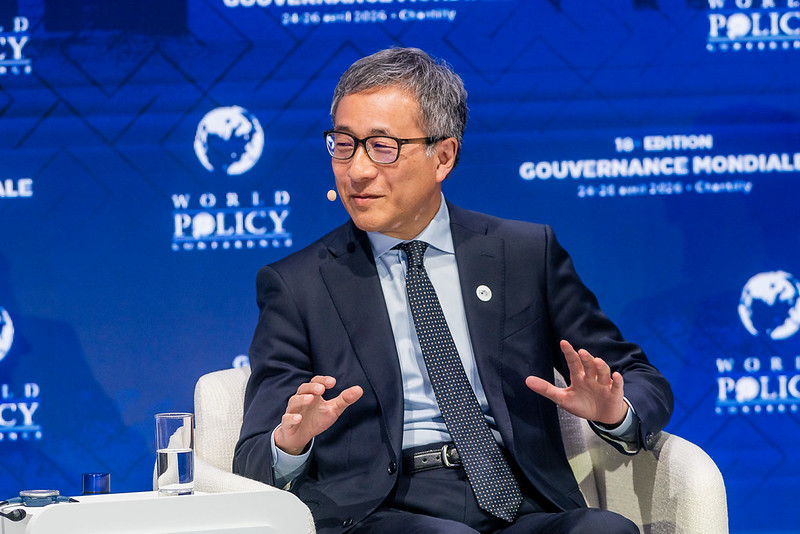
Hiroyuki AKITA, Nikkei commentator
September 19, 2026
TOKYO — Negotiations aimed at ending the war in Ukraine have resumed. But it is difficult to believe that Russian President Vladimir Putin has abandoned his ambition to dominate the neighboring country. Rather, signs of a more dangerous trend are emerging.
CIA Director John Ratcliffe visited Moscow on Aug. 25 amid concerns that Russia could intensify provocations against NATO. According to U.S. media reports, Ratcliffe warned Russian officials against attacking the alliance.
The news reverberated across Europe.
A senior security official from a major European country said that the U.S. has not yet provided any explanation about Ratcliffe’s warning, adding that it is difficult to predict how Putin might act if he feels cornered.
Speculation about possible Russian military action against Europe is nothing new. In a speech made last December, NATO Secretary-General Mark Rutte warned that Russia could be in a position to launch an attack within five years.
According to the Wall Street Journal, U.S. intelligence reports say Putin could try to test NATO’s resolve with a limited assault on an allied country as early as autumn this year, or if not, at least before 2030.
What worries NATO is not a full-scale invasion of alliance territory but rather limited attacks by special forces or large-scale strikes on infrastructure. European security officials have grown increasingly concerned that Russia could orchestrate actions against NATO member states that stop just short of outright war.
Russia’s military continues to struggle in Ukraine. According to the Center for Strategic and International Studies think tank, Russian casualties surpassed 30,000 per month in 2026, with the cumulative number reaching about 1.4 million by June since the invasion began in February 2022. A direct military confrontation with the 32-member NATO alliance would be close to suicidal.
Yet there is no guarantee that Putin sees the situation the same way. Russia’s armed forces are exhausted and lack the capacity for a major offensive on the Ukrainian front. The Russian president may conclude that escalating tensions with Europe offers a better chance of breaking the current stalemate in Ukraine. In that case, Putin would have three options.
The first one is to continue the war of attrition and wait for Ukraine and its Western backers to tire and move toward compromise.
The second is to accept a ceasefire and save time to rebuild Russia’s military strength.
The third is to destabilize NATO through a hybrid campaign combining military provocations and intelligence warfare, thereby undermining the alliance’s unity.
At first glance, Russia would likely choose the first path. But a closer look at conditions inside Russia suggests otherwise. The country’s military and economic resources appear to be under strain, reducing its chances of winning a prolonged war of attrition.
While battlefield casualties continue to rise, recruitment is plateauing. Russia has relied on generous signing bonuses to attract contract soldiers. Compensation has been raised across the country, but the number of new contract recruits in the first half of 2026 totaled about 200,000, down from more than 210,000 a year earlier, according to figures released by Russia.
Ukrainian attacks are also hitting Russian oil refineries and transport infrastructure. Refinery throughput fell to an estimated 3.6 million barrels a day in July, the lowest level since May 2002.
Rising government spending and weaker energy revenues have further strained public finances. Russia’s budget deficit reached roughly $78.5 billion in the first four months of 2026, already exceeding the government’s original full-year target of about $50.6 billion. Liquid assets in the National Wealth Fund, which can be used to cover fiscal shortfalls, had shrunk to 1.5% of gross domestic product as of July 1 from 6.5% before the war.
There are few signs that these trends will reverse anytime soon. The longer Putin waits, the greater the risk that Russia’s position will deteriorate.
Then, a ceasefire, the second option, would look like the most sensible path. But for Putin, it would carry political risks. Once the fighting stops, it would become difficult to justify the extraordinary social controls imposed under wartime conditions.
Critics could also argue that Russia has failed to deliver gains commensurate with the sacrifices made. Returning veterans could become another source of domestic discontent.
Therefore, Putin may find himself drawn toward the third scenario: escalating provocations against NATO. The more pressure he faces, the stronger the temptation to bet on risky gambles.
“Russia has long embraced the concept of using measures short of war to deter an adversary or compel it to take action [in favor of Moscow],” said Yu Koizumi, an associate professor at the University of Tokyo’s Research Center for Advanced Science and Technology.
“If Russia attacks a NATO country, the objective would not be war itself but rather to sow divisions within Europe with the aim of forcing [the alliance] to reduce support for Ukraine and lift sanctions against Moscow,” he added.
This is not simply a European concern. Among Asian nations, Japan is a supporter of Ukraine, and Russia has designated it an “unfriendly country.” On Aug. 13, Putin became the first sitting Russian president to visit Etorofu Island, one of the Russian-controlled islands claimed by Japan as part of the so-called Northern Territories. Further provocations cannot be ruled out.
“Japan, as a supporter of Ukraine, needs to prepare for scenarios similar to those facing Europe,” Koizumi said. One possibility, he said, is that Russia could begin stopping, boarding or even seizing Western vessels operating near the Northern Territories.
Russia is often compared to a giant bear. When cornered, it bares its teeth and becomes more dangerous. Yet that does not mean the West can afford to ease the pressure out of fear of provoking Moscow. The U.S., Europe and Japan should calmly analyze Putin’s next moves, strengthen their coordination and reinforce their defenses accordingly.
Read article on Nikkei‘s website.