Éditoriaux de l’Ifri, 1er septembre 2020
En prenant un peu de distance vis-à-vis de l’activité des dernières semaines, une phrase célèbre de Goethe (dans sa relation du siège de Mayence, en 1793) m’est revenue en mémoire : « Je suis ainsi fait, j’aime mieux commettre une injustice que de souffrir un désordre. » Autrement dit : le désordre engendre davantage d’injustices que celles qu’il fait éventuellement disparaître. Or, s’il y a un mot qui caractérise le monde en cette fin d’été 2020, c’est bien le désordre.
Le cas des États-Unis retient surtout l’attention, car le désordre pandémique se superpose à celui, plus profond, d’une fracture sociale (pas seulement raciale) préexistante à l’avènement de Donald Trump, mais que celui-ci a amplifié comme par plaisir. La magie du 45e président des États-Unis continue cependant d’opérer. Il parvient à se faire passer auprès d’une moitié de ses concitoyens comme le sauveur d’une Amérique dévitalisée par les démocrates. Son adversaire Joe Biden est manifestement déstabilisé par la situation dans son ensemble. Trump n’a rien à envier à ses homologues autocrates – qu’il admire tant – pour la maîtrise de l’art des fake news. Et ça marche ! Le fond du problème est que la première puissance mondiale n’a jamais paru aussi divisée depuis la guerre de Sécession. Aussi est-elle plus violente que jamais, et l’on ne voit pas que le spectaculaire désordre américain s’accompagne d’une diminution de l’injustice. Quel que soit le résultat de l’élection du 3 novembre prochain, la réunification américaine n’est pas pour demain. Et une Amérique divisée ne redeviendra pas un leader mondial. C’est dire que le désordre du système international n’est pas près de se résorber. Qui pourrait croire que la cause de la justice en profitera ?
L’injustice, cela commence avec la sélectivité du regard. Les êtres humains sont ainsi faits qu’ils se sentent davantage concernés par leurs « prochains » que par les « lointains ». Dans l’actualité de cet été, l’explosion de Beyrouth a pendant quelques jours retenu l’attention de tous ceux qui, dans le monde, portent encore un intérêt au Liban. Particulièrement en France, pour des raisons historiques et affectives qui remontent au xvie siècle. Malheureusement, le pays du Cèdre vit dans une guerre civile plus ou moins larvée depuis près d’un demi-siècle, avec pour seul terrain d’entente entre les communautés le pillage du bien commun, aux dépens de toute notion de libanité. Comme d’ailleurs dans d’autres pays (je pense particulièrement à l’Algérie), la révolte grondait dans la jeunesse bien avant le drame de 4 août, mais en vain. Et il n’est pas certain que les conditions posées à juste titre par les donateurs éventuels pour sortir le pays de l’abîme soient suivies d’effets. À cela s’ajoute que le conflit israélo-palestinien se situe désormais à la périphérie de la politique du Moyen-Orient dans son ensemble, comme l’illustre le spectaculaire rapprochement entre les Émirats arabes unis et l’État hébreu, un autre fait marquant de ces dernières semaines. Dans le nouveau cadre qui s’esquisse, centré sur les grands intérêts de l’Iran, de l’Arabie Saoudite, de la Turquie et, à l’extérieur de la région, des États-Unis, de la Russie ou – de plus en plus – de la Chine, le Liban ne compte plus. Dans l’absolu, cela est profondément injuste. La vie est cruelle pour ceux qui ne se prennent pas suffisamment en charge, et se complaisent dans un désordre au mieux dissimulé par un décor en trompe-l’œil. Là aussi, « l’histoire-en-train-de-se-faire » nous rappelle que la justice ne saurait sortir spontanément du désordre.
Que dire de la Biélorussie ? Si le désordre ne peut qu’engendrer l’injustice, faut-il en déduire qu’« on » doit laisser le champ libre à Alexandre Loukachenko, l’un de ces potentats qui ont capté une partie de l’héritage soviétique, pour établir une sorte de monarchie conservatrice d’un genre de plus en plus décalé par rapport à la marche de l’histoire ? La réponse est évidemment négative. Car le fait que le désordre engendre les injustices, ne justifie pas que n’importe quel ordre doive être préservé. Le problème de Loukachenko est celui de tous les régimes qui, avec le temps, n’ont plus pour objectif que de se perpétuer. Une illustration du conatus de Spinoza. Mais alors, si « on » ne doit pas laisser le champ libre au roitelet de Minsk, que doit-« on » faire ? La réponse à ce genre de question ne peut être que politique. Et d’abord, de quel « on » s’agit-il ? Dans les relations internationales contemporaines, les rapports de force n’ont pas perdu leur primauté. Tout juste sont-ils tempérés par le droit international tel qu’il s’exprime dans le cadre de l’Organisation des Nations unies (ONU). Qu’on le veuille ou non, « on », c’est d’abord les États qui s’intéressent de près à la Biélorussie (autrement que sous une forme convenue, comme souvent en politique), en tête desquels figure la Russie. Ainsi peut-on s’attendre à ce que le Kremlin soutienne toute formule qui permette un renforcement de la relation entre la Biélorussie et le grand frère russe. Dans le contexte international actuel, je ne vois objectivement aucun acteur majeur désireux d’investir dans un printemps de Minsk.
La question de la dialectique entre justice et ordre, ou injustice et désordre, est éternelle. On peut s’appuyer sur l’actualité d’un moment, quel qu’il soit, pour disserter à son propos. Sans doute les « pauses estivales » se prêtent-elles bien à pareille distanciation. J’ai commencé en citant Goethe mais, plus près de nous, je pense souvent à Albert Camus dont on a beaucoup parlé au début de cette année à l’occasion du soixantième anniversaire de sa mort accidentelle. À l’opposé de Jean-Paul Sartre, l’auteur de La Peste posait clairement la distinction entre révolte et révolution. La révolte est d’abord une attitude émotionnelle face à l’injustice, dans l’acception la plus large du terme. Du point de vue de l’action, elle est sage quand elle s’exprime dans des formes d’engagement personnel ou collectif qui ne sont pas fondées sur la haine et la violence aveugle – comme il advient dans toute révolution – mais sur une éthique, nécessairement gagnante à long terme pourvu qu’elle ne soit pas corrompue. De tels engagements sont en effet gagnants dans la mesure où, en persévérant, ils rencontrent toujours leur kairos, leur moment propice pour le succès. Je me représente Camus comme un promoteur d’une philosophie de l’Histoire qu’on pourrait qualifier d’équilibre dynamique, comme une spirale s’enroulant autour d’un axe de nature essentiellement éthique. Je ne pense pas aller trop loin dans l’interprétation du grand écrivain, pour qui le monde était peut-être absurde, mais pas au point d’encourager des politiques absurdes.
Ce type de réflexions est fondamental aujourd’hui, en un temps où, comme le dit Antonio Gutteres, le secrétaire général de l’ONU, l’esprit de coopération au niveau international est au plus bas. La violence se manifeste entre les nations mais aussi à l’intérieur des nations, comme on le voit dans des pays aussi attachés à l’idéal démocratique que la France ou les États-Unis. Face au désordre, les démocraties sont souvent handicapées par rapport aux régimes autoritaires. À force d’inefficacité, il peut leur arriver de perdre leur légitimité. Les États autoritaires ont d’immenses vulnérabilités, mais dans certaines circonstances comme présentement, le temps peut jouer en leur faveur.
Aujourd’hui encore, je conclurai par une note positive sur l’Union européenne, qui est en train de démontrer une fois de plus sa capacité à progresser – certes dans la douleur – à l’occasion de chaque crise majeure. Elle est, à une échelle régionale déjà fort importante, le seul laboratoire vivant d’une gouvernance internationale digne de ce nom qui nous permette d’espérer que démocratie et efficacité fassent bon ménage dans la longue durée. Efficacité économique et sociale, mais aussi efficacité sécuritaire, tant du point de vue intérieur que du point de vue extérieur.
La démocratie sans autorité fait le lit de l’autoritarisme. Et comment ne pas finir en rappelant la célébrissime pensée de Pascal : « La justice sans la force est impuissante. La force sans la justice est tyrannique. La justice sans force est contredite parce qu’il y a toujours des méchants. La force sans la justice est accusée. Il faut donc mettre ensemble la justice et la force, et pour cela faire que ce qui est juste soit fort ou que ce qui est fort soit juste. » Sur ce plan, la gouvernance mondiale a encore beaucoup à faire. Et l’Union européenne aussi.






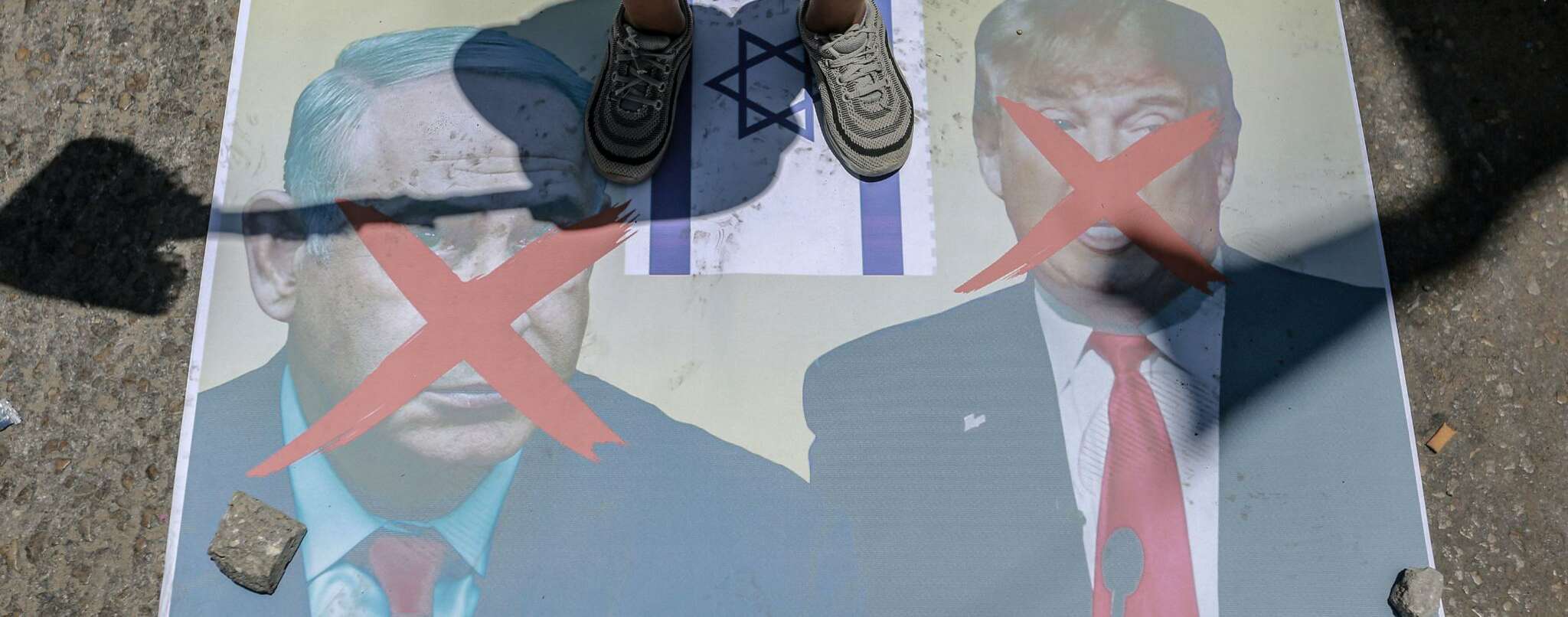
PARIS – It would be foolish to start celebrating the end of US President Donald Trump’s administration, but it is not too soon to ponder the impact he will have left on the international economic system if his Democratic challenger, Joe Biden, wins November’s election. In some areas, a one-term Trump presidency would most likely leave an insignificant mark, which Biden could easily erase. But in several others, the last four years may well come to be seen as a watershed. Moreover, the long shadow of Trump’s international behavior will weigh on his eventual successor.
On climate change, Trump’s dismal legacy would be quickly wiped out. Biden has pledged to rejoin the 2015 Paris climate agreement “on day one” of his administration, achieve climate neutrality by 2050, and lead a global coalition against the climate threat. If this happens, Trump’s noisy denial of scientific evidence will be remembered as a minor blip.
In a surprisingly large number of domains, Trump has done little or has behaved too erratically to leave an imprint. Global financial regulation has not changed fundamentally during his term, and his administration has flip-flopped regarding the fight against tax havens. The International Monetary Fund and the World Bank have carried on working more or less smoothly, and Trump’s furious tweeting did not prevent the US Federal Reserve from continuing to act responsibly, including by providing dollar liquidity to key international partners during the COVID-19 crisis. True, Trump has repeatedly spoiled international summits, leaving his fellow leaders flummoxed. But such behavior has been more embarrassing than consequential.
But, Trump will be remembered for his trade initiatives. Although it has always been difficult to determine the real aims of an administration beset by infighting, three key goals now stand out: reshoring of manufacturing, an overhaul of the World Trade Organization, and economic decoupling from China. Each objective is likely to outlast Trump’s tenure, at least in part.
Reshoring looked like a costly fantasy four years ago, and it still is in many respects. As my Peterson Institute colleague Chad Bown has documented, Trump’s chaotic trade war with the world has often hurt US economic interests. But reshoring as a policy objective has gained new life after the pandemic exposed the vulnerability entailed by depending exclusively on global sourcing. Biden has endorsed the idea, and “economic sovereignty” – whatever that means – is now a near-universal new mantra.
US Trade Representative Robert Lighthizer claims that a “reset” of the WTO has been a high priority for the administration. If so, it has made some headway. The other G7 countries now share the long-standing US dissatisfaction with the WTO’s leniency toward China’s government subsidies and weak intellectual-property protection. There is also a recognition that some US grievances against WTO dispute-settlement procedures (and in particular the so-called Appellate Body) are valid. But whether the battle ends with a reset or the deconstruction of the multilateral trading system remains to be seen.
The major watershed is US-China relations. Although bilateral tensions were apparent before Trump’s election in 2016, nobody spoke of a “decoupling” of two countries that had become tightly integrated economically and financially. Four years later, decoupling has begun on several fronts, from technology to trade and investment. Nowadays, US Republicans and Democrats alike view bilateral economic ties through a geopolitical lens.
It is not clear whether Trump merely precipitated a rupture that was already in the making. He is not responsible for Chinese President Xi Jinping’s authoritarian assertiveness, and he did not devise the Belt and Road Initiative, China’s massive transnational infrastructure and credit program. But it was Trump who ditched his predecessor Barack Obama’s carefully balanced China strategy in favor of a brutally adversarial stance that left no scope for events to take a different course. Whatever the cause of decoupling, there won’t be a return to the status quo.
A Biden administration would also not find it easy to achieve its goal of restoring ties with US allies, like-minded democracies, and partners around the world. Until Trump’s presidency, much of the world had become accustomed to regarding the US as the main architect of the international economic system. As Adam Posen, also of the Peterson Institute, has argued, the US was a sort of chair-for-life of a global club whose rules it had largely conceived, but still had to abide by. The US could collect dues, but was also bound by duties, and had to forge a consensus on amendments to the rules.
Trump’s trademark has been to reject this approach and treat all other countries as competitors, rivals, or enemies, his overriding objective being to maximize the rent that the US can extract from its still-dominant economic position. “America First” epitomizes his explicit promotion of a narrow definition of the national interest.
Even if the US under Biden were willing to make credible international commitments again, its outlook may change lastingly. The former Trump adviser Nadia Schadlow recently argued that Trump’s tenure will be remembered as the moment when the world pivoted away from a unipolar paradigm to one of great-power competition.
It is by no means obvious that if Biden wins, he will be able to restore the trust of America’s international partners. For all its aberrations, Trump’s presidency may indicate a deeper US reaction to the shift in global economic power, and reflect the American public’s rejection of the foreign responsibilities their country assumed for three-quarters of a century. The old belief among US allies and economic partners that Americans will “ultimately do the right thing,” as Winston Churchill reputedly said, may be gone.
In any event, Trump’s peculiar behavior has made it easy for America’s allies to postpone hard choices. That seems particularly true of Europe. A Biden-led US might seem like a familiar partner to most European leaders. But if it asked them to take sides in the confrontation with China, Europe would no longer be able to put off its own moment of decision.
Read the article on Project Syndicate’s website