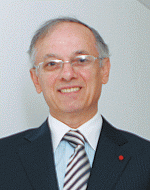
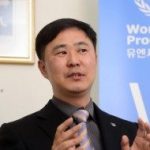
Fen Osler Hampson

Director of CIGI’s Global Security & Politics program, Co-director of the Global Commission on Internet Governance and Chancellor’s Professor at Carleton University in Ottawa, Canada. Previously, he served as director of the Norman Paterson School of International Affairs. He is the recipient of various awards and honors and is a frequent contributor to the national and international media. He is the author of 10 books including The Global Power of Talk (co-authored with I. William Zartman). He serves on the International Advisory Board Committee of the Korea National Diplomatic Academy. He holds a PhD from Harvard University.

Marc Mourre

Global Co-Head of Commodities Market Natixis. Mr. Mourre has over 35 years’ banking experience, primarily with Morgan Stanley, where he was latterly Managing Director, Vice Chairman of the Commodities Division and Chairman of the firm’s African business. He also co-founded the bank’s oil trading activities in London, established its energy trading activity in Asia, and set up its Singapore office for commodities. Before joining the finance industry, he worked three years for the French Ministry of Foreign Affairs as Cultural Attaché in Hong Kong, and then at Elf Aquitaine (now Total) for over four years as a crude oil trader. He joined Natixis as a Senior Adviser, was then appointed Global Head of Global Markets Commodities and became Co Head of Commodities Markets. He holds a Master of Science degree in business administration from Sup. de co., a D.E.A in business administration from ESSEC/ IAE and a D.E.S.S in international trade and transportation from Aix Marseille University. He did research and taught international finance at HEC for four years. He is Trustee of the Trust of the Friends of the French Institute in London, Chairman of the Crown Estate Paving Commission, Regents Park, Chevalier des Arts et des Lettres and Chevalier de la Légion d’honneur.

Alejandro Jara

Senior counsel at King & Spalding LLP. He served as Deputy Director General of the World Trade Organization from 2005 to September 2013. During 2001, he served as Chairperson of the Committee on Trade and Environment of the WTO, and in February 2002, he was elected as Chairman of the Special Session of the Council for Trade in Services. In June 2000, he was appointed as Ambassador, Permanent Representative of Chile to the World Trade Organization in Geneva. He graduated from the University of Chile and pursued graduate studies in the University of California at Berkeley.

Patrick Messerlin

Professor Emeritus at Sciences Po Paris. Special Adviser to Mike Moore (WTO Director general) (2001-2002), he co-chaired the Task Forces on Trade for the Millennium Development Goals (2002-2005) and on Global Finance and Trade Architecture (2007-2010). He was a member of the Global Trade Agenda Council, World Economic Forum (2009-2012).

Tatsuo Masuda

Visiting professor at the Graduate School of Nagoya University of Commerce and Business (NUCB) on energy-climate nexus. He also serves as auditor of SOC Corporation in Tokyo, chairman of FairCourt Capital in London and strategic committee member of Elion House in Singapore. He has had an extensive career in energy business and policy making as JAPEX advisor, JNOC vice president and director of the International Energy Agency. He has a strong interest in new dimension of energy and environmental policies and measures. He belongs to the Expert Network of the World Economic Forum.

Liu Chen

Professor of Social Sciences, School of English and International Studies, Beijing Foreign Studies University (BFSU). Her research interests include international relations, international political economy and international communication. Her latest book Imaging China and China’s Image around the World from 1978 Deng Xiaoping’s Reform and Opening up to 2013 Xi Jinping’s Chinese Dream: An International Communication Perspective won the grant from the National Social Science Foundation of China. She is also the Executive Director of China Association for Intercultural Communication Studies (CAFICS) and adviser to China Central Television (CCTV).

Baroness Lynda Chalker of Wallasey

Founder and Chairman of Africa Matters Ltd. Between 1986 and 1997 she was Minister of State at the Foreign & Commonwealth Office. She is a Trustee of the Investment Climate Facility for Africa (ICF), she is also an Executive Trustee of the Global Leadership Foundation, a member of the international advisory board of Lafarge et Cie and advised the World Bank for over 8 years. She is Vice-President of WaterAid, Honorary Vice-President of the British Red Cross and Patron of a number of charities working in Africa.

Nathalie Delapalme participated in the 7th edition of the World Policy Conference

Nathalie Delapalme participated in the 7th edition of the World Policy Conference which took place from 8 to 10 December in Seoul, South Korea. Nathalie was one of the panellists in the fifth plenary session of the first day “Africa in a global context”, which was moderated by Marie-Roger Biloa. The session placed emphasis on relations between Africa and Asia.

Other speakers were:

  • Youssef Amrani, Chargé de mission, Royal Cabinet, Morocco
  • Lynda Chalker, Founder and Chairman of Africa Matters Ltd; Former UK Minister for Overseas Development and Africa
  • Elisabeth Guigou, President of the Committee on Foreign Affairs of the French National Assembly
  • Wu Jianmin, Executive Chairman of China Institute for Innovation and Development Strategy

The annual meeting brought together leading figures from all five continents from political and business leaders, representatives of civil society, academia to journalists, to discuss all aspects of governance and suggest constructive solutions to major regional and international challenges.

Dünya Politika Konferansı

Dünya Politika Konferansı

10 Aralık 2014 Çarşamba 14:41

Konferansta Türkiye’yi, Kalkınma Bakan Yardımcısı Ceylan temsil etti.

Kalkınma Bakan Yardımcısı Mehmet Ceylan, Seul’de düzenlenen 7. Dünya Politika Konferansı’nda katıldı.

Bakanlıktan yapılan açıklamaya göre  7. Dünya Politika Konferansı (World Policy Conference-WPC)  8-10 Aralık’ta Güney Kore‘nin başkenti Seul‘de gerçekleştirildi. 

Konferansta Türkiye‘yi temsil eden Ceylan, ülkenin son 10 yılda edindiği kalkınma tecrübesiyle ilgili katılımcılara bilgi verdi.

Ceylan, konferans kapsamında yaptığı konuşmada, makroekonomik göstergeler, sosyal alanda yapılan reformlar, fiziksel altyapıda yapılan iyileştirmeler, 10. Kalkınma Planı ile dönüşüm programları, bölgesel kalkınma ve kalkınma yardımlarında yaşanan artış gibi konularda değerlendirmelerde bulundu.

Fransız Uluslararası İlişkiler Enstitüsü tarafından her yıl gerçekleştirilen toplantıda “Avrupa ve Doğu Asya‘da Güvenlik Yönetişiminden” “Küresel Çerçevede Afrika‘ya” kadar pek çok uluslararası konu ele alındı. – Ankara

La WPC participe au débat : le Big Data débouchera-t-il sur un Big Brother ?

Parallèlement aux grands dossiers à caractère géopolitique, la World Policy Conference, dont les travaux de sa septième édition viennent de s’achever à Séoul, a planché sur un problème lié à un autre gendre d’actualité : l’émergence du Big Data et ses conséquences économiques et politiques.


De notre envoyé spécial à SÉOUL, Michel TOUMA | OLJ

La situation actuelle au Moyen-Orient ainsi que la place grandissante qu’occupe l’Asie dans le nouvel ordre mondial – dossiers liés à l’actualité internationale – ont été au centre de la 7e édition de la World Policy Conference (WPC) qui s’est tenue du 8 au 10 décembre à Séoul (voir L’Orient-Le Jour des 8, 9 et 10 décembre). Mais parallèlement, et dans le but d’élargir le débat et d’étendre les échanges de connaissances à un champ plus large que la sphère purement politique, les congressistes réunis dans la capitale coréenne ont planché dans le même temps sur des thèmes à caractère sociétal en rapport avec le changement climatique, l’énergie, l’environnement, les défis que pose le phénomène de Big Data, sans compter les rapports agroalimentaires entre l’Asie et l’Afrique. Autant de sujets liés aussi à l’actualité, mais une actualité d’un autre genre. Celle qui concerne les populations dans le détail de leur vie quotidienne et qui influe sur leur niveau de vie.
Le développement exponentiel de la révolution numérique est à n’en point douter l’un des principaux domaines qui touche de près le citoyen lambda. À l’ouverture de la session consacrée aux conséquences économiques et politiques du Big Data, le modérateur du débat, Nicolas Barré, directeur adjoint du quotidien Les Échos, indiquait, en guise d’entrée en matière, qu’en l’an 2000, un quart des données dans le monde étaient sous forme numérique. Aujourd’hui, cette proportion est quasiment de 100 pour cent. Et dans ce bouleversement vertigineux, l’Asie joue un rôle central. C’est du moins ce qu’affirme Chang Due Whan, président d’un géant médiatique en Corée du Sud, le Mackyung Media Group, qui possède, notamment, un quotidien, qui tire à un million d’exemplaires, ainsi que quinze de chaînes de télévision.
Évoquant les circonstances de cette révolution du XXIe siècle, Chang Due Whan souligne que la plupart des nouvelles inventions dans le domaine numérique viennent d’Asie. Il en déduit que cette zone sera la force motrice du secteur des appareils numériques, tels que les smartphones ou les phablets (combinaison du téléphone et de la tablette). Le développement dans ce domaine est tellement rapide que nombre d’utilisateurs estiment déjà que le PC est devenu obsolète et qu’il est de plus en plus évincé par la nouvelle génération de téléphones portables. Et dans ce cadre, souligne Chang Due Whan, la nouvelle technologie 5G va accroître considérablement le flux d’informations.
C’est précisément sur ce plan qu’intervient le problème du Big Data, en ce sens qu’il représente la capacité d’avoir accès, d’analyser et d’exploiter la quantité gigantesque de données disponibles, ce qui implique la création et l’utilisation efficace des outils permettant l’exploitation des données versées sur le marché un peu partout dans le monde. « Le Big Data est le nouveau pétrole », affirme à cet égard Chang Due Whan.
Le rythme de l’expansion de ce secteur d’activité a été mis en évidence par Luc-François Salvador, président exécutif pour l’Asie-Pacifique du groupe Capgemini, qui affirme que 90 pour cent des données actuelles ont été créées ces deux dernières années, et ce volume de données disponibles double chaque année. Conséquence prévisible : de nouveaux outils sont créés pour analyser et exploiter ces data. À titre d’exemple, Google a mis en place un système de gestion des maladies de manière à prévoir les dates, ou plus précisément les périodes, auxquelles apparaissent les grippes dans une région déterminée. Autre exemple dans ce domaine : au Japon, des chercheurs planchent sur l’analyse des données que l’on peut tirer de la façon de… s’asseoir ! La manière de s’asseoir devient ainsi une sorte de « signature » propre à la personne considérée.


La protection des données
Cette accumulation des données, notamment personnelles, à un rythme exponentiel, ainsi que la capacité grandissante d’analyser et d’exploiter de telles informations posent, à l’évidence, le problème de la protection des données personnelles et les craintes d’un fâcheux impact qui pourrait se manifester au niveau de la liberté de l’individu. Plusieurs intervenants ont évidemment soulevé ce point précis lors du débat. M. Salavador a ainsi relevé que le Big Data permet d’enregistrer des progrès énormes au niveau du traitement de certaines maladies ou aussi dans les projets d’urbanisme, mais dans le même temps, il pose le problème de la protection des données personnelles, ce qui implique la nécessité de concevoir les moyens dont devrait bénéficier le citoyen pour s’assurer une protection adéquate face au Big Data.
Cette question a été soulevée par un expert et consultant américain, Ben Scott, qui a affirmé qu’il se profile à l’horizon, du fait de ce problème, une perte de confiance de la population dans les gouvernements et les pratiques démocratiques, et, surtout, dans les outils informatiques, ce qui risque de pousser les individus à hésiter de trop s’engager dans l’utilisation des nouveaux outils ou applications numériques.
Un professeur universitaire américain, Joseph Nye, a relevé dans ce cadre que la capacité de traitement des données double chaque deux mois, de sorte que les citoyens vivant dans des pays démocratiques finissent par exprimer leurs appréhensions concernant l’exploitation des données personnelles. Certes, certaines personnes soulignent qu’au nom de la sécurité, face aux menaces terroristes, notamment, elles sont disposées à sacrifier de leur liberté ou de leur confidentialité. Cela pose, relève Joseph Nye, le problème de l’absence, au stade actuel, de contre-pouvoirs dans ce domaine.
Le Big Data risque-t-il ainsi de rendre quelque peu réel le danger de l’émergence d’un Big Brother ? Intervenant dans le débat, le député israélien de gauche Meir Sheetrit a apporté une nuance dans la nature du danger qui plane à cet égard, soulignant que le Big Data n’est pas exclusivement contrôlé par les gouvernements, mais il est aussi contrôlé et exploité surtout par les grandes entreprises, d’où la nécessité de protéger également les populations contre certaines grandes entreprises privées. Joseph Nye relèvera à ce propos que c’est dans la mesure où les données sont partagées entre plusieurs entreprises puissantes que le danger se fait plus grand au niveau de la confidentialité et de la liberté de l’individu.
Le débat sur ce plan est donc ouvert à l’échelle planétaire. Les experts et hauts responsables qui planchent sur la question feraient bien de proposer sans trop tarder des mesures concrètes en termes de protection des libertés individuelles avant que la situation dans ce domaine n’échappe à tout contrôle.

تركي الفيصل أكد أن الحرس الثوري الإيراني يتباهى بالسيطرة على أربع عواصم عربية وهي: بيروت ودمشق وبغداد وصنعاء

«تركي الفيصل» لـ«لوموند»: الحرس الثوري الإيراني يتباهى بالسيطرة على 4 عواصم عربية

11-12-2014 الساعة 16:17 | نور الشامسي

تناولت صحيفة «لوموند» الفرنسية في حوار لها مع الرئيس السابق للمخابرات السعودية والسفير السابق في لندن وواشنطن، «تركي الفيصل»، قضية تنظيم الدولة الإسلامية وتواجده في المنطقة، والأخطار التي يمثلها على الدول المجاورة وكيفيه التصدي له. متحدثُا لها على هامش مشاركته في نسخة 2014 من World Policy Conference في سيول، عن موقف بلاده من الحرب ضدّ الدولة الإسلامية ومن إيران.

وتقول الصحيفة الفرنسية في مطلع حوارها مع الأمير السعودي، أن «تركي الفيصل» الذي يقود مركز الملك فيصل للأبحاث والدراسات الإسلامية في الرياض. يمثل المملكة العربية السعودية التي تُعد من بين الدول العربية المشاركة في التحالف بقيادة الولايات المتّحدة الأمريكية ضدّ الدولة الإسلامية، والتي تعمل طائراتها المقاتلة على قصف سوريا، ولكن لا تشارك في العمليات بالعراق.

يقول الأمير أن تنظيم الدولة الإسلامية ليست ظاهرة جديدة. لافتًا أنه سبق وكان هناك خطر تنظيم القاعدة، وقبلها ما أسماه بـ «المجموعات الإرهابية الفلسطينية». موضحًا: «طالما لا تزال الأراضي الفلسطينية محتلّة وطالما أنّنا نصمت أمام مجزرة ضحيّتها 200 ألف مدني في سوريا وطالما أنّ العراق مقسّم حسب الخطوط الطائفية سيكون هناك دائمًا أشخاص يستغلون ذلك».

وبسؤاله عما يرى من حلول لخطر تنظيم الدولة الإسلامية المتنامي، يقول: « اقترحنا مبادرة السلام العربية على إسرائيل سنة 2002 الّتي تضمن لها السلام مقابل الأراضي الفلسطينية، ولكن إسرائيل لم تقبل. ولكن قيادات فاحش (وهو المصطلح الذي يستخدمه الأمير في حديثه عن تنظيم داعش) تستغلّ الظلم الّذي يمارس ضدّ الفلسطينيين للانتداب. الأمر مستمرّ من 70 عامًا».

وبالحديث عما إذا كان «لا يبارك العمليات العسكرية التي تشارك فيها المملكة»، يقول أن التحالف الدولي نجح وحملته من قصف جوّي، في تفادي تمدّد الجماعة، ولكن «إذا أردنا القضاء على المرض وليس فقط الأعراض يجب أن نذهب أبعد من ذلك. الوضع في سوريا جرح مفتوح في الشرق الأوسط، يجب تطهيره من أجل أن يندمل ويُشفى. المشكل في دمشق حيث بشار يقتل شعبه دون تحرّك أي شخص، وفي العراق كان هناك مشكل المالكي الّذي نبذ السنة وقد تمّ حلّه. الآن لدينا حكومة أكثر شمولية تسمح بمحاربة الإرهابيين بفعالية. يجب القيام بالأمر نفسه في دمشق وإلا لننتظر الأسوأ».

وتسائلت الصحيفة الفرنسية، بعد أن أعلنت السعودية مؤخرًا عن عشرات الاعتقالات ضدّ أشخاص مشتبهين بالإرهاب، إذا ما كان هذا يعني أنّ المملكة «مخترقة من الدولة الإسلامية الجهادية المستوحاة من السلفية والوهابية المعمول بها في السعودية»، يجيب «تركي»:  «فكرة أنّ وحشية القاعدة أو فاحش مرتبطة بطريقة ما بالسلفية خاطئة … نحن أتباع الإسلام السنيّ ومدارسه الفقهية الأربعة فقط».

وعن اتهام المملكة بتزويد الجماعات مثل الدولة الإسلامية وجبهة النصرة في سوريا بالدعم المالي، يؤكد الأمير السعودي أن هذه الفكرة «خاطئة»، مشيرًا إلى أن السعودية «لم تدعم أي شخص خارج نطاق التمرّد المعتدل ممثّلا في الجيش السوري الحرّ، ولم نحوّل يوما أي مبلغ من المال إلى الدولة الإسلامية أو إلى جبهة النصرة».

واستطرد الأمير حول قضية الصراع «السني/شيعي» الطاغي على المشهد في الآونة الأخيرة وفق الصحيفة، قائلا: «لا وجود لمشكلة شيعية سنية. نحن نؤمن بالربّ نفسه وبالرسول نفسه وبالقرآن نفسه. لافتًا «هناك شيعة في السعودية، يعيشون بكلّ حريّة. وهناك سنة في إيران يتعرّضون للاضطهاد».

ووجه «تركي» الاتهام إلى سياسة إيران في خلق ما يتم وصفه على أنّه صراع شيعي سني، قائلًا: «هذا بدأ مع الثورة الإسلامية سنة 1979 عندما أعلن الخميني أنّه يرغب في تصدير ثورته إلى العالم العربي. فعل ذلك في لبنان بواسطة حزب العراق، ثمّ في العراق بعد الغزو الأمريكي في 2003. وسعت إيران أيضًا إلى تحقيق ذلك في البحرين واليوم، تعمل عليه في اليمن من خلال تزويد الحوثيين بالأسلحة الثقيلة التي سيطروا بها على صنعاء».

كما خاض موضوع الاتّفاق على البرنامج النووي الإيراني وتبعاته على السعودية، موضحًا أنه منذ بداية المفاوضات لم يتمّ تمثيل دول مجلس التعاون الخليجي، «مع أنّنا أول المعنيين بهذا التهديد». وأكد أنه «ما نريده هو اتّفاق شامل مع إيران من أجل وقف تدخّلاتها في العالم العربي، حيث إنّ الحرس الثوري الإيراني يتباهى بالسيطرة على أربع عواصم عربية: بيروت ودمشق وبغداد وصنعاء. وهذا غير مقبول»، على حد تعبيره.

المصدر | الخليج الجديد + التقرير

MEHMET CEYLAN DÜNYA POLİTİKA KONFERANSI’NA KATILDI

  1. Dünya Politika Konferansı (World Policy Conference-WPC) Güney Kore’nin başkenti Seul’de 8-10 Aralık 2014 tarihlerinde düzenlendi.


Uluslararası ilişkiler alanında bilimsel araştırmalar yürüten, konferans ve tartışma forumları düzenleyen Fransız Uluslararası İlişkiler Enstitüsü (“Institut Français des Relations Internationales”- IFRI) tarafından her yıl gerçekleştirilen toplantıda, “Avrupa ve Doğu Asya’da Güvenlik Yönetişimi”nden, “Küresel Çerçevede Afrika”ya,“Avrasya’nın Jeopolitiği ve Jeoekonomisi”nden “Ticaret ve Politika İlişkisi”ne kadar pek çok uluslararası konu ele alındı.


Konferansta ülkemizi Kalkınma Bakan Yardımcısı Mehmet CEYLAN temsil etti.  CEYLAN, ayrıca, toplantının üçüncü gününde gerçekleştirilen Öğlen Oturumu’nda bir konuşma gerçekleştirdi ve Türkiye’nin geçtiğimiz on yıl içerisinde edindiği kalkınma tecrübesi ile ilgili olarak katılımcılara bilgi verdi.


Bu çerçevede Bakan Yardımcısı, makroekonomik göstergeler, sosyal alanda yapılan reformlar, fiziksel altyapıda yapılan iyileştirmeler, 10. Kalkınma Planı ile Dönüşüm Programları, bölgesel kalkınma ve kalkınma yardımlarında yaşanan artış gibi hususlarda önemli mesajlar verdi.

Le premier jour des travaux de la WPC à Séoul : pour un système de sécurité en Asie de l’Est

La présidente Park Geun-hye : « La Corée du Sud a beaucoup souffert de la pauvreté et de l’occupation ; elle désire donc œuvrer contre la pauvreté et pour le développement durable. »

Débat

La présidente de la Corée du Sud, Park Geun-hye, a donné le coup d’envoi des travaux de la World Policy Conference, à Séoul, en prononçant un discours axé sur la recherche d’un système assurant la paix et la sécurité en Asie de l’Est.

SÉOUL, de Michel TOUMA | OLJ

Un peuple qui, comme les Coréens, manie sept niveaux de langage, c’est-à-dire sept façons différentes de s’adresser à un interlocuteur en fonction de la nature des rapports entretenus avec la personne à qui il s’adresse, est à l’évidence un peuple qui sait faire dans la nuance et qui manifeste une finesse certaine dans son comportement ou sa perception des choses de la vie. Cela se reflète d’abord au niveau populaire, dans le caractère particulièrement affable, serviable et respectueux du Coréen lambda croisé dans la rue. Cela se traduit aussi, à un tout autre niveau – macropolitique – par la ligne de conduite adoptée par la Corée du Sud à l’égard des contentieux, des sources de tension et des grands dossiers qui ponctuent l’actualité internationale.
Telle est l’impression globale qui se dégage de la première journée de la World Policy Conference (WPC) qui a entamé ses travaux hier matin, lundi (à 16h, heure de Beyrouth), au somptueux hôtel Conrad de Séoul. Telle est surtout l’impression qu’a laissée la présidente de la Corée du Sud, Mme Park Geun-hye, qui a pris la peine de faire le déplacement pour prononcer le discours d’ouverture de la conférence, dans un geste symbolique illustrant l’intérêt qu’accorde son pays à la bonne gouvernance mondiale (leitmotiv qui sous-tend l’action de la WPC, depuis sa fondation à l’initiative de Thierry de Montbrial en 2008).
Dans son mot de bienvenue à la présidente, prononcé devant près de 200 décideurs, hauts responsables et experts du monde politique, économique, diplomatique, des affaires et de la presse, M. de Montbrial a d’ailleurs annoncé la couleur en rappelant que la Corée partage les mêmes objectifs de dialogue, d’échanges libres et d’ouverture que la WPC, ce qui fait d’elle le principale partenaire de cette conférence pour la région asiatique. Le fondateur de la WPC a d’autre part rendu hommage à la diplomatie audacieuse de Séoul, fondée sur la recherche et la mise en application de « mesures de confiance » ( « Confidence building measures » ) en vue d’aboutir à un « monde ouvert » et d’instaurer un climat, voire un système, de paix et de stabilité en Asie.
La politique initiée sur ce plan par Séoul a été explicitée dans le discours de la présidente Park Geun-hye qui a réaffirmé la détermination de son pays à œuvrer en vue d’améliorer la gouvernance mondiale et de mettre en place un système de sécurité en Asie de l’Est. « Nous sommes un pays qui a beaucoup souffert de la pauvreté et de l’occupation, a notamment déclaré la présidente. Nous soutenons donc la lutte contre la pauvreté et le combat mené pour favoriser le développement durable. »
Évoquant les rapports complexes entre la Corée du Sud, le Japon et la Chine, la présidente a souligné que son pays œuvre à mettre en place « un cadre adéquat assurant la sécurité de la péninsule coréenne, ce qui constitue une démarche vitale pour la paix et la stabilité dans le monde ». Elle a relevé dans ce cadre qu’à eux trois, la Corée du Sud, la Chine et le Japon représentent non moins de 25 % de l’économie et du commerce internationaux. Stigmatisant l’obstination de la Corée du Nord à aller de l’avant dans son programme nucléaire, « ce qui constitue un défi et une véritable menace pour la région », elle a proposé la mise en place de « mesures de confiance au niveau de la péninsule coréenne », tout en se déclarant prête au dialogue avec la Corée du Nord. « Si nos deux pays font de petits pas au niveau du secteur privé, cela nous permettra d’enregistrer des progrès dans la réalisation de la paix et la stabilité dans la péninsule coréenne », a affirmé, en faisant preuve de pragmatisme, Mme Park Geun-hye qui a précisé que son pays œuvrait avec la Russie et les États-Unis, notamment, pour mettre en place « une structure de paix dans la péninsule ».

Le parallèle avec l’Europe
L’absence d’un système de sécurité en Asie de l’Est a été mise en relief, notamment, par M. Jean-David Levitte, ancien haut conseiller à l’Élysée, lors du premier panel de la conférence ayant pour thème « Organisation de la sécurité en Asie et en Europe ». M. Levitte a établi dans ce cadre un parallèle entre les expériences, foncièrement divergentes, de l’Europe et de l’Asie en matière de sécurité. Il a relevé à ce propos que durant près de cinq décennies, l’Europe a été divisée, du fait du rideau de fer, et elle a connu de graves crises, comme celles de la Tchécoslovaquie et de la Hongrie, mais elle n’a pas pour autant connu de guerres. Par contre, parce qu’elle ne bénéficie pas d’un système de sécurité adéquat, comme c’est le cas de l’Europe, l’Asie a connu après la Seconde Guerre mondiale plusieurs guerres, au Vietnam, au Laos, en Corée et au Cambodge.
Dans un tel contexte, M. Levitte a dénoncé la politique suivie par le président Vladimir Poutine « qui semble vouloir rebâtir l’empire russe, ce qui constitue un défi majeur pour l’Europe ».
Les propos de M. Levitte à cet égard ont été rejetés par l’un des intervenants, Igor Morgulov, ministre adjoint russe des Affaires étrangères, en charge du dossier de l’Asie. « Nous vivons une époque de transformations fondamentales et de ce fait la tension dans le monde ne saurait être attribuée à la Russie et à ce qui est perçu comme une volonté de la Russie de faire resurgir l’empire russe », a affirmé M. Morgulov, qui a déploré dans ce contexte le fait que certaines parties ignorent tout des réalités et spécificités régionales. « Ce qui nous inquiète est l’absence de système de sécurité en Asie », a affirmé M. Morgulov.
M. Richard Haass, président du Conseil américain pour les relations étrangères et ancien haut responsable au département d’État, a abondé dans le même sens que M. Levitte, relevant que l’Asie de l’Est n’a pas connu une expérience semblable à celle des relations entre la France et l’Allemagne au lendemain de la Seconde Guerre mondiale. « En Europe, a-t-il déclaré, le système de sécurité a été institutionnalisé, ce qui n’est pas le cas de l’Asie. » Ce même constat a été fait par l’ancien ministre coréen des Affaires étrangères, Han Sung-joo, qui a précisé que l’Asie de l’Est bénéficie d’un système d’alliance, relevant, cependant, à ce sujet que « les États-Unis sont au cœur de ce système d’alliance ».
Un ancien diplomate japonais, Shotaro Oshima, professeur à l’université de Tokyo, a souligné pour sa part que la structure de sécurité en Asie était dominée par l’Occident. « Or nous assistons aujourd’hui à un retrait de l’Occident et à l’émergence de la Chine alors que nous n’avons pas de système de sécurité asiatique », a-t-il déclaré, indiquant qu’il n’est pas vrai, dans un tel contexte, que nous assistons à l’émergence d’une « idéologie nationaliste au Japon ».
Cette séance consacrée à l’Asie a été suivie des deux sessions qui ont porté sur les thèmes « Inégalités et mondialisation » et « L’Afrique dans le contexte mondial », parallèlement à la causerie-débat de l’émir Turki al-Fayçal.


South Korea pushing for summit with Japan, China

SEOUL – President Park Geun-hye said Monday that South Korea is working to hold a trilateral summit with Japan and China and establish more trust in East Asia.

“The establishment of a framework of trust and cooperation in the East Asian region, including the Korean Peninsula, is very important for the whole world to move into a more peaceful and secure future,” Park said in a speech at the seventh World Policy Conference.

“It’s important for Korea, China and Japan to gather forces together for multilateral cooperation in Northeast Asia, given their unique role and status,” Park said in remarks released by the South Korean presidential office.

“The South Korean government wants to make efforts to arrange a summit among the three countries in the near future on the basis of a foreign ministers’ meeting,” she said.

Diplomatic ties between Japan and South Korea have been strained by historical issues stemming from Japan’s colonial rule of the Korean Peninsula from 1910 to 1945, including the issue of Korean women who South Korea says were coerced to work in wartime Japanese military brothels.

Prime Minister Shinzo Abe and Chinese President Xi Jinping have held their first talks since they took office, meeting last month in Beijing on the sidelines of a regional leaders’ forum amid lingering tension over disagreements on territorial and history-related issues.

Abe and Park have not held a formal summit. South Korea has urged Japan to address the “comfort women” issue before Park will meet with Abe.

Since 2008, South Korea, Japan and China have held five trilateral summits independently from other multilateral meetings. But none has taken place since Abe came to power in December 2012.

Since 1999, the three countries had also often held trilateral summits on the occasion of the ASEAN-related summit meetings.

S. Korea’s President Vows Efforts for Summit with China, Japan

(MENAFN – QNA) South Korea’s President Park Geun-hye said Monday that South Korea will make efforts to hold a summit with China and Japan, the latest move that underscores her commitment to advancing ties with the two Asian neighbors.

The remarks came three weeks after she suggested there are uncertainties over a potential summit with Chinese and Japanese leaders, according to South Korea’s (Yonhap) News Agency.

“The South Korean government will make efforts to ensure a trilateral summit can take place based on the meeting of their foreign ministers in the near future,” Park said in a keynote speech at the World Policy Conference, an annual international meeting, in Seoul.

In November, she floated the idea of resuming a regular trilateral summit, which has been put on hold since May 2012 due to tensions between South Korea and Japan and between China and Japan over territorial and other history-related issues.

Japan controlled much of China in the early part of the 20th century.

South Korea has said a trilateral summit might be held if the countries successfully conclude their foreign ministers’ meeting and conditions mature.

Also Monday, Park pressed North Korea again to abandon its nuclear weapons program, calling it “the biggest destabilizing factor” not only on the Korean Peninsula but also in Northeast Asia.

Despite international pressure, North Korea has repeatedly vowed to develop its economy and nuclear arsenal in tandem, viewing its nuclear programs as a powerful deterrent against what it claims is Washington’s hostile policy toward it.

Park said North Korea’s policy is “incompatible” and accused North Korea of worsening the human rights situation in the North.

Ángel Gurría

OECD Secretary-General. Former Mexico’s Minister of Foreign Affairs and Minister of Finance and Public Credit, Chairman of the International Task Force on Financing Water for all, World Water Council.

Olivier Guillin

Enterprise Director at the Chamber of Commerce French Riviera. Former General Delegate at France Chine 2000, Managing Director at Territoires, consulting firm specializing in economic strategy.

Philippe Bardey

Founder and President of ACRI, company specializing in modeling and study cases on environment.

Dominique Pages

Honorary Consul of the Republic of Kazakhstan, founder of PROMSTAN Asia (Kazakhstan), Founding President of PROMVOST (Russia), Managing Director of PROMEST/COOPINVEST. Former Managing Director of TECHNOFI.

Vladimir Pozdnyakov

Consul General of the Russian Federation in Marseille (France). Former Minister Counsellor at the Embassy of the Russian Federation to France and attaché to the Russian Security Council.

Régine Scapel-Grail

Honorary Consul of the Republic of Mauritius in Marseille (France), laywer at the Bar of Marseille.

Christine Graeff

Director General of the Directorate General Communications and Language Services at the European Central Bank. Former Partner and Managing Director in the Brunswick Group.

Mustapha Adib

Director of the cabinet of the Prime Minister of Lebanon. Professor at the Lebanese University and the Center of Technology of the Lebanese French University, Head of the Center for Middle Eastern Strategic Studies (CESMO).

2008 Themes

1. The United States: what does the world expect from the “indispensable nation” ?

The “unipolar moment” of post-Cold War came to a close but, for the predicable future, the United States still remains the power of reference. On the eve of a presidential elections and after a strong erosion of the soft power of the United States, what should the world expect from the “indispensable nation”? Is the United States ready to reassess its role positively, taking into account the other powers and multilateral organizations in a world becoming multipolar?

2. Russia : domestic developments and external policies

Russia is “back”, in particular because the rising price of hydrocarbons stimulates its economic growth and increases its international leverage. How to stabilize this growth which is excessively reliant on raw materials? Will Russia’s new “cards” determine a new capacity of proposal, and a new approach over spaces involving its strategic interests? What should the world expect from Russia – and through which policies? Conversely, what should Moscow expect from its partners?

3. China: domestic developments and assertion of power

What effects will the economic emergence of China, whether it continues or stops, have on the economies of the area and those of the world at large? More broadly, should the redefinition of equilibrium, on a regional and world scale, be based on China’s assertion of its global power? How can Chinese strategy be made compatible with those of other regional or global actors?

4. Japan: what power, what strategies?

Because of its economy and its military and technological force – and especially because it stands as “a nuclear threshold” country – Japan is a major power, insufficiently considered as such. Tokyo is now readjusting its international surface to the evolution of its society, and the ongoing mutation of regional power struggles, crucially affected mainly by the emergence of China. How must we assess the place of Japan within Asia, whose internal structure and world weight are undergoing a rapid change? Beyond Asia, what does Japan want, and what does the world hope for Japan?

5. India: regional power and/or world actor?

The shape of tomorrow’s multipolarity in great part depends on the structure and modalities of the growth of India. Will India want and manage to play both the cards of economic emergence and those of political power? India will have to redefine its regional relations (China, Pakistan…), and at a more global level, to say what role it intends to play in world affairs and in the elaboration of common rules.

6. Sub-Saharan Africa: implosion or takeoff?

Africa may be viewed both as the continent of hope (economic takeoff in some countries, regional organization, progress of democracy) and as threatened of implosion (crisis of the States, strong inequalities of development, increasing number of domestic conflicts, etc.). What methods could best contribute to develop the cards of the African countries? And what is, what could be the role of outside actors?

7. Is Europe with 27 and more members sustainable?

A European Union with nearly thirty members is inevitably more heterogeneous. The EU will remain, and further expand, but around what projects? Will it have to relinquish the goal of achieving political power? Should the EU become an actor in the new multipolar world? In what sense? Over what geographical areas and foreign policies will this Union be able to be influential?

8. Israel/Palestine, a crucial international issue: what commitments for external actors?

Most international actors agree that the coexistence of both states could bring a solution to the conflict. The urgency of the situation demands putting out of the way opponents to this idea. Is the perpetuation of the status quo not carrying the most dangerous risks? What part, – in ways yet to be defined – can important global or regional actors (first and foremost the United States, but also the Arab states, Russia, EU, UN, NATO…) concretely take to solve this issue?

9. An arc of crisis from Iraq to Pakistan

The Iraqi disaster could lead to the activation of a “Shia arc” and/or to the break-up of the country, the further deterioration of the relations between Western powers and Teheran, internal instability in Pakistan, no clear way out of the war in Afghanistan. All these elements turn the region into a particularly alarming arc of crisis. What internal stabilisation means at political societies level, what regional means of equilibrium can be used? Which actors could help negotiating ways out of the crisis?

10. Which governance for which stability?

The “multilateralism” developed during and after the cold war showed both its merits (arms control and disarmament, NPT, role of UN and the regional security institutions, International Penal Tribunal…) and its limits (crisis management, proliferation…). After a period of systematic “dismantling” of multilateralism, and while new powers emerge, how to conciliate “multipolarity” and “multilateralism”? Which institutions, which procedures are necessary to get towards an organized multipolar world?

11. The economy of knowledge, or education, still deserves an effort

The “economy of knowledge” constitutes a major challenge for the economies on the whole, whether emergent or developed. Few countries have been successful in that matter. Governments encounter many difficulties to achieve their ambition. In Europe, the Lisbon strategy is a failure. How to organize more effectively the efforts in favour of education? Where to focus the effort? Which initiatives to take so that innovation can create new growth opportunities? How to facilitate the adhesion of the social strata to these changes?

12. Credit crisis, financial crisis, economic crisis: what to do?

The current crisis appears to be more serious than those of the last 20 years. Why? Which lesson to draw from the errors done? Did we show an excessive zeal in deregulating? Which initiatives to take to avoid the repetition of this, presumably in new fashion, in the future? What new rules for the financial planet?

13. Regulation of migrations, a world issue

The human migrations South to North, South to South, or within developed countries constitute an important aspect of globalization, badly apprehended and badly controlled. The question is too complex (development issues, internal stability of “exporting” societies, “importing” societies or transit issue…) to be dealt with only at national, or only at international level. A management mode combining domestic and foreign policies, and taking cues from all states, North and South, remains to be invented.

14. Energy and climate: what diplomatic challenges?

Energy has always been an international key stake. This is a question which has reached new dimensions primarily because of the explosion of demand. If the scarcity of resources comes from lack of investments, how to stimulate them? It is necessary to put nuclear power back on the agenda? How to make national interests compatible? In addition, climatic change has become everywhere in the world a declared priority of foreign policy. Which proposals to make in order to create after Bali the “carbon governance” that the planet needs? Will Europe be able, and at what price, to exercise the leadership which it believes it obtained from the agreement of Kyoto?

15. Is the Gulf becoming an arc of hope?

Caught between a spectacular economic development partly based on the rising price of hydrocarbons and the growth of geopolitical and geo-economic risks mainly resulting from its geographic position, the Arabian Gulf Peninsula is at a crossroad. Will it move towards the geography of hope of Asia, with the dream of its many city States of becoming “new Singapore” or will it drift into the geography of tension of the Greater Middle-East?

16. Global food crisis

2009 Themes

I. Political Governance

Globalization has multiplied political units that play a role in the international system and have a capacity to affect it more or less seriously. How to ensure coexistence among these political units? How to make their conflicts manageable in peaceful ways, compatible with the system’s global stability? Two decades after the end of the Cold War, the progressive emergence of a new multipolar world, heterogeneous and global, first suggests the need to evaluate the pertinence of existing institutions at the global and regional levels. What assessment can be given of the mutations of the United Nations and what reforms are needed in order to overcome current blockages – including the blockage of reform itself? How efficient are regional security systems today – systems from which we expected so much in the 1990s – or regional defense groupings? European examples (OSCE, Atlantic Alliance, European Union etc.) as well as African ones (reform of the UA, initiatives for sub-regional groupings) and Asian ones (ASEAN, attempts to build new security forums) all provide the first series of lessons in this respect.

In parallel to the institutions, with their triple functions as forums, norms producers and crisis regulators, other processes play an important role for the resolution of today’s central problems: in particular, weapons proliferation and disarmament. The North Korean and Iranian crises – following the Iraki or Libyan examples – visibly confront non-proliferation measures, be they institutional or not (Non Proliferation Treaty, International Atomic Energy Agency, Proliferation Security Initiative). Similarly, the resumption, after a long hiatus, of disarmament negotiations between Washington and Moscow does not resolve the problem: what role will nuclear arms play tomorrow in the global equilibrium? On what vision of the world will a new NPT have to be based? And what processes must be established to deal effectively with other types of arms (conventional weapons in general, or low caliber murderous ones)?
Beyond the institutions and the processes which must be reinforced or developed, one must also integrate the tools inherited from thinking and experimentation these last few decades. This brings to mind confidence-building measures which are now present universally, whose establishment and development are essential, in particular when it comes to preventive conflict management. As for the methods of crisis management, with the help of strategic cultures and the experience of all the actors who have gotten to know them over the last 20 years, they constitute a promising field for the study of and cooperation between states.

Together, these institutional, political, conceptual approaches will have to combine in a global governance of the international system to organize peaceful yet competitive coexistence to which the society of states aspires.

The topic will be covered during two sessions:

  1. Architecture of Political Governance
  2. Security

II. Economic and Financial Governance

The economic and financial crisis has dashed hopes for a tranquil form of globalization that would peacefully promote the expansion of free-markets and democracy. In the face of this crisis, and out of necessity, governments are the first responders. States have made a massive comeback. In a world in which several forms of capitalism seem to be competing, Western values and interests are called into question. Today, globalization appears much more fragile than it was once thought to be. And yet, there is no viable alternative: the failure of globalization would be the worst of all scenarios. The challenges which the world economy must overcome are tremendous: the rise of unemployment, financial uncertainty, a dearth of resources – all of this makes the future unclear, puts the decisions that companies must make into a more uncertain and riskier context and jeopardizes development projects.

Today, the world economy requires a comprehensive form of regulation. In the face of these challenges, the governance of the international system has aged. We are inheriting institutions that reflect the realities of the period that followed World War II, decolonization and the Cold War. They are poorly adapted to a world now marked by the emergence of new powers. The meeting of Heads of State in the G20 format is a hopeful initiative. By tackling financial regulation, it has taken only the first step. It is the next series of steps that we must now imagine and put into practice.

  • • Has globalization reached its peak?
  • • What are the appropriate budgetary and monetary policies? Do we need a more active international cooperation?
  • • What is the appropriate exit strategy and how to put it into practice?
  • • How far should we push the harmonization of new financial regulations?
  • • How to ensure a better adjustment between savings and investment on a global scale? How to ensure the harmonious evolution of balances of payments?
  • • What initiatives could more powerfully push back nationalist and protectionist temptations and stimulate international trade?
  • • What could be the consequences of calling into question the anglo-saxon financial capitalism system?
  • • What political consequences could derive from economic and social strains? How to confront the risks of economic nationalism?
  • • Taking the G20 initiatives further, is there a need for new forms of world governance in the economic and financial domain?

These issues will be discussed during 3 sessions:

  1. Macro-economic Governance: the efficiency of budgetary policies, non-conventional monetary policies; exit strategies, world trade, economic nationalism; the future of poor countries, movement of capital and exchange rates; international monetary system, governance (G20, IMF etc.)
  2. Economic and Financial Regulations: banking supervision, the infrastructure of globalization (accounting standards, rating agencies…); a new business model for banks; remittances, governance (G20, Financial Stability Board etc.)
  3. The future of capitalism: the recasting of the anglo-saxon model; the diversity of models; the creation and distribution of wealth; shareholders and stakeholders; challenges to the middle class; risk aversion and seeking protection; “Animal Spirits” and the intervention of the State; what kind of international cooperation for this new phase of globalization?

III. International Law

For some, the notion of governance has nothing to do with international law, and even with law more generally. It refers to the process of articulation and decision-making among different instances, of different statutes, which cooperate so as to resolve problems of common concern. The G 7, G 8 or G 20 forums, which have been constituted empirically but regularly, partly satisfy this demand. But this remains above all a desire and a need, more than it does a reality. What role could international law play in this context? It would have to satisfy the double dimension of governance. In its regulatory dimension, governance creates norms of sustainable behavior, so as to ensure the security of relations among actors, their mutual trust, the predictability of their behavior, the efficiency of established prescriptions. In it decisional dimension, it must allow to adapt rapidly to change, to react to crises or urgent situations by casting aside ordinary rules, or even modifying them in light of a new durable context.

International law as an instrument of governance’s double dimension 

International law governs societies based on a plurality of actors: States. Each one conducts its own policies but they share common interests. Their relations are theoretically not based on a hierarchical structure, but on a horizontal contractual logic, and their interests adjust through negotiation. Their common wish is to preserve their dominant status as legitimate and efficient actors of international regulation, but also as principal actors faced with international crises and situations which call for quick and coherent decisions. In this context, international law offers a number of useful techniques.

International law as a regulatory instrument 

In the field of peaceful relations, that of economic and commercial exchanges, the WTO is the last great organizations to have been established after the end of the East-West confrontation. With a light structure and limited power, but with strong ambitions, the WTO rests upon two pillars, adaptation and adjustment – adaptation through agreements which progressively open markets ; and adjustment by resolving the various trade disputes among states, as they pertain to these agreements. How to emerge from the current gridlock ? What lessons should be drawn from the original techniques of conflict resolution for other aspects of international relations?

International law as a mechanism of crisis management

The UN Security Council, which is the principal instance and tool of international crisis management, sanctions juridical inequality among state, resting upon the privileged position of the permanent members. It can take decisions that are binding for all, and make use of constraints. It must respond to crisis situations in a timely manner. It is in keeping with the decisional dimension of governance, since it can cast aside ordinary rules and substitute exceptional measures. It has demonstrated a great ability to adapt in the face of major crises in the last decades, but is often criticized for creating inequality among States though a composition which many deem archaic, and even recused by the United States, which are reluctant to accept the constraints that it seeks to imply. This instrument is not always made sufficient use of. How to reinforce it, adapt it and enhance its efficiency? Would reforming it not bring on its demise?

Legal techniques for global governance

The principles and techniques of international law are indispensable for a balanced and efficient system of global governance.

The absolute primacy of States in international society, their sovereignty and their equality are based on principles of rationality, stability and equilibrium which are indispensable for effective governance. What role for non-State actors? Classical multilateralism calls for a combination of universal participation and an allocation of tasks based on the relative power of states. Lacking an organizing project, it is unable to define a common interest which would transcend the specific requests from the members of a deeply heterogeneous international society. How to contribute to the revival of multilateralism, which is a key of global governance? As for institutional unilateralism, it does not limit itself to the Security Council. It can manifest itself in response to urgent situations and also in response to the need for universal norms, notably in the domain of public health. How to make it more legitimate and effective?

Soft law, or concerted instruments which are not conventional and not legally binding but respected when they are well-balanced and carry mutual trust, is a flexible technique which is well-suited for governance. On the other hand, what role for international jurisdictions which have multiplied over the last several decades, in the political and non judicial process of governance? Can they efficiently handle crises or urgent situations? Can they serve as mainstream regulatory instruments?

IV. Migrations

International cross-border migration is a global challenge to which all States are confronted. In the last 15 years, migration has expanded to reach all regions of the planet. Across the globe, the population of migrants has increased dramatically. The impact of remittances on the economies of migrants’ countries of origin is considerable. Departure points and regions of emigration have also become hubs of transit and arrival. Cross-border migrations have transformed international relations. At the same time, this is a politically loaded topic with much media coverage, which can cloud the assessment of the true issues at stake.

Today, states find themselves in a difficult conundrum. They increasingly consider cross-border migration to be a factor of economic growth and global development; yet they put into place restrictive policies, which have actually proven to be less effective than predicted. In this context, the idea of a world governance for migration has progressively taken hold. It was a matter of reconciling the policy objectives of “Northern” countries, the interests at play on the international marketplace, the development of “Southern” countries and the respect of the rights and security of migrants. Today, does a consensus exist on the diagnosis of the limits of national migratory policies? Would a form of world governance in the area of migration make sense? And if it does, what can the objectives be, and the common means to achieve it? What can be the role of non-state actors, and in particular of companies?

This raises several challenges: how to adapt the national sovereignty of States to the global phenomenon of cross-border migration? A global governance of migration will not be possible without States. Nevertheless, what can be the appropriate institutional and political means to regulate migration? Another decisive question: what is the impact of migrations on North / South relations? Can cross-border migration pave the way to new, more balanced and symmetrical relations between the countries of departure, transit and arrival? What are the real common issues at stake with respect to migration and development? How to solve the dilemma of the “brain drain”? How to foresee the future, and notably the anticipated impact of climate change on migratory flows? Is migration also a global means of regulation for demographic problems in the North as well as in the South? Last challenge: the evolution of national societies in a world of migration. A stronger human mobility should not be accompanied by a rise of xenophobic and racist identities. How to ensure that this is the case?

V. Energy and Climate

The same energy that warms us, lights us and cooks our food is at the center of some of the greatest challenges to mankind. There has never been any question that there is ample clean, reliable energy for every man, woman and child on earth, but many do without. Man’s use of energy has evolved over the millennia, but it is only in the past 150 years that fossil fuels have come to dominate our energy requirements. We extract these fossil fuels from the earth wherever they are found. They are not evenly distributed around the world and create therefore haves and have nots. This has led to competition and aggression between nations and within nations. They are extracted from nature often without due regard for the impact on the global commons or the interests of neighboring populations. Trade in these fuels enriches governments and exporting nations, but depending on the quality of governance in those countries, the wealth generated by fossil fuels can be a source of growth and improving welfare, or it can lead to corruption, autocracy and exclusion. The resource curse has been written about and well studied, but it still ravages many resource rich countries. For the future, which starts now, the burning of vast quantities of fossil fuels is having a discernable negative effect on world climate and will have a catastrophic effect in the next decades if we continue on our present path.

What are the energies of the future and how do we deploy them rapidly enough to forestall insurmountable consequences? What are the carbon trajectories to 2050 for countries in which carbon emissions vary from 44 tons per capita to 0.01 tons per capita? How do we assure that more of the world’s population can have access to clean, reliable, affordable energy? And how do we improve international governance so as to reduce conflicts that take their origin in the uneven distribution of natural energy resources?

The institutions looking for answers to these challenges have not really evolved since the 1960s. They are still basically bimodal, north/south, G-77/Industrialised countries, rich/poor. They still centralize the debates and seek to negotiate consensual outcomes – but anyone can block or bolt. This mode of negotiation hasn’t worked for nearly two decades. What was the last successful multilateral trade negotiation? The Law of the Sea took 14 years and is still not fully ratified. The Energy Charter lacks the US and Russia ratification. The Kyoto Protocol is a stool with two legs.

Foreign Policy editor Moise Naim has suggested replacing multilateralism with minilateralism. Can Kyoto succeed in December in Copenhagen with 180 countries around the table? The same bimodal debates dominate although they are often bimodal for convenience – not conviction. It is defensive multilaterism. Should the debate be moved to or shaped in a smaller forum? There is the G8, the G20 and the Major Economies Forum (MEF) (16 countries). But in all of these, major European states speak with several voices – China and India with one each. Possibly the core of any effective climate change solution is to be found first in a bilateral US/China entente on broad principles – then expanded via the MEF or G20 to the Kyoto Conference of the Parties . Does inclusiveness need to mean paralysis?

The European Community has long practiced subsidiarity. Yet in current multilateralism, countries seek both to establish principles and to identify modalities. This is an overload on heads of state. Once principles are established, implementation and modalities should be split off into subsidiary bodies with the relevant technical competence. Political posturing and defense of the moral high-ground can be kept out of these subsidiary talks.

Climate talks began to take shape in 1988. It is already 20 years later and GHG emissions continue to grow. There remain only 40 years to 2050, a deadline for emissions stabilisation and decline. We cannot afford to lose more time.

VI. Health and the Environment

Health and the environment have gradually imposed themselves as objects of international relations since the 19th century. Epidemics and pollution know no borders, and in their wake human communities find themselves inescapably interdependent. The increasing pace of globalization adds another dimension to this objective interdependence, fostered by the media whose coverage of events puts together and homogenizes the experiences and reactions of different audiences, confronted with a trans-border industrial accident or an influenza epidemic. In the face of this globalization process, political responses to health and environment issues remain partial. New institutions, norms, innovative financing mechanisms have been created, implemented or consolidated at the global level, but taken together, they present the picture of a shapeless global governance network, of a sketchy and uneven texture. How can those emerging forms of governance be improved and empowered to respond to crises and prevent health and environmental risks? Do we need a true formal and centralized governance system – for instance around the WHO, which remains highly decentralized today – or a “World Environment Organization,” which is yet to be created? Or should one rather aim to strengthen the existing fluid framework, which allows for a progressive harmonization of policies through the dissemination of ideas and analyses across different political spheres? And are there other options?

Such questions, relative to the structure of a global governance system, raise other ones, more specific but just as essential. How can we improve the strategic coherence between the many actors of the global health and environmental governance field? How can we consolidate the interest and the mobilization that alone can allow for the pooling of sufficient funding in a period of financial and economic crisis? How can we take care of the less visible, more delicate or more ambitious issues, such as the fight against the pollution of the Global Commons – ocean, space, etc. – the fight against non communicable diseases, the structural reform of health systems? How can we frame the contribution of science to political decision-making, taking into account the uncertainties that come with any form of knowledge? How can we develop equitable processes to allow for a better access to medicine and technological innovation (for example to the technological transfers needed in most developing countries to address climate change)? What balance can and should be established between the protection of trade and economic benefits on one side, and health and the environment, on the other, especially with regards to lessons that could be learned for the management of the new A/H1N1 influenza? How can we ensure that commitments taken by key actors are fulfilled, and how could we palliate to their failures? Should evaluation processes and audits be generalized? Should a health and environmental “responsibility to protect” be adopted? All these questions, some old and some emerging must be addressed to prepare for the future, and for the development of a new global health and environmental governance system or at the very least the refinement of existing options.

VII. Water, Agriculture and Food

Water
Today every human being is entitled to have access to water. There is a universal “quasi-right” to water for all. But, because of exploding and diversifying needs, water, a basic and vital element, traditionally seen as unlimited, is becoming a good in short supply, which must have a price, ruled by economic laws. If one kilo of wheat requires 1000 liters of water, one kilo of meat requires 15000 liters.
Water issues are first of all regional: industrial areas that generate a great deal of pollution, deserts or semi-deserts faced with sudden increases of water consumption (demographic growth, food production, industrialization, urbanization….). Moreover, in many parts of the world (particularly in the case of rivers flowing through several states), the water issue cannot be separated from the main political challenges of the region, affecting questions of peace, security, relations among regional actors. For example, the planning of the Danube river, disputes over the Tigris and Euphrates, the Middle East peace process, the fact that the Nile is shared among ten states, the Sinkiang rivers (Irtysh, Ili)

  • • What kinds of regional plans promote more effective water management?
  • • Are global rules and institutions needed in this field?

Agriculture and Food
As access to water for all is a universally recognized right, a sufficient and healthy food supply for the whole population belongs to the basic needs which today must be fulfilled by any credible society. Around one billion people suffer from malnutrition (measured as having to live on one dollar or less per day). The so-called new middle classes in emerging countries (In 1990, 1.4 billion people were living on $2-13 per day; this number climbed to 2.6 billion in 2006) remain very dependent on food price fluctuations (in 2008, the striking rise of food prices reminded these people how precarious is their condition).

Food is perceived as a major sign of human inequality, the poor being both underfed and badly fed (huge spread of obesity). More generally, increasingly numerous populations and societies are claiming a balanced diet (a better diet being a way to an improved way of living).
Can food markets be handled like any other market, governed by free and open world competition? Or should agriculture, providing food and survival for human beings, be driven by security priorities, and demanding public intervention (regulations, subsidies, protection)?
Land takes on a role in the global free-for-all. China, South Korea, the United Arab Emirates, Saudi Arabia, Qatar are buying or renting arable grounds on a huge scale in foreign countries.
Ideally a viable global governance in agriculture and food should set up the following goals:

  • • To guarantee that no human being is underfed or badly fed.
  • • To promote healthy food in the whole world, being strongly aware of the links between food and public health.
  • • To monitor a better use of resources (soil, livestock…) within a global framework of sustainable development.
  • • To work out some form of international legal protection for land torn among at least three forces: an increasing demand for land; state sovereignty; the seeking of new income by the same states.

2010 Themes

The plenary sessions of the third edition of the World Policy Conference (WPC) will focus on the five following major themes.

1. The problem of the medium- to long-term interaction between demographic trends, climate change and public health challenges. Each of these topics is generally the object of separate in-depth research work and certain specialised international institutions are very concerned about each of them. However, although these three topics make up a whole, they are rarely treated as such. The purpose of the plenary session dedicated to this theme in Marrakech will be to formulate the problem properly and to identify the institutional improvements likely to strengthen world governance within the framework of the overall issue of development.

2. The second plenary session will be dedicated to global monetary and financial governance. Since the start of the financial crisis in 2008, the G20 has been established and measures have been taken, first, to prevent a great depression or, at least, to mitigate the deflationary impact of the crisis, and second, to reduce the likelihood of another recession. This second point is all the more important as the leeway given to governments and central banks is now extremely limited. The aim of this session will be to assess the progress made and to identify the remaining shortcomings. Particular attention may be paid to the lessons that are to be drawn from the euro crisis triggered by the Greek debt crisis.

3. This year, we are introducing a theme of fundamental importance, which has hardly been explored yet: the governance of digital information or, to use the terminology we prefer, the governance of cyberspace. The purpose of this session will be to identify the major challenges of the Internet, such as cybercriminality or digital warfare. We shall also attempt to formulate properly the issue of Internet governance.

4. The ongoing institutionalisation of the G20 poses two problems. First, this new entity may be considered too light for its job and too heavy to do it. We therefore need to think about its future in terms of effectiveness and legitimacy. Second, the emergence of the G20 calls for a review of the overall architecture of global governance and, in particular, a re-assessment of the reform of the United Nations system.

5. The global move towards multipolarity is accelerating year by year. A plenary session will therefore be dedicated to the views of powers such as China, India, Brazil, Turkey and South Africa on the subject of their responsibilities in terms of linking regional and global governance.

6. A sixth plenary session will allow key figures to discuss the issues of current international affairs from the point of view of global governance.

Finally, we plan to hold three workshops, each of which will deal with a fundamental facet of global governance:

  • · Energy, raw materials and the environment;
  • · Food security and nutrition;
  • · Global monetary and financial governance.

The first two workshops will tackle questions of literally vital importance relating to the overall issue of development. The third one will be a natural follow-up to the second plenary session. Each of the plenary sessions and all of the workshops will be introduced by leading figures who occupy high positions of authority or who participate actively in international brainstormings. The interactive debates with participants will be facilitated by journalists and commentators of worldwide repute.

A number of top public figures will also be speaking at extra meetings to be held during the conference.

2011 Themes

After a general introduction, the opening session of the fourth edition of the WPC will focus on the viewpoints, at the highest level, of two key players in the Muslim world: Turkey and Qatar. This will be followed by ten plenary sessions and four workshops.

1. The first session will be organised around the new president of the European Central Bank. The ECB, whose statutes leave little room for interpretation, is subject to pressure from those who would like to see it deployed, at least partially, as a crisis backstop in the euro zone. Germany is resisting such a proposal, while the peoples of Europe become increasingly angry.

2. The second session will be devoted to the “Arab Spring” and its consequences in terms of world governance. Important political figures from the region will take the floor. Economic aspects, notably energy, will also be discussed, as will the comparison, often made in Europe, between the current crisis and previous historic events such as the Fall of the Berlin Wall and the collapse of the Soviet Union between 1989 and 1991.

3. One aspect of the growing interdependency characteristic of globalisation is the increased risk of truly global catastrophes. Nuclear proliferation is an example that is often mentioned, particularly in relation to North Korea and Iran. Another possibility is digital terrorism, which has perhaps been less systematically explored until now. This could be practised by states or small non-state political units. The third session will address these two topics.

4. Contrary to still widely held preconceived ideas, Africa is undergoing thriving development and has abundant resources. On the whole, however, this continent suffers from poor governance, which has significant global consequences. The fourth session will look at this issue.

5. The G8 and especially the G20 have become the two pillars of global political and economic governance. Their efficiency and legitimacy, however, remain controversial. It is therefore natural that each year this subject is taken up by the WPC. This year, it is centred on the main players under the Korean (2010), French (2011) and Mexican (2012) Presidencies.

6. The European Union is a true governance laboratory, on the scale of a continent. Perhaps it could foreshadow the very long-term evolution of global governance. Beyond the current crisis, what lessons can be learned from its experiences? In the sixth session, this issue will be discussed, from various angles, by some major players, both from inside and outside the EU.

7. Globalisation benefits active units all over the world, including terrorists and criminals, adding another dimension to the issue of governance. This will be the topic of the seventh session, based on the experience of India and of the United Nations Office on Drugs and Crime.

8. Even though states are still the principal actors of the international system, they are no longer the only ones. Global companies have responsibilities both at the level of the countries in which they operate, as well as in terms of global governance. This important issue will be explored by two prominent figures, one from the world of politics and the other from the world of business.

9. For unique historical reasons, Israel has a specific role to play on the world stage, the scope and influence of which extends far beyond the Near and Middle East. The Jewish State is therefore a world player, whose vision in terms of global governance is rarely discussed. The ninth session will examine this issue with a very important figure from the Israeli government.

10. The last session will be devoted to an overall debate led by several figures, each of whom has played an important role in recent events. They will try to draw some lessons from the conference and open up new perspectives and possibilities.

The four workshops will look at some of the fundamental, and thus recurring, elements of global governance.

WORKSHOPS

Energy and environment

From a governance perspective, the link between these two issues is increasingly strong, due to climate change and the impact of events such as the Fukushima nuclear power plant disaster. The workshop will look at these issues from the varying perspectives of a large company, an NGO and a specialised rating agency.

Food security

This topic is connected to world population growth, climate change and hazards, changing food habits and market volatility. The debate on the role of states and international organisations in regulating – in the broadest sense – markets has given rise to strong opposition. The topic will be addressed in this workshop by prominent specialists from the private and public sectors.

Health

Public health issues have become an integral part of the problem of global governance, due to the increased mobility of people and goods. The subject will be addressed this year by two major pharmaceutical firms and a public policy generalist.

Global governance and its current state

The aim of this workshop is to exchange overall views on governance, using the data collected by the observatory set up by the Council on Foreign Relations in New York and Washington, as well as the results of the work on this subject by a prominent Singaporean intellectual and two industry leaders operating globally.

2008 Agenda

17:00 – 22:00

Registration and Welcome buffet

09:30 – 10:15

Opening session
Presentation of the World Policy Conference:
Thierry de Montbrial, President and Founder
François Fillon, Prime Minister of the French Republic (speech delivered by Thierry de Montbrial)

10:15 – 12:30

Plenary session
Toomas Hendrik Ilves, President of the Republic of Estonia
Raila Amolo Odinga, Prime Minister of the Republic of Kenya
Hans Gert Pöttering, President of the European Parliament
Jaap de Hoop Scheffer, Secretary-General of NATO
SAR Turki Al Faisal, Chairman of King Faisal Center for Research and Islamic Studies
Mario Monti, President of the Bocconi University of Milan

Moderators: Quentin PeelThe Financial Times
Jim HoaglandThe Washington Post

13:00 – 15:00

Parallel lunch-debates 

Lunch 1
World Leaders
Moderator: Thierry de Montbrial

Lunch 2
Kemal Dervis, Administrator of the United Nations Development Programme (UNDP)
Mario Monti, President of the Bocconi University of Milan
Moderator: Jacques Mistral, Director for Economic Studies at Ifri

Lunch 3
Han Sung-Joo, Chairman of the Asian Institute for Policy Studies. Former Foreign Minister of the Republic of Korea
Eberhard Sandschneider, Director of the Research Institute of the German Society for Foreign Policy (DGAP) in Berlin
Yukio Satoh, Former Ambassador to the United Nations. Head of the Japan Institute for International Affairs
Yusuf Wanandi, Co-Founder, Member of the Board of Trustees, and Senior Fellow, Centre for Strategic and International Studies (CSIS) at Jakarta
Moderator: Dominique Moïsi, Senior Advisor at Ifri

15:30 – 17:00

Parallel Workshops

1. United States: what does the world expect from the “indispensable nation”?
Han Sung-Joo, Chairman of the Asian Institute for Policy Studies. Former Foreign Minister of the Republic of Korea
Marshall Goldmann, Professor of Russian Economics (Emeritus) at Wellesley College, Former Associate Director of the Davis Center for Russian Studies at Harvard University
Jim Hoagland, Columnist and Senior Foreign Correspondent for The Washington Post
Dominique Moïsi and Etienne de Durand (Ifri)
Moderator: Vincent JauvertLe Nouvel Observateur

2. Japan : what power, what strategies ?
Yukio Satoh, Former Ambassador to the United Nations. Head of the Japan Institute for International Affairs
Igor Ivanov, Former Foreign Minister of Russia
Roderick MacFarquhar, Professor of History and Political Science at Harvard University
Valérie Niquet (Ifri)

3. Is Europe with 27 and more member sustainable?
Arseni Iatseniouk, Chairman of the Verkhovna Rada of Ukraine
Kemal Dervis, Administrator of the United Nations Development Programme (UNDP)
Yusuf Wanandi, Co-Founder, Member of the Board of Trustees, and Senior Fellow, Centre for Strategic and International Studies (CSIS) at Jakarta
Michel Foucher, Former Ambassador to Latvia. Ex-Director of CAP
Hans Stark and Kerry Longhurst (Ifri)
Moderator: Quentin Peel, The Financial Times

4. An arc of crisis from Iraq to Pakistan
Volker Perthes, Director of the German Institute for International and Security Affairs and Chairman and Director of the Board of SWP
Shireen Hunter, Visiting Professor at Georgetown University, Distinguished Scholar at the Center for Strategic and International Studies in Washington, D.C.
Denis Bauchard and Marc Hecker (Ifri)
Moderator: Robert Parsons, France 24

5. Which governance for which stability?
K. Shankar Bajpai, Former India’s Ambassador to Pakistan, China, and the United States, Chairman of the Delhi Policy Group
Sergueï Karaganov, Chairman of the Council on Foreign and Defense Policy. Dean of the School of International Economics and Foreign Affairs, State University – Higher School of Economics (SU-HSE), Moscow
Jean-Marie Guéhenno, French Diplomat, Former United Nations Under-Secretary-General for Peacekeeping Operations
Marie-Christine Dupuis-Danon, International Consultant, Expert in Criminal Finance, Former Expert, Laundering of criminal money, UN Office for Crime Prevention
Philippe Moreau Defarges and Laurence Nardon (Ifri)
Moderator: Bernard Guetta, France Inter

6. The economy of knowledge, or education, still deserves an effort
Bertrand Collomb, Honorary Chairman of Lafarge. Chairman of Board of Directors of Ifri
Jean Pisani-Ferry, Director of Bruegel
Anatoly Torkunov, Rector of the Moscow State Institute of International Relations (MGIMO), Corresponding Member of the Russian Academy of Science
Susanne Nies (Ifri)
Moderator: Natacha Butler, France 24

7. Credit crisis, financial crisis, economic crisis: what to do?
Mario Monti, President of the Bocconi University of Milan
André Lévy-Lang, Administrator of Dexia, Paris-Orléans and Scor.Associated Professor Emeritus at Paris Dauphine University
Gikas A. Hardouvelis, Professor at the University of Piraeus, Chief Economist and Director of Research at EFG Eurobank
Jacques Mistral, Director for Economic Studies at Ifri
François Nicolas and Eliane Mossé (Ifri)
Moderator: John ThornhillThe Financial Times

8. Regulation of migrations, a world issue
Juan Manuel Gomez-Robledo V., Representative of the President of the United Mexican States
Mohammed Bedjaoui, Former Foreign Minister of Algeria
Christophe Bertossi (Ifri)
Moderator: Taoufik Mjaïed, France 24

9. Is the Gold becoming an arc of hope?
SAR Turki Al Faisal, Chairman of King Faisal Center for Research and Islamic Studies
Henry Siegman, Director for the US/Middle East Project
Bassma Kodmani, Director of the Arab Reform Initiative
Khadija Mohsen Finan (Ifri)
Moderator: Christophe BoltanskiLe Nouvel Observateur

20:00 – 22:30

Dinner-debate
Dinner with Pascal Lamy, Director-General of the World Trade Organization
Moderator: Quentin PeelThe Financial Times

10:00 – 12:30

Plenary session
Abdoulaye Wade, President of the Republic of Senegal
Stepan Mesic, President of the Republic of Croatia
Nambaryn Enkhbayar, President of the Republic of Mongolia
SaKong Il, Personal Representative of the President of Republic of Korea
Juan Manuel Gomez-Robledo V., Representative of the President of the United Mexican States
Moderators: Stéphane Paoli, France Inter ; Ulysse Gosset, France 24

13:00 – 15:00

Parallel lunch-debates
Lunch 1
Abdoulaye Wade, President of the Republic of Senegal
Moderator: Lionel Zinsou, Managing Partner of the Private Equity firm PAI

Lunch 2
Nambaryn Enkhbayar, President of the Republic of Mongolia
Moderator: Roderick MacFarquhar, Professor of History and Political Science at Harvard University

Lunch 3
Toomas Hendrik Ilves, President of the Republic of Estonia
Moderator: Dominique Moïsi, Senior Advisor at Ifri

15:30 – 17:00

Workshops and a non plenary roundtable in parallel
Workshops

1. Russia: domestic developments and external policies
Marshall Goldman, Professor of Russian Economics (Emeritus) at Wellesley College, Former Associate Director of the Davis Center for Russian Studies at Harvard University
Sergueï Karaganov, Chairman of the Council on Foreign and Defense Policy. Dean of the School of International Economics and Foreign Affairs, State University – Higher School of Economics (SU-HSE), Moscow
Anatoly Torkunov, Rector of the Moscow State Institute of International Relations (MGIMO), Corresponding Member of the Russian Academy of Science
Thomas Gomart and Adrian Dellecker (Ifri)
Moderator: Bernard Guetta, France Inter

2. China: domestic developments and assertion of power
Yusuf Wanandi, Co-Founder, Member of the Board of Trustees, and Senior Fellow, Centre for Strategic and International Studies (CSIS) at Jakarta
Eberhard Sandschneider, Director of the Research Institute of the German Society for Foreign Policy (DGAP) in Berlin
Roderick MacFarquhar, Professor of History and Political Science at Harvard University
Valérie Niquet (Ifri)
Moderator: Ursula GauthierLe Nouvel Observateur

3. India: regional power and/or world actor?
Jean-Luc Racine, Senior Fellow du CNRS au Centre des Etudes de l’Asie du Sud (CEIAS), Ecoles des Hautes Etudes en Sciences Sociales, Paris
Brahma Chellaney, Professor of Security Studies at the New Delhi-based Center for Policy Research
K. Shankar Bajpai, Former India’s Ambassador to Pakistan, China, and the United States, and as Secretary of the Ministry of External Affairs, Chairman of the Delhi Policy Group
Olivier Louis (Ifri)
Moderator: John ThornhillThe Financial Times

4. Sub-Saharan Africa: implosion or takeoff?
James Orengo, MP, Minister for Lands of the Republic Kenya
William Zartman, Jacob Blaustein Professor of International Organizations and Conflict Resolution and Director of Conflict Management at the John Hopkins University
Lionel Zinsou, Managing Partner of the Private Equity firm PAI
Robert Glasser, Secretary General of CARE International
Alain Antil (Ifri)
Moderator: Robert Parsons, France 24

5. Israel/Palestine, a crucial international issue: what commitments for external actors?
Amine Gemayel, Former President of the Lebanese Republic
Henry Siegman, Director for the US/Middle East Project
Shlomo Avineri, Professor of Political Science at Hebrew University of Jerusalem
Sari Nusseibeh, Professor of Islamic Philosophy, President of Al Quds University, Former PLO Representative in Jerusalem
Bassma Kodmani, Executive Director of the Arab Reform Initiative
Dorothée Schmid (Ifri)
Moderator: Jean-Bernad Cadier, France 24

6. Energy and climate: what diplomatic challenges?
Thomas Becker, Deputy Permanent Secretary at the Danish Ministry of Climate and Energy
Bruno Weymuller, Advisor to the Managing Director at Total SA
Bruno Lescoeur, EDF’s Senior vice President for International Businesses
Jacques Lesourne, Former Editor of Le Monde, President of Futurible International
William Ramsay and Maïté Jauréguy-Naudin (Ifri)
Moderator: Natacha Butler, France 24

7. World food crisis
Hervé Gaymard, MP, President of the Regional Council of Savoy, France
François Danel, Director General of Action Contre la Faim
Aline Leboeuf (Ifri)
Moderator: Andrey Zolotov, Founding Editor of Russia Profile Magazine, RIA Novosti

8. Non plenary roundtable
Mohammed Bedjaoui, Former Foreign Minister of Algeria
Han Sung-Joo, Chairman of the Asian Institute for Policy Studies. Former Foreign Minister of the Republic of Korea
Igor Ivanov, Former Foreign Minister of Russia
Hubert Védrine, Former French Foreign Minister
Moderator: Wolfgang Ischinger, German Diplomat. Former Ambassador to the UK and the USA

17:15 – 18:45

Special plenary session on economics
Kemal Dervis, Administrator of the United Nations Development Programme (UNDP)
Jean-Claude Trichet, President of the European Central Bank
Thierry de Montbrial, President and Founder
Moderator: Jacques Mistral, Director for Economic Studies at Ifri

20:00 – 23:00

Official dinner

09:00 – 12:00

Plenary session
Opening session: Thierry de Montbrial
Pascal Couchepin, President of the Swiss Confederation
Boris Tadic, President of the Republic of Serbia
Christophe de Margerie, General Director of Total
Moderators: Jim Hoagland, The Washington Post ; Stéphane Paoli, France Inter

12:00 – 13:15

Closing session
Dmitri Medvedev, President of the Federation of Russia
Nicolas Sarkozy, President of the French Republic

13h30 – 15h30

Parallel lunch-debates
Lunch 1
Stepan Mesic, President of the Republic of Croatia
Moderator: Michel Foucher, Former Ambassador of France to Latvia, Former Director of CAP

Lunch 2
Pascal Couchepin, President of the Swiss Confederation
Moderator: Dominique Moïsi, Senior Advisor at Ifri

Lunch 3
SAR Turki Al Faisal, Chairman of King Faisal Center for Research and Islamic Studies
Christophe de Margerie, General Director of Total
Moderator: Jim HoaglandThe Washington Post

2009 Agenda

19:30

Cocktail

20:30

Dinner debate
Nambaryn Enkhbayar, former President of Mongolia

8:30 – 9:30

Opening session
Reading of the Royal Message from His Majesty King Mohammed VI

Opening Speech by Thierry de Montbrial, President and Founder of the WPC

Message from Kofi Annan, Seventh Secretary-General of the United Nations

9:30 – 11:00

Session 1: “Architecture of Political Governance”
Introducers: Nambaryn Enkhbayar, former President of Mongolia
Han Seung-Soo, former Prime Minister of Republic of Korea
Hubert Védrine, former French Foreign Minister Robert Blackwill, Senior Fellow & Senior Advisor to the President, RAND Corporation; former United States Ambassador to India

Moderator: Steven ErlangerThe New York Times

11:00 – 11:30

Coffee break

11:30 – 12:45

Session 2: “Macro-economic Governance”
Introducers: Fathallah Oualalou, President, Commune urbaine de Rabat, former Finance Minister of Morocco
Arkadi Dvorkovitch, Sherpa to President Dmitry Medvedev
Yoichi Otabe, Deputy Minister for Foreign Affairs, G8 Sherpa, Japan
Wolfgang Munchau, Associate Editor of The Financial Times, Director of Eurointelligence Advisor Limited

Moderator: Jacques Mistral, Head of Economic Research at Ifri

12:45 – 15:00

Lunch debate
Han Seung-Soo, former Prime Minister of Republic of Korea

15:00 – 16:15

Session 3: “The future of capitalism”
Introducers: Lionel Zinsou, Firm’s Chairman and Chief Executive of the Private Equity firm PAI
Tommaso Padoa-Schioppa, former Italian Minister of Economy and Finance
Jeffry Frieden, Professor at Harvard University’s Department of Government

Moderator: Jean-Pierre Elkabbach, President of Lagardère News

16:15 – 16:45

Coffee break

16:45 – 18:15

Session 4: “Energy and Climate”
Introducers: Richard Bradley, Senior Manager for Climate Change and Energy Efficiency at the IEA
Anil Razdan, ormer Power Secretary, Government of India
Manoelle Lepoutre, Director of Sustainable Development and Environment, Total
William Ramsay, Director of the Ifri Energy Program, former Deputy Executive Director of the IEA

Moderator: Alexei Pushkov, Director of the Institute of Contemporary International Problems at the Diplomatic Academy in Moscow

18:15 – 18:45

Mini-session 1: “Migrations”
Introducer: Pierre Morel, Special Representative for Central Asia and for the Crisis in Georgia, EU

Discussant: Jean Paul Guevara Avila, Director-General of Bilateral Relations, Ministry of Foreign Affairs, Plurinational State of Bolivia

20:00 – 22:00

Dinner debate
Jean-David Levitte, Diplomatic Advisor and Sherpa to President Nicolas Sarkozy

9:00 – 10:45

Session 5: “Security”
Yutaka Limura, Special Envoy of the Government of Japan for the Middle East and Europe
Sergei Karaganov, Chairman of the Presidium of the Council on Foreign and Defense Policy in Moscow
Dominique Moïsi, Special Advisor to Ifri

Moderator: Quentin PeelThe Financial Times

10:45 – 11:45

Session 6: “Economic and Financial Regulations”
Introducers: Kemal Dervis, Vice President and Director of Global Economy and Development Program at Brookings Institution, former Turkish Minister for Economic Affairs and Treasury
Nicolas Véron, Research Fellow at Bruegel, Brussels

Moderator: Jacques Mistral, Head of Economic Research at Ifri

11:45 – 12:15

Coffee break

12:15 – 13:30

Session 7: “International law”
Introducers: Celso Lafer, Professor of Philosophy of law at University of São Paolo, former Foreign Minister of Brazil
Serge Sur, Professor at University of Paris II – Panthéon-Assas
Assia Bensalah Alaoui, Ambassador-at-Large, Kingdom of Morocco

Moderator: Philippe Moreau Defarges, Senior Fellow and Co-Director of RAMSES at Ifri

13:30 – 15:30

Lunch debate
Amr Moussa, Secretary-General of the League of Arab States

15:30 – 17:00

Session 8: “Health and Environment”
Introducers: José Angel Cordova Villalobos, Health Minister of the United States of Mexico
Cherif Rahmani, Algerian Minister for Planning, Environment and Tourism
Bruno Lafont, Chairman and CEO of Lafarge
Thomas Wellauer, Head of Corporate Affairs and Executive Member of Novartis

Modérateur : Dominique Moïsi, Special Advisor to Ifri

17:00 – 17:30

Coffee break

17:30 – 18:45

Session 9 : “Water, Agriculture and Food”
Introducers: Michel Camdessus, former Managing Director of the IMF, Honorary Governor of Banque de France
Christian Bréchot, Vice President for Medical Scientific Affairs, Mérieux Alliance
Louise Fresco, Professor, University of Amsterdam

Moderator: Philippe Moreau Defarges, Senior Fellow and Co-Director of RAMSES at Ifri

18:45 – 19:15

Mini-session II : “The role of Regions in Globalization”
Introducer: Jordi Puyol, former President of the Generalitat de Catalunya

Discutant: Moulay Driss Mdaghri, President, Association Marocaine d’Intelligence Economique, AMIE

19:15 – 19:45

Conclusions
Thierry de Montbrial, President and Founder of the WPC

21:00

Gala dinner
Speech 1
Taïeb Fassi Fihri, Minister for Foreign Affairs and Co-operation, Kingdom of Morocco

Speech 2
Michael Posner, Assistant Secretary of State for Democracy, Human Rights and Labor, USA, Founder and President of Human Rights First

Speech 3
Samuel Kaplan, American Ambassador to Morocco

2010 Agenda

Download 2010 agenda

19:00

Welcome cocktail

20:30

Dinner-debate
Christophe de Margerie, Chairman and CEO, Total

8:30 – 10:00

Opening session
Reading of the Royal Message

Opening speech by Thierry de Montbrial, President and Founder of the WPC

Speech by Ban Ki-Moon, Secretary-General of the United Nations

11:00 – 11:30

Plenary session 1: “Population, Climate, Health: What Global Governance?”
Introducers: William Reilly, Chairman of the Climate Works Foundation, former Administrator of the United States Environmental Protection Agency
Chris Viehbacher, Chairman and CEO, Sanofi-Aventis
Fernando Alvarez del Rio, Head of the Economic Analysis Unit, Secretariat of Health, Mexico
Jean de Kervasdoué, Professor, CNAM

Moderators: Jean-Pierre Elkabbach, President, Lagardère News
Narendra Taneja, Energy CEO and Convener, World Oil & Gas Assembly

11:30 – 12:00

Coffee break

12:00 – 13:30

Plenary session 2: “Global Monetary and Financial Governance”
Introducers: Jean-Claude Trichet, President, European Central Bank
Haruhiko Kuroda, President, Asian Development, former Special Adviser to the Cabinet of Japanese Prime Minister Junichiro Koizumi
Kemal Dervis, Vice President, Global Economy and Development, Brookings Institution

Moderators: Xavier Vidal-Folch, Deputy Director, El País, President of the World Editors Forum
Jacques Mistral, Head of Economic Studies, Ifri

13:30 – 15:30

Parallel workshops
1. Energy and Environment
Anil Razdan, Chair, former Power Secretary, Government of India
Bruno Lafont, Chairman and CEO, Lafarge
William Ramsay, Director of the Energy Program, Ifri
Qu Xing, President, China Institute for International Studies
Mohammed Tawfik Mouline, General Director, Royal Institute for Strategic Studies

2. Food Security
Philippe Chalmin, Chair, Professor, Paris-Dauphine University, Founder of the Cercle Cyclope
Kairat Umarov, Deputy Minister of Foreign Affairs, Republic of Kazakhstan
Yashwant Thorat, former Chief General and Executive Director, The Reserve Bank of India

3. Global Monetary and Financial Governance
Jacques Mistral, Head of Economic Studies, Ifri
Lionel Zinsou, Chairman and CEO, PAI Partners
Pier Carlo Padoan, Deputy Secretary-General and Chief Economist of the OECD
Gordon Smith, Distinguished Fellow, Centre for International Governance Innovation, Canada

17:30 – 18:00

Coffee break

18:00 – 19:30

Plenary session 3: “Discussion Panel on Current Events”
Introducers: Joaquín Alumnia, Vice President and the Commissioner for Competition in the second college the Barroso Commission
Nambaryn Enkhbayar, former President of Mongolia
Miguel Angel Moratinos, Minister of Foreign Affairs and Cooperation of Spain
Hubert Védrine, former French Foreign Minister
Amir Peretz, Member of Parliament, State of Israel
Konstantin Kosachev, Chairman of the Russian Duma Foreign Affairs Committee
Manuel Hassassian, Ambassador from Palestine to London

Moderators: Dominique Moïsi, Special Adviser to Ifri
Jim Hoagland, Associate Editor and Chief Foreign Correspondent, Washington Post

20:30 – 22:30

Gala Dinner
Amina Benkhadra, Minister of Energy, Mines, Water and Environment
Fu Ying, Vice Minister of Foreign Affairs, People’s Republic of China

09:15 – 09:25

Introduction of the day
Thierry de Montbrial

09:25 – 09:30

Message from Henry Kissinger

09:30 – 10:00

Reports from parallel workshops
1. Energy and Environment 
Bruno Lafont, Chairman and CEO, Lafarge

2. Food Security 
Philippe Chalmin, Chair, Professor, Paris-Dauphine University, Founder of the Cercle Cyclope

3. Global Monetary and Financial Governance 
Lionel Zinsou, Chairman and CEO, PAI Partners

10:00 – 11:15

Plenary session 4: “Governance of the Cyberspace”
Introducers: Nathalie Kosciusko-Morizet, Minister of State for Forward Planning and Development of the Digital Economy
Craig Mundie, Chief Research and Strategy Officer of Microsoft Corp.
François Barrault, Chairman and Founder of FDB Partners SPRL, former CEO of British Telecom Global Services, former Chairman of Lucent EMEA

Moderators: Ulysse Gosset, Journalist, France Télévision
Steven Erlanger, Paris Bureau Chief, New York Times

11:15 – 12:45

Plenary session 5: “French and Korean Views on the G20”
Introducers: Jean-David Levitte, Diplomatic Adviser and Sherpa to President Nicolas Sarkozy
Ahn- Ho-Young, Ambassador-at-large for the G20, Deputy Minister for Trade, Ministry of Foreign Affairs and Trade
Samir Aita, Editor-in-chief of Le Monde diplomatique éditions arabes and President of the Cercle des économistes arabes

12:45 – 15:30

Lunch-debate
With Mo Ibrahim, Founder and Chair of the Mo Ibrahim Foundation, Founder and former Chairman of Celtel International Global Governance and Business

15:30 – 18:00

Free afternoon

18:00 – 19:30

Plenary session 6: “Emerging Powers and Global Governance”
Introducers: Fu Ying, Chinese Vice Minister of Foreign Affairs
Kanwal Sibal, former Foreign Secretary of India
Kemal Dervis, Vice President, Global Economy and Development, Brookings Institution
Stuart Eizenstat, Partner, Convington & Burling LLP

Moderators: Mehmet Ali Birand, Journalist and writer, CNN Türk
Fyodor Lukyanov, Editor-in-chief of the journal Russia in Global Affairs

19:30 – 19:45

Envoi

20:30

Closing dinner