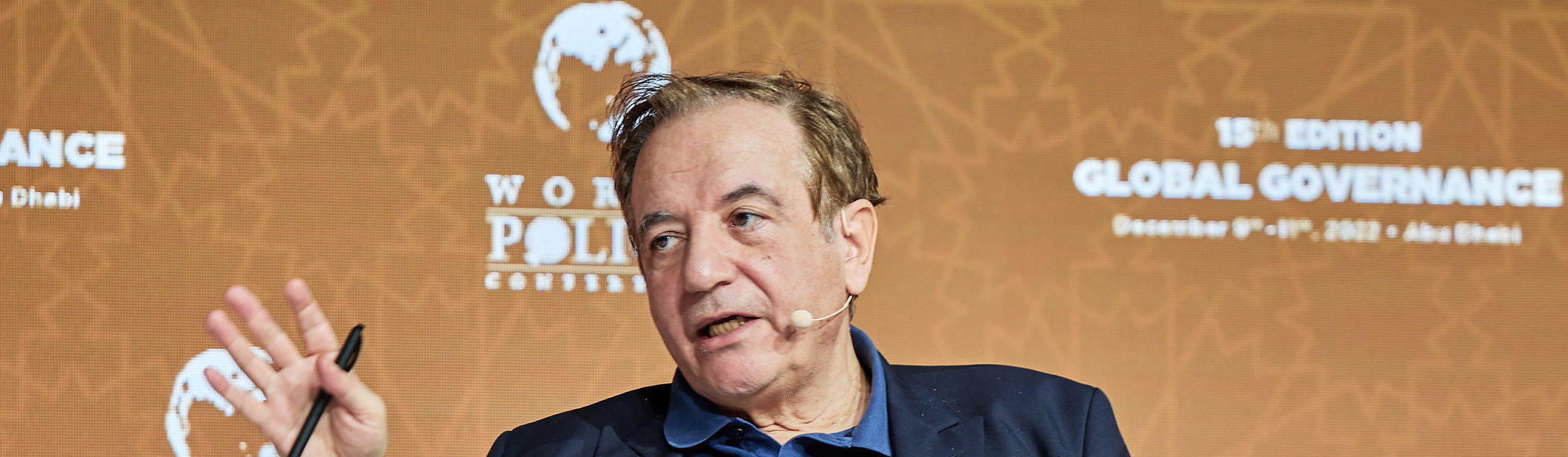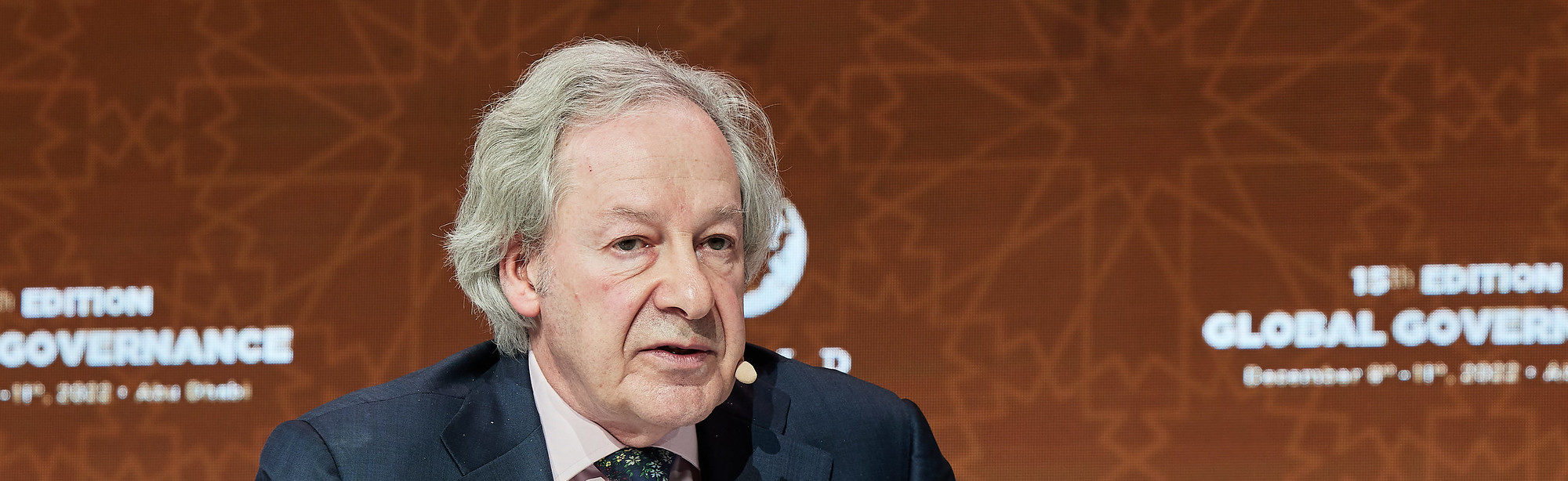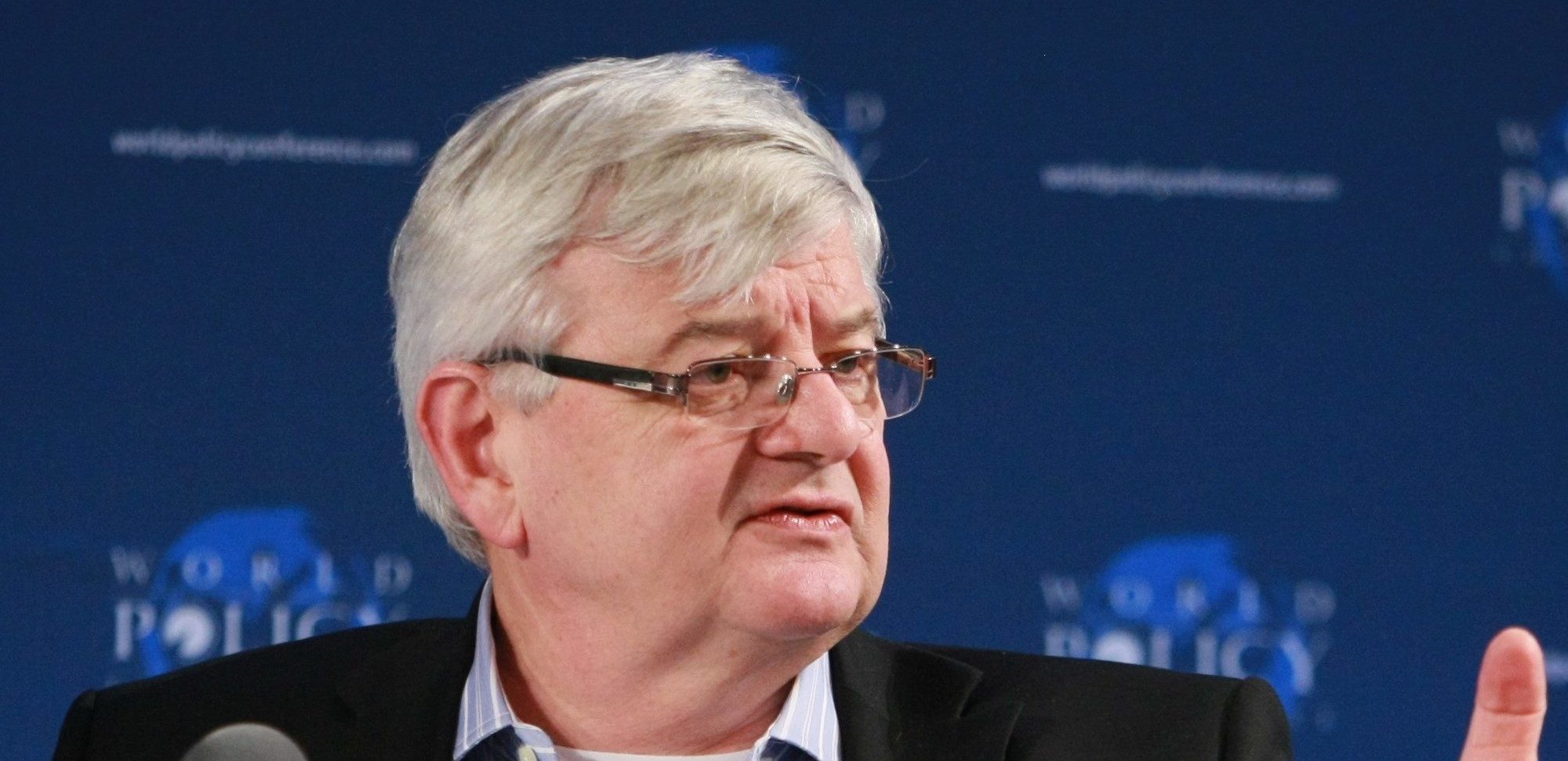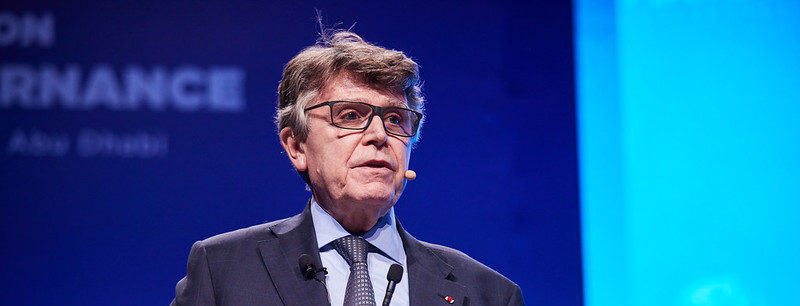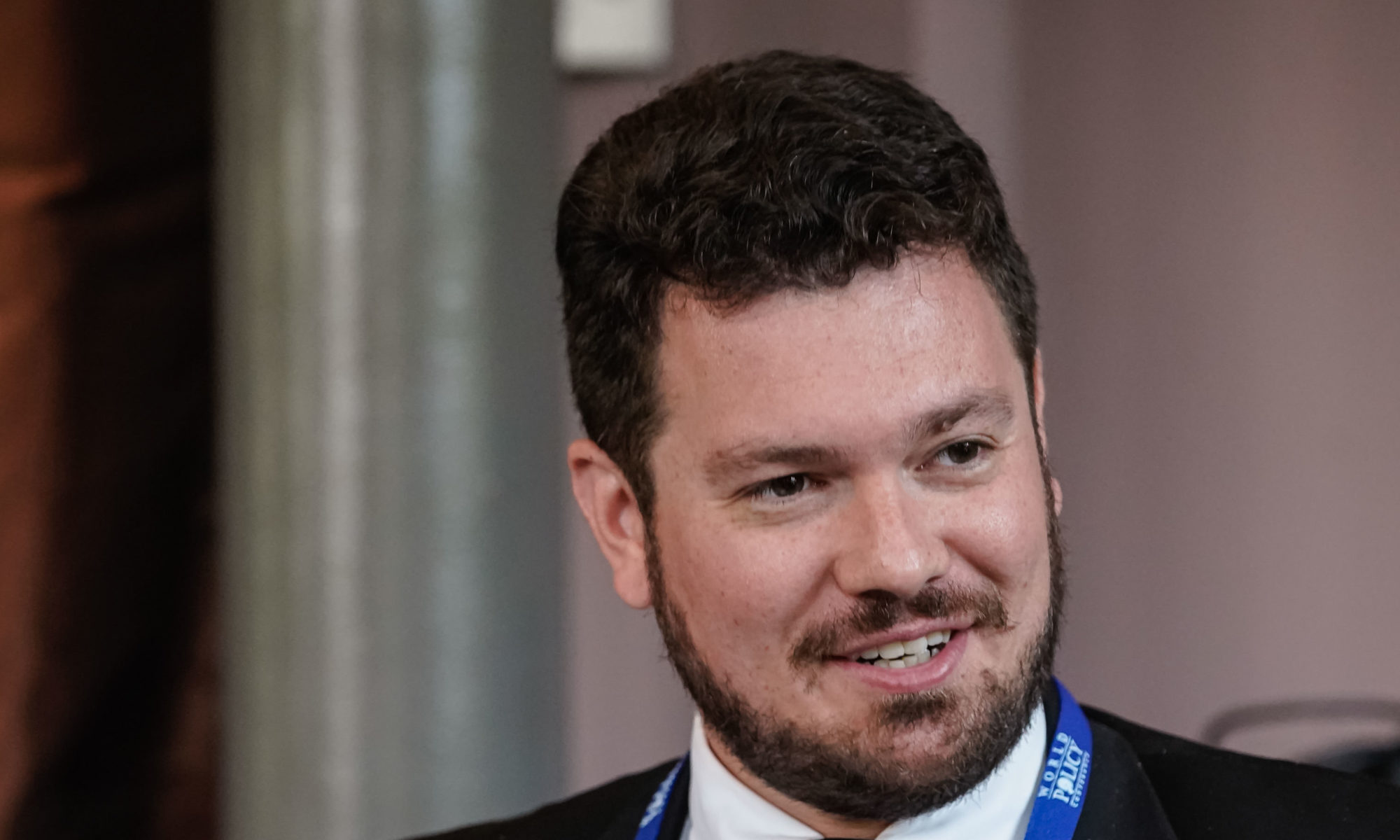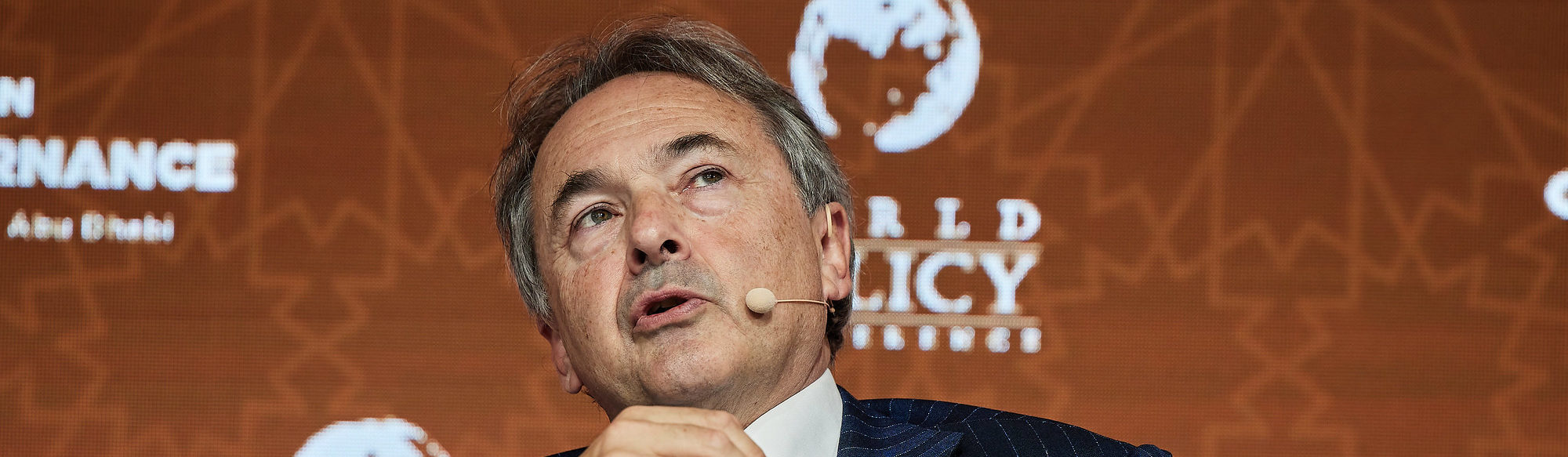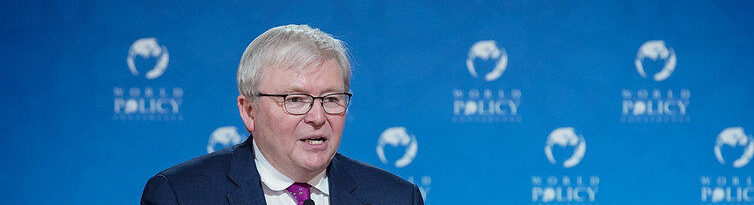

Thierry de Montbrial, était l’invité de la matinale Radio Classique – Le Figaro

Chaque matin, à 8h12, suivez en direct l’édito de Guillaume Tabard (Le Figaro) ainsi que l’interview de David Abiker (Radio Classique). Ce jeudi 20 juin, l’invité de 8h15 était Thierry de Montbrial, président fondateur de l’IFRI

Listen to this interview released by Le Figaro TV

https://video.lefigaro.fr/figaro/video/thierry-de-montbrial-est-linvite-de-la-matinale-radio-classique-le-figaro/

Jean Pisani-Ferry : « La France envoie au monde le signal d’un pays en désarroi »

LA TRIBUNE DIMANCHE – Les marchés s’affolent… Pensez-vous que cela va durer?

JEAN PISANI-FERRY – Nous vivons un bouleversement politique considérable, les turbulences que connaissent les marchés ne vont pas se calmer tout de suite. Évidemment, ce ne sont pas les marchés qui font la politique et dictent nos choix. Mais ils imposent une contrainte de cohérence. Si les marchés jugent que notre politique – quelle qu’elle soit dit une chose et fait son contraire, ils ne suivront pas. Et nous pourrions connaître ce qu’a vécu le Royaume-Uni avec Liz Truss, la Première ministre qui n’a pas pu appliquer son programme. Même si, contrairement aux Anglais, nous ne risquons pas de crise du change car l’euro nous protège.

Est-ce que l’on risque une crise de la dette ?

L’indicateur le plus synthétique est le spread [l’écart de taux d’emprunt] entre l’Allemagne et la France. Il est actuellement à 80 points de base, contre 50 avant les élections. Ce n’est pas dramatique, mais le signal est là. La France est très endettée aujourd’hui. Et donc très soumise à l’appréciation des marchés.

Read the interview on La Tribune.

Covid-19 : “Cette nouvelle vague pourrait bien venir perturber les JO”, alerte le Pr. Antoine Flahault

En cette mi-juin 2024, les contaminations et hospitalisations liées au Covid-19 sont en hausse et laissent entrevoir l’émergence d’une nouvelle vague estivale.

Le Covid-19 va-t-il venir jouer les trouble-fêtes lors des JO de Paris ? Si la situation est bien différente des premières vagues de contaminations en ce mois de juin 2024, il est fort probable que la France connaisse une explosion de cas dans les semaines à venir, du fait du brassage des populations et de l’émergence d’un nouveau variant d’Omicron, prévient auprès d’actu.fr le professeur Antoine Flahault, épidémiologiste et directeur de l’Institut de santé globale de l’Université de Genève, par ailleurs auteur du livre Prévenez-moi !.

Actu : D’après les données dont vous disposez, pouvons-nous confirmer une hausse des cas ces derniers jours/semaines ?

Antoine Flahault : Oui, les signaux précoces apportés par la surveillance des eaux usées (qui permet de détecter la charge virale dans la population, à défaut de test qui ne sont plus que rarement utilisés) montrent depuis plusieurs semaines une augmentation de la circulation du SARS-CoV-2 en France et dans d’autres pays européens comme le Royaume-Uni et le Portugal.
Nous n’avons pas beaucoup d’informations sur les variants prédominants en France. Au Portugal, plus des deux-tiers des cas chez lesquels les séquences du virus ont pu être identifiées sont dus à un nouveau sous-variant d’Omicron appelé KP.3, dont on ne sait pas encore grand-chose. Je ne serais pas surpris d’apprendre qu’en France le même sous-variant s’impose aussi.

Read the full interview on Actu.fr.

Vol inaugural d’Ariane 6 le 9 juillet : “C’est le retour de l’Europe dans la course spatiale”, se réjouit le PDG du CNES

Après de multiples retards liés au Covid et à des problèmes techniques, le premier vol de la fusée européenne Ariane 6 est enfin annoncé.

“C’est le retour de l’Europe dans la course spatiale”, s’est réjoui mercredi 5 juin sur franceinfo Philippe Baptiste, président-directeur général du Centre national d’études spatiales (CNES) alors que la date du vol inaugural d’Ariane 6 est prévue le 9 juillet prochain. Initialement prévu en 2020, le décollage d’Ariane 6 a été reporté à maintes reprises en raison de la pandémie de Covid-19 et des difficultés techniques.

“Ariane 6 revient dans la course. Le carnet de commandes est archi plein. Il y a plus de 30 lancements qui sont déjà commandés sur Ariane 6”, a-t-il précisé. Philippe Baptiste assure “que tout le monde est très, très content d’avoir un compétiteur qui revient aujourd’hui face à la solution qui devient quasi hégémonique d’Elon Musk” avec Space X.

Franceinfo : C’est le lancement à ne pas rater ?

Philippe Baptiste C’est fondamental ! L’Europe revient dans la course. Le programme a du retard. Depuis un an, l’Europe n’avait plus d’accès à l’espace. C’était simplement très, très embêtant pour ne pas dire dramatique. On est très, très heureux évidemment d’avoir cette date à laquelle on croit et qui va arriver maintenant, très vite. C’est le retour de l’Europe dans la course spatiale. Cette capacité d’accès à l’espace est absolument fondamentale. Vous n’avez pas de spatial si vous n’avez pas de lanceur, si vous n’avez pas de fusées qui vous permettent d’accéder à l’espace. Ma priorité, c’est évidemment le retour en vol d’Ariane et l’arrivée en particulier de ce nouveau lanceur Ariane 6 qu’on attend tous avec beaucoup d’impatience.

Vous avez mis l’accent aussi sur l’environnement. Comment fait-on pour décarboner les lancements spatiaux européens à Kourou ?

Il y a énormément de travaux qui sont déjà menés. Nos priorités, c’est d’abord de décarboner la base progressivement. C’est installer des panneaux photovoltaïques, c’est demain de produire de l’hydrogène vert, produire des carburants verts, directement issus de la biomasse. C’est un travail de long terme. Ça ne va pas se faire en un claquement de doigts. Ce sont des investissements qui sont conséquents, mais c’est aussi du temps. Il faut aussi convaincre, il faut expliquer… Mais effectivement c’est une des priorités, on est très, très mobilisés sur cette feuille de route de la décarbonation.

Elon Musk, le milliardaire à la tête de SpaceX, a taclé Ariane 6 disant qu’une fusée qui n’est pas au moins en grande partie réutilisable n’a pas d’avenir. Que lui répondez-vous ?

La question de la réutilisabilité est évidemment une question clé. Il est très clair que l’Europe et nous aussi, collectivement, on n’a pas assez cru dans cette technologie. Il faut maîtriser cette technologie. On a lancé depuis quelques années plusieurs programmes qui vont permettre à la France, au CNES et à l’Europe aussi, d’accéder à cette technologie de la réutilisabilité. Pour autant, ce n’est pas l’alpha et l’oméga. Ça dépend de vos besoins.

Aujourd’hui, c’est absolument clé pour Elon Musk parce qu’il doit répondre à ses propres besoins qui sont de lancer de très, très, très nombreux satellites de télécommunications en orbite basse pour Starlink. Dans ce cas-là, vous avez besoin d’avoir des cadences infernales et vous avez absolument besoin d’un lanceur réutilisable. La question est un petit peu différente pour nous aujourd’hui en Europe, à tort ou à raison. Aujourd’hui, je n’ai pas à commenter SpaceX.

Tout le monde est très content d’avoir un compétiteur qui revient aujourd’hui face à la solution qui devient quasi hégémonique d’Elon Musk.

Vous vous inscrivez dans un duel direct avec SpaceX ?

Non, ce n’est pas une question de duel. Aujourd’hui en Europe, tant d’un point de vue économique, que d’un point de vue de la souveraineté, on a besoin d’avoir une autonomie d’accès à l’espace. C’est une priorité pour la France et pour l’Europe. On est extrêmement engagés là-dessus.

L’Agence spatiale européenne vient de lancer un programme de soutien d’entreprises européennes pour développer un vaisseau, d’abord de fret, peut-être un jour un “habité”. L’Europe en a-t-elle les moyens ?

On développe un cargo, c’est-à-dire qui n’est pas habité. Ce n’est pas un développement à la mode classique. On l’a déjà beaucoup fait. La question, c’est comment est-on capable de faire des cargos avec des capsules qui sont capables de faire l’aller-retour entre la Terre et la station spatiale ou les stations spatiales futures ? On veut les faire pas chers. C’est ça qui est fondamental. On veut faire ça avec des coûts qui sont extrêmement bas. Pour ça, on change radicalement notre manière de faire. La France est très allante sur le sujet. En particulier, on veut avoir de l’achat de services, c’est-à-dire donner aux industriels une très grande liberté, une très grande autonomie et une très grande responsabilité. Nous, on est là évidemment pour les aider et consolider leur business plan, c’est-à-dire leur garantir qu’à la fin, on va bien leur acheter du service.

On peut faire bien et pas cher ?

J’en suis absolument convaincu. On a tous les industriels en Europe qui sont capables de le faire aujourd’hui. On a des talents absolument incroyables dans le spatial. On a une ambition qui est extrêmement forte. Il faut y aller maintenant. Il faut démontrer qu’on est capable à la fois de continuer ce qu’on a fait, mais de nous renouveler profondément.

Read the article on the website of Franceinfo

https://www.francetvinfo.fr/economie/aeronautique/vol-inaugural-d-ariane-6-le-9-juillet-c-est-le-retour-de-l-europe-dans-la-course-spatiale-se-rejouit-le-pdg-du-cnes_6586296.html

Nuclearelectrica and Canadian Nuclear Partners sign framework agreement for Cernavoda NPP Unit 1 refurbishment project

Nuclearelectrica (SNN) and Canadian Nuclear Partners (CNPSA) have signed a long-term framework agreement to provide Project Management Organization (PMO) services for the preparation and implementation of the Cervavoda Nuclear Power Plant Unit 1 refurbishment project in Romania.

This framework agreement has an approximate value of 240 million EUR and represents an essential step in the completion of the Cernavoda Unit 1 refurbishment in compliance with the established development stages. Under the agreement, CNPSA, a subsidiary of Laurentis Energy Partners (Laurentis), will support SNN by providing:

  • Project management services
  • Technical assistance
  • Consulting services
  • Training specific to CANDU plant refurbishment, and
  • Organization and coordination of Unit 1’s commissioning, up to its return to commercial operation

The Framework Agreement builds on an earlier agreement signed between SNN and Laurentis, through CNPSA, in 2021 to develop a conservation program for reactor water systems during refurbishment.

Ontario Ministers Todd Smith and Stephen Lecce, Romanian Energy Minister Sebastian Burduja, and Canada’s Ambassador to Romania, Gavin Buchan, along with representatives from CNPSA, SNN, Laurentis, and Ontario Power Generation, were on hand for the June 11 signing ceremony in Bucharest.

The world is watching as Ontario continues to deliver multi-billion-dollar CANDU nuclear refurbishment projects on time and on budget” said Ontario Minister Todd Smith. “We’re ready to support our allies, leveraging all that experience and expertise to support the refurbishment of Cernavoda NPP Unit 1 so it can continue to deliver reliable and clean energy for generations to come, and provide continued energy security.”

With increasing geopolitical volatility, it is clear that countries around the world are looking for stable democratic energy partners that offer clean, reliable and affordable energy — and Ontario is once again answering that call,” said Ontario Minister of Energy and Electrification Stephen Lecce. “We are proud to partner with Romania to deliver this major refurbishment that is going to support energy security in Europe while creating new economic opportunities for workers in both of our countries.”

We are looking forward to working with CNPSA to further advance the refurbishment of Cernavoda NPP Unit 1. Highly professional and robust project management, with combined Canadian and Romanian experience, will enable Romania to benefit from clean, safe, and reliable energy for another 30 years beyond 2029” said Cosmin Ghita, CEO of Nuclearelectrica. “Romania and Canada have been working together for more than 50 years in the nuclear industry and they continue to do so by fostering strategic projects to advance energy security, decarbonization and economic development.”

We are proud to partner with SNN to provide the leading-edge PMO services needed to successfully carry out this large-scale project, which will ensure a long-term reliable and affordable source of clean electricity for the people and industries of Romania” said Jason Van Wart, CEO of CNPSA. “We are pleased to leverage our decades of experience with Canadian-made CANDU technology to help deliver the Unit 1 refurbishment project on time and on budget and demonstrate how Canadian nuclear experts can support clean energy projects in other parts of the world”.

Read the article on the website of The Diplomat

Nuclearelectrica and Canadian Nuclear Partners sign framework agreement for Cernavoda NPP Unit 1 refurbishment project

Libération d’otages israéliens : un «tournant symbolique» qui conforte temporairement la position de Netanyahu, estime Gilles Kepel

Au lendemain de la libération de quatre otages israéliens à Gaza, Gilles Kepel, auteur de “Holocaustes” aux éditions Plon, était l’invité du Grand Rendez-vous Europe 1/CNews/Les Échos dimanche. Pour le professeur des universités, il s’agit d’un “tournant symbolique”.

L’armée israélienne a annoncé avoir libéré samedi lors “d’une opération spéciale” quatre otages d’un camp de réfugiés dans le centre de la bande de Gaza : Noa Argamani, 26 ans, Almog Meir Jan, 22 ans, Andrey Kozlov, 27 ans, et Shlomi Ziv, 41 ans, tous les quatre “enlevés” sur le site du festival de musique electro Nova, lors de l’attaque sans précédent menée sur le sol israélien par le Hamas le 7 octobre, qui a déclenché les hostilités, selon l’armée. Une opération considérée comme “un tournant symbolique” dans le conflit par Gilles Kepel, professeur des universités, auteur de “Holocaustes” aux éditions Plon, invité du Grand Rendez-vous Europe 1/CNews/Les Échos dimanche.

“Ça montre que Benjamin Netanyahu […] a quelque chose à mettre sur la table, la libération de quatre otages. Il y a eu des scènes de liesse en Israël hier”, a-t-il indiqué au micro d’Europe 1. D’après le professeur des universités, cette libération conforte la stratégie militaire du Premier ministre israélien, sous pression à l’étranger et en interne. “Cela conforte sa position, en tout cas temporairement, au moment où le président Biden a insisté pour qu’il y ait une feuille de route visant à la cessation des combats”, a-t-il déclaré.

Un conflit qui concerne “le monde entier et plus précisément, le président et candidat Biden”

Alors que les efforts diplomatiques pour arracher une trêve piétinent, le secrétaire d’État américain Antony Blinken est attendu la semaine prochaine en Israël, en Égypte, au Qatar et en Jordanie, pour “promouvoir une proposition de cessez-le-feu” présentée récemment par le président Joe Biden, selon Washington. D’après Gilles Kepel, ce conflit pourrait avoir une incidence sur le résultat de l’élection présidentielle américaine qui aura lieu le 5 novembre prochain.

“Ce conflit n’est pas seulement le conflit au Moyen-Orient, il concerne le monde entier. Il concerne plus précisément le président et candidat Biden. Car pour la première fois sans doute dans l’histoire des États-Unis, sauf peut-être pendant la guerre mondiale, un enjeu de politique intérieure est majeur pour l’élection ou la réélection ou non du président Biden”, a analysé Gilles Kepel au micro d’Europe 1.

L’armée américaine annonce la reprise d’une aide humanitaire

Samedi, la livraison d’aide humanitaire à Gaza a pu reprendre via la jetée temporaire américaine. Les États-Unis ont ainsi pu livrer 500 tonnes d’aide humanitaire. L’armée américaine a aussi réfuté des informations de presse faisant état d’un soutien américain aux opérations de libération des otages.

Read the article on the website of Europe 1

https://www.europe1.fr/international/liberation-dotages-israeliens-un-tournant-symbolique-qui-conforte-temporairement-la-position-de-netanyahu-estime-gilles-kepel-4251781

Gouvernance mondiale, Ukraine, Union européenne : Quo vadis ?

Politique étrangère, vol. 89, n° 2, été 2024

La révolution technologique du dernier xxe siècle, les chocs de 2001 et 2007-2008, ont encadré les illusions occidentales de la mondialisation heureuse.

Le système international, désormais, se fragmente. Cet éclatement rend problématique le développement d’une gouvernance mondiale qui devrait, avant tout, se préoccuper des défis de sécurité. En Europe, la guerre d’Ukraine risque d’emporter l’Union européenne dans un emballement dangereux, que symbolise la tentation de nouveaux élargissements.

Thierry de Montbrial, membre de l’Académie des sciences morales et politiques, est le fondateur et président de l’Institut français des relations internationales. Il est également fondateur et président de la World Policy Conference.

Article publié dans Politique étrangère, vol. 89, n° 2, été 2024.

https://www.ifri.org/fr/publications/politique-etrangere/articles-de-politique-etrangere/gouvernance-mondiale-ukraine-union

D’anciens physiciens du CERN inventent une technologie qui réduit de 80 % la radioactivité des déchets nucléaires

Transmutex, cette entreprise suisse a développé une solution innovante pouvant réduire le volume des déchets nucléaires de 80 %. Une technologie révolutionnaire qui pourrait changer le paysage énergétique mondial.

Le devenir des déchets nucléaires est incertain, raison pour laquelle leur gestion est, depuis des années, au cœur des préoccupations environnementales. En France, par exemple, on dénombre environ 1 200 producteurs de déchets radioactifs et plus de la moitié de ces déchets provient de l’industrie électronucléaire, selon l’Andra. Dans le monde, approximativement 10 000 mde déchets de haute radioactivité et 200 000 m3 de déchets à faible et moyenne radioactivité sont produits chaque année. Face à cette problématique, la société Transmutex, basée à Genève, a développé une technologie innovante permettant d’atténuer leur impact environnemental, en utilisant une variété de matériaux combustibles tels que le thorium.

Un procédé basé sur la transmutation

La technologie mise au point par Transmutex n’est nul autre que la transmutation, visant à convertir des éléments radioactifs en leurs isotopes ou en d’autres éléments complètement différents. Les anciens scientifiques du CERN ont utilisé un accélérateur de particules et un assemblage combustible sous-critique pour transformer le thorium, un métal légèrement radioactif que l’on trouve dans les sols et les roches, en un isotope de l’uranium. Cet accélérateur, relié à une usine de fission nucléaire, permet de traiter immédiatement l’uranium nouvellement généré afin qu’il ne produise pas de déchets hautement radioactifs, contrairement à l’uranium utilisé dans les centrales nucléaires. Selon Transmutex, il offre plusieurs avantages par rapport aux réacteurs nucléaires autonomes traditionnels. Petite anecdote, ce serait l’ancien directeur général du CERN (Conseil Européen pour la Recherche Nucléaire), Carlo Rubbia, qui aurait imaginé en premier cette technologie innovante.

Une technologie permettant de réduire efficacement les déchets nucléaires à vie longue

Selon la Nagra (Société coopérative nationale pour le stockage des déchets radioactifs), cette technologie développée par Transmutex pourrait réduire le volume des déchets nucléaires de 80 % et leur période radioactive à moins de 500 ans. L’agence nationale suisse l’a déjà examiné minutieusement et est arrivée à une conclusion selon laquelle, elle représente une avancée significative dans la gestion de ce type de déchets. Ce procédé innovant pourrait jouer un rôle crucial pour l’avenir de l’énergie propre et durable, surtout dans le contexte actuel où l’on est constamment en quête de solutions durables et sûres pour gérer l’énergie nucléaire. Toutefois, selon la société genevoise, il y a des défis à relever, surtout en termes de coût. Il semblerait que construire cet accélérateur de particules à proximité de chaque centrale pourrait s’avérer très couteux.

Des levées de fonds pour accélérer la recherche et le développement de l’accélérateur de particules

Pour accélérer le développement de sa technologie révolutionnaire et son déploiement à l’échelle mondiale, Transmutex a procédé à des levées de fonds, depuis 2020. Elle a obtenu un financement de plus de 20,6 millions d’euros auprès de l’Union Square Ventures et de Steel Atlas, deux fonds de capital-risque basés à New-York. La société suisse a reçu un large soutien dans la réalisation de cette solution énergétique nucléaire plus sûre, plus propre et plus durable. Celle-ci a attiré un grand nombre d’investisseurs, pour ne citer que Verve Ventures, FONGIT, HCVC, AlleyCorp, House Of Ventures, Presight Capital, etc. Pour information, la société Transmutex a été créée en 2019 par Franklin Servan-Schreiber. Composée d’anciens physiciens du CERN, elle s’est donnée pour mission de révolutionner l’énergie nucléaire.

Read the article on the website Neozone

D’anciens physiciens du CERN inventent une technologie qui réduit de 80 % la radioactivité des déchets nucléaires

President Kagame’s Impactful Participation at the World Economic Forum Special Meeting in Riyadh

President Kagame’s Vision for Africa’s Development Shines at WEF Special Meeting

President Paul Kagame recently showcased Rwanda’s remarkable progress and emphasized the importance of collaboration and inclusive growth during his participation at the World Economic Forum special meeting in Riyadh, Saudi Arabia. As a key panelist discussing “A New Vision for Global Development,” President Kagame highlighted Rwanda’s successful recovery journey driven by investments in human capital and innovative solutions. He underscored Africa’s positive growth trajectory and the need for global engagement to leverage the continent’s potential for economic advancement.

  1. Rwanda’s Resilience and Sustainability Initiatives: President Kagame’s discussions with the IMF’s Managing Director, Kristalina Georgieva, underscored Rwanda’s pioneering efforts in climate change initiatives. The country’s collaboration with the IMF through the Resilience and Sustainability Trust sets a precedent for sustainable development in Africa.
  2. Strategic Partnerships for Technological Advancement: President Kagame’s meeting with Prime Minister Anwar Ibrahim of Malaysia focused on deepening cooperation in key sectors like technology and education. Such partnerships exemplify Rwanda’s commitment to embracing technological advancements for economic growth.
  3. Africa’s Position in Global Affairs: President Kagame’s advocacy for Africa’s growing importance on the global stage highlighted the continent’s collective efforts towards economic progress. His call for the world to recognize Africa as a vital player in international politics and economy signifies a shift in global perspectives towards the continent.

Conclusions:

In conclusion, President Kagame’s active participation at the WEF special meeting not only showcased Rwanda’s development success but also emphasized the significance of collaboration, sustainable initiatives, and strategic partnerships for economic growth. His advocacy for Africa’s role in global affairs reflects a broader trend towards recognizing the continent’s potential and the need for inclusive, equitable development strategies in today’s interconnected world.

Read the article on the website of Africa24

https://africa24.it/en/2024/06/05/president-kagames-impactful-participation-at-the-world-economic-forum-special-meeting-in-riyadh/

Renaud Girard : « Guerre d’Ukraine, du rééquilibrage au cessez-le-feu ? »

CHRONIQUE – Alors que la nouvelle aide américaine éloigne l’hypothèse d’un effondrement militaire de l’Ukraine, Joe Biden serait bien avisé de se servir de la nouvelle position de force que lui a accordée le Congrès pour ouvrir des discussions avec la Russie sur un éventuel cessez-le-feu.

Une nouvelle fois, l’Amérique a sauvé l’Ukraine. En votant, le 21 avril 2024, une résolution allouant à Kiev une aide gigantesque de 61 milliards de dollars – soit le double du budget militaire annuel total de la Pologne -, la Chambre des représentants a, sur le court terme, donné un formidable remontant au moral de la population ukrainienne. Elle était en effet déçue par l’échec de l’offensive de son armée sur trois fronts à l’été 2023, et même inquiète après la victoire russe de février 2024 à Avdiivka, ex-ville forteresse ukrainienne située au nord-ouest de Donetsk, qui menaçait une route russe cruciale pour l’approvisionnement terrestre de la Crimée.

À moyen terme, l’aide américaine – qui a toutes les chances d’être rapidement approuvée par le Sénat et promulguée par le président – rééquilibrera une situation militaire qui était en train de tourner à l’avantage des Russes. Ces derniers, après avoir repoussé victorieusement les attaques mécanisées ukrainiennes de 2023 grâce aux fortifications…

Read the entire article on the website of Le Figaro Vox
https://www.lefigaro.fr/vox/monde/renaud-girard-guerre-d-ukraine-du-reequilibrage-au-cessez-le-feu-20240423

L’Ukraine durcit le ton contre les hommes en âge de conscription se trouvant à l’étranger

“Le fait de séjourner à l’étranger ne dispense pas un citoyen de ses devoirs envers la patrie”, a rappelé mardi le ministre ukrainien des Affaires étrangères Dmytro Kouleba sur X. Le gouvernement a par conséquent décidé que les consulats ne fourniraient plus de services aux hommes en âge de conscription.

M. Kouleba affirme que la protection des droits et des intérêts des citoyens ukrainiens à l’étranger a toujours été et reste une priorité pour le ministère des Affaires étrangères, mais “dans le même temps, dans les circonstances de l’agression à grande échelle par la Russie, la principale priorité est de protéger notre patrie de la destruction”. Il est donc inacceptable, ajoute-t-il, que les hommes en âge de conscription se rendent à l’étranger sans se soucier de la survie de leur État.

Selon le ministre des Affaires étrangères, les citoyens séjournant à l’étranger ont également des devoirs à remplir. C’est pourquoi il a pris une série de mesures visant à rétablir une équité entre hommes en âge de conscription, qu’ils se trouvent en Ukraine ou en dehors du pays. Les consulats ne fourniront par exemple plus de services aux hommes en capacité de servir leur patrie et ne les aideront qu’à rentrer en Ukraine.

Avec ces nouvelles mesures, M. Kouleba veut s’assurer que davantage de personnes rejoignent les rangs de l’armée ukrainienne, actuellement confrontée à une pénurie de nouvelles recrues.

Read this article on the website of 7 sur 7

https://www.7sur7.be/monde/lukraine-durcit-le-ton-contre-les-hommes-en-age-de-conscription-se-trouvant-a-letranger~a548239d/?referrer=https%3A%2F%2Fwww.google.com%2F

Georgia not ready for EU, says ruling party

The pronouncement comes as tensions fray between Tbilisi and Brussels over a ‘Kremlin-inspired’ foreign agent law.

Georgia is unlikely to join the European Union any time soon, despite having been granted candidate status last year, the chairman of the country’s ruling party said on Saturday.

“Last December, we became a candidate country. The next step is joining,” Irakli Garibashvili told reporters on Saturday. “Today, we are not ready to become a member country.”

Despite widespread protests, the Georgian Dream politician and former prime minister defended a controversial new bill that would label NGOs, campaign groups and media outlets that receive more than 20 percent of their funding from abroad as agents of foreign influence. Critics say the legislation would drive a wedge between Georgia and the West and stifle opposition in the same way similar rules have in Russia.

“If we are told that tomorrow we will become a member of the EU, then it will be possible to very easily cancel it, revise, transform or adopt a new one,” Garibashvili said.

At the same time, he claimed that “there is no consensus a country can become a member of the EU today” because the bloc “is not ready for enlargement and it will take time and these next steps depend on many things.”

The EU has told Georgia the proposals, which have brought thousands onto the streets in protest in recent weeks, are incompatible with European values and should be withdrawn, while Washington branded the “Kremlin-inspired” legislation as an attack on civil society.

When the European Commission granted Georgia candidate status last year, it set out specific steps needed for the South Caucasus country to be admitted as a full member, including tackling political polarization and strengthening human rights protections. According to the bloc’s top diplomat, Josep Borrell, passing the foreign agent law, as well as the government’s new proposals cracking down on LGBTQ+ rights, “would negatively impact Georgia’s progress on its EU path.”

A December 2023 poll conducted by the National Democratic Institute found that 79 percent of Georgian respondents supported their country’s EU membership ambitions.

Read the article on the website of Politico

https://www.politico.eu/article/georgia-not-ready-eu-membership-georgian-dream-irakli-garibashvili-russian-law-agent-bill-protest-tbilisi/

The Gaza War Goes Global

The escalating war in the Middle East must be understood in a broader context. The fact that the Iranian regime felt emboldened to risk a direct strike on Israel attests to a changing world order in which Western power is increasingly open to challenge.

BERLIN – With Iran’s drone and missile attack on Israel on the night of April 13, the war in the Middle East has taken on a new dimension. For years, the conflict between Iran and Israel had been a “shadow war” in which both sides avoided direct military strikes on each other’s territory. Instead, the conflict reached furtively into the streets of Tehran, where there have been assassinations of Iranian nuclear scientists and engineers, and into war-torn areas of Syria, Lebanon, Yemen, and Gaza. In those hot spots, the so-called Axis of Resistance – comprising Hezbollah (in Lebanon), Hamas (in Gaza), and the Houthis (in Yemen) – receives extensive support in the form of Iranian money, weapons, and training.

The current war started on October 7, 2023, when Hamas launched an attack on Israel that claimed 1,200 lives and 253 hostages. Israel soon hit back, and the war has been raging in Gaza ever since. As a result of the Israel Defense Forces’ campaign to eliminate Hamas once and for all, more than 30,000 Palestinians have been killed, and the enclave has been laid to waste.

Despite these horrors and the appalling conditions in Gaza, the war is the latest chapter in a bloody conflict that Israelis and Palestinians have been fighting over the same stretch of land for almost 80 years. By contrast, Iran’s direct attack against Israel represents something new. To launch a strike from Iranian territory, rather than operating through proxies, is to invite retaliation against Iran itself. The Iranian regime either must feel very sure of itself, or is under enormous pressure to make a show of strength, even if that means risking “open war” not only with Israel but also with the United States.

The immediate trigger was Israel’s April 1 strike on an Iranian consulate building next to Iran’s embassy in Damascus, where several members of the Iranian Revolutionary Guard Corps, including two high-ranking commanders, were killed. Though these were hardly the first casualties of Iran’s “shadow war” in Syria and Lebanon, the Iranian leadership nonetheless felt compelled to respond.

True, Iran did reportedly let the US know through informal channels that its counterattack was imminent, and no one was particularly surprised when it came. Nonetheless, the implications of the move are profound. The war is no longer an Israeli-Palestinian one over the same stretch of land; it has been regionalized – even globalized.

Looming ominously in the background is the potential threat posed by the Iranian nuclear program. Given the latest developments, this existential threat to Israel is becoming less hypothetical by the day. Will Iran take the final steps to cross the nuclear threshold, and does the mere possibility increase the odds of a war with Israel and the US? That is now the big question for the entire region.

Moreover, we know that Iran’s aims extend beyond achieving regional predominance. The regime would welcome the replacement of the US-led international order by a more multipolar system in which great and emerging powers compete. To command a powerful position in this new international order will require nuclear weapons, access to state-of-the-art technology, and an end to the economic isolation implied by far-reaching Western sanctions. All this now looks to be within reach through its deepening ties with China, Russia, and parts of the Global South.

Iran’s theocrats know that they are in a fraught position domestically. Large-scale protests led by women, young people, and ethnic minorities (in Kurdistan and Baluchistan, for example) have discredited the regime, as has rampant corruption among the ruling elite. The country’s aging leadership no longer has any legitimacy; it is merely surviving through outright repression. But while relying on truncheons and bullets may work for a while, it is hardly a recipe for long-term success.

In geopolitical terms, however, the situation is completely different. Iran’s theocratic regime is among the big winners of the transition away from the US-led world order. According to the International Atomic Energy Agency, Iran’s nuclear program has advanced further than ever, putting it on the threshold of enriching enough weapons-grade uranium for a bomb. One also should assume that Iran has the technological know-how to build a nuclear warhead and the systems for delivering it.

In an increasingly favorable geopolitical landscape, Iran’s marriage of convenience with Russia and China is of paramount importance, not least because it will allow the regime to escape its decades-long international isolation. As new and emerging powers seek to develop new multilateral structures beyond the reach of Western hegemony, Iran will almost inevitably benefit.

The war in the Middle East must be understood in this broader context, which also includes Ukraine and Taiwan. We are witnessing increasingly bold and ambitious efforts to topple the old Western-led order through any means necessary – even outright war.

2023 Conference proceedings

08:00 – 09:00 | Opening session

Noura Al Kaabi

Minister of State of the United Arab Emirates

Before we start, we must acknowledge the devastating events happening in our region. Since the war in Gaza broke out, we express our deepest condolences for the loss of civilian lives, and our thoughts go to those who have lost loved-ones as a result of this conflict.

Read the full text

Thierry de Montbrial

Founder and Executive Chairman of Ifri and the WPC

The WPC rejects simplistic political classifications, and its point of view is not aligned with that of the great powers, whatever they may be. It gives voice to the “middle powers”, i.e. States that, without necessarily being endowed with large resources, are nevertheless determined to devote some of them to making a positive contribution to global governance.

Read the full text

Laurence Boone

Secretary of State for European Affairs

My message for the opening of this conference is very simple: we are living in a period of proliferating crises. And yet we have no choice but to cooperate. Let us be clear: cooperation is not so much a moral imperative as an existential one.

Read the full text

09:00 – 10:00 | Plenary session 1

The Major Mid-Term Issues of the Global Economy in an Adverse Geopolitical Context

Jean-Claude Trichet

President of the Académie des sciences morales et politiques, former President of the European Central Bank, Honorary Governor of the Banque de France

I would just highlight that technology is a major driving-force, and we are experiencing something particularly striking with the emergence of artificial intelligence. This is only the start; science and technology are progressing very rapidly.

Read the full text

Gabriel Felbermayr

Director of the Austrian Institute of Economic Research (WIFO), former President of the Kiel Institute for the World Economy (IfW)

Given recent system-shocks, this comes as no surprise. What we should take away from this is not only divergences across the Atlantic, China and Europe, but a relative lack of collapse. Resilience is what we should see here. The FIAT recession, if it comes to the Eurozone, will be a mild one. We are not facing an imminent disaster.

Read the full text

Sébastien Jean

Senior Associate of Ifri, Professor of Economics at CNAM University

A recent paper defined this situation as one of geo‑finance, to reflect the fact that it is marked by the increasing politicization of information and financial flows. This differs somehow from what we used to think of as geo-economic competition in the 1990’s or 2000’s.

Read the full text

John Lipsky

Senior Fellow of the Foreign Policy Institute at Johns Hopkins University’s Paul H. Nitze School of Advanced International Studies (SAIS)

Based on the IMF’s latest World Economic Outlook, global growth is slowing, and is expected to remain subpar for the coming 5 years or more, while inflation is not expected to return to its pre-pandemic rate until 2025. In these circumstances, the actual evolution of inflation will be a key to the outlook.

Read the full text

Marcus Noland

Executive Vice President and Director of Studies at the Peterson Institute for International Economics

Likewise, the legislation incentivized use of non-Chinese minerals in the production of the batteries for those cars, and due to our vision that essentially endorses production and free-trade partners, it has created a strange phenomenon in Washington where Korean firms who build the batteries are lobbying the US government to conclude free trade agreements with Indonesia, Philippines, Argentina.

Read the full text

Speakers debate

Read the full text

Debate

Read the full text

10:00 – 11:30 | Plenary session 2

World Economic Order Still Conceivable in a Foreseeable Future?

Masood Ahmed

President of the Center for Global Development, former Director of the Middle East and Central Asia Department of the IMF

It is difficult today to discuss the economic outlook without talking about changes in the structure of international relations and what that means for economics.

Read the full text

Aminata Touré

former Prime Minister of Senegal

We really need to look into the new world we want to build through what we are doing now – discussing, but discussing very honestly – and having the courage to put issues on the table. We are unhappy with the state of international affairs.

Read the full text

Qiao Yide

Vice Chairman and Secretary General of Shanghai Development Research Foundation

We can see the current order is still there but, at the same time, we have already seen signs of change or decoupling happen. In the World Economic Outlook, the IMF’s annual report, the word ‘fragmentation’ was mentioned 172 times in this year’s version while, five years ago, ‘fragmentation’ was only mentioned once. That is a very interesting phenomenon

Read the full text

Lee Hye-min

Senior Advisor of KIM & CHANG, former G20 Sherpa of Korea, former Ambassador for International Economic Affairs of the Republic of Korea

Deglobalization since the financial crisis of 2008 and Covid‑19 has significantly strengthened government regulations. Climate change and digitalization of the global economy require a stronger government intervention, as we need new rules on these issues.

Read the full text

Pierre Jacquet

Professor of Economics at the École nationale des ponts et chaussées (ENPC), member of the Cercle des Économistes

An international economic order is a negotiated agreement that balances national interests with international cooperation. The emerging set of global rules and institutions is not stable over time.

Read the full text

Vladislav Inozemtsev

Director of the Center for Post-Industrial Studies in Moscow, Special Advisor to Middle East Media Research Institute’s Russia Media Studies Project in Washington, DC.

I believe that for at least several decades the global economy will experience an age of creative destruction with the cutting-edge technologies making it less predictable than at any other stage in human history, so therefore we should talk not so much of a new order than rather of a set of frameworks which can somehow help us to make the current developments a bit more orderly.

Read the full text

Yann Coantanlem

CEO of DataCore Innovations LLC, President of Club Praxis

If we really want to build a new vibrant multilateral organization, we need to meet, in my view, two conditions. One is to define clear mutual benefits, and the second is to have strong, equal, players.

Read the full text

Speakers debate

Read the full text

Debate

Read the full text

11:30 – 12:00 | Plenary session 3

Conversation with Leung Chun-ying

Leung Chun-ying

Vice Chairman of the National Committee of the Chinese People’s Political Consultative Conference, former Chief Executive of the Hong Kong Special Administrative Region of China

I think we could use a lot more people-to-people dialogue between the two sides, which is something that I have been facilitating myself. People need to see for themselves what political and socioeconomic life is about on the mainland. That is something that we are not doing enough of.

Read the full text

13:00 – 14:15 | Plenary session 4

Geopolitics and Global Trade: What Can Be Done Today?

Nikolaus Lang

Managing Director and Senior Partner, Global Leader GA Practice Area of Boston Consulting Group

As leaders constantly ponder and ask questions about the future of geopolitics, BCG has developed a few scenarios that describe what the world could look like in 2030. These scenarios range from “Back to the Future” at one end to “Global Escalation” at the other, with “Limited Stalemate” and “Multipolar World” in the middle.

Read the full text

Nicolas Terraz

President of Exploration & Production, member of the Executive Committee of TotalEnergies

In this changing global trade pattern, one key factor is the energy transition and the need to address climate change. In TotalEnergies, we believe that our role, our mission, is to provide more energy with less emissions.

Read the full text

Penelope Naas

Non-Resident Senior Fellow of the Atlantic Council, former President of International Public Affairs and Sustainability at UPS

Risks are generally not what the last crisis was. It is something new, usually something that surprises you and, while it might occasionally be a black swan, what hits you is usually something that is within your control.

Read the full text

Bark Taeho

President of Lee&Ko Global Commerce Institute, former Minister for Trade of Korea

Major countries are utilizing subsidies, trade and investment measures to achieve their national objectives in various areas, including national security, economy, technology, society, and more. However, some of these measures may violate the multilateral trade norms of the WTO.

Read the full text

Jay Truesdale

CEO of Veracity Worldwide

They are seeking to build a taxonomy to map the various risks that they face. Financial firms have done this over the course of the last 25 years increasingly well, in part due to regulatory requirements that have been placed on them.

Read the full text

Speakers debate

Read the full text

Debate

Read the full text

14:15 – 15:00 | Plenary session 5

Climate Change: Is There Still a Collective Will?

Introduction

I could not have asked for two better individuals to guide us through this very timely, indeed, conversation – a few weeks before COP28, right here in this very country.

Read the full text

Need of COPs

First of all, it is about the just energy transition and, because ourselves as a country are going through this transition, we understand we need political will; we need money; we need to build up the national capacity; we need to diversify.

Read the full text

Food insecurity

We are trying to make the COP28 the most inclusive COP ever done. What I mean by this is the indigenous people, the women, the youth, faith-based organizations, all coming together because what they have in common is about doing more to respect nature. Bringing them all together and making sure that all voices from across the world are here is our commitment

Read the full text

COP 28

The international context is different today: diplomatic relations are more complex, the climate situation is worsening, and we are off-track from previous commitments. This year’s COP28 in Dubai is set in the continuity of preceding COPs.

Read the full text

15:00 – 15:30 | Plenary session 6

Conversation with Dmytro Kuleba

Dmytro Kuleba

Minister of Foreign Affairs of Ukraine

I think that there is no room for deadlines when it comes to the fight for territorial integrity and sovereignty of any country.

Read the full text

15:30 – 16:15 | Plenary session 7

Reconfiguration of the International System: Short and Long-Term Perspectives in the Eurasian Region

Situation in Ukraine

As Kazakhstan which is a peace-loving country that does not have problematic relations with any country, we naturally want the solution as soon as possible. We are prepared to help, to serve as a negotiating platform if Russia and Ukraine want our services.

Read the full text

Situation in Armenia

On the global level, I think the biggest challenge is how to make sure that the United Nations system works again. Our President addressed this issue in numerous statements, including at the United Nations General Assembly, stating that the role of the General Assembly needs to be strengthened as the most representative body and the Security Council needs to be reformed.

Read the full text

Foreign policy of Kazakhstan and Armenia

Nobody knows better than us the horror of war. We witnessed it back in the 90s and in 2020. We are still witnessing the consequences of the recent military aggression of September 19, 2023, as a result of which Nagorno-Karabakh and 100,000 people were forced to displace and basically Nagorno-Karabakh is ethnically cleansed.

Read the full text

Major challenges for Kazakhstan and Armenia

We are diversifying the markets from where we are buying weapons, which are for defensive purpose only. France and India are some of our partners. We are determined to cooperate in this sphere with other colleagues as well, bearing in mind that we have a right to protect our sovereignty and territorial integrity, and we do not have any intention to attack any of our neighbors.

Read the full text

16:15 – 17:30 | Plenary session 8

2024: A Critical Electoral Year

Virginie Robert

Foreign Desk Editor at Les Échos, Vice President of the European-American Press Club in Paris

In 2022 the world has entered the longest democratic recession every observed, which means that for the sixth consecutive year democratic values are losing ground everywhere.

Read the full text

Isabelle Lasserre

Diplomatic Correspondent for Le Figaro

2024 will be an incredible year in terms of the elections organized absolutely everywhere, in India, the world’s biggest democracy, South Africa, Iran, Brazil, Nigeria, Taiwan, Russia, maybe Ukraine of course, the European elections in Europe and the USA.

Read the full text

Jean-Claude Gruffat

Member of United Way Leadership Council, board member of Atlas Network, Managing Director of Weild and Co LLC New York

The US elections next year in November 2024 is expected by many to be a remake of 2020, with a close race for Congress and a toss up for the President. Is there a chance that we avoid another dreadful choice between Biden and Trump?

Read the full text

Hiroyuki Akita

Commentator of Nikkei, Japan

U.S. voters have become increasingly divided between Democratic and Republican supporters, effectively creating a political civil war. U.S. presidential election in November 2024, whether President Biden or Mr. Trump wins, would result in a further deepening polarization in the US.

Read the full text

Igor Yurgens

Chairman of the Management board of the Institute of Contemporary Development in Moscow

Do not forget that Russia is a seventh of the world’s land mass with a hundred nations and nationalities and it is very telling and interesting to know who reacts to what and how at the current stage of serious geopolitical conflict.

Read the full text

Jean-Claude Gruffat

Member of United Way Leadership Council, board member of Atlas Network, Managing Director of Weild and Co LLC New York

The US elections next year in November 2024 is expected by many to be a remake of 2020, with a close race for Congress and a toss up for the President. Is there a chance that we avoid another dreadful choice between Biden and Trump?

Read the full text

Debate

Read the full text

17:30 – 18:45 | Plenary session 9

Food Security in a Context of Political Turbulence

Jean-Michel Severino

President of Investisseurs & Partenaires

We also have this threat around climate and this big question of whether food and agriculture are going to be a climate ally or will there be a lasting conviction between producing food and fighting climate change.

Read the full text

Máximo Torero Cullen

Chief Economist of the Food and Agriculture Organization (FAO), Assistant Director General for the Economic and Social Development Department of the FAO

Our agri-food systems need to be transformed to achieve this carbon neutralization. For this we need to improve governance of natural resources, improve productivity, which means producing more from less, improve production practices, improve consumption patterns and behavior and use cleaner energy.

Read the full text

Sam Okwulehie

Chairman and CEO of LATC

The interesting thing is that protectionism starts to make food a weapon because there is social unrest in these countries as a result of these situations, and problems like migration with a lot of people migrating from Africa to Europe and the Mediterranean Sea now becoming almost a cemetery.

Read the full text

Kamel Abdallah

Managing Director and CEO of Canal Sugar

In Egypt 70 million people out of around 110 to 120 million people receive some kind of food subsidy for bread. However, this model is not sustainable, governments cannot continue to run budget deficits and we had another complication with the health crisis in the region.

Read the full text

Park Yong-joo

Chief Marketing Officer and Head of Global Business Operations at PlanTFarm

The question is whether controlled environment agriculture, CEA, technology can be the solution to food crises or shortages.

Read the full text

Debate speakers

Read the full text

Debate

Read the full text

19:00 | Dinner debate with Kevin Rudd

Kevin Rudd

Australia’s Ambassador to the United States, former President of the Asia Society Policy Institute, former Prime Minister of Australia

I continue to be a realist on US-China relations, there are certain structural things that have not changed. Number one, China is more powerful, militarily, economically and technologically, than it was 10, 20 or 30 years ago.

Read the full text

08:30 – 09:45 | Plenary session 10

Artificial Intelligence: Opportunities and Dependencies

Patrick Nicolet

CEO of Linebreak Ltd., former Group Chief Technology Officer of Capgemini

In Artificial Intelligence because every time there is a breakthrough in technology there is a discussion about the utopian or dystopian perspective. The question is whether it will destroy or save the world and the answer is neither for the simple reason that the technology is ultimately a machine.

Read the full text

Daniel Andler

Professor Emeritus at Sorbonne University, member of the Académie des sciences morales et politiques, philosopher

The dream of a machine that would be genuinely intelligent, a true thinking machine, one that would possess “artificial general intelligence” or AGI, or again “human-level intelligence” is alive again.

Read the full text

Kazuto Suzuki

Director of the Institute of Geoeconomics at International House of Japan, Professor at the Graduate School of Public Policy at the University of Tokyo, Japan

I think some of the questions touch upon the demand side of AI and I think most of the regulations are now focusing on the supply side, on how to apply ethics in the way AI is designed and used.

Read the full text

Ameena Al Sumaiti

Associate Professor of Electrical Engineering and Computer Science at Khalifa University in Abu Dhabi

We needed the power of AI to take the weather impact into account in our planning problem and we made sure that no accidents will take place when we program our autonomous vehicles.

Read the full text

Tobby Simon

Founder and Chairman of Synergia

The moment you use AI there is a vulnerability, it is a like a boomerang, it can possibly ping you back. The attack involves data poisoning and data manipulation, thereby rendering AI very ineffective.

Read the full text

François Barrault

Founder and Chairman of FDB Partners, Chairman of IDATE DigiWorld

We have talked a lot about AI and there are three pillars in it. Artificial Intelligence, Augmented Intelligence has three pillars: the hardware, the transmission (fiber, satellite and Mobile 5G) and the software.

Read the full text

Debate

Read the full text

09:45 – 10:45 | Plenary session 11

Semiconductors and Geopolitical Trends: An Opportunity to Strengthen Relationships

Paul Boudre

Silian Partner, former CEO of Soitec

Read the full text

Handel Jones

Founder and CEO of International Business Strategies (IBS)

China is trying to do some mature technologies, which will be okay for a while, but there is going to be a point where China will push back and that will potentially create significant supply chain issues on a global basis. That may occur in 2025, 2026 or 2027, but it will happen.

Read the full text

Max Masood Mirgoli

Executive Vice President of worldwide strategic partnerships at Imec

It is imperative hence today that for any country to participate in the digital transformation as it is commonly said that today “ DATA is the new OIL “ and economic opportunities that technology can bring to any economy, all being based on advancements of Semiconductors is simply impossible to ignore.

Read the full text

Helmut Gassel

former Management board member of Infineon

Beside the benefits to Europe now getting from advanced manufacturing being brought into the region, Europe has its own strength in certain areas. One is automotive, where I would say that 50% of the semiconductors for automotive are being designed and to a large extent manufactured in Europe today, so it is a very great strength.

Read the full text

Debate

Read the full text

10:45 – 12:00 | Plenary session 12

Innovative Leaders: How Can Carbon Credit Contribute to Net Zero?

Lucia Sinapi-Thomas

Executive Director of Capgemini Ventures

More and more corporates are publicly stating their targets to net zero and are actively working on their decarbonization plans, which by the way very often translate into investments for modernizing their industrial estates.

Read the full text

Annette Nazareth

Chair of the board Integrity Council for the Voluntary Carbon Credits (ICVCM)

By implementing the core carbon principles and encouraging market participants to embrace these high integrity credits, we are creating an ecosystem where the value of emissions reductions are appropriately recognized and rewarded and I believe this will unlock greater capital flows and drive innovation and catalyze the development and deployment of truly impactful climate solutions.

Read the full text

Matt Atwood

Founder and CEO of Aircapture

Aircapture is a US-based company that develops direct air capture technology. What we do in the simplest terms is build machines that use a fan which pulls air through the machine and the CO2, carbon dioxide from the air is collected on a surface of contactor substrates inside the machine.

Read the full text

Kristinn Ingi Lárusson

Head of Business Development and Commercialization of Carbfix

There are simple chemical components in the bedrock itself and in our case we need three ingredients. First we need CO2, second we need basaltic rock and third, we need water. What we do here is dissolve the CO2 in water and then gently inject into the bedrock.

Read the full text

Sam Gill

Co-Founder and President of Sylvera

If we were all to agree that if a carbon credit needs to be storing carbon for 100 years, for example, to be acceptable, that would allow the market to start engineering horizontal or vertical stacking approaches to allow different types of carbon to be used in portfolios.

Read the full text

Maryam Al Mansoori

General Manager of Rebound

The plastics recycling market today definitely faces a challenge of typically this is an economy. Financially companies will not pay more to introduce recycled plastics into their finished products if the virgin plastic is cheaper.

Read the full text

Debate

Read the full text

13:30 -14:45 | Plenary session 13

The West after the Ukraine War

Terry Martin

Journalist, TV news anchor

This is an important debate and important points you are bringing up with the whole question about the Global South and how it perceives what is going on. I also take your point on the West, and whether or not it is a useful term.

Read the full text

Tsakhiagiyn Elbegdorj

former President of Mongolia

The second half of those 10 issues are related to Ukraine’s territorial integrity and the withdrawal of Russian troops, a special tribunal, the security structure and confirmation of the end of the war, including signing a document. This is Ukraine’s peace formula.

Read the full text

Bogdan Klich

Senator in the Polish Parliament, Chairman of the Foreign and EU Affairs Committee in the Polish Senate

I would say that the results of the NATO Summit in Vilnius recently were a good sign for implementing the decisions that were taken a year ago during the Madrid Summit. We should go this way to implement the new model of forces responsible for reinforcing those countries that could be attacked in the future.

Read the full text

Zaki Laïdi

Personal Advisor to the High Representative and Vice President of the Commission EEAS

The other achievement is that the level of consensus among Europeans is still very strong, with of course some caveats, but by and large it is extremely strong. That is because all European states see in Ukraine a challenge to their security.

Read the full text

Norbert Röttgen

member of the Deutscher Bundestag and member of the Foreign Affairs Committee

There are increasing doubts whether the United States will continue in this role as number one security provider for Europe. This is only one reason we are not going to see an end to this war until the presidential elections.

Read the full text

Speakers debate

Read the full text

Debate

Read the full text

14:45 – 16:15 | Plenary session 14

Geopolitics of the Indo-Pacific between Security Concerns and Economic Opportunities

John Andrews

Author, journalist and contributing editor to The Economist

Whatever the current crises are the medium and long-term questions geopolitically and economically will be in the IndoPacific region. If you take the region, you could argue that it has far too many nuclear powers.

Read the full text

Jean-Pierre Cabestan

Senior Researcher Emeritus at the French National Centre for Scientific Research (CNRS) attached to the French Research Institute on East Asia (IFRAE) of the National Institute of Oriental Languages and Civilisations, Professor Emeritus at Hong Kong Baptist University

The slowdown in China also has other consequences, such as the fact that the BRI, the Belt Road Initiative, now has less steam in its engine, with less money being invested in it today. I think this gives other players an opportunity to play a bigger role in the Indo-Pacific region and the Global South as a whole.

Read the full text

Yuichi Hosoya

Professor of International Politics at Keio University in Tokyo

Japan is the third largest economy in the world and has decided to double its defense budget to enhance Japanese deterrence in the region. This is mainly because the US government has repeatedly asked Japan to do this, and there are so many uncertainties and the regional powers must take more responsibility than before.

Read the full text

Kim Chang-beom

Vice Chairman and CEO of the Federation of Korean Industries

The most fundamental threat or risk being felt on the business level is undoubtedly the US-China rivalry. As this rivalry intensifies, governments of big and even middle powers, are trying to adopt more protective measures and sometimes to fortify their own economic structures and economic security.

Read the full text

Hervé Mariton

Mayor of Crest, Chairman of the Franco-British Council, Chairman of the Federation of Overseas Companies (FEDOM)

France is an Indo-Pacific country through its presence and connection, the presence is several territories in the Indian Ocean and the Pacific with more than one and a half million inhabitants.

Read the full text

Mayankote Kelath Narayanan

former Senior Advisor and National Security Advisor to the Prime Minister of India (Manmohan Singh), former Governor of West Bengal

China wants to be the number one power in Asia and it is the only country standing between it is India, so they will try to belittle India and reduce its sphere of influence. However, we do not see China as a dangerous adversary so much as an imminent threat we have to face.

Read the full text

Douglas Paal

Distinguished Fellow at the Asia Program Carnegie Endowment for International Peace

Despite a slowing economy, China continues to develop unprecedented military capabilities. The US is challenged to upgrade its own military capabilities while being compelled to provide assistance to Ukraine and now the Israelis in Gaza.

Read the full text

Speakers debate

Read the full text

Debate

Whatever the current crises are the medium and long-term questions geopolitically and economically will be in the IndoPacific region. If you take the region, you could argue that it has far too many nuclear powers.

Read the full text

16:15 – 16:45 | Plenary session 15

Conversation with Anwar Gargash

Anwar Gargash

Diplomatic Advisor to the President of the United Arab Emirates

We always have to recognize that Arab public opinion rightfully is very emotional when it comes to the Palestinian issue, this is something that you have read about and you have been brought up with and so on and so forth.

Read the full text

16:45 – 19:15 | Parallel workshops

Workshop #1 – Economy and Finance

Jean-Claude Trichet

président de l’Académie des sciences morales et politiques, ancien président de la Banque centrale européenne, gouverneur honoraire de la Banque de France

We are relatively confident at this stage, despite the abominable tensions that we have to cope with, geostrategic tensions, we know that a lot of surprises, unfortunate surprises can come and that we have to be prepared for everything.

Read the full text

Masood Ahmed

President of the Center for Global Development, former Director of the Middle East and Central Asia Department of the IMF

First, in financing climate, we should think separately about how to support adaptation and mitigation. For mitigation, we need to adopt an approach which maximizes the emissions impact globally rather than thinking of this as a sort of add-on for every country to avoid wasting money.

Read the full text

Bertrand Badré

Managing Partner and Founder of Blue like an Orange Sustainable Capital, former Managing Director and Chief Financial Officer of the World Bank Group

In a nutshell private flows are diminishing, they are miniscule and they are diminishing, it is less than 4% of European AUM which goes to emerging markets, less than 2% of American AUM, so it is very small.

Read the full text

Akinari Horii

Special Advisor and member of the Board of Directors of the Canon Institute for Global Studies

In light of both the full employment at present and fiscal stimulus in the pipeline, the Federal Reserve may begin to lower the federal fund rate target in 2024 but it would do so only to the extent consistent with increases in the unemployment rate.

Read the full text

Pierre Jacquet

Professor of Economics at the École nationale des ponts et chaussées (ENPC), member of the Cercle des Économistes

The bridge is called debt and I think that this pathology of the international system is the risk of emergence of a new debt crisis with considerable impact, especially for countries in Africa, but not only.

Read the full text

André Lévy-Lang

Founder and Chairman of the Louis Bachelier Institute, former CEO of Banque Parisbas

Jean-Claude mentioned about the embedded negative risks of the financial system, number five was cryptocurrencies. Let me make a comment on financial innovation and its impact on finance by starting with cryptocurrencies. They are not a systemic risk.

Read the full text

John Lipsky

Senior Fellow of the Foreign Policy Institute at Johns Hopkins University’s Paul H. Nitze School of Advanced International Studies

For most of the period post-World War Two, trade expansion was driven by cost and efficiency considerations. These economic incentives for expanding trade were created through market opening, reductions in restrictions, and the lowering of tariffs, among other measures.

Read the full text

Jean-Claude Meyer

Vice Chairman International of Rothschild & Cie

The stock markets should remain volatile and relatively flat until the third quarter of next year. The US stock markets and the Japanese one could go up slightly more than the European stock markets which will remain bumpy, but naturally all stock markets will go up again as soon of course of interest rates will appear, i.e., end of next year.

Read the full text

Debate

Read the full text

Workshop #2 – Energy, Climate and Technology

Olivier Appert

Chairman of France Brevets, Scientific Advisor of the Center for Energy and Climate of Ifri, former President of the French Energy Council

This workshop today will discuss the opportunities and challenges to achieve the goals of energy security, sustainability, affordability, acceptability and resilience, from the perspective of different geographic stakeholders which map out credible and realistic pathways through this most demanding period.

Read the full text

Nicolas Terraz

President of Exploration and Production, member of the Executive Committee of TotalEnergies

At TotalEnergies, we see, more or less, the oil production stabilizing over the decade, and then starting to decline from 2030 to reach a level in 2050, when we aim to be carbon neutral, of somewhere between 40 million and 60 million barrels per day compared to 100 million today.

Read the full text

Jean Abiteboul

President of GIIGNL (International Group of Liquefied Natural Gas Importers), Non Executive board member of Tellurian, Inc. (AMEX: TELL), Founder and Chairman of JA Energy Consulting

In Europe, LNG has filled the gap created by the disruption of Russian gas. To make it simple, in Europe, the Russian gas has been replaced by LNG from the US.

Read the full text

Igor Yurgens

Chairman of the Management board of the Institute of Contemporary Development in Moscow

We have got to understand that, whether it is energy or climate, we need to engage the whole world. Unless the discussion or the conversation is truly global, we will actually end up reaching the wrong conclusions and, when the conclusions are wrong, solutions that we propose to the world, or to the people of Europe, will not produce any results.

Read the full text

Narendra Taneja

Chairman of Independent Energy Policy Institute in New Delhi

The Russian Federation started a real integration into the ESG world. There is a carbon regulation, there is a sustainable finance regulation, there is a regulation of ESG risks by the central bank, and we created a methodical framework for taking all of those ESG factors into the development of industry in the Russian Federation.

Read the full text

Xavier Ploquin

Investment Director and Chief of Staff to the CEO of Meridiam

I think that a good way of probably discussing energy transition, and it will also involve the southern countries, is to focus on resilience, adaptation and sovereignty. Most of the climate adaptation strategies also have a benefit on mitigation. People are ready to accept adaptation measures because it will give them more value for money.

Read the full text

Valérie Ducrot

Executive Director of Global Gas Centre

We are only talking about renewables at the UN, at the COP, etc., and this is a disaster for the global south. This is a disaster, like you mentioned here, for even the citizens from the north or west or whatever you want to call it, and it is a complete disaster. However, we have to be here. We have to occupy the field.

Read the full text

Marc-Antoine Eyl-Mazzega

Director of the Center for Energy & Climate of Ifri

We need a predictable, stable oil price that allows consumers to afford the energy, but still to transition, and the companies and the governments to have the resources to invest in the alternatives.

Read the full text

Debate

Read the full text

Workshop #3 – Economic and Social Issues in the Middle East

Abdulrahman A. Al Hamidy

Director General and Chairman of the Board of Executive Directors at the Arab Monetary Fund

It is predicted that, like the rest of the world, economic growth in Arab countries will be affected by several factors this year and the next including slower global growth, tight global and regional financial conditions, volatile commodity prices and country specific factors.

Read the full text

Mona Makram Ebeid

Egyptian Senator, Advisor to the UN High Representative for the Alliance of Civilizations, former member of Parliament

Egypt’s long-standing dependence on fuel and food imports has bloated its foreign debt, thanks in part to the war in Ukraine and Covid-19. In addition, securing international financing has grown more costly and domestic subsidies continue to drain government resources.

Read the full text

Abdulrahman Al Neyadi

Director of Policy Planning of the Ministry of Foreign Affairs of the UAE

Countering extremist messaging is not enough. We need a longer-term vision of enhancing education, educational systems, encouraging and building resilience in society by educating our youth in critical thinking. It is also very important to work on empowering women and youth.

Read the full text

Raed Charafeddine

Central and Commercial Banker, former First Vice Governor of the Central Bank of Lebanon

Lebanon is grappling with an unprecedented economic crisis exacerbated by regional turmoil, public finance challenges, and various other factors, including the COVID-19 pandemic and the Beirut Port explosion. The macroeconomic scene in Lebanon has drastically shifted since 2019, with the regress of trade, tourism, investment, and consumption, while government spending has steeply declined.

Read the full text

Ernesto Damiani

Professor at Khalifa University for the Department of Electrical Engineering and Computer Science, Director of the Center for Cyber-Physical Systems (C2PS)

Regional processes and inter-regional processes are particularly important in this region because we are in a place that is a hub between the East and West. I do not want to approach this from the point of view of the economist or politician because it is really not my way, but this make it a very fascinating place for the technologist.

Read the full text

François Gouyette

former Ambassador of France to the UAE and to Saudi Arabia

The Middle East is also a mosaic of nations with complex relationship. Increased regional cooperation is essential to address shared challenges, such as water scarcity, refugees and regional security. Diplomacy should always prevail over conflicts, the war that is raging between Israel and Hamas as we are speaking today, must reinforce our convictions in this respect.

Read the full text

Memduh Karakullukçu

Founding board member of the Global Relations Forum, Founding Partner of Kanunum, Chairman of Kroton Consulting

Unemployment is high, youth unemployment is still high, the informal economy is still huge, participation by women is still very low. When it comes to the quality of jobs, they are still low-skilled, low-paid and low-tech, so there is not much change there.

Read the full text

Kamel Abdallah

Managing Director and CEO of Canal Sugar

Do we have reliable, efficient delivery of water in the region? We do not. It is getting there and technology is helping a lot and thanks to that we are now being more self‑sufficient in food production in the region, but it is still not enough.

Read the full text

Debate

Read the full text

09:00 – 10:00 | Reports from parallel workshops

Pierre Jacquet

Professor of Economics at the École nationale des ponts et chaussées (ENPC), member of the Cercle des Économistes

The bridge is called debt and I think that this pathology of the international system is the risk of emergence of a new debt crisis with considerable impact, especially for countries in Africa, but not only.

Read the full text

Marc-Antoine Eyle-Mazzega

Director of the Center for Energy & Climate of Ifri

We need a predictable, stable oil price that allows consumers to afford the energy, but still to transition, and the companies and the governments to have the resources to invest in the alternatives.

Read the full text

François Gouyette

former Ambassador of France to the UAE and to Saudi Arabia

The Middle East is also a mosaic of nations with complex relationship. Increased regional cooperation is essential to address shared challenges, such as water scarcity, refugees and regional security. Diplomacy should always prevail over conflicts, the war that is raging between Israel and Hamas as we are speaking today, must reinforce our convictions in this respect.

Read the full text

10:00 – 11:00 | Plenary session 16

In Search of Hope for a Better World

Thierry de Montbrial

Founder and Executive Chairman of Ifri and the WPC

I think our discussion shows that it was a great and beautiful initiative because of its symbolism. In this session, talked a lot about time, and I believe that time is indeed the root of everything.

Read the full text

H.H. Bartholomew 1st

Archbishop of Constantinople – New Rome and Ecumenical Patriarch

Globalization has unified the world in a superficial way. Today, there are strong trends towards fragmentation, a reorganization of space that goes beyond the economic dimension. The divides that are emerging or re-emerging are also political, geopolitical and identity-based.

Read the full text

Mohamed Abdelsalam

Secretary General of Muslim Council of Elders

This is the same region that, to our profound regret, suffers today from a bloody and devastating war which, at every moment, claims the lives of innocent civilians, presenting a scene that imposes a collective responsibility upon us all: not only towards the innocent casualties and the children, but towards our whole humanity worldwide.

Read the full text

Haïm Korsia

Chief Rabbi of France

I think it would be mistaken to reduce the conflict between Israel and Hamas to one between faiths. No religion in the world can encourage or incite the massacre of children, hatred and absolute violence.

Read the full text

11:00 – 12:30 | Plenary session 17

Are We Ready for the Next Pandemic?

Michel Kazatchkine

Special Advisor to the World Health Organization Regional Office for Europe

Key figures on Covid 19 show us that the political attention and the public opinion/attention is rapidly waning, what people call the cycle of “panic and neglect”. We are actually in a phase of neglect.

Read the full text

Antoine Flahault

Director of the Institute of Global Health at the University of Geneva, Director of the Swiss School of Public Health

It becomes apparent that while they may excel in crisis management, our policymakers seem less adept at proactive prevention.

Read the full text

Els Torreele

Visiting Policy Fellow at the UCL Institute for Innovation & Public Purpose in London

While the scientific community was able to create life‑saving vaccines in record time, the main failure of our collective Covid response was that many countries were precluded from timely and equitable access to these vaccines, resulting in avoidable suffering and deaths.

Read the full text

Maha Barakat

Assistant Minister for Health and Life Sciences at the Ministry of Foreign Affairs of the UAE

If countries implement the Paris Agreement by the year 2050, we could be saving one million lives every year, just from pollution alone.

Read the full text

Michel Kazatchkine

Special Advisor to the World Health Organization Regional Office for Europe

‘Are we ready for a next pandemic?’. To me, the answer is no, we are not, but it is our choice if we want it to be so. It is a choice now to put in place measures that will allow us to identify new outbreaks rapidly and to respond to them in speed where and when they occur, and prevent an infectious outbreak from becoming an epidemic or becoming a pandemic.

Read the full text

Haruka Sakamoto

Primary care physician and Senior Fellow at the Tokyo Foundation for Policy Research

Even if we succeed in vaccination research and development, we need several million vaccinations. However, usually a country does not have such manufacturing capabilities. Therefore, whenever a global pandemic happens, we need to collaborate with a country which has the manufacturing capacity on a large scale.

Read the full text

Jacques Biot

board member and Advisor to companies in the field of digital transformation and artificial intelligence, former member of the executive committee of Roussel-Uclaf and Pasteur Mérieux Serums and Vaccines

Overall, retrospective statistics show that there was a wide disparity of performances relative to morbidity, lethality and resulting mortality on the continent, which could suggest that ‘there was no such thing as Europe’.

Read the full text

Debate

Read the full text

13:30 – 14:45 | Plenary session 18

Securing Critical Minerals for the Clean-Tech Transition

Friedbert Pflüger

Director of the European Cluster for Climate, Energy and Resource Security (EUCERS) at the University of Bonn, Founding Partner of Strategic Minds Company GmbH

Read the full text

Philippe Chalmin

Founder of Cercle Cyclope, Professor Emeritus at Paris-Dauphine University

By 2030, that is more or less tomorrow or the day after tomorrow, copper and nickel demand should grow by 70%, cobalt by 150%, and even the demand for graphite and lithium should be multiplied by six or seven.

Read the full text

Jonathan Cordero

Head of Corporate Development at Eurasian Resources Group (ERG)

Policymakers need to be open to mining as an industry. We are seeing this in the Middle East, where Saudi Arabia has made mining the third pillar of Vision 2030, but we also see adverse forces in Latin America and a mere standstill in Europe.

Read the full text

Christophe Poinssot

Deputy CEO and Scientific Director of the Bureau de recherches géologiques et minières (BRGM)

We have some long but weak value chains, which can be perturbed by any event that could occur and we had a large number of disruptions over the last years, regardless of the size of disruption. We need to also remember the key role of China.

Read the full text

Nicolas Piau

Co-Founder & CEO of Tilt Capital

Let us be clear – today, when we are saying, ‘We need to mine more. We need to refine more’, who are the recipients of those materials? It is the rich population of the more developed countries.

Read the full text

Speakers debate

Read the full text

Debate

Read the full text

14:45 – 16:15 | Plenary session 19

Middle East: What in the Next Few Months

Terry Martin

Journalist, TV news anchor

The attack by Hamas on Israel on October 7 and Israel’s response have shattered the status quo and put a big question mark over the immediate future of this region.

Read the full text

Nabil Fahmy

Dean Emeritus at the American University in Cairo, former Foreign Minister of Egypt

My point really here is we need to have an Arab/Israeli process that leads to Arabs and Israelis living peacefully in the Middle East and, at the core of that, are the Palestinians and the Israelis. That will require an ending of occupation.

Read the full text

Dorothée Schmid

Head of the Turkey/Middle East program at Ifri

My concern is that this moment of flou could freeze into ‘the West against the rest’ and Gaza would be the symbolic point that would catalyze this divide of the West, explicitly the US, the EU and Israel, set against a very disparate group of countries that have stood against what they feel as blatant injustice against what they see as a massacre being perpetrated in Gaza by Tsahal.

Read the full text

Itamar Rabinovich

Vice Chairman of the Institute for National Security Studies (INSS) in Tel Aviv, Distinguished Fellow at the Brookings Institution

It should include a return of The Palestinian Authority to Gaza, renewal of the negotiations with the PA with the prospect of a two state solution and the creation of a coherent moderate bloc composed of several moderate Arab states and Israel as a counterweight to Iran and its Russian and Chinese partners.

Read the full text

Volker Perthes

Under-Secretary General and Head Independent Strategic Review of UNAMI (United Nations Assistance Mission for Iraq)

Nothing, not even the decade-long grievances of Palestinians, can justify the appalling attack by Hamas. And this appalling attack cannot justify any collective punishment of the people in Gaza. International humanitarian law has to be upheld any time.

Read the full text

Renaud Girard

Senior Reporter and International Columnist at Le Figaro

Only an international conference can impose a solution on Israel. It would not be that hard to organize it because this is an issue where views converge. The Americans, Russians, Chinese, French, British, Saudis and Arabs all have more or less the same idea on the solution to the Israel-Palestine problem, but disagree on other issues.

Read the full text

Mohammed Baharoon

Director General of the Dubai Public Policy Research Center (b’huth)

A Middle East warning – nothing about this region is regional. There are always global implications of everything. The conflict is already internationalized. We are afraid of regionalizing it but, in reality, it is internationalized and that is going to affect us.

Read the full text

Debate

Read the full text

16:15 – 18:00 | Plenary session 20

Where Is Africa Heading?

Amir Ben Yahmed

Chief Executive Officer of Jeune Afrique Media Group, President of Africa CEO Forum

Read the full text

Lionel Zinsou

former Prime Minister of Benin, Chairman of SouthBridge

The point I wanted to make, which is counter-intuitive, is that, unfortunately, agriculture, along with energy, is the activity that consumes the most capital.

Read the full text

Bertrand Badré

Managing Partner and Founder of Blue like an Orange Sustainable Capital, former Managing Director and Chief Financial Officer of the World Bank Group

If we want to successfully make the shift to a more sustainable and resilient economy, it would be in Europe’s interest to reach out to Africa, Latin America and South Asia. We’d be better off doing it together rather than getting crushed between China and the United States.

Read the full text

General Francis A. Béhanzin

Co-Founder and Chairman of the Réseau mondial des professionnels de sécurité et de défense pour la prévention et la lutte contre le terrorisme, former Commissioner Political Affairs, Peace and Security of the Economic Community of West African States (ECOWAS)

More often than not, it is civilians who ask the military to step in, although the army’s role is now defined in almost every African country’s constitution. When civilians can’t agree, the state must still keep working.

Read the full text

Jean-Michel Severino

President of Investisseurs & Partenaires

If we want profound change for Africa, these Africans need a step up to become prosperous, to become employers, without being forced into corruption, which unfortunately is an all too human temptation in these contexts.

Read the full text

Robert Dossou

President of the African Association of International Law, former Minister of Foreign Affairs of Benin, former President of the Constitutional Court of Benin

I proclaim that Africa is making progress. The proof is that in recent years, if I take the case of Benin, we have seen the emergence of small and medium-sized agro-industrial companies, and their products are on the market.

Read the full text

Speakers debate

Read the full text

Debate

Read the full text

Gilles Kepel : « L’attaque du 7 octobre a marqué un tournant dans l’ordre mondial »

Dans son livre Holocaustes. Israël, Gaza et la guerre contre l’Occident (Plon), le politologue Gilles Kepel estime que le conflit entre Israël et le Hamas constitue un choc qui prend l’allure d’une guerre planétaire et a plus fracturé les sociétés occidentales que les attentats du 11 septembre 2001.

Dans votre livre, vous écrivez que l’attaque du Hamas contre Israël du 7 octobre 2023 est un moment de bascule. Pourquoi ?

« Elle marque un tournant dans le conflit israélo-palestinien et un autre dans l’organisation de l’ordre mondial, plus important que les attentats du 11 septembre 2001 qui n’avaient pas fracturé autant les sociétés occidentales. L’opération terrifiante du Hamas a fait voler en éclats le sentiment que l’État d’Israël était un refuge pour les Juifs. Le Premier ministre Benjamin Netanyahou joue sa survie politique car il porte la responsabilité personnelle de ne pas avoir empêché Israël de subir…

Read the entire article on the website of L’Alsace

https://www.lalsace.fr/defense-guerre-conflit/2024/04/06/gilles-keppel-l-attaque-du-7-octobre-a-marque-un-tournant-dans-l-ordre-mondial

Anwar Gargash slams exploitation of Gaza war to incite instability in Jordan

Official highlights Jordan’s role as voice of reason in supporting Palestinian cause.

Dubai: Dr. Anwar Mohammed Gargash, Diplomatic Adviser to the UAE President, underscored the unacceptability of leveraging the Israeli aggression on Gaza to instigate instability in Jordan, emphasising that such actions are detrimental to the interests of the people of Gaza.

Dr. Gargash emphasised Jordan’s historical role as a voice of reason and influence in supporting the Palestinian cause.

“Jordan has always been a rational and influential voice in supporting the Palestinians and exploiting the Israeli aggression on Gaza to incite people and instigate instability in the Kingdom is totally unacceptable and does not serve the people of Gaza. The conflicts waged by certain organisations against the Arab state do not represent the legitimate rights of the Palestinian people nor defend their rights,” Dr. Anwar Gargash said in a statement on X.

What’s happening in Jordan?

Activists in Jordan called for further protests on Sunday after days of demonstrations against the war and Jordan’s peace treaty with Israel that have brought thousands onto the streets.

Jordan, where nearly half the population is of Palestinian origin, has seen regular rallies in Amman and elsewhere in solidarity with Gaza since Israel’s military onslaught in response to Hamas’s unprecedented October 7 attack.

Recent protests have seen rare clashes between demonstrators and security forces in the capital and in Jordan’s largest Palestinian refugee camp.

The group Jordanian Youth Gathering urged people to return later Sunday to the Israeli embassy in Amman “to support the resistance in Gaza and demand the cancellation of the Jordanian Israeli peace treaty and cut all ties with Israel”.

Peace treaty with Israel

In 1994, Jordan became the second Arab country, after Egypt in 1979, to sign a peace treaty with Israel.

“No to a Zionist embassy on Jordanian territory”, read one banner at Saturday’s embassy protest, where people have gathered every evening since the holy Muslim month of Ramadan began more than two weeks ago.

Security forces said on Sunday they had arrested a number of protesters 20 kilometres (12 miles) north of Amman at the Beqaa refugee camp.

Public security spokesman Amer Al Sartaawi said in a statement a “number of rioters” were arrested after “acts of rioting and vandalism, setting fires, and hurling stones at vehicles on the public road”.

Beqaa camp, home to more than 100,000 Palestinians, is one of six camps set up to house the influx of refugees fleeing the West Bank and Gaza Strip during the Arab-Israeli war of 1967.

Jordan has 2.2 million people who have been registered by UNRWA, the UN agency for Palestinian refugees.

Many have been granted Jordanian citizenship.

Hamas’s October attack on Israel resulted in the deaths of 1,160 people, mostly civilians, according to an AFP tally of official Israeli figures.

Israel responded with a relentless military campaign that has so far killed 32,782 people, mostly women and children, according to the health ministry in Hamas-run Gaza.

Read this article on the website of Gulf News

https://gulfnews.com/uae/government/anwar-gargash-slams-exploitation-of-gaza-war-to-incite-instability-in-jordan-1.101956753

Political and socioeconomic effects of Reconstruction in the American South

After the American Civil War, Black people in the South were granted new political and civil rights, only for such gains to be reversed within a few decades by white supremacists. This column studies how dramatic institutional change in the Reconstruction era affected the political and socioeconomic outcomes of Black people in the American South. Reconstruction led to higher education, literacy, occupational status, and property ownership among the Black population. But changing laws and rules alone was not enough. The organised power of the state, including military power, was needed to enforce the legal changes.

One of the most prominent research agendas in political science and economics concerns the impact of institutions on comparative economic development. This literature can be traced back to the pioneering work of Nobel laureate Douglass North, including Davis and North (1971), North and Thomas (1973), North and Weingast (1989), and North (1990). These early studies laid the foundations for the seminal works of Sokoloff and Engerman (2000), who emphasise the impact of factor endowments on political and economic development, and Acemoglu and Robinson (2008), who contributed to our understanding of institutions by distinguishing between de jure and de facto political power.

In recent work (Frieden et al. 2024), we study how dramatic institutional change interacted with factor endowments in the American South during the Reconstruction era. In the aftermath of the Civil War, the victorious Union embarked on a massive social experiment. A million formerly enslaved adult men gained the right to vote, while many former Confederates were disenfranchised. Tens of thousands of federal troops occupied the former Confederacy, and nearly a thousand offices of the Freedmen’s Bureaus were set up across the region (Figure 1) to assist freed people in securing their political and legal rights, as well as to provide educational and social services. Eyewitness accounts suggest that this federal presence was important in securing the rights of the formerly enslaved. As one observer put it, “[t]he wrongs increase just in proportion to the distance from the US authorities” (White 2017: 69).

Black people, who made up a significant portion of the population of the South, took enthusiastic advantage of their new political and civil rights. The enfranchisement of freedmen in the former Confederacy led to the electoral dominance of the Republican Party, which was firmly committed to guaranteeing the legal and civil rights of freed people. This also resulted in the election of well over a thousand Black politicians, including many at the local and state level who were responsible for setting local policy and enforcing the law (Foner 1988). Freedmen’s Bureau offices helped to establish 4,300 schools that were educating 250,000 formerly enslaved children by 1870.

After the Hayes-Tilden agreement following the 1876 election, federal troops gradually returned to their barracks. Within a few decades, white supremacists reversed the political gains made by Black people and their white allies with a combination of extra-legal terror, legal manipulation, and fraud.

How did this massive political change affect the lives of Black people in the South? Did these major political reforms have an impact on the social and economic opportunities available to freed people? Did enfranchisement, political engagement, and civil rights – however transitory – lead to Black socioeconomic advances in the South? And did these changes, if any, persist after Reconstruction policies were largely reversed?

We use the location of federal troops and Freedmen’s Bureaus across Southern counties as an indicator of the intensity of Reconstruction, and the county’s cotton suitability as an indicator of the presence of an anti-Reconstruction planter elite. We then look at the political and socioeconomic outcomes for Black Americans in the former Confederacy to answer questions about the short- and longer-term consequences of Reconstruction.

We find that a greater federal presence during Reconstruction was associated with more Black political engagement, including higher Black voter registration, more votes for the Republican Party, and more Black office holders at the state and local levels. This effect was less pronounced in areas dominated by cotton plantations. Using data from the 1880 census, we find that areas that had a greater federal presence exhibited higher levels of school attendance by Black youths aged 6–16. We also find that the Black populations of these counties had higher literacy, average occupational status, and agricultural position – that is, a higher percentage in high-status/pay occupations (e.g. professions, managers, skilled craftsmen) and a lower percentage in low-status/pay occupations (e.g. farm labour). This effect, too, was less pronounced in cotton plantation regions.

We then use data from the 1900 and 1910 censuses to see if these effects were persistent. Again, we find that in counties where there had been a greater federal presence during Reconstruction, Black citizens were more likely to have higher-skilled/paid occupations, were more likely to be home and farm owners, and less likely to be share tenants nearly a quarter of a century after the end of Reconstruction. And, yet again, these effects are lessened in cotton plantation areas.

We further assess the mechanism that might have been at play in explaining our results. We find that greater Republican majorities and more Black local office holders in a county in the1870s led to higher local property tax rates – an effect that was reduced in cotton plantation areas. Previous work has shown that the election of Black politicians was associated with higher tax revenues and higher Black literacy rates and land tenancy (Logan 2020, Suryanarayan and White 2021). We believe that higher tax rates led to greater investment in local education during the Reconstruction period, and indeed they were associated with a higher proportion of Black children attending school. This investment led to long-term benefits for the formerly enslaved. Despite the concerted – and, ultimately, successful – effort by white supremacists to disenfranchise Blacks through all manner of legal and extra-legal tactics, the educational gains made during Reconstruction were less reversible and, as a consequence, had a lasting positive on Black socioeconomic achievement.

Our findings strongly suggest that the major institutional changes put in place during Reconstruction had many of the positive effects intended by their architects. Reconstruction facilitated, for a time at least, Black political empowerment. Combined with a strong federal presence, political empowerment had important and lasting socioeconomic effects. Black people and their allies in the former Confederacy were able to massively expand Black children’s access to education and to facilitate access to occupational and professional opportunities from which they had previously been excluded. Although white supremacists eventually reversed the enfranchisement of most Black men, the socioeconomic impact of the advances achieved during and after Reconstruction endured for decades.

The evidence presented here is very strongly in line with the proposition that political-institutional reforms to expand the franchise, especially to disadvantaged segments of the population, lead to improvements in the lot of those newly empowered. An important implication of the Reconstruction experience, however, is that formal institutional change is not enough to ensure long-term institutional change. At one level this is obvious, since the franchise was eventually stolen back by white supremacists. More to the point, the presence of federal troops and the Freedmen’s Bureau had a powerful impact on political and socioeconomic outcomes; it took the power of the state to enforce the rights enumerated by formal legal changes. This suggests an important amendment, even corrective, to a simple – perhaps naïve – focus on institutions and institutional change as in and of themselves catalysts of political and socioeconomic change. In the Reconstruction context, institutional reform required the support of military might and dedicated government officials.

Another important corrective to the purely institutional view is that the underlying economic structure of the region affected the impact of the institutional changes. Counties in the cotton plantation zone lagged well behind the rest of the South, so much so that in some of our analyses being in a cotton region negated the impact of Black political engagement and federal presence. This is consistent with much of the secondary literature, which typically characterises cotton plantations as enclaves within which the planter elite could exercise major pressure on Black workers and could often manipulate local institutions to produce desired political results almost at will. The production structure affected social and political power and could in some instances overcome institutional change.

Reconstruction and the federal presence had direct, important, and long-lasting positive effects on a whole range of Black socioeconomic outcomes, including schooling, literacy, occupational status, and property ownership. The evidence we present demonstrates the profound and lasting impact that changes in political institutions can have on both political and socioeconomic outcomes. However, it also suggests some cautionary notes. First, it makes clear that changing institutions – laws and rules – is not sufficient to overcome historical disadvantages and entrenched opposition. In the case of Reconstruction, it took the organised power of the state – including military power, in ways that mattered at the very local level – to make meaningful and lasting change possible. Second, it makes clear that the underlying economic structure of an area can have a powerful impact on its susceptibility to reform. More specifically, the effects of political-institutional change can be stymied or blocked by entrenched interests, such as the cotton planter elite represented in the South. We believe that all these lessons remain relevant and are of profound interest and value, today.

Read this article on the website of Vox EU

https://cepr.org/voxeu/columns/political-and-socioeconomic-effects-reconstruction-american-south

Quand la France et l’Allemagne se chamaillent, Poutine jubile

OPINION. Berlin et Paris doivent parler d’une même voix et régler leurs différends loin de la scène publique car ils font sinon le jeu de la Russie, écrit l’ancien ministre allemand vert Joschka Fischer, inquiet de l’affaiblissement de l’Union européenne.

La relation franco-allemande a toujours été compliquée et n’a jamais été dénuée de conflits ou de tensions. Tout le monde comprend que la coopération entre ces deux pays clés de l’Union européenne est nécessaire et dans l’intérêt de l’ensemble du bloc. Ils n’ont cependant jamais complètement surmonté leur rivalité actuelle – et historique.

L’une des raisons est que la France et l’Allemagne sont aussi fortes l’une que l’autre, mais dans des dimensions différentes. Au cours de ces sept dernières décennies d’unification progressive de l’Europe, l’Allemagne, bien que divisée entre 1945 et 1990, était un pays économiquement puissant mais diplomatiquement timide. La France, en revanche, pouvait faire valoir ses forces militaires et culturelles et une tradition ininterrompue de puissance européenne. Après la défaite de l’Allemagne lors de la Seconde Guerre mondiale, Charles de Gaulle a tenu à affirmer pleinement la confiance retrouvée de la France.

Read the entire article on the website of Le Temps
https://www.letemps.ch/opinions/debats/quand-la-france-et-l-allemagne-se-chamaillent-poutine-jubile

Finance verte : « Notre épargne est un bulletin de vote qui construit le monde de demain »

Les financiers Bertrand Badré et François Faure appellent, dans une tribune au « Monde », à l’introduction d’un principe démocratique dans la gestion de l’épargne, afin de mieux refléter la préférence sociale pour un avenir durable.

Vous pouvez partager un article en cliquant sur les icônes de partage en haut à droite de celui-ci.
La reproduction totale ou partielle d’un article, sans l’autorisation écrite et préalable du Monde, est strictement interdite.
Pour plus d’informations, consultez nos conditions générales de vente.
Pour toute demande d’autorisation, contactez syndication@lemonde.fr.
En tant qu’abonné, vous pouvez offrir jusqu’à cinq articles par mois à l’un de vos proches grâce à la fonctionnalité « Offrir un article ».

https://www.lemonde.fr/idees/article/2024/03/22/finance-verte-notre-epargne-est-un-bulletin-de-vote-qui-construit-le-monde-de-demain_6223525_3232.html

« Si tu veux faire rire Dieu, parle-lui de tes plans », dit le proverbe. Combien de gérants de fonds ont vu leurs plans déjoués par le Covid-19, la guerre en Ukraine ou le retour de l’inflation ; comment prendre en compte, dans les allocations d’actifs, le danger Trump, les tensions autour de Taïwan, la poussée des extrêmes droites en Europe ? Ces crises multiples sont pour certaines imprévisibles, et pour la plupart échappent à toutes les législations, en défiant parfois la raison. Nous sommes contraints de les affronter comme des poussées tectoniques.

Mais d’autres faits – le réchauffement climatique, l’effondrement de la biodiversité, la raréfaction des ressources naturelles – sont connus : sur ceux-ci les Etats, les entreprises, les consommateurs et la finance peuvent agir. Ces faits-là nous obligent à une transformation de nos modes de vie : devenir plus sobres et plus solidaires. Nous n’avons pas le choix, nous sommes embarqués, comme le disait en son temps le philosophe Emmanuel Mounier (1905-1950).

A la racine de ces faits, il y a évidemment la question de la quête du profit, indispensable aux investissements pour la transformation de l’économie et défini par les normes comptables internationales. A quelques exceptions près, les entreprises labellisées B Corp, soit la plupart des grandes entreprises cotées, ne sont pas des entreprises à mission. Elles sont calées sur l’objet social de l’entreprise, qui est le profit pour les actionnaires. La responsabilité fiduciaire des représentants des actionnaires est la défense de leurs intérêts financiers. C’est l’orthodoxie.

Le profit n’est qu’un moyen

Mais nous voyons bien qu’il y a déconnexion entre cette orthodoxie et le réchauffement climatique. Un profit qui ne prend pas en compte ces contraintes est un faux profit, car il soustrait de l’argent au corps social et à la nature, sans se préoccuper de leur pérennité.

Une responsabilité fiduciaire « responsable » a donc deux faces : celle de l’objet social des entreprises (entreprises à mission) et celle des investisseurs à la recherche d’un rendement associant des critères de durabilité.

Read the entire article on the website of Le Monde

https://www.lemonde.fr/idees/article/2024/03/22/finance-verte-notre-epargne-est-un-bulletin-de-vote-qui-construit-le-monde-de-demain_6223525_3232.html

The Indo-Pacific strategy’s fatal blind spot

Read the article on the website of The Globe and Mail

https://www.theglobeandmail.com/opinion/article-the-indo-pacific-strategys-fatal-blind-spot/

EU council adopts raw materials act, but some say targets are ‘too ambitious’

The act sets targets, timelines and new risk assessment mandates.

After a year of deliberation, the EU’s council announced today the formal adoption of the Critical Raw Materials Act (CRMA).  Peter Handley, deputy director of the European Commission, told Mining Magazine…

Read the entire article on the website of Mining Magazine
https://www.miningmagazine.com/europe/news-analysis/4187159/eu-council-adopts-raw-materials-act-targets-ambitious

Renaud Girard : « Comment s’arrêtent les guerres contemporaines ? »

CHRONIQUE – À l’heure où ni l’Ukraine ni la Russie n’imaginent d’autre issue que la victoire, une réflexion à la lumière des exemples du passé s’impose pour envisager la fin de la guerre.

Dans une interview à la télévision suisse, diffusée le 9 mars 2024, le pape François a réitéré son appel à une paix en Ukraine. Il a appelé les belligérants à « avoir le courage de négocier » et a rappelé qu’il y avait de nombreux acteurs « prêts à jouer le rôle de médiateurs, par exemple la Turquie ».

Au mois de mars 2022, il y avait eu à Istanbul des négociations approfondies entre Russes et Ukrainiens et un compromis avait été pratiquement atteint. C’était une neutralisation de l’Ukraine assortie de garanties de sécurité internationales, un statut d’autonomie pour le Donbass et le report à vingt ans de la question de la Crimée.

Il y a encore un flou historique sur les raisons pour lesquelles l’accord n’avait finalement pas été signé.

Read the entire article on the website of Le Figaro

https://www.lefigaro.fr/vox/monde/renaud-girard-comment-s-arretent-les-guerres-contemporaines-20240312

Hubert Védrine : « Il faut rétablir le rapport de force en Ukraine »

À l’occasion de la publication de son nouvel ouvrage, Grands Diplomates, l’ancien ministre des Affaires étrangères analyse les derniers développements de la guerre en Ukraine.

Depuis le début de la guerre en Ukraine, les alliés tiennent une position : soutien à l’Ukraine, mais pas de cobelligérance. N’est-on pas en train de franchir la limite qui sépare les deux ?

Sans minimiser la France, elle n’est pas seule dans cette affaire. Depuis le début de la guerre, c’est la ligne Biden qui est suivie : empêcher Poutine de gagner, sans se laisser entraîner dans une guerre contre la Russie. Fondamentalement, cela n’a pas changé. La question qui se pose, aujourd’hui, est de savoir ce qu’il faut faire si les Russes risquent de l’emporter. Dans ce contexte, il n’est pas anormal qu’un certain nombre de leaders européens, dont le président Macron, alertent l’opinion pour qu’elle prenne conscience des enjeux.

Read the entire article on the website of Famille chrétienne

https://www.famillechretienne.fr/42468/article/hubert-vedrine-il-faut-retablir-le-rapport-de-force-en-ukraine

Past policies haunt the European Central Bank

Prince Michael of Liechtenstein at 2015 WPC

By keeping interest rates steady, the European Central Bank may be hoping to tackle the impact of its poor past decisions.

Last week, the European Central Bank (ECB) held a session where they chose to keep the key interest rates unchanged. This decision came as a disappointment to many who were hoping for a slight reduction, given that inflation seemed to be under control.

However, the situation may not be that straightforward. Across the eurozone, unions are advocating for significant wage increases, with some demands in Germany reaching double-digit percentages. The costs of these wage hikes will likely be passed on to consumers to a certain extent, unless they are balanced by an increase in labor productivity. Unfortunately, productivity gains in the eurozone have been modest at best, hovering around 1 percent in recent years, and it is unrealistic to expect a sharp improvement soon.

In the longer term, these persistently high levels of debt and staggering public deficits – fueled by excessive administrative spending and inefficiency – will lead to monetary destabilization and create potent inflationary pressures.

It seems the ECB is beginning to acknowledge the genuine risk of inflation. The bank has been a significant enabler of public deficits through its extensive quantitative easing program, which contradicted its own guidelines. Now, it appears the bank is grappling with the consequences of its past actions.

Read the article on the website of GIS

https://www.gisreportsonline.com/r/ecb-inflation-2/

Requiem pour l’OMC

L’Organisation mondiale du commerce est paralysée depuis cinq ans. En son absence, la loi de la jungle qui s’impose dans les négociations bilatérales est une « régression qui ne profite qu’aux Etats-Unis et à la Chine », prévient Philippe Chalmin.

Autrefois, c’est-à-dire il y a une bonne trentaine d’années, les réunions portant sur le commerce international organisées dans le cadre du GATT étaient des événements marquants sur la scène mondiale. A Seattle, à Hong Kong ou à Genève, les débats étaient certes dans la salle, mais surtout dans les rues : c’était l’époque où les « altermondialistes » fustigeaient l’Uruguay Round qui se négociait alors.

Les manifestations étaient souvent violentes comme d’ailleurs à l’occasion des sommets du G7. La « société civile » y gagna ses premiers galons. Nostalgiques du « nouvel ordre économique international » des années 1970, celui qui avait été dominé par la conférence des Nations unies sur le commerce et le développement (Cnuced) et dont l’échec avait été patent, les contestataires s’opposaient à la « mondialisation libérale » dont le GATT, puis l’OMC, semblaient être le nom.

Read the entire article on the website of Les Echos

https://www.lesechos.fr/idees-debats/editos-analyses/requiem-pour-lomc-2082097

Renaud Girard : « Israël doit choisir, un État pour les Palestiniens ou la guerre perpétuelle »

CHRONIQUE – Si l’État hébreu persévère dans la riposte militaire sans envisager la création d’un État palestinien, il laisse planer le spectre d’une guerre sans fin.

Le chaos et la misère ne cessent de s’amplifier dans la bande de Gaza. Le 29 février 2024, une émeute de la faim autour de camions d’aide humanitaire a fait plus de cent morts parmi les Palestiniens, certains écrasés par les camions ou piétinés par la foule, d’autres abattus par des soldats israéliens. Dans cette zone côtière de 365 km2, où s’entassent sans pouvoir en sortir deux millions de Palestiniens – les descendants des réfugiés de la guerre israélo-arabe de 1948, perdue par les Arabes -, plus des deux tiers des habitations et des infrastructures ont été détruites par les bombardements de Tsahal.

Comme l’administration du territoire a été démantelée par la guerre, les gangs se multiplient. La loi d’Allah a été remplacée par la loi du plus fort. Vivre à Gaza n’était pas particulièrement riant avant la guerre, où l’on subissait une double sujétion, celle de la force extérieure israélienne et celle de la tyrannie islamiste intérieure du Hamas.

Read the entire article on the website of Le Figaro

https://www.lefigaro.fr/vox/monde/renaud-girard-israel-doit-choisir-un-etat-pour-les-palestiniens-ou-la-guerre-perpetuelle-20240304

Au Rwanda, le parti au pouvoir désigne Paul Kagame comme candidat à la présidentielle

Paul Kamage, 66 ans, dirige le Rwanda d’une main de fer depuis le milieu des années 1990 et a remporté la présidence, à chaque fois avec plus de 90 % des voix, lors des élections de 2003, de 2010 et de 2017.

Le parti au pouvoir au Rwanda, le Front patriotique rwandais (FPR), a désigné, samedi 9 mars, le président du pays, Paul Kagame, comme son candidat à l’élection présidentielle du 15 juillet, pour un probable quatrième mandat de sept ans.

Le FPR a déclaré l’avoir élu, sans opposition, lors d’un congrès qui s’est terminé samedi. Paul Kamage, 66 ans, dirige le Rwanda d’une main de fer depuis le milieu des années 1990 et a remporté la présidence, à chaque fois avec plus de 90 % des voix, lors des élections de 2003, de 2010 et de 2017.

L’un de ses rares concurrents au scrutin présidentiel est le chef du Parti vert, dans l’opposition, Frank Habineza. Député de 47 ans, ce dernier n’a obtenu que 0,45 % des voix à la présidentielle de 2017. Il est donné troisième par les sondages actuels, critiqués par les associations de défense des droits pour leurs irrégularités et les intimidations à l’encontre des électeurs.

Elections présidentielle et législatives à la même date

L’autre concurrente possible de M. Kagame, Victoire Ingabire, leader du mouvement non enregistré DALFA-Umurunzi (« développement et liberté pour tous »), est à ce stade exclue de la course à la présidentielle en raison d’une condamnation antérieure. Une décision de justice, prévue le 13 mars, dira si elle est autorisée ou non à se présenter à cette élection.

Le Rwanda prévoit ses élections présidentielle et législatives le 15 juillet, conformément à une décision l’an dernier du gouvernement d’organiser ces scrutins à la même date.

Vingt-quatre femmes parlementaires, deux représentants des jeunes et un représentant des Rwandais souffrant de handicaps seront par ailleurs choisis par des collèges et comités électoraux le 16 juillet. Les candidats pourront faire campagne du 22 juin au 12 juillet, selon la commission électorale.

Le Rwanda se présente comme l’un des pays les plus stables du continent africain, mais plusieurs groupes de défense des droits humains accusent M. Kagame de le diriger dans un climat de peur, étouffant la dissidence et la liberté d’expression.

Read the article on the website of Le Monde

https://www.lemonde.fr/afrique/article/2024/03/09/au-rwanda-le-parti-au-pouvoir-designe-paul-kagame-comme-candidat-a-la-presidentielle_6221084_3212.html

24 États n’ont que peu ou pas progressé dans la restitution d’œuvres spoliées

La WJRO a révélé le noms d’économies majeures et d’États membres de l’UE en infraction lors d’un événement co-organisé par le Département d’État en faveur de la restitution.

La plupart des 47 pays inclus dans un rapport dévoilé lors d’un événement du Département d’État sur la restitution des œuvres d’art pillées pendant la Shoah n’ont fait que peu ou pas de progrès en la matière, selon une récente enquête.

Le rapport publié mardi, intitulé « Holocaust-Era Looted Cultural Property : A Current Worldwide Overview » (« Les biens culturels pillés à l’époque de la Shoah »), évalue les progrès réalisés par les pays dans la mise en œuvre des principes de la Conférence de Washington de 1998 sur les œuvres d’art volées par les nazis.

La World Jewish Restitution Organization (WJRO) a dévoilé le rapport lors d’un événement organisé conjointement avec le Département d’État au US Holocaust Memorial Museum à Washington. Le Département d’État a également publié une série des meilleures pratiques qui, selon lui, « renforcent les principes de Washington, notamment en reconnaissant que des ventes forcées ont eu lieu et en soulignant l’urgence de résoudre les dernières réclamations concernant les biens ». À ce jour, 21 pays ont adopté cette série de pratiques optimales.

Ensemble de lignes directrices formulées en décembre 1998, les principes de Washington sont issus de la Conférence de Washington sur les œuvres d’art volées par les nazis. Cette conférence a réuni des représentants de 44 pays, des représentants d’ONG et des observateurs du marché de l’art. Ces lignes directrices, juridiquement non contraignantes, évoquent la nécessité d’identifier les objets d’art spoliés par les nazis afin de retrouver leurs propriétaires dans le cadre des négociations de restitution.

Les 47 pays concernés par cette enquête ont approuvé la déclaration de Terezin de 2009, qui reprend les principes de la Conférence de Washington.

Le rapport de mardi énumère 24 pays qui ont fait « peu ou pas de progrès » dans la mise en œuvre des principes de la Conférence de Washington. Cette liste comprend certaines des principales économies mondiales ainsi que des États membres de l’Union européenne (UE) et l’International Holocaust Remembrance Alliance (IHRA).

L’Espagne, le Portugal, le Danemark, la Finlande, l’Estonie, l’Irlande, la Roumanie, la Bulgarie, la Lituanie, la Lettonie, Chypre et Malte, pays membres de l’UE, font partie des 24 pays non-conformes, tout comme l’Australie. D’autres pays importants figurent sur la liste : le Brésil, la Russie, l’Ukraine et la Turquie, ainsi que six pays des Balkans et l’Uruguay.

« La Shoah n’a pas seulement été le plus grand génocide de tous les temps. C’était l’un des plus grands vols de masse de l’Histoire », a déclaré le secrétaire d’État américain Anthony Blinken dans un discours pré-filmé pour l’événement de mardi, intitulé « 25e anniversaire des principes de Washington sur l’art confisqué par les nazis ».

Blinken, qui est Juif, a déclaré que sa famille en Pologne faisait partie des innombrables victimes de la dépossession nazie. Un soldat au service de l’Allemagne nazie a volé l’alliance de la mère du beau-père de Blinken, aujourd’hui décédé, avant de la faire monter dans un train à destination d’un camp de la mort, raconte-t-il dans la vidéo.

« Sur les millions d’œuvres d’art et de biens culturels volés par les nazis, d’innombrables objets n’ont toujours pas été restitués à leurs propriétaires », a souligné Blinken.

« Aujourd’hui, trop de gouvernements, de musées, de marchands, de galeries et de particuliers demeurent réfractaires aux efforts de restitution. »

Stuart Eizenstat, conseiller spécial de Blinken pour les questions relatives à la Shoah, a déclaré lors de l’événement commémoratif que même si les meilleures pratiques et les lignes directrices initiales « ne sont pas juridiquement contraignantes, elles sont moralement importantes ».

La restitution par des organismes publics ou des particuliers « ne consiste pas seulement à rendre ce qui a été pris ; elle vise à reconnecter les familles et les communautés à leur patrimoine », a déclaré Gideon Taylor, président de la WJRO.

Israël, le Canada et la Suisse ont fait des « progrès substantiels », selon le rapport, mais leurs efforts ne sont pas à la hauteur de ceux des sept pays qui ont fait des progrès « majeurs » : les États-Unis, l’Allemagne, la Grande-Bretagne, la France, les Pays-Bas, l’Autriche et la République tchèque.

En 2022, la municipalité d’Amsterdam a réglé un long litige concernant un tableau de grande valeur de Wassily Kandinsky qu’elle a reconnu avoir été volé par les nazis à des propriétaires juifs, mais qu’elle a tout de même conservé au Stedelijk Museum, propriété de la ville, en invoquant l’importance culturelle de l’œuvre. La municipalité a remis aux héritiers de Robert Lewenstein et Irma Klein l’œuvre de 1909 « Painting With Houses ».

Treize pays ont fait « quelques » progrès dans l’adoption des principes de Washington, selon l’enquête.

« Dans de nombreux pays, les musées continuent d’ignorer la nécessité d’effectuer des recherches sur la provenance et, dans la plupart des pays, ces recherches ne sont pas considérées comme un élément essentiel de la pratique institutionnelle des musées », précise également le rapport.

La recherche sur la provenance s’est néanmoins « considérablement développée et est devenue beaucoup plus sophistiquée, en partie grâce à un meilleur accès aux archives et à l’effet de la numérisation », note le rapport.

Read the article on the website of The Times of Israel

https://fr.timesofisrael.com/24-etats-nont-que-peu-ou-pas-progresse-dans-la-restitution-doeuvres-spoliees/

Olivier Blanchard, ancien expert du FMI : « Il faut être prêt à soutenir encore l’économie »

Le professeur à l’Ecole d’économie de Paris et ancien économiste en chef du Fonds monétaire international redoute que l’Europe ne cherche à réduire trop vite ses déficits publics, au moment où la croissance ralentit.

A l’heure où les tensions croissantes déstabilisent l’économie mondiale, la France doit augmenter ses dépenses de défense contre la Russie et contre le réchauffement climatique, s’alarme Olivier Blanchard. Professeur à l’Ecole d’économie de Paris et ancien économiste en chef du Fonds monétaire international (FMI), il estime également que les coupes budgétaires de 10 milliards d’euros annoncées par Bercy n’interviennent pas au bon moment et manquent de clarté.

Vous aviez sonné l’alarme à propos de la dette publique en novembre 2023, quand les taux américains dépassaient les 5 %. Ils sont redescendus depuis. Le pire est-il derrière nous ?

J’étais surtout inquiet à propos de l’énorme déficit primaire américain qui, même si les taux baissent, fera gonfler la dette publique. Il est vrai que les Etats-Unis ont un énorme avantage : leurs bons du Trésor sont considérés comme sans risque et prisés des investisseurs – ils peuvent donc s’endetter plus largement que n’importe quel autre pays.

Mais il y a une limite. On peut imaginer un scénario où une administration Trump continue de creuser les déficits jusqu’à ce que les investisseurs se demandent s’il n’y a pas un risque. Cela se traduirait par une série de petites crises : des obligations qui peinent à trouver preneurs, une hausse de taux d’intérêt qui effraie le Congrès, des efforts qui se révèlent insuffisants pour rassurer les marchés. Ce qui pourrait finir par déclencher une crise conséquente.

L’Europe, elle, renoue avec la rigueur budgétaire. Commet-elle la même erreur qu’en 2011, quand l’austérité avait étouffé la reprise ?

Réduire le déficit trop vite quand l’activité freine risque en effet d’accentuer le ralentissement.

Read the entire article on the website of Le Monde

https://www.lemonde.fr/economie/article/2024/03/04/olivier-blanchard-il-faut-etre-pret-a-soutenir-encore-l-economie_6219898_3234.html