
10.12.2022
The Minister of State Prof. Nshuti Manasseh has called for the international community to look for sustainable solutions that address root causes of conflicts.
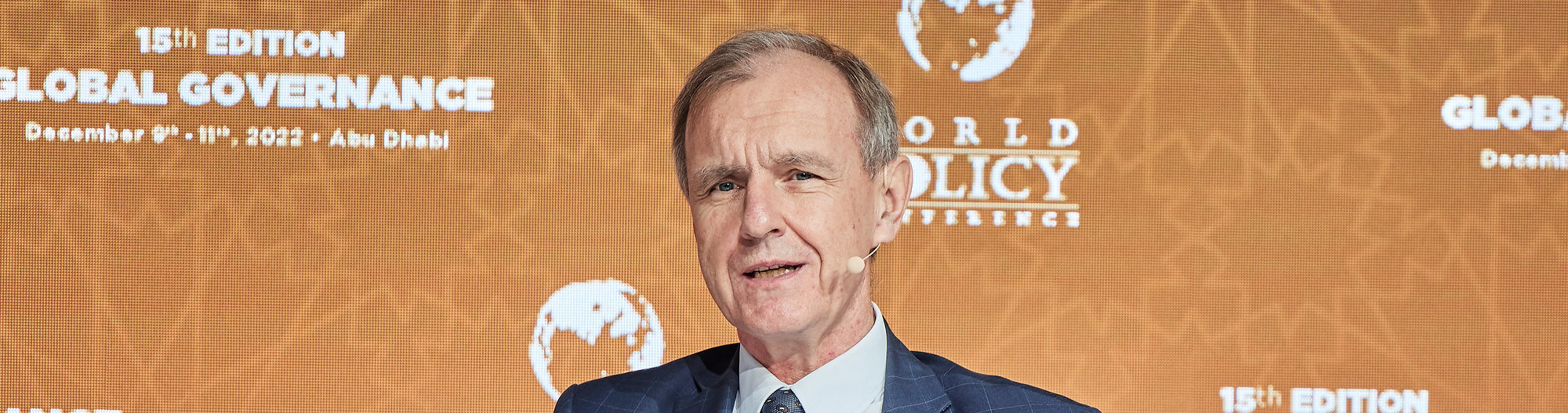
The Minister in the Ministry of Foreign Affairs and International Cooperation in Charge of East African Community made this remark in a plenary session on “The Sahel and West Africa: Geopolitics and Geo-economics” at the 15th Edition of the World Policy Conference taking place in Abu Dhabi, UAE from 9th – 11th December 2022.
Minister Nshuti told participants that consequences of insecurity in Sahel affect many countries.
“The terrorism threat is affecting and dangerously spreading beyond the Sahel region. As we all know terrorism has no borders,” he said.
Reflecting on solutions to conflicts, the official reminded that military means cannot be perceived as a panacea for all insecurity challenges.
“Security cannot be solely defined and addressed simply by military means. It is important to address root causes of insecurity which include poor governance, service delivery and socio-economic challenges to ensure stable and cohesive societies,” he emphasized.
He added that there is need to increase Africa’s financial capacity to timely and efficiently respond to threats against peace and security on the continent.
“Indeed, in the world of peace support interventions, those who have the means lack the will, and those with the will lack resources,” he said.
Speaking on Rwanda’s commitment to peace and security efforts in Sahel and the whole African continent, the Minister of state told the gathering that Rwanda supports peace interventions through multilateral and bilateral arrangements.
“From the experience of Rwanda’s military support in Mozambique and Central African Republic, it’s proven that bilateral arrangements complement multilateral interventions in a better way to produce timely results,” he said.
The work of the fifteenth edition cover issues such as the International Economic Order, the Sahel and West Africa, US-China Rivalry, the Future of EU, Climate Change and Energy Transition, Public Health, Food Security, and many topics. More than 200 international leading figures are attending the conference.
By Peter Muyombano.