CHRONIQUE – Les unités combattantes sont épuisées. La guerre de mouvement a fait place à la guerre d’usure.
Il y a tout juste six mois, la Russie envahissait son voisin ukrainien. Vladimir Poutine ne supportait plus l’envol des Ukrainiens hors de sa sphère d’influence – processus chaotique mais continu depuis leur indépendance en 1991. Il lançait donc la première guerre de Sécession du XXIe siècle. Il était passé à l’acte, à la surprise de la plupart des Européens.
Son plan, en forme de coup de poker, était de s’emparer en trois jours de Kiev, grâce à une opération commando aéroportée, pour y installer un gouvernement à sa botte. Il échoua parce que la CIA avait percé les secrets de l’état-major russe et transféré ses plans opérationnels à l’armée ukrainienne. Cette dernière attendait de pied ferme les parachutistes russes sur l’aérodrome des usines Antonov, au nord de la capitale.
Haut-fonctionnaire du Corps des mines, il est diplômé de l’ENS et de HEC Paris où il a étudié l’informatique, l’économie et l’entrepreneuriat. Passionné par l’innovation et l’intelligence artificielle, il a travaillé avec Yoshua Bengio (prix Turing 2017) et au sein de Facebook AI Research à New York et Paris. Médaillé d’argent de l’IOI, il défend depuis 2013 l’importance de l’enseignement de l’informatique au sein de l’association France-IOI. Depuis 2022, il occupe le poste de chef de projets digitalisation & innovation fintech à l’ACPR.
Directeur général adjoint de l’OMC à Genève depuis 2021. Monsieur Jean-Marie Paugam était auparavant délégué permanent de la France auprès de l’Organisation Mondiale du Commerce et a exercé plusieurs responsabilités managériales en matière de commerce, développement et finance internationale au sein de la direction générale du Trésor en France et du système des Nations Unies/OMC. Il a collaboré à l’Institut français des relations internationales (Ifri) en tant que chercheur senior sur les questions de politique commerciale, en particulier le thème du développement. M. Paugam est ancien élève de l’École nationale d’administration et diplômé en droit des affaires et en sciences politiques de l’université d’Aix-Marseille.
Consultant senior auprès de l’OCDE et de la Banque Asiatique de Développement, travaillant actuellement sur la Malaisie, le Kazakhstan et le Bhoutan. Ancien Directeur adjoint au département Économie de l’OCDE, il a supervisé les travaux sur une cinquantaine de pays membres et non-membres. Il est auteur ou co-auteur de rapports sur la Chine, l’Inde, la Russie, le Japon, les deux Corées, la Thaïlande, la Nouvelle Zélande, la zone euro, la France, le Royaume-Uni, la Turquie, la Pologne et les pays nordiques. Il fut également Conseiller économique, auteur principal des Perspectives économiques de l’OCDE et Secrétaire OCDE du G10. Auparavant, il fut économiste au Fonds Monétaire International, au sein des départements Recherche et Europe. Il démarra sa carrière à la Banque de France. Il est titulaire d’un doctorat en économie du MIT, a publié deux manuels et de nombreux articles et papiers. Il a enseigné à l’ENA, HEC et l’Université Paris-Dauphine.
Country must beef up decision-making and cooperation with allies, private sector
Joe Biden, left, Fumio Kishida, Tsai Ing-wen and Xi Jinping: As China-Taiwan tensions intensify, experts worry about Japan’s readiness to deal with an emergency in the Taiwan Strait. (Nikkei montage/Xinhua/AP/Getty Images/Reuters)
HIROYUKI AKITA, Nikkei commentator
TOKYO — China’s saber-ratting to intimidate Taiwan is stirring up tensions in the Taiwan Strait, raising concerns that the region is entering an extended period of heightened risk of armed conflict. The increasingly volatile situation means time is running out for Japan to prepare for a full-blown crisis involving Taiwan.
This is, however, not the first time for Japan to face a tense situation in the strait. In March 1996, the Chinese military launched missiles into waters around Taiwan, calling it a military exercise, in an apparent attempt to intervene in the island’s presidential election — an incident that became known as the Third Taiwan Strait Crisis.
Selon l’économiste Philippe Chalmin, de nombreux acteurs vendent leurs barils moins cher qu’au début de la guerre en Ukraine, anticipant une baisse de la demande et une augmentation de l’offre.
Depuis neuf semaines, les prix du carburant baissent. En France, le gazole se vend désormais 1,79 euro le litre en moyenne ; le super sans plomb 1,78, selon les données du gouvernement publiées mardi 16 août. Les prix à la pompe n’ont pas été aussi bas depuis le mois de février, alors que la guerre fait toujours rage en Ukraine. C’est la conséquence d’un fléchissement de la consommation de pétrole et des tractations au sujet du nucléaire iranien, selon l’économiste Philippe Chalmin, professeur à l’université Paris Dauphine et président de Cyclope, un groupe d’étude spécialisé dans l’analyse des marchés des matières premières.
L’Express : Pourquoi les prix du carburant baissent-ils, alors que la guerre fait toujours rage en Ukraine ?
Philippe Chalmin : Contrairement au gaz, la guerre en Ukraine impacte moins directement le marché du pétrole. Le monde ne dépend pas uniquement des exportations russes pour se procurer cette marchandise. Quelques semaines après le début de l’invasion, les prix de l’ensemble des matières premières se sont effectivement envolés. A cette époque, les analystes peinaient à évaluer exactement les implications du conflit. Cette incertitude a contribué à pousser les prix à la hausse, notamment ceux du pétrole.
CHRONIQUE. Arte n’avait aucune raison valable de diffuser le documentaire militant « Notre ami l’atome – Un siècle de radioactivité » le matin du 4 août.
Le matin du 4 août 2022, peu de téléspectateurs ont vu le documentaire de 2020 intitulé Notre ami l’atome – Un siècle de radioactivité sur Arte*. Il n’y avait aucune raison de diffuser ce film partisan à une heure où l’audience serait vraisemblablement infime. Ce n’est pas la première fois qu’Arte présente des films militants qui prétendent à l’objectivité, mais qui ne sont qu’une propagande éhontée de l’écologie politique, antinucléaire notamment. Les deux précédents présidents d’Arte à qui j’en ai parlé m’ont tous les deux précisé que de tels films, et notamment celui-là, étaient un « choix allemand ».
Prime Minister Fumio Kishida’s administration is currently working to revise the national security strategy — first created in December 2013 under Prime Minister Shinzo Abe with Kishida involved as then-foreign minister.
The strategy states that it is intended to cover a period of around 10 years. And, in the nearly nine years since its creation, the world has faced a great change in international order, including the ongoing Russian aggression in Ukraine.
The government began hearing the opinions of experts in January to kick off the process of revision.
Unlike when the strategy was first created, the government has not established a panel of experts this time. Instead, the Cabinet Secretariat’s National Security Secretariat appears to be working on the draft along with bureaucrats from the Defense Ministry and the Foreign Ministry.
It is likely that the government will put together the draft of the revision during summer and fall.
One thing to watch will be how economic security will be positioned in the strategy.
The term was not included in the initial strategy document released in 2013, but recently serious concerns have arisen over U.S.-China confrontations and moves to decouple from China, as well as Beijing pressuring other countries by taking advantage of their economic relationships.
As the Kishida administration gears up discussion on drafting a new national security strategy, the biggest change between 2013 and now is that the issue of economic security has been attracting attention.
Economic statecraft
The Kishida administration is not the first Japanese government to work on economic security or geoeconomic challenges.
After World War II, Japan pursued the path of a pacifist nation under Article 9 of the Constitution, which states, “the Japanese people forever renounce war as a sovereign right of the nation and the threat or use of force as means of settling international disputes.”
Unlike other major industrialized countries, Japan has continued efforts to expand its influence in the global community through nonmilitary means due to both its constitutional constraints and remorse over its wartime aggression.
It can be said that Japan positioned economic statecraft — the use of economic means as foreign policy tools — at the center in identifying its postwar diplomacy.
In “The Diplomatic History of Postwar Japan,” a book edited by Makoto Iokibe, professor emeritus of Kobe University, Iokibe wrote that Japan settled on the Yoshida doctrine adopted by then-Prime Minister Shigeru Yoshida’s administration of “light rearmament, dependency on the United States for its security, and emphasis on economics and commercial development.”
And Iokibe said, “Yoshida’s choices were to have a long and controlling influence as the basis for postwar Japan.”
Postwar Japan’s pursuit of such foreign policies resulted in the country building its identity as an economic superpower.
Moreover, the international environment during the Cold War made the use of military force even more difficult. French sociologist Raymond Aron described the Cold War as “peace impossible, war improbable.”
Thinking that a nuclear war between the U.S. and the Soviet Union would obliterate human life, both the Western and Eastern bloc countries were attempting to act cautiously so that the use of military power would not lead to World War III.
Hence there was an increasing need for major industrialized countries to employ a strategy that utilized nonmilitary means, and some countries began aiming at expanding their influence through such measures as economic aid to developing nations.
Japan strategically strengthened relationships with Southeast Asian and African countries through providing official development assistance.
The Export-Import Bank of Japan, later succeeded by the Japan Bank for International Cooperation, served as the driving force behind Japan’s strategic infrastructure exports.
In 2014, Japan revised the ODA Charter to change its name to the Development Assistance Charter, in a shift from providing assistance to cooperating with equal partners.
The move reflected the government’s growing intention to link economic cooperation with national security and promote foreign economic aid strategically.
The end of the Cold War freed people from the fears of World War III and, as a result, also lowered the hurdle for the use of military force by superpowers.
Even after the end of the Cold War, Japan kept on implementing a foreign policy based on the Yoshida doctrine’s lightly armed approach and continued to work on protecting national security and interests through nonmilitary means under Article 9.
However, this foreign policy is now reaching an impasse.
De-globalization and decoupling
After the Cold War ended, people expected that it would put an end to global divisions, bringing the world together toward globalization.
They believed that democracy and capitalism would spread across the world to create one global market.
Under such assumptions, Japan and other industrialized democracies called on China to join the World Trade Organization. They also deepened economic ties with Russia mainly in the field of energy sources, regarding the country as a potential market as part of the BRICs group — Brazil, Russia, India and China.
Such recognitions were forced to change as Beijing used rare earth resources as a tool to pressure Japan, in the wake of the September 2010 collision between a Chinese fishing boat and Japan Coast Guard vessels near the Senkaku Islands, and as Moscow annexed Crimea in March 2014 through military intimidation.
Following such incidents, people began to point out the difficulties and issues regarding economic cooperation with China and Russia.
And, as can be seen from the October 2018 speech made by then-U.S. Vice President Mike Pence and the July 2019 speech by then-U.S. Secretary of State Mike Pompeo, the U.S. under President Donald Trump’s administration criticized China’s authoritarian regime and started addressing the need to review the economically interdependent relationship with Beijing — the notion of decoupling.
As confrontations and divisions between Washington and Beijing progress, Japan is also facing the need to partly review and reorganize its close supply chain relationship with China.
Some observers began to argue that the world has shifted from the era of globalization, controlled by dynamics of integration, to the era of de-globalization characterized partly by divisions and decoupling.
It will not be possible for the U.S. and China or Japan and China to decouple almost entirely like in the Cold War era.
However, as confrontations between democratic and authoritarian regimes are discussed more often, it is becoming difficult to have an optimistic outlook for China-Japan economic relations as was seen before.
That means Japan will have to create a national security strategy for the coming era by comprehensively taking into account various factors.
Japan’s geoeconomic strategy
To cope with such challenges that are both old and new, the term geoeconomics has been mentioned often in recent years. In addition to the often-used term geopolitics, economic tools and power are becoming more important than ever.
In the 21st century, it has become necessary to design a new foreign policy that responds to qualitative changes in international relations, including the shift in power balance brought about by the rise of emerging countries, and ensure the economy and national security connected closer together.
Since the Abe administration, Japan has been focusing on the geographic concept of the Indo-Pacific and at the same time has been stressing the importance of securing the safety of sea lines of communication and developing “open and stable seas” as part of its identity as a maritime nation.
Such intentions resulted in the “free and open Indo-Pacific” strategy put forth by Abe in August 2016 in a speech in Nairobi.
Under the strategy, which covers two oceans — the Pacific Ocean and the Indian Ocean — Japan aims to lead efforts to construct rules-based international order in the region alongside countries that share the same values.
Kishida’s economic security strategy
The Kishida administration, while succeeding the strategy promoted by the Abe administration, is also focusing more strongly on economic security, which had not been sufficiently addressed during Abe’s term, and has enacted the economic security promotion law.
Kishida’s strategy is to establish rules-based international order in the Indo-Pacific region, with Japan playing a central role and upgrading the U.S.-Japan alliance as well as the “Quad” framework of Japan, the U.S., Australia and India.
In doing so, it is necessary to more effectively respond to such issues as influence operations feared to be conducted by Beijing, as well as cyberattacks and infringement on intellectual property rights.
While concerns are growing in the international community over Beijing stepping up military activities in the South and East China seas and building military facilities on disputed islands, China remains the biggest trade partner for Japan, South Korea and members of the Association of Southeast Asian Nations (ASEAN).
As the Regional Comprehensive Economic Partnership Agreement was signed by 15 countries in the Asia-Pacific region including Japan, South Korea, China and ASEAN members in 2020, trade among these countries will continue to expand.
Japan must seriously consider a geoeconomic strategy that integrates issues related to both national security and economic interests.
It means we are now in a more difficult era — something we have never experienced before, having to struggle with threats we cannot clearly see and thus cannot easily cope with.
Male suspect tried to use paralysing spray on security guards after being caught trying to take photographs at the facility at Gramsh.
Two Russians and a Ukrainian have been arrested after an apparent bungled spying raid on a military base and arms factory in central Albania, the Albanian defence ministry said on Saturday.
One of the male suspects allegedly attacked the guards with a paralysing spray while trying to take photographs of the Gramsh factory, which is used for dismantling derelict weapons, the ministry said in a statement.
The ministry added that two of its soldiers were injured while trying to stop the raid, but the three foreign nationals were detained.
Albanian prime minister Edi Rama said the three individuals are “suspected of espionage”.
“Three citizens with Russian and Ukrainian passports have tried to enter the factory,” the ministry said in a statement.
“The officers who were guarding the plant reacted immediately, but during their efforts to stop the three foreign nationals, two of our soldiers were injured,” the statement said, adding the conditions of the soldiers was stable.
“In an attempt to escape control, one of the Russian nationals, identified by the initials MZ, 24 [years old], used neuroparalysing spray on the two security guards,” after he was tackled by the guards, the ministry added.
Two others, a Russian woman identified as ST, aged 33, and an Ukrainian man, identified as FA, 25 years old, were also arrested in the vicinity.
“What pride for the military guards who neutralized three individuals suspected of espionage,” Rama wrote on Twitter, adding: “Now let’s wait for the full clarification of this event.”
During the summer holidays Albania is visited by many Russians and Ukrainian tourists. The Gramsh military base is more than 70km away from the beaches.
During communism, the Albanian Gramsh plant was used to produce the Russian type of rifle AK-47.
According to the ministry’s website, the plant today provides manufacturing services for the defence industry, without giving more details.
Membre du Bundestag allemand, où il siège à la commission des affaires étrangères. Il est le porte-parole de la commission d’enquête sur l’Afghanistan. De 2018 à 2022, M. Beyer a occupé le poste de coordinateur du gouvernement fédéral pour la coopération transatlantique à la chancellerie d’Angela Merkel. M. Beyer a étudié le droit aux universités de Düsseldorf et de Bonn, où il a obtenu son diplôme en 1999. Il a commencé sa carrière juridique en tant qu’avocat associé pour le cabinet américain Mayer, Brown & Platt (aujourd’hui Mayer Brown), puis a travaillé pour Brinks, Hofer, Gilson & Lione à Chicago et Murchison & Cumming à Los Angeles. En 2000, il s’est inscrit à un programme d’études juridiques de troisième cycle à la faculté de droit de l’université de Virginie à Charlottesville, où il a obtenu un master en droit. M. Beyer a commencé sa carrière politique en 2009 et a été directement élu au Bundestag allemand à chaque élection générale depuis lors (2009, 2013, 2017 et 2021). En tant qu’homme politique, il est connu pour être un fervent défenseur d’une relation transatlantique forte, favorisant les liens entre l’Allemagne, les États-Unis et le Canada. En outre, M. Beyer a été pendant douze ans le principal rapporteur de la commission des affaires étrangères sur les Balkans occidentaux. Il est un membre engagé de diverses organisations, telles que Atlantik-Brücke, et occupe le poste de vice-président exécutif de l’Association germano-américaine, de vice-président de l’Association pour l’Europe du Sud-Est et de président de l’Assemblée fédérale du groupe régional de Silésie en Allemagne.
Iran’s response to the “final text,” sent to the European Union just before midnight Monday, does not raise major new objections, officials say.
BRUSSELS — For the first time in many months, European officials expressed increasing optimism on Tuesday that a revival of the 2015 Iran nuclear deal may actually be agreed upon by Iran and the United States.
Just before midnight Monday in Tehran, Iran sent its promised response to what the European Union has called a final text of an agreement to restore the nuclear deal, known as the Joint Comprehensive Plan of Action, or J.C.P.O.A., which former President Donald J. Trump abandoned in 2018.
The response, after tough internal talks inside Iran, was encouraging, officials said. It was not a complete yes, but it made no significant new objections. Instead, Iran is seeking further clarifications on assurances that the United States would lift punishing economic sanctions and that such assurances would be valid once President Biden leaves office.
Earlier on Monday, Iran’s foreign minister had called on the United States to show flexibility to resolve three remaining issues. Iran’s state-run IRNA news agency offered no details Tuesday, but said: “The differences are on three issues, in which the United States has expressed its verbal flexibility in two cases, but it should be included in the text. The third issue is related to guaranteeing the continuation of the J.C.P.O.A., which depends on the realism of the United States.”
Nabila Massrali, speaking for the European Union, said of Iran’s response: “We are studying it and are consulting with the other J.C.P.O.A. participants and the U.S. on the way ahead.”
The prospect of a return to power of Mr. Trump, who called the 2015 deal the worst in history before breaking it apart, has hung over these 16 months of talks. Mr. Biden’s hopes for a better deal, “longer and stronger,” as his officials put it early on, have been dashed. But Iran has moved so far ahead on stockpiling highly enriched uranium that it could now build a nuclear weapon, which it has always denied wanting to do.
The 2015 deal reduced Iran’s stockpiles of enriched uranium sufficiently to give the United States and its allies at least one year’s “breakout time” — the amount of time Iran would need to build a bomb if it chose to. That “breakout time” can now be measured in days or weeks, which is why Mr. Biden wants to restore the old deal, even if it is weaker than before, because Iran would have to give up nearly all the enriched uranium it has stockpiled since 2018.
Still, Iran has in the interim developed technical knowledge about enrichment that cannot be deleted and learned how to build advanced centrifuges, banned under the original deal, which critics say makes even a revival of the deal less valuable.
As of the last public count, Iran has a stockpile of some 3,800 kilograms of enriched uranium, well beyond the limits of the 2015 deal. Under that deal, Tehran could enrich uranium only up to 3.67 percent purity, while maintaining a stockpile of uranium of 300 kilograms under constant scrutiny of surveillance cameras and international inspectors.
But now, Iran enriches uranium up to 60 percent purity — useless for civilian applications and a short step away from bomb grade.
At the same time, in a separate dispute with the International Atomic Energy Agency, the U.N. nuclear watchdog that is supposed to monitor any deal, Iran has turned off key surveillance cameras and not allowed the agency to replace memory cards.
Notably, the Iranian response did not include its earlier stated demand that the I.A.E.A. drop its three-year investigation into unexplained deposits of highly enriched uranium, which Iran has refused to account for. But officials said that the dispute with the I.A.E.A. was an important but separate issue from the nuclear deal, which would not block agreement or implementation of the deal.
On Monday, in Washington, the State Department spokesman, Ned Price, said the United States would share its own response with the European Union, which is chairing the talks, and urged Iran to drop “extraneous demands” that go beyond the nuclear deal.
“The only way to achieve a mutual return to compliance with the J.C.P.O.A. is for Iran to drop further unacceptable demands that go beyond the scope of the J.C.P.O.A.,” Mr. Price said.
Farnaz Fassihi contributed reporting from New York.
Read this article on the website of The New York Times
Protests took place in the northwest of Syria after Turkish Foreign Minister Mevlut Cavusgolu last week declared that he had briefly met with his Syrian counterpart in Belgrade nine months ago and had discussed a possible reconciliation between the Assad regime and the opposition. Some opposition supporters went to the extreme of burning the Turkish flag in response, while the Syrian Interim Government issued a statement calling for everyone to calm down and apologizing for the burning of the flag.
Russian President Vladimir Putin is trying to prop up Bashar Assad. He is encouraging the Kurdish-dominated Syrian Democratic Forces to talk to Assad to fend off a proposed Turkish incursion, while also pushing Turkish President Recep Tayyip Erdogan to cooperate with Damascus on answering Ankara’s security concerns, including mentioning the Adana Agreement. Turkey and Syria signed this accord in 1998 following the expulsion of Abdullah Ocalan from Syria. Through this deal, Turkey can chase terrorists 8 km into Syrian territory. Could an extension to it mean Putin and Assad agreeing to the safe zone Turkey has talked about for some time?
Assad’s talks with the Kurds have not gone anywhere and probably will not. To start with, the Syrian army cannot, under any conditions, face off with the Turkish military. Hence, Assad cannot offer the SDF the protection it seeks. On the other hand, the Kurds are no fools — they know they have no real prospects with Assad. They know he will never keep his word. The scenario that former US envoy to the Global Coalition Against Daesh Brett McGurk outlined to end the war in 2019, by which Assad reconciles with the Kurds, does not seem to work out. This is why Putin is now talking to Erdogan about normalizing with Assad.
Erdogan currently needs all the help he can get. His popularity is sinking due to Turkey’s high inflation, worsening economic situation and the presence of 3.7 million Syrian refugees. A stunt against the Kurds in Syria should give him a boost with his electorate. However, Turkey will not conduct its operation unless it gets a green light from either the US or Russia. Putin is now proposing coordination with Assad as an alternative to an incursion.
Though Turkish-Syrian intelligence cooperation has not stopped regardless of the animosity between the two leaders, it has not led to any breakthrough in bilateral relations. It is difficult for Erdogan to normalize with Assad as he would lose credibility. Being the main backer of the Syrian opposition, the Turkish president cannot just pull the plug on Idlib.
His own constituency has been hearing for so long the narrative of the need to support the Syrian opposition and the fact that Assad and his regime are ruthless criminals. Can he change course all of a sudden? How could he then justify having accepted millions of refugees? Meanwhile, Assad has no intention of allowing the refugees to return.
The US somehow accepted the Assad-Kurdish talks; however, they should have opposed them and instead encouraged Kurdish-Turkish talks. This could help Erdogan regain the conservative Kurdish electorate domestically. He has to remember that it was the Kurdish vote that allowed Ekrem Imamoglu and Mansur Yavas to snatch Istanbul and Ankara, respectively, from him in the 2019 mayoral elections.
Though the general mood in Turkey is now more in favor of confronting the PKK than for peace talks, a breakthrough with the Kurds might help Erdogan regain some of the Kurdish constituency. After all, the Kurds in Syria should be realistic and recognize that the only sustainable scheme is for them to share power with the Arab population and make the local councils more representative by removing the control of the “kadros” and allowing elected officials to assume their role.
The US, on the other hand, would be better off if, instead of letting Russia broker the talks on Syria’s northeast, it brought its two allies, the Kurds and the Turks, together and convinced them that talking to each other is better than talking to Assad. The Syrian leader would end up stabbing both in the back. And they would be better off finding a settlement now.
Erdogan is in a precarious situation as he might lose next year’s elections. Polls have shown that he is losing out in head to heads with five other contenders. Kemal Kilicdaroglu, leader of the main opposition party CHP, has pledged to normalize with Assad and to agree with him on the “voluntary return” of refugees, which will most likely be anything but.
According to a July report by European Council on Foreign Relations Turkish specialist Asli Aydintasbas, Europe should make sure that, in this eventuality, any normalization takes place in line with UN Security Council Resolution 2254. However, there is no way that Assad will comply with this resolution. Hence, it would be better for Europe and the US to prepare for a possible change in Turkey’s leadership by making sure a deal is struck now that will alienate Assad. They should stress to the new leadership in Ankara — if there is a change in the next elections — that any rapprochement with Assad will affect the country’s relations with the US and Europe and may be subject to sanctions.
The Turkish position on Syria is of prime importance to the conflict. If Ankara pulls the plug on Idlib, the stronghold of the opposition, and allows an incursion by Assad, then the world will witness a new level of carnage. The people in Idlib are not reconcilable with the regime. Hence, they will fight to the death knowing they have no place to go.
Therefore, the US and the West should approach Turkey’s relations with Syria in a very strategic manner. They should remove their tacit agreement to the Assad-SDF negotiations and direct their Kurdish partners to talk to Turkey instead. An agreement with the Kurds of the northeast would likely allow Erdogan to mend, to a certain extent, his deteriorating relations with the Kurdish constituency at home. To ensure the sustainability of this agreement, the US and Europe should make it clear that, whoever wins the presidency in June 2023, normalization with the Assad regime will not be tolerated.
The US and Europe should act now to steer the course of events before it is too late by putting in place a sustainable agreement between Turkey and the Kurds of northeast Syria that will prevent any new military operation by Ankara.
President Paul Kagame has congratulated Kenya’s President elect William Ruto over his election that was announced by Kenya’s Independent Electoral and Boundaries Commission.
On his twitter account, Kagame further congratulated the citizen of Kenya for peaceful presidential elections.
“On behalf of the Government and People of Rwanda, I congratulate our Brothers and Sisters, the People of Kenya, for conducting peaceful elections on 9 August 2022. I also congratulate H.E. Dr William Samoei Ruto, the President-Elect,” Kagame wrote this evening.
“The Government of Rwanda attaches great importance to the good relationship and cooperation between Kenya and Rwanda.”
An earlier message by the Ministry of Foreign Affairs and international cooperation had said that the Rwandan Government sent its complimentary message to the Kenyan Foreign congratulating the President-elect following a successful election held August 9, 2022.
“The Government of Rwanda attaches great importance to the cooperation between Kenya and Rwanda and wishes to take this opportunity to reaffirm its to further strengthen the bond of relationship that exists between the two countries” the ministry said in a statement this Tuesday.
Rwanda’s Ministry of Foreign Affairs also used the statement to announce a renewal of cooperation with assurances of highest consideration.
Ruto has been declared the duly elected fifth President of Kenya by the Independent Electoral and Boundaries Commission (IEBC).
The commission said Ruto had fulfilled the constitutional requirements after garnering 7,176,141 votes, representing 50.49 per cent of the total votes cast and he achieved the minimum number of 39 counties at 25%.
His main rival Raila Odinga of the Azimio La Umoja One Kenya coalition party got 6,942,930 votes representing 48 percent of the votes cast.
RIYADH: Representatives from Western and Gulf Arab countries met in the Saudi capital, Riyadh, on Tuesday to discuss joint efforts to support the stability and prosperity of Sudan.
The Friends of Sudan, including officials from the UAE, US, UK, Germany, France, Sweden, Norway, UN, EU, African Union, Arab League, World Bank Group and the International Monetary Fund, held their meeting at the Ministry of Foreign Affairs in Riyadh.
“The meeting discussed ways to strengthen joint cooperation to support all efforts that ensure a peaceful political transition in Sudan,” a statement issued by Saudi Press Agency said.
The group also discussed ways to further assist and support the efforts of the UN Integrated Transition Assistance Mission in Sudan (UNITAMS).
Earlier on Tuesday, UN special representative for Sudan Volker Perthes confirmed the meeting was underway on Twitter, however, he was not able to attend in person, only virtually, as he had tested positive for COVID-19.
“International support and leverage is needed, Perthes said, adding: “Support for political process needs to go along with active support to stop violence.”
He also expressed deep concern over Monday’s violence. Sudanese security forces opened fire on anti-coup protesters in Khartoum, killing seven people.
Eid bin Mohammed Al-Thaqafi, the undersecretary of the Ministry of Foreign Affairs for Political and Economic Affairs, attended the meeting on behalf of Saudi Arabia.
US Assistant Secretary of State for African Affairs Molly Phee and newly-appointed envoy for the Horn of Africa David Satterfield, who met with the Saudi foreign minister a day earlier, also attend the one-day conference.
The meeting comes a day after representatives of the Sudanese quartet — Saudi Arabia, the UAE, Britain and the US — met in Riyadh to also discuss efforts to support Sudan and assist UNITAMS.
The adverse impacts of the COVID-19 and conflicts are hampering food security in the African continent. This was disclosed at a high-level the African Union Development Agency-NEPAD meeting that kicked off on Tuesday July 26, 2022 in Dakar, Senegal.
In her opening remark, CEO of the African Union Development Agency-NEPAD, Mrs Nardo Bekele-Thomas, said that the COBVID-19 and its socio-economic consequences have exacerbated food insecurity and malnutrition globally. In Africa, compared with 2019, about 46 million more people were affected by hunger in 2020, in the shadow of the pandemic. Further evidence suggests that, without urgent action, COVID-19 could result in an additional 9.3 million wasted children – on top of the 45 million in 2020 – and an additional 2.6 million stunted children – on top of the 149 million in 2020 – globally by the end of 2022, backsliding a decade of progress on nutrition.
Mrs Nardos Bekele-Thomas noted that climate change, conflicts and terrorism, and the increased cost of food are some of the challenges adversely impacting food security. According to the CEO, in the Horn of Africa region, severe droughts since 1981 are leading to the death of livestock and crop failure, resulting in an estimated 13 million people waking up hungry every day. « Conflict is a major threat to food security and the leading cause of global food crises in 2020 and now the conflict in Ukraine and Russia has plunged global food and energy markets into turmoil, raising high food prices evn further. These increases once passed on to our local domestic markets, will limit people’s access to food of adequate quantity and quality, » she said.
FAO has estimated that, globally, the number of undernourished people, which was around 817 million in 2021, could increase by 7.6 – 13.1 million people in 2022-2023.
However, Nardos Bekele-Thomas said, despite the challenges affecting food and nutrition security in Africa, the National Agriculture Investment Plans (NAIPs) and Regional Agriculture Investment Plans (RAIPs) are instrumental in driving the agriculture transformation processes and building risilient food systems on the continent. « Today, I am very delighted that we are nearing the end of the second decade (MALABO Declaration) of the NAIP and RAIP implmentation, it is of paramount importance to take stock on how far the National Agriculture Investment Plans (NAIPs) and Regional Agriculture Investment Plans (RAIPs) were instrumental in driving the agriculture transformation processes and building resilient on food systems. Further, I would like to also congratulate the Member States here present and with the support of partners, that we have managed to successfully sustain and expand the Comprehensive Africa Agriculture Development Programme (CAADP) process for more than a decade, » she said.
Ms. Nardos Bekele-Thomas said the work built on the CAADP as a continental policy framework for agricultural transformation to increase food security and nutrition and reduce poverty and the commitment to agricultural transformation under the African Union (AU) CAADP Malabo declaration on agricultural growth and transformation, the African Common Position on Food Systems shall bring renewed impetus to agriculture developed on the African Continent.
« Africa expects the momentum created by the UNFSS to result in mobilizing and galvanizing implementation of its priorities in Agenda 2063, the CAADP-Malabo declaration, the Africa Continental Free Trade Agreement (AfCFTA) and other AU continental development frameworks. »
The African Union Development Agency-NEPAD is mandated to coordinate and promote regional integration towards the accelerated realization of the AU Agenda 2063.
Prime Minister Edi Rama has given Sunday his instructions to the team of negotiators for the process of opening negotiations on the road of European integration.
On the side of the the new chief negotiator, Majlinda Dhuka Rama explained the reasons for the changes in the government while asking the team that will represent Albania in Brussels to make a positive impression with their work.
« We are no longer in the conditions of an interaction with the so-far intensity. It is fundamental that each of you guarantees with work, seriousness, the quality of materials, communications and interaction that Albania is viewed with respect at every step. The respect we have gained in the political aspect, I want to gain in the technical aspect. I want the Albanian team to create a positive impresison in Brussels.
I have had the opportunity to know and appreciate most of your qualities and I have had the opportunity to see them in a certain progress. Some of the deputy ministers have been on this road since the beginning of time. The challenge is entirely new. It is important to emphasize that the appointment of the new chief negotiator underlines the changing nature of the relationship between us and the EU. Ambassador Mazi did a commendable and diplomatic job. Being a side in this process, until the moment when it was decided to open the negotiations formally.
There is a fundamental difference. There are many people in our administration who cannot be found on Google, but without whom the administration would not be able to function. There are people who have been in office since the early 1990s. They have served the state with modesty. If everything had been left in the hands of those who come in and out as if it were their father’s property, we would have a situation like after the earthquake », said Rama.
Read the article on the website Albanian Daily News
Shared interests may sustain alliances in peacetime. But alliances that are capable of winning wars and confronting crises require something more: a willingness to compromise one’s immediate well-being and to endure sacrifices. This is called solidarity, and it is one of the principles upon which the European Union (EU) is based.
Solidarity in Europe had long been a matter for speeches. But then the 2010 euro crisis put it to the test, when Greece, Ireland, and Portugal lost access to capital markets and were forced to seek financial assistance. Many in Northern Europe were shocked: To allow those states that had ignored the single currency’s rules to rely on their partners’ helping hand was simply an invitation to flout the rules repeatedly. The battle lasted for five years, with many twists and turns, and entailed much unnecessary economic hardship, until it ended in 2015 with the decision to keep Greece inside the euro.
That lesson had not been forgotten when the Covid-19 pandemic shock hit Europe in 2020. The European Central Bank (ECB) was quick to launch a dedicated asset-purchase programme, and the EU itself devised two path breaking initiatives in a matter of months. It developed a joint plan to purchase and distribute vaccines, so that wealthier member states could not outbid poorer ones, and it established the Recovery and Resilience Facility (RRF), through which grants and loans to member states are being financed by EU borrowing. These were rightly hailed as European solidarity in action.
But the war in Ukraine and its economic consequences have opened a new, complicated chapter for the EU. The shock is evidently highly asymmetric. For example, there are currently 1.2mn Ukrainian refugees in Poland, but only 130,000 in Spain – a roughly ten-to-one difference between countries with similar populations. Dependence on Russian natural gas also is extremely uneven. Supplies from Russia cover about one-quarter of total energy demand in Hungary, Latvia, and Slovakia, and about one-eighth in Germany and Italy, but a negligible share in Spain and Portugal.
In normal times, tackling this asymmetry would present a major challenge for the EU. But the big, essential difference with previous threats to the bloc’s cohesion is that, in Russian President Vladimir Putin, Europe faces an external enemy who makes no secret of his desire to exploit and exacerbate divisions both between and within European countries. Putin’s ultimate goal is to destroy the EU.
To this end, he is punishing Russia’s adversaries by cutting gas supplies, and rewarding Russia’s European allies for their loyalty. The latter include Hungarian Prime Minister Viktor Orbán, who has now fully endorsed the Russian narrative, declared that the EU “shot itself in the lungs” by imposing sanctions against Russia, and sent his foreign minister to Moscow to negotiate additional gas purchases.
The recent unravelling of the Italian government coalition led by former ECB President Mario Draghi is clearly bad news in this regard. Not only was Draghi a staunch advocate of toughness against Russian aggression and a key architect of EU sanctions, but the three parties (the Five Star Movement, the League, and Forza Italia) that triggered his government’s collapse represent various shades of pro-Russian opinion. Putin has undoubtedly scored a goal here.
The ECB’s pivot to a more hawkish policy stance could have been another blow to European solidarity. Since March 2020, flexibility in the allocation of the ECB’s special asset-purchase program had kept a lid on sovereign bond spreads among eurozone countries; but by mid-July the combination of the scheme’s expected termination and political turmoil in Italy had already caused spreads to widen.
The ECB’s announcement on July 21 of the Transmission Protection Instrument, a new discretionary asset-purchase facility, is likely to help calm fears. Activation of the TPI is of course conditional on a eurozone member state fulfilling economic policy criteria, including – importantly – a determination by the ECB that its public debt remains sustainable. But this was necessary to avoid moral hazard and protect the central bank from the perils of fiscal dominance.
EU solidarity on the energy front, however, is in shorter supply. Initial reactions to the European Gas Demand Reduction Plan presented on July 20 by European Commission President Ursula von der Leyen were cool, to say the least.
According to the original proposal (based on the same EU treaty article that provided the cornerstone for the post-pandemic RRF), all member states should aim to reduce their gas usage over the winter by 15%. Furthermore, these reductions could be made mandatory in the event of an energy alert triggered by a substantial risk of a severe gas shortage or by exceptionally high demand. In other words, Spain, which does not depend on Russian gas, would be expected to cut its domestic consumption if Russia further curtailed its exports to Germany.
This plan was clearly put on the table as a basis for discussion. Other issues, such as the politically controversial postponement of the planned closures of nuclear or coal-fired power plants, common purchases of liquefied natural gas, and the expansion of interconnection infrastructure must be part of the negotiation. But the instant negative reactions from Spain, Portugal, and Greece amounted to a replay in reverse of what these countries suffered during the euro crisis a decade ago.
After several days of negotiations, EU member states agreed on July 26 to a watered-down version of the plan. But it is hardly sufficient quantitatively, and it is full of carve-outs and exemptions. Moreover, to mandate any cuts will require a vote in the European Council.
When the 13 American colonies signed the Declaration of Independence in 1776, Benjamin Franklin famously said that, “We must all hang together, or, most assuredly, we shall all hang separately.” With the fallout from the Ukraine war threatening Europe’s cohesion, Franklin’s warning has gained new and acute relevance. — Project Syndicate
Experts discussed the new geopolitics of energy at the 2022 Aspen Security Forum on July 19-22 in Colorado in the US.
Produced in collaboration with the Aspen Energy and Environment Program, this discussion on The New Geopolitics of Energy involved Jason Bordoff, Founding Director, The Center on Global Energy Policy at Columbia University; Meghan O’Sullivan, Jeane Kirkpatrick Professor of the Practice of International Affairs, Harvard Kennedy School, Harvard University; and Daniel Poneman, Former Deputy Secretary, US Department of Energy. The moderator was Joseph Nye, Co-Chair, Aspen Strategy Group and Dean Emeritus, Harvard Kennedy School, Harvard University.
If Russia decides to mount a nuclear strike on the United States, it will succeed, according to David Wurmser of the Washington-based Center for Security Policy.
“I don’t think most Americans perceive that, because their elites have convinced them that there is no such option,” Wurmser tells Caroline Glick on this week’s “Mideast News Hour.” “I think there is a misperception out there in America of our own power and strength.”
As a nation, the United States still possesses tremendous latent strength, “but latent strength does not win wars,” he continued. “So, America right now is in a bad place, where we’re intoxicated with our words, we’re cashing in on a legacy of power that we no longer are willing to pay for societally, economically, or in terms of assertion of American power and sacrifice.”
Glick and Wurmser focus their discussion on the fallout from President Joe Biden’s recent visit to Israel and the Middle East.
Every state in the Middle East, friend and foe—except Israel—realizes that Biden’s visit to the region was a failure, they say.
Only Israel thinks Biden’s visit was a success
Israel’s caretaker government under Prime Minister Yair Lapid and Defense Minister Benny Gantz is still insisting that Biden’s visit was a success. This even as Biden refused to put forward any option for preventing Iran from becoming a nuclear-armed state.
The Saudis, Emirates and Egypt all responded to Biden by looking for ways to normalize their ties with Tehran. Russian President Vladimir Putin responded to Biden’s failure by holding a summit in Tehran with Iranian dictator Ali Khamenei and Turkish President Recep Erdoğan.
Wurmser explains that Biden’s refusal to green-light an Israeli attack on Iran or consider any option but continuing down his current sure path of enabling Iranian nuclear armament should have sufficed to convince Lapid and Gantz that Israel needs to ignore the United States and move forward with its regional partners to either take out Iran’s nuclear installations by force or take down the regime, or both.
Instead, Lapid responded by putting a framed copy of his Jerusalem Declaration with Biden on the wall of the security cabinet meeting room. That is, he doubled down on his faith that the United States will keep its word and prevent Iran from acquiring nuclear weapons.
Gantz, for his part, went one further. He flew to the United States this week to meet again with Biden’s top advisors. Speaking in Aspen, Gantz insisted that Biden’s pledge to prevent Iran from acquiring Iran from becoming a nuclear power was a significant event.
Why America refuses to stop Iran
Wurmser and Glick delve into the deeper reasons for Washington’s refusal to prevent Iran from becoming a nuclear power. They show that the failures of the United States are structural and conceptual, and as a result unlikely to be corrected in a timeframe relevant to preventing Iran from becoming a nuclear-armed state.
Finally, they move to Israel itself, and the stakes in the coming election. They talk about what is liable to happen before the elections in the United States and Israel, and the important signal that Israel is sending both through its continued operations in Iran and through strategic messaging from opposition leader Benjamin Netanyahu. They explain how those messages and actions are likely to impact events, for better or worse, in the coming months.
Le président du Groupe de la Banque africaine de développement (BAD), Akinwumi Adesina, a rassuré les investisseurs américains : l’Afrique est un marché sûr, compétitif et rentable. C’était à l’occasion du Sommet des affaires Afrique- Etats-Unis, à Marrakech, au Maroc, sur le thème « Building forward together (Bâtir l’avenir ensemble »). Un sommet Etats-Unis-Afrique se tiendra du 13 au 15 décembre à Washington.
Ont pris part à l’événement, le président du Botswana, Mokgweetsi Masisi, la vice-présidente des États-Unis, Kamala Harris, le ministre marocain des Affaires étrangères, Nasser Bourita, la directrice générale du Millennium Challenge Corporation américain, Alice Albright, le président de la Confédération générale des entreprises du Maroc, Chakib Ali, et la directrice générale du Népad, l’agence de développement de l’Union africaine, Nardos Bekele-Thomas, ainsi que 450 représentants d’entreprises et de gouvernements. Ils ont échangé sur le renforcement des liens commerciaux, d’investissement et de commerce entre les États-Unis et l’Afrique. Dans son discours d’ouverture, le patron de la diplomatie marocaine, Nasser Bourita, a rappelé que jamais le moment n’avait été aussi opportun pour renforcer la coopération entre l’Afrique et les États-Unis. « Il est temps pour l’Afrique de récolter les fruits de ses potentialités, de jouer un rôle central et naturel sur la scène internationale et dans les développements majeurs qui se produisent au niveau mondial », a-t-il déclaré.
Le patron de la BAD, Akinwumi Adesina, a exhorté les investisseurs américains à considérer l’Afrique comme une destination d’investissement logique et à s’y engager dans un partenariat gagnant-gagnant. Selon lui, les investissements américains sont essentiels pour accélérer le développement des infrastructures sur le continent. « C’est un moment opportun pour les investissements américains en Afrique, et ce, à grande échelle », a-t-il dit, mais : « Le futur n’attend pas. L’heure de l’Afrique est venue, l’avenir de l’Afrique est radieux. Nous sommes ouverts aux affaires, et nous vous accueillons à bras ouverts », a-t-il rappelé. La vice-présidente des Etats-Unis, Kamala Harris, a déclaré : « Nous nous concentrons sur le besoin urgent d’augmenter la production et les exportations alimentaires avec et au sein de l’Afrique », soulignant le rôle clé des partenariats public-privé, et du renforcement des relations États-Unis-Afrique : « Le président Biden et moi-même sommes impatients d’accueillir les dirigeants de tout le continent africain à Washington, du 13 au 15 décembre, à l’occasion du sommet des dirigeants États-Unis–Afrique », a-t-elle ajouté.
Akinwumi Adesina a énuméré quelques investissements en Afrique, ce qui témoigne le potentiel du continent, notamment la raffinerie de pétrole et le complexe de production d’engrais du groupe Dangote, au Nigeria, d’une valeur de 20 milliards de dollars, et le groupe MTN d’Afrique du Sud. Malgré la pandémie de Covid-19 et son impact sur les économies, le nombre d’opérations de capital-investissement en Afrique est passé de 230 en 2019 à 255 en 2020, a ajouté le président de la BAD. Malgré les turbulences, les opportunités ne cessent d’abonder en Afrique, a souligné Akinwumi Adesina, précisant que sur les six dernières années la BAD a engagé plus de 44 milliards de dollars dans les infrastructures du continent (transports, énergie, eau et assainissement), reconnaissant toutefois que l’Afrique est toujours confrontée à un déficit annuel de financement des infrastructures de l’ordre de 68 à 108 milliards de dollars.
« Nous sommes tous ici mobilisés pour créer davantage de voies vers la prospérité sur le continent africain », a déclaré Alice Albright, du Millennium Challenge Corporation. Grâce à « Prosper Africa », une initiative des Etats-Unis, lancée il y a deux ans, visant à accroître le commerce et les investissements et à promouvoir le développement durable sur le continent, 800 accords de commerce et d’investissement bilatéraux dans 45 pays d’Afrique ont été signés, pour une valeur estimée à 50 milliards de dollars.
Un sommet Afrique-Etats-Unis aura lieu du 13 au 15 décembre à Washington
L’annonce a été faite par le président américain, Joe Biden, où seront discutés des défis allant de la sécurité alimentaire au changement climatique. Il promet des « milliards de dollars » d’investissements, avec le secteur privé, qui démontrera « l’engagement durable des États-Unis envers l’Afrique et soulignera l’importance des relations entre les Etats-Unis et l’Afrique et d’une coopération accrue sur des priorités mondiales communes ». Selon un responsable américain, s’exprimant sous couvert d’anonymat, une cinquantaine de dirigeants africains devraient y participer. Depuis sa prise de fonctions en janvier 2021, Joe Biden ne s’est pas encore rendu en Afrique en tant que président des États-Unis. « Nous pensons que les Etats-Unis offrent un meilleur modèle, mais nous ne demandons pas à nos partenaires africains de choisir », a-t-il précisé. Le sommet de décembre vise « à établir un nouvel engagement économique, à promouvoir la démocratie et les droits humains, à faire progresser la paix et la sécurité et à relever des défis, tels que la sécurité alimentaire et le changement climatique ainsi que la pandémie de Covid-19 », a indiqué Joe Biden.
Lire l’article original sur le site de ADIAC Congo.
Dans un entretien exclusif accordé à TV5 Monde, la secrétaire générale de l’Organisation Internationale de la Francophonie (OIF), Louise Mushikiwabo, a annoncé qu’elle est candidate à sa propre succession.
La Rwandaise Louise Mushikiwabo veut briguer un nouveau mandat à la tête de l’OIF. « Je suis candidate pour un nouveau mandat à la tête de la Francophonie », a-t-elle annoncé au micro de TV5 Monde.
Pour sa première candidature, la diplomate rwandaise de 61 ans a notamment reçu l’appui du président français Emmanuel Macron, désireux de voir la direction de l’OIF revenir à un Africain. Elle s’est également vue assurer en juillet du « soutien collectif » des dirigeants de l’Union africaine (UA).
Née le 22 mai 1961 à Kigali, Louise Mushikiwabo est une femme politique rwandaise. Ministre de l’Information puis des Affaires étrangères du Rwanda de 2009 à 2018, elle est élue secrétaire générale de l’Organisation internationale de la francophonie en octobre et 2018 est entrée en fonction en janvier 2019.
Lire l’article original sur le site de Bénin Web TV.
Author: Kishore Mahbubani, Asia Research Institute, NUS
Populations in Western countries are angry. Western elites, who are supposed to lead their societies in the right direction, are instead leading them in the wrong direction on Ukraine. There is a wiser course of action.
This wiser course of action is based on a simple principle — that the perfect is the enemy of the good. G7 countries should accept imperfect solutions that will make their people happier. That will also help the billions of poor people in the Third World who are suffering from higher food and energy prices.
Moral priority has to be given to the sufferings of the poor — the bottom 10 or 20 per cent of the world’s population.
The greatest American political philosopher of recent times, John Rawls, emphasised that the most just society was the one that took care of the bottom 10 per cent. As he outlined in his seminal work, A Theory of Justice, any social or economic inequalities, if they are to satisfy the principles of justice, ‘are to be to the greatest benefit of the least-advantaged members of society’.
The global poor are suffering today for three main reasons. The massive post-COVID-19 stimulus packages, especially in the United States, have unleashed global inflation. Financial Times economist Martin Wolf recently wrote that ‘the combination of fiscal and monetary policies implemented in 2020 and 2021 ignited an inflationary fire’.
The illegal Russian invasion of Ukraine, followed by massive on Russia, have led to a huge spike in energy and food prices. And despite these sanctions, the EU has paid more money for Russian gas. Since the war began on 24 February 2022, Europe has paid more than US$60 billion for Russian oil and gas, while complaining that India and China were buying too much Russian oil. This led to the now famous quip from the Indian Foreign Minister, Subrahmanyam Jaishankar, who said ‘our total purchases for the month would be less than what Europe does in an afternoon’.
The Omicron strain of COVID-19 has broken through the defences of China’s zero-COVID policy. This led to massive shutdowns, including lockdowns in Shanghai since March 2022. Since China is the factory of the world, have also contributed to global inflation.
What is the rational response? To find a perfect solution? Or to accept an imperfect solution that alleviates the suffering of many people, including the people of Ukraine and the large number of poor people in the world? The West has been pushing for a perfect solution. The rest of the world would prefer to decrease their suffering with an imperfect solution.
What is the perfect solution? It is what the West is pursuing in Ukraine — the total withdrawal of Russian forces from Ukraine. No compromise. If the West could accomplish this, it should go for it. But the prospects of achieving this perfect solution in Ukraine are zero.
World Trade Organisation (WTO) Director-General Ngozi Okonjo-Iweala said ‘the war in Ukraine has created immense human suffering, but it has also damaged the global economy at a critical juncture. Its impact will be felt around the world, particularly in low-income countries, where food accounts for a large fraction of household spending … Smaller supplies and higher prices for food mean that the world’s poor could be forced to do without.’
So what is the imperfect solution for Ukraine?
The first step is to call for an immediate ceasefire. Hundreds die each day that the war continues. If Ukraine is going to feed the world again in 2023, it needs to get fertiliser so its farmers can start planting in 2022. More food in 2023 equals less suffering for the global poor.
The second step is to start talking to Russia. There should be two levels of talks. The first should be between Ukraine and Russia. The second should be between the West and Russia. Ukrainian lives would be saved and the whole world would breathe a sigh of relief.
Then comes the hard slog. Given the huge chasm between Western and Russian positions on Ukraine, there will be no immediate long-term solution. But we’re more likely to get one if talks begin, especially if we can get more countries in the world to talk to Russia.
It would be a huge strategic mistake by the West to get Indonesia, as the host of the G20 meeting on 15–16 November, to disinvite Russian President Vladmir Putin from the meeting. It would be an even bigger mistake for the West to boycott the G20 summit if Putin should attend.
There is one statistic that every Western leader should memorise and repeat each night before going to sleep — the West only comprises 12 per cent of the world’s population.
If Putin comes to Jakarta in November 2022, as he should, he will hear the views of the West and he will hear the views of the rest. Putin is not likely to listen to the West since there is zero trust between Russia and the West. But he will listen to the rest, so the West is stabbing itself in the foot by calling for Putin to be disinvited.
The West is pushing for Putin to be excluded because it is pushing for the perfect solution of trying to defeat Russia. But that is a solution that will never come about.
The West should listen to Indonesia and other non-Western members of the G20 and try to find some kind of compromise solution for Ukraine. Such a solution will save the lives of Ukrainians and it will alleviate the sufferings of the hundreds of millions of poor people in the world.
In short, the pragmatic solution is also the ethical solution.
Even before Russian President Vladimir Putin launched his war against Ukraine and set off a global scramble for fossil fuels, the battle against climate change was being lost. With national leaders and international diplomacy proving ineffective, is there any hope of saving ourselves?
NEW YORK – t is often said that no one wins a war, just that some lose less than others. Russia’s war against Ukraine promises to be no exception. One clear loser is already evident: the planet.
The war has become the international priority for policymakers and publics. And rightly so: Russian President Vladimir Putin’s aggression against Ukraine threatens a pillar of international order, namely the prohibition on changing borders by force. But the war has also triggered a global scramble for sufficient supplies of energy in response to sanctions against Russian energy exports and the possibility that Russia will cut off supplies. Many countries have found that the easiest and quickest route is to secure greenhouse-gas-emitting fossil fuels.
CHRONIQUE – Notre pays est la seule puissance qui souhaite sincèrement la réussite du développement africain.
Pour le deuxième déplacement international de son deuxième mandat, du 25 au 28 juillet 2022, Emmanuel Macron a décidé de se rendre en Afrique (Cameroun, Bénin, Guinée-Bissau). Le président de la République estime, à juste titre, que les destins de la France et du continent africain sont étroitement liés.
Qu’est-ce à dire? La réponse est simple: quand la France réussit en Afrique, c’est bon pour l’Afrique et quand l’Afrique se développe, c’est bon pour la France.
La politique du «pré carré», qui consiste pour Paris à s’intéresser en priorité aux pays issus des anciennes Afrique occidentale et Afrique équatoriale françaises (AOF et AEF) est-elle condamnable? Absolument pas. Les liens historiques, politiques, économiques, linguistiques, culturels, et disons-le tout net, affectifs, tissés avec ces territoires depuis Jules Ferry, ont forgé un magnifique patrimoine humain commun qu’il serait honteux de laisser en déshérence.
Lire l’article dans son intégralité sur le site du Figaro.
UAE, Kuwait expected to send their envoys back to Tehran in coming days, says Iranian foreign minister
Syed Zafar Mehdi | 22.07.2022
Iranian Foreign Minister Hossein Amir-Abdollahian
TEHRAN, Iran
Iran’s foreign minister said Saudi Arabia has expressed its readiness to advance the tension-easing talks between the two estranged neighbors from the security to the political level.
Hossein Amir-Abdollahian made the remarks in an interview with Iran’s state TV late on Thursday, noting progress in the Baghdad-brokered talks that have been underway since last April.
Iran’s top diplomat said they received a message from Iraqi Foreign Minister Fuad Hussein last week, who said that the Saudis were ready to advance the talks to the “political and public level.”
Iran, he added, also expressed its readiness to continue the ongoing talks brokered by the Iraqi government to the political level to restore their diplomatic ties.
The two Persian Gulf neighbors severed their diplomatic relations in 2016 after protesters stormed Saudi diplomatic missions in Tehran and Mashhad over the execution of Sheikh Nimr al-Nimr, a prominent Shia cleric in Saudi Arabia.
After almost five years, the two neighbors last year agreed to hold peace talks mediated by Baghdad. While both sides have noted progress in the talks, a significant breakthrough has been eluding.
Amir-Abdollahian said the two countries have reached some agreements in the five rounds of talks, including on the reopening of embassies, lending credence to reports already doing rounds.
Pertinently, last week, after the Jeddah summit, Saudi Foreign Minister Faisal bin Farhan said Riyadh has “extended a hand of friendship to Iran.” The comments were welcomed by Tehran.
Iran’s top diplomat also announced that the United Arab Emirates (UAE) and Kuwait would be sending their ambassadors to Tehran “in a few days,” saying the two countries introduced their envoys, and Tehran agreed with the choices.
His remarks came almost a week after UAE presidential adviser Anwar Gargash said Abu Dhabi was considering reinstating its ambassador to Iran, seeking enhanced economic ties with the country.
“We are now indeed considering sending an ambassador to Iran,” Gargash told journalists. “The next decade cannot be like the last decade. It is a decade where ‘de-escalation’ should be the keyword.”
Amir-Abdollahian also informed that Kuwait, which also snapped its diplomatic ties with Iran over the same incident in 2016, will be sending its envoy back to Tehran in the coming days.
In May, Iran’s President Ebrahim Raisi called for the restoration of Tehran-Kuwait relations to “their true capacities” amid his government’s outreach to Iran’s neighbors.
What effect does having women in executive roles have on the bottom line?
A survey of 21,980 publicly traded companies in 91 countries demonstrated that the presence of more female leaders in top positions of corporate management correlates with increased profitability of these companies, according to a paper published by the Peterson Institute for International Economics. The 35-page report, “Is Gender Diversity Profitable? Evidence from a Global Survey,” was written by Marcus Noland, Tyler Moran, and Barbara Kotschwar and supported by a major research grant from EY. The research is made up of rigorous data analysis of gender diversity and corporate profitability.
The study shows that the extent of gender diversity and its relationship to profitability varies robustly by country, sector of the economy, and by policies towards female work opportunities. The research finds no evidence that, by itself, having a female CEO is related to increased profitability, but there is some evidence that having women on a board may help—and robust evidence that women in the C-level (as in CEO, CFO and COO of management) is associated with higher profitability. In 2014 data, the study finds that nearly a third of companies globally have no women in either board or C-suite positions, 60 percent have no female board members, 50 percent have no female top executives, and fewer than 5 percent have a female CEO.
The PIIE report also found strong positive correlations between gender diversity in company size, the size of the company as well as national policies for women’s education, family leave, and the absence of discriminatory attitudes toward female executives. The study found that national averages for women’s participation on boards range across countries from 4 percent to roughly 40 percent, and that there is greater female representation on board and corporate leadership positions in the financial, healthcare, utility, and telecommunications sectors than in sectors such as basic materials, technology, energy, and industry. This is consistent with the authors’ interpretation that what matters most for gender diversity is creating a pipeline of women into corporate management, from elementary education through child-bearing years.
“We have found that some policy initiatives are more promising than others to deliver benefits while promoting gender equality, and that the emphasis should be on increasing diversity in corporate management broadly,” said Adam S. Posen, president of the Peterson Institute for International Economics. “At a minimum, the results from our unique global study, generously supported by EY, strongly suggest the positive impact of gender diversity on firm performance and identify in which sectors and countries the most progress on diversity needs to be made.”
“The impact of having more women in senior leadership on net margin, when a third of companies studies do not, begs the question of what the global economic impact would be if more women rose in the ranks,” said Stephen R. Howe, Jr., EY’s US chairman and Americas managing partner. “The research demonstrates that while increasing the number of women directors and CEOs is important, growing the percentage of female leaders in the C-suite would likely benefit the bottom line even more.”
Après le bombardement russe du port d’Odessa samedi, l’accord conclu la veille entre l’Ukraine et la Russie, et prévoyant des couloirs sécurisés pour exporter par la mer Noire 20 à 25 millions de tonnes de céréales ukrainiennes, est fragilisé, sinon caduc. De quoi doucher les espoirs des pays africains de voir se calmer les prix de leurs importations alimentaires et de leurs engrais.
L’Afrique pouvait attendre de l’accord entre l’Ukraine et la Russie une baisse des cours mondiaux des céréales, en particulier du blé. Mais selon le spécialiste des matières premières, Philippe Chalmin, le bombardement d’Odessa remet en cause les espérances du continent. « C’est vrai qu’avec un accord, les prix auraient eu logiquement tendance à baisser. Et qu’à la suite du bombardement du port d’Odessa, le mouvement [de baisse] va être enrayé. Manifestement, ce n’est pas demain ni même après-demain que des céréales ukrainiennes vont pouvoir librement sortir des ports ukrainiens », estime-t-il.
Faire pression sur l’Union européenne
Grâce à l’accord, l’embargo sur les engrais russes aurait dû être levé, ce qui aurait entraîné une baisse des prix des fertilisants, déjà très chers à cause de l’envolée des prix du gaz qui les compose. Il est urgent, souligne Philippe Chalmin de mettre en place des routes alternatives terrestres pour les céréales et les engrais ukrainiens.
« L’Afrique n’a pas grand-chose à espérer de ces mouvements diplomatiques. Et il me semble qu’il vaudrait mieux qu’elle fasse pression sur l’Union européenne pour que celle-ci finance – ce qui ne serait pas très élevé d’ailleurs – les capacités terrestres, notamment ferroviaires, pour sortir par la terre les céréales ukrainiennes, les amener sur le Danube, et pouvoir les exporter au départ des ports roumains ou bulgares. »
Les États africains devront aussi, selon le chercheur, mettre en place des politiques agricoles réduisant leur dépendance alimentaire.
U.S.-Chinese Competition Is Getting Sharper—but Doesn’t Necessarily Have to Get More Dangerous
By Kevin Rudd
In the year and a half since President Joe Biden took office, competition between the United States and China has only intensified. Rather than dismantle former President Donald Trump’s tough policies toward Beijing, Biden has largely continued them, underscoring that the two powers are almost certainly headed for a protracted period of sharp and militarily dangerous strategic rivalry. But that doesn’t mean that the United States and China are moving inexorably toward crisis, escalation, conflict, or even war. To the contrary, Beijing and Washington may be groping toward a new set of stabilizing arrangements that could limit—though not eliminate—the risk of sudden escalation.
Assessing the state of U.S.-Chinese relations at any given time is never easy, given the difficulty of distinguishing between what each side says about the other publicly—often for domestic political effect—and what each is actually doing behind the scenes. Yet despite the harsh and often heated rhetoric, some early signs of stabilization have emerged, including the tentative reconstitution of a form of political and security dialogue aimed at managing tensions.
Such stabilization falls well short of normalization, which would mean restoring comprehensive political, economic, and multilateral engagement. The days of normalization have been consigned to history. But stabilization would nonetheless be significant. It would mean the difference between strategic competition that is managed through steadying guardrails and competition that is unmanaged—that is, driven by a process of push and shove, primarily by each country’s military, in the hope that on any given day no one pushes too far. The question for both sides, and for the countries that are caught in the middle of this titanic struggle for the future of the regional and global orders, is what kind of strategic competition they will pursue.
A trilateral meeting of the leaders of Iran, Russia and Turkey seemed to suggest a new anti-American alliance. But there are major fissures between the countries, too.
By Steven Erlanger
BRUSSELS — Commenting on the visit of Vladimir V. Putin to Iran, a member of the Russian Parliament and television talking head, Yevgeny G. Popov, said that the two countries hoped to form an “axis of good,” mocking former President George W. Bush’s description of Iran, Iraq and North Korea as an “axis of evil.”
Trolling American foreign-policy blunders and rhetoric is a popular sport in Russia, from Mr. Putin, the president, on down, but the growing affection between Russia and Iran is that of two isolated, sanctions-stricken countries whose main connection is their active opposition to the United States, its allies and its domination of the multilateral world order.
While the United States likes to wrap its alliances in grandiloquent words about shared values and democracy, Russia, Iran and China, Moscow’s other openly supportive pal and American rival, are far more transactional in their connections.
But transactional relations do not make for lasting alliances or disguise the strains within them.
“Russia is isolated on the global stage in a way it’s never been,” said Charles A. Kupchan, a former American official who is a professor at Georgetown University. “Putin is looking for recognition and acceptance wherever he can get it, and that he can get it in Tehran speaks volumes.”
Even China, which has stood by its anti-American partnership with Russia, “has carefully kept its distance from the war in Ukraine,” Mr. Kupchan said. “And even though the lion’s share of the world’s countries aren’t enforcing the sanctions regime against Russia, they get it: that Russia’s invasion was a bald act of aggression.”
Read the full article on the site of the New York Times.
Following the wake of the war in Ukraine, a global panic has set in with the rising cost of living and prophets of doom predicting swelling inflation.
While the alarm bell is ringing for many, a former World Bank chief says anxious rhetoric could make matters worse and that the global economic model must be reinvented to prevent rising inequality.
The world order shifted after Russian president Vladimir Putin invaded Ukraine in late February, prompting the West to slap sanctions on Russia which in turn have caused Putin to weaponise Russian gas exports to Europe.
“The issue is that the more you repeat things, the more central banks move in that direction, the more it’s a self-fulfilling prophecy,” Bertrand Badré, who was also the chief financial officer of the World Bank, said in an interview with Euronews Next at the International Financial Forum in Paris.
“We have to kind of see what’s going on, not ignore the signals. Be cautious but also not just jump to conclusions,” he said.
But those signals point to a downturn that was worse than predicted.
Last week, the European Commission revised its inflation forecast for 2022 from 6.1 per cent to 7.6 per cent.
Many economists are predicting a recession for the eurozone but for the moment, European officials are keeping tight-lipped on that possibility. However, Badré does not believe the current economic woes will be as bad as the 2008 financial crisis.
“I don’t think there is a Lehman Brothers in the making,” he said.
“So, there are tensions; obviously, there’s a war in Ukraine. But at the same time, the pricing of agricultural and energy products are coming a little bit down”.
Badré, who authored the book Can Finance Save the World, said governments should be working together and not build walls during this period, which is not happening at the moment.
“I think none of these issues will be solved by a country alone,” he said, adding that if countries isolate themselves it will be “damaging for everybody”.
“Now is the time for some relocation of production, now is the time for being more cautious with your supply, but it’s also time to work together”.
After his tenure at the World Bank, Badré founded and is the chief executive officer of BlueOrange Capital, an investment fund that aims to finance the United Nation’s Sustainable Development Goals.
The 54-year-old said as the world order changes and the current model of globalisation is questioned, people should also be thinking about what he calls “planetarisation,” issues the planet is facing such as climate, biodiversity and refugees
“We should not move away from the planet. We have to move away from a certain form of globalisation which was put together over the past 50 years. I think it is responsible for the limits we see today,” he said.
Asked if the financial worries could impact investment on green and sustainable investment, Badré said this is the ultimate “acid test” and that this is the moment “to stay firm” and not deviate from sustainable goals.
How to solve inequality
The global economy was already battered by the impact of lockdowns due to the coronavirus pandemic before the ripple effects of the war in Ukraine hit the world’s financial systems.
Commodity prices have as a result reached record highs, the UN’s Food and Agriculture Organization (FAO) in April said food prices are 34 per cent higher than this time last year, and have never been this high since FAO started keeping record.
Rising food prices, energy prices and tightening financial conditions have caused inequality to increase.
Badré said stopgap measures, for instance, government cash handouts to those most affected or systems such as a universal basic income or taxing the rich, only really work on the surface.
He believes the whole economic model needs reinventing to prevent inequality.
“Quick fixes are like the pediment sequences from Rome. ‘Give them something so they don’t bother us,’ though I think it’s not respectful at all,” Badré said.
The real solution, he says, is to work on education, training and salaries, which he calls the “bread and butter of the economy between the 1940s and 1980s” which have been dismantled.
“The quick fixes are worth being discussed but I think it’s mostly symbolic or marginal,” Badré said.
“The real fix would be to really provide opportunities for everybody within the system, not repair from the outside”.
Read the original article on the site of euronews.



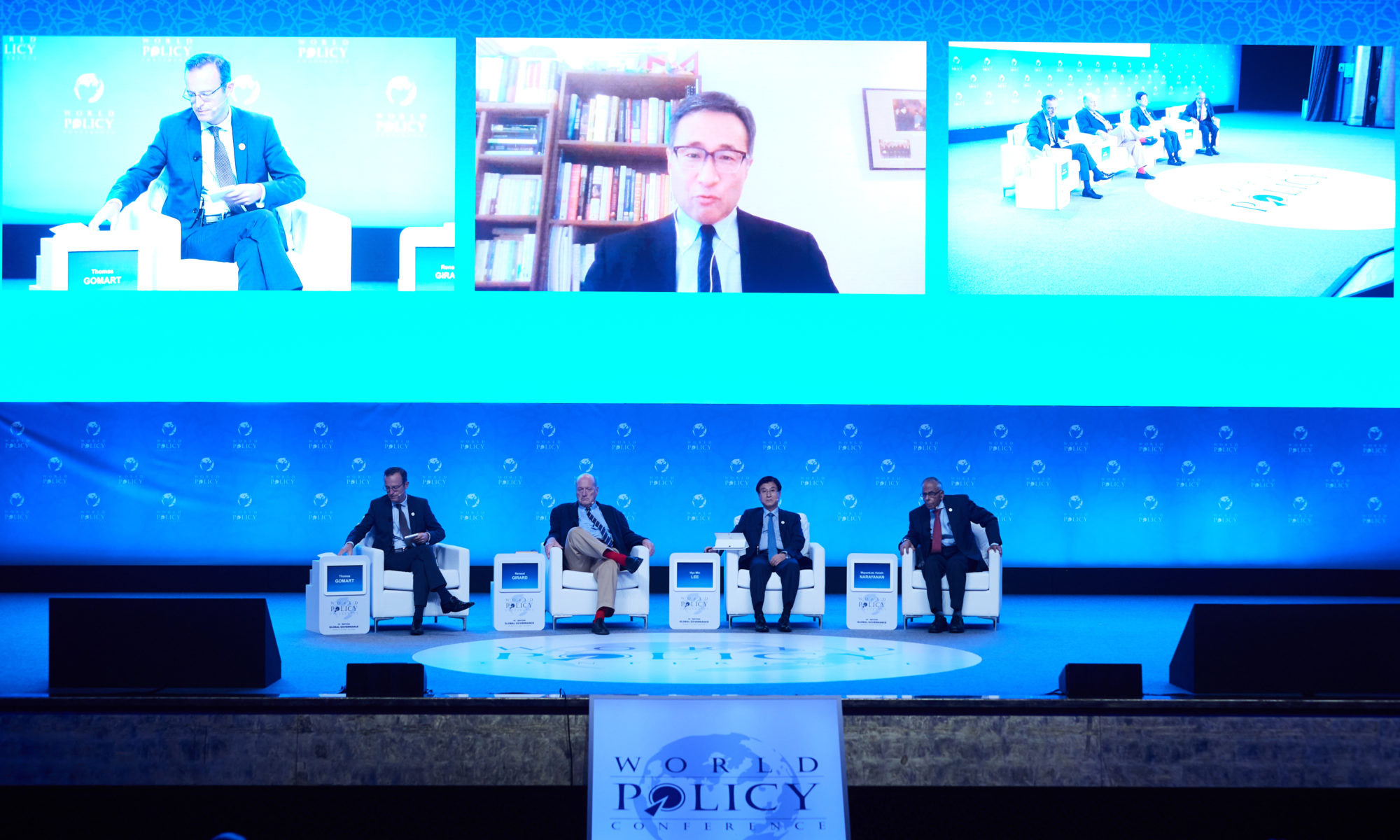




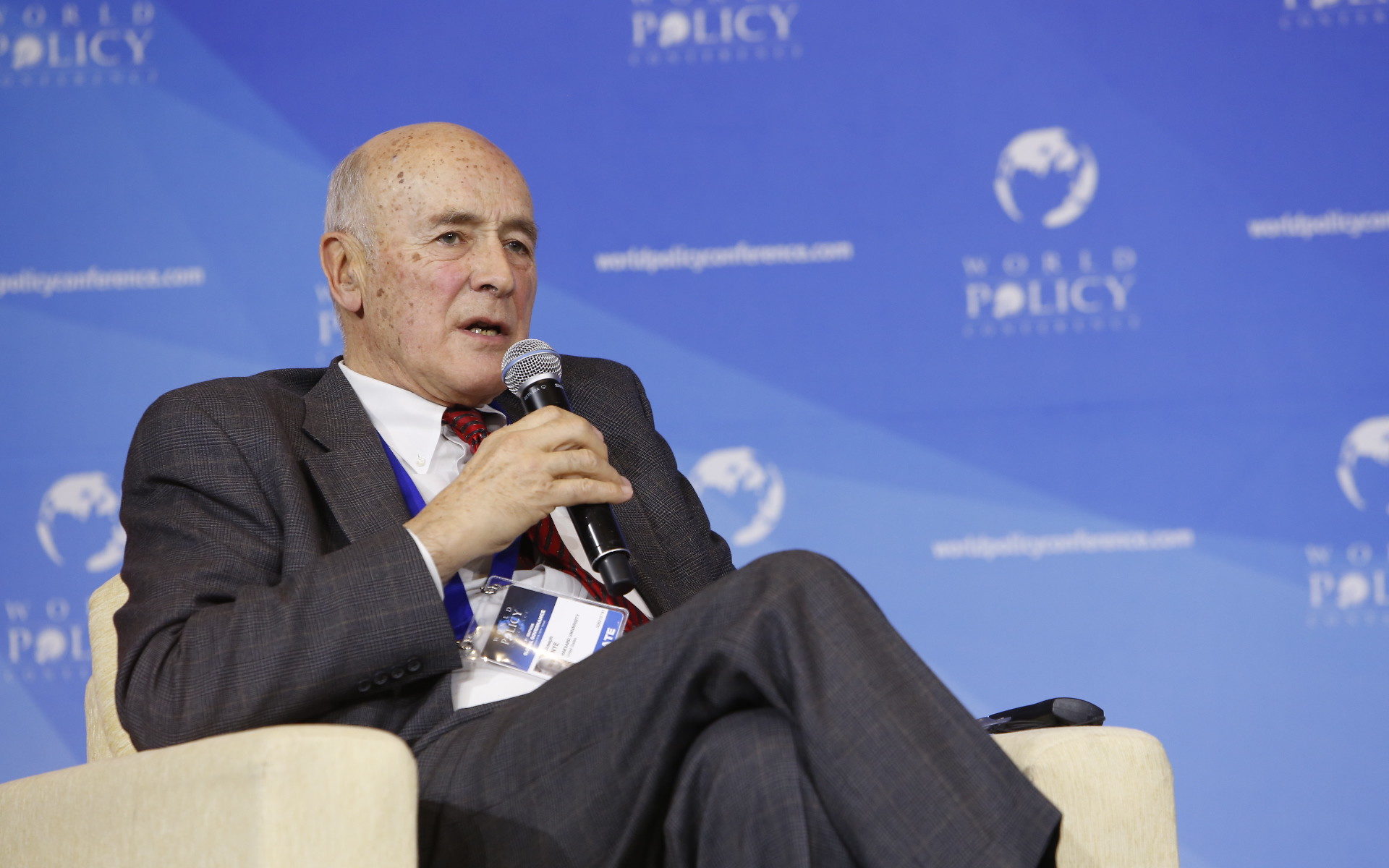

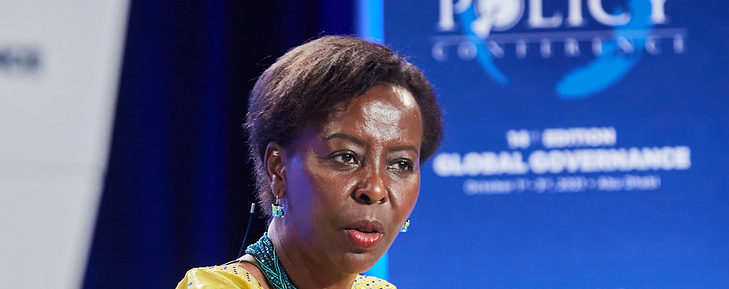

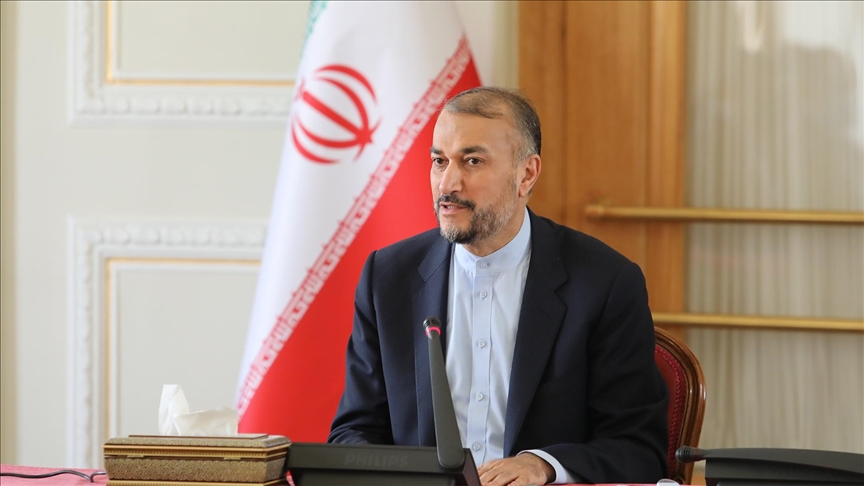



NEW YORK – t is often said that no one wins a war, just that some lose less than others. Russia’s war against Ukraine promises to be no exception. One clear loser is already evident: the planet.
The war has become the international priority for policymakers and publics. And rightly so: Russian President Vladimir Putin’s aggression against Ukraine threatens a pillar of international order, namely the prohibition on changing borders by force. But the war has also triggered a global scramble for sufficient supplies of energy in response to sanctions against Russian energy exports and the possibility that Russia will cut off supplies. Many countries have found that the easiest and quickest route is to secure greenhouse-gas-emitting fossil fuels.
Read the entire article on Project Syndicate.