« Que sanctionnent les sanctions? »

Ursula von der Leyen, présidente de la Commission européenne. JOHANNA GERON/REUTERS

CHRONIQUE – Les États occidentaux ont mis en place des sanctions économiques pour punir la Russie de son invasion en Ukraine. Une véritable balle dans le pied des Européens.

Sur proposition de la présidente de la Commission européenne, les membres de l’Union européenne ont, le 17 juin 2022, adopté leur sixième train de sanctions contre la Russie, afin de la punir pour son invasion militaire de l’Ukraine. Quand Ursula von der Leyen présente ces sanctions à la presse, elles semblent de bon sens. Mais quand on les examine de plus près, on devient sceptique.

Dans le dernier train, il y a l’interdiction faite aux Européens d’importer du pétrole russe par bateau. En quoi cette sanction punit-elle l’appareil militaro-politique russe et le freine-t-elle dans son attaque du territoire ukrainien? Les hydrocarbures russes sont exportés vers l’Inde, la Chine, l’Afrique et l’Amérique du Sud ; jamais les revenus des groupes énergétiques russes ont été aussi élevés ; le taux de change entre rouble et dollar s’est accru depuis le début de la guerre le 24 février 2022.

Lire l’article dans son intégralité sur le site du Figaro.

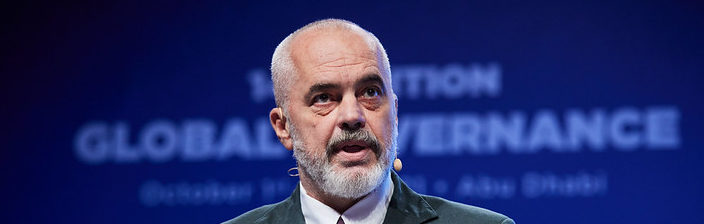
Edi Rama: « Balkan membership hopefuls leave EU summit empty handed »


Albania’s Prime Minister Edi Rama arrives in Brussels, Belgium, 23 June, for the meeting of Western Balkans leaders with EU leaders.

The summit of European Union leaders and Balkan leaders failed to resolve a deadlock on Thursday (23 June) over a stalled EU membership application by North Macedonia, Albania and the European Union. This was despite Ukraine being officially invited to join.

Separately from the Ukraine decision on Thursday, leaders of six Balkan countries, Albania, Bosnia and Kosovo, Montenegro Montenegro North Macedonia, Serbia, and Montenegro expressed disappointment that negotiations have not begun or remain stalled after years of promising eventual EU membership.

« What has occurred is a serious blow (to the credibility) of the European Union, » Dimitar Kuvacevski, North Macedonia’s prime minister, said at a news conference after the Balkan-EU summit. He was referring to the lacklustre progress.

The EU reiterated its promise almost two decades back to the Balkans that it would grant them membership if they implemented deep economic, judicial, and political reforms.

An EU official stated that the meeting « clearly and unambiguously reiterated the European perspective on the Western Balkans » and the region’s future within the European Union.

However, the EU member Bulgaria has not lifted its veto since 2020 when it stopped accession talks with North Macedonia because of a dispute over history and language. The EU also links Albania’s progress to North Macedonia’s.

Edi Rama, the Albanian Prime Minister, said it was a « disgrace » to call Sofia’s inaction « impotent ».

Rama said that it was a shame that Bulgaria, a NATO country kidnaps two NATO countries in the middle of a war in Europe’s backyard with 26 EU countries sitting still in scary shows of impotence. » Rama was referring to Russia’s invasion of Ukraine.

Rama briefly considered skipping the summit but decided to make his point clear to leaders during a closed-door session held on Thursday. The collapse of the Bulgarian coalition government on Wednesday prevented any breakthrough in Brussels.

These EU decisions are made by the 27 member states in unanimity.

Rama stated that even a pandemic or a threatening war would not be able to unify them, referring to the disunity of EU leaders.

However, the Bulgarian Prime Minister Kiril Petrov, who represented his country despite losing confidence votes on Wednesday, stated that he hopes for support for North Macedonia within the Bulgarian parliament soon without providing more details.

The Dutch Prime Minister Mark Rutte said that there might be a solution to the issue next week. He also mentioned hopes that the parliament of Bulgaria would meet again to lift the veto against North Macedonia.

Balkan citizens long dream of joining the EU, after Yugoslavia’s disintegration in 1990s.

However, northern countries like France and the Netherlands have stopped the EU’s « enlargement », fearing that it will repeat the 2007 rushed accession of Romanian and Bulgaria and the badly managed migration of workers from eastern Europe to Britain. This has turned many Britons against the EU.

Read the original article on the site of Eureporter .

After 50 years of China-Japan economic ties, what comes next?

Many regard the 1972 normalization of diplomatic ties between Japan and China as historically important, since it restructured the international order that had been divided by the Communist camp during the Cold War.

But it also had a great impact on the global economic structure, laying the groundwork for China’s reform and opening-up.

Read the entire article on the site of the Japan Times.

Josep Borrell: « ​Iran and EU agree to restart nuclear deal talks on Borrell visit »

Indirect talks between Iran and the US are set to resume after the EU foreign policy chief visits Tehran to resolve the impasse.

Tehran, Iran – Iran and the European Union have agreed during a visit by the bloc’s foreign policy chief to resume nuclear talks with the United States that have stalled since March.

Iranian Foreign Minister Hossein Amirabdollahian and the EU’s Josep Borrell announced during a news conference following a “long but positive” talk on Saturday that they have agreed that indirect talks between Tehran and Washington to restore their 2015 nuclear accord will restart within days.

Amirabdollahian told reporters that, for Iran, what matters most is that it can enjoy the full economic benefits that it was promised under the original deal.

“Whatever issue that can [negatively] impact Iran’s economic benefits will not be agreeable” for Iran and the government of President Ebrahim Raisi, he said.

“We hope, specifically, that the American side will this time realistically and fairly engage in committed and responsible acts towards reaching the final point of an agreement.”

Borrell also welcomed the resumption of the talks, saying a restored nuclear deal would benefit the region and the world.

He also said he would like to return to Iran in the future, presumably when US sanctions are lifted, to further discuss the “high potential” of expanding trade and energy ties between Iran and the EU.

The restarted talks will be aimed at “resolving the last outstanding issues”, he said in a series of tweets following the news conference, without elaborating.

Borrell and his deputy Enrique Mora arrived in Tehran late on Friday and met Amirabdollahian and chief nuclear negotiator Ali Bagheri Kani on Saturday. Borrell was also scheduled to have a meeting with Iran’s security chief Ali Shamkhani later on Saturday.

Iran and the US – which unilaterally abandoned the accord in 2018 under then-President Donald Trump and imposed harsh sanctions – had been in an impasse over how to revive the Joint Comprehensive Plan of Action (JCPOA) – as the nuclear deal is formally known – since March.

Read the original article in Al Jazeera.

Lionel Zinsou: « African economies see reasons for optimism despite crises »

From Covid-19 to the war in Ukraine, external crises have put pressure on African economies, but many on the continent see opportunities to undertake radical reforms.

Africa already showed some resilience during the pandemic as its economic contraction was less severe than in the rest of the world, shrinking by two percent compared to 3.3 percent globally in 2020.

While Russia’s invasion of Ukraine is weighing on the world economy, Africa faces a better outlook again in 2022.

« Africa is headed towards growth of around 3.7 percent, while in North America and Europe there is a real risk of recession », said economist Lionel Zinsou, formerly prime minister of Benin.

« We haven’t been the biggest victims of the pandemic, and we won’t be the biggest victims of the collateral consequences of the war in Ukraine », added Zinsou.

The conflict in Europe has fuelled a surge in global inflation, but Zinsou said growing prices for raw materials will compensate for the higher costs of imports in Africa.

Another positive signal is that investor confidence in Africa is up to a higher level than that before the pandemic.

Of 190 business owners in Africa who were questioned, 78 percent voiced confidence about their development prospects — compared to 61 percent before the Covid crisis, according to a report by the Deloitte accountancy firm.

‘Opportunity to transform’

The fallout from the war in Ukraine, however, remains a threat as it has driven up prices for wheat and other key agricultural products, sparking fears of famine in some countries.

« We are concerned about the slowdown in global growth and the availability for Africa of certain products such as wheat or fertilisers », Ivory Coast President Alassane Ouattara said during the Africa CEO Forum in Abidjan this month.

Makhtar Diop, general director of the International Finance Corporation (IFC), a branch of the World Bank, said African economies « have taken a hit and haven’t regained their pre-2019 growth rates ».

« The situation remains particularly difficult with inflation which disproportionally affects the poorest populations, » he added.

But some see the situation as a chance for African countries to map out new strategies.

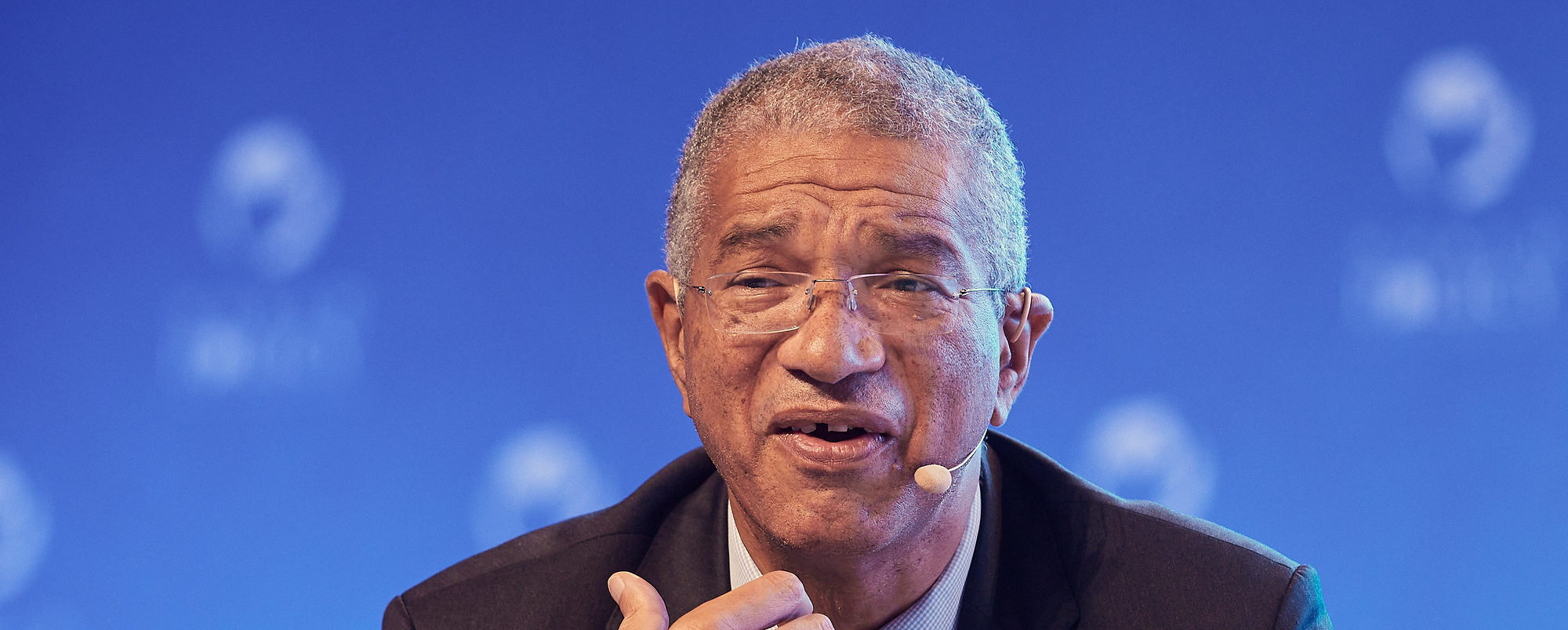
Benin's former prime minister Lionel Zinsou says Africa's economy had been 'extraordinarily responsive' to Covid and 'will be again' as it faces other crises
Benin’s former prime minister Lionel Zinsou says Africa’s economy had been ‘extraordinarily responsive’ to Covid and ‘will be again’ as it faces other crises Issouf SANOGO AFP/File

« We lose a good part of our crops each year due to lack of electricity and cold chain, » said Zinsou, referring to the transport of goods that need to be kept cool across the supply chain.

These losses could be reduced through infrastructure investment, he added.

For Diop, « every crisis is an opportunity to transform the situation structurally. There is potential for the economic transformation of African countries by increasing the added value created on the continent. »

‘Gain independence’

Some countries have stepped up the pace in recent years. Ivory Coast has built new cashew processing plants, while Nigeria is building a major oil refinery in Lagos.

In Guinea, foreign companies have recently been tasked with building bauxite processing plants.

« One of the consequences of the pandemic is that many groups wanted to depend less on foreign imports, » said Emmanuel Gadret, head of Deloitte in francophone Africa.

Georges Wega, deputy director of international banking networks for the Africa region at France’s Societe Generale financial group, believes that Africa has « a lot of potential » to finance its essential projects.

« This is the time for Africa to gain its independence in many aspects. We need to rely more on funds raised on the continent versus external debt, » he said.

The African Continental Free Trade Area (AfCFTA), which aims to harmonise customs tariffs across the continent, which is gradually happening, holds out hopes of boosting intra-African trade.

« Africa has been extraordinarily responsive (to the pandemic), financially and technically, and it will be again, » said Zinsou.


Read the article on RFI.

Philippe Chalmin: «Dire que c’est l’Ukraine qui provoque une crise alimentaire mondiale est une exagération»

Le gouvernement allemand organise ce vendredi 24 juin à Berlin une conférence internationale sur la crise alimentaire liée à la guerre en Ukraine. Depuis son déplacement à Sotchi, le président sénégalais Macky Sall, président en exercice de l’Union africaine, le répète : « Il faut faciliter l’exportation du blé ukrainien à partir du port d’Odessa parce que l’Afrique est véritablement menacée de famine ». Philippe Chalmin, spécialiste des marchés de matières premières, se déclare quant à lui surpris de ce qu’il appelle une « dramatisation » de la part de la communauté internationale. « Il n’y a, selon lui, aucune raison de supplier Moscou et de donner à Poutine une arme du blé ».

Carine Frenk : Quel est selon vous l’impact du quasi-blocage de l’Ukraine sur la situation alimentaire de l’Afrique aujourd’hui ?

Pour l’instant il est faible dans la mesure où certes il y a peu de céréales qui sortent aujourd’hui d’Ukraine, mais je rappelle que l’Afrique est surtout concernée par le blé et l’Ukraine avait presque terminé sa campagne d’exportation de blé. Il reste dans les silos ukrainiens, avant la nouvelle campagne, il reste peut-être 4 à 5 millions de tonnes de blé. Mais en réalité, le véritable impact de la guerre en Ukraine sur les importations africaines de blé, c’est par le biais le prix. Il faut bien reconnaître que depuis le déclenchement de la guerre, les prix mondiaux du blé ont bien pris quand même une centaine de dollars la tonne de plus.

Mais quand on parle des exportations céréalières de l’Ukraine et qu’on en fait la cause majeure du problème alimentaire mondial, c’est une erreur d’appréciation, un raccourci de journalistes ?

Je laisse les journalistes parler de raccourci de journalistes, mais je pense que c’est un peu beaucoup de cela. Ce qui est clair, c’est que la vraie raison des tensions sur les marchés agricoles mondiaux, et qui est antérieure à la crise ukrainienne puisqu’elle remonte à 2021, c’est l’importance des achats chinois en 2021. Il est clair qu’ensuite nous avons eu une augmentation des tensions liées à la guerre en Ukraine. Donc la crise ukrainienne a amplifié un problème qui d’abord existait déjà, qui était la dépendance alimentaire excessive de nombre de pays africains qui n’ont pas fait les efforts de politique agricole suffisante. Et d’autre part, les tensions, on les avait déjà en 2021 du fait notamment de l’importance des achats chinois. Dire que c’est l’Ukraine qui provoque une crise alimentaire mondiale, c’est une exagération.

Et donc ça veut dire que vous remettez en question les analyses que font les instances européennes onusiennes ou africaines, quand elles évoquent l’urgence d’ouvrir des corridors en mer Noire pour laisser passer le blé.

Le problème, c’est que pour l’instant ces corridors laisseraient plus se passer du maïs que du blé, il faut en être honnête. Ensuite va se poser le problème de l’arrivée de la nouvelle campagne, donc de la nouvelle récolte ukrainienne. Celle-ci effectivement aura du mal à sortir. Mais je pense que plutôt que d’imaginer des corridors maritimes qui seront extrêmement difficiles à mettre en place dans la mesure où une partie de la mer est minée, et que la fiabilité du partenaire turc peut-être quand même assez facilement mis en doute, il vaut probablement mieux faire tous les efforts possibles pour essayer de développer des corridors terrestres par la route et le rail pour arriver sur le Danube et sortir par les ports roumains par exemple. On n’arrivera pas à tout sortir, mais si je me cantonne au blé, on arriverait probablement à sortir une bonne part du blé ukrainien.

Autre facteur inquiétant pour l’Afrique, c’est la pénurie d’engrais. Le président Macky Sall a évoqué à son retour de Sotchi le risque d’un effondrement de 20 à 50% des rendements céréaliers en Afrique si l’approvisionnement en engrais n’est pas assuré sur le continent. Partagez-vous ces inquiétudes ?

Alors là je crois qu’il a parfaitement raison. Le président Macky Sall touche probablement ce qui est le talon d’Achille, à l’heure actuelle, de l’agriculture africaine. Je crois qu’il faut appeler un chat un chat : la crise alimentaire africaine, elle est avant tout une crise de la pauvreté, une crise de la mal gouvernance, une crise de la mauvaise gestion des politiques agricoles et pour certaines régions, mais aussi une crise climatique, je pense à la sécheresse qui touche la corne de l’Afrique.

Lire l’interview sur le site de RFI.

« Les risques de crise financière ressurgissent avec force »

La remontée des taux d’intérêt – et la fuite de capitaux qui en découle – associée à la sous-estimation par le système financier des risques climatique, « cyber » et géopolitique fait peser de graves menaces sur l’économie mondiale, alerte, dans une tribune au « Monde », l’économiste Hélène Rey.

Au moment où presque toutes les banques centrales retirent des liquidités de l’économie pour combattre l’inflation, la crainte de crises financières ressurgit avec force. Dans un environnement où les Etats et les secteurs privés sont très endettés et où les prix des actifs sont souvent surévalués, le retournement du cycle financier global est à craindre. Car, plus le resserrement des politiques monétaires est important, plus la création de crédit ralentit, et plus les flux de capitaux se tarissent et les primes de risque augmentent, parfois de façon excessive. La Réserve fédérale américaine joue un rôle particulièrement important pour le cycle financier mondial et donne le ton sur les marchés financiers internationaux : lorsqu’elle coupe les liquidités, l’aversion au risque augmente et la valeur des actifs risqués (bitcoin, actions, etc.) chute.

La situation actuelle rappelle dans une certaine mesure la période précédant la crise de la dette de l’Amérique latine des années 1980, soulignait Richard Portes, professeur à la London Business School et fondateur du Centre for Economic Policy Research (CEPR), lors du premier symposium du CEPR à Paris, le 2 juin, où ce réseau européen de 1 600 chercheurs vient d’installer son siège, auparavant situé à Londres. La montée des taux et l’augmentation des primes de risque pourraient déstabiliser les pays émergents en raison des fuites de capitaux et des crises de change. On peut ajouter que les restructurations de dette qui seront probablement nécessaires seront bien plus difficiles à gérer dans un monde où le multilatéralisme est moribond et où la Chine est un créditeur important mais n’est pas membre du Club de Paris, l’institution réunissant les créanciers publics où se négocient lesdites restructurations.

Au-delà des pays émergents, certaines économies avancées seront aussi sous pression : les risques de fragmentation de la zone euro apparaissent à nouveau avec le retrait de liquidités par la Banque centrale européenne (BCE). Il est important que des écarts de taux entre pays de la zone existent, car ils reflètent des risques de crédit hétérogènes, mais la BCE ne peut les laisser diverger car cela signalerait un risque d’éclatement de la zone euro.

Les nouveaux « faux actifs sûrs »

A ces risques traditionnels de premier ordre se greffe une série de facteurs d’apparition de nouvelles crises. Quand les perceptions des acteurs financiers sur l’activité économique future deviennent plus pessimistes, les actifs préalablement étiquetés comme sûrs et utilisés comme garantie auprès des débiteurs deviennent soudainement douteux, rappelait dans ce même symposium du CEPR Stephen Cecchetti, ancien conseiller économique de la Banque des règlements internationaux (BRI). Leurs prix peuvent alors chuter et entraîner avec eux une partie du système financier.

Lire la tribune dans son intégralité dans Le Monde.

Michael Fullilove: « Australia must be strong on China »

Michael Fullilove has laid out the need for balanced in Australia’s international policies.

Australia should be strong on China to meet the international challenges that lie ahead, a leading foreign policy expert says.

In an address to the National Press Club on Wednesday, Lowy Institute executive director Michael Fullilove laid out the need for a balanced approach to Australia’s international policies.

But he emphasised Australia needed to be « strong on China ».

« The Australian government should be firm, circumspect and disciplined, » he said.

« We should cooperate with China when we can, disagree when we must, and always stand our ground. »

It comes amid increasing tensions in the Pacific region, with a Chinese fighter jet flying dangerously close to a RAAF P-8A Poseidon conducting routine surveillance in international airspace on May 26.

China also sought a wide-ranging security pact with 10 Pacific island nations last month.

Dr Fullilove said southeast Asia remained « profoundly important » to the nation because of its economic weight and geography.

« We will need to work much harder to maintain our influence there, » he said.

« Allowing decades to elapse between bilateral prime ministerial visits to capitals, such as Bangkok, Manila, Hanoi, and Phnom Penh is not good enough. »

Criticising the former Morrison government’s policies as « one dimensional » and « unbalanced, » Dr Fullilove said Australia was under-weighted on diplomacy and development.

Despite the Morrison government strengthening ties with Japan and India, this came at a cost for the southeast Asia region and the aid budget, he said.

The latest Lowy Institute poll showed one in 10 Australians trusted China.

This has fallen further from last year, where the figure was 16 per cent and plummeted from four years ago when more than half of Australians said they trusted Beijing.

Dr Fullilove said the language used by some politicians to comment on national security was done for political gain.

Australia should use global institutions to solve international problems and work with its long-time ally the United States.

« We also need to restore a sense of balance to our international policies – balance between diplomacy and defence, between what we say and what we do, and between old alliances and new, » Dr Fullilove said.

Australian Associated Press

Read the original article in the Canberra Times.

La France perd sa bataille contre l’obésité

CHRONIQUE. Un rapport de l’OMS pointe la progression du surpoids en Europe. Or notre pays est à la traîne face à ce fléau contre lequel il faut agir tôt.

Le surpoids et l'obesite, des tendances a la hausse en Europe.
Le surpoids et l’obésité, des tendances à la hausse en Europe.© Jean-François FREY / MAXPPP / PHOTOPQR/L’ALSACE/MAXPPP
Par Jean de Kervasdoué

La branche européenne de l’Organisation mondiale de la santé (OMS Europe) vient de publier un rapport aussi documenté qu’inquiétant. Il traite de l’évolution croissante du surpoids et de l’obésité dans les pays européens et en souligne les très fâcheuses conséquences. En la matière, l’idée que la France se faisait jusque-là d’elle-même n’est plus fondée, tant l’épidémie se développe à tous les âges, et notamment chez les jeunes. Pour le constater, il suffit d’ailleurs d’ouvrir les yeux, notamment dans les quartiers pauvres de nos grandes villes.

L’obésité est à la fois une maladie et un facteur d’aggravation de nombreuses autres affections.

Une révolution française

Le système politique français paraît à bout de souffle. Avec l’arrivée en nombre de nouveaux députés d’extrême-droite et d’un groupe important de gauche radicale à l’Assemblée nationale, la conversation politique a irréversiblement changé de nature.
Par Jean Pisani-Ferry
Publié le 

C’était comme une évidence. Quel que soit le résultat de l’élection présidentielle, les électeurs allaient envoyer à l’Assemblée les députés du même camp à l’occasion des élections législatives qui suivent. Les électeurs ne manifestaient aucun intérêt pour cette élection, malgré les termes de la Constitution selon lesquels « le gouvernement détermine et conduit la politique de la nation ». Le président n’était pas très intéressé non plus. On s’attendait à une participation remarquablement faible. En fait, pas moins de 70 % des électeurs âgés de 18 à 34 ans n’ont même pas pris la peine de se présenter. L’histoire était écrite d’avance.

Mais même les systèmes super stables peuvent atteindre un point de rupture. Pourquoi cette fois-ci ? Peut-être parce que l’élection présidentielle a révélé un pays divisé en trois blocs d’ampleur à peu près égale : une gauche dure, un centre pas si radical, et une droite dure. Peut-être parce que Jean-Luc Mélenchon, le leader de la gauche dure, a été assez habile pour construire à gauche une alliance improbable et pour faire campagne sous le slogan « élisez-moi premier ministre ». Peut-être parce que le président n’a manqué aucune occasion de montrer à quel point il était distrait (au point de ne pas indiquer comment il souhaitait que les électeurs choisissent entre gauche dure et droite dure). Peut-être aussi parce que les électeurs étaient (et sont toujours) profondément mécontents et en colère.

La grande surprise de cette élection n’est pas venue de la gauche, mais de la droite dure. Marine Le Pen, la candidate porte-drapeau, n’a guère pris la peine de faire campagne. Elle semblait ailleurs et s’était fixée des objectifs modérément optimistes, comme celui de pouvoir former un groupe parlementaire (15 membres) dans la nouvelle assemblée. Mais au lieu de 15, elle a atteint le seuil beaucoup plus ambitieux de 89.

Ce qui s’est passé en fait, c’est une sorte de Brexit light. Venant après les Gilets jaunes (2018), l’incapacité de Hollande à se représenter, qui a ouvert la voie à l’élection surprise de Macron (2017), la révolte des Bonnets rouges contre la taxe sur l’énergie (2013), le rejet par les électeurs français d’une constitution européenne pourtant d’origine française (2005) et l’exclusion de Jospin du second tour de l’élection présidentielle (2002) – et de bien d’autres expressions du ressentiment populaire -, la situation actuelle atteste du niveau de colère des électeurs.

On ne peut faire mine d’ignorer le résultat. Un système étrange – presque sans équivalent dans le monde – qui combine l’élection d’un monarque et le choix d’une majorité parlementaire a atteint son point de rupture. Certes, la coalition de gauche dure de Mélenchon peut certainement se déliter. Elle a déjà commencé à se disputer sur la répartition des postes. Mais le vrai changement, probablement plus durable, est ailleurs : le nombre de députés représentant la droite dure a été multiplié par 15. Certains de ces nouveaux parlementaires vont certainement décevoir. Mais un nombre suffisamment important d’entre eux s’imposeront, accumuleront de l’expérience et imprimeront leur marque. Avec une gauche et une droite dure au Parlement, la conversation politique a changé de manière irréversible.

La conséquence immédiate est une probable paralysie politique dans l’un des grands pays européens, à un moment où le continent est confronté à une guerre, à une crise énergétique imminente, à l’inflation qui en résulte et à la menace d’une récession. La transition écologique ne peut pas attendre. Les marchés sont légitimement nerveux car ils espéraient des choix clairs, plutôt que des atermoiements. Cela n’est certainement pas de bon augure pour les réformes et les finances publiques.

Mais le véritable enjeu est bien plus profond. La question pour l’avenir est de savoir comment le système politique va faire face à une situation jusqu’ici imprévue. Quelle que soit la façon dont les choses sont présentées, il est difficile d’échapper à la conclusion que la France est entrée dans un état de paralysie politique durable. L’ambiguïté politique à la base du régime constitutionnel a atteint son acmé.

L’ambiguïté du système français repose sur le rôle incertain des partis politiques. En 1958, lorsque de Gaulle a réformé la Constitution, cela devait fondamentalement contribuer à l’expression des préférences politiques. Une sorte de régime présidentiel a été construit sur les bases chancelantes de la prédominance parlementaire. Mais tous les changements intervenus depuis – en particulier l’élection du président au suffrage universel direct, en 1961, l’expérience de la cohabitation, en 1986, le raccourcissement du mandat présidentiel, en 2000, et l’effondrement des partis politiques, après 2017 – ont rapproché la réalité française d’un régime présidentiel pur.

Parce qu’elle revient à élire un roi, les électeurs français aiment l’élection présidentielle. Ce qui se passe ensuite n’a pas beaucoup d’importance pour eux. Mais cela a une importance constitutionnelle, car le système est, en son cœur, de nature parlementaire. Les partis politiques ne comptent que si le président a le pouvoir de se passer d’eux. Comme l’expérience de la cohabitation l’a montré à trois reprises, le système fonctionne remarquablement bien si le président et le premier ministre appartiennent à des partis différents. Le premier peut s’en tenir à son rôle constitutionnel – nommer le premier ministre, décider du déclenchement des élections, diriger les armées et avoir son mot à dire dans les affaires étrangères. Tout le reste appartient au premier ministre.

Ajoutez à ce paysage une crise politique qui a conduit les électeurs à prendre leurs distances avec ce qu’ils appellent « le système ». Comme dans beaucoup d’autres pays, une proportion de plus en plus importante des électeurs français des classes populaires et moyennes s’abstient depuis une quarantaine d’années de participer aux élections législatives dont l’issue ne correspond pas à leurs préférences. Petit à petit, ils ont construit un système alternatif qui leur est propre. Pendant des années, cela a été une question pour la sociologie politique. Aujourd’hui, c’est devenu un défi majeur, qu’aucun parti ne peut vraiment relever.

La situation à court terme est largement incertaine, dans la mesure où président et son premier ministre ont tous deux les cartes en main. Mais la question plus profonde est que la France a atteint les limites constitutionnelles de son système politique. Une époque s’ouvre, et c’est un défi bien plus préoccupant.

Lire l’article original sur le site de Terra Nova.

Patrick Achi pose la première pierre d’un centre de formation consacré aux énergies renouvelables

Patrick Achi pose la première pierre d’un centre de formation consacré aux énergies renouvelables

Patrick Achi a posé la première pierre du Centre de formation aux métiers des énergies renouvelables de Yopougon le vendredi 17 juin 2022. Photo : AfrikiPresse

Le Premier ministre Patrick Achi a posé la première pierre du Centre de formation aux métiers des énergies renouvelables de Yopougon le vendredi 17 juin 2022. À cette occasion, le chef du gouvernement s’est prononcé sur l’importance pour la Côte d’Ivoire de former des jeunes sur les énergies renouvelables à une ère où la question du réchauffement climatique intéresse tous les États.

« Ces énergies renouvelables, ici comme ailleurs dans le monde, sont au cœur de la stratégie de transition énergétique que l’accélération du réchauffement du climat nous impose d’amplifier. Ces métiers seront donc clés pour l’avenir, celui de notre pays comme de notre continent, et favoriseront ainsi une très bonne et très durable insertion de notre jeunesse, dans la vie active et dans la vie tout court », a déclaré Patrick Achi à cette occasion.

La formation professionnelle comme une option prioritaire, et non secondaire

À en croire le chef du gouvernement, la formation professionnelle est un segment important pour l’État ivoirien dans le cadre de la vision Côte d’Ivoire 2030 du Président de la République Alassane Ouattara. Il a dans ce sens, invité les parents d’élèves à ne plus voir l’enseignement professionnel comme la solution après avoir échoué partout, mais plutôt, comme une option prioritaire.

« Avec la création du ministère dédié en avril 2021, la volonté du Gouvernement est de faire passer le taux de scolarisation dans ce secteur à 15% en 2025 », a expliqué le chef du gouvernement qui a précisé : « Ce centre de formation novateur qui sera construit ici et dans lequel vous pourrez inscrire vos enfants dans quelques mois, illustre la volonté claire du gouvernement de faire de l’Enseignement Technique et de la Formation professionnelle une vraie alternative à l’enseignement général, mais surtout une passerelle très forte vers l’emploi durable ».

Patrick Achi pose la première pierre d’un centre de formation consacré aux énergies renouvelables
Patrick Achi a posé la première pierre du Centre de formation aux métiers des énergies renouvelables de Yopougon le vendredi 17 juin 2022. Photo: AfrikiPresse

Le futur centre de formation qui doit être inauguré dans 9 mois, est le fruit de la coopération entre la Côte d’Ivoire et le Royaume d’Espagne. Le Premier ministre a dans ce sens salué les relations entre les deux pays.

De son côté Rafael Soriano Ortiz, Ambassadeur d’Espagne en Côte d’Ivoire a indiqué que ce projet permettra d’avoir une infrastructure fondamentale dans la stratégie du ministère de l’Enseignement technique mais aussi permettra d’assurer une formation d’excellence aux métiers des énergies renouvelables.

[Un coût de 6,5 milliards Fcfa, 500 apprenants]

Avant le Premier ministre Patrick Achi, c’est Koffi N’Guessan, Ministre de l’Enseignement Technique, de la Formation Professionnelle qui a souligné l’importance de cet établissement. Ce lycée professionnel, faut-il le savoir sera construit pour un montant total de 6,5 milliards de Francs CFA dont 5,5 milliards apportés par la Coopération espagnole et 1 milliard décaissé par le gouvernement ivoirien.

500 apprenants pourront assister aux cours de façon simultanée dans ce lycée qui offre plusieurs commodités dont des espaces aménagés pour les handicapés ou des installations alimentées par l’énergie solaire.

Yaya Kanté avec Sercom


Lire l’article sur le site de AfrikiPresse.

Philippe Baptiste : « L’espace est un moyen de redonner une souveraineté numérique à l’Europe »

Le PDG du Cnes, Philippe Baptiste, milite pour une démocratisation des données spatiales, dont une grande partie est accessible gratuitement. Selon lui, l’espace est une opportunité pour l’Europe de reprendre pied dans le numérique.

«L’espace est un moyen de redonner une souveraineté numérique à l'Europe», promet Philippe Baptiste, le PDG du Cnes

Les données satellitaires sont une richesse dont les industriels européens doivent se saisir pour proposer de nouveaux services, estime Philippe Baptiste.

L’Usine Nouvelle. – Quand on parle du secteur spatial, on évoque surtout les lanceurs et les satellites. Moins les données, qui sont pourtant la finalité de tels systèmes. Quel est le potentiel associé à ces données?

Philippe Baptiste. – Effectivement, le secteur spatial se développe sous nos yeux en amont avec de nouveaux lanceurs et de nouveaux satellites. Mais l’aval aussi, notamment les données spatiales. Le potentiel et l’engouement autour de ces données sont gigantesques. Le gisement est là devant nous, disponible. Une partie de ces données est même gratuite. Il faut les ramasser. De nouveaux acteurs s’en saisissent déjà et les transforment pour en faire des services et du business. On est devant un tas d’or. Tout le monde est amené à en bénéficier : le secteur public, les entreprises, les citoyens, les collectivités, l’État…

Lire l’entretien sur le site d’Usine nouvelle.

Jean-Claude Trichet : «Pour surmonter la crise, l’Europe doit construire le marché unique de l’énergie»

Jean-Claude Trichet.

Jean-Claude Trichet. ERIC PIERMONT / AFP

VU D’AILLEURS – Selon l’ancien président de la Banque centrale européenne, «les mesures réactives prises par les pays les plus dépendants de la Russie, comme l’Italie et l’Allemagne, ne suffisent pas».

Par Maurizio Molinari (La Repubblica)

Kevin Rudd: « Why China’s Xi Jinping’s damage control is all about heading off a crisis »

PUBLISHED SUN, JUN 19 2022

Chinese President Xi Jinping speaks during the unveiling of the Communist Party's new Politburo Standing Committee on October 25, 2017 in Beijing, China.
Chinese President Xi Jinping speaks during the unveiling of the Communist Party’s new Politburo Standing Committee on October 25, 2017 in Beijing, China.
Lintao Zhang | Getty Images News | Getty Images

For President Xi Jinping, dispatching his special envoy to Europe for a three-week charm tour was just one of many acts of high-stakes damage control ahead of the 20th Chinese Communist Party Congress this autumn.

Xi’s economy is dangerously slowing, financing for his Belt and Road Initiative has tanked, his Zero Covid policy is flailing, and his continued support of Russian President Vladimir Putin hangs like a cloud over his claim of being the world’s premier national sovereignty champion as Russia’s war on Ukraine grinds on.

Few China watchers believe Xi’s hold on power faces any serious challenge, but that’s hard to rule out entirely given how many recent mistakes he’s made. So, Xi’s taking no chances ahead of one of his party’s most important gatherings, a meeting designed to assure his continued rule and his place in history.

European business leaders understood that as the context for their recent meetings with Wu Hongbo, the special representative of the Chinese government for European affairs and former UN Undersecretary General. His message was a similar one at every stop: Belgium, Cyprus, the Czech Republic, France, Hungary, Germany, and Italy.

“The Chinese want to change the tone of the story, to control the damage,” said one European business leader who asked to remain anonymous due to his Chinese business interests. “They understand they have gone too far.”

The businessman described Wu, with his fluent and fluid English, as one of the smoothest, most open, and intellectually nimble Chinese officials he’s met. At every stop, Wu conceded China had “made mistakes,” from its handling of Covid-19, to its “wolf warrior” diplomacy, to its economic mismanagement.

His trip came as concerns in China have grown about “losing Europe” in the wake of Putin’s invasion of Ukraine.

The public mood has shifted sufficiently to have Finland and Sweden knocking on NATO’s door, and the European Union this week embracing the prospect of Ukraine’s membership candidacy. Wu’s visit was also something of a mop-up operation following a failed visit by Chinese official Huo Yuzhen to eight central and east European countries. In Poland, he was refused a meeting with government officials.

Germans and their political leaders — Europe’s most significant target for Chinese diplomats and business — are raising new questions about everything from investment guarantees for German business in China to specific projects like VW’s factory in Xinjian province, home of human rights abuses against the primarily Muslim Uyghur population.

Though Wu addressed Putin’s war in Ukraine only indirectly, his message was designed to reassure Europeans that they are preferred partners, as opposed to the United States. His bottom line: China will always be China, a country of growing significance and economic opportunities for Europe.

Yet lost ground in Europe is just one of many gathering problems President Xi faces ahead of his party congress, which will determine the country’s economic, foreign policy and domestic agenda for years to come.

The party congress is likely to provide Xi a third term, a move that follows a 2018 decision to scrap term limits. What’s more likely to reveal the extent of Xi’s power, writes Michael Cunningham of the Heritage Foundation, is whether he can put his allies in key central bodies, primarily the Politburo and the Politburo Standing Committee, as retirement norms ensure considerable turnover.

However the Congress turns out, there is growing talk among China experts about whether we are entering a period of “Peak Xi” or even “Peak China.” There’s growing evidence that he and the country he represents (and his approach has been to make the two inseparable) have reached the height of their influence and reputation.

Nothing will determine the outcome more than how Xi manages China’s economy, which is the foundation for the country’s far-reaching global influence as well as the Communist party’s domestic legitimacy.

Former Australian Prime Minister Kevin Rudd, one of the keenest China-watchers anywhere, sees China’s economic prospects weakening due to a chain of factors. They include at least 10 Chinese property developer defaults, and Xi’s crackdown on China’s technology sector, which has cost it $2 trillion in market capitalization of its 10 biggest tech companies over the past year.

Moreover, Putin’s invasion of Ukraine has sent energy and commodity prices soaring and has snarled supply chains, “terrible news for the world’s largest manufacturer, exporter and energy-consuming economy,” Rudd wrote recently in The Wall Street Journal. Add to this Xi’s insistence on China’s Zero Covid strategy, which led to mass lockdowns.

Rudd concludes that this combination of factors is enough to make Xi miss his 5.5% growth target and perhaps even grow more slowly this year than the United States. “For Mr. Xi, failing to reach the target would be politically disastrous,” writes Rudd.

Xi’s damage control on the economic front has included fiscal and monetary stimulus and infrastructure spending to grow domestic demand. A recent meeting of the Politburo also suggested some coming relief from the regulatory crackdown on China’s tech sector.

Yet none of that will be enough to reverse Xi’s cardinal sin, and that was his dramatic pivot to stronger state and party controls.

Writing in Foreign Affairs, the Atlantic Council’s Daniel H. Rosen, who is a founding partner of Rhodium Group, argues, “China cannot have both today’s statism and yesterday’s strong growth rates. It will have to choose.”

Adds Craig Singleton this week in Foreign Policy, “China’s fizzling economic miracle may soon undercut the (Communist party’s) ability to wage a sustained struggle for geostrategic dominance.”

There’s not much time left for damage control before Xi opens his party Congress in the Great Hall of the People. He’s likely to get the vote he wants, but that won’t solve the larger problem. It has been his leadership and decision-making that have generated China’s challenges, and he’ll have to correct course if he is to restore economic growth at home, revive his international momentum and avoid “Peak Xi.”

Read the original article on the CNBC‘s website.

Céréales: les États-Unis appellent la Russie à accepter rapidement l’ouverture des ports ukrainiens

États-Unis et Union européenne ont appelé jeudi la Russie à accepter rapidement une ouverture des ports ukrainiens afin de permettre aux millions de tonnes de céréales qui y sont stockées d’être exportées, permettant d’atténuer la crise alimentaire mondiale.

Moscou «devrait agir immédiatement pour ouvrir ces ports et mettre fin à cette guerre», a souligné le ministre américain de l’Agriculture, Tom Vilsack, lors d’une conférence de presse après des discussions à l’ONU. «C’est une chose sérieuse, nous ne devrions pas utiliser la nourriture comme une arme», a-t-il insisté.

L’ONU négocie depuis plusieurs semaines avec Moscou, Kiev et Ankara, caution militaire d’une utilisation de la mer Noire pour des navires civils, un accord qui permettrait aux céréales ukrainiennes de sortir du pays en sécurité et aux engrais produits par la Russie de revenir sur le marché international.

Moscou se plaint d’entraves à ses exportations à cause de sanctions économiques.

Si un accord était trouvé, il ferait baisser les prix des denrées et atténuerait la crise alimentaire dans le monde, qui s’aggrave du fait de l’invasion russe de l’Ukraine.

Tom Vilsack a réaffirmé que les sanctions américaines ne visaient pas la nourriture et les engrais. Pas plus que les sanctions européennes, a renchéri le chef de la diplomatie de l’Union européenne, Josep Borrell, lors d’une réunion du Conseil de sécurité de l’ONU sur la coopération avec l’UE.

«Les sanctions de l’UE ne sont pas la cause des pénuries alimentaires» car «elles visent la capacité du Kremlin à financer l’agression militaire – et non la conduite d’un commerce légitime», a déclaré le responsable européen.

«Les sanctions de l’UE n’interdisent pas l’importation et le transport de produits agricoles russes, ni d’engrais, ni de paiement pour ces exportations russes» et «nos mesures n’affectent pas la capacité des pays tiers à acheter à la Russie», a précisé Josep Borrell.

«Besoin immédiat»

À propos des discussions en cours, le ministre américain a indiqué espérer que les Russes négocient «de bonne foi», «sérieusement et qu’ils ne fassent pas cela uniquement pour créer une image» destinée à faire croire à leur bonne volonté. «J’encourage la Russie» à contribuer à «la réouverture des ports et qu’elle le fasse rapidement. Car le besoin est immédiat», a-t-il dit.

Actuellement, «la Russie bloque au moins 20 millions de tonnes de céréales ukrainiennes qui ne peuvent pas atteindre les marchés mondiaux», a dénoncé de son côté Josep Borrell, en appelant aussi Moscou à permettre la réouverture des ports sous blocus russe.

«C’est l’équivalent de 300 énormes navires qui devraient accoster dans des ports du monde entier. Au lieu de cela, la Russie bombarde les ports, les infrastructures et les terres agricoles de l’Ukraine», a-t-il lancé.

Ambassadeur russe à l’ONU, Vassily Nebenzia a balayé ces accusations. «On essaie de rejeter la faute sur la Russie, avec des allégations infondées de bombardements d’entrepôts de céréales, de blocages de céréales. Il n’y a aucun obstacle à cet égard», a-t-il affirmé.

Interrogé sur un projet du président américain Joe Biden d’établir des silos en Pologne pour accueillir du grain ukrainien, Tom Vilsack a expliqué qu’il s’agissait de «réduire le risque de perte» des céréales, éviter leur vol et préserver leur qualité.

Mercredi, la Turquie a annoncé être prête à accueillir «une réunion à quatre», avec l’ONU, la Russie et l’Ukraine, en vue d’organiser la sortie des céréales ukrainiennes via la mer Noire.

«La Turquie soutient» le plan proposé par l’ONU «et attend le retour de la Russie», a indiqué le ministre des Affaires étrangères Mevlüt Cavusoglu, en précisant que des rencontres techniques entre militaires se poursuivaient.

«Il faut répondre aux inquiétudes de tout le monde», a précisé le ministre . «La Russie veut être sûre que les bateaux ne transportent pas d’armes et l’Ukraine veut être sûre que la Russie n’utilisera pas ces corridors (en mer) pour attaquer», a-t-il expliqué.

Lire l’article sur le site du Journal de Québec

https://www.journaldequebec.com/2022/06/16/cereales-les-etats-unis-appellent-la-russie-a-accepter-rapidement-louverture-des-ports-ukrainiens

President Sheikh Mohamed pledges $50 billion to tackle climate change at Biden meeting

Sheikh Mohamed says the UAE will continue to honour its commitments and looks forward to hosting the world at Cop28.

President Sheikh Mohamed has pledged $50 billion to address climate change across the world after taking part in a meeting hosted by US President Joe Biden.

Sheikh Mohamed said the UAE had invested more than $50bn in renewable energy projects across 40 countries, and it plans to double that over the next decade.

He joined heads of state from 17 economies accounting for 80 per cent of global GDP, population and greenhouse gas emissions at an online meeting on Friday.

“I was pleased to participate in the Major Economies Forum on Energy and Climate hosted by President Biden and to emphasise the ongoing importance of peace, unity and meaningful collaboration as enablers of sustainable social and economic development,” Sheikh Mohamed wrote on Twitter.

“The UAE continues to honour its commitments on climate action and is on track to submit its revised NDC.”

NDC, Nationally Determined Contribution, is an action plan to cut emissions and adapt to climate change effects.

“We look forward to hosting the world at Cop 28 and accelerating progress on climate action through an inclusive, practical and integrated approach,” Sheikh Mohamed said.

Mariam Al Mheiri, Minister of Climate Change and Environment, said the $50bn investment highlighted the country’s commitment to addressing environmental concerns around the world.

“The UAE has joined the ranks of countries at the forefront of the fight against climate change,” said Ms Al Mheiri, who also serves as Minister of State for Food Security.

“We have issued environmental protection laws and strategies and rolled out relevant initiatives. We have also adopted a proactive approach to promoting clean energy solutions as the sustainable, alternative energy sources of tomorrow.”

The Emirates will host the 28th UN global climate talks in 2023.

Addressing leaders, Sheikh Mohamed acknowledged that climate change must be addressed by co-operation.

He said the UAE has long held the view that climate action is an opportunity to achieve new pathways for economic and social development, with a focus on practical solutions that can benefit all countries.

The UAE is stepping up its efforts to address climate change and speed up the global energy transition.

At the third virtual gathering of the Major Economies Forum under his presidency, Mr Biden urged countries to take collective action on climate, energy security and food security.

He also invited leaders to co-operate and ease these immediate effects by supporting initiatives that accelerate the clean energy transition and reduce the vulnerability of the food system to climate and supply-chain disruptions.

“His Highness Sheikh Mohamed bin Zayed’s address to global leaders at MEF highlighted the need for unity, peace, stability and collaboration as key enablers for sustainable economic and social development, particularly as the world tackles global economic challenges, energy and food security, as well as resource scarcity,” Dr Sultan Al Jaber, Minister of Industry and Advanced Technology and special envoy for climate change, said after the meeting.

“His Highness’s statement highlighted the UAE’s long-standing history of and ongoing commitment to climate action, driven by the principles established by our Founding Father Sheikh Zayed.

“For more than 15 years, the UAE has demonstrated a proven track record in progressive climate action and multilateral co-operation, as well as playing a leading role in investing in renewable energy both domestically and internationally which have led to the UAE’s selection as the host country of Cop28 in 2023.”

The UAE was the first country in the region to sign and ratify the Paris Agreement and the first in the region to commit to an economywide reduction in emissions and announce a net zero by 2050 initiative.

The Emirates has also invested in renewable and clean energy, both domestically and internationally.

It is also the first in the region to use peaceful nuclear energy and is home to three of the largest and lowest-cost solar plants in the world.

Read the article on the website The National

https://www.thenationalnews.com/uae/government/2022/06/17/president-sheikh-mohamed-participates-in-climate-change-meeting-hosted-by-joe-biden/

Lebanon’s corrupt elite are running out of options

In devastating testimony to a US Congressional hearing this month, a Syrian man known only as “the gravedigger” described the atrocities he witnessed when he was forced to work at a mass grave in Syria from 2011 to 2018.

His evidence — of trucks arriving twice a week with up to 600 bodies of the victims of torture, shelling and slaughter, and at least 40 bodies of civilians who had been executed in prison — is the final blow to those in the US who want to rehabilitate Bashar Assad, and to hopes of supplying gas to Lebanon through Syria.

Lebanon will plunge into darkness after the summer. The deal under which Iraq has supplied the country with a million tons of fuel oil over the past year expires soon, and Baghdad does not want to renew it. In the Lebanese parliament, despite the relative success of protest candidates at the election in May, the established elite will block any attempt to enact the reforms required by the IMF to trigger a desperately needed financial bailout.

The election delivered a fragmented parliament that cannot reach a consensus on anything. Though the protest groups are supposed to work as a bloc, they are divided on several issues, primarily Hezbollah’s weapons — which some want to tackle as a priority, while others see it as a regional issue and prefer to tackle the challenges that affect the day-to-day life of the average citizen. This division was shown in the vote for parliamentary Speaker, which resulted in Nabih Berri’s retention of the role.

The Lebanese elite had pinned their hopes on a deal signed last September for Egyptian natural gas to flow to Lebanon via the 20-year-old Arab Gas Pipeline through Jordan and Syria, but that would require the US to ease or lift sanctions imposed on the Assad regime in Syria under the Caesar Act — and the testimony of “the gravedigger” has buried those hopes.

In addition, the composition of the US Congress will probably change after the November mid-term elections, making it less likely that the “frozen conflict” policy — which indirectly includes a certain level of rehabilitation of Assad — will work. Advocates of this policy in Washington hoped that neutering the Caesar Act with so many exceptions as to make it devoid of content would be a shortcut to stabilizing Syria by accepting Assad as he is, but the new evidence against the Assad regime makes that impossible.

Meanwhile Jordan, which had been lobbying the US government to accept Assad, has changed its position after pro-Iran Assad forces were caught smuggling drugs into the country. As for the US-backed Syrian Democratic Forces, the Assad regime has been displacing and persecuting the Kurds for decades and will not give them the autonomy they want, and negotiations with Damascus have been fruitless. The SDF has asked the regime to protect the northeast and use its air defenses against an imminent military incursion by Turkey, but the regime does not want to confront Turkish forces — so the entire premise of agreement between the regime and the SDF falls apart. Therefore, the only remaining viable US policy is to maintainsanctions on the Assad regime and hope that “maximum pressure” will one day bring it down.

None of this is of any comfort to a Lebanese elite that is to a large extent linked to the Assad regime. The political class that has been resourceful in blackmailing the international community to keep itself afloat is running out of options. Hezbollah had hoped that gas via Syria would generate enough electricity to appease popular discontent, but the US is now more likely to enforce the Caesar Act than to weaken it.

Another possible lifeline is the extraction of gas from disputed fields in the Mediterranean, but that is a long shot. Viable extraction takes years, so even if the maritime border dispute with Israel is resolved, it is not a solution to Lebanon’s immediate problems.

Lebanon’s political elite are trying by all means to avoid the true reforms that would expose them. They are holding on to the status quo and banking on stop-gap solutions to prevent a total crash — for example, pricing goods and services in US dollars to extract as much hard currency as possible from the Lebanese expatriates who will come to visit their families this summer.

None of these crooked tricks will save Lebanon. It is important that the international community stands firm against the country’s political establishment, as accommodating them means the disintegration of the country. They might have a space to float during the summer, but a reckoning is coming in September and the US and the rest of the world should be ready to increase the pressure then.

In the end, either Lebanon’s corrupt political elite will crack, or the country will.

• Dr. Dania Koleilat Khatib is a specialist in US-Arab relations with a focus on lobbying. She is co-founder of the Research Center for Cooperation and Peace Building, a Lebanese NGO focused on Track II.

Read the article on the website of Arab News

https://www.arabnews.com/node/2105611

US Supreme Court authorizes indefinite detention of immigrants and immunizes Border Patrol agents from brutality claims

In a pair of related cases in which the decisions were announced June 13, the US Supreme Court upheld the challenge by Biden administration lawyers to three lower court rulings that entitled non-citizens to request a bail hearing while waiting for their objections to deportation to be resolved.

Because of these reactionary rulings, thousands of immigrants who pose no danger and no risk of flight, and who are asserting credible legal claims to remain in the United States, will remain jailed under medieval conditions as their cases wind through the backlogged and indifferent immigration courts.

In a third case decided on June 8, Border Patrol agents, perhaps the most thuggish of all federal law enforcement officers, were granted broad immunity from constitutionally based lawsuits for excessive force, brought by US citizens.

Antonio Arteaga-Martinez was arrested in 2018 after six years in the United States, while awaiting the birth of his first child, because he entered without documents. An asylum official found credible Arteaga-Martinez’s claim that he would face persecution and torture if deported to Mexico. Arteaga-Martinez sought to be reunited with his family while his petition for a “withholding of removal” order worked its way through the immigration courts, followed by the inevitable appeals.

Writing for eight of the nine justices, the leading “liberal,” Justice Sonia Sotomayor, reversed the lower court ruling requiring the federal government to provide a bail hearing within six months, at which an immigration judge could consider traditional criteria for releasing someone in exchange for the posting of a cash bond, such as danger to the public or risk of flight.

Sotomayor, indifferent to the devastating impact that indefinite imprisonment for immigration violations has on working families, based her decision on a pedantic, result-driven reading of the governing statute, which, she  added, could be changed. Sotomayor left open the option that Arteaga-Martinez could present a constitutional challenge on remand to the lower court.

Stephen Breyer dissented, writing that a 2001 case, Zadvydas v. Davis, resolved the issue, preventing the government from detaining immigrants indefinitely. If deportation was not likely in the “reasonably foreseeable future,” immigrants must be released absent some good reason to detain them, Breyer wrote. Arch-reactionary Clarence Thomas agreed that Zadvydas was controlling, but instead urged that the earlier decision be overruled.

The second case, Garland v. Aleman Gonzalez, involved two class actions filed on behalf of non-citizens jailed for more than six months. Both lower courts issued class-wide injunctions ordering bail hearings on the grounds that due process rights were being violated.

Reactionary Justice Samuel Alito, writing for the majority, did not just rule that the lower courts were wrong, but that the detainees had no right to bring the lawsuit in the first place. He wrote that federal law “generally prohibits lower courts from entering injunctions that order federal officials to take or to refrain from taking actions to enforce, implement, or otherwise carry out specified statutory provisions.”

Despite her simultaneous ruling against the statutory right to bail hearings, Sotomayor dissented, joined by Justices Elena Kagan and Breyer, on the grounds that Alito’s ruling made it impossible for people to band together in challenging government misconduct that could not be challenged individually. She wrote that the ruling will “leave many vulnerable noncitizens unable to protect their rights.”

These reactionary rulings occurred against the background of a surge in arrests along the Mexican border. US Customs and Border Protection announced there were 239,416 arrests in May alone, a pace of nearly three million detentions annually. The mass arrests are fueled in large part by the Biden administration’s failure to terminate the unconstitutional Title 42 summary exclusion policy, instituted by the Trump administration, which effectively abolishes the right to asylum on the southern border of the United States.

In the previous week’s case, Egbert v. Boule, Justice Clarence Thomas, writing for the right-wing majority, ruled against Robert Boule, a US citizen who runs the “Smuggler’s Inn,” a bed-and-breakfast that abuts the Canadian border.

Boule was a paid government informant who found himself at odds with Erik Egbert, a local Border Patrol agent. While arguing over a Turkish guest legally in the United States, Egbert threw Boule against a car and then slammed him to the ground. When Boule filed a formal complaint, Egbert used his government connections to retaliate by triggering a tax audit.

Boule filed a federal lawsuit under the well-known 1971 precedent Bivens v. Six Unknown Federal Narcotics Agents, which authorizes claims for money damages against federal officials based on constitutional violations. Right-wing justices have been attacking and restricting Bivens for decades. Although Thomas declined to straight-out overrule Bivens, his opinion reduced its scope to the approximate size of a postage stamp.

While the facts may seem somewhat trivial, the decision has far-reaching legal consequences.

Thomas referred at length to Alito’s 2020 decision in Hernández v. Meza, a sickening case where the Supreme Court “declined to create a damages remedy for an excessive-force claim against a Border Patrol agent who shot and killed a 15-year-old Mexican national across the border in Mexico.”

Although Bivens was decided two years after Chief Justice Earl Warren retired, it stands as one of the landmark decisions from the relatively brief period in the last century when the Supreme Court was popularly perceived as an institution that protected democratic rights. Thomas, speaking for the reactionary majority, wrote not only that Bivens would likely be decided differently today, but that “we are now long past the heady days in which this Court assumed common-law powers to create causes of action.”

Finally, Thomas wrote, “In Hernández, we declined to authorize a Bivens remedy, in part, because the Executive Branch already had investigated alleged misconduct by the defendant Border Patrol agent… Boule nonetheless contends that the Border Patrol’s grievance process is inadequate because he is not entitled to participate and has no right to judicial review of an adverse determination. But we have never held that a Bivens alternative must afford rights to participation or appeal… Thus here, as in Hernández, we have no warrant to doubt that the consideration of Boule’s grievance against Agent Egbert secured adequate deterrence and afforded Boule an alternative remedy.”

In other words, because a law enforcement agency rubber-stamps the actions of its employees, without “rights to participation or appeal,” there is no need for a lawsuit.

Read the article on the website World Socialist Website

https://www.wsws.org/en/articles/2022/06/18/auqu-j18.html

Eight Lessons from the Ukraine War

Although it is too early to guess when Russia’s war of aggression will end, it is not too early to start learning from the conflict. Developments in Ukraine have already forced us to question some of our assumptions and reacquaint ourselves with older truths.

CAMBRIDGE – When Russian President Vladimir Putin ordered his invasion of Ukraine on February 24, he envisaged a quick seizure of Kyiv and a change of government analogous to Soviet interventions in Budapest in 1956 and Prague in 1968. But it wasn’t to be. The war is still raging, and no one knows when or how it will end.

While some observers have urged an early ceasefire, others have emphasized the importance of punishing Russian aggression. Ultimately, though, the outcome will be determined by facts on the ground. Since it is too early to guess even when the war will end, some conclusions are obviously premature.

Read the entire article in Project Syndicate.

Is Sustainable Investing Sustainable?

Bertrand Badré at 2019 WPC Finance workshop

The Big Question is a regular feature in which Project Syndicate commentators concisely address a timely topic.

Tumbling equity markets and greater regulatory and public scrutiny are subjecting previously fast-growing green investments to what may be their toughest stress test yet. As fears of recession increase, many believe that an industry based on the promise of making money while doing good may be facing a reckoning.

In this Big Question, we ask Bertrand Badré, Karen Karniol-Tambour, Daniel Litvin, and Eva Zabey to assess the future of environmental, social, and governance investing.

Read the entire article in Project Syndicate.

The Keys to the Kingdom

The Time is Ripe to Reset U.S.-Saudi Relations.

Originally published at Project Syndicate

June 14, 2022

Several recurring debates animate foreign policy. The most basic is how much foreign policy to have, or how to strike the right balance between addressing domestic issues and problems abroad – in extreme form a debate between isolationism and internationalism. Then there are debates over tools (diplomacy versus sanctions or military force) and means (unilateralism versus multilateralism). In some countries, there are also debates over how foreign policy should be made and carried out; in the United States, for example, this debate involves the role and powers of Congress versus those of the president and the executive branch.

The two countries also collaborated against the Soviet Union during the Cold War, most notably in Afghanistan. Such common interests more often than not offset persistent differences over the Saudi government’s poor human rights record and the Kingdom’s hostility toward Israel.

President Joe Biden’s administration came into office a year and a half ago determined to alter this pattern and treat Saudi Arabia as a “pariah.” The US had concluded that Crown Prince Mohammed bin Salman (widely known as MBS), the country’s de facto ruler and heir apparent to the throne, ordered the 2018 murder in Istanbul of Jamal Khashoggi, a prominent journalist and Saudi dissident who was a US permanent resident.

The Biden administration was also deeply opposed to Saudi participation in Yemen’s civil war, a conflict responsible for enormous human suffering. With oil prices low and supplies plentiful (in no small part because of much-expanded US output), and Biden determined to reduce the US footprint in the Middle East and focus on Asia, values appeared to take precedence over economic and security interests for the first time since US-Saudi relations developed in the 1940s.

Now, however, the Biden administration is reportedly considering a change of course, with Biden planning to visit the Kingdom and meet with MBS this summer. It is not difficult to figure out why. Energy prices have skyrocketed, owing to high demand associated with the post-pandemic economic recovery and the sanctions now in place against Russia, Iran, and Venezuela, all of which limit supply.

Higher energy prices are fueling inflation, which has emerged as the greatest economic and political challenge facing the Biden administration. Suddenly, Saudi Arabia, the rare oil producer with the ability to increase output relatively quickly, is a much-needed partner again.

Other factors are at work as well. Several Arab countries in recent years, including the United Arab Emirates and Bahrain, have made peace with Israel. Bringing Saudi Arabia, host to the holiest sites in the Muslim world, into the peace camp would have great symbolic and political value. Also paving the way to a presidential visit is Saudi Arabia’s embrace of a cease-fire in Yemen.

What could ultimately prove to be the most important reason, though, is Iran. The US and Saudi Arabia find themselves sharing mounting concern over Iran’s nuclear and missile programs, as well as its support for violent groups in Yemen, Syria, and Lebanon. It is a classic case of the enemy of my enemy is my friend. Close cooperation between the Kingdom and the US will be essential if, as seems increasingly likely, diplomatic efforts to restore the 2015 nuclear pact with Iran fail – or fail to prevent Iran from achieving nuclear breakout with little or no notice.

Despite these new considerations, the Biden administration is treading carefully, as it is sure to be attacked for changing its stance. The good news is that there is no reason for the US to abandon its commitment to human rights. The Saudis need US support to stand up to Iran, and as a result can be pushed to improve their treatment of government critics, women, and religious minorities. The result will not be perfect, but the emergence of a more open society is achievable.

There is a larger lesson here. A successful foreign policy for a global power such as the US cannot choose values over interests. A pure, values-centered approach to Saudi Arabia – or toward China, Russia, Iran, or North Korea, for that matter – is unsustainable. The principal measure of a foreign policy is that it prioritizes the country’s security over its preferences. Realism must prevail over idealism. History suggests the ability of a country, even one as powerful as the US, to bring about political reform in other countries is limited.

But this does not mean that the US should ignore democracy and human rights. Foreign policy must reflect the country’s values if it is to enjoy public support and lead over time toward a more democratic world, which is more likely to be peaceful and prosperous and open to cooperation. It is always a matter of degree and of balance. What the Biden administration is contemplating in Saudi Arabia appears to be righting the balance.

Read the article on the site of Council on Foreign Relations.

Is China following Japan’s prewar path in the South Pacific?

Beijing’s growing clout in strategic region irks U.S., Australia

Chinese Foreign Minister Wang Yi speaks on a recent island-hopping trip to the South Pacific. Beijing wants to boost its influence in the region through infrastructure projects such as one near a sea wall in Fiji, left. (Source photos by AP) 

TOKYO — China’s drive to boost its influence in the South Pacific has set alarm bells ringing in major Western powers and revived uncomfortable memories of events in the strategically important region during the run up to World War II.
Read the entire article on the site of Nikkei Asia.

Cosmin Ghita : « Romania Sees an Opening to Become an Energy Power in Europe »

The Ukraine war could lead to breakthroughs in nuclear power and natural gas, with Washington’s help.

June 15, 2022

CERNAVODA, Romania — A row of hulking concrete domes loom along the Danube-Black Sea Canal in Cernavoda, about two hours east of Bucharest. Two of the structures house nuclear reactors feeding Romania’s electrical grid. Two others were begun decades ago and are still waiting for completion — though, perhaps, not for long.

“We have major plans,” said Valentin Nae, the site director.

The nuclear complex was conceived during the regime of Nicolae Ceausescu, the Communist dictator who ran Romania for a quarter century before he was overthrown and executed in 1989. Mr. Ceausescu’s strategy was to insulate Romania from the influence of the Soviet Union by having it generate its own electricity.

More than 30 years on, as much of Europe looks to cut ties to Russia’s energy, Romania is benefiting from Mr. Ceausescu’s thinking. The two reactors very cheaply supply about 20 percent of Romania’s electricity.

Russia’s invasion of Ukraine, which shares a nearly 400-mile border with Romania, has strengthened Romania’s push for energy independence. Its ambitious energy plans include completing two of the Cernavoda plants and leading the way into a new type of nuclear technology called small modular reactors. It also wants to take full advantage of substantial offshore gas fields in the deep waters of the Black Sea.

Some see Romania, a nation of 21 million roughly the size of Oregon, as having the potential to become a regional energy powerhouse that could help wean neighbors in eastern and southern Europe from dependence on Moscow. It is a goal shared in Washington and among some investors, who see business and strategic opportunities in a corner of the world that has flared hot in recent months.

The owner of the Cernavoda nuclear complex, a state-controlled company called Nuclearelectrica, plans to spend up to 9 billion euros ($9.5 billion) on nuclear initiatives this decade.

“For Romania, I will definitely tell you, these projects are super important,” said Cosmin Ghita, Nuclearelectrica’s chief executive. Mr. Ghita said nuclear power could help Romania achieve a variety of goals, from reducing carbon emissions to “countering Russian aggression in the region” on energy matters.

The war in Ukraine has created momentum to break years of stalemate and step up drilling in the Black Sea to unlock potentially rich troves of natural gas that Romania could export.

“We will supply energy security for the neighborhood,” Virgil-Daniel Popescu, Romania’s energy minister, said in an interview after lawmakers passed legislation designed to encourage investment in gas production.

Yet working in Romania will probably prove to be a challenge for companies from the United States and other Western countries. The government has a reputation for greeting outside investors with cumbersome taxes and heavy-handed regulations. These policies, perhaps a result of fears that Romanian consumers would end up paying too much as energy giants took home hefty profits, have probably driven outside companies away.

Last month, for example, Exxon Mobil sold its 50 percent stake in Neptun Deep, a Black Sea project that had been heralded as potentially the largest new natural gas production field in the European Union. Exxon’s brief announcement said the company wanted to focus on projects with “a low cost of supply.” Romania’s tax regime is considered Europe’s toughest.

Romania’s petroleum industry is one of the world’s oldest, dating to the drilling of wells as far as back the 1860s and centered on the vibrant hub of Ploiesti, about 35 miles north of Bucharest. While the venerable oil fields are on the wane, industry executives say drilling in the Black Sea could produce enough natural gas to turn Romania, now a modest importer, into the largest producer in the European Union.

“The opportunity resides in the offshore,” said Christina Verchere, chief executive of OMV Petrom, Romania’s largest oil and gas company.

Romania also has dams generating nearly 30 percent of the country’s electricity. And the nuclear industry, employing around 11,000, receives high marks from the global industry.

“They are a terrific operator; they know what they are doing,” said Carl Marcotte, senior vice president for marketing and business development at SNC-Lavalin, a Canadian company that owns the Cernavoda reactor technology and is involved in the upgrade.

This potential has drawn the interest of the United States. In 2020, with encouragement from the Trump administration, Romania broke off negotiations with China to complete the reactors at Cernavoda and turned to Washington as its main source of nuclear support.

While plans for Cernavoda are grinding forward, the Romanian government and the Biden administration announced in May a preliminary agreement to build a so-called small modular reactor at the site of a shuttered coal-fired power plant.

The provider would be an Oregon company, NuScale Power, which has received more than $450 million in support from Washington to develop what the nuclear industry hopes will be a new technology to revive reactor building.

The idea is to build components for the plants in factories and then assemble them at the site with the hope of cutting the enormous costs and long construction times that have hampered the nuclear industry. Over time, these reactors could provide European countries with an alternative to polluting coal and imported gas from Russia.

“Europe must find trusted sources of clean and reliable energy, sources free of coercion and malign political influence,” said David Muniz, the chargé d’affaires at the U.S. Embassy in Bucharest, at a news conference announcing the NuScale deal.

For a country like Romania with a well-trained, low-cost work force, experts say, making equipment for this new type of reactor could turn into an export industry, not to mention the chance to export surplus electricity.

“I believe it is an immense opportunity,” said Ted Jones, senior director for strategic and international programs at the Nuclear Energy Institute, an industry group in Washington.

Yet the Romanian government is likely to keep close watch on investors and try to insulate Romanians from global economic forces. Outside of the faded elegance of some districts of Bucharest, Romania is a relatively poor country, its median income ranking near the bottom in the European Union.

“There is an ingrained mistrust in the private market,” said Radu Dudau, director of the Energy Policy Group, a nonprofit in Bucharest. “There is an underlying understanding and expectation that the people and the nation will be safer if the state controls it.”

Such principles appear to have been at work in 2018 when the government raised taxes and imposed export restrictions on offshore petroleum production. Exxon followed that move by putting up for sale its share of the Neptun field, believed to hold tens of billions of dollars’ worth of gas. On May 3, Exxon said it would sell its share to Romgaz, a state-controlled firm, for about $1 billion.

If development of the project had gone ahead in 2018, Romania would perhaps be close to nearly doubling its current gas production. Instead, at best, the project isn’t expected to come onstream for another five years. The government’s moves “significantly undermined the competitiveness of Romania’s offshore for investors,” said Ashley Sherman, research director for Caspian and Europe at Wood Mackenzie, an energy consulting firm.

Mr. Popescu, the energy minister, said the sponsors of the 2018 legislation had misjudged, figuring that Exxon would proceed with the project anyway, and had been proved wrong by “real life.” Recently, with energy security much higher on the agenda, lawmakers passed legislation to repair the damage and ease some of the rules. Soaring natural gas prices and the war in Ukraine persuaded lawmakers that they had to “start exploitation of the Black Sea,” he said.

A a smaller gas field in the Black Sea began operating on Wednesday. Owned by a group including a unit of Carlyle, the U.S. investment management firm, the project will pipe fuel ashore near Constanta, Romania’s major port and offshore drilling center. Eventually, it will produce about 10 percent of Romania’s gas needs.

Developing Neptun, estimated at $4 billion, is likely to be more difficult and expensive than if the work had begun a few years ago. With high oil and gas prices, costs of drilling and steel and other inputs have soared. The Black Sea is a risky area now with mines floating around and the perils from Russian military activity adding to insurance rates. Exxon also has far greater expertise in operating in deep water than Romgaz or OMV Petrom, which has taken over from Exxon as operator of the project.

Despite those issues, concerns over energy security are so strong that the project seems likely to go ahead, even with Exxon gone, analysts say. It may even help that two Romanian companies are in charge.

“I think it definitely has the right context now,” Ms. Verchere, the OMV Petrom chief executive, said.

Read the original article on the New York Times.

Edi Rama : « No EU membership talks soon, and it’s Bulgaria’s fault »

BELGIUM-EU-ALBANIA
The Albanian leader also said he supports French President Emmanuel Macron’s idea of a European Political Community | Pool photo by John thys via Getty Images

Albanian Prime Minister Edi Rama said he doesn’t expect an EU summit next week to clear the way for his country to begin membership talks and placed the blame on Bulgaria.

All EU governments agreed back in March 2020 to give Albania and North Macedonia the green light to start membership talks. But negotiations have yet to get underway after Bulgaria insisted it wanted concessions from North Macedonia in bilateral disputes touching on language, history and identity.

Although Sofia’s blockade applies only to North Macedonia, the EU has favored handling the membership bids of Albania and North Macedonia together — so Albania is effectively blocked too.

Read the original article on the POLITICO website.

Finances publiques : la dette a de nouveau un coût et le réveil va être brutal

Anesthésiés depuis des années par des taux d’intérêt négatifs, nous allons redécouvrir que la dette a un coût et des limites. Et que l’argent ne tombe pas du ciel.

Depuis deux ans, c’est la question à laquelle aucun responsable politique n’accepte réellement de répondre, mais qui les taraude tous, au fond : après les plans d’urgence, après les centaines de milliards d’euros déversés pour amortir les chocs de la pandémie hier, de la guerre en Ukraine aujourd’hui, que se passera-t-il lorsque l’argent cessera de tomber du ciel ? Lorsque, dans nos pays occidentaux trop longtemps anesthésiés par des taux d’intérêt négatifs, nous finirons par redécouvrir que la dette a un coût et des limites ?

Dans le cas français, l’interrogation est tout sauf rhétorique : voilà quarante ans, ou presque, que nous sommes dans l’illusion de l’argent magique, en vivant au-dessus de nos moyens et en creusant consciencieusement nos déficits. Et puisque les montants en jeu, stratosphériques, empêchent souvent de se représenter la menace qui se profile, en voici une traduction concrète : en dépit des discours récurrents sur la nécessité de diminuer le train de vie de l’Etat, de renouer avec une trajectoire financière « durable », notre dette publique s’est alourdie de 1660 milliards d’euros au cours des trois derniers quinquennats, soit près de 100 000 euros par travailleur actif…

On peut, comme Jean-Luc Mélenchon et son orchestre, continuer à jouer sur le pont du Titanic. On peut aussi se dire, en voyant les taux d’intérêt européens repartir à la hausse, que la fête est bien finie et que nous n’avons plus beaucoup de temps pour éviter la catastrophe.

Voilà un peu plus d’un an, dans les colonnes de L’Express, l’ancien président de la Banque centrale suisse, Philipp Hildebrand, avait prédit l’inévitable retour à une politique monétaire plus orthodoxe. « Ce sera un rendez-vous historique, essentiel, qui nécessitera un vrai courage politique », prévenait-il, en formulant cette mise en garde : les Etats qui auront utilisé les monceaux d’argent injectés à mauvais escient et n’auront pas profité de cette parenthèse inédite pour engager les transformations structurelles qui s’imposent « vont au-devant de grosses difficultés et seront inévitablement rattrapés par la soutenabilité de leur dette ». Ce moment crucial, presque existentiel pour notre pays, c’est maintenant.

Lire l’article sur le site de L’Express

https://lexpansion.lexpress.fr/actualite-economique/finances-publiques-la-dette-a-de-nouveau-un-cout-et-le-reveil-va-etre-brutal_2175187.html

100 Killed in Tribal Clashes in Sudan’s Darfur in Past Week

Darfur has been witnessing a civil war since 2003 during the rule of former President Omar al-Bashir, who was ousted from power in April 2019.

On Monday, the United Nations announced that about 100 people were killed in tribal clashes over the past week in Sudan’s West Darfur Province.

The fighting grew out of a land dispute between Arab and African tribes in the town of Kulbus in West Darfur, the UN Refugee Agency said, adding that local Arab militias attacked multiple villages in the area, forcing thousands to flee.

« I’m appalled, again, by the violence in Kulbus, West Darfur, with so many deaths, » tweeted Volker Perthes, head of the United Nations Integrated Transitional Assistance Mission in Sudan (UNITAMS).

« The cycle of violence in Darfur is unacceptable and highlights root causes that must be addressed, » he added and called on community leaders, authorities, and armed groups to de-escalate and ensure the protection of civilians.

Sudan’s Darfur region has been witnessing a civil war since 2003 during the rule of former President Omar al-Bashir, who was ousted from power in April 2019.

The previous transitional government in Sudan sought to end the armed conflict in the Darfur region through an agreement reached on Oct. 3, 2020, but some armed groups have not yet signed it.

For years, efforts failed to end the tribal conflicts, which have become a nagging concern for the local population and the authorities of the troubled region. Many factors, including disturbances, tribes’ access to weapons, and lack of effective governance in many parts of the Darfur region, have contributed to the growing violence in the region.

Read the article on the website TeleSUR

https://www.telesurenglish.net/news/100-Killed-in-Tribal-Clashes-in-Sudans-Darfur-in-Past-Week-20220613-0015.html

Raising capital in a tough global environment

The global financial system finds itself in a very different situation from a few years ago when interest rates were at multi-year lows and stock prices were at all-time high highs, said Bertrand Badré, CEO of BlueOrange Capital.

Speaking at the Ministerial high-level policy dialogue at the ECA’s Conference of African Ministers of Finance, Planning & Economic Development in Dakar, he said, “In 2015 we all believed that financing the SDGs would be relatively straightforward in the era of multilateralism and globalisation, but things have not happened like we thought they would happen.”

In the context of Covid-19, Russia’s war on Ukraine and creeping isolationist policies across the world, investors are looking at “nearshoring” – investing closer to home rather than looking at risker regions like Africa.

This could have profound impacts on Africa, a continent that requires billions of dollars each year to finance its development objectives.

To counter negative market conditions, Africa must “step up and participate” aggressively in the global financial system to attract finance.

One way to do this, Badré said, is for Africa to position itself as a key destination for environment, social and governance (ESG) funds.

Investors are still keen to finance the space, allocating significant portions of their portfolios to development-led investments.

Mohamed Maait, Egypt’s Minister of Finance, said that he would not go to the international markets in the current environment, fearing that any issues will most likely be undersubscribed.

This is in stark contrast to 2020 when Maait went to the market to raise $3bn but returned with $5bn due to high levels of investor interest.

“At the time, I was even being offered as much as $24bn at a very reasonable cost so I decided to increase our demands,” he said.

Maait says that African countries “must diversify” capital-raising strategies if they want to invest in critical sectors, pay off steadily ballooning debt and deal with rising commodity prices.

The minister suggested green bonds and loans from commercial banks as ways to do this.

Rindra Hasimbelo Rabarinirinarison, Madagascar’s finance minister, echoed the Egyptian minister’s sentiments, saying that “alternative and innovative sources of funding must be found”.

One key area is to encourage the diaspora to send funds back to Madagascar, she said.

The country will also look at increasing the tax base and raising funds through green and blue bonds to tackle the lack of fiscal space and dearth of opportunities to plug gaps on the international market.

Serge Ekué, President of the West African Development Bank, said that the IMF’s special drawing rights (SDRs) have not been deployed to their full potential in Africa.

Africa has received a fraction of the SDRs, despite being one of the poorest regions in the world, reinforcing the need for the continent’s finance ministers to push Bretton Woods institutions for increased funding at more favourable terms.

Read the article on the website of African Business

https://african.business/2022/06/economy/raising-capital-in-a-tough-global-environment/

Michel Foucher : « La France ne peut plus être une puissance médiatrice, nous devons choisir notre camp »

Michel Foucher,  diplomate, géographe et ancien directeur du Centre d’analyse et de prévision du ministère des Affaires étrangèresMichel Foucher, diplomate, géographe et ancien directeur du Centre d’analyse et de prévision du ministère des Affaires étrangères RFI

La demande officielle d’adhésion de la Finlande et de la Suède à l’Otan était, pour Moscou, la ligne rouge à ne pas franchir. Comment cette démarche est finalement vécue du côté Russe ? Décryptage de Michel Foucher, géographe, ancien diplomate en Lettonie et spécialiste des frontières géopolitiques. Auteur de « Ukraine-Russie. La carte mentale du duel », collection Tracts chez Gallimard, mai 2022. Invité de la mi-journée de RFI, il répond aux questions de Jean-Baptiste Marot. Il estime que la France ne peut plus être une puissance médiatrice et doit choisir son camp.


Ecouter son intervention sur le site de RFI.

Olivier Blanchard: « Il faudra augmenter les impôts ou diminuer certaines dépenses »

13/06/2022 L’AGEFI 

L’ex-chef économiste du FMI était à Paris le 10 juin à l’Amundi World Investment Forum. Inflation, ‘policy mix’: il décrypte les enjeux du moment pour L’Agefi.

Olivier Blanchard, ex-chef économiste du FMI

Olivier Blanchard, ex-chef économiste du FMI. (PIIE)

Quelle est votre vue sur le caractère structurel de l’inflation ?

Comme prévu, le stimulus budgétaire a provoqué une surchauffe de l’économie américaine mais le mécanisme de formation de l’inflation a été différent de ce que je pensais. Ce sont les prix des biens qui ont démarré le processus, et non les salaires, les entreprises s’étant retrouvées à court de moyens en raison des perturbations de la chaîne d’approvisionnement, une situation exacerbée par la forte demande de biens au détriment des services. Les Etats-Unis ont ensuite transmis ces tensions inflationnistes au reste du monde, dont l’Europe, indirectement au travers des prix des matières premières, tensions désormais accentuées par la crise en Ukraine. Je n’ai pas de doute sur la capacité de la Fed et de la BCE à faire ce qu’il faut pour ramener l’inflation à un niveau plus bas. L’inflation ne sera pas un phénomène permanent. Le timing peut bien sûr être plus ou moins long, mais l’inflation sera réduite d’ici un ou deux ans à des niveaux beaucoup plus bas. Une partie de la baisse sera liée aux effets de base car certains prix vont diminuer, mais l’inflation ne baissera pas d’elle-même aux niveaux des cibles des banques centrales, à 2%. Ces dernières pourraient alors décider de s’arrêter dès que l’inflation descendra à 3% ou 4%. Mais jusqu’à ce niveau, elles feront ce qu’il faut.

Pensez-vous toujours que le bon niveau d’inflation est 4% ?

Non, car à 4%, l’inflation devient un sujet d’inquiétude dans l’esprit des gens. A 3%, on parle moins de l’inflation. Ce niveau me paraît plus raisonnable.

Les Etats-Unis et la zone euro ne sont pas aussi avancés dans le cycle. Cela crée-t-il une différence de politique monétaire ?

Il y a en effet une différence importante. L’économie américaine est réellement en surchauffe car la boucle salaires-prix est bien enclenchée et les taux d’intérêt réels sont assez négatifs. Ce n’est pas une situation où l’économie va ralentir d’elle-même. A moins qu’il y ait un choc du type d’une récession majeure en Chine, qui entraînerait une forte baisse du prix des matières premières. Ce qui serait un cadeau aux Etats-Unis et à l’Europe. Par ailleurs, l’effet de la consolidation budgétaire, très forte, est largement annulé par le montant abondant d’épargne accumulé pendant la crise sanitaire. Les annonces de la Fed ont déjà déclenché un ajustement à la baisse sur les marchés actions. Mais l’on sait qu’il faut du temps entre le moment où l’on resserre les conditions financières et la traduction de ces décisions dans l’économie réelle. Il peut y avoir une période instable pendant laquelle la Fed augmente ses taux et l’économie reste en surchauffe.

L’économie américaine peut-elle échapper à la récession si la Fed doit ramener l’inflation vers sa cible ?

La Fed va essayer de faire atterrir l’économie en douceur. Mais ce n’est pas évident. Il faut arriver à diminuer le taux de croissance, qui doit rester positif, sous le potentiel, avec des instruments qui fonctionnent avec peu de précision. La probabilité de récession est non négligeable même si la stratégie de la Fed est de l’éviter. Il se peut toutefois, si l’inflation ne diminue pas assez, que la banque centrale américaine n’ait pas d’autre choix que de la provoquer.

Que pensez-vous du chemin pris par la BCE ?

En Europe, la situation est différente. Il n’y pas de surchauffe, ni de tensions salariales, pour le moment. Il y a une chance pour que la demande diminue, en raison de la baisse des revenus réels, sans que la BCE ait besoin d’augmenter fortement les taux. La BCE fait donc ce qu’il faut, jusqu’à maintenant.

Y a-t-il un risque de fragmentation de la zone euro ?

C’est le principal souci aujourd’hui de la BCE. Si les investisseurs décident que l’Italie est au bord du gouffre et réclament par exemple des spreads de 400 points de base [pb], le pays serait dans une situation intenable. Or la seule institution pouvant agir pour l’empêcher est la BCE. Je ne pense pas que l’Italie a aujourd’hui un problème de soutenabilité de sa dette. Toutefois, en cas de dérapage des spreads, il sera compliqué pour la BCE, politiquement et du point de vue de son mandat, d’intervenir avec suffisamment de moyens. Nous risquons d’avoir devant nous des mois compliqués, avec des discussions tendues au sein du Conseil.

Dans ce contexte, comment les enjeux climatiques et de sécurité en Europe pourront-ils être financés ?

Outre la question du changement climatique et la hausse à venir des dépenses militaires dans le contexte géopolitique dégradé que nous connaissons en Europe, les gouvernements vont devoir faire face à un autre enjeu majeur, qui est celui de la réduction des inégalités. Ce nouveau monde, avec des Etats plus présents, risque d’entraîner 2 à 3 points de PIB de dépenses publiques supplémentaires chaque année. Il n’est pas tenable de les financer complètement par les déficits et la dette de façon pérenne. Il faudra donc nécessairement augmenter les impôts ou diminuer d’autres dépenses. C’est loin d’être évident.

Quelle serait la meilleure règle budgétaire pour l’Union européenne ?l

Il n’y a pas de règle simple pour un problème d’une telle complexité. La dynamique de la dette dépend de tout une série de facteurs, difficiles à mettre dans une règle, surtout une règle simple. J’ai proposé la mise en place d’un cadre d’analyse de soutenabilité des dettes dans lequel on regarderait la dynamique de la dette sous incertitude afin d’en définir les dangers, comme le font les agences de notation. Mais les dirigeants européens veulent des règles explicites. Il me semble que l’on se dirige vers un maintien de la règle des 3% de déficit public et 60% de dette publique pour satisfaire les  faucons, comme symbole, mais en supprimant les règles sur la rapidité des ajustements. Pour satisfaire les colombes, on mettrait en place des plans de financement du type Next Gen EU comme cela a été fait pour le Covid mais cette fois pour la transition énergétique, ou l’Ukraine, ou la prochaine crise…

Lire l’interview sur le site de l’Agefi.