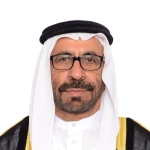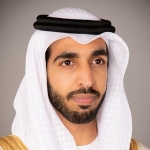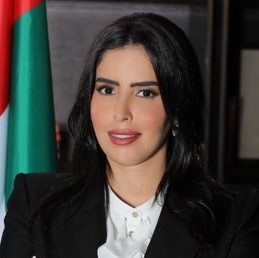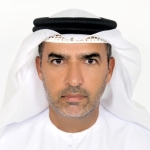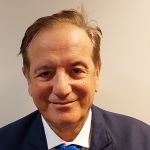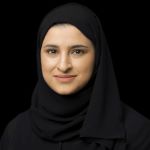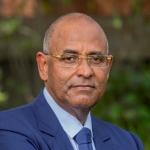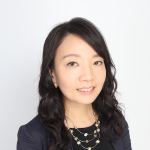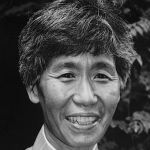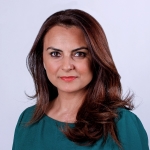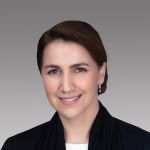
Vice Chairman of the WPC. He manages the organisation of the annual conference since its first edition in 2008. He is also chairman and founder of Alandia, a restructuring advisory firm which helped various States or Sovereign funds to regain control over their industrial investments (Middle East, Africa and West Asia). Former Vice chairman of the Franco Indian chamber of commerce, he was more especially in charge of agricultural investments. He seats, or seated, at several Advisory Boards such as British Telecom or PWC. He published a book on globalization in June 2010: Mondialisation, un autre regard and one on restructuring issues in France (2015).
Dominique David WPC – Health
Advisor to the Executive Chairman, Ifri, Editor of Politique étrangère and co-director of the annual report Ramses. He is also President of the Austro-French Centre for Rapprochement in Europe. Former Executive Vice-President of Ifri. Previously, he was in charge of the Security Studies department at Ifri. Before joining Ifri, he was Deputy Director of the Institut français de polémologie (French Institute of Polemology), and then Secretary General of the FEDN (Fondation pour les études de défense nationale). He also taught at the Military School of Saint-Cyr, at the Paris I University and at the Institut d’études politiques de Paris (IEP). His studies and publications deal with strategic issues, particularly with French strategy and European issues.
Vuk Jeremić
President of the Center for International Relations and Sustainable Development (CIRSD), a global public policy think-tank and a Co-Founder of the Global Preventive Diplomacy Initiative. He is the Editor-in-Chief of the quarterly magazine Horizons – Journal of International Relations and Sustainable Development. He is a Professor of Practice at the Sciences Po Paris School of International Affairs and a Visting Professor of Practice at Tsinghua University in Beijing. Mr. Jeremić is Senior Advisor to Eurasia Group, world’s leading
geopolitical risk analysis firm, providing insights and advice to top
international corporations, financial institutions, and governments
worldwide. He served as Serbia’s Minister of Foreign Affairs from 2007 to 2012. From 2017 to 2024, Mr. Jeremić served as Senior Advisor to Partners Group, leading global private equity firm based in Switzerland, with USD 147 billion in assets under management.
François Nordmann WPC – Health
Former Ambassador of Switzerland to France (2002-2007). He joined the Foreign Service in 1971. He held several positions such as Ambassador to Guatemala and to other States of Central America, Head of the Swiss Delegation to UNESCO, Ambassador to the United Kingdom and Permanent Representative of Switzerland to the international organizations in Geneva. He contributes regularly to the Swiss newspaper Le Temps. He studied law and international relations at the University of Fribourg and the Graduate Institute for International Studies in Geneva.
Gilles Guérin WPC – Health
Managing Director of Banque Bordier & Cie, Geneva. He is also a member of the Board and Treasurer of the WPC Foundation. His area of expertise is private asset management. He was formerly Managing Partner at EFG Bank in Geneva. He previously worked as a money market dealer at the Al Saudi bank in Paris, then as treasurer for Europe at the National Bank of Abu Dhabi in Paris. He received a degree in economics from the University of Neuchâtel and an advanced management degree from the École des Cadres de Lausanne.
Tedros Adhanom Ghebreyesus WPC – Health
Director-General of the World Health Organization since 2017. Prior to his election, he served as Ethiopia’s Minister of Foreign Affairs from 2012 to 2016 and as Minister of Health from 2005 to 2012. He holds a PhD in Community Health from the University of Nottingham and a MSc in Immunology of Infectious Diseases from the University of London. He is globally recognised as a health scholar, researcher, and diplomat with first-hand experience in research, operations, and leadership in emergency responses to epidemics. Throughout his career Dr Tedros has published numerous articles in prominent scientific journals, and received awards and recognition from across the globe.
Jean de Kervasdoué WPC – Health
Professor Emeritus of the Chair of Economics and Management of Health Services at the Conservatoire national des arts et métiers (CNAM) and Founder of the Pasteur/CNAM School of Public Health. He is a member of the French Academy of Technologies and a member of the executive board of the Médecins du Monde Foundation. Former Consultant to the Organization for Economic Cooperation and Development, he served as Visiting Professor at Yale University, Under Secretary at the French Ministry of Health and Adviser to the Prime Minister. He holds a Master in Agronomy from the Institut national agronomique Paris-Grignon, a MBA and a PhD in Socio Economics from Cornell University.
Michael van den Berg WPC – Health
Michael is a policy analyst at the OECD, and is specialized in health systems performance assessment, quality of care, performance indicators and primary care. His current work is driven by the ambition to move towards a new generation of indicators that will enhance international learning on the value of healthcare as reported by patients themselves. He is passionate about international collaboration and as a member of the OECD Health Division, he helps countries achieve high-performing health systems. Michael studied sociology, wrote a PhD thesis in the area of primary care and has been working on health services research and policy advice more than eighteen years. Michael is managing the development of an international survey of chronic patients within the framework of OECD’s Patient Reported Indicator Surveys initiative.
Elhadj As Sy WPC – Health
Elhadj As Sy is the Chair of the Kofi Annan Foundation Board, and Co-chair of the WHO/World Bank Global Pandemic Preparedness Monitoring Board (GPMB). In addition, Mr. Sy is also a Commissioner for the Global Commission on Climate Adaptation, Governor at the Wellcome Trust, and a member of the Governing Board of Interpeace as well as numerous other boards and organizations. Mr. Sy has extensive experience in leadership roles in the humanitarian, health, environment, development sectors, and has previously served as the Secretary-General of the International Federation of Red Cross and Red Crescent Societies (IFRC) – the world’s largest humanitarian network. Prior to this appointment, he served at a senior level with UNICEF, UNAIDS, the Global Fund to Fight AIDS, Tuberculosis and Malaria, and other agencies for more than 25 years. For instance, Mr. Sy was UNICEF’s Director of Partnerships and Resource Development in New York, and from 2005 to 2008, he was Director, HIV/AIDS Practice with the United Nations Development Program in New York. Before that, he worked with the Global Fund to Fight AIDS, Tuberculosis and Malaria as Director of Operational Partnerships and Country Support in Geneva. Mr. Sy graduated from the University of Dakar, the University of Graz, the Diplomatic Academy in Vienna and the École normale supérieure in Dakar.
Stanislas Cozon WPC – Health
Stanislas Cozon is Executive Vice President of Capgemini. He was Managing Director in charge of global industry sectors within Capgemini (consumer products, retail, utilities, tax and welfare, public security, telecommunications, financial services and manufacturing). The transformation of corporations and governments is at the heart of this role. He started his career at the French Treasury (Inspection Générale des Finances) and joined Capgemini in 1989. He holds a diploma of the Institut d’Études Politiques de Paris and of the École Nationale d’Administration.
Seán Cleary WPC – Health
Founder and Executive Vice-Chairman of the FutureWorld Foundation and Chairman of Strategic Concepts (Pty) Ltd. Chairman of the Advisory Board of the Global Economic Symposium, Advisory Council member of Climate-KIC and IAS Köszeg; and a Director of companies, Faculty Member of the Parmenides Foundation, and co-author, with Thierry Malleret, of Resilience to Risk, and Global Risks, as well as numerous articles and chapters. He studied social sciences and law and holds a MBA from Henley Management College at Brunel University, United Kingdom.
Roberto Burioni WPC – Health
Roberto Burioni, MD, PhD, is Professor of Virology and Microbiology at the Medical School of the Università Vita-Salute San Raffaele in Milan, Italy. Before that, he was Assistant Professor at the Medical School of the Università Cattolica del Sacro Cuore, Rome. He began his career in the United States where he held several research positions, most recently at the Center for Molecular Genetics at the University of California, San Diego, and at the Scripps Research Institute, La Jolla, California, in Dr. Dennis Burton’s laboratory. He is currently leading a lab active in the development of human monoclonal antibodies against human infectious agents and is the medical director of the site www.medical facts.it.
Michael Møller WPC – Health
Chairman of the Diplomacy Forum, Geneva Science and Diplomacy Anticipator; Senior Advisor, Macro Advisory Partners; and Member of the Board of the Kofi Annan Foundation. Former Under-Secretary-General of the United Nations and Director-General of the United Nations Office at Geneva (2013-2019). He served as Executive Director of the Kofi Annan Foundation (2008-2011) and as UN Secretary-General’s Special Representative for Cyprus (2006-2008). Between 2001 and 2006 he was Director for Political, Peacekeeping and Humanitarian Affairs in the Office of the Secretary-General, while serving concurrently as Deputy Chief of Staff for the last two years of that period. He served as Head of the Office of the Under-Secretary-General for Political Affairs at UN headquarters (1997-2001). He began his career in 1979 with the Office of the UN High Commissioner for Refugees. He graduated from Johns Hopkins University, United States, and the University of Sussex, United Kingdom.
Jacques Biot WPC – Health
Jacques N. Biot currently serves as a Board-member or advisor to companies in the field of digital transformation and artificial intelligence, and a Trustee to several scientific academic institutions. He has international professional experience in higher education and research (First executive President of Ecole polytechnique, 2013-2018), life sciences (Roussel-Uclaf, Pasteur-Mérieux Serums and Vaccines, now parts of Sanofi; JNBD, strategic consulting firm in health technology, divested to ICON; and Guerbet, GBT, Euronext), industry and technology financing, and public administration (Prime Minister’s office). The motto of his career has been about how to turn scientific innovation into societal and economic value. Jacques is a graduate of Ecole polytechnique (X71) and a member of the Corps des Mines. He is an Officer of the Legion of Honor and of the French Orders of Merite, and a member of the Lion’s Order of Senegal.
Nardos Bekele-Thomas WPC – Health
Nardos Bekele-Thomas is Resident Coordinator for Nations (UN) in South Africa. She was previously the Senior Director of the Office of the Secretary-General. She also served as the UN Resident Coordinator and UNDP Resident Representative in the Republic of Kenya and the Republic of Benin. Her interest includes promotion of human development; anchored on the principles of economic, social and political rights for all. She has excelled as a Private Sector Policy Adviser focusing on the promotion of trade and investment in African countries through private/public sector partnerships in the United States. She holds a Master’s Degree and a Ph.D. Candidate Certificate in Economic Development, Monetary Economics and Econometrics from New York University (NYU). She is the author of several papers and monographs, and she is fully bilingual in French and English.
Jean Kramarz WPC – Health
Director of the Healthcare activities of the AXA Partners Group. He is a specialist in the development of healthcare services in France and around the world. Before joining the AXA Group, where he launched medical teleconsultation for the general population in France, he was Director of New Services for the Malakoff-Médéric Group, Director of Development for Europ Assistance, Director of International Health Subsidiaries for the Gras Savoye Group. He also worked in the French public sector, including in the Oil & Gas and Automotive Departments of the Ministry of Industry and in the Treasury Department of the Ministry of Finance. Jean Kramarz is an alumnus of Sciences Po Paris and ENA.
Holger Mey WPC – Health
Vice President of Advanced Concepts, Airbus, Munich, Germany. Before joining Airbus in 2004, he worked as a self-employed Security Policy Analyst and Consultant. Among many other functions, he served as President & CEO of the Institute for Strategic Analyses which he founded in 1992. He is an Honorary Professor for Foreign Policy at the University of Cologne. He began his career as a Research Associate at the Stiftung Wissenschaft und Politik. From 1990 to 1994, he served successively as Security Policy Analyst on the Policy Planning Staff of the German Minister of Defense and Security Policy Advisor to the Chairman of the Defense Committee in the German Parliament.
Daniel Andler WPC – Health
Daniel Andler is emeritus professor at Sorbonne Université and a member of the Académie des sciences morales et politiques. He began his academic career as a mathematician, specializing in logic and teaching at Paris 7 and other universities, He then was appointed as professor of philosophy of science at the universities of Lille, Nanterre and finally Paris IV. He is chiefly interested in cognitive science and artificial intelligence, and in their import for education, collective decision and public policy. He was the founder and first director of the department of cognitive studies at the Ecole normale superieure in Paris. His latest books are La Silhouette de l’humain, quelle place pour le naturalisme aujourd’hui ? and La Cognition, du neurone à la société (co-authored). His book on the significance of the present surge of artificial intelligence is forthcoming.
Alexandre de Germay WPC – Health
Global Head of the Cardiovascular and Established Products Franchise at Sanofi. With more than 20 years of experience in the healthcare field, he is a trusted and strategic executive possessing a proven track record of enabling innovative and winning strategies to achieve significant and sustainable results across markets. Before joining Sanofi in 2016, he held several positions for Pfizer as Global Established Pharma Regional President for Japan-Asia-Pacific, Director Worldwide Marketing Group, General Manager. Alexandre de Germay earned two master’s degrees in business administration and finance from Paris XIII University in France.
Jean-Pierre Lablanchy WPC – Health
Medical Doctor and Psychiatrist, member of the Supervisory Board of Edeis. He is specialized in the management of conflict situations, and in particular in the management of post-traumatic syndromes. He participates in work on sleep, biological rhythms, and physiological and psychological adaptation factors. He has been practicing in Paris for 37 years, with an involvement in corporate work. He has carried out numerous consulting missions including with Progress, Danone, Rians, Laboratoires Debat, Spie Batignolles, L’Oréal, EDF, Normédic, La Poste, and with the government of Senegal. He also collaborated with IMS Health and the General Management of Manpower.
Michel Kazatchkine WPC – Health
Special Advisor to the Joint UN Programme on HIV/AIDS (UNAIDS) for Eastern Europe and Central Asia, he has over 35 years of experience in global health as a leading physician, researcher, administrator, advocate, policymaker, and diplomat. He is Emeritus Professor of Immunology at Paris Descartes University, Senior Fellow with the Global Health Centre of the Graduate Institute for International and Development Studies in Geneva, and a member of the Global Commission on Drug Policy. He was Executive Director of the Global Fund to fight AIDS, Tuberculosis and Malaria, Director of the French Agency for Research on AIDS, French ambassador on HIV/AIDS and communicable diseases, and UN Secretary-General’s Special Envoy on HIV/AIDS in Eastern Europe and Central Asia.
Arthur Stril WPC – Health
Chief Business Officer and member of the Executive Committee of Cellectis. Prior to this position, he was Vice President, Corporate Development at Cellectis, responsible for program management, strategy and business development. Cellectis is a clinical-stage biopharmaceutical company developing gene-edited allogeneic CAR-T immunotherapies in oncology. Arthur began his career at the European Commission’s Directorate-General for Competition, controlling global pharmaceutical mergers such as the Novartis/GSK and Sanofi/Boehringer Ingelheim asset swaps, Pfizer’s acquisition of Hospira and Teva’s acquisition of Actavis Generics. He later became Head of the Hospital Financing unit at the French Ministry of Health, where he led a team responsible for the €80bn hospital budget. Arthur graduated from the École Normale Supérieure, Paris and Cambridge University, and holds a diploma in Immunotherapy from the Université Paris-Descartes. Arthur is also a member of the French Corps des Mines.
Juliette Tuakli WPC – Health
Juliette M. Tuakli, MD, MPH, is an extremely experienced, multiple award winning leader in Women’s, Children’s and Public Health. As CEO of CHILDAccra Medical Group, she has grown the organization from a small pediatric clinic into an acclaimed world-class regional medical conglomerate, providing medical care, Public Health, research and development as well as medical training in Africa, England and USA. Dr. Tuakli is the first female Chair of the Board of Trustees of United Way Worldwide, the world’s largest private NGO. She chairs the Medical Review Committee overseeing international medical research/publications of Mercy Ships. She is a Board Member of Zenith Bank and Commonwealth Human Rights Initiative and Co-Founder of the outstanding MOREMI African Girl Leadership program. As the first female Rotary president of the premier Anglophone club in Africa, Dr. Tuakli enabled legislation to protect the disabled, orphans and vulnerable children of Ghana. Her work was hailed by the African Union in 2016. She regularly shares her expertise with international agencies including the World Bank, African Union, Zayed Sustainability Prize and Unicef. Her curriculum development work led to an acclaimed CHILD HEALTH in AFRICA curriculum used in several public health programs in the US and Africa.
Alexandra Prieux WPC – Health
President of Alcediag, Founder of SkillCell. Alexandra is a graduate of École centrale Paris (2005) and of the MIT Sloan School of Management (2009). She began her career as a junior analyst in the Transaction Advisory Services in Ernst & Young. After her MBA, she joined the McKinsey & Co Paris Office where she worked as a consultant and as a junior manager. In 2012, she joined the Alcen family group which is made up of over thirty high-tech companies active in the following sectors: defense and security, energy, medical and healthcare, aeronautics and space, large scientific instruments. She first took on the role of Head of Development, working on Alcen’s proprietary technologies such as renewable energy (thermodynamic solar power) and nanotechnologies. In 2016, she became president of Alcediag, an Alcen subsidiary focusing on precision diagnostics and developing blood biomarkers and tests for mental health and more particularly bipolar disorder. In addition in 2017, she founded SkillCell, a biotech company developing miniaturized tests for health, food and environment based on a proprietary synthetic biology and biomimicry technology.
Pierre Prieux WPC – Health
President of Alcen, group composed of high technology companies in the fields of defense, energy, medical machines and aeronautics. He started his career as President of Tabur Marine and of Dufour. He served at Matra Group as Senior Vice President in charge of 4 departments (car electronics, robotics, computer-aided design and watchmaking). He set up and managed a telecommunication operator, Kaptech and an equipment manufacturer, Cirpack. He studied at the Ecole Polytechnique and at the Insead.
Patrick Nicolet WPC – Health
Patrick Nicolet is Capgemini’s Group Chief Technology Officer responsible for the technology, innovation and corporate venture agenda for the organization. Throughout his career Patrick has held a number of executive leadership and operational excellence roles such as Chairman of the Board of Capgemini Brazil and Executive Leader for India Operations. It was during this tenure that Patrick successfully led the integration of 30,000 new colleagues into Capgemini following the acquisition of iGate. He started his career in operations by turning around businesses notably as partner of the corporate recovery practice of Ernst & Young Switzerland and later within Capgemini as Group sales director or CEO of the Infrastructure Services business. Patrick has been recognized by the World Economic Forum as a Global Leader for Tomorrow at Davos (the precursor to the Forum for Young Global Leaders).
Carlos Moreira WPC – Health
Founder, Chairman and CEO of WISeKey. Before founding his company in 1999, he served as United Nations Expert on cybersecurity during 17 years. He is recognized worldwide as an Internet pioneer and has a unique profile, which combines extensive high level international diplomacy experience and emerging technologies expertise. He has received many international awards for his commitment to secure the Internet. He is very active in disruptive cryptotechnology, AI, blockchain, IoT and cybersecurity. He is also an expert in M&A, fundraising, IPOs, and listed companies. He is the coauthor of The transHuman Code bestseller book.
Thierry de Montbrial WPC – Health
Thierry de Montbrial is Executive Chairman of the French Institute of International Relations (Ifri), which he founded in 1979. He is Professor Emeritus at the Conservatoire National des Arts et Métiers. In 2008, he launched the World Policy Conference. He has been a member of the Académie des Sciences Morales et Politiques of the Institut de France since 1992, and is a member of a number of foreign academies. He serves on the board or advisory board of a number of international companies and institutions. Thierry de Montbrial chaired the Department of Economics at the Ecole Polytechnique from 1974 to 1992. He was the first Chairman of the Foundation for Strategic Research (1993- 2001). Entrusted with the creation of the Policy Planning Staff (Centre d’analyse et de prévision) at the French Ministry of Foreign Affairs, he was its first Director (1973-1979). He has authored more than twenty books, several of them translated in various languages, including Action and Reaction in the World System – The Dynamics of Economic and Political Power (UBC Press, Vancouver, Toronto, 2013) and Living in Troubled Times, A New Political Era (World Scientific, 2018). He is a Grand Officer of the Légion d’honneur, Grand Officer of the Ordre National du Mérite. He has been awarded the Order of the Rising Sun – Gold and Silver Star, Japan (2009), Commander of the Order of Merit of the Federal Republic of Germany (2016) and other state honors by the French and several foreign governments. Thierry de Montbrial is a graduate of the Ecole Polytechnique and the Ecole des mines, and received a Ph.D. in Mathematical Economics from the University of California at Berkeley.
Les élections américaines et au-delà
Éditoriaux de l’Ifri, 12 octobre 2020
J’écris ces lignes alors que l’incertitude règne encore sur l’état de santé de Donald Trump, ce qui ajoute une inconnue à l’équation déjà compliquée du 3 novembre prochain. Dans une perspective à court terme, le contexte de l’élection ne serait cependant bouleversé que si le président sortant ne pouvait pas se présenter. Autrement, ce nouvel avatar dans une campagne déjà à nulle autre pareille ne devrait pas changer fondamentalement les choses.
Quel que soit l’élu, l’Amérique restera divisée comme jamais depuis la guerre de Sécession, avec de nouvelles explosions de violence et une mise sous tension inédite de la Constitution, dont chacun sait qu’elle est le pilier de l’identité américaine. Si un autre que Trump est élu, ce sera par défaut, comme ce fut le cas pour Trump face à Hilary Clinton en 2016.
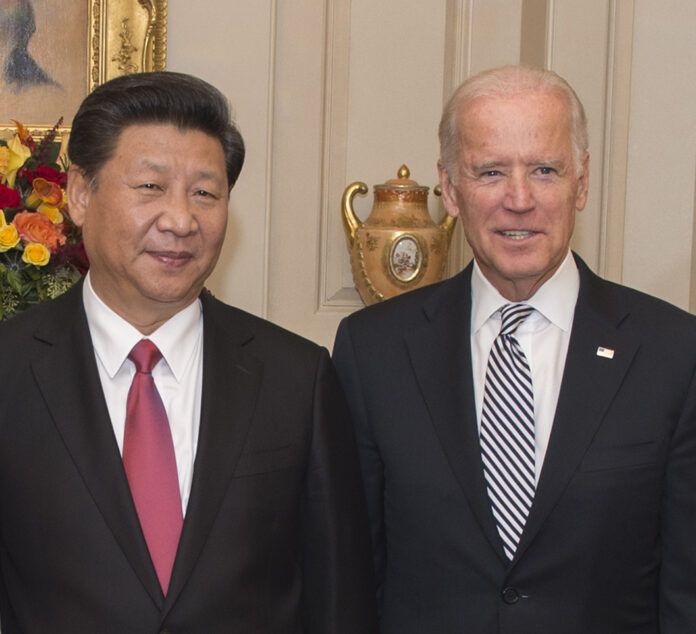
Les prochaines années seront agitées aux États-Unis. La dépendance de la politique extérieure vis-à-vis de la politique intérieure a peu de chances de se distendre. Qu’il s’agisse de la rivalité avec la Chine ou du centrage sur les intérêts israéliens de la politique au Moyen-Orient, par exemple, on voit mal un Joe Biden faire significativement marche arrière. Beaucoup d’Européens veulent croire qu’avec l’ancien vice-président d’Obama on en reviendrait au bon vieux temps de la concertation transatlantique et du multilatéralisme. En apparence, peut-être. Mais en apparence seulement, car la dérive des continents a commencé avec l’émergence du monde post-soviétique, c’est-à-dire plus ou moins au début du nouveau siècle. Cette dérive s’explique par des facteurs objectifs, principalement la montée de la Chine et l’abaissement de la Russie. La personnalité des hôtes successifs de la Maison-Blanche ne peut qu’en forcer ou en atténuer les traits. Ce détail n’est cependant pas insignifiant. Pour arriver à ses fins en politique intérieure, Trump n’a pas hésité à rompre avec tous les codes en politique extérieure. Il a fait des émules jusqu’en Grande-Bretagne avec Boris Johnson. Du point de vue de la stabilité du monde dans son ensemble, le mépris du droit et des institutions internationales est pire qu’un crime. C’est une faute à l’égard du monde, et donc aussi me semble-t-il à l’égard des États-Unis. De ce point de vue, un autre que Trump pourrait peut-être calmer les blessures, mais pas changer le cours des choses. C’est la raison pour laquelle certains, de ce côté de l’océan Atlantique, espèrent la réélection du milliardaire. Selon eux, seul un tel choc pourrait consolider le timide mouvement des Européens en faveur de leur souveraineté.
Pour ma part, je me refuse à pareilles spéculations. D’abord, parce que les Européens ne sont que des spectateurs de la scène politique américaine. Ils n’ont aucun moyen de l’influencer. Ensuite et surtout, au nom du réalisme : dans tous les cas de figure, un minimum d’entente euro-américaine est nécessaire pour que les pays occidentaux, et ceux de tous les continents auxquels ils sont liés par l’histoire et la géographie, affrontent en souplesse le défi de la montée des puissances illibérales. Il y a aussi le défi de l’islamisme politique, incompatible avec les valeurs occidentales, et a fortiori la menace persistante du terrorisme islamiste. La nécessaire entente euro-américaine suppose cependant que les États-Unis, avec ou sans Trump, cessent de traiter les Européens comme des adversaires, en leur imposant brutalement leurs propres choix notamment par la voix des sanctions. Ayant dit cela, il faut reconnaître qu’un Trump II aurait peu de chances de se distinguer vraiment d’un Trump I. Dans ce cas, l’Union européenne n’aurait d’autre choix que de chercher les moyens de sortir des griffes de l’oncle Sam sans tomber dans celles de la Cité interdite. Le point le plus délicat est qu’à ce stade rien ne nous permet de penser qu’une Amérique à nouveau démocrate ne chercherait pas elle aussi à imposer sa volonté aux Européens, certes en y mettant un peu plus les formes.
Pour compléter ces propos pré-électoraux, prenons encore davantage de recul, avec un regard plus sociologique sur le monde contemporain. En premier lieu, on observe le rejet de toute notion d’autorité en général. Particulièrement spectaculaire à cet égard est l’effondrement du christianisme dans le monde occidental, incroyablement rapide à l’échelle de l’Histoire. Cela est vrai globalement du catholicisme mais aussi des protestantismes, particulièrement au profit des églises évangéliques. Ce dernier point est frappant aux États-Unis, où ce qui reste de la culture protestante, si importante pour l’identité de la première puissance mondiale, se trouve transfiguré dans des communautarismes sectaires d’autant plus irréalistes et intolérants qu’ils se sont coupés de leurs racines. Par analogie, comment ne pas faire un parallèle avec l’idéologie communiste, ce travesti du christianisme où l’on avait remplacé Dieu par « le peuple » et l’Église par le Parti. En Europe de l’Est, les églises orthodoxes résistent encore. Dans l’avenir proche, c’est peut-être aux États-Unis que la perte d’identité est la plus frappante, malgré les tentatives pour la dissimuler. En fin de compte, le phénomène Trump ne traduit-il pas la crispation d’une moitié de la population qui craint sincèrement la disparition des valeurs américaines ? La peur identitaire ne se manifeste pas qu’aux États-Unis. Elle est visible en France, et depuis longtemps. En fait, en dehors de l’orthodoxie en Russie, s’il est un monothéisme qui depuis un demi-siècle n’a cessé de renforcer ses positions, sur le plan tant religieux que politique, c’est l’islam. Et, depuis les décolonisations au sens large, l’islam politique a tendu à dégénérer dans les pires formes d’obscurantisme.
Après ou plutôt à côté de la religion, je citerai les réseaux sociaux et la conception libertaire qui prévaut encore à leur sujet. Il aura fallu beaucoup de temps pour qu’on commence à reconnaître que des segments entiers d’opinions publiques sont conditionnés par le déferlement continu de propos ou d’« informations » non contrôlés. Et les jugements éthiques à leur sujet ne coulent jamais de source. Les problèmes posés aux sociétés contemporaines sont extrêmement complexes. On ne peut traiter ces questions qu’en examinant toutes leurs faces et aucune synthèse parfaite n’est possible. Quand plus aucune autorité n’est reconnue, manipulateurs et cyniques ont le champ libre pour propager la « post-vérité » et justifier leurs crimes. La technologie est un formidable instrument sur lequel ils peuvent s’appuyer. Sans doute, le temps passant, la nécessité de légiférer sur l’internet se fera-t-elle de plus en plus sentir. Mais avant qu’un droit nouveau n’émerge, combien de drames se seront-ils déroulés, et avec quels effets ?
Pour mémoire, mentionnons sans commentaires l’explosion des inégalités pendant le temps de la « mondialisation heureuse », la surexploitation de la nature et les manifestations de plus en plus tangibles du changement climatique. Autant de faits qui, à eux seuls, suffiraient à expliquer le retour de formes quasi-révolutionnaires du socialisme (ou leur apparition dans le cas des États-Unis), fort éloignés de la social-démocratie.
Enfin, il y a l’interminable pandémie de COVID-19. Elle nous oblige à reconsidérer la gouvernance mondiale en matière de santé, alors que la tendance – exacerbée par la pandémie – est à la déglobalisation et à l’affaiblissement du multilatéralisme. Cet affaiblissement est accru par la suspicion d’incompétence qui prévaut au moins dans les opinions occidentales, sur la capacité des gouvernants à mener des politiques publiques cohérentes et efficaces.
J’ajoute pour terminer que les régimes autoritaires ou totalitaires ne sont pas à l’abri des révolutions, en partie pour les mêmes raisons. Aucun pays de nos jours ne peut se mettre entièrement à l’abri du regard des autres. Les régimes apparemment les plus solides peuvent se trouver balayés en un clin d’œil. Le déséquilibre est un phénomène mondial. Le mieux que l’on puisse attendre du prochain président des États-Unis, c’est un peu plus de sagesse. La sagesse n’exclut pas la fermeté. Ce serait déjà un grand progrès pour le système international dans son ensemble.
Je vous donne rendez-vous après le 3 novembre.
Thierry de Montbrial
Fondateur et président de la WPC
Fondateur et président exécutif de l’Ifri
Franciscus Verellen et Jean-Pierre Cabestan, experts sur la Chine
4 Instituts Pour Mieux Comprendre La Chine D’Aujourd’hui
Forbes – 16.11.2020
Par Philippe Branche
“Quand on s’intéresse à la Chine : il est important de connaitre la pensée chinoise : d’Anne Cheng à Jacques Gernet en passant par Léon Vandermeersch”, explique le professeur Jean-Pierre Cabestan. A l’heure où le futur des relations diplomatiques avec la Chine est plus que jamais incertain avec l’élection de Joe Biden, le travail des sinologues est d’autant plus important. Peu connus du grand public, la France compte pourtant de nombreux instituts qui fournissent une intelligence de terrain pour les décideurs politiques et économiques. Retour pour Forbes France sur les différentes sources d’information pour comprendre la Chine d’hier et d’aujourd’hui.

Comprendre le passé de la Chine avec Franciscus Verellen – Ancien Directeur de L’École française d’Extrême-Orient (EFEO), membre de l’Institut.
L’École française d’Extrême-Orient (EFEO). Une institution qui a donné ses lettres de noblesse à la sinologie française. Sa mission scientifique vise l’étude des civilisations classiques d’Asie par le prisme des sciences humaines et sociales. Depuis sa création en 1898, l’École a connu une croissance constante avec un total de 18 centres et antennes en Asie : de Pondichéry, à la Thaïlande, en passant par Tokyo ou encore Hong Kong, et même un chantier archéologique en Corée du Nord.

L’EFEO n’aurait pas pu connaitre un tel essor sans les compétences apportées par ses enseignants-chercheurs. Franciscus Verellen, ancien directeur de l’École de 2004 à 2014 qui est aujourd’hui responsable du centre de Hong Kong, décrit l’École comme un exemple reconnu au plan international de « l’importance de la connaissance directe et acquise sur le terrain qui reste, encore aujourd’hui, une spécificité de la sinologie française ». Les implantations de l’EFEO sont considérées par les décideurs politiques et économiques comme une ressource fiable sur la Chine comme sur l’Asie.

Les travaux de Franciscus Verellen s’inscrivent dans la tradition d’excellence de la sinologie française. Son ouvrage « Imperiled Destinies : the Daoist Quest for Deliverance in Medieval China » retrace sur huit siècles l’ouverture du taoïsme à différentes influences et l’essor de la religion chinoise par excellence. Un livre passionnant pour comprendre l’évolution du taoïsme et ses liens complexes avec le bouddhisme et le confucianisme. L’expertise de Franciscus Verellen lui permet aussi d’avoir une compréhension subtile des enjeux religieux actuels en Chine. Lors de son intervention à la World Policy Conference créée par Thierry de Montbrial, le sinologue a mis l’accent sur la réponse politique au fait religieux dans l’Empire du Milieu. Selon lui, la Chine est un « État fondamentalement religieux » et ce renouveau spirituel a été provoqué par « la question des valeurs ». Depuis février 2018 le Front uni du parti communiste chinois régule et « sinicise » les cinq religions reconnues, taoïsme, bouddhisme, islam, catholicisme et protestantisme. Franciscus Verellen fait ainsi partie des sinologues dont le regard d’historien est précieux pour mettre en perspective des enjeux contemporains.
MERICS et l’Insitut Ricci – deux instituts internationaux pour l’actualité chinoise
La France n’est pas le seul pays européen à vouloir mieux comprendre la Chine contemporaine ; l’Allemagne s’y intéresse également. En 2013 fut établi le Mercator Institute for China Studies (MERICS), un think tank dédié uniquement à l’étude de la Chine. Les experts du MERICS se définissent d’abord comme “ouverts à de nouvelles perspectives sur la Chine et à de nouvelles propositions destinées à façonner les relations avec ce pays”. Leur dernier podcast, publié le 10 Novembre, ouvre des perspectives pour mieux cerner les enjeux d’actualité : “ US-Chine : les relations après les élections ”, un échange pour appréhender l’agenda chinois de Joe Biden. Ce think tank s’avère d’autant plus important que la Chine affiche malgré la pandémie mondiale un objectif de croissance annuelle du PIB de 5% pour les cinq prochaines années selon l’agence Reuters. De même, un autre institut plus ancien a pour objectif d’analyser les échanges culturels sino-occidentaux: l’Institut Ricci, dont le nom vient du premier prêtre Italien Matteo Ricci (1552-1610) à inaugurer l’inculturation du christianisme en Chine. Contrairement au MERICS qui se consacre principalement aux enjeux géopolitiques, ce dernier se consacre avant tout à l’étude de la civilisation chinoise et au dialogue interreligieux. Une conférence universitaire par Sophie Boisseau du Rocher (IFRI) devrait se tenir le 20 février 2021 prochain à Paris avec comme thème « Les Nouvelles Routes de la Soie, vues de l’Asie». Autant d’instituts donc pour mieux comprendre la Chine contemporaine d’un point de vue géopolitique et culturel.
Comprendre le présent du monde chinois avec Jean-Pierre Cabestan, ancien directeur du Centre d’études français sur la Chine contemporaine (CEFC)
Jean-Pierre Cabestan est directeur de recherche au CNRS et professeur à l’Université baptiste de Hong Kong. Il a été directeur du CEFC de 1998 à 2003 et s’intéresse tout particulièrement aux phénomènes politique en Chine populaire, à Hong Kong comme à Taiwan. Dans son ouvrage, ‘Chine-Taiwan, la guerre est-elle concevable?’, Jean-Pierre Cabestan d’une part analyse la menace chinoise et la capacité militaire, politique et économique de Taipei à résister. D’autre part, il évalue les risques de guerre et considère les différents scénarios possibles, avec ou sans implication américaine. Pour des sujets aussi sensibles et complexes, les experts comme Jean-Pierre Cabestan sont indispensables pour appréhender en profondeur cette zone de tension.
“En analysant l’histoire de la sinologie française, l’un des premiers pionniers de la recherche locale en Chine fut le général Jacques Guillermaz (1911-1998). Le général devient un observateur attentif des événements politiques de la Chine avec l’idée de l’étudier sur le terrain, une notion que de nombreux sinologues suivent encore aujourd’hui” explique Jean-Pierre Cabestan. “Le général a été l’un des fondateurs du Centre de recherche et de documentation sur la Chine contemporaine, qui fait maintenant partie de l’EHESS.” Dans son ouvrage Demain la Chine : démocratie ou dictature ? (publié en français et en anglais), Jean-Pierre Cabestan estime que le régime politique mis en place par Mao Zedong reste solide et doté d’une certaine capacité d’adaptation. Mais l’ancien directeur du CEFC pense qu’à plus long terme, du fait de la modernisation et la mondialisation de l’économie comme de la société chinoises, la question de la démocratie se posera, comme partout ailleurs.

Jean-Pierre Cabestan à la World Policy Conference ©
L’EFEO, le MERICS, l’Institut Ricci et le CEFC. Quatre instituts pour mieux apprécier la pluralité du monde contemporain chinois. Sans Franciscus Verellen ou Jean-Pierre Cabestan, il nous serait de plus en plus difficile d’appréhender le présent chinois. Par le biais d’un travail de recherches de terrain, nous comprenons qu’il y a non pas une mais différentes manières d’être chinois. “Ceux qui souhaitent bien connaître la Chine doivent se garder de prendre une partie pour le tout “ recommande finalement le Président chinois Xi Jinping.