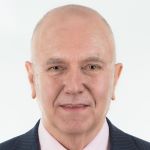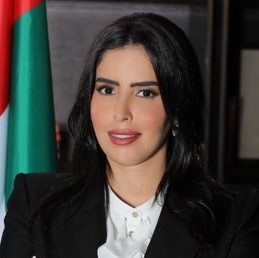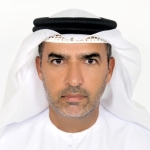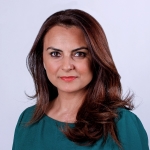
Nicolas de Germay WPC – Health

Vice Chairman of the WPC. He manages the organisation of the annual conference since its first edition in 2008. He is also chairman and founder of Alandia, a restructuring advisory firm which helped various States or Sovereign funds to regain control over their industrial investments (Middle East, Africa and West Asia). Former Vice chairman of the Franco Indian chamber of commerce, he was more especially in charge of agricultural investments. He seats, or seated, at several Advisory Boards such as British Telecom or PWC. He published a book on globalization in June 2010: Mondialisation, un autre regard and one on restructuring issues in France (2015).

Dominique David WPC – Health

Advisor to the Executive Chairman, Ifri, Editor of Politique étrangère and co-director of the annual report Ramses. He is also President of the Austro-French Centre for Rapprochement in Europe. Former Executive Vice-President of Ifri. Previously, he was in charge of the Security Studies department at Ifri. Before joining Ifri, he was Deputy Director of the Institut français de polémologie (French Institute of Polemology), and then Secretary General of the FEDN (Fondation pour les études de défense nationale). He also taught at the Military School of Saint-Cyr, at the Paris I University and at the Institut d’études politiques de Paris (IEP). His studies and publications deal with strategic issues, particularly with French strategy and European issues.

Vuk Jeremić

President of the Center for International Relations and Sustainable Development (CIRSD), a global public policy think-tank and a Co-Founder of the Global Preventive Diplomacy Initiative. He is the Editor-in-Chief of the quarterly magazine Horizons – Journal of International Relations and Sustainable Development. He is a Professor of Practice at the Sciences Po Paris School of International Affairs and a Visting Professor of Practice at Tsinghua University in Beijing. Mr. Jeremić is Senior Advisor to Eurasia Group, world’s leading geopolitical risk analysis firm, providing insights and advice to top international corporations, financial institutions, and governments worldwide. He served as Serbia’s Minister of Foreign Affairs from 2007 to 2012. From 2017 to 2024, Mr. Jeremić served as Senior Advisor to Partners Group, leading global private equity firm based in Switzerland, with USD 147 billion in assets under management.

François Nordmann WPC – Health

Former Ambassador of Switzerland to France (2002-2007). He joined the Foreign Service in 1971. He held several positions such as Ambassador to Guatemala and to other States of Central America, Head of the Swiss Delegation to UNESCO, Ambassador to the United Kingdom and Permanent Representative of Switzerland to the international organizations in Geneva. He contributes regularly to the Swiss newspaper Le Temps. He studied law and international relations at the University of Fribourg and the Graduate Institute for  International Studies in Geneva.

Gilles Guérin WPC – Health

Managing Director of Banque Bordier & Cie, Geneva. He is also a member of the Board and Treasurer of the WPC Foundation. His area of expertise is private asset management. He was formerly Managing Partner at EFG Bank in Geneva. He previously worked as a money market dealer at the Al Saudi bank in Paris, then as treasurer for Europe at the National Bank of Abu Dhabi in Paris. He received a degree in economics from the University of Neuchâtel and an advanced management degree from the École des Cadres de Lausanne.

Tedros Adhanom Ghebreyesus WPC – Health

Director-General of the World Health Organization since 2017. Prior to his election, he served as Ethiopia’s Minister of Foreign Affairs from 2012 to 2016 and as Minister of Health from 2005 to 2012. He holds a PhD in Community Health from the University of Nottingham and a MSc in Immunology of Infectious Diseases from the University of London. He is globally recognised as a health scholar, researcher, and diplomat with first-hand experience in research, operations, and leadership in emergency responses to epidemics. Throughout his career Dr Tedros has published numerous articles in prominent scientific journals, and received awards and recognition from across the globe.

Jean de Kervasdoué WPC – Health

Professor Emeritus of the Chair of Economics and Management of Health Services at the Conservatoire national des arts et métiers (CNAM) and Founder of the Pasteur/CNAM School of Public Health. He is a member of the French Academy of Technologies and a member of the executive board of the Médecins du Monde Foundation. Former Consultant to the Organization for Economic Cooperation and Development, he served as Visiting Professor at Yale University, Under Secretary at the French Ministry of Health and Adviser to the Prime Minister. He holds a Master in Agronomy from the Institut national agronomique Paris-Grignon, a MBA and a PhD in Socio Economics from Cornell University.

Michael van den Berg WPC – Health

Michael van den Berg, Health Policy Analyst at the OECD

Michael is a policy analyst at the OECD, and is specialized in health systems performance assessment, quality of care, performance indicators and primary care. His current work is driven by the ambition to move towards a new generation of indicators that will enhance international learning on the value of healthcare as reported by patients themselves. He is passionate about international collaboration and as a member of the OECD Health Division, he helps countries achieve high-performing health systems. Michael studied sociology, wrote a PhD thesis in the area of primary care and has been working on health services research and policy advice more than eighteen years. Michael is managing the development of an international survey of chronic patients within the framework of OECD’s Patient Reported Indicator Surveys initiative.

Elhadj As Sy WPC – Health

Elhadj As Sy

Elhadj As Sy is the Chair of the Kofi Annan Foundation Board, and Co-chair of the WHO/World Bank Global Pandemic Preparedness Monitoring Board (GPMB). In addition, Mr. Sy is also a Commissioner for the Global Commission on Climate Adaptation, Governor at the Wellcome Trust, and a member of the Governing Board of Interpeace as well as numerous other boards and organizations. Mr. Sy has extensive experience in leadership roles in the humanitarian, health, environment, development sectors, and has previously served as the Secretary-General of the International Federation of Red Cross and Red Crescent Societies (IFRC) – the world’s largest humanitarian network. Prior to this appointment, he served at a senior level with UNICEF, UNAIDS, the Global Fund to Fight AIDS, Tuberculosis and Malaria, and other agencies for more than 25 years. For instance, Mr. Sy was UNICEF’s Director of Partnerships and Resource Development in New York, and from 2005 to 2008, he was Director, HIV/AIDS Practice with the United Nations Development Program in New York. Before that, he worked with the Global Fund to Fight AIDS, Tuberculosis and Malaria as Director of Operational Partnerships and Country Support in Geneva. Mr. Sy graduated from the University of Dakar, the University of Graz, the Diplomatic Academy in Vienna and the École normale supérieure in Dakar.

Stanislas Cozon WPC – Health

Stanislas Cozon is Executive Vice President of Capgemini. He was Managing Director in charge of global industry sectors within Capgemini (consumer products, retail, utilities, tax and welfare, public security, telecommunications, financial services and manufacturing). The transformation of corporations and governments is at the heart of this role. He started his career at the French Treasury (Inspection Générale des Finances) and joined Capgemini in 1989. He holds a diploma of the Institut d’Études Politiques de Paris and of the École Nationale d’Administration.

Seán Cleary WPC – Health

Founder and Executive Vice-Chairman of the FutureWorld Foundation and Chairman of Strategic Concepts (Pty) Ltd. Chairman of the Advisory Board of the Global Economic Symposium, Advisory Council member of Climate-KIC and IAS Köszeg; and a Director of companies, Faculty Member of the Parmenides Foundation, and co-author, with Thierry Malleret, of Resilience to Risk, and Global Risks, as well as numerous articles and chapters. He studied social sciences and law and holds a MBA from Henley Management College at Brunel University, United Kingdom.

Roberto Burioni WPC – Health

Roberto Burioni, MD, PhD, is Professor of Virology and Microbiology at the Medical School of the Università Vita-Salute San Raffaele in Milan, Italy. Before that, he was Assistant Professor at the Medical School of the Università Cattolica del Sacro Cuore, Rome. He began his career in the United States where he held several research positions, most recently at the Center for Molecular Genetics at the University of California, San Diego, and at the Scripps Research Institute, La Jolla, California, in Dr. Dennis Burton’s laboratory. He is currently leading a lab active in the development of human monoclonal antibodies against human infectious agents and is the medical director of the site www.medical facts.it.

Michael Møller WPC – Health

Michael Moller

Chairman of the Diplomacy Forum, Geneva Science and Diplomacy Anticipator; Senior Adviser, Macro Advisory Partners; and Member of the Board of the Kofi Annan Foundation. Former Under-Secretary-General of the United Nations and Director-General of the United Nations Office at Geneva (2013-2019). He served as Executive Director of the Kofi Annan Foundation (2008-2011) and as UN Secretary-General’s Special Representative for Cyprus (2006-2008). Between 2001 and 2006 he was Director for Political, Peacekeeping and Humanitarian Affairs in the Office of the Secretary-General, while serving concurrently as Deputy Chief of Staff for the last two years of that period. He served as Head of the Office of the Under-Secretary-General for Political Affairs at UN headquarters (1997-2001). He began his career in 1979 with the Office of the UN High Commissioner for Refugees. He graduated from Johns Hopkins University, United States, and the University of Sussex, United Kingdom.

Jacques Biot WPC – Health

Jacques N. Biot currently serves as a Board-member or advisor to companies in the field of digital transformation and artificial intelligence, and a Trustee to several scientific academic institutions. He has international professional experience in higher education and research (First executive President of Ecole polytechnique, 2013-2018), life sciences (Roussel-Uclaf, Pasteur-Mérieux Serums and Vaccines, now parts of Sanofi; JNBD, strategic consulting firm in health technology, divested to ICON; and Guerbet, GBT, Euronext), industry and technology financing, and public administration (Prime Minister’s office). The motto of his career has been about how to turn scientific innovation into societal and economic value. Jacques is a graduate of Ecole polytechnique (X71) and a member of the Corps des Mines. He is an Officer of the Legion of Honor and of the French Orders of Merite, and a member of the Lion’s Order of Senegal.

Nardos Bekele-Thomas WPC – Health

Nardos Bekele-Thomas is Resident Coordinator for Nations (UN) in South Africa. She was previously the Senior Director of the Office of the Secretary-General. She also served as the UN Resident Coordinator and UNDP Resident Representative in the Republic of Kenya and the Republic of Benin. Her interest includes promotion of human development; anchored on the principles of economic, social and political rights for all. She has excelled as a Private Sector Policy Adviser focusing on the promotion of trade and investment in African countries through private/public sector partnerships in the United States. She holds a Master’s Degree and a Ph.D. Candidate Certificate in Economic Development, Monetary Economics and Econometrics from New York University (NYU). She is the author of several papers and monographs, and she is fully bilingual in French and English.

Jean Kramarz WPC – Health

Director of the Healthcare activities of the AXA Partners Group. He is a specialist in the development of healthcare services in France and around the world. Before joining the AXA Group, where he launched medical teleconsultation for the general population in France, he was Director of New Services for the Malakoff-Médéric Group, Director of Development for Europ Assistance, Director of International Health Subsidiaries for the Gras Savoye Group. He also worked in the French public sector, including in the Oil & Gas and Automotive Departments of the Ministry of Industry and in the Treasury Department of the Ministry of Finance. Jean Kramarz is an alumnus of Sciences Po Paris and ENA.

Holger Mey WPC – Health

Vice President of Advanced Concepts, Airbus, Munich, Germany. Before joining Airbus in 2004, he worked as a self-employed Security Policy Analyst and Consultant. Among many other functions, he served as President & CEO of the Institute for Strategic Analyses which he founded in 1992. He is an Honorary Professor for Foreign Policy at the University of Cologne. He began his career as a Research Associate at the Stiftung Wissenschaft und Politik. From 1990 to 1994, he served successively as Security Policy Analyst on the Policy Planning Staff of the German Minister of Defense and Security Policy Advisor to the Chairman of the Defense Committee in the German Parliament.

Daniel Andler WPC – Health

Daniel Andler is emeritus professor at Sorbonne Université and a member of the Académie des sciences morales et politiques. He began his academic career as a mathematician, specializing in logic and teaching at Paris 7 and other universities, He then was appointed as professor of philosophy of science at the universities of Lille, Nanterre and finally Paris IV. He is chiefly interested in cognitive science and artificial intelligence, and in their import for education, collective decision and public policy. He was the founder and first director of the department of cognitive studies at the Ecole normale superieure in Paris. His latest books are La Silhouette de l’humain, quelle place pour le naturalisme aujourd’hui ? and La Cognition, du neurone à la société (co-authored). His book on the significance of the present surge of artificial intelligence is forthcoming.


Alexandre de Germay WPC – Health

Global Head of the Cardiovascular and Established Products Franchise at Sanofi. With more than 20 years of experience in the healthcare field, he is a trusted and strategic executive possessing a proven track record of enabling innovative and winning strategies to achieve significant and sustainable results across markets. Before joining Sanofi in 2016, he held several positions for Pfizer as Global Established Pharma Regional President for Japan-Asia-Pacific, Director Worldwide Marketing Group, General Manager. Alexandre de Germay earned two master’s degrees in business administration and finance from Paris XIII University in France.

Jean-Pierre Lablanchy WPC – Health

Medical Doctor and Psychiatrist, member of the Supervisory Board of Edeis. He is specialized in the management of conflict situations, and in particular in the management of post-traumatic syndromes. He participates in work on sleep, biological rhythms, and physiological and psychological adaptation factors. He has been practicing in Paris for 37 years, with an involvement in corporate work. He has carried out numerous consulting missions including with Progress, Danone, Rians, Laboratoires Debat, Spie Batignolles, L’Oréal, EDF, Normédic, La Poste, and with the government of Senegal. He also collaborated with IMS Health and the General Management of Manpower.

Michel Kazatchkine WPC – Health

Special Advisor to the Joint UN Programme on HIV/AIDS (UNAIDS) for Eastern Europe and Central Asia, he has over 35 years of experience in global health as a leading physician, researcher, administrator, advocate, policymaker, and diplomat. He is Emeritus Professor of Immunology at Paris Descartes University, Senior Fellow with the Global Health Centre of the Graduate Institute for International and Development Studies in Geneva, and a member of the Global Commission on Drug Policy. He was Executive Director of the Global Fund to fight AIDS, Tuberculosis and Malaria, Director of the French Agency for Research on AIDS, French ambassador on HIV/AIDS and communicable diseases, and UN Secretary-General’s Special Envoy on HIV/AIDS in Eastern Europe and Central Asia.

Arthur Stril WPC – Health

Arthur Stril, Chief Business Officer of Cellectis

Chief Business Officer and member of the Executive Committee of Cellectis. Prior to this position, he was Vice President, Corporate Development at Cellectis, responsible for program management, strategy and business development. Cellectis is a clinical-stage biopharmaceutical company developing gene-edited allogeneic CAR-T immunotherapies in oncology. Arthur began his career at the European Commission’s Directorate-General for Competition, controlling global pharmaceutical mergers such as the Novartis/GSK and Sanofi/Boehringer Ingelheim asset swaps, Pfizer’s acquisition of Hospira and Teva’s acquisition of Actavis Generics. He later became Head of the Hospital Financing unit at the French Ministry of Health, where he led a team responsible for the €80bn hospital budget. Arthur graduated from the École Normale Supérieure, Paris and Cambridge University, and holds a diploma in Immunotherapy from the Université Paris-Descartes. Arthur is also a member of the French Corps des Mines.

Juliette Tuakli WPC – Health

Juliette Tuakli, CEO of Child, Family and Associates, Ghana

Dr. Juliette M. Tuakli is United Way Worldwide’s Chair of Governance Committee and a Member of their Leadership Council. She is also the acclaimed medical Director/Founder of Family CHILD & Associates, a Board Member of Commonwealth Human Rights Initiative, co-Founder of MOREMI Leadership program and a Member of Child Healthcare Information for All. She has more than 30 years of pediatric, family medicine and public health care experience. She was on the Harvard and Boston Medical School faculties, and a Pediatric Professor. As Pediatric/Adolescent medical Director of the Children’s Hospital of Boston affiliated community health center, she initiated seminal cross-cultural, service-directed, operations research (CHILD), for many years.

Alexandra Prieux WPC – Health

Alexandra Prieux, President of Alcediag and Founder of SkillCell

President of Alcediag, Founder of SkillCell. Alexandra is a graduate of École centrale Paris (2005) and of the MIT Sloan School of Management (2009). She began her career as a junior analyst in the Transaction Advisory Services in Ernst & Young. After her MBA, she joined the McKinsey & Co Paris Office where she worked as a consultant and as a junior manager. In 2012, she joined the Alcen family group which is made up of over thirty high-tech companies active in the following sectors: defense and security, energy, medical and healthcare, aeronautics and space, large scientific instruments. She first took on the role of Head of Development, working on Alcen’s proprietary technologies such as renewable energy (thermodynamic solar power) and nanotechnologies. In 2016, she became president of Alcediag, an Alcen subsidiary focusing on precision diagnostics and developing blood biomarkers and tests for mental health and more particularly bipolar disorder. In addition in 2017, she founded SkillCell, a biotech company developing miniaturized tests for health, food and environment based on a proprietary synthetic biology and biomimicry technology.

Pierre Prieux WPC – Health

President of Alcen, group composed of high technology companies in the fields of defense, energy, medical machines and aeronautics. He started his career as President of Tabur Marine and of Dufour. He served at Matra Group as Senior Vice President in charge of 4 departments (car electronics, robotics, computer-aided design and watchmaking). He set up and managed a telecommunication operator, Kaptech and an equipment manufacturer, Cirpack. He studied at the Ecole Polytechnique and at the Insead.

Patrick Nicolet WPC – Health

Patrick Nicolet is Capgemini’s Group Chief Technology Officer responsible for the technology, innovation and corporate venture agenda for the organization. Throughout his career Patrick has held a number of executive leadership and operational excellence roles such as Chairman of the Board of Capgemini Brazil and Executive Leader for India Operations. It was during this tenure that Patrick successfully led the integration of 30,000 new colleagues into Capgemini following the acquisition of iGate. He started his career in operations by turning around businesses notably as partner of the corporate recovery practice of Ernst & Young Switzerland and later within Capgemini as Group sales director or CEO of the Infrastructure Services business. Patrick has been recognized by the World Economic Forum as a Global Leader for Tomorrow at Davos (the precursor to the Forum for Young Global Leaders).

Carlos Moreira WPC – Health

Founder, Chairman and CEO of WISeKey. Before founding his company in 1999, he served as United Nations Expert on cybersecurity during 17 years. He is recognized worldwide as an Internet pioneer and has a unique profile, which combines extensive high level international diplomacy experience and emerging technologies expertise. He has received many international awards for his commitment to secure the Internet. He is very active in disruptive cryptotechnology, AI, blockchain, IoT and cybersecurity. He is also an expert in M&A, fundraising, IPOs, and listed companies. He is the coauthor of The transHuman Code bestseller book.

Thierry de Montbrial WPC – Health

Thierry de Montbrial is Executive Chairman of the French Institute of International Relations (Ifri), which he founded in 1979. He is Professor Emeritus at the Conservatoire National des Arts et Métiers. In 2008, he launched the World Policy Conference. He has been a member of the Académie des Sciences Morales et Politiques of the Institut de France since 1992, and is a member of a number of foreign academies. He serves on the board or advisory board of a number of international companies and institutions. Thierry de Montbrial chaired the Department of Economics at the Ecole Polytechnique from 1974 to 1992. He was the first Chairman of the Foundation for Strategic Research (1993- 2001). Entrusted with the creation of the Policy Planning Staff (Centre d’analyse et de prévision) at the French Ministry of Foreign Affairs, he was its first Director (1973-1979). He has authored more than twenty books, several of them translated in various languages, including Action and Reaction in the World System – The Dynamics of Economic and Political Power (UBC Press, Vancouver, Toronto, 2013) and Living in Troubled Times, A New Political Era (World Scientific, 2018). He is a Grand Officer of the Légion d’honneur, Grand Officer of the Ordre National du Mérite. He has been awarded the Order of the Rising Sun – Gold and Silver Star, Japan (2009), Commander of the Order of Merit of the Federal Republic of Germany (2016) and other state honors by the French and several foreign governments. Thierry de Montbrial is a graduate of the Ecole Polytechnique and the Ecole des mines, and received a Ph.D. in Mathematical Economics from the University of California at Berkeley.

The American Elections and Beyond

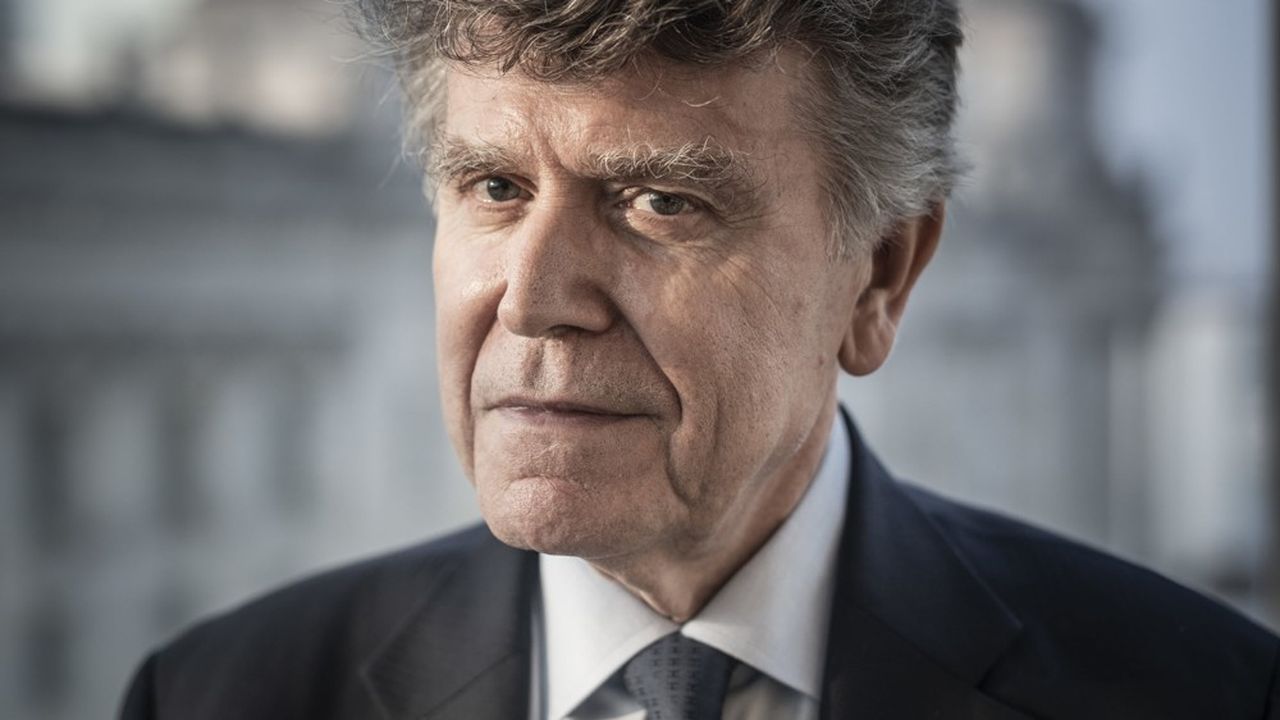
Portrait de Thierry de Montbrial © Bahi

Éditoriaux de l’Ifri, October 12th, 2020

The next few years will be tumultuous ones in the United States. The dependency of foreign policy on domestic policy is unlikely to diminish. Whether in the rivalry with China or the predominance of Israeli interests in Middle East policy, for example, it is hard to imagine Biden taking a big step backward. Many Europeans want to believe that a victory by Obama’s former vice president will signal a return to the good old days of transatlantic consultation and multilateralism. In appearance, perhaps. But only in appearance, for the continents started drifting apart with the emergence of the post-Soviet world, i.e. more or less at the beginning of the new century. This drift is explained by objective factors, mainly the rise of China and the decline of Russia. The personality of successive presidents can only speed up or slow down the trend. This detail, however, is not an insignificant one. To reach his domestic policy ends, Trump has unflinchingly flouted all the conventions of foreign policy. Copycats have followed his lead, including Boris Johnson in Great Britain. From the perspective of the world’s stability as a whole, scorn for international law and institutions is worse than a crime. It is an offence against the world, and therefore also, it seems to me, against the United States. From this point of view, anyone other than Trump could perhaps soothe the wounds but not change the course of things. That is why some people on this side of the Atlantic hope the billionaire is re-elected. In their view, only such a jolt could bolster the Europeans’ tentative movement towards sovereignty.

For my part, I reject such speculations. First, because Europeans are merely observers of the American political scene. They have no means to influence it. Second, and above all, in the name of realism: whatever happens, a minimum of Euro-American understanding is necessary if Western countries, and those of all continents to which they are linked by history and geography, are to flexibly face the challenge of the rise of illiberal powers. There is also the challenge of political Islamism, which is incompatible with Western values, and a fortiori the persistent threat of Islamist terrorism. This necessary Euro-American understanding presupposes, however, that the United States, with or without Trump, should stop treating Europeans as adversaries by brutally imposing its own choices on them, in particular through sanctions. That said, it must be acknowledged that a second Trump term would hardly look different from the first one. If he prevails, the European Union would have no choice but to seek ways of escaping from Uncle Sam’s clutches without falling into those of China. The trickiest point is that at this stage there is nothing to suggest that a newly democratic America would not also seek to impose its will on Europeans, albeit in a slightly more gentle way.

To round out these pre-electoral comments, let us take a further step back with a more sociological look at today’s world. In the first place, the rejection of any notion of authority in general can be observed. The collapse of traditional forms of Christianity in the Western world, stunningly quick on the scale of history, is especially spectacular in this regard. This is globally true of Catholicism but also of Protestantism, with evangelical churches benefitting the most. The last point is striking in the United States, where what is left of Protestant culture, so important to the identity of the world’s leading power, has been transfigured into communitarian sects as unrealistic and intolerant as they are cut off from their roots. By analogy, how can a parallel not be drawn with communist ideology, that travesty of Christianity where God was replaced by “the people” and the Church by the Party? In Eastern Europe, the Orthodox churches are still holding their own. In the near future, it is perhaps in the United States that the loss of identity will be most striking, despite attempts to hide it. Ultimately, doesn’t the Trump phenomenon reflect the anxiety of that half of the population that genuinely fears that American values are disappearing? The fear of losing identity is not only seen in the United States. It has been visible in France for a long time. In fact, outside of Orthodoxy in Russia, if there is a monotheistic faith that for a half-century has ceaselessly bolstered its positions, both religious and political, it is Islam. And, since decolonization in the broad sense of the term, political Islam has had a tendency to degenerate into the worst forms of obscurantism.

After, or rather alongside religion, I would mention social media and the libertarian aura that still surrounds them. It has taken a long time to recognize that whole segments of public opinion throughout the world are influenced by a steady drumbeat of messages or unverified ”news”. The issues facing contemporary societies are extremely complex. And ethical judgements about them are never easy to make. They can only be addressed by looking at every side; no perfect synthesis is possible. When there is no longer any recognized authority, manipulators and cynics have a free hand to spread “alternative facts” and justify their crimes. technology is a formidable tool at their disposal. As time goes by, the need for Internet legislation will undoubtedly become increasingly felt. But before a new legal system emerges, how many tragedies will have unfolded and what effects will they have had?

For the record, let us mention without comment the explosive rise of inequality during the time of “happy globalization”, the over-exploitation of nature and the increasingly tangible manifestations of climate change. These facts alone would suffice to explain the return of quasi-revolutionary forms of socialism (or their appearance, in the case of the United States), which are a far cry from social democracy.

Lastly, there is the interminable COVID 19 crisis. It forces us to reconsider global governance in terms of health just when the trend—exacerbated by the pandemic—is towards de-globalization and the weakening of multilateralism. This weakening is aggravated by the suspicion, at least in Western opinion, that governments are too incompetent to carry out coherent and effective public policies.

In conclusion, I would add that authoritarian or totalitarian regimes are not immune to revolutions, partly for the same reasons. No country nowadays can be completely impervious to the gaze of others. The seemingly strongest regimes can be swept away in the blink of an eye. Imbalance is a global phenomenon. The best that can be expected from the next president of the United States is a little more wisdom. Wisdom and firmness are not mutually exclusive. That would already be a big step forward for the international system as a whole.

See you after the 3rd of November.

Thierry de Montbrial

Founder and Chairman of the WPC
Founder and Executive Chairman of Ifri

Franciscus Verellen et Jean-Pierre Cabestan, experts sur la Chine

4 Instituts Pour Mieux Comprendre La Chine D’Aujourd’hui

Forbes – 16.11.2020

Par Philippe Branche

“Quand on s’intéresse à la Chine : il est important de connaitre la pensée chinoise : d’Anne Cheng à Jacques Gernet en passant par Léon Vandermeersch”, explique le professeur Jean-Pierre Cabestan. A l’heure où le futur des relations diplomatiques avec la Chine est plus que jamais incertain avec l’élection de Joe Biden, le travail des sinologues est d’autant plus important. Peu connus du grand public, la France compte pourtant de nombreux instituts qui fournissent une intelligence de terrain pour les décideurs politiques et économiques. Retour pour Forbes France sur les différentes sources d’information pour comprendre la Chine d’hier et d’aujourd’hui.

Getty Images ©

Comprendre le passé de la Chine avec Franciscus Verellen – Ancien Directeur de L’École française d’Extrême-Orient (EFEO), membre de l’Institut.

L’École française d’Extrême-Orient (EFEO). Une institution qui a donné ses lettres de noblesse à la sinologie française. Sa mission scientifique vise l’étude des civilisations classiques d’Asie par le prisme des sciences humaines et sociales. Depuis sa création en 1898, l’École a connu une croissance constante avec un total de 18 centres et antennes en Asie : de Pondichéry, à la Thaïlande, en passant par Tokyo ou encore Hong Kong, et même un chantier archéologique en Corée du Nord.

Institute of Chinese Studies de l’Université Chinoise de Hong Kong où l’EFEO a établi son Centre de recherches depuis 1994

L’EFEO n’aurait pas pu connaitre un tel essor sans les compétences apportées par ses enseignants-chercheurs. Franciscus Verellen, ancien directeur de l’École de 2004 à 2014 qui est aujourd’hui responsable du centre de Hong Kong, décrit l’École comme un exemple reconnu au plan international de « l’importance de la connaissance directe et acquise sur le terrain qui reste, encore aujourd’hui, une spécificité de la sinologie française ». Les implantations de l’EFEO sont considérées par les décideurs politiques et économiques comme une ressource fiable sur la Chine comme sur l’Asie.

Franciscus Verellen à la World Policy Conference ©

Les travaux de Franciscus Verellen s’inscrivent dans la tradition d’excellence de la sinologie française. Son ouvrage « Imperiled Destinies : the Daoist Quest for Deliverance in Medieval China » retrace sur huit siècles l’ouverture du taoïsme à différentes influences et l’essor de la religion chinoise par excellence. Un livre passionnant pour comprendre l’évolution du taoïsme et ses liens complexes avec le bouddhisme et le confucianisme. L’expertise de Franciscus Verellen lui permet aussi d’avoir une compréhension subtile des enjeux religieux actuels en Chine. Lors de son intervention à la World Policy Conference créée par Thierry de Montbrial, le sinologue a mis l’accent sur la réponse politique au fait religieux dans l’Empire du Milieu. Selon lui, la Chine est un « État fondamentalement religieux » et ce renouveau spirituel a été provoqué par « la question des valeurs ». Depuis février 2018 le Front uni du parti communiste chinois régule et « sinicise » les cinq religions reconnues, taoïsme, bouddhisme, islam, catholicisme et protestantisme. Franciscus Verellen fait ainsi partie des sinologues dont le regard d’historien est précieux pour mettre en perspective des enjeux contemporains.


MERICS et l’Insitut Ricci – deux instituts internationaux pour l’actualité chinoise

La France n’est pas le seul pays européen à vouloir mieux comprendre la Chine contemporaine ; l’Allemagne s’y intéresse également. En 2013 fut établi le Mercator Institute for China Studies (MERICS), un think tank dédié uniquement à l’étude de la Chine. Les experts du MERICS se définissent d’abord comme “ouverts à de nouvelles perspectives sur la Chine et à de nouvelles propositions destinées à façonner les relations avec ce pays”. Leur dernier podcast, publié le 10 Novembre, ouvre des perspectives pour mieux cerner les enjeux d’actualité : “ US-Chine : les relations après les élection”, un échange pour appréhender l’agenda chinois de Joe Biden. Ce think tank s’avère d’autant plus important que la Chine affiche malgré la pandémie mondiale un objectif de croissance annuelle du PIB de 5% pour les cinq prochaines années selon l’agence Reuters. De même, un autre institut plus ancien a pour objectif d’analyser les échanges culturels sino-occidentaux: l’Institut Ricci, dont le nom vient du premier prêtre Italien Matteo Ricci (1552-1610) à inaugurer l’inculturation du christianisme en Chine. Contrairement au MERICS qui se consacre principalement aux enjeux géopolitiques, ce dernier se consacre avant tout à l’étude de la civilisation chinoise et au dialogue interreligieux. Une conférence universitaire par Sophie Boisseau du Rocher (IFRI) devrait se tenir le 20 février 2021 prochain à Paris avec comme thème « Les Nouvelles Routes de la Soie, vues de l’Asie». Autant d’instituts donc pour mieux comprendre la Chine contemporaine d’un point de vue géopolitique et culturel.

Comprendre le présent du monde chinois avec Jean-Pierre Cabestan, ancien directeur du Centre d’études français sur la Chine contemporaine (CEFC)

Jean-Pierre Cabestan est directeur de recherche au CNRS et professeur à l’Université baptiste de Hong Kong. Il a été directeur du CEFC de 1998 à 2003 et s’intéresse tout particulièrement aux phénomènes politique en Chine populaire, à Hong Kong comme à Taiwan. Dans son ouvrage, ‘Chine-Taiwan, la guerre est-elle concevable?’, Jean-Pierre Cabestan d’une part analyse la menace chinoise et la capacité militaire,  politique et économique de Taipei à résister. D’autre part, il évalue les risques de guerre et considère les différents scénarios possibles, avec ou sans implication américaine. Pour des sujets aussi sensibles et complexes, les experts comme Jean-Pierre Cabestan sont indispensables pour appréhender en profondeur cette zone de tension.

En analysant l’histoire de la sinologie française, l’un des premiers pionniers de la recherche locale en Chine fut le général Jacques Guillermaz (1911-1998). Le général devient un observateur attentif des événements politiques de la Chine avec l’idée de l’étudier sur le terrain, une notion que de nombreux sinologues suivent encore aujourd’hui” explique Jean-Pierre Cabestan. “Le général a été l’un des fondateurs du Centre de recherche et de documentation sur la Chine contemporaine, qui fait maintenant partie de l’EHESS.” Dans son ouvrage Demain la Chine : démocratie ou dictature ? (publié en français et en anglais), Jean-Pierre Cabestan estime que le régime politique mis en place par Mao Zedong reste solide et doté d’une certaine capacité d’adaptation. Mais l’ancien directeur du CEFC pense qu’à plus long terme, du fait de la modernisation et la mondialisation de l’économie comme de la société chinoises, la question de la démocratie se posera, comme partout ailleurs.

Jean-Pierre Cabestan à la World Policy Conference ©

Jean-Pierre Cabestan à la World Policy Conference ©

L’EFEO, le MERICS, l’Institut Ricci et le CEFC. Quatre instituts pour mieux apprécier la pluralité du monde contemporain chinois. Sans Franciscus Verellen ou Jean-Pierre Cabestan, il nous serait de plus en plus difficile d’appréhender le présent chinois. Par le biais d’un travail de recherches de terrain, nous comprenons qu’il y a non pas une mais différentes manières d’être chinois. “Ceux qui souhaitent bien connaître la Chine doivent se garder de prendre une partie pour le tout “ recommande finalement le Président chinois Xi Jinping.

Accédez à l’article original paru sur Forbes.