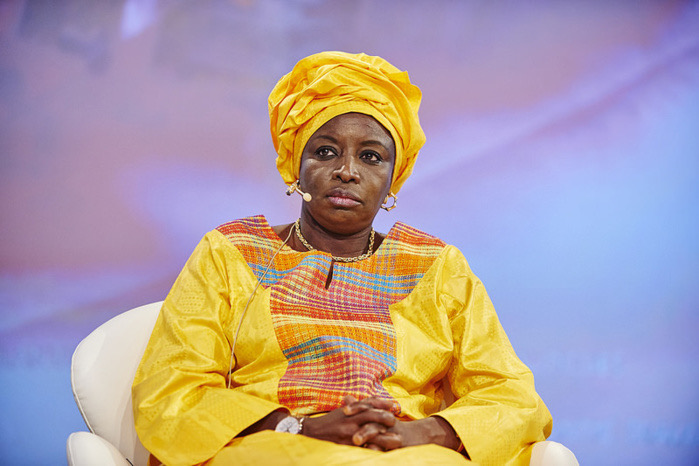

Civil servant within the French Corps des Mines, Eponine Loridant went to a binational French-German high school and studied at the French engineering school Ecole Polytechnique. As part of her education, she worked for a humanitarian organization in Ivory Coast and at the French embassy in Switzerland.
David Wurmser
Dr. David Wurmser, is a Senior Fellow and Director of the Project on Global Anti-Semitism and the US-Israel Relationship at the Center for Security Policy, as well as being a Senior Fellow at the Kohelet Policy Forum. He also is the executive and founding member of the Delphi Global Analysis Group, LLC – a firm specializing in geopolitical risk analysis and mitigation for hydrocarbon, infrastructure, high-tech, defense and financial firms from the United States, Japan and India navigating in Israel and the Middle East – since its founding in 2007. From December 2018 until September 2019, Dr. Wurmser also served as Senior Advisor (Special Government Employee) to the US National Security Advisor, Ambassador John Bolton.
Manon Nguyen Van Mai
Manon Nguyen Van Mai is an Engineering student of the French Corps des mines. She graduated from the “Sciences for environmental challenges” track at École Polytechnique and is currently training to become a civil servant. She completed six months of military service on a surveillance frigate in the French Southern and Antarctic Lands. During her studies, she worked for the biotech startup Embleema and for the industrial groups Butagaz and EDF.
Ingvil Smines Tybring-Gjedde
Non-Executive Director of Norge Mining. Ingvil Tybring-Gjedde brings an exceptional level of experience to Norge Mining’s Board as a Non-Executive Director. A representative of the Norwegian Progress Party (FrP) and the former Deputy Minister in the Norwegian Ministry of Petroleum and Energy, she will be a guiding light as the country explores its exciting economic next steps. Ingvil was also the Minister of Public Security in the Ministry of Justice and Public Security from January 2019 until January 2020. And she previously worked as a Senior Advisor in the Norwegian Ministry of Foreign Affairs, and in oil and gas management positions at Innovation Norway. Committees of the Board: Remuneration (Member) & ESG (Chair).
Mehdi Benchoufi
Co-founder of echOpen, a low-cost handheld ultrasound device connected to smartphones, he is a Public Health practitioner at Hôtel-Dieu Hospital, former assistant professor in Clinical Epidemiology and PhD in Mathematics. He is mainly involved in the interfaces between connected medicine and open technologies: ultrasound imaging, methodology for the development of Artificial Intelligence solutions. He was a pioneer in Blockchain applications for the quality of clinical trials.
John Vergopoulos
CEO of Norge Mining. John Vergopoulos brings decisive, hands-on leadership to Norge Mining, as well as an international financial ‘black book’ and years of experience in the mineral resources sector. He has a strong fundraising track record in capital, private equity and syndicated loan markets. He has been an SME Board Director and a CEO and CFO for various publicly traded corporations in the tech and mineral resources industries. Over the years, John has been in charge of dealing with government institutions throughout Europe, Africa and Asia. He started out his career as a chartered accountant in Deloitte’s London Audit Department.
Arnaud Breuillac
Senior Advisor to the Chairman & CEO, Total Energies. Arnaud Breuillac, 63, graduated from the Ecole Centrale de Lyon in 1981. He joined TotalEnergies in 1982 and has served in various positions in its Exploration & Production Division, including Abu Dhabi, the United Kingdom, Indonesia and Angola as well as the Refining Division in France. From 2004 to 2006, he held the position of Vice President, Middle East – Iran. In December 2006, he was appointed to the Management Committee of the Exploration & Production Division, concurrent with a new role as Senior Vice-President, Continental Europe & Central Asia. In July 2010, he was appointed President, Exploration & Production, Middle East and in January 2011, became a member of the Group’s Management Committee. In 2014, Arnaud Breuillac became Member of Total Executive Committee and President, Exploration & Production, responsible for the Company’s very large and increasingly diverse upstream portfolio around the world. Since September 1st, 2021, Arnaud Breuillac has been nominated Senior Advisor to the Chairman & CEO of TotalEnergies SE.
Ahmed bin Hilal Al Busaidi
Ambassador of the Sultanate of Oman to the United Arab Emirates. Previously, he served as Ambassador of the Sultanate of Oman to the Kingdom of Saudi Arabia, Non-Resident Ambassador to the Republic of Djibouti and Permanent Representative of the Sultanate of Oman to the Organization of Islamic Cooperation. His Excellency Dr. Al Busaidi started his diplomatic career in 1983 as Second Secretary in the European Department of the Ministry of Foreign Affairs in Muscat, then as First Secretary in the Omani Embassy in Cairo. In 1988, he returned to the Ministry of Foreign Affairs in Muscat as Director of the Political and Economic Affairs Office of the Gulf Cooperation Council, before being promoted to Director of the Middle East and Iran Desk in 2000. In 2004, he became Deputy Head of the Arab Department for Gulf Cooperation Council Affairs. H.E. Dr. Ahmed bin Hilal Al Busaidi holds a MSC in Economic Development and International Trade from the University of Reading in the UK, and a PhD in Economics from the University of Hull in the UK.
Michael Wurmser
An astute economist and entrepreneur, Michael will advise on the finances and strategic direction of Norge Mining. He has worked for Citibank Zurich, and has held a prestigious array of senior positions at multinational financial institutions in New York and Frankfurt. He has previously been mandated by various governments, finance ministries and state banks to help settle sovereign debts. Over the years, Michael has advised on structure financing for companies in the natural resources, commodities and mining sectors in Russia, the Middle East and Mongolia.
Holger Bingmann
Managing Partner, Bingmann Pflüger International. Dr Holger Bingmann was born on 8 July 1961 in Stuttgart (Germany). For many years he has held leading positions in industry and associations. Since May 2020 Holger Bingmann is managing partner of Bingmann Pflüger International. He is also President of the German Chapter of the International Chamber of Commerce (Paris), member of the Board of Directors of KfW (Frankfurt/Berlin), and member of the Executive Committee of, among others, the German Federal Association of Wholesale, Foreign Trade and Services (BGA), the German Employers’ Association (BDA), and the German eCommerce Association. Holger Bingmann is shareholder of Pressevertrieb München Holding, advisory board member of several press wholesalers and founder and owner of the Digital Business University, Berlin. He is also member of the Advisory Board of, among others, Commerzbank (Frankfurt), the Austrian Logistics Association (WKÖ) and other national and international associations. Bingmann is partner of GLB German Latin Business GmbH and iconomy GmbH (Berlin).
Kristian Bader
Chief Operations Officer, Norge Mining. Dr. Kristian Bader has extensive experience as Operations Adviser, most of which he gained as line manager and project manager in companies in the financial and technological industries. Kristian has furthermore founded and built up various companies. His strengths lie in the analysis, conception and implementation of organizational structures and processes and in the strategic development of these. He is also passionate about developments in the fields of technology, digitization and automation. Kristian has a Doctorate in Business Administration and holds Executive Master’s degrees in Business Law and Art Market Studies.
Alice Pannier
Alice Pannier is Head of the Geopolitics of Technology program, launched at Ifri in October 2020. Her research focuses on the geopolitical dimension of new technology, European technology policies, and transatlantic relations. She has also worked for a long time on European security and the foreign and defense policies of European countries, especially France and the United Kingdom. Prior to joining Ifri, she was Assistant Professor in International Relations and European Studies at the Paul H. Nitze School of Advanced International Studies (SAIS) at Johns Hopkins University in Washington (2017-2020). Previously, she was a postdoctoral researcher at the Institute of strategic research (IRSEM) at the French Ministry of Armed Forces. She is a graduate of King’s College London and Panthéon-Sorbonne University and holds a doctorate in political science from IEP Paris, co-supervised with King’s College.
Philippe Baptiste
Chairman and CEO of the Centre National d’Etudes Spatiales (CNES), the French Space Agency. Previously, he was advisor to the Prime Minister, Édouard Philippe, and chief of staff to Frédérique Vidal, the Minister for Higher Education, Research and Innovation. A scientist from the digital sphere, Philippe Baptiste is a specialist in algorithms, combinatorial optimization, operational research and artificial intelligence. He has helped to found and develop several start-ups and pursued numerous collaborations with digital, aviation and defence manufacturers. He was a Partner and Director with Boston Consulting Group and Chief Technology Officer of Total. Before that, he was a researcher at the French national scientific research centre CNRS and IBM’s Watson Research Center, and a lecturer at Ecole Polytechnique. He headed its information technology laboratory and created the Institute of Information Sciences and Interactions before being appointed Associate Director General of CNRS. He also previously sat on the board of INRIA, the French national institute for research in computer science and control. He holds a PhD from the University of Technology of Compiègne (UTC) and is a graduate in civil engineering from the Ecole des Mines engineering school in Nancy. He also holds an MSc from the University of Strathclyde, Glasgow, and a DEA postgraduate diploma from Sorbonne University.
Louise Mushikiwabo
Secretary-General of La Francophonie since 2019. Former Minister of Foreign Affairs, Cooperation and the East African Community of the Republic of Rwanda, she was previously Minister of Information in the Government of Rwanda. After living in the United States for some 20 years, she moved to Tunisia where she worked at the African Development Bank in the communications directorate. In March 2008, she was called by the President of the Republic of Rwanda to join the government team. Deeply affected by the genocide against the Tutsis in 1994, she co-authored the book Rwanda Means the Universe (Saint Martin’s Press, 2006), an intergenerational and autobiographical socio-historical memoir, and has written numerous press articles. A multi-faceted African politician, she has spoken on numerous television and radio programs on Rwandan and pan-African issues and collaborated on many award-winning documentary films. She also received the 2004 Outstanding Humanitarian Award from the American University & School of International Studies. In May 2018, Jeune Afrique magazine featured her as one of the most influential African figures on the continent. Louise Mushikiwabo, a language and interpretation graduate from the University of Delaware in the United States, is perfectly fluent in French and English, in addition to her native language, Kinyarwanda.
Gilles Kepel
Chair of Middle East and Mediterranean studies at École nationale supérieure in Paris and of the Middle East Freethinking Platform of the Italian Switzerland University in Lugano. Specializing in the contemporary Arab world and Islam in the West, he teaches at the University of Paris Sciences & Lettres. He is the author of widely-acclaimed books translated into many languages, including the latest one, The Prophet and the Pandemic / From the Middle East to Atmosphere Jihadism. The excerpt : The Murder of Samuel Paty, was released in the Spring issue of Liberties Journal (April 27th, 2021). His previous book’s English version, Away From Chaos / The Middle East and the Challenge to the West, was published in 2020 by Columbia University Press.
Victor Richon
Deputy Head at the French Treasury, he is in charge of economic relations with Russia and the EAEU (Eurasian Economic Union). Passionate about international relations, he previously worked for the International Finance Corporation (part of the World Bank Group) as an investment analyst. Victor recently held the position of Jumia Global CEO’s executive assistant within the African e-commerce leading company. He graduated from the Ecole des Mines Paristech and he is an engineer of the French Corps des mines.
Clément Tonon
Member of the French Council of State. He graduated from HEC Paris, Sciences Po Paris and the French School of Administration. He also holds a degree from Johns Hopkins University. He started his career at the French Senate by working on international affairs. He wrote several reports on the strategic issues raised by the digital economy.
Lucia Sinapi-Thomas
Executive Director of Capgemini Ventures, since January 2019, Ms. Lucia Sinapi graduated from ESSEC business school (1986) and started her career as a tax and business lawyer in 1986, was admitted to the Paris bar (1989), before joining Capgemini in 1992. She was successively Group Tax Advisor (1992), head of Corporate Finance, Treasury and Investors Relations (1999), taking over Risk Management and Insurance in 2005. She was appointed Deputy Chief Financial Officer in 2013, and from January 2016 Executive Director of Business Platforms Unit. Lucia Sinapi-Thomas is a member of the Board of Directors of Bureau Veritas since May 2013 and Dassault Aviation since May 2014, and has been a Board member of Capgemini from 2012 to 2024.
Paul Sheard
Paul Sheard is Research Fellow in the Mossavar-Rahmani Center for Business and Government at Harvard Kennedy School. Previously, he was Vice Chairman of S&P Global, after being Executive Vice President and Chief Economist. Earlier, he held chief economist positions at Standard & Poor’s, Nomura Securities, and Lehman Brothers. Sheard was on the faculty of the Australian National University (ANU) and Osaka University, and was a visiting assistant professor at Stanford University and foreign visiting scholar at the Bank of Japan. Sheard is a member of the World Economic Forum’s Global Future Council on the New Agenda for Fiscal and Monetary Policy, and he twice served on committees of the Japanese Government’s Economic Deliberation Council. Sheard is on the board of the Foreign Policy Association and is a member of the Bretton Woods Committee and the Economic Club of New York. Sheard received a PhD in Japanese Economy and Master of Economics from the ANU. In 2019, his undergraduate alma mater, Monash University, conferred an honorary Doctor of Laws on Sheard.
Nabil Fahmy
Designated Secretary General of the Arab League since March 2026, Dean Emeritus at The American University in Cairo. He founded the School of Global Affairs and Public Policy in 2009 but he is also a career Diplomat. He was Minister of Foreign Affairs of Egypt from July 2013 to June 2014. During his distinguished diplomatic career over three decades, he served as Ambassador to the United States between 1999 and 2008 and Japan between 1997 and 1999, as well as in numerous government and international positions. His work focused on international and regional security, disarmament and non-proliferation, conflict resolution and Arab-Israeli diplomacy. He was also the Chairman of the United Nations Advisory Board on Disarmament Matters, and the Vice Chairman of the United Nations General Assembly’s first committee dealing with disarmament and international security. Currently, he is Chairman of the Board of Trustees of the Cairo Regional Centre for International Commercial Arbitration. He serves on several academic and policy boards internationally. He is also a columnist and author of multiple books on Middle East diplomacy and international relations.
Serge Ekué
President of BOAD, the development finance institution of the West African Economic and Monetary Union (WAEMU) member countries. Prior to joining, this well-known expert with over twenty years of international experience in global finance, structured finance and capital markets, worked as Natixis’ Corporate and Investment Banking (CIB) Country Manager for the UK in London as well as Head of Global Markets for Europe, Middle East and Africa (EMEA) and Head of Natixis’ Africa and Russia Departments. Between 2010 and 2016, he managed Natixis’ Global Markets for the Asia-Pacific region before taking over as Chief Executive Officer of the bank based in Hong Kong. He holds an Executive MBA from HEC Paris, a post-graduate degree in Banking and Finance from Paris V University and a degree from the Institut d’études politiques of Bordeaux.
Rola Dashti
Ms. Dashti is a leading Kuwaiti economist and long-time champion of women’s rights, gender equality and democratic reform. She is currently Under-Secretary-General, Executive Secretary, Economic and Social Commission for Western Asia (ESCWA). She served as a member of the Supreme Planning Council in Kuwait. From 2012 to 2014, she was Minister for Planning and Development and Minister of State for Parliamentary Affairs. Ms. Dashti played a pivotal role in advocating for a decree to allow Kuwaiti women to vote and run for parliamentary elections. In May 2009, she and three others became the first women to be elected to the Kuwait parliament. She has held key positions in research and development institutions, such as the Kuwait Institute for Scientific Research, and has worked for major national and international financial and development institutions, such as the National Bank of Kuwait and the World Bank. She also managed contracts for the Kuwaiti Emergency and Reconstruction Program during the invasionto-post liberation period. She is listed among the top 150 women leaders by Business Week, among the top 20 businesswomen in the Arab region by the Financial Times, and among the world’s 100 most powerful Arabs by Arabian Business. Ms. Dashti holds a doctorate degree in population dynamics from Johns Hopkins University in Baltimore, a master’s degree in economics and finance from California State University in Sacramento, and a bachelor of science in agriculture economics from California State University in Chico.
Michel Kazatchkine
Professor of medicine and diplomat, former Executive Director of the Global Fund to fight AIDS, Tuberculosis and Malaria; former ambassador on HIV and communicable diseases and UN Secretary General’s Special Envoy on HIV in Eastern Europe and Central Asia. More recently he was a member of the Independent panel on Pandemic Prevention., Preparedness and Response called by the World health Assembly after the Covid-19 pandemic.
Jacques Biot
Academic and senior advisor with extensive international experience spanning higher education, life sciences, innovation financing and public policy. His career has consistently focused on transforming scientific and technological innovation into economic and societal value. He currently serves as a board member, teacher and advisor in the fields of higher education, entrepreneurship, artificial intelligence and life sciences. He teaches entrepreneurship at Tianjin University and sits on the advisory boards of several leading institutions in China, including HKUST-GZ, Westlake University and EIT Ningbo. He also chairs the Board of Huawei Technologies France. From 2013 to 2018, he served as the first Executive President of École polytechnique, where he led a major transformation to strengthen research, internationalization and entrepreneurship, while developing strategic partnerships worldwide.Previously, he founded and led JNBD, a consulting firm in life sciences, and held senior governance roles at Guerbet. Earlier in his career, he worked in the French administration and in international biopharmaceutical companies. A graduate of École polytechnique and member of the Corps des Mines, he is an Officer of the Legion of Honour.
Jean Kramarz
Jean Kramarz is currently Director of the Healthcare activities of the AXA Partners Group. He is a specialist in the development of healthcare services in France and around the world. Before joining the AXA Group, where he launched medical teleconsultation for the general population in France, he was Director of New Services for the Malakoff-Médéric Group, Director of Development for Europ Assistance, Director of International Health Subsidiaries for the Gras Savoye Group. He also worked in the French public sector, including in the Oil & Gas and Automotive Departments of the Ministry of Industry and in the Treasury Department of the Ministry of Finance. Jean Kramarz is an alumnus of Sciences Po Paris and the Ecole nationale d’administration.
Daniel Andler
Professor Emeritus at Sorbonne Université and a member of the Académie des sciences morales et politiques. He began his academic career as a mathematician, specializing in logic and teaching at Paris 7 and other universities. He then was appointed as professor of philosophy of science at the universities of Lille, Nanterre and finally Paris IV. He is chiefly interested in cognitive science and artificial intelligence, and in their impacts on education, collective decision and public policy. He was the founder and first director of the department of cognitive studies at the Ecole normale superieure in Paris. His latest books are La Silhouette de l’humain, quelle place pour le naturalisme aujourd’hui ?, La Cognition, du neurone à la société (co-authored) and Intelligence artificielle, intelligence humaine: la double énigme.
Godefroy Galas
Deputy director of the cabinet of the CEO of the Direction Générale des Entreprises (DGE), a French government agency attached to the Ministry of the Economy and Finance. He contributes to the design and implementation of public policies supporting business development. Previously, he was technical analyst in the Operations Department of the ANSSI, the French national cybersecurity agency. Before that, he worked for the industrial companies General Electric, Alstom, TotalEnergies and Vesuvius, as well as for the Private Equity fund Astorg in Paris. As a Corps des mines Engineer, Godefroy Galas is a French high civil servant. He is also a graduate Engineer of Télécom Paris, a graduate of the Grande École programme of HEC Paris and holds a Master’s degree in Public Affairs (Prép’ENA) from the Panthéon-Sorbonne University.
Fathallah Oualalou : « La mondialisation a démarré avec la prise de Sebta en 1415 »
Quitting coal power ‘single most important’ step in six months before Cop26, says IEA chief Dr Fatih Birol
Exclusive: World must ‘drastically’ cut back on fossil fuels if serious about meeting climate goals, says Dr Fatih Birol

Quitting coal-fired power is the “single most important” step the world must take as it gears up for a crucial set of UN climate talks taking place in six months’ time, an energy expert has said.
At the start of November, world leaders are due to meet in Glasgow for Cop26, a climate summit that will be key for getting countries on track for the global aspiration of limiting temperatures to 1.5C above pre-industrial levels by the end of the century.
Dr Fatih Birol, chief of the influential International Energy Agency, said ending coal, the dirtiest of the fossil fuels, should be the top priority for countries in the run-up to the talks.
“I think it is for me the single most important issue today,” he told The Independent.
He pointed to a recent analysis by the IEA which found that CO2 emissions are set for their second-largest annual increase in history this year as the world increasingly turns to coal-fired power in the second year of the Covid-19 pandemic.
“I was disappointed that despite all the rhetoric and expectations that the world would come out of Covid in a more sustainable manner, we see that the economic recovery colour is brown, not green,” he said.
The Independent’s Stop Fuelling the Climate Crisis campaign calls for more action to stop support for fossil fuel projects, including from the UK’s financial and political systems.
“Coal plants are today responsible for about one-third of all emissions and it is therefore important to do two things when it comes to coal,” said Dr Birol. “One, to not build new coal plants and second – maybe more critically – to come up with a plan for dealing with existing coal plants, especially in Asia.”
He added that richer nations needed to come up with more incentives to encourage lower-income countries to shut down their existing coal power plants.
“In Europe and the US, we have coal plants but they are on average about 40 to 43 years old, which is close to the retirement age of about 45 years. But in Asia, the average age is about 11 years old – they are far from retirement,” he said.
“How are we going to provide incentives for early retirement for those coal plants, especially in countries with lower income levels? For me, this is a burning question.”

The UK, along with Canada, is leading a global effort to try to get countries and businesses to commit to phasing out the use of coal-fired power ahead of Cop26.
However, a report published earlier this month by the NGO Reclaim Finance said the initiative, known as the Powering Past Coal Alliance, was compromised by serious loopholes – rendering it “not fit for purpose”.
In addition to phasing out coal, countries must also “drastically” scale back on oil and fossil gas production if the planet is to meet its climate goals, Dr Birol added.
“If the world is serious about reaching its net-zero target, we need to see the use of all fossil fuels going down drastically – or we need to find new technologies to use them in a carbon-free manner,” he said.
“Alok Sharma … made me believe that the UK can pull off an excellent outcome for the world from Cop26” – Dr Fatih Birol, International Energy Agency chief
He added that he hoped to see more countries coming forward with short-term emissions goals in the run-up to the conference.
“We have to see countries who have not yet come up with pledges to reduce emissions to net-zero by 2050 come forward with this commitment,” he said.
“But more importantly, countries who have made that pledge must explain how they are going to halve their emissions this decade and the critical energy policies they are going to put in place to make those reductions happen.”
Despite the ongoing need for more progress, he remains optimistic that the UK-led conference could prove a historic moment in the fight against the climate crisis, he added.
“Two things make me optimistic,” said Dr Birol. “Firstly, I was very impressed with the recent climate leaders summit, which boosted international climate momentum.
“And, secondly, I recently had a long and comprehensive meeting with Alok Sharma – [the UK minister appointed Cop26 president] – and his plans and ambitions made me believe that the UK can pull off an excellent outcome for the world from Cop26, and that Glasgow will go in the history books alongside Paris.”
Daisy Dunne, Climate Correspondent
2 May 2021
The demise of liberal democracy
Big government, high taxes, massive debt, political polarization and social crises have become the norm throughout Western Europe and North America. But it is high time for leaders and citizens to take a look at the lessons history has to offer. Only then could the region avoid going down the same path as Rome and other fallen empires

Western governments appear to have thrown caution to the wind. Higher taxes are financing massive spending campaigns that have no clear implementation strategy (source: GIS)
Both the Biden administration and the European Union have announced unprecedented spending programs, $1.9 trillion and 1.8 trillion euros respectively, to fight Covid-19 and kickstart the green economy. There is no clear concept on how these funds will be spent or financed. But this kind of spending could serve as a pretext for a sharp tax increase in Washington. It appears that on both sides of the Atlantic, governments see the pandemic and the green economy as ideal excuses to keep overspending and increasing the role of the state and the administration.