27.10.2018
Mehdi Mahmoud, Telquel
Lors d’une session plénière de la World Policy Conférence intitulée « Les migrations et l’avenir du multiculturalisme », le 26 octobre à Rabat, des personnalités occidentales et d’Europe centrale mettent en garde sur la vague populiste qui touche l’Europe et livrent des regards différents sur la question migratoire, non sans un mot d’ordre : agir vite.
Ils exhortent la gouvernance mondiale à faire davantage. Quatre experts ont pris la parole à l’occasion de cette première journée de la World Policy Conférence, qui se déroule du 26 au 28 octobre pour parler de la question migratoire. Le sujet était attendu et la salle du Sofitel de Rabat, quasiment pleine au moment où démarrait la quatrième session plénière de l’événement organisé par l’Institut français de relations internationales avec la participation de l’OCP.
Alors que les pays de l’Union européenne se divisent sur le sort des migrants, et que certains d’entre eux ont décidé de fermer leurs portes, Jean-François Copé, László Trócsányi, Bogdan Klich et Jim Hoagland étaient les invités du panel. Ils viennent d’Occident ou d’Europe centrale, hommes politiques de droite ou observateur assidu, les quatre appellent à une prise en compte immédiate du problème. D’autant, qu’elle devra être l’oeuvre d’un travail d’ensemble de l’Union européenne, afin d’éviter un essor des extrémismes. Extraits choisis.
Jean-François Copé, maire de Meaux et ancien ministre délégué au Budget sous la présidence Nicolas Sarkozy.
L’enjeu pour l’Union européenne est de trouver une solution collective au problème migratoire. Il est important d’harmoniser les analyses et voir de quelle manière travailler ensemble. Le piège serait d’avoir une vision manichéenne, qui distinguerait des nationalistes et des humanistes. L’un des enjeux clés consisterait à voir quoi faire à l’échelle européenne. Le problème, aujourd’hui, est de trouver un terrain d’entente et de concilier les propositions des différents Etats membres.
Autre défi qui me parait essentiel, celui du contrôle des frontières. L’Europe doit contrôler l’ensemble des frontières européennes et non, seulement, celle d’un pays. Sur la question de l’immigration, il faut mettre de côté l’idéologie et les bons sentiments, avec un seul objectif : réussir le parcours d’intégration de ceux qui viennent en Europe. Nos partis politiques, en Europe, ont de grandes difficultés à agir et offrir des réponses structurelles aux partis populistes qui émergent et s’installent. Ces réponses concrètes doivent être données rapidement, sinon il sera trop tard.
En France, jusqu’aux années soixante, nous étions adeptes de l’assimilation. On optait alors pour un prénom français, on le parlait dans l’espace public et on laissait ses convictions religieuses chez soi. Depuis, on a opté pour le multiculturalisme. On a pensé que cette culture d’origine du migrant pouvait prévaloir sur les lois. C’est le problème en France. L’aspect religieux, avec l’avènement de l’islamisme cristallise cela. Je m’étais moi-même engagée pour une loi interdisant la burqa.
Il me semble évident d’accroitre l’aide aux premiers pays concernés par ces questions migratoires. Il faut une aide, qui soit suivie, et coopérer avec eux. Le Maroc, par exemple, est l’un des pays qui œuvre remarquablement dans ce sens. Nous, Européens, nous devons d’être à leurs côtés, car nous partageons également une même tradition et de nombreux points communs.
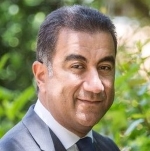
László Trócsányi, ministre hongrois de la Justice
Lorsque l’on évoque ces questions migratoires et ses perceptions en Europe centrale, il est important de prendre en compte la théorie de la responsabilité. Est-ce que l’Europe Centrale a la même responsabilité dans ces flux que les pays d’Europe occidentale ? Cette Europe centrale, qui a été fermée pendant quarante-cinq ans avec le rideau de fer et qui désormais assiste à une déstabilisation de toute une région. Est-ce qu’elle a participé à un export de la démocratie ? Je n’en suis pas sur et certain. La vision est forcément différente qu’en Occident, car il n’y a pas la même histoire, les mêmes implications.
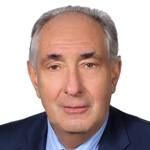
Bogdan Klich, chef de l’opposition au Sénat polonais, ancien ministre de la Défense et membre du Parlement européen
La gestion du Maroc doit servir d’exemple, en matière de coopération avec l’Europe. Le Royaume a pu accueillir 50.000 personnes d’origines subsahariennes, tout en réussissant à collaborer avec d’autres pays pour protéger les frontières européennes. Je pense notamment à sa coopération avec l’Espagne, qui est une success-story.
Le problème de la migration est qu’elle est devenue l’une des raisons principales de l’expansion du populisme en Europe centrale. L’Europe, centrale et occidentale, connait une résurgence dangereuse de ces manifestations populistes. Elle est aussi due au fait que les institutions ne sont pas prêtes à traiter des questions sensibles et cela constitue une menace pour le système démocratique.
L’ONG Freedom House (financée par le gouvernement américain et qui étudie sur la démocratie dans le monde, ndlr) explique qu’il y a eu plus de régimes autoritaires qui se sont renforcés plutôt que des régimes démocratiques renforcés. Dix-neuf pays ont connu un recul de leur démocratie. Cette tendance, d’abord visible en Europe centrale, l’est devenue en Europe occidentale. À mon sens, leurs sources sont les mêmes.
Il est nécessaire de renforcer le contrôle des frontières de l’Union européenne en mettant en place un engagement plus profond et efficace de l’agence Frontex. Celle-ci doit permettre de renforcer la zone de voisinage entre la zone méridionale et la zone de l’est.
Jim Hoagland, conseiller de la rédaction du Washington Post
Il me semble nécessaire de poser une question : est-ce que le populisme est une réponse effective à la migration et aux autres aspects de la mondialisation qui posent problème ? La migration est un résultat et, en même temps, une cause des changements politiques profonds qui s’opèrent sous nos yeux. À travers les réseaux sociaux, nous en savons plus sur d’autres pays, mais nous voyons aussi les effets des différentes politiques. Les avancées technologiques font que l’on peut mobiliser d’autres personnes et transformer la politique sous une forme de plébiscite.
Trump et d’autres leaders sont convaincus que l’on peut changer le problème par la politique. C’est une mauvaise lecture à mon sens. Trump a identifié un problème, qu’il s’applique à rendre pire. C’est une politique dangereuse, qui vise à démanteler la gouvernance mondiale telle que nous la connaissons. Malheureusement, on risque de se retrouver dans un monde plus chaotique. Cela a fait la part belle aux populismes et créé des divisions en Europe centrale et occidentale.
L’un des aspects majeurs qu’il faudra prendre en compte reste la démographie. On dit que l’expansion démographique en Europe s’est stabilisée, mais c’est un euphémisme : la population se rétrécit à cause du taux de fécondité qui se réduit pour de nombreuses raisons, dont un environnement peu satisfaisant. Inversement, force est de constater que vingt-trois pays africains ont les taux de fécondité les plus élevés du monde. D’ici 2050, la population africaine va tripler, et une grande partie vivra avec moins de deux dollars par jour.
L’effet combiné de ces changements démographiques, avec ceux des réseaux sociaux, doit permettre d’amener les gens à savoir à qui faire confiance. Et de qui se méfier. Nous ne sommes pas une génération éprouvée, nous n’avons pas connu la Seconde Guerre mondiale. C’est l’occasion pour nous de nous mobiliser et d’agir sur un monde en constante mutation. La migration représente une crise. Tout le bruit que l’on entend et qui s’y réfère a tendance à ne pas nous permettre d’aborder la question avec toute l’urgence qu’elle demande. Les politiques doivent aussi reconnaitre avec honnêteté les problèmes sociaux des migrations. Il faut arrêter de les utiliser pour segmenter et diviser.