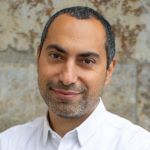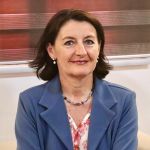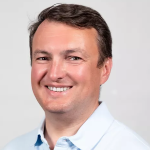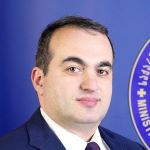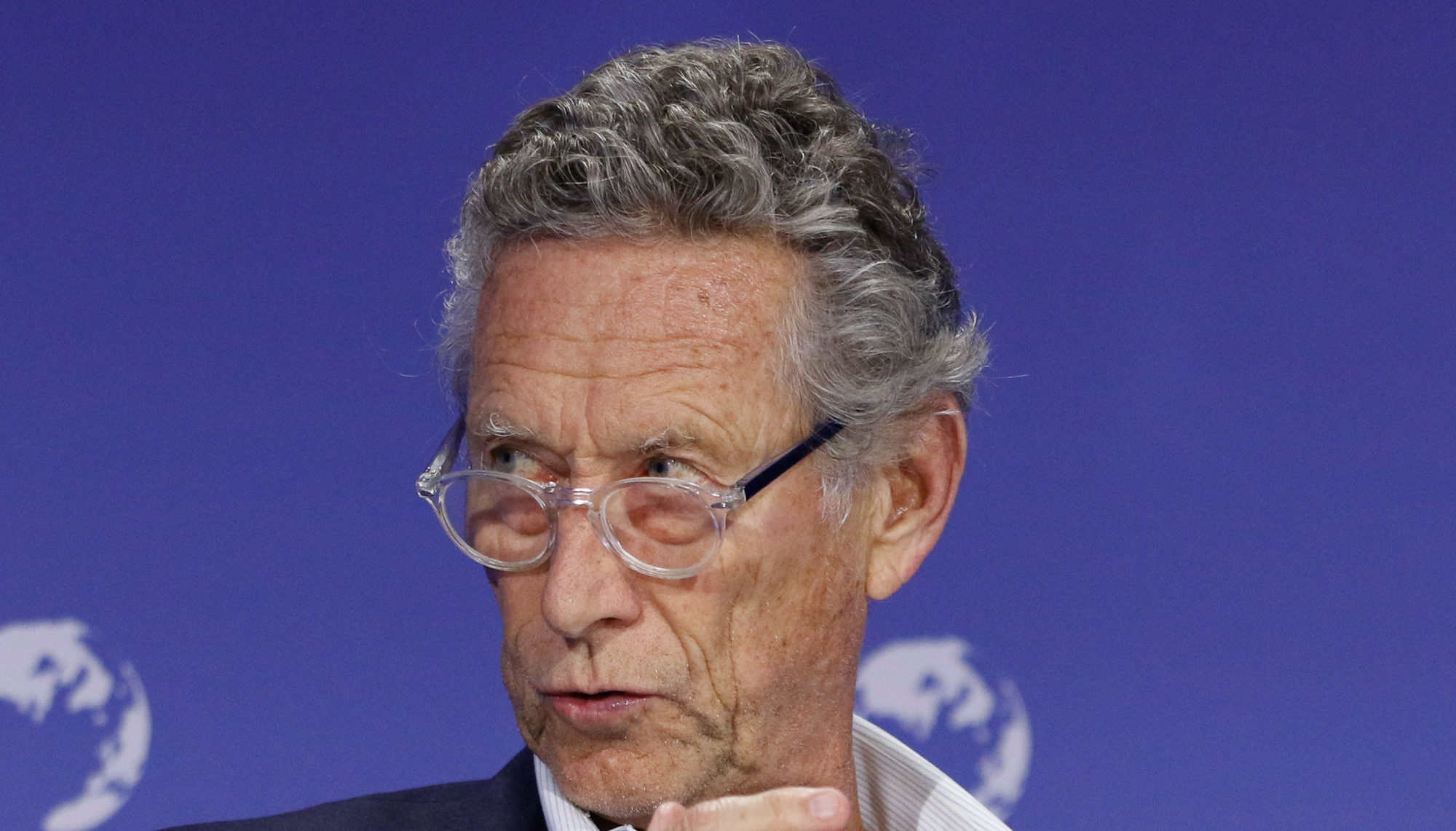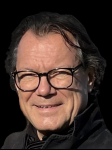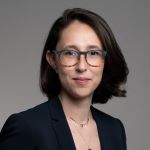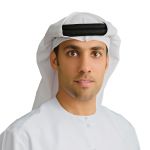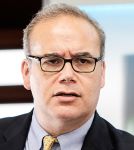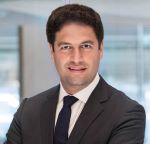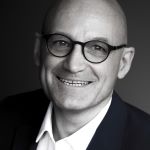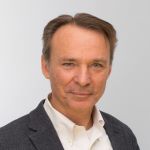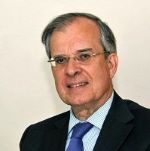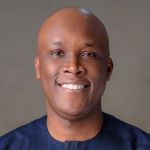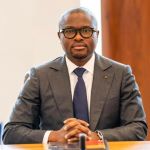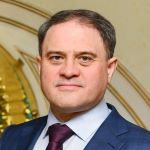
Minister of Interior of the Republic of Rwanda since 12 June 2024. He previously served as the Minister of Foreign Affairs and International Cooperation from 4 November 2019. Prior to that, Dr. Biruta held several cabinet positions in the Government of Rwanda including Environment from August 2017 to November 2019, Natural Resources from 2014 to 2017, Education from 2011 to 2014, Public Works, Transport and Communication from 1999 to 2000, and Health from 1997 to 1999. Beside his cabinet appointments, he was the President of the Senate in the Parliament of the Republic of Rwanda from 2003 to 2011 and President of the National Transition Assembly from 2000 to 2003. Dr. Biruta is a qualified physician. He has furthered his studies in Public Health and Nutrition at the Université Catholique de Louvain in Belgium as well as in Planning and Management of Health Services in Developing Countries at the Université Libre de Bruxelles.
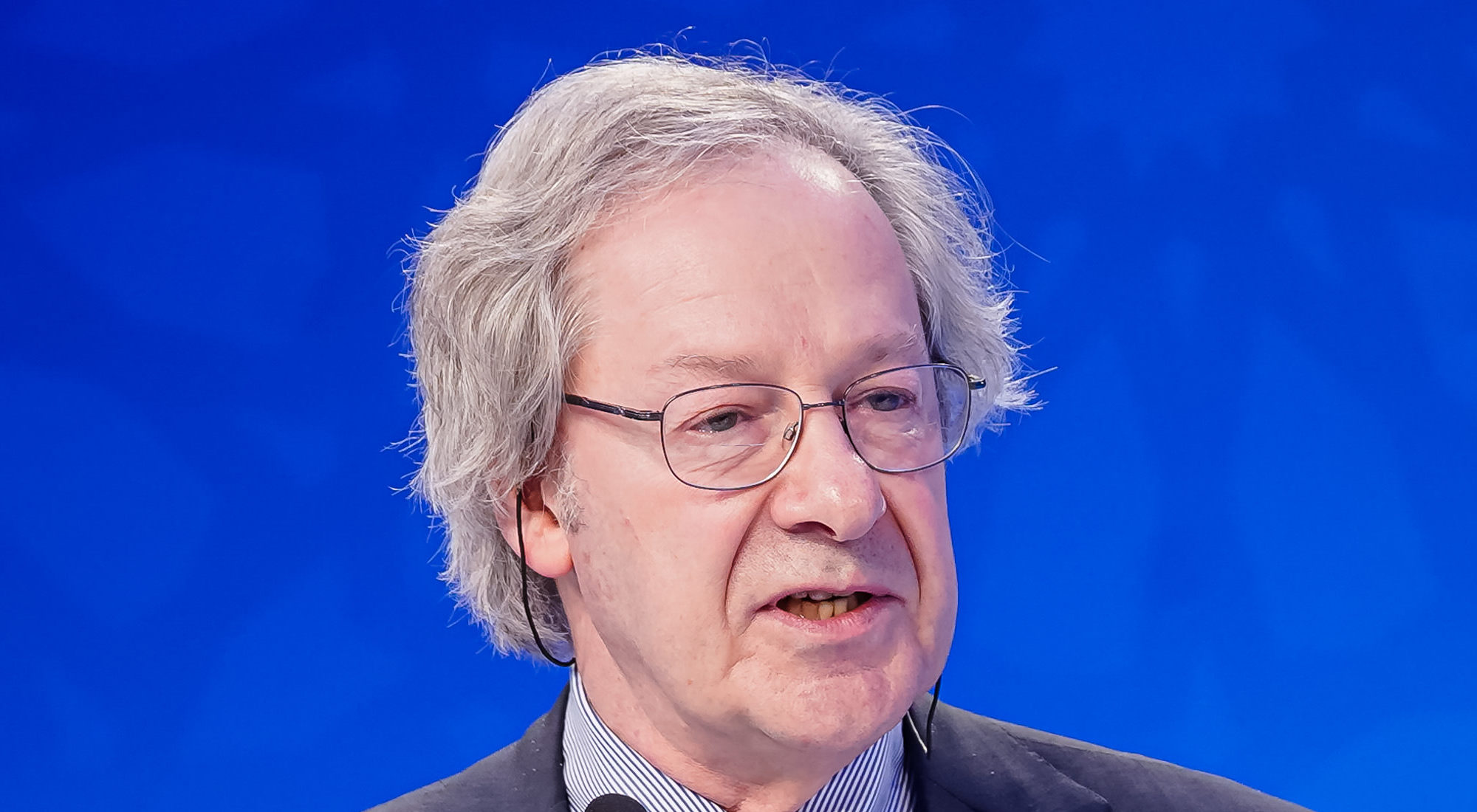
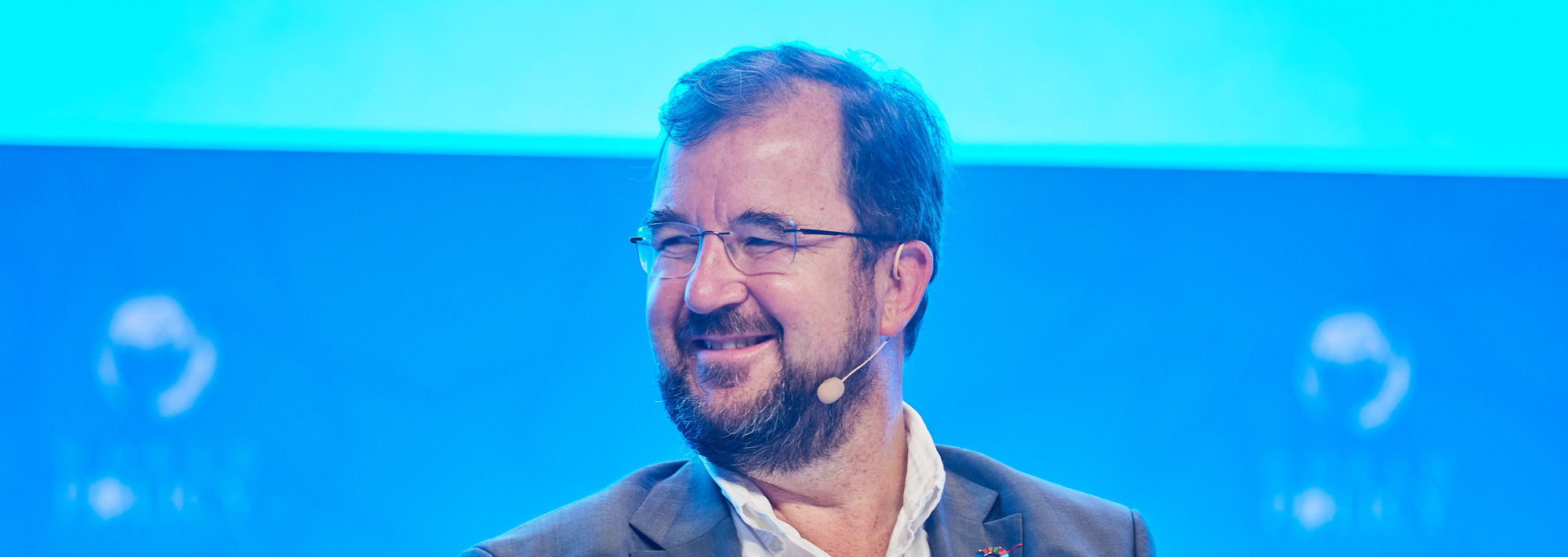
Benedikt Sobotka
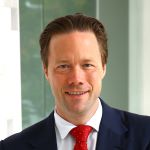
Chief Executive Officer of Eurasian Resources Group, headquartered in Luxembourg, operating in 16 countries. He has extensive experience in the mining and energy sectors, previously holding various management positions at BCG advising multinationals worldwide, including in Germany, Russia, South Africa and the UK. Benedikt works in close partnership with the World Economic Forum, taking an active role in many industry groups and wider initiatives. He has a seat on the Governors Steering Committee for the Metals and Mining Community and the Steering Committee for the Partnering Against Corruption Initiative (PACI). Benedikt is co-chair of the Global Battery Alliance (GBA) and a founding member of the Re|Source initiative, which work towards establishing an ethical and sustainable supply chain for batteries and renewable energy systems. He is also Advisor to the Hainan International Energy Exchange and an investor in hightech start-ups, including MVS, which was sold to Platts/Dow Jones in 2015. In addition, he has co-authored a Financial Times top 10 bestseller, China Champions, about success strategies for investment in China. He holds an MA in Management from the WHU-Otto Beisheim School of Management and has also studied at the Rotterdam School of Management, CEIBS Shanghai, and the Moscow Finance Academy.
Saeed Al Awar
Managing Director and Head of Middle East at Rothschild & Co. Before that, he worked for Linklaters. He also serves as Independent Director of the Board of ADC SPAC and Xcube. He is an Advisory Council Member of the Dubai International Chamber of Commerce.
Lívia Ribeiro de Souza
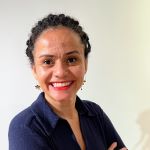
Co-founder and chief technology officer at Mimicrete, a spin-off from Cambridge University developing self-healing cementitious materials. She holds a BSc in Chemistry, MPhil in Mineral Science and Technology, and a PhD in autonomic self-healing cementitious materials. Lívia was a Senior Postdoctoral Researcher at the University of Cambridge for 5 years, during which time she started working on the transition of laboratory solutions to commercial products. Now, she focuses mostly on the large scale manufacturing platforms and extending the utilization stage of construction products.
Roman Vassilenko
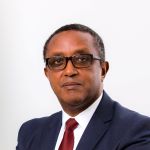
Deputy Minister of Foreign Affairs of the Republic of Kazakhstan, since January 2022. Roman Vassilenko has been in Kazakhstan’s diplomatic service since 1996, first as Third Secretary and later as Second Secretary at the Embassy of Kazakhstan to the United Kingdom of Great Britain and Northern Ireland. He worked as Assistant to the Head of the Prime Minister’s Office of the Republic of Kazakhstan (1999 – 2000), Chief Inspector of the Secretariat of the Secretary of State of Kazakhstan, Consultant of the President’s Chancery of the Republic of Kazakhstan, and Deputy Chief of Staff to the Secretary of State of Kazakhstan (2007 – 2009). He served as Chairman of the Committee for International Information of the Ministry of Foreign Affairs of Kazakhstan, overseeing the communications for the Ministry during such important periods as Kazakhstan’s chairmanships in the Organization for Security and Cooperation in Europe and the Organization of Islamic Cooperation (2009 – 2012). He served as Deputy Director (2012 – 2013) of the Nazarbayev Center, a multifunctional scientific, analytical, humanitarian and educational public institution. He was appointed Deputy Minister of Foreign Affairs of the Republic of Kazakhstan (2016 – 2019). He served as Ambassador Extraordinary and Plenipotentiary of the Republic of Kazakhstan to the Slovak Republic (2019 – 2022). He was appointed as Deputy Minister of Foreign Affairs of Kazakhstan again in January 2022.
Dmytro Kuleba
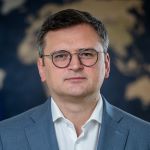
Minister of Foreign Affairs of Ukraine. In 2003, Mr. Kuleba graduated with honour from the Institute of International Relations, Taras Shevchenko University (Kyiv, Ukraine), where he studied international law. In 2006, Mr. Kuleba obtained a Ph.D. in Law. From 2003 to 2010, he worked at the Ministry of Foreign Affairs and at the Permanent Mission of Ukraine to the OSCE. He also worked at the office of Ukraine’s Foreign Minister from 2010 to 2013 where he was in charge of the issues related to the image of Ukraine abroad, international organizations, and the relations with the United States. After quitting civil service in 2013, he chaired the Board of the UART Foundation for Cultural Diplomacy. In 2014, he returned to the Ministry of Foreign Affairs as Ambassador-at-Large to launch strategic communications. He introduced the concepts of digital diplomacy, strategic communications, cultural diplomacy and public diplomacy into the Ministry’s work. In 2016, Mr. Kuleba was appointed as Permanent Representative of Ukraine to the Council of Europe. From August 2019 to March 2020, he was Deputy Prime Minister for European and Euro-Atlantic Integration of Ukraine. He is author of the book The War for Reality. How to Win in the World of Fakes, Truths and Communities, 2019.
Hubert Védrine dans « Israël est coupable “d’apartheid” affirment cinq ex-ministres des Affaires étrangères »
ARTICLE – Parmi les signataires, Hubert Védrine, ancien ministre des Affaires étrangères français
Une tribune publiée ce jeudi par cinq anciens ministres des Affaires étrangères européens dans le journal Le monde, appelle à reconnaître que “les politiques et pratiques d’Israël à l’encontre des Palestiniens équivalent au crime d’apartheid”.
Parmi les signataires, Hubert Védrine, ancien ministre des Affaires étrangères français sous Lionel Jospin.
Relevant l’urgence de protéger “un ordre mondial fondé sur le droit international”, les ex-ministres écrivent souhaiter que ” l’illégalité et l’immoralité de plus de cinq décennies d’occupation israélienne constitue l’épine dorsale” de la politique européenne vis-à-vis de l’Etat hébreu.
Retrouvez l’article en entier dans i24news.
Xi Jinping is China’s Most Audacious Leader for Decades
ARTICLE – The changes in policy, politics and personnel revealed by the Chinese Communist Party’s five-yearly congress, which finished in recent days, show just how radically China has changed under Xi Jinping, compared with his predecessors Deng Xiaoping, Jiang Zemin and Hu Jintao. His audacity is without bounds. Mr. Xi is smashing through long-established political conventions and plain old bureaucratic inertia to achieve his ambitions for both himself and China. Consistent with his deeply-held ideological worldview, Mr. Xi is determined to change the international order in a manner more compatible with Chinese national interests and values. His power to do so, at least within his own system, is now unconstrained.
Take politics. Mr. Xi used the 20th congress to defy a convention that general secretaries limit themselves to two five-year terms. Originally this was introduced to preserve the principles of collective leadership and to prevent a return to Mao Zedong’s practice of lifelong rule. The cult of personality is also back. Mr. Xi has his own body of ideological “thought” much earlier than his predecessors, and it has now been entrenched in the party constitution as “the Marxism of our times”. To further cement loyalty, he has presided over the longest-running anti-corruption campaign in the party’s 100-year history. Partly it has been a mechanism for entrenching political loyalty and control.
Find the article written by Kevin Rudd on Asia Society.
Michel Sidibé
African Union Special Envoy for the African Medicines Agency (AMA), CEO MHS Consulting. Sidibé is a renowned tireless champion of African-owned solutions and has been an outspoken advocate for local pharmaceutical production of medicines and other essential health commodities. He contributed to the efforts towards access to quality and safe medicines and vaccines and in fighting global inequities. As former Minister of Health and Social Affairs for Mali (2019-2020), Sidibé has championed a people centered approach to health and development for over 40 years. He served as Executive Director of UNAIDS, holding the rank of Under-Secretary-General of the United Nations (2009-2019). Prior to joining UNAIDS, Sidibé worked at UNICEF and for Terre des Hommes, where his passion for advancing global health and social justice began. In 2021 he was appointed a board member of The Global Commission on Drug Policy. He is founder and CEO of MHS Consulting, an innovation accelerator platform working with governments, private sector and civil society to promote global health security and diplomacy. An economist by training, Michel Hamala Sidibé is the recipient of various African and global awards, including honorary doctorates from world’s leading universities.
Guillaume A. Callonico
Geopolitical Risk Manager, Senior Director at CDPQ, a global leading public pension fund manager. He is a political scientist and risk manager specializing in international relations, democratization process and geopolitical risk. He leads the team responsible for cross-sectoral and geopolitical risk. His team identifies, assesses and monitors the main financial and geopolitical risks for global portfolio and specific investments. The team is also responsible for producing qualitative risk measures, developping tools and fundamental portfolio analysis supporting discussions with portfolio managers and board members. In recent years, his responsibilities led him to work on improving the risk management processes, implementing a geopolitical strategy, and coaching global companies to better understand and manage geopolitical risks. Mr. Callonico also teaches political and geopolitical risk management at the University of Montreal and is also the author of the Geopolitical Awakening of Finance (2023).
François Regnier
Country Head for BNP Paribas for the United Arab Emirates since 1st of October 2021. He also serves as Multinational Clients Coverage Coordinator for the Middle East region. As a seasoned professional, François has over 30 years of strong and diversified experience with BNP Paribas. He spent 10 years in Paris at the start of his career, both in Inspection Générale and then Coverage in a Banker role. From 2000 onwards, he held several senior executive roles in London and Central & Eastern Europe. He was Country Head for BNP Paribas in Hungary from 2005 until 2009, and then Country Head in Russia from 2012 until 2015. In London, he led the Acquisition Finance team in the early 2000’s and served as Head of Human Resources at the time of the BNP Paribas and Fortis merger. He was also Chief Operations Officer for BNP Paribas London Branch. Before coming to the UAE, he served as BNP Paribas’ Chief Compliance Officer, UK. Francois graduated in France as an Engineer from Ecole Nationale Superieure d’Arts et Metiers and he holds an MBA from EM Lyon.
Anders Nordström
Swedish Ambassador for Global Health at the Ministry for Foreign Affairs in Stockholm. Medical doctor from the Karolinska Institute. He worked for WHO as the Assistant Director General for General Management, Health Systems and Services and as Acting Director-General 2003-2008 and as the Head of the WHO Country Office in Sierra Leone 2015-17. He has served as Director-General for the Swedish International Agency for Development Cooperation (Sida). As the Interim Executive Director, he established the Global Fund to Fight AIDS, Tuberculosis and Malaria as a legal entity 2002. Recently he headed the secretariat for the Independent Panel for Pandemic Preparedness and Response. He has served as board member of the Global Fund to fight AIDS, TB and Malaria, GAVI, UNAIDS and PMNCH. He is currently a member of the Alliance for Health Systems Research’s board, the Chatham House Commission for Universal Health, the International Vaccine Institute Global Advisory Group of Expert and the Virchow Foundation for Global Health Council.
Renaud Girard : « Rapport de force établi, négociation possible »
Publié
CHRONIQUE – La grande difficulté d’une discussion russo-ukrainienne est qu’elle devra, pour avoir la moindre chance de réussir, sauver la face des autorités de Moscou comme de Kiev.
Les avancées victorieuses successives de l’armée ukrainienne à Izyoum, à Lyman et sur le front de Kherson signalent qu’elle a réussi à établir un rapport de force à son avantage face à son agresseur russe. Elle est plus manœuvrière, plus motivée et mieux équipée que lui. L’Ukraine et ses alliés occidentaux ont d’ores et déjà montré, sur le terrain, que Vladimir Poutine avait commis une erreur stratégique en envahissant son voisin.
Maintenant que l’équilibre militaire est établi sur le front, la négociation politique redevient possible entre Russes et Ukrainiens. C’est ce que souhaitent les grandes puissances, membres permanents du Conseil de sécurité de l’ONU.
Lire l’article en entier sur le site du Figaro.
Josep Borrell cité dans : « Borrell met en garde contre le risque d’une récession mondiale »
Le chef de la diplomatie européenne Josep Borrell a mis en garde lundi contre «le risque d’une récession mondiale» à cause de la course à la hausse des taux d’intérêt lancée par la Réserve fédérale américaine, lors d’une intervention devant les ambassadeurs de l’UE.
«Tout le monde doit suivre les hausses de taux décidées par la Fed, sinon les monnaies seront dévaluées» face au dollar, a-t-il expliqué. «Tout le monde court pour augmenter les taux d’intérêt et cela nous amènera à une récession mondiale», a-t-il prédit. «Tout le monde suit la Fed et met en oeuvre la même politique monétaire, parce qu’il n’y a pas d’autre moyen, sinon les capitaux vont fuir», a-t-il expliqué.
Un nouveau tour de vis nécessaire
Le comité de politique monétaire, l’organe de décision de la Fed, a procédé à trois hausses de taux depuis mars et a averti que pour faire face à une inflation toujours trop forte, un nouveau tour de vis serait nécessaire. Josep Borrell s’aventure rarement sur le terrain de l’économie, mais son intervention devant les ambassadeurs de l’UE visait à analyser la nouvelle donne créée par le fait que la Russie et la Chine sont devenues des sources de problèmes économiques et sécuritaires pour l’UE.
«La Russie et la Chine contribuaient à notre développement économique, ce n’est plus le cas: cela va impliquer une forte restructuration de notre économie, car l’accès à la Chine va devenir de plus en plus difficile et nous n’aurons plus de gaz russe bon marché», a-t-il souligné. «L’ajustement sera difficile. Et cela créera des problèmes politiques».
«D’autre part, nous avons délégué notre sécurité aux États-Unis. Mais qui sait ce qui se passera dans deux ans? Ou même en novembre?», a-t-il souligné dans une référence aux prochaines échéances électorales aux Etats-Unis. «Nous devons assumer nous-mêmes plus de responsabilités, nous devons assumer une plus grande partie de notre responsabilité en matière de sécurité». «Mais nous avons encore beaucoup à faire pour être une, une seule puissance, qui agisse au nom de l’Union dans son ensemble», a-t-il déploré.
Lire la tribune sur le site du Figaro.
IMF-World Bank meetings are the last stop before a coming economic storm

The International Monetary Fund headquarters in Washington, D.C., on April 3, 2021. (Samuel Corum/Bloomberg)
When they gather in Washington next week for the International Monetary Fund and World Bank Group annual meetings, the world’s finance ministers face what has been labeled a polycrisis: Challenges ranging from increased interest rates, climate change and an epically strong dollar, to food-supply shortages, high inflation and a still-prevalent pandemic all combine to threaten not just the global economy but also the livelihoods of hundreds of millions.
It is likely that in the next year the United States will go into recession, Europe will be battered by high energy costs and China will suffer its lowest growth in decades. A major slowdown in the global economy is almost inevitable.
What is at stake — what will greatly depend on decisions that finance ministers make next week — is whether developing countries suffer a lost decade of economic opportunity, as happened to many countries in the 1980s, or whether they are enabled to maintain momentum, as occurred after the 2009 financial crisis.
While much will depend on national policy choices, the external environment will be enormously important for most countries. Global cooperation through the IMF and the World Bank matters a great deal. The challenge for these institutions will be not to just discuss new funds and funding mechanisms but to actually deliver the greatly increased support the moment demands.
Read the entire article in the Washington Post.
Prince Michael of Liechtenstein: “People stuck together. There was a strike from outside and they came together”
OPINION – Ukraine Is Weakened by Corruption, So How Is It Stymying the Russians?
Corruption undermines society as surely as termites undermine houses. Ukraine suffers from corruption. So how has Ukrainian society nonetheless managed to stymie a Russian invasion, and even turn the tables on its invaders?
I asked experts inside and outside Ukraine for their answers to this pivotal question and heard several interesting theories. The most intriguing is that it’s possible in certain situations to be simultaneously corrupt and patriotic.
Here are some of the explanations:
Ukraine is corrupt, but the enemy is even more corrupt. On Transparency International’s Corruption Perceptions Index, Ukraine was 122nd of 180 countries last year (higher numbers are worse). Pretty bad, but Russia was ranked even worse, at 136th. In May the U.S. State Department said, “While it may be too early to draw definitive conclusions, we have seen open-source reporting about expired rations, lack of fuel and outdated and poorly maintained equipment that point to the waste, misuse and abuse of ‘public’ resources designated for Russia’s military.”
[…]
Ukrainians are rallying around their flag. “Corruption is less because the survival of the nation is at stake,” said Brian Bonner, who was chief editor of The Kyiv Post from 2008 to 2021 and is now an editor at Geopolitical Intelligence Services. “We’re at a higher level of unity and selflessness than I’ve seen since I’ve lived here.” Prince Michael of Liechtenstein, who founded Geopolitical Intelligence Services, agreed: “People stuck together. There was a strike from outside and they came together.”
Read the article on The New York Times.
Edi Rama in “Greece and Albania head to international court over maritime borders dispute”
ARTICLE – Greece and Albania are heading to the International Court in The Hague after both countries failed to agree on the issue of maritime borders, despite both prime ministers meeting on the sidelines of the European political Community in Prague on Thursday, reports Euroactiv.
Albanian Prime Minister Edi Rama said that no consensus was found, and the matter would progress to the International Court in The Hague.
“This is a legal process, there are a number of rules, there are a number of procedures, and we will respect the procedures from the beginning to the end because we have to make our position very clear, we have to make it very clear what we intend in this process and that unified attitude required of this court as to what one side intends and what the other side intends, requires its own time. So, we don’t have a consensus between the parties”, said Rama.
Find the article on Greek City Times website.
The West’s Role in the Global Food Crisis
COMMENT – Contrary to the Kremlin’s claims, the West is not to blame for current food shortages in the developing world. But it does have a responsibility to help address them, rather than leaving these countries to fend for themselves, as it largely did during the COVID-19 pandemic.
MADRID – Actions speak louder than words. That adage explains why Russian President Vladimir Putin’s depiction of his brutal and senseless war in Ukraine as a noble fight against Western imperialism comes across as farcical. It should also inform Western leaders’ response to the crises that war has fueled – including the food crisis that looms over vulnerable populations in Africa.
While climate change and the pandemic were undermining food security well before Russia’s invasion of Ukraine, the situation is even more dire now, particularly in low-income African countries that depend on food imports from Russia and Ukraine. Globally, a staggering 345 million people face acute food insecurity, with hundreds of millions more going to bed hungry every night. As United Nations Secretary-General António Guterres warned last month, there is a real risk of multiple famines this year.
Read the comment written by Ana Palacio on Project Syndicate.
Anwar Gargash in: “UAE’s Gargash calls for political solution in Ukraine as conflict escalates”
Presidential adviser and former foreign minister says the ‘law of the jungle’ is not acceptable in any conflict
Dr Anwar Gargash, diplomatic adviser to the UAE President, has called for a political solution to the war in Ukraine.
Speaking on Wednesday at the Arab Media Forum in Dubai, Dr Gargash said the effects of the war have been felt around the world.
“There is no political solution yet, unfortunately,” he said. “There are attempts to have countries with or against. Many are being negatively affected.”
Dr Gargash stressed that many countries, including the UAE, were careful not to take sides in a complex war, while saying the “law of the jungle” should not prevail in any dispute.
“Many countries … don’t want to be with or against [Ukraine or Russia] but with the rules. We live in a region with lots of difficulties [so we] cannot [have the] laws of the jungle. There must be clear rules.”
The wide-ranging talk on the second day of the forum also touched on Yemen, the UAE’s plans for the next several decades, and complex relations with countries such as Turkey and Iran.
On Iran, Dr Gargash, a former minister of state for foreign affairs, said it was important to avoid judging other political systems in the region and instead build on opportunities for growth.
“We cannot say this system doesn’t suit us and don’t like it,” he said.
Dr Gargash said there were “issues” with Iran but the UAE is striving for good relations. He cautioned against the “illusion” of a military situation that would only mean the region would lose.
“The solution with Iran is to have good bilateral relations and continue dialogue,” he said.
“To hold each other accountable and find partnerships. [This is the case] not only with Iran but with other countries.”
Dr Gargash said the last decades in the region had been very difficult, with wars, crises and the Arab uprisings of 2011.
“We do not want to spend 20 to 30 years in wars. No one who is rational will accept a repeat,” he said.
Dr Gargash pointed to strengthening ties with Turkey and talks between Egypt and Turkey that suggested a more positive future.
But he said the fact that Yemen was still without a ceasefire was a “disaster”. He said a ceasefire was a paramount objective and conditions for a political solution were needed.
‘Without growth this region will be forgotten’
Looking ahead to the UAE’s path for the next few decades, Dr Gargash said it had passed through an “exceptional decade” of challenges, problems, coronavirus, unrest and the Arab uprisings in other countries.
Now the plan was to work on the economy, but not just the traditional economy.
“We have to change the work environment. This is an ecosystem and not just about economic transactions,” Dr Gargash said.
He said it was important to also strengthen bridges built in the past 15 years and he pointed to the signing of the Abraham Accords, talks with Iran and Turkey and efforts to find new partnerships.
“We are not naïve,” Dr Gargash said. “Every country has its own interests. The UAE is working on sorting out problems. We have succeeded to a certain extent. There is competition and we accept legitimate competition.
“The region is slowly getting out of the Arab spring crises. It took a lot of effort to put out those fires. This region will be forgotten if we do not focus on putting prosperity and growth on the agenda.
“Look at Saudi Arabia. This shows the fact [there was a] previous approach for a previous period. [But now] new challenges need a new approach to creating jobs and a new economy.”
Read the article on the site of The National.
Volker Perthes cited in “1,700 Sudanese former rebels integrated in National Army”
A total of 1,700 former rebels have been trained and integrated into the Sudanese National Army as required by the Juba Peace Agreement signed in 2020, Anadolu News Agency reports.
The army, rebel groups in the country, and the UN envoy confirmed the figure.
In an address to his Sudan People’s Liberation Movement-Northern sector, rebel leader, Malik Agar, said more than 700 fighters in the troubled region of Blue Nile were trained and integrated into the National Army.
He, however, added that there are many obstacles to the implementation of security arrangements in the Agreement, including the lack of financial support.
Volker Perthes, the UN’s Special Envoy to Sudan, urged all parties to speed up the implementation of the peace deal.
“However, this two-year anniversary is another stark reminder that much remains to be done. There is an urgent need for the full implementation of the Juba Peace Agreement’s provisions, including security arrangements and the swift deployment of the Joint Security Keeping Forces to ensure the protection of civilians, the establishment of relevant commissions such as the Commission for Refugees and Internally Displaced Persons, the Transitional Justice Commission, the Land and Hawakeer Commission, as well as other provisions on wealth and power sharing, nomads and reparations,” Perthes said in a statement on Wednesday.
Meanwhile, Darfur rebels and the army exchanged accusations of delay in the implementation of the security arrangements.
Darfur ruler, Mini Arko Minawi, said the army has delayed the formation of the Joint Civil Protection Forces, which was supposed to include 12,000 fighters from both sides.
However, Sudanese Armed Forces spokesman, Nabil Abdullah, has denied the accusations, saying that the formation of the Civil Protection Forces has faced wide obstacles, especially from the rebel groups.
The Juba Peace Agreement was signed in October 2020, but the two sides have exchanged blame over the implementation of the Agreement.
Read the original article on the Middle East Monitor.
Assad’s drugs blackmail proves he cannot be redeemed
While there had been speculation about using the upcoming Arab League summit in Algeria to normalize relations with Syria’s Bashar Assad and rehabilitate him, this matter now seems more elusive than ever. Though Assad lost his legitimacy when he slaughtered his people, he now poses a direct health threat to the Gulf and the wider international community as Syria turns into a narco-state and Assad uses drugs as a bargaining chip.
Initially, Assad used refugees as a bargaining chip. He wanted them to overwhelm the international community so that he could bring it to its knees and foreign leaders would accept his conditions without him having to make any concessions. However, he cannot play this card anymore, as the Europeans have somehow absorbed the waves of refugees, the violence in Syria has largely stopped and the international community is talking about early recovery without having to normalize with the regime.
Now that the refugee card is lost, Assad needs a new point of pressure. In the first eight months of this year, 250 million Captagon pills of Syrian provenance were confiscated worldwide. Syria is thought to have exported pills worth $17.5 billion in 2020, or 22 times the nation’s total exports. The main destination for the lethal Captagon pills is Saudi Arabia. Every now and then, the Kingdom’s authorities find drugs hidden inside shipments of fruit. Also, in an attempt to evade suspicion, Assad sends the fruits via Lebanon.
In an interview with Le Figaro, a regime-linked Syrian businessman hinted that Assad would stop sending Captagon to the world if the international community rehabilitated him without him having to change his behavior. The businessman gave the excuse that the regime needs to find ways “to live” while sanctions are imposed.
However, various attempts to rehabilitate Assad have failed. Jordan tried to help Assad. When King Abdullah visited US President Joe Biden last year, he took with him the Assad dossier. However, Assad returned the favor by sending weapons and drugs to Jordan. There were also talks held about Amman reviving the opposition groups in Deraa, southwestern Syria, in order to create a buffer between Assad’s thugs and the Jordanian border.
However, the attitude of Assad toward Jordan shows that a step-by-step approach does not work. Assad will always blackmail the international community to get what he wants without making any concessions. This actually makes sense because any concession Assad does make will be the end of his regime.
Assad is a survivor. He will do whatever it takes to survive. When aid goes through Damascus, he makes sure he takes a large cut to bolster his regime. Now that sanctions have cut him off from the global economy, he has turned to the black economy to finance his regime. Drugs serve two purposes. They are both a medium to finance the regime and a way to blackmail the international community.
However, drugs are a red line for the international community. While Assad slaughtering his own people in Syria was an issue, when he is causing health problems in Gulf countries and in Europe, this is a totally different ball game. Europe will not cave in to Assad; on the contrary, it has now confirmed that the Syrian president cannot be trusted and any concessions made to him will only produce more belligerent behavior and more blackmail.
The drugs are a reality check for Europe, the Gulf and the world, including those who go by the logic of ‘better the devil you know’.
Dr. Dania Koleilat Khatib
Everyone in Europe is concerned about drugs and it is unlikely they will empower a regime that they deem so malicious. But the drugs are a reality check for Europe, the Gulf and the world, including those who go by the logic of “better the devil you know.” There is no way forward with Assad. He will not change his behavior and will continue blackmailing the international community, even if funds are directed to him.
Former US President Jimmy Carter, who favors normalization with Assad as a way to stop the conflict, once described the process as an “ugly peace.” However, there will be no peace of any kind with Assad. He does not understand that his methods do not work with the international community and that, unless he shows some goodwill, no one will lend him a hand.
The overtures of Jordan to his regime were a golden opportunity for him to show some goodwill that could have created an incentive for other Arab countries to start the normalization process. However, instead of showing appreciation to the king of Jordan, Assad’s reckless and unethical behavior only embarrassed King Abdullah. What kind of sign does that send to those who have thought of normalizing with him?
Assad does not realize that he is living on borrowed time. He has been very skillful at playing on the differences between his allies and even among his foes. He knew how to strike a balance between the Russians and the Iranians. He presented himself as a deterrent against Turkey at the height of Ankara’s tensions with the UAE. This was one incentive for Abu Dhabi to normalize with the Syrian regime and extend help to it. However, his behavior cannot be sustained. And the Captagon episode is proof that Assad cannot be redeemed.
Read the article on the website of Arab News
Louise Mushikiwabo: « La francophonie n’est pas pour l’hégémonie de la langue française »
INTERVIEW – La Secrétaire générale de la Francophonie Louise mushikiwabo est candidate à sa propre succession à la tête de l’organisation qu’elle dirige depuis 2019. En visite dans les studios de la VOA à Washington, l’ancienne chef de la diplomatie rwandaise promet de poursuivre les réformes engagées pour reformer et moderniser cette organisation. Le 18e sommet de la francophonie est prévue fin novembre en Tunisie. Au micro d’Abdourahmane Dia, Louise Mushikiwabo a dit que l’adhésion de pays francophones comme le Togo et le Gabon au Commonwealth doit plutôt être vue comme une opportunité et non une menace à l’espace francophone.
Retrouvez la vidéo de l’interview complète sur VOA Afrique.
How effective are the West’s sanctions on Russia?
COMMENT – The previous three Geoeconomic Briefing series discussed whether Russia’s invasion of Ukraine has aspects of a “new war.”
To better understand the conflict, it is also necessary to examine sanctions against Russia and the impact of such economic measures on Russian behavior.
When Russia was building up troops along its border with Ukraine ahead of its invasion of the country, the United States ruled out sending troops into Ukraine, giving up the option of hampering Russia’s invasion by use of force.
Instead, Washington threatened to impose severe economic sanctions as a means to prevent Russia’s actions.
It is not surprising that such threats of economic sanctions did not work as a deterrence. Generally speaking, economic sanctions are meant to appeal to economic rationality. They are aimed at urging a nation to stop taking certain actions because such measures, if put into practice, would lead to economic damage.
But a decision to start a war is not necessarily based on economic rationality, and Russia’s invasion of Ukraine is driven by Moscow’s national security interests and ambition to expand its territory, rather than by economic rationale.
This means it would have been difficult to deter Russia — which was trying to start a war under logic beyond economic rationality — with economic sanctions.
Read more about this comment written by Kazuto Suzuki on thejapantimes.
« Les fissures du pouvoir de Poutine »
ANALYSE – Il semble que le président russe ait omis de préparer un plan B cohérent en cas d’échec de son armée dans la soumission de l’armée ukrainienne.
Après vingt-deux ans d’un pouvoir sans partage à la tête de la Russie, Vladimir Poutine ne semble plus totalement en phase avec la réalité. Vendredi 30 septembre, dans une cérémonie grandiose organisée sur la place Rouge à Moscou, le président russe célébrait l’annexion à la Russie de quatre régions (oblasts) ukrainiennes. Mais, au même moment, face à une offensive éclair ukrainienne, l’armée russe s’enfuyait de la ville de Lyman (20.000 habitants avant la guerre), un nœud ferroviaire stratégique situé dans l’oblast de Donetsk, l’un des quatre prétendument annexés. Dans les stratégies d’extension territoriale des empires, le contrôle précédait normalement l’annexion. Dans son allocution du 30 septembre, Poutine a innové, en inventant l’annexion sans contrôle…
L’article écrit par Renaud Girard est à retrouver dans le FigaroVox.
Philipp Hildebrand : « Nous avons besoin que le monde politique fasse sa part »
« Le Conseil fédéral décidera à la fin du mois si la Suisse est capable d’organiser la COP31 »
Le conseiller fédéral Ueli Maurer a ouvert le grand rendez-vous de la finance durable Building Bridges en compagnie de son président Patrick Odier.
Le sommet de la finance durable Building Bridges a été officiellement lancé au CICG, à Genève, en présence du conseiller fédéral Ueli Maurer.
«Cette troisième édition se veut un événement phare et un catalyseur du changement. Aucun secteur ne peut y parvenir seul, nous avons tous un rôle à jouer dans cette transition», a souligné son président Patrick Odier devant la presse.
«La durabilité est notre mission pour la prochaine génération et Building Bridges est un excellent instrument pour atteindre cet objectif», a commenté Ueli Maurer.
Le conseiller fédéral a saisi l’occasion pour donner quelques précisions sur l’organisation de la COP 31 en 2026 en Suisse.
[…]
« Nous avons besoin que le monde politique fasse sa part »
Philipp Hildebrand, l’actuel vice-président de BlackRock, premier gestionnaire d’actifs au monde avec près de 10.000 milliards de dollars sous gestion, clôture la première journée de conférences.
«Nous avons un rôle majeur à jouer, mais nous ne pouvons pas régler le problème [du changement climatique]. Nous avons besoin que le monde politique fasse sa part. Ne nous considérez pas comme ceux qui vont forcer le changement. Mais nous pouvons être le catalyseur», souligne Philipp Hildebrand.
L’article est à retrouver sur le site d’AGEFI.
Industrie : la lutte pour la survie
ARTICLE – Avec la flambée des prix de l’énergie, la bataille pour la survie de l’industrie européenne est devenue une priorité. Pour la gagner et vaincre ceux qui rêvent de nous évincer, il faudra rester solidaire. Ce n’est pas gagné.
L’industrie européenne craque. Notre continent avait promis de se réindustrialiser après la crise du Covid, celle-ci ayant révélé des dépendances excessives à l’égard du reste du monde. Dans les puces électroniques, les batteries, les principes actifs pour les médicaments et l’on en passe, l’heure devait être à la reconquête. Avec pour objectif de retrouver de l’autonomie dans une panoplie d’industries critiques.
Retrouvez l’article écrit par Nicolas Barré dans Les Echos.
« Le gouvernement doit formuler sans tarder une stratégie de sortie du bouclier tarifaire »
Parce qu’il a limité la hausse des prix de l’énergie et donc de l’inflation, le « bouclier tarifaire » fait l’orgueil du ministre de l’économie, Bruno Le Maire.
Il faut dire que ses effets sont spectaculaires : certes en forte hausse, l’inflation en France demeure aujourd’hui sensiblement plus faible que chez nos voisins. Mesurée sur un an et sur une base harmonisée, elle a été en août de 6,6 % dans l’Hexagone contre 9,1 % dans l’ensemble de la zone euro, à peine moins en Allemagne et jusqu’à 25,2 % en Estonie.
Cet écart n’est pas entièrement dû à la politique du gouvernement (l’énergie, et en particulier le gaz, pèse plus lourd dans l’indice des prix en Estonie), mais celle-ci y concourt largement. L’Insee a calculé que sans le bouclier tarifaire l’inflation aurait été de 3,1 points plus élevée.
L’objectif premier du bouclier est social : il s’agit de protéger le pouvoir d’achat des ménages à faible revenu. Mais il est aussi économique, et Bercy ne fait pas mystère de sa volonté d’engranger des gains de compétitivité durables. L’occasion est belle : mettre à profit le choc pour dévaluer le taux de change réel vis-à-vis de nos partenaires.
Il y a dix ans tout juste, le rapport Gallois sommait le gouvernement d’abaisser les cotisations sociales pour gagner en compétitivité. On se rappelle la suite : CICE [crédit d’impôt pour la compétitivité et l’emploi] et pacte de responsabilité signaient bientôt la conversion de François Hollande à l’économie de l’offre. Ils opéraient ainsi un transfert massif vers les entreprises, dont les conséquences politiques allaient être terribles pour la gauche.
Lire la chronique complète sur le site du Monde.
« À Prague, de l’échec confédéral à la Communauté politique européenne »
« La géopolitique de l’Europe a besoin d’une théorie des ensembles »
François Mitterrand, 1990
La première réunion de préfiguration de la Communauté politique européenne se tient à Prague le 6 octobre 2022, convoquée par la présidence tchèque du Conseil de l’Union, sous la conduite du Président du Conseil Charles Michel2. Il s’agit de donner corps à la proposition formulée par le Président Emmanuel Macron lors de la session de clôture de la Conférence sur l‘avenir de l’Europe, le 9 mai à Strasbourg.
« En 1989, le président François Mitterrand ouvrit cette réflexion alors que l’Union soviétique se délitait en proposant la création d’une confédération européenne. Sa proposition n’eut pas de postérité. Elle était sans doute trop précoce. Elle associait la Russie à cette confédération, ce qui est bien entendu, fût très rapidement inacceptable pour les États qui venaient de se libérer du joug de l’Union soviétique. Mais elle posait une bonne question et cette question demeure : comment organiser l’Europe d’un point de vue politique et plus large que l’Union européenne ? C’est notre obligation historique que d’y répondre aujourd’hui et de créer ce que je qualifierai aujourd’hui devant vous une « communauté politique européenne ».

La question centrale, alors posée, était de savoir comment organiser l’Europe, au sens de continent, sans tout faire reposer, de manière exclusive sur l’Union européenne. Le Kremlin a simplifié la donne en s’excluant de l’espace de civilisation européenne en recourant à la guerre, c’est dire en brisant le principe du « plus jamais ça » qui est le fondement de la réconciliation des pays européens de régime démocratique. La géographie de l’Europe contemporaine est dans sa politique – la démocratie – et la liste des pays invités regroupe l’ensemble des pays membres du Conseil de l’Europe, dans sa configuration de 2022.
Lire l’article complet sur le site du Grand Continent.
Russia’s covert operations working despite Ukraine troubles
COMMENT – Russia maintains its ability to sow strife in democratic countries through covert operations, even if President Vladimir Putin’s war machine fails in what he calls the “special military operation” in Ukraine.
Putin recently insisted that his war in Ukraine is going well and producing positive results for his country. “We have not lost anything and will not lose anything,” the Russian president said at the Eastern Economic Forum in Vladivostok on Sept. 7.
Read the article written by HIROYUKI AKITA on Nikkei Asia.
Lionel Zinsou : « L’Afrique n’est pas surendettée, l’Afrique est sous financée »
«Le monde entier avait prophétisé que l’Afrique allait être la victime du Covid. Ce fut finalement le continent le moins éprouvé». C’est par ces mots, en réponse à la question «où va l’Afrique? »que l’ancien premier ministre béninois Lionel Zinsou, ancien patron du fonds PAI Partners et co-fondateur de Southbridge Bank, a ouvert le 17 septembre 2022, le débat économique en marge de la célébration des dix ans de L’Economiste du Bénin, un journal parti du pays éponyme et aujourd’hui présent au Togo, au Niger et, entre autres, au Burkina Faso avec, insiste le fondateur, Léonard Dossou, “des ambitions panafricaines”.
D’emblée, Lionel Zinsou met à nu l’échec des prévisions pessimistes qui ont fleuri jusqu’au sein des institutions spécialisées (OMS) et financières les plus prestigieuses (Banque Mondiale, FMI) sur l’apocalypse africaine.
«Au final, les conséquences ont été beaucoup plus limitées que la prophétie» déclare le conférencier louant la réactivité rapide des gouvernements africains qui ont travaillé en étroite concertation. Aussi, ni le Bénin, hôte de la célébration des dix ans de l’Economiste, encore moins l’Union économique et monétaire ouest africaine (UEMOA) n’est pas entré en récession. La raison ?
La résilience et l’ingéniosité africaine qui ont permis au monde d’aboutir à l’instrument des émissions budgétaires de 650 milliards de dollars à travers les droits de tirage spéciaux (DTS). Cet espace supplémentaire pour les budgets qui n’est pas de la dette a été âprement négocié au niveau du G20. Dans ces DTS, l’Afrique avait son quota de 33 milliards de dollars avec une extension possible à 100 milliards à travers le principe d’une reallocation des parts des pays n’ayant pas besoin de ces liquidités, soit 3% du PIB. «Aujourd’hui, précise le conférencier, nous sommes à 90 milliards de dollars d’engagements envers l’Afrique».
Par la suite, l’Union Africaine a mis en place un mécanisme d’achat d’équipements anti -Covid-19 et de vaccins avec le soutien d’une facilité de Afreximbank. À la pandémie s’est ajoutée le bouleversement géopolitique en Europe de l’Est.
La crise ukrainienne a montré que le continent ne peut pas dépendre de l’extérieur sur un certain nombre de denrées de base. L’envolée des cours du pétrole accélère la transition énergétique.
Grand hic cependant du renouvelable en Afrique aux yeux de Lionel Zinsou, la lenteur dans les montages financiers des projets solaires et renouvelables. Ce volet s’étale sur quatre ans alors que le déploiement technique se fait en 6 mois. Ces lenteurs réduisent l’avantage comparatif des prix relatifs des énergies renouvelables comparés aux importations des hydrocarbures.
Pour sûr, la hausse actuelle des prix de l’Energie est une aubaine pour les pays africains exportateurs nets de pétrole. Mais là aussi, il faut le dire, l’avantage brut est rogné par la faible capacité de raffinage des pays africains confrontés aux problèmes de financement des raffineries.
Le sous financement de l’économie
En fait, ajoutera Lionel Zinsou, les pays africains mr sont pas surendettés mais sont sous financés. Et de prendre l’exemple de son pays d’origine, hôte de la rencontre. «Le Bénin n’est pas surendetté en termes de dettes publiques. Quand on a une dette publique équivalent à 50% de PIB à des taux concessionnels sur des durées longues, on est sous endetté ». Depuis 2016, Cotonou est passée d’une dette en Franc CFA exigible en un an sur le marché financier de l’UEMOA à des horizons beaucoup plus long. L’exemple le plus parlant est l’eurobond à vocation sociale et environnementale émis en juillet 2021 avec une tranche à dix ans et une à trente ans. “Il s’est bien passé quelque chose entre un passif exigible à 10 ans et un à 30 ans. C’est une révolution financière”.
Bref, le vrai problème de l’Afrique réside dans le sous financement de l’économie. Les concours à l’économie du secteur bancaire et de la microfinance envers le secteur privé (qui représente 80% de la production des richesses ) et les ménages n’excède pas 37% du PIB en zone de l’Union économique et monétaire ouest africaine (UEMOA) contre 150% du PIB dans l’Union Européenne et plus de 200% aux Pays-Bas. “En Afrique, il y a trois pays convenablement financés au niveau du secteur privé. Le Maroc avec avec 110% du PIB, l’Egypte et l’Afrique du Sud pour 90% du PIB ont des niveaux de financement compatibles avec les besoins de base”, estime l’ancien premier ministre.
Partout dans le monde sauf en Afrique subsaharienne, le premier poste d’emploi des ressources des banques est le crédit logement aux ménages. Seule une pellicule de 2% des ménages en bénéficie en Afrique Subsaharienne. Le deuxième poste des banques est le financement du fonds de roulement des entreprises, inexistant chez nous. Le troisième poste est le financement de l’investissement des entreprises également inexistant chez nous. Ne pouvant compter ni sur le financement bancaire ni sur la dynamique des marchés financiers comme aux USA, l’économie africaine reste sous-financée et devra puiser dans les dynamiques de convergence et d’intégration pour doper la mobilisation de l’immense potentiel de l’épargne intérieure africaine en s’inspirant des systèmes anglo-saxons de fonds de pension dont les mastodontes ivoiriennes, la Caisse Nationale de la Prévoyance Sociale (CNPS) et l’ Institution de Prévoyance Sociale-Caisse Générale de Retraite des Agents de l’Etat (IPS-CGRAE) constituent les formes les plus abouties en zone francophone.
Lire l’article original sur le site de Financial Afrik.