Making U.S. foreign policy work better for the middle class
Carnegie Endowment for International Peace
Co-editors:
Salman Ahmed, Rozlyn Engel, Wendy Cutler, Douglas Lute, Daniel M. Price, David Gordon, Jennifer Harris, Christopher Smart, Jake Sullivan, Ashley J. Tellis, Tom Wyler
Summary
If there ever was a truism among the U.S. foreign policy community—across parties, administrations, and ideologies—it is that the United States must be strong at home to be strong abroad. Hawks and doves and isolationists and neoconservatives alike all agree that a critical pillar of U.S. power lies in its middle class— its dynamism, its productivity, its political and economic participation, and, most importantly, its magnetic promise of progress and possibility to the rest of the world.
And yet, after three decades of U.S. primacy on the world stage, America’s middle class finds itself in a precarious state. The economic challenges presented by globalization, technological change, financial imbalances, and fiscal strains have gone largely unmet. And that was before the novel coronavirus plunged the country into the worst economic crisis since the Great Depression, exposed and exacerbated deep inequities across American society, led long-simmering tensions over racial injustice to boil over, and launched a level of societal unrest that the United States has not seen since the height of the civil rights movement.
If the United States stands any chance of renewal at home, it must conceive of its role in the world differently. That too has become a point of rhetorical consensus across the political spectrum. But what will it actually take to fashion a foreign policy that supports the aspirations of a middle class in crisis? The Carnegie Endowment for International Peace established a Task Force on U.S. Foreign Policy for the Middle Class to answer that question. This report represents the conclusion of two years of work, hundreds of interviews, and three in-depth analyses of distinct state economies across America’s heartland (Colorado, Nebraska, and Ohio). It proposes to better integrate U.S. foreign policy into a national policy agenda aimed at strengthening the middle class and enhancing economic and social mobility. Five broad recommendations bear highlighting up front.
First, broaden the debate beyond trade. Manufacturing has long provided one of the best pathways to the middle class for those without a college degree, and it anchors local economies across the country, especially in the industrial Midwest. It makes sense, therefore, that so much of the debate about the revival of America’s middle class is centered around the effects of trade policy on manufacturing workers. But while millions of manufacturing jobs have been lost in the United States, other economic forces beyond global trade have also played a major role in the decline. In this sense, debates about “trade” are often a proxy for anxieties about the breakdown of a social contract—among business, government, and labor—to help communities, small businesses, and workers adjust to an interdependent global economy whose trajectory is increasingly shaped by large multinational corporations and labor-saving technologies.
Moreover, the majority of American households today sustain a middle-class standard of living through work in areas outside manufacturing, especially in the service sectors where the United States has competitive advantages. Many of these Americans generally support the trade policies of past decades that have largely served them well. In a February 2020 Gallup poll, 79 percent of Americans agreed that international trade represents an opportunity for economic growth.1 Many of these Americans are less concerned with overhauling past trade policies and are more preoccupied with how military interventions and changes in the United States’ global commitments, among other aspects of foreign policy, might affect their security and economic well-being.
Middle-class Americans are not a monolithic group. Their interests diverge. Different aspects of foreign policy impact them differently, including across gender, racial, ethnic, and geographic lines. Getting trade policy right is hugely important for American households but it is not a cure-all for the United States’ ailing middle class and represents only one element of a broader set of middleclass concerns about U.S. foreign policy.
Second, tackle the distributional effects of foreign economic policy. Globalization has disproportionately benefited the nation’s top earners and multinational companies and aggravated growing economic inequality at home. It has not spurred broad-based increases in real wages among U.S. workers. It has not driven a wave of public and private investments to enhance U.S. productivity generally and make more American workers and small businesses globally competitive. And while it has brought down the prices of certain highly tradable goods, it has done little to alleviate the growing pressure on American middle-class families from the rising costs of healthcare, housing, education, and childcare. Making globalization work for the American middle class requires substantial investment in communities across the United States and a comprehensive plan that helps industries and regions adjust to economic disruptions.
In particular, foreign economic policy will need to:
• prioritize international policies that will stimulate job creation and allow incomes to recover; • revamp the U.S. international trade agenda and ensure it is paired with a domestic policy agenda to support more inclusive economic growth;
• modernize U.S. and international trade enforcement tools and mechanisms to better combat unfair foreign trade practices that are especially harmful to small and medium-sized enterprises (SMEs) and workers;
• pursue other international agreements that close regulatory and governance gaps across countries to improve burden-sharing and help address equity concerns; and
• craft a National Competitiveness Strategy that includes efforts to make U.S. SMEs and workers more competitive in the global economy and enhances the ability of communities to attract job-creating business investment.
Third, break the domestic/foreign policy silos. For decades, U.S. foreign policy has operated in a relatively isolated sphere. National security strategists and foreign policy planners have articulated national interests and set the direction of U.S. policy largely through the prism of security and geopolitical competition. That remains a critical perspective, especially at a time when geopolitical competition with China, Russia, and other regional powers is on the rise. But with so many Americans now struggling to sustain a middle-class standard of living, threats to the nation’s long-term prosperity and to middle-class security demand a wider prism—informed by a deeper understanding of domestic economic and social issues and their complex interaction with foreign policy decisions. That is not an easy shift to make. It will take better interagency coordination, interdisciplinary expertise, and some policy imagination. It will also require the contributions of a new generation of foreign policy professionals who break free of the mold cast during the Cold War and its immediate aftermath.
Fourth, banish stale organizing principles for U.S. foreign policy. National security strategists and foreign policy planners in Washington, DC, crave neat organizing principles for U.S. strategy. But there is no evidence America’s middle class will rally behind efforts aimed at restoring U.S. primacy in a unipolar world, escalating a new Cold War with China, or waging a cosmic struggle between the world’s democracies and authoritarian governments. In fact, these are all surefire recipes for further widening the disconnect between the foreign policy community and the vast majority of Americans beyond Washington, who are more concerned with proximate threats to their physical and economic security.
A foreign policy agenda that would resonate more with middle-class households and, in fact, advance their well-being, should:
• reinvigorate relations with close allies to build an agile and cohesive network that can effectively address the full range of diplomatic, economic, and security challenges—from pandemics and cyber attacks to unsecure weapons of mass destruction and climate change—that could imperil middle-class security and prosperity;
• manage strategic competition with China to mitigate the risk of destabilizing conflict and counter its efforts toward economic and technological hegemony;
• reduce the threat of a digital crisis and promote an open and healthy digital ecosystem;
• boost strategic warning systems and intelligence support to better head off costly shocks and build up protective systems at home;
• shift some defense spending toward research and development (R&D) and technological workforce development to protect the U.S. innovative edge and enhance long-term readiness;
• strengthen economic adjustment programs to improve the ability of middleclass communities to adjust to inevitable changes in the pattern of economic activity; and
• safeguard critical supply chains to bolster economic security.
This may seem like a somewhat less ambitious foreign policy agenda than might be expected from a task force comprised of foreign policy professionals who served in Democratic and Republican administrations from George H.W. Bush to Barack Obama. And to a large extent it is. That is the point. The United States cannot renew America’s middle class unless it corrects for the overextension that too often has defined U.S. foreign policy in the post–Cold War era. It is equally evident that retrenchment or the abdication of a values-based approach is not what America’s middle class wants—or needs.
Middle-class Americans have no illusion that their fate can be walled off from the fate of the world. They embrace the sense of enlightened self-interest that has motivated U.S. foreign policy over the past seven decades and want the United States to serve as a positive and constructive force around the world. They appreciate that U.S. foreign assistance cannot simply be about short-term transactional benefits for the United States but must serve a wider purpose. They understand that repressive regimes make the world less safe and less free, and that it is in the United States’ self-interest to stand up for human rights. All this requires a larger international affairs budget to retool American diplomacy and development for the twenty-first century.
Middle-class Americans interviewed also understand that the United States must sustain a strong national defense and that, moreover, it is in their economic interests. Defense spending and the defense industrial base are—and will remain for some time—the lifeblood for many middle-class communities across the country. That is why drastic cuts in the defense budget in the near term would be unwise. Instead of slashing the defense budget, a more prudent course would be to reduce defense spending gradually and predictably over the longer term, while shifting some resources toward a broader conception of national defense—to include workforce development, cyber security, R&D to enhance U.S. economic and technological competitiveness in strategic industries, pandemic preparedness, and the resilience of defense supply chains.
At the same time, middle-class Americans are concerned about the cost of U.S. interventions and the potential for political overreach. They want the country to exercise its power judiciously and to selectively seek out the best opportunities for effecting positive change. But to credibly assert global leadership, the United States must redress democratic deficits and social, racial, and economic injustice at home while seeking to reclaim the moral high ground abroad. The United States must get its own house in order.
Fifth, build a new political consensus around a foreign policy that works better for America’s middle class. None of the current major foreign policy approaches hold the key to American middle-class renewal—be it post–Cold War liberal internationalism, President Donald Trump’s America First, or progressives’ elevation of economic and social justice and climate change and the potential downsizing of U.S. defense spending. This may partly explain why no single view commands broad-based bipartisan support. In fact, despite the variation in middle-class economic and political interests, their foreign policy preferences point the way toward a potential new foreign policy consensus that is not yet reflected in today’s highly polarized political class.
A Gallup poll from February 2019 showed that 69 percent of Americans thought the United States should take a major or leading role in world affairs, a figure that has been relatively stable for a decade. There is simply very little public support for Trump’s revolution in U.S. foreign policy and its call to turn back the clock on globalization and international trade, constrain legal immigration, gut foreign aid, abandon U.S. allies, or abdicate U.S. leadership on the global stage. But that should not be overinterpreted as support for the restoration of the foreign policy consensus that guided previous Republican and Democratic administrations. That set of policies left too many American communities vulnerable to economic dislocation and overreached in trying to effect broad societal change within other countries. America’s middle class wants a new path forward.
A foreign policy that works better for the middle class would preserve the benefits of business dynamism and trade openness—which does not feature prominently enough in the progressive agenda—while massively increasing public investment to enhance U.S. competitiveness, resilience, and equitable economic growth. It would sustain U.S. leadership in the world, but harness it toward less ambitious ends, eschewing regime change and the transformation of other nations through military interventions. And it would recognize that a foreign policy that works for the middle class has to be connected to a domestic policy that works for the middle class.
Taken collectively, the task force’s recommendations provide a blueprint for rebuilding trust. So much of what is required to make U.S. foreign policy work better for the middle class will not be visible to, or verifiable by, most Americans at the local level. And in many instances, it will require working through difficult trade-offs, where the interests of industries, workers, or communities do not align. The American people need to be able to trust that U.S. foreign policy professionals are managing this tremendous responsibility as best they can, with the interests of the middle class and those striving to enter it at the forefront of their consideration.
U.S. foreign policy professionals will also need to regain the trust of U.S. allies and partners, which no longer have confidence that the deals struck with one U.S. administration will survive the transition to the next or that basic alliance structures that have endured for decades are still a given. As a result, they are increasingly hedging their bets, trying to stay in the United States’ good graces while also keeping their options with China and other U.S. rivals open.
Restoring predictability and consistency in U.S. foreign policy requires building broad-based political support for it. And the best and perhaps only viable path right now to rebuilding such support lies in making U.S. foreign policy work better for the middle class. The ideas in this report represent a starting point for discussion—one that will hopefully lead to healthy debate and bring many more innovative and actionable ideas to the table.
This publication can be downloaded at no cost at https://carnegieendowment.org/specialprojects/usforeignpolicyforthemiddleclass/.







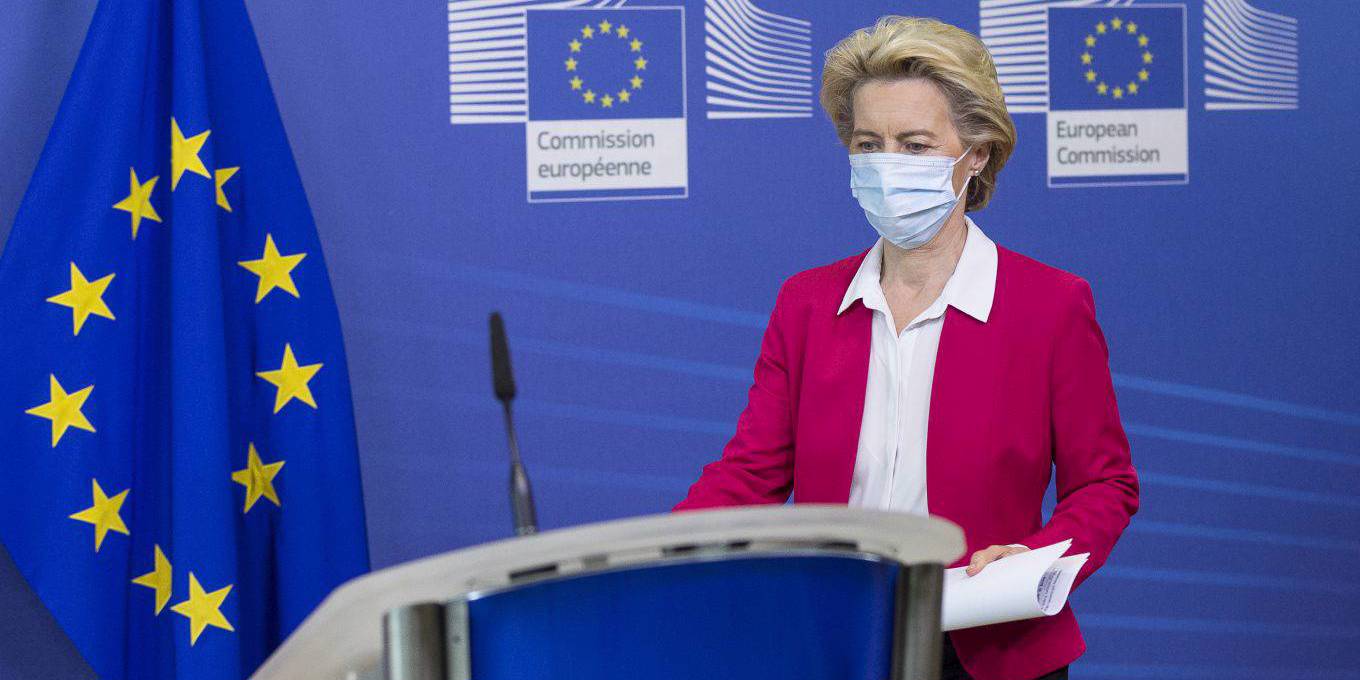




MADRID – In her first State of the European Union address, European Commission President Ursula von der Leyen offered a wide-ranging view of the current moment. She touted Europe’s recent achievements and identified its goals for the coming years. She dedicated significant attention to the European Green Deal and the Digital Agenda, and called for the completion of the banking union and capital-market integration. In normal times, it would have been a solid, if not particularly inspiring, performance. These are not normal times.