Ofensiva da Turquia contra curdos na Síria causa temor de retorno do Estado Islâmico

11.10.2019

RFI

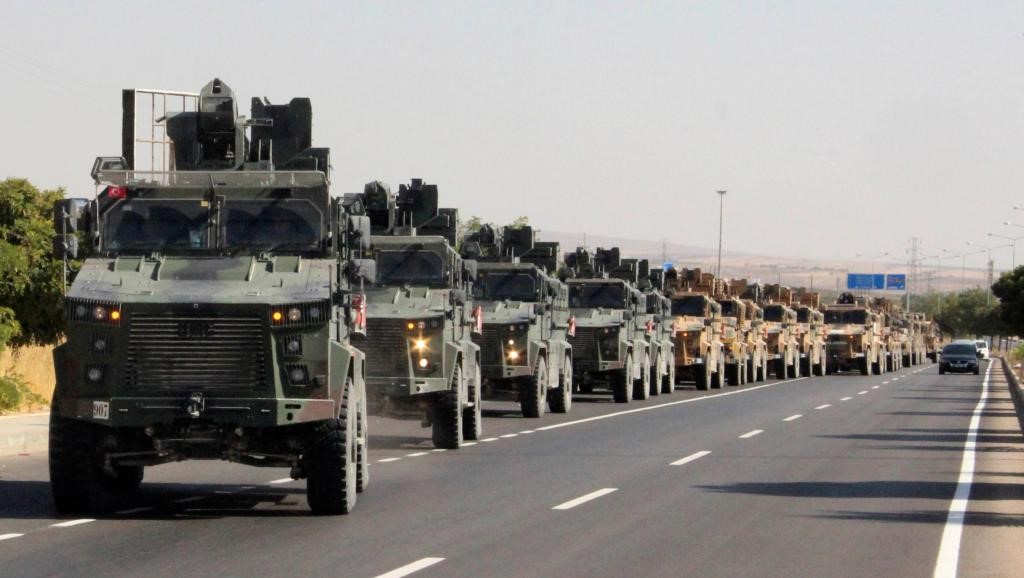
A ofensiva da Turquia contra uma milícia curda no norte da Síria preocupa os europeus e é analisada pela imprensa francesa nesta sexta-feira

Fotomontagem RFI

Os franceses acompanham com profunda preocupação a ofensiva militar lançada na quarta-feira (9) pela Turquia contra a milícia curda YPG, braço sírio do Partido dos Trabalhadores do Curdistão (PKK), na região nordeste da Síria.

Os curdos derrotaram o grupo Estado Islâmico (EI) na Síria com o apoio da coalizão internacional liderada pelos Estados Unidos (EUA) e países europeus. Cerca de 12 mil jihadistas, sendo 2 mil cidadãos europeus (britânicos, franceses, belgas), estão detidos nas prisões do Curdistão Ocidental, uma região autônoma “de fato” situada na porção norte-nordeste da Síria. Ante os bombardeios turcos, o maior temor da União Europeia é que haja uma fuga dos extremistas e a reorganização do grupo fundamentalista islâmico, derrotado há apenas seis meses.

Nesta sexta-feira (11), o jornal conservador Le Figaro publica um editorial crítico ao presidente dos EUA, Donald Trump. Ao retirar os soldados americanos da região e dar apoio implícito à ofensiva turca, Trump fez pouco caso dos 11.000 curdos mortos no combate aos jihadistas do EI. A proteção dos curdos tornou-se uma questão ética para os europeus.

O diário diz que o presidente turco, Recep Erdogan, tem em mãos uma arma de dissuasão de massa e 3,5 milhões de refugiados sírios que podem, a qualquer hora, ser enviados às portas da Europa. Erdogan, enfraquecido pela crise econômica em seu país, decidiu apostar no caos, enquanto o russo Vladimir Putin está na espreita para recuperar os curdos para seu aliado Bashar al-Assad.

Qual tratamento para Erdogan?

O diário católico La Croix considera que adotar sanções contra a Turquia e enviar sinais de isolamento do país são instrumentos legítimos para pressionar Erdogan a suspender a ofensiva contra os curdos. Mas é preciso tomar o cuidado de não cortar os laços com o governo turco, senão as consequências para a Europa seriam amargas, adverte o jornal. Deixar o assunto para ser resolvido entre a Rússia e a Turquia seria um erro, alerta La Croix.

A imprensa francesa trata Erdogan com desprezo. O jornal comunista L’Humanité evoca os “sonhos demoníacos do sultão de Ancara”, que tem como estratégia aparente ressuscitar o poderio do Império Otomano no século 21. Erdogan quer fazer da Turquia uma potência regional e instrumentaliza, sem o menor pudor, a massa de 3,5 milhões de refugiados sírios em seu território, condena L’Humanité.

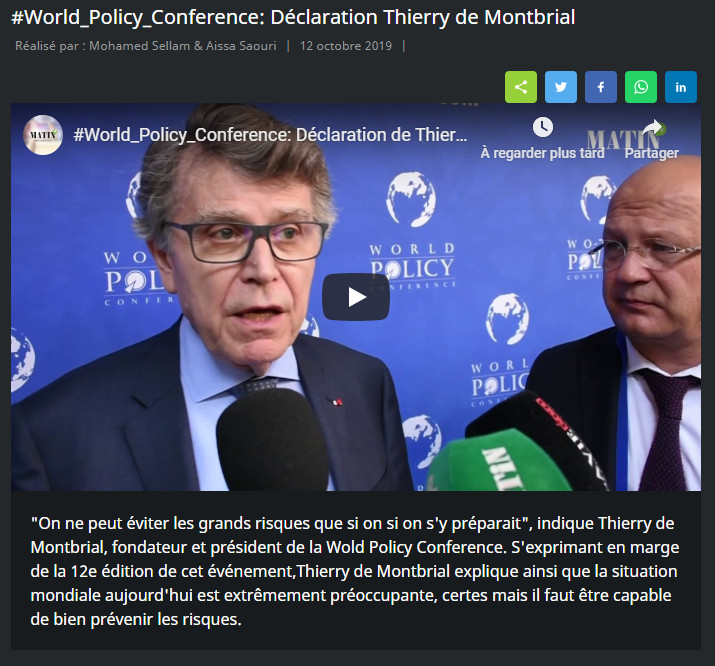
Nas páginas do Les Echos, o fundador do Instituto Francês de Relações Internacionais, Thierry de Montbrial, observa que os conflitos se propagam nas fronteiras, nas instituições internacionais e talvez, em breve, nos mercados. O caos ambiente é uma ocasião para os Estados se emanciparem de antigas alianças e tentarem construir uma nova ordem mundial.


Read the article on RFI

L’EUROPE DOIT SE RAPPROCHER DAVANTAGE DES PAYS DU SUD

12.10.2019

APS – Agence de Presse Sénégalaise

De l’envoyée spéciale de l’APS : Sokhna Bator Sall

Marrakech, 12 oct (APS)- Thierry de Montbrial, fondateur et président de la ‘’World policy conference’’, une conférence annuelle sur la gouvernance mondiale, a souhaité un plus grand rapprochement de l’Europe avec les pays du Sud, en matière économique et dans la lutte contre le terrorisme.

‘’Nous sollicitons une Europe qui se rapproche des pays du sud pour un modèle géopolitique mondial pacifique. Il est nécessaire pour les puissances moyennes de comprendre la réalité internationale telle qu’elle est, afin de mieux prendre en main leur destin’’, a-t-il indiqué.

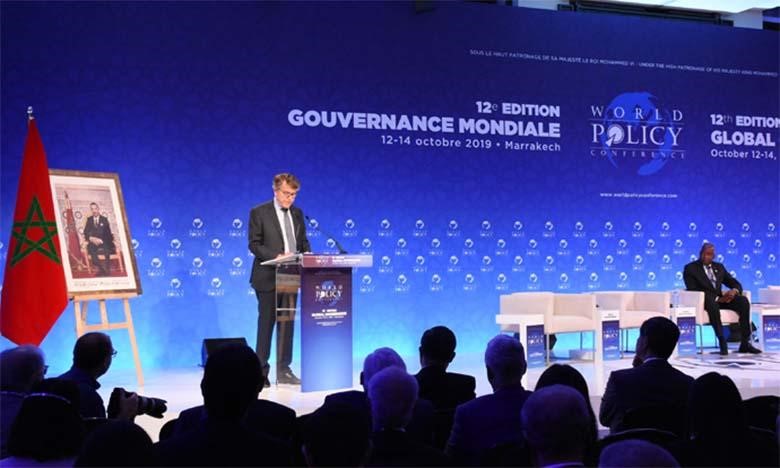
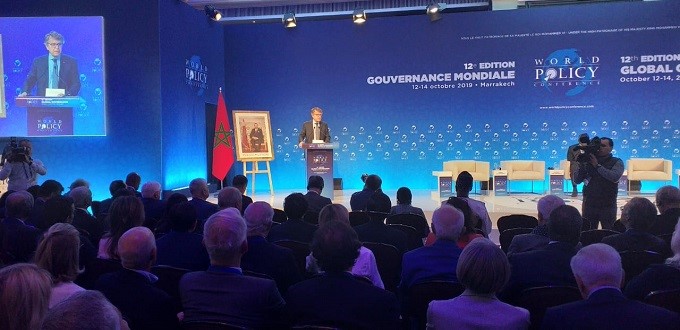
Il s’exprimait samedi à Marrakech à l’ouverture de la 12e édition de cette conférence sur la politique mondiale (12 au 14 octobre).

Le président de la WPC n’a pas manqué de souligner ’’un durcissement nationaliste dans le monde, auquel, l’Europe même n’échappe pas avec le phénomène des démocraties libérales, des chocs politiques qui affectent le monde’’.

‘’J’insiste encore une fois, sur l’enjeu de l’Union européenne (UE) car l’Europe est intimement liée à celle de ses flancs. Je suis de ceux qui se félicitent à cet égard de la perspective d’un rapprochement possible avec la Russie’’, a-t-il fait savoir.

Il a également mis en avant l’impératif pour l’UE de pratiquer une politique étrangère véritablement commune dans la perspective d’un renforcement de la coopération pour le développement et la sécurité des pays du Sud, le Maghreb et le Sahel notamment.

La WPC, est une conférence annuelle sur la gouvernance mondiale, initiée depuis 2008 par son fondateur et en collaboration avec l’institut français des relations internationales.

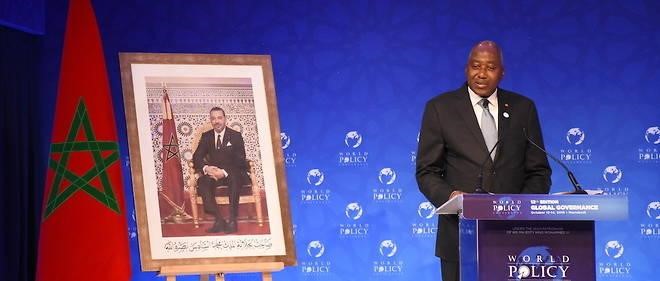
Cette 12ème édition est marquée par la présence du premier ministre ivoirien Amadou Gon Coulibaly et de plusieurs délégations venant de divers pays du monde.

Lire l’article sur le site de l’APS

« Personne ne peut compter durablement sur les Etats-Unis »

11.10.2019 

Les Echos

Virginie Robert, Nicolas Barré, Jacques Hubert-Rodier

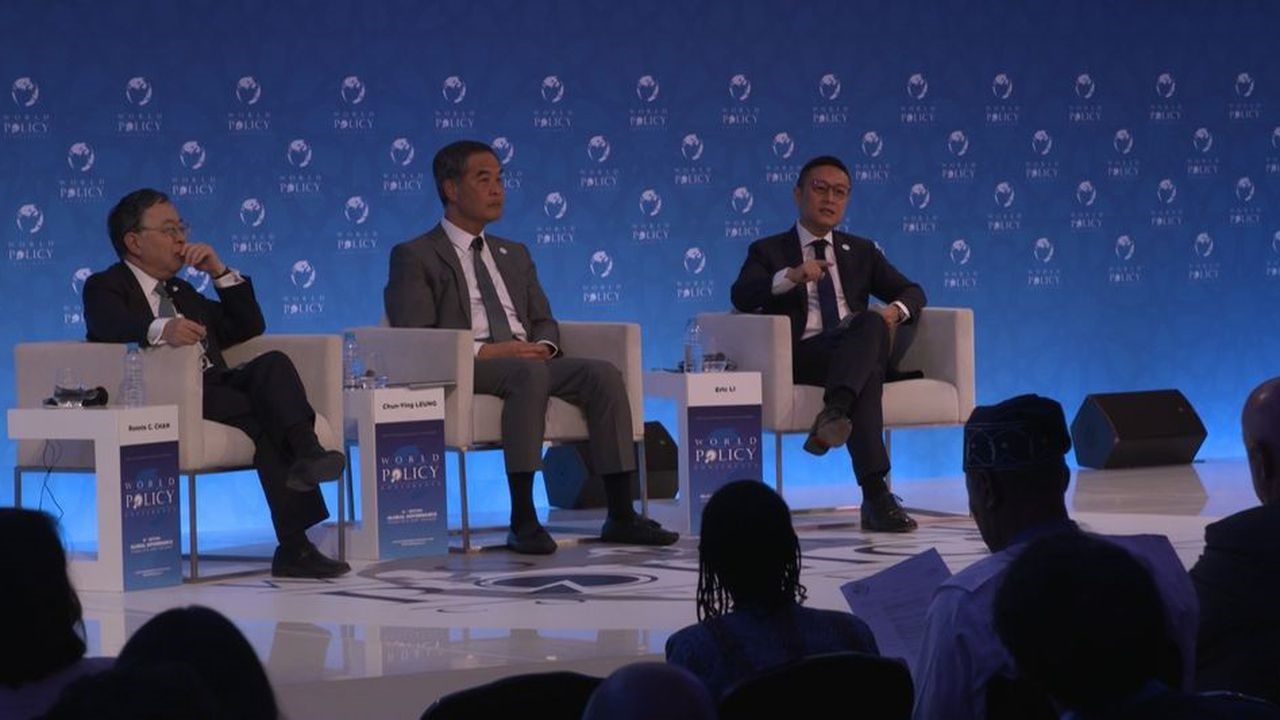
Pour sa douzième édition, la World Policy Conference, créée Thierry de Montbrial, fondateur de l’Institut français des relations internationales, va rassembler près de 250 experts des relations internationales à Marrakech ce week-end. La montée de la Chine, la guerre commerciale, l’avenir du système financier international ou la cybermenace sont autant de sujets qui seront abordés.

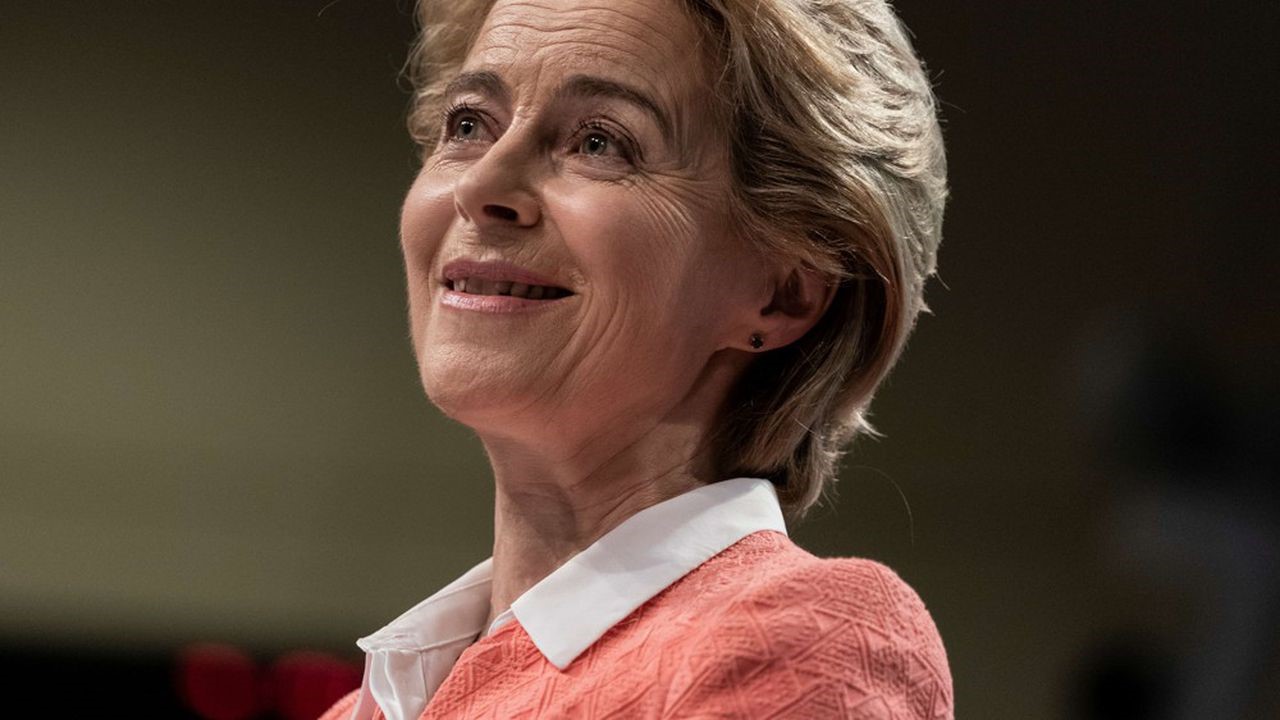
La nouvelle présidente de la Commission, Ursula Von der Leyen, pourra-t-elle mettre en oeuvre une Europe puissance ?

L’Europe puissance est une locution équivoque. Toutefois, il y a une prise de conscience croissante que si l’Europe ne s’émancipe pas des Etats-Unis, elle deviendra une proie dans la compétition sino-américaine. On se pose la même question ailleurs dans le monde, que ce soit au Moyen-Orient ou en Asie de l’Est. De mon point de vue, l’Alliance atlantique au sens fort n’a pas survécu à la fin de la guerre froide. Les Européens doivent donc reformuler leur projet et élaborer progressivement une capacité de sécurité et de défense dans un sens très large. Cela commence par l’économie. Les Allemands, qui naguère encore rejetaient le concept de politique industrielle, y ont maintenant recours. Ils admettent désormais la nécessité d’élaborer sur le long terme un projet sécuritaire, certes sans rompre avec les Etats-Unis, mais largement autonome.

L’Europe en a-t-elle la force politique ?

Sur le court terme, il est réconfortant que les élections au Parlement européen n’aient pas conduit à une victoire du populisme simpliste. A moyen terme, il est vital que l’Union européenne reformule un projet commun auquel les pays membres adhèrent réellement. L’entrée des pays ex-communistes de l’Est a révélé qu’ils étaient loin de partager la vision des pères fondateurs et que certains, comme la Pologne, ont un tropisme américain. Les prochaines décennies seront dominées par la compétition entre les Etats-Unis et la Chine, avec une dimension technologique fondamentale. Comment éviter de se trouver assujettis à ce nouveau monde bipolaire ? Plus que bien d’autres régions du monde, l’Europe a de grands atouts. N’ayant aucune visée impérialiste, elle a une réelle capacité d’attraction vis-à-vis du nouveau tiers-monde, même en Asie.

La crise du Brexit en Grande-Bretagne illustre-t-elle la faillite d’une démocratie parlementaire ?

La légitimité d’un régime politique est corrélée à son efficacité. Il ne s’agit pas seulement de l’aspect économique, mais plus généralement de la façon de prendre les bonnes mesures engageant le long terme et de les appliquer. Les Chinois l’ont parfaitement compris. Le coeur de leur politique est le développement économique et social à l’intérieur. Ils savent que la dynastie communiste ne survivrait pas à un échec. Le problème de la démocratie libérale, c’est son inefficacité. En conséquence, c’est le principe même de la démocratie qui est relativisé un peu partout dans le monde. Elle n’est plus nécessairement perçue comme le plus mauvais des régimes « à l’exception de tous les autres ».

Il y a aussi un risque de rupture interne ?

Les divisions en Grande-Bretagne sont profondes. Un nouveau référendum sur l’Ecosse est possible dans les prochaines années. On évoque même la réunification de l’Irlande. Il se peut que la monarchie soit fragile. Le jour où la reine Elizabeth II disparaîtra, je ne doute pas qu’une énorme vague d’émotion submergera le monde entier. On prendra alors pleinement conscience du déclin de la Grande-Bretagne. Walter Bagehot [1826-1857, rédacteur en chef de « The Economist », NDLR] divisait le pouvoir en deux branches : l’« efficient » [le pouvoir exécutif, NDLR] et le « dignified » [la monarchie et le décorum parlementaire, NDLR]. La reine Elizabeth II aura réussi ce tour de force d’incarner la grandeur du royaume, et de lui conserver un halo victorien. Après elle, le « dignified » survivra-t-il avec autant de majesté ? Le Brexit n’est pas seulement un épisode peu glorieux de la démocratie en Grande-Bretagne. Il est surtout un échec du pays qui aura longtemps incarné la démocratie. C’est beaucoup plus grave.

Que pensez-vous du tournant de la diplomatie française vers la Russie ?

Le fait de ne pas avoir pris en compte les intérêts fondamentaux de la Russie après la chute de l’URSS en 1991 a généré une chaîne d’événements dont l’aboutissement n’est pas dans l’intérêt de l’Europe. La Russie se tourne aujourd’hui vers la Chine. L’acquis de la maîtrise des armements pendant la guerre froide est détruit et la défiance s’est profondément installée entre la Russie et les Occidentaux. Mais Emmanuel Macron a justement souligné, lors de la conférence des ambassadeurs, que la Russie ne pouvait se contenter d’un rôle de « junior partner » de la Chine. Elle a aussi des difficultés économiques considérables. Tout cela peut aller dans le sens d’un « reset ».

Est-ce qu’il peut y avoir une position commune en Europe sur ce sujet ? On a vu que cela suscitait énormément de tensions…

Les Britanniques sont très durs, les Allemands restent beaucoup plus ambivalents. Et, pour des raisons historiques évidentes, des pays comme la Pologne ou la Lituanie sont particulièrement fermés à la Russie. Les constantes géopolitiques sont manifestes. La diplomatie britannique, par exemple, n’a jamais cessé d’agir pour empêcher des rapprochements trop étroits sur le continent. Le cas de la Russie illustre bien la grande difficulté de préciser la notion d’intérêts européens, et donc de défense européenne, puisqu’on défend toujours des intérêts, dont les valeurs ne sont qu’une des composantes.

Paris peut-il être efficace dans une médiation avec l’Iran ?

La politique américaine est dans une impasse. Les Pasdarans [les Gardiens de la révolution, NDLR] qui sont au centre de tous les trafics en Iran, bénéficient des sanctions. La France fait partie du très petit nombre de pays qui ont une vraie capacité diplomatique au niveau mondial. Et pas uniquement à cause de notre siège permanent au Conseil de sécurité. Il y a aussi notre tradition militaire. Il est difficile de ne pas tirer un coup de chapeau après l’initiative du président Macron au G7, puis aux Nations unies. Mais on ne peut pas en espérer trop, car l’Europe est actuellement hors circuit au Moyen-Orient. Je pense cependant que notre position équilibrée pourrait être utile au moment propice.

Où l’Iran veut-il en venir avec l’attaque sur les installations pétrolières saoudiennes ?

Cela fait des années que les Iraniens disent : « Ce n’est pas notre souhait, mais si l’on nous cherche trop, nous avons des capacités de créer le désordre partout. » Le but est de démontrer que la politique actuelle des Etats-Unis de casser, faire s’agenouiller l’Iran, la faire renoncer à l’arme nucléaire sans compromis, ainsi que de rejeter toute idée que l’Iran puisse avoir une influence dans d’autres pays, ne marchera pas. Cette politique américaine a adopté la vision israélienne et saoudienne, avec une alliance improbable entre les Etats-Unis, l’Arabie saoudite, l’Egypte et Israël.

L’objectif de l’Iran est de revenir à la politique dans laquelle il s’était engagé et qui avait conduit à l’accord sur le nucléaire de juillet 2015 [JCPOA]. Il faut rappeler que la question d’une grande négociation [sur les missiles et les ingérences iraniennes dans la région NDLR] avait été posée avant la conclusion de cet accord. Il s’agissait alors de négocier d’abord sur le nucléaire quitte à élargir ensuite les discussions. Ce qui est choquant, c’est la dénonciation unilatérale de l’accord de Vienne par Donald Trump, au lieu de dire : « Maintenant, commençons à élargir les négociations aux autres sujets. »

Les Etats-Unis viendraient au secours de quel pays aujourd’hui ?

Aucun, si leurs intérêts n’étaient pas frappés au coeur. Je pense d’ailleurs que l’Arabie saoudite ne se fait pas trop d’illusions. Une des caractéristiques des Américains, c’est qu’ils peuvent laisser tomber leurs partenaires ou même leurs alliés du jour au lendemain. Le lâchage de Moubarak [en Egypte], en 2011, a provoqué un séisme en Arabie saoudite et même au Maroc. En dépit du caractère erratique de sa politique, on constate que Donald Trump recule quand le danger se rapproche. Surtout, nous sommes dans une phase historique où les Etats-Unis sont non pas isolationnistes, mais où leurs intérêts nationaux sont étroitement conçus. Un peu comme au tout début du XXe siècle. Pendant la guerre froide, leur conception de l’intérêt national était beaucoup plus large. Il s’agissait d’empêcher l’expansion du communisme dans le monde.

Donald Trump a promis le retrait des troupes américaines d’Afghanistan. Est-ce qu’il peut y arriver après l’interruption des négociations avec les talibans ?

Il est intéressant de relever que, pour remplacer John Bolton comme conseiller à la sécurité nationale, Donald Trump a choisi Robert O’Brien, le négociateur du département d’Etat lors des prises d’otages. Ce point est révélateur de son approche : la négociation, le marchandage. La méthode s’applique à l’Afghanistan, mais aussi à l’Iran. Donald Trump croit qu’il peut mettre n’importe qui dans sa poche, les talibans, Kim Jong-un… Du fait de leur puissance, les Etats-Unis se croient plus forts que tous les autres. Mais on devrait savoir, depuis le XIXe siècle, qu’on ne se tire pas facilement d’affaires en Afghanistan. Je ne vois pas les Américains se retirer complètement de ce bourbier.

Quels risques fait peser la politique de Donald Trump sur l’économie mondiale ?

Il y a un an, le paysage économique était plutôt dégagé. Les nuages aujourd’hui ne sont pas directement liés à l’économie. En revanche, les risques géopolitiques n’ont fait qu’augmenter. Si, d’ici aux élections présidentielles américaines de 2020, la politique étrangère de Washington ne se traduit que par une dégradation de la situation économique mondiale, Donald Trump s’en rendra évidemment compte. L’absence probable de grandes percées diplomatiques sur l’Iran ou la Corée dans les prochains mois pourrait inciter Washington à calmer le jeu sur le plan commercial. C’est aussi l’intérêt de Pékin. Et si Trump est réélu fin 2020, il serait parfaitement capable de changer totalement de position sur les grands dossiers internationaux. Nous n’en sommes pas là.


Lire l’article en ligne sur le site des Echos : https://www.lesechos.fr/monde/enjeux-internationaux/personne-ne-peut-compter-durablement-sur-les-etats-unis-1139153

Ali Zerouali

Masen’s Cooperation and International Development Director since September 2015. Among other responsibilities, Ali is in charge of designing and implementing an international projection strategy for Masen. In his early roles at BNP Paribas, Accenture and UTC, Ali gained extensive experience of managing internationally oriented corporate restructuring and business development projects. On his return to Morocco, Ali founded Next Management, a company that specializes in restructuring and transformation projects, and then took over the general management of MCS, a subsidiary of UTC. Ali Zerouali graduated in engineering with a degree in organizational management from Ecole des Mines de Paris & HEC Paris.

Jihane Ajijti

Jihane Ajijti is Head of Business Development, Digital and Communication within OCP Africa. She manages partnerships and development projects that aim at improving the ecosystem around smallholder farmers, particularly through offering a wider range of innovative agro-services (training, financial inclusion, market linkages). She joined OCP Group in 2014 and she is based in Casablanca. Prior to joining OCP, she was an associate in an international strategic consultancy firm where she has worked for several large-scale projects in various industries. A native of Morocco, she holds a Master in Management from HEC Paris and an Executive MBA from Africa Business School in partnership with Columbia Business school.

Hamid Asghar

Ambassador of Pakistan since June 2019. Hamid Asghar started is diplomatic career with the Pakistan Ministry of Foreign Affairs in 1992. Over the last 24 years, he served as numerous positions around the world: Vice Consul in Dubai, Second Secretary in Germany, Media Coordinator & Protocol in charge in London, Deputy Chief of Protocol for Punjab in Lahore and Deputy Chief of State Protocol responsible for VVIP visits in Islamabad. He was also Head of Chancery and Acting Consul General in London, Counsellor & Acting Consul General in Australia and Consul General in Los Angeles. He has a Master’s Degree in Business Administration, from IBA, Lahore having specialized in Marketing and Management. 

Mehdi Tazi

Mehdi Tazi graduated from Télécom Paris Sud in 1999 and received an MBA from INSEAD in 2004. He started his career at KPMG Consulting France. He was successively Director of Development of the Saham Group, Deputy Managing Director and then Managing Director of Isaaf Mondial Assistance. Mehdi Tazi was then appointed Chairman and Chief Executive Officer of Saham Assurance after having served as its Chief Executive Officer.  He also served as interim CEO of GA Angola Seguros and as a director of several insurance companies of Saham Group, Taslif, CAT in Morocco. Since 2017, he has been Head of the Beassur firm. In 2013, Mr. Tazi was recognized by Jeune Afrique among the 25 young African leaders, and in 2014, 2015 and 2016 by the Choiseul Institute 7th, 4th and 2nd among the 100 African leaders under 40 years of age.

Abdelkader Zraih

Ex-parliamentary from the Chamber of Counsels, president of the CDT, ex vice-president of the Morocco-France mixed commission of the Chamber. He was President of the regional commission of Human Rights in Rabat-Salé-Kenitra. He is the Advisor of the president of the National Council of Human Rights, Joint General Secretary of the Euro-Med Foundation, member of the International Secretariat of the Global Human Rights Forum and member of “Enterprise and Human Rights” in London. In addition, he is a member of the Moroccan National Commission of the Chart of National Education and Vocational Training and the president of the Safi Foundation.

Hamid Tawfiki

Director and Chief Executive Officer of CDG Capital, Member of the Executive Committee of CDG, Chairman of the Casablanca Stock Exchange, Chairman of Maghreb Titrisation. Mr. Tawfiki was Chairman and Chief Executive Officer and Co-founder of Avenir Global Investment Advisors and held senior positions within the Suez Group and the Crédit Agricole Group. He is a member of the Bretton Woods Committee, Sherpa of the International Development Finance Club and the Long Term Investor Club, member of the Scientific Committee of COP22. A graduate of the Ecole Polytechnique and the Ecole des Mines de Paris, he also holds a DEA in mathematics (University of Paris Dauphine).
Vlad Stoica

Lawyer, Partner, Ionescu si Sava, a law firm based in Bucharest, which provides both consultancy and litigation service active in a wide range of industries, such as banking, financial services, automotive, pharmaceuticals, real estate and infrastructure. Previously, he was the Head of the Prime Minister’s Chancellery (during Victor Ponta government), where he worked, amongst others, at the integration between ministries and acted as coordinator of the projects developed by the prime minister. holds a bachelor’s degree in Romanian Law and is a member of the Bucharest Bar since 2009. He has also taken postgraduate studies in political management.

Hassane Saoudi

Mr. Hassane Saoudi is a retired Colonel of the Royal Gendarmerie, Consultant and Director of Securi-Consulting. He held the position of Chief of Studies and Legislation at the Royal Gendarmerie Headquarters as well as the title of Commander of the Royal Gendarmerie Training Centre in Marrakech. He was Commander of the Kenitra and Meknes regions. He obtained his master’s degree in Economic Intelligence and Business Security from the Institut National des Hautes Etudes de la Sécurité et de la Justice in 2012 and a global security diploma from the Institut National des Hautes Etudes de la Sécurité et de la Justice de Paris in 2010 and in the same year, he obtained a certificate of expertise in psychocriminology from the Institut de Hautes Etudes de Criminologie de Paris.

Mohammed Sadiki

President of International Center for Advanced Mediterranean Agronomic Studies and Secretary General of the Ministry of Agriculture, Maritime Fisheries, Rural Development and Forest, Morocco. Doctor of Agricultural Sciences and Agricultural Engineer, Dr. Sadiki is also a Professor of Genetics at the Hassan II Institute of Agronomy and Veterinary Medicine. He is a member of the Board of Directors of the International Platform for Agrobiodiversity Research and a member of the Scientific Council of the International Center for Agricultural Research and Development. He is Morocco’s representative on the Board of Governors of the International Fund for Agricultural Development.

Abdellah Saaf

Abdallah Saaf is a professor of Political sciences at Mohamed V Rabat University, Director of the Center for Studies in Social Sciences Research, Founder of the Moroccan Association of Political Science, Director of Abhath Review, as well as Senior Fellow at the Policy Center for the New South, which focuses on political science, international relations, policies and development strategies. Prof. Saaf was a member of the commission in charge of revising the Constitution during July 2011, and member of the Scientific Committee at the Global Forum for Humans rights. He is a former Minister of Education. He also manages Strategic Report of Morocco, an annual publication

Bouchra Rahmouni

Director of Research, Partnerships and Events at Policy Center for the New South. Prof. Rahmouni is an international affiliated professor at NYU (USA) as well as a visiting professor at Holy Spirit University (Lebanon) and at International trade and Law Institute of Pusan National University (South Korea). She teaches geopolitics at Grenoble School of Management (France). She contributed to numerous books, such as Femme et entrepreneur: c’est possible ! (Pearson, 2012) , Géopolitique de la Méditerranée and Géopolitique de la condition féminine (PUF, 2013). Bouchra gave lectures in world forums and prestigious institutions in France, Hong Kong, US, South Korea, Lebanon and Switzerland.
Bouchra Outaghani

President, Federation of Trade and Services, CGEM and General Manager of the communication consultancy agency Par3com. She has more than 20 years’ experience in audit, marketing and communication strategy. During her career, she has accompanied and advised more than a hundred public and private institutions in the development of strategic projects at the national and international levels. She is both Vice-President and General Secretary of the Moroccan Association of Exporters (ASMEX), a member of the Board of Directors of the Moroccan Student Foundation, and currently President of the CGEM Trade and Services Federation, which has more than 1780 members. 

Nadia Motii

Professor of Business Management and Human Resources at the University Mohammed V, Rabat. She was Advisor to the President of Mohammed V University and consulted on projects pertaining to development, education and governance with NGOs and institutions including the UNDP, Africa Humanitarian Action, the Ministry for Civil Service and Administrative Reform where she served in the Cabinet of the Minister in charge of UN and UNDP projects in the MENA region. Dr. Motii earned her Master’s in Public Affairs at the American University in Washington DC, and her Doctorat d’Etat in Economic Sciences from the Faculty of Juridical, Economic and Social Sciences in Casablanca.

Jasna Mileta

Jasna Mileta is Ambassador Extraordinary and Plenipotentiary of the Republic of Croatia to the Kingdom of Morocco. Also non-resident ambassador to the countries: Tunisia, Mauritania, Senegal, Burkina Faso, Côte d’Ivoire, Cameroon and Gabon. From 2013 to 2017, she was Plenipotentiary Minister and Coordinator of the Union for the Mediterranean in the Committee of Senior Officials of the Union for the Mediterranean (appointed by the Minister of Foreign and European Affairs); as well as Croatia’s representative on the Board of Governors of the Anna Lindh Euro-Mediterranean Foundation for the Dialogue of Cultures (ALF).

Mustapha Metaich

Mustapha Metaich is a graduate of the Central School of Paris and a Doctor in Industrial Engineering. He is co-founder and managing Partner at EMC. He teaches Data Science at the Central School of Casablanca. He began his career in France as an engineer in many multinational firms such as TECHNIP and EDF before joining international management consulting companies. At the same time, he is a visiting professor in the Central School of Paris, the University of Paris 13 and ISCAE. He is also President of the Association of the ex-Centrale Students in Morocco. He was an administrator of the Central School of Casablanca and president of the “Forum Centralien” think tank. 

Mostapha Mellouk

President and Founder of Casablanca Media Partners Group. Mostapha Mellouk started his career in media with the launch of 2M TV Channel where he managed programs, news and sports. He established and lead Media Com before joining Lagardère Group as Director of educational tv channels owned by Qatar Foundation and the Aljazeera Group. He was President of Medi1Sat TV. He is also Smart Studio’s creator and he co-founded the Copeam. He was designated African Media Leader in 2012, and was elected Member of the International Academy of Television, Arts & Science in New York. He chairs the communication commission of the CGEM.

Hicham Masmoudi

Head of the International Economic Department, Bank Al-Maghrib. Since 2007, Hicham Masmoudi has been in charge of the International Economic Affairs Department at Bank Al-Maghrib in Rabat. He was also a statistician at Nielsen Company and a part-time lecturer at Hassan II University in Casablanca: Master 1st year and 2nd year”Econometrics Applied to Macro and Microeconomic Modelling”. He holds a Master (DESA) in Applied Econometrics for Macro and Micro-Economic Modelling from Hassan II University in Casablanca and obtained his Applied Bachelor’s degree in Econometrics at Hassan II University.

Taoufik Marrakchi

Prof. Taoufik Marrakchi is a retired Colonel-Major of the Royal Armed Forces. Born in Sfax (Tunisia), he got his PhD in International Law and International relations. He joined the Royal Military academy in Meknes and graduated in 1976 then graduated as a Military Chief of staff in the Military school of Kenitra in 1988. He obtained another certificate from Joint Defense College in Paris in 1997. He taught Geopolitics, Strategy, Security and Defense and its international institutions and History of crises and contemporary conflicts in many institutions, such as: the Moroccan Diplomacy Academy (AMED), the Royal School of Gendarmerie Officers (EROG) and the Royal Naval School (ERN). 

Li Li

H.E.M Li Li is an Extraordinary and Plenipotentiary Ambassador of the People’s Republic of China to Morocco after a long career and responsibility positions at the Ministry of Foreign Affairs of the People’s Republic of China. H.E.M Li Li has accumulated extensive experience, through his diplomatic missions, in the African continent, particularly in Mali, the Republic of Mauritius and the Kingdom of Morocco. Mr. Li Li holds a Master in Law.

Ahmed Laamoumri

Secretary General of the Ministry of Reform of Administration and Public Service. Mr. Ahmed Laamoumri started at the Ministry of Trade and Industry, then joined the Ministry of the Economy and Finance, and later the Ministry of Public Service and Modernization of Administration. He then became Director of Studies, Communication and Cooperation in the Ministry of charge of modernization of the administration and Secretary General of the Ministry of Reform Administration and Public Service. He has an engineering Degree in Quality Management from L’Ecole des Mines in France and another in Legal and Industrial Metrology from L’Ecole Supérieure de Métrologie in Paris.

Kim Hong Kyun

Former Special Representative for Korean Peninsula Peace and Security Issues and Head of Delegation to Six Party Talks of the Republic of Korea (ROK). Prior to this position, Ambassador Kim was the Deputy Minister for Political Affairs at the ROK Ministry of Foreign Affairs. Previously he was Secretary to the President for Policy Coordination and Deputy Secretary-General of the NSC Secretariat, in the Office of National Security. Ambassador Kim is a graduate of the University of Virginia where he completed an M.A. in Foreign Affairs, and Seoul National University where he completed a B.A. in English Language and Literature.

Jawad Kerdoudi

After graduating from HEC Paris, Jawad Kerdoudi became a representative of the Moroccan Office de Commercialisation et d’Exportation in Hamburg and in New York where he also was in Charge of the Moroccan Consulate. Later, he worked in the OCE headquarters in Casablanca where he, among responsibilities, managed the Group’s wine subsidiary. In 2003, he created the Moroccan Institute of International Relations. He teaches International Trade and International Relations in Casablanca and Rabat. He wrote numerous articles and several books about Moroccan foreign trade, the Maghreb, and the Spanish model. He participated in several studies on the Euro-Mediterranean region.

Achraf Ibrahim

Ambassador of the Republic of Egypt in Morocco. Deputy Chief of Mission at the Egyptian Embassy in Kenya, he moved to Warsaw and was Deputy Head of Mission at the Egyptian Embassy before becoming Deputy Permanent Representative of Egypt to the Arab League. Ambassador in the Democratic Republic of Congo, he then became Deputy Minister of Foreign Affairs for International Economic Affairs. Achraf Ibrahim is a Master’s Graduate in Economy and Political Science from the University of Cairo, a graduate of the International Institute of Public Administration in Paris and has an In-Depth Degree in International Trade from Paris 1 Panthéon-Sorbonne University.

Peje Emilsson

Founder and Owner of Kreab Worldwide(1970), a global advisory firm with consultants of 40 nationalities in 25 countries, and Kunskapsskolan Education (2000) – personalized education for 30.000 students in 6 countries. He is a Board member of the Nobel Prize Outreach since 2011 and is a Member of the Royal Swedish Academy of Engineering Sciences, IVA. He was Chef de Cabinet of ICC, the world business organization (1973-1981) and Chairman of the Stockholm Chamber of Commerce (2010–2014). Recipient of the King of Sweden’s Medal of the Twelfth Dimension in Blue Ribbon for achievements as business leader and entrepreneur. He has a BA from the University of Stockholm and is a graduate of the Owner/President Management Program from Harvard Business School.

Thami Ghorfi

Dean of ESCA Ecole de Management, Casablanca, Morocco, he teaches communication strategy and change management. Advisor to several organizations, he also edited and authored several books. In 2011, Thami Ghorfi was appointed as an expert member of the Economic, Social and Environmental Council. He is Vice President of the AL AMANA foundation and a member of the board of the Development and Solidarity Council, the Amadeus Institute and the Academic Advisory Board of GBSN. He chairs the AACSB MENA Advisory Council and is part of International Academic Member of the EDAF Committee of the EFMD. He graduated from ISG-Paris and ESSEC Business School.

Farid El Bacha

Dean of the Faculty of Law, Rabat-Agdal. He was a counselor for the General Secretariat of the National Council of Youth and the Future. He is the founder and president of the Moroccan Center for Legal Studies, as well as the founder of the Moroccan Legal Institute. Executive Chairman of the Center for Studies and Research in Hebrew Law in Morocco, he wrote numerous articles on business law. President-delegate of the Ribat Al Fath Association for sustainable development, Prof. El Bacha ensures the preparation of national and international scientific meetings, including the annual conference on Morocco-Europe relations in partnership with the Konrad Adenauer Foundation.

Nouzha Chekrouni

Dr. Nouzha Chekrouni has made a longstanding career as a politician, a diplomat and a professor. She was the Kingdom of Morocco’s Ambassador to Canada between 2009 and 2016. Dr. Chekrouni served as Minister for the Moroccan Community Residing Abroad, a member of Parliament, and Minister for Women and Social Issues. She holds a Bachelor Degree from the Philological Faculty at the University of Fez, a Post-Graduate Diploma and a PhD in Linguistics from Université Sorbonne Nouvelle in Paris. Dr. Chekrouni has also completed a Certificate in Ethics and International Relations at Harvard University. She is a 2016 Senior Fellow in Advanced Leadership at Harvard University.