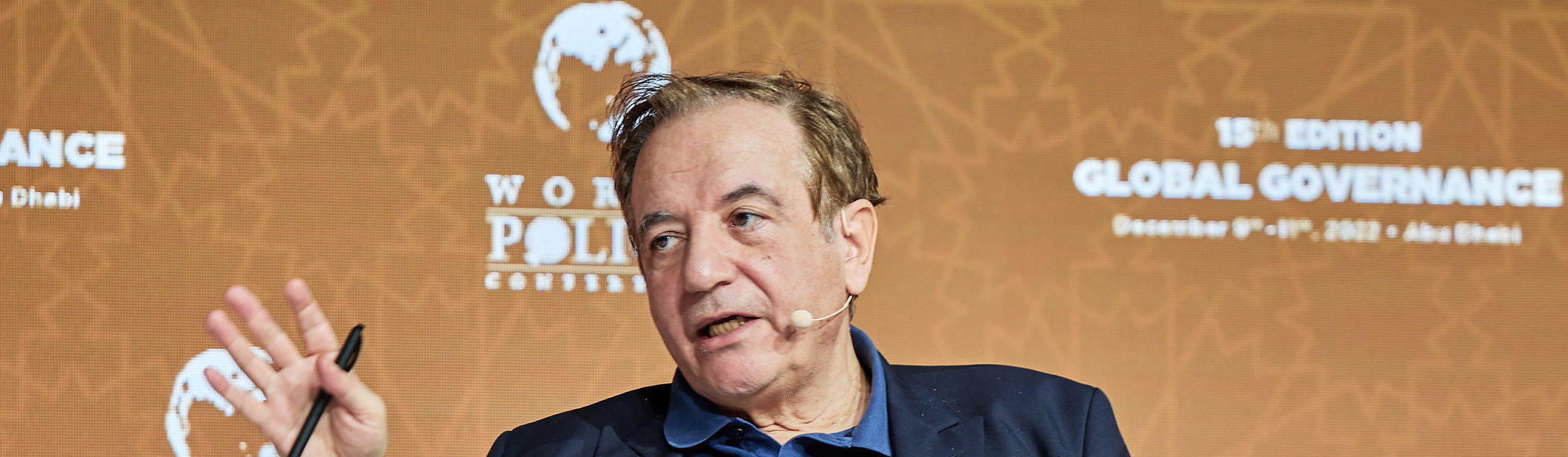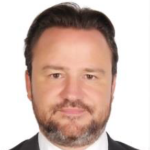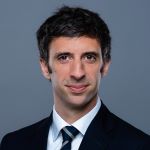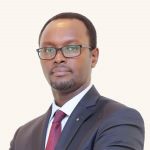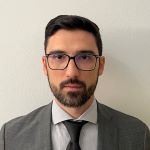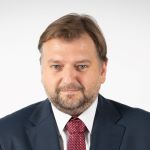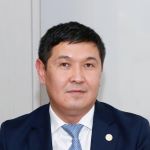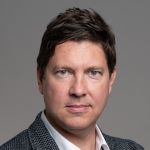
Jonathan Cordero

Head of Corporate Development at Eurasian Resources Group (ERG), a leading diversified natural resources group – present in 16 countries with around 80,000 people. With over 14 years of senior-level experience in general management, strategy, and M&A, Jonathan D. Cordero is a leading advisor in the metals and mining industry. At ERG, he is responsible for global ventures development, strategy, and M&A, with a special focus on the group’s MENA growth platform. Mr Cordero is also an investor and mentor in the ResourceTech space, and co-founder and partner at Caesar Ventures, a seed-stage investment firm supporting entrepreneurs in the fields of clean energy, circular economy, and digital transformation. He has served as a board member at various companies and holds a Master of Science in Management from HHL- Leipzig Graduate School of Management.

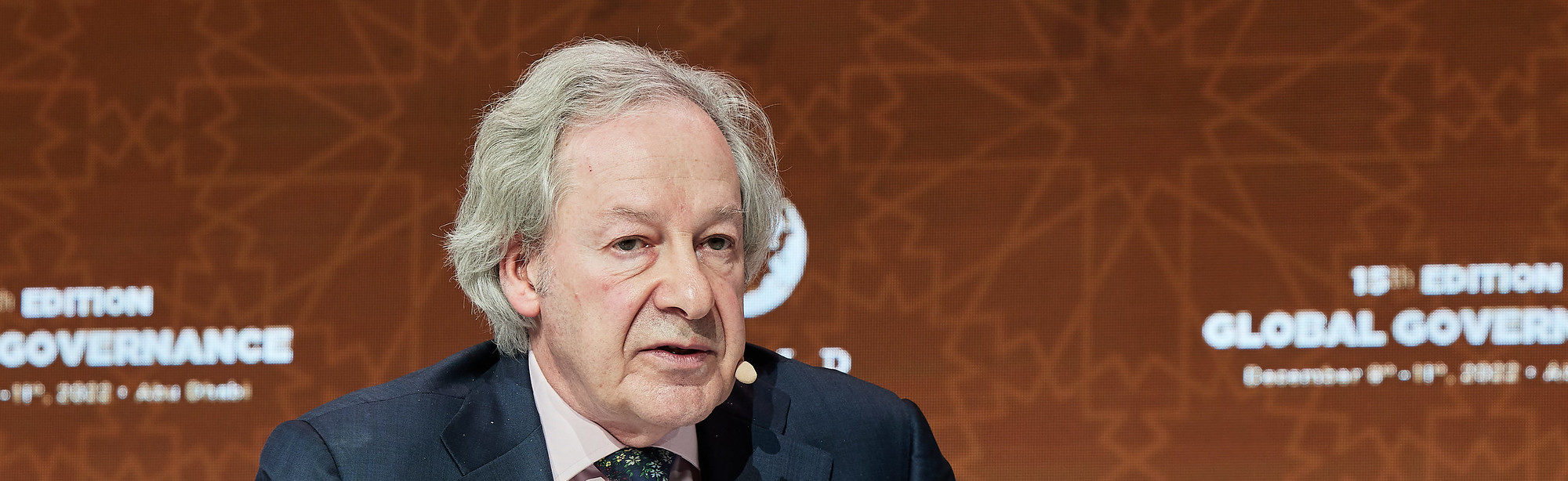
Arash Duero

Managing Director of UAE-based Big Picture Strategy LLC, a consultancy that specializes in communication and marketing services for clients in the energy, climate and natural resources sectors. Arash Duero is also Senior Advisor at Berlin Global Advisors, a leading German public and government affairs consultancy, where he provides strategic counsel to a wide range of clients across multiple industries and functions. Mr. Duero regularly serves as Senior Expert at Roland Berger, Senior Consultant at Berlin-based Clean Hydrogen Advisors (CH2A), Advisor to the Global Gas Centre and the Clean Energy Forum, and member of the German Economic Council. Moreover, Mr. Duero is Head of Strategic Programs at the European Cluster for Climate, Energy and Resource Security (EUCERS) at the Centre for Advanced Security, Strategic and Integration Studies (CASSIS), University of Bonn. He previously worked at the European Commission’s Joint Research Center (JRC) – Institute for Energy, as a researcher at the Environmental Policy Research Centre (FFU) of the Free University in Berlin, as a research associate at the Berlin Centre for Caspian Region Studies, was part of the Resilien-tech Working Group of the German National Academy of Science and Engineering (ACATECH) and was a Senior Fellow at the European Centre for Energy and Resource Security (EUCERS) at King’s College London. He has also served as an advisor and peer-reviewed various International Energy Agency (IEA) publications. As a researcher, he has published on a number of energy-related topics in scholarly journals and other publications, including for Energy Policy, the Bosch Foundation and the German Foreign Office. A native of Savannah, Georgia, USA, Mr. Duero studied economics at Georgia Southern University and holds an advanced degree in Political Science with a focus on Macroeconomics and International Energy Policy from the Free University in Berlin, Germany. He is based in Dubai and, in addition to his native tongue of English, speaks German, Farsi and Armenian fluently.

Valérie Ducrot

Executive Director of the Global Gas Centre based in Geneva, Switzerland (GGC). The GGC is an association bringing together leading stakeholders of the gas industry and was founded by major gas companies in December 2014. The GGC program consists mainly of meetings and roundtables organized by the GGC, sometimes in collaboration with one of their members or partners. Among the latter are the United Nations Conference on Trade and Development (UNCTAD), the United Nations Economic and Social Commission for Asia and the Pacific (UNESCAP), the International Society for Energy Transition Studies (ISETS), and the Energy Policy Research Foundation Inc. (EPRINC). From 2009 to 2014, Valérie Ducrot was the Manager of the UNECE (the United Nations Economic Commission for Europe) Gas Centre. Previously, she occupied several positions in the French energy company named today ENGIE. Over the last 27 years she has gained extensive experience in the energy sector, particularly the gas sector, at a global level. She holds an MBA from the Grande Ecole EMLYON and graduated in Business Administration in 1995. She also received a Master’s Degree in Political Sciences from the University of Lyon, France, in 2004. Additionally, Valérie has finished the Executive Diploma Program in International Relations and Business offered by the Ambassador Partnership, an international consultancy of former Ambassadors from 15 countries.

Florent Andrillon

Global lead of Capgemini Invent Sustainability Services. He advises organisation from different sectors on their climate, environment, and energy transition transformation projects. Florent graduated from EM Lyon in France in 2001. He started his career in the Energy Industry, before joining Capgemini Invent in 2005. Since then, he has worked with many companies players in the Energy and Utilities sector on strategy and transformation projects. For a couple of years now, Florent has been working a lot with clients from various industries willing to transform their business and operating model to reduce their environmental footprint.

Lasha Darsalia

First Deputy Minister for Foreign Affairs of Georgia since June 2021. His responsibilities include to deal with the issues concerning the Russian-Georgian conflict, as well as neighboring countries and International Organizations. Mr. Darsalia is chief negotiator from Georgia to the Russian Federation in the Geneva International Discussions (GID). Prior to his assignment Lasha Darsalia was First Deputy Minister at the State Ministry for Reconciliation and Civic Equity. His main responsibilities included to work on the issues of the engagement policy with the communities on the Russian Occupied territories.

U.S., NATO scramble to arm Ukraine, refill own arsenals

ARTICLE – When the Soviet Union collapsed, European nations grabbed the “peace dividend,” drastically shrinking their defense budgets, their armies and their arsenals.

With the rise of al-Qaida nearly a decade later, terrorism became the target, requiring different military investments and lighter, more expeditionary forces. Even NATO’s long engagement in Afghanistan bore little resemblance to a land war in Europe, heavy on artillery and tanks, that nearly all defense ministries thought would never recur.

But it has.

In Ukraine, the kind of European war thought inconceivable is chewing up the modest stockpiles of artillery, ammunition and air defenses. Even the mighty United States has only limited stocks of the weapons the Ukrainians want and need, and Washington is unwilling to divert key weapons from delicate regions like Taiwan and Korea, where China and North Korea are constantly testing the limits.

Now, nine months into the war, the West’s fundamental unpreparedness has set off a mad scramble to supply Ukraine with what it needs while also replenishing NATO stockpiles.

As both sides burn through weaponry and ammunition at a pace not seen since World War II, the competition to keep arsenals flush has become a critical front that could prove decisive to Ukraine’s effort.

The amount of artillery being used is staggering, NATO officials say. Ukraine can fire thousands of rounds daily and remains desperate for air defense against Russian missiles and Iranian-made drones.


Read the entire article written by Steven Erlanger on The Spokesman-Review‘s website.

Olivier Blanchard : « Je redoute le scénario d’une guerre commerciale »

INTERVIEW – L’ancien expert du Fonds monétaire international estime que la transition énergétique exigera de lever des impôts supplémentaires ou de couper dans certaines dépenses.

La récession dans laquelle plonge le Vieux Continent pourrait s’aggraver si un rationnement du gaz était instauré à la fin de l’hiver, s’alarme Olivier Blanchard. Ancien économiste en chef du Fonds monétaire international, coauteur de l’ouvrage Les Grands Défis économiques (PUF, 240 pages, 15 euros), avec le prix Nobel d’économie Jean Tirole, il prévient également : la tentation du protectionnisme industriel pourrait coûter cher aux pays industrialisés comme aux émergents.

L’Europe peut-elle encore éviter la récession ?

Probablement pas, et certains pays y sont sûrement déjà. D’abord, parce que le pouvoir d’achat a diminué en raison de l’augmentation du prix de l’énergie importée. Ensuite, parce que les incertitudes rendent les ménages plus prudents, et les entreprises plus frileuses. Cela pourrait être pire s’il y avait un rationnement du gaz à la fin de l’hiver. Pour le moment, la politique monétaire n’a pas encore joué un grand rôle.

Les banques centrales ne sont-elles pas en train de tuer la croissance en relevant leurs taux ?

Il faut d’abord rappeler que la zone euro importe une bonne partie de son énergie, dont les cours ont flambé. Pour faire face à cette hausse, les entreprises augmentent les prix, tandis que les salariés réclament des augmentations pour limiter leur perte de revenu. Mais les augmentations de salaire représentent une nouvelle hausse des coûts pour les entreprises, qui la répercutent en partie sur leurs prix, ce qui génère de nouvelles tensions sur les salaires, etc. C’est ce qu’on appelle « la boucle prix-salaires », qui peut conduire à une inflation plus élevée que l’inflation initiale.

Lisez l’interview d’Olivier Blanchard en entier sur le site du Monde.

L’hiver de la récessoflation

CHRONIQUE – Le prix de l’énergie est devenu la principale angoisse des dirigeants d’entreprise. Pour Philippe Chalmin, ces hausses de coût seront répercutées, entraînant la plupart des pays d’Europe dans la stagflation, voire pire pour certains…

Ce sont les derniers jours de l’automne, un automne chaud que commencent à balayer les premiers frimas. Alors que la nuit tombe dès le milieu de l’après-midi, on aime à rentrer dans le confort chaleureux d’un foyer. Chaleur ? C’est bien là que le bât blesse tant la chaleur est chère aujourd’hui et le sera encore plus demain.

Les quelques dernières semaines nous avaient offert un peu de répit : un bel été indien tout d’abord et donc une demande plus faible de gaz et d’électricité pour le chauffage. Malgré la guerre en Ukraine, les réserves de gaz en Europe se sont remplies au point d’avoir dans bien des pays atteint le maximum de leur capacité. Oh, certes, cela a eu un coût et il a fallu payer le gaz norvégien ou russe, les gaz naturels liquéfiés américain ou qatari à des prix équivalents en réalité entre 200 dollars ou 300 dollars le baril de pétrole. Depuis peu, les cours du gaz en Europe ont donné l’illusion de la détente. Mais à y regarder de près, celle-ci n’affecte que le marché à très court terme, les livraisons du lendemain.

Retrouvez la chronique de Philippe Chalmin, publiée le 22 novembre, sur le site des Échos.

Saskia Van Genutgen

Associate Director at MacroScope Strategies. Before joining M2S, she served as Strategy and Policy Advisor at the Netherlands Ministry of Defense. She was also a Senior Research Fellow at the Anwar Gargash Diplomatic Academy in Abu Dhabi, a Political Affairs Officer for the UN Mission to Libya (UNSMIL), a Manager in the Government and Public Sector Advisory arm of PwC, and a staff member of the Standing Committee on Foreign Affairs, Defense and Development Cooperation of the Senate of the Netherlands. She is a Non-Resident Research Fellow at the Royal Dutch Defense Academy and a Non-Resident Senior Fellow at the Middle East Institute (MEI) in Washington DC. She has an extensive publications track-record in international affairs related issues, both in Europe and the Middle East. She holds a Ph.D. in European and Middle East Studies from the Johns Hopkins University, School of Advanced International Studies (SAIS), an MA in International Relations and International Economics from Johns Hopkins University (SAIS), an MA in the History of International Relations and a BA in Italian Literature from Utrecht University. She speaks English, Dutch and Italian.

Maha Taysir Barakat

Assistant Minister for Health and Life Sciences in the UAE Ministry of Foreign Affairs, and also serves as the Director General of the Frontline Heroes Office in the UAE. Professor Maha Barakat is the former Chair of the RBM Partnership to End Malaria, has held the post of Director General of the Health Authority Abu Dhabi 2013-2018, and was Co-Founder, Medical & Research Director and Consultant Endocrinologist at the Imperial College London Diabetes Centre (ICLDC) in Abu Dhabi. She has served as a member of the Social Development Committee of the Executive Council of the Government of Abu Dhabi, and Board member of several Government of Abu Dhabi-related entities including the Board of Trustees of Khalifa University, the Family Development Foundation, the Abu Dhabi Quality and Conformity Council, and the Statistics Centre Abu Dhabi. As part of her role within the Health Authority, in addition to the fight against lifestyle-related disease, Professor Barakat has supported several public health eradication campaigns against communicable disease both within the UAE and internationally, including Africa and the Indian subcontinent.

Frank Obrist

Founder and CEO of Obrist Group which was founded in 1996. Before setting up his company, he studied as a mechanical engineer and worked closely with Felix Wankel where he became specialized in R744 compressors and test benches. Obrist Group owns today over 400 patents. Frank Obrist has devoted his professional career to the design of advanced machinery and to the creation of sustainable innovations. His main ambition has been finding the best technical solutions to fight climate change with the help of world-leading scientists. Frank is leading his company toward renewable technology, such as the Obrist aFuel; The world’s first climate-positive energy carrier. Obrist Group has developed this technology, to be applicable to the current infrastructure, affordable to consumers, and to be globally scalable. As a long-term goal, Frank Obrist wants to bring the world to a new “carbon sink-era”, which enables us to significantly reduce the amount of CO2 in the atmosphere.

Tim Figures

Partner and Associate Director, EU & Global Trade and Investment at Boston Consulting Group, London. Tim is a senior expert in geopolitics and trade working within Boston Consulting Group’s Global Advantage practice. He advises public and private sector clients globally on geopolitical and business strategy, with a particular focus on the future of Europe and the intersection between climate action and trade. He has published widely on a range of related topics including geopolitics and private equity, geopolitics and climate, and carbon border adjustments. Before joining BCG, Tim had a long career as a policymaker with the UK Government and the European Commission, spending over a decade in Brussels focussing on EU single market and trade issues. More recently he was a policy advisor on EU and trade issues for the UK Secretary of State for Business, Energy and Industrial Strategy (2017-2019) and Policy Director for the UK’s leading manufacturing trade association.

Emna Amri

Innovation Director at CYSEC, Lausanne-CH. Dr. Emna Amri has multiple years of experience in R&D projects management and an extensive background in quantum systems design and implementation for security applications. Emna holds a PhD in Quantum Technologies from the University of Geneva and an international Master degree in Micro and Nanotechnologies from EPFL (CH), INPG (FR) and Polito (IT). Emna is a published author of many papers in top rated scientific journals and patents holder.

Salem Humaid AlMarri

Director General of the Mohammed Bin Rashid Space Centre. With close to 20 years of experience in the space industry, H.E. Salem Humaid AlMarri has been responsible for ensuring the success of various programmes within the UAE National Space Programme including Mars 2117, Emirates Mars Mission, UAE Astronaut Programme, and the UAE Satellite Programme. AlMarri has been an integral part of the teams that set up both the Emirates Institution for Advanced Science and Technology (EIAST) in 2006, which then merged under the umbrella of the Mohammed Bin Rashid Space Centre (MBRSC) in 2015. He was one of the first engineers to form the core of the Knowledge Transfer Programme with South Korea that launched the UAE’s first remote sensing Satellite and he led and set up the UAE Astronaut Programme which put the UAE’s first astronaut into space. AlMarri received the UAE Pioneers Award in 2014 for being the first project manager of the UAE satellite Dubaisat-1 and Dubaisat-2. He was elected as the first member from the UAE to the International Academy Astronautics (IAA).

Máximo Torero Cullen

Chief Economist of the Food and Agriculture Organization (FAO). He joined the Organization in January 2019 as Assistant Director-General for the Economic and Social Development Department. Previously, he was the World Bank Group Executive Director for Argentina, Bolivia, Chile, Paraguay, Peru and Uruguay since November 2016 and before joining the Bank, Mr. Torero led the Division of the Markets, Trade, and Institutions at the International Food Policy Research Institute (IFPRI). His major research work lies mostly in analyzing poverty, inequality, importance of geography and assets (private or public) in explaining poverty, and in policies oriented towards poverty alleviation based on the role played by infrastructure, institutions, and on how technological breakthroughs (or discontinuities) can improve the welfare of households and small farmers. His experience encompasses Latin America, Sub-Saharan Africa, and Asia.

Rami Rafih

Managing Director and Partner in the Dubai office of Boston Consulting Group (BCG). Rami Rafih has more than 15 years of consulting experience. He leads the Economic Advantage of Nations topic (FDI, clusters/hubs/SEZs, SME development, etc) globally for BCG. Rami is also a member of BCG’s Public Sector leadership team, a core member of Principal Investors and Private Equity (PIPE) as well as Global Advantage (GA) practice areas; and worked for government ministries and authorities in Europe, GCC countries, North Africa, and Asia, covering topics such as economy, commerce, investments, industry, healthcare, and tourism. He holds a Bachelor of Engineering from the American University of Beirut as well as a Masters in Management from HEC Paris. He is fluent in English, French and Arabic.

Bruno Langlois

Business Development and Partnerships Director at Carbios. He has over 25 years of experience in the Chemical Industry in developing business with innovative chemistries and establishing long term partnerships, innovating with customers and colleagues, observing and thinking how we could do and think differently. Carbios, with its unique technical solution, business model, and ability to make polyester (PET) circular is a perfect fit to passionately address the major issues to transition to a more sustainable economy by reducing plastic and textile waste. Bruno Langlois holds a Ph.D. from Clarkson University in New York.

Franklin Servan-Schreiber

Co-Founder and CEO of Transmutex. Franklin received a bachelor in electrical engineering and a master’s degree in comparative history from Carnegie Mellon University. He was the Assistant Director of ELLE magazine in New York, member of the corporate philanthropy division of Shiseido Co. in Japan, Head of the user interface research lab for Sony USA Corp, Director of Communication at the International Olympic Committee in Lausanne, Founder and President of the award winning Zoomorama startup in Paris, advisor to the Executive Chairman at the World Economic Forum, Volunteering member of the Strategic Committee and Director of Communication at the Race for Water Foundation engaged in the fight against ocean plastic pollution, and now co-founder and president of Transmutex SA based in Geneva.

Maurice Gourdault-Montagne

Former Ambassador, former Permanent Under Secretary of the French Ministry of Foreign Affairs. After graduating from the Institut d’études politiques de Paris and the Institute of Oriental Languages and Civilizations (INALCO) as well as from Paris-Assas where he completed a MA in Public Law, he joined the diplomatic service in 1978 in the Ministry of Foreign Affairs where he had his whole career, alternating between positions in France and abroad. He has notably been spokesperson for the Ministry (1991-1993), Private Secretary for the Prime Minister (1995-1997), Senior Diplomatic Advisor to President Jacques Chirac as well as Sherpa of G7/G8 (2002-2007), he was also in charge of strategic dialogues with India and China. He worked abroad in India and Germany as Secretary and Advisor to the Embassies and then as Ambassador in Tokyo (1998-2002), London (2007-2011), Berlin (2011-2014) and Beijing (2014-2017).

Sam Okwulehie

Chairman & Chief Executive Officer of LATC Group – a proprietary investment firm with interests in marine logistics, retail, agriculture & manufacturing. He has vast experience in global logistics and commercial aviation having led commercial operations within the Air France/KLM & Kenya Airways group at senior levels in Africa, Europe & USA. Sam holds a BA in History & International Relations and is an alumnus of the executive management program of Columbia Business School. In addition to a number board positions, Sam is a member of the global advisory board of the Commonwealth Enterprise & Investment Council (CWEIC) in London and is a Senior Advisor at Boston Consulting Group (BCG). Besides English, Sam is fluent in French and has conversational knowledge of Spanish & Portuguese.

Hyosung Yim

Hyosung Yim is currently Vice President at the Corporate Strategy Center of Hyosung Corporation in Korea. He is the assistant to the Vice Chairman/Chief Operating Officer of Hyosung Group, who administers and runs the everyday operations of the multinational business group. Mr. Yim is also currently responsible for managing and coordinating the hydrogen business within Hyosung. Prior to joining Hyosung, Mr. Yim was a stock analyst at Daiwa Securities Capital Markets Korea. He also served as a senior researcher at the Korea Institute for International Economic Policy (KIEP), a government think-tank responsible for advising the government on international economic and trade issues. He holds a BA in business administration from Yonsei University in Seoul, Korea and an MBA from the Graduate School of Yonsei University.

Bertrand Badré : “Setting the Standard for Climate Finance”

ARTICLE – To achieve net-zero emissions, environmentally-vulnerable countries must invest trillions of dollars in capacity-building and green infrastructure. To enable investments on this scale requires mandatory global frameworks for sustainable investment.

PARIS/WASHINGTON, DC – Next week’s United Nations Climate Change Conference (COP27) in Egypt will be the first such summit held on African soil since 2016. That makes the gathering an ideal setting for world leaders to deliver on their earlier promises and announce a comprehensive plan to mitigate the worst effects of climate change on countries in the Global South.

Providing developing countries with the financing they need to achieve net-zero emissions is crucial to realizing climate justice. Ensuring inclusive and sustainable growth will require investing trillions of dollars in clean energy and green infrastructure. But only through investment on this scale can we meet the 2015 Paris climate agreement’s central goal of limiting global warming to well below 2° Celsius, relative to pre-industrial levels.

Fortunately, since the Paris agreement was signed, institutional investors have become increasingly aware that climate change could significantly affect companies’ bottom lines and have incorporated ESG (environmental, social, and governance) and sustainability factors into their risk analyses and valuations.

But as important and commendable as these measures are, they are not enough. Developing global standards for climate-risk disclosure marks the next stage in the fight against climate change. To this end, we must merge today’s alphabet soup of differing ESG and sustainability guidelines into a single mandatory framework. The International Sustainability Standards Board (ISSB) and the European Union’s proposed Sustainability Reporting Standards (ESRS), which aim to create clear rules and criteria for ESG-related disclosures, are both steps in the right direction.

[…]

Find the entire article written by Bertrand Badré and Jingdong Hua on Project Syndicate.

Francis Béhanzin

Chairman and co-founder of World Network of Security and Defence Professionals for preventing and combating terrorism. Former Commissioner for Political Affairs, Peace and Security of ECOWAS (Economic Community of West African States). In this position, General Francis A. Béhanzin notably managed with great efficiency and discernment political affairs, promotion of democratic governance, regional security and peace in the West African region. He conducted during his mandate from 2018 to 2022 the presidential electoral in the fifteen members states of ECOWAS. He also methodically and rationally led the development of the 2020-2024 regional action plan to combat terrorism. With several specialized military and police trainings in Europe, the United States, Canada and Africa, particularly on organized crime and peace operations, he also graduated from National Defence College of Abuja and auditor of the Institut des Hautes Etudes de Defense Nationale de Paris (IHEDN). He became Lecturer at the Institut des Hautes Etudes de Défense Nationale in Paris and at the National Defence College of Abuja. Founder member of the Benin Human Rights Commission of Benin, he holds a Master’s Degree in Law and Political Sciences from the National University of Benin since 1981.

Romuald Wadagni

Senior Minister in charge of Economy and Finance of Benin. Romuald Wadagni had a leading international experience within Deloitte. He developed cutting-edge expertise in several fields, serving customers in various sectors of activity and various governments and donors. In 2012, he was promoted to Managing Director and Partner at Deloitte in recognition of his professional achievements, his expertise and knowledge of European, American, and African economic issues. In 2015, he created a new office in the Democratic Republic of Congo and was appointed Audit Manager and Director of Professional Practice for all of Deloitte’s activities in French-speaking Africa. In charge of the Ministry of Economy and Finance of Benin since April 2016, he implements a policy articulated around two axes: on the one hand a transparent, proactive, and innovative management of public finances in order to make Benin trustworthy with public and private international donors, and on the other hand the improvement of the business climate and the strengthening of the resilience of the private sector in the face of exogenous crises. He plays a major role on the West African stage. As Chairman of the Statutory Council of WAEMU Finance Ministers, he led negotiations with France and signed the agreement in December 2019 to put an end to the franc CFA in West Africa.

Vincent Biruta

Minister of Interior of the Republic of Rwanda since 12 June 2024. He previously served as the Minister of Foreign Affairs and International Cooperation from 4 November 2019. Prior to that, Dr. Biruta held several cabinet positions in the Government of Rwanda including Environment from August 2017 to November 2019, Natural Resources from 2014 to 2017, Education from 2011 to 2014, Public Works, Transport and Communication from 1999 to 2000, and Health from 1997 to 1999. Beside his cabinet appointments, he was the President of the Senate in the Parliament of the Republic of Rwanda from 2003 to 2011 and President of the National Transition Assembly from 2000 to 2003. Dr. Biruta is a qualified physician. He has furthered his studies in Public Health and Nutrition at the Université Catholique de Louvain in Belgium as well as in Planning and Management of Health Services in Developing Countries at the Université Libre de Bruxelles.

Benedikt Sobotka

Chief Executive Officer of Eurasian Resources Group, headquartered in Luxembourg, operating in 16 countries. He has extensive experience in the mining and energy sectors, previously holding various management positions at BCG advising multinationals worldwide, including in Germany, Russia, South Africa and the UK. Benedikt works in close partnership with the World Economic Forum, taking an active role in many industry groups and wider initiatives. He has a seat on the Governors Steering Committee for the Metals and Mining Community and the Steering Committee for the Partnering Against Corruption Initiative (PACI). Benedikt is co-chair of the Global Battery Alliance (GBA) and a founding member of the Re|Source initiative, which work towards establishing an ethical and sustainable supply chain for batteries and renewable energy systems. He is also Advisor to the Hainan International Energy Exchange and an investor in hightech start-ups, including MVS, which was sold to Platts/Dow Jones in 2015. In addition, he has co-authored a Financial Times top 10 bestseller, China Champions, about success strategies for investment in China. He holds an MA in Management from the WHU-Otto Beisheim School of Management and has also studied at the Rotterdam School of Management, CEIBS Shanghai, and the Moscow Finance Academy.

Saeed Al Awar

Managing Director and Head of Middle East at Rothschild & Co. Before that, he worked for Linklaters. He also serves as Independent Director of the Board of ADC SPAC and Xcube. He is an Advisory Council Member of the Dubai International Chamber of Commerce.

Lívia Ribeiro de Souza

Co-founder and chief technology officer at Mimicrete, a spin-off from Cambridge University developing self-healing cementitious materials. She holds a BSc in Chemistry, MPhil in Mineral Science and Technology, and a PhD in autonomic self-healing cementitious materials. Lívia was a Senior Postdoctoral Researcher at the University of Cambridge for 5 years, during which time she started working on the transition of laboratory solutions to commercial products. Now, she focuses mostly on the large scale manufacturing platforms and extending the utilization stage of construction products.

Roman Vassilenko

Deputy Minister of Foreign Affairs of the Republic of Kazakhstan, since January 2022. Roman Vassilenko has been in Kazakhstan’s diplomatic service since 1996, first as Third Secretary and later as Second Secretary at the Embassy of Kazakhstan to the United Kingdom of Great Britain and Northern Ireland. He worked as Assistant to the Head of the Prime Minister’s Office of the Republic of Kazakhstan (1999 – 2000), Chief Inspector of the Secretariat of the Secretary of State of Kazakhstan, Consultant of the President’s Chancery of the Republic of Kazakhstan, and Deputy Chief of Staff to the Secretary of State of Kazakhstan (2007 – 2009). He served as Chairman of the Committee for International Information of the Ministry of Foreign Affairs of Kazakhstan, overseeing the communications for the Ministry during such important periods as Kazakhstan’s chairmanships in the Organization for Security and Cooperation in Europe and the Organization of Islamic Cooperation (2009 – 2012). He served as Deputy Director (2012 – 2013) of the Nazarbayev Center, a multifunctional scientific, analytical, humanitarian and educational public institution. He was appointed Deputy Minister of Foreign Affairs of the Republic of Kazakhstan (2016 – 2019). He served as Ambassador Extraordinary and Plenipotentiary of the Republic of Kazakhstan to the Slovak Republic (2019 – 2022). He was appointed as Deputy Minister of Foreign Affairs of Kazakhstan again in January 2022.

Dmytro Kuleba

Minister of Foreign Affairs of Ukraine. In 2003, Mr. Kuleba graduated with honour from the Institute of International Relations, Taras Shevchenko University (Kyiv, Ukraine), where he studied international law. In 2006, Mr. Kuleba obtained a Ph.D. in Law. From 2003 to 2010, he worked at the Ministry of Foreign Affairs and at the Permanent Mission of Ukraine to the OSCE. He also worked at the office of Ukraine’s Foreign Minister from 2010 to 2013 where he was in charge of the issues related to the image of Ukraine abroad, international organizations, and the relations with the United States. After quitting civil service in 2013, he chaired the Board of the UART Foundation for Cultural Diplomacy. In 2014, he returned to the Ministry of Foreign Affairs as Ambassador-at-Large to launch strategic communications. He introduced the concepts of digital diplomacy, strategic communications, cultural diplomacy and public diplomacy into the Ministry’s work. In 2016, Mr. Kuleba was appointed as Permanent Representative of Ukraine to the Council of Europe. From August 2019 to March 2020, he was Deputy Prime Minister for European and Euro-Atlantic Integration of Ukraine. He is author of the book The War for Reality. How to Win in the World of Fakes, Truths and Communities, 2019.