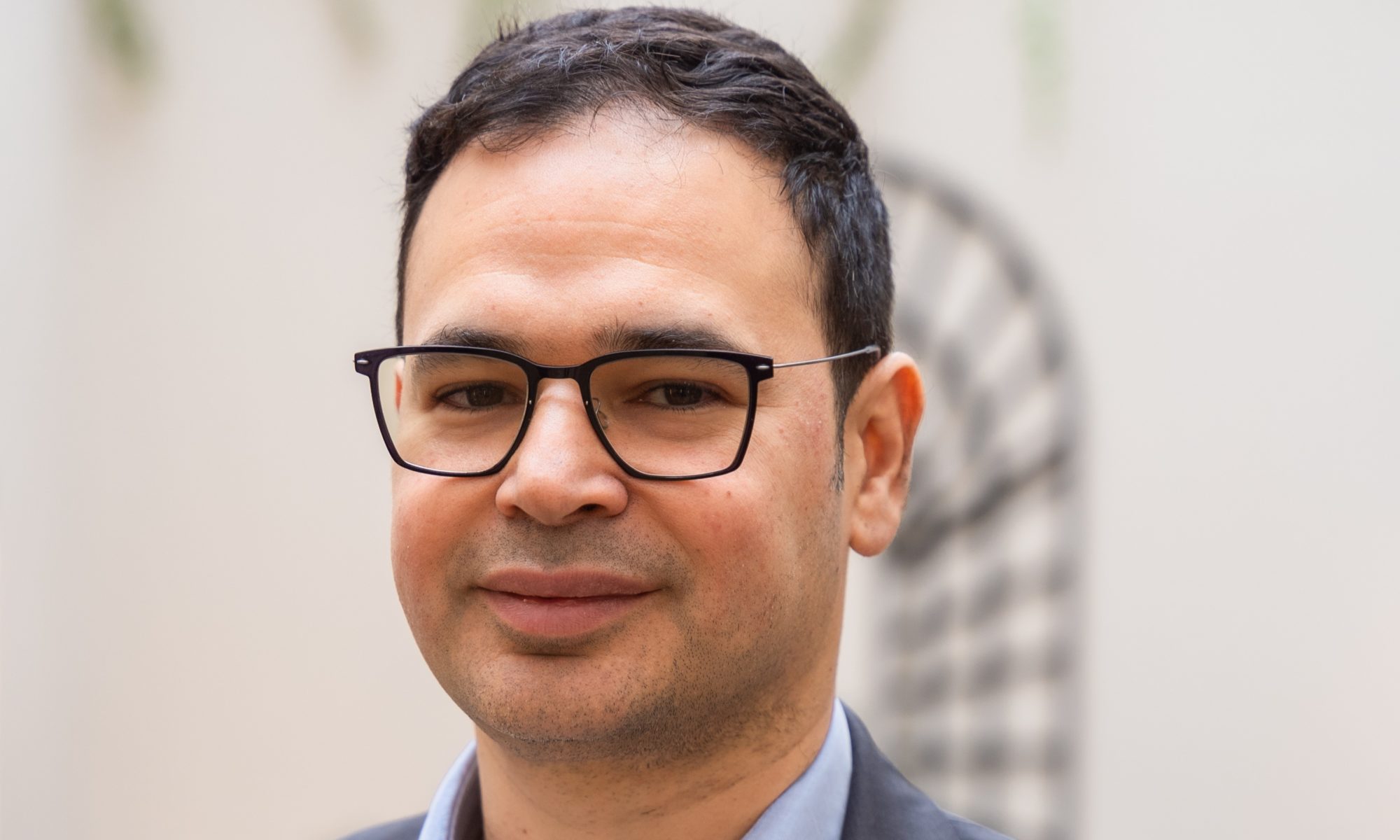
Director General for Enterprise at the French Ministry of the Economy, Finance and Industrial and Digital Sovereignty. He began his career in 1995 at the Ministry of Defence as head of fighter aircraft programmes, before serving as Chief of Staff to the Director of Aircraft Programmes. In 2002, he joined the Directorate General of the Treasury, where he held several positions, including Deputy Head of the Asia Office, Head of the Africa-Maghreb Office, Head of the Aeronautical, Military and Naval Affairs Office, Secretary General of the Paris Club, and Deputy Director for Bilateral Economic Relations. In 2010, he was appointed Chief of Staff to the Secretary of State for Foreign Trade (Pierre Lellouche), and subsequently Deputy Chief of Staff to the Ministers of Economy, Finance and Industry (Christine Lagarde and François Baroin). In 2012, he returned to the Treasury as Secretary General, before becoming Deputy Director General from 2015 to 2018. In August 2018, he was appointed Director General for Enterprise. An Ingénieur général de l’Armement, he is a graduate of the École supérieure de l’aéronautique et de l’espace (SUPAERO). He is a Knight of the Legion of Honour and a Commander of the National Order of Merit.
Balabanova-Ruleva Radka
Ambassador of Bulgaria to France since February 2024 and Permanent Delegate of Bulgaria to UNESCO. She joined the Bulgarian Ministry of Foreign Affairs in 1997. She has held numerous positions related to European affairs, including at the Permanent Mission of Bulgaria to the European Union in Brussels and within departments responsible for European integration and EU policies. She also served at the Bulgarian Embassy in Paris as First Secretary. She has held senior leadership roles at the Ministry, including Director of External Economic Relations and Development Cooperation, as well as Special Coordinator for cooperation with the OECD. She also served as Deputy Head of Mission in Brussels. She holds a Master’s degree in International Economic Relations from the University of National and World Economy in Sofia and a Master’s degree in European Integration from Sofia University.
Nkulikiyimfura François
Ambassador of the Republic of Rwanda to France since 2022, with accreditation to Spain and Portugal, and designated Ambassador to Italy and Monaco, he also serves as Permanent Delegate to several international organizations, including UNESCO, OIF and OECD. With a background in economics, he has 18 years of experience in development economics and public finance management. He notably served at Rwanda’s Ministry of Finance and Economic Planning as Director of the Treasury and later Director General of Corporate Services. He then joined the African Development Bank, where he worked as an expert in governance and public financial management for several East African countries, overseeing major economic reforms. He also served as Ambassador of Rwanda to Qatar. He holds a degree in industrial economics from Université Paris XIII.
Miklós Tromler
Accredited Ambassador of Hungary to France since December 2025, he has extensive diplomatic experience, notably in Morocco where he served as Ambassador to the Kingdom of Morocco and the Islamic Republic of Mauritania. He also held the position of Dean of the European Diplomatic Corps in Morocco. He previously served in various roles at the Hungarian Ministry of Foreign Affairs and Trade, including in protocol and Asia-Pacific affairs. He began his professional career in international congress management. Alongside his diplomatic career, he has a distinguished background in elite sports. A former professional water polo player, he competed in France, Italy, and Hungary, winning a LEN European Cup and seven French championship titles. He holds an Executive MBA from Corvinus University of Budapest, as well as degrees in management, and is certified as an occupational health and safety expert. He is fluent in Hungarian, French, Italian, and English.
Brian Kingston
President and Chief Executive Officer of the Canadian Vehicle Manufacturers’ Association (CVMA). The CVMA represents Canada’s leading manufacturers of light and heavy duty motor vehicles. Its membership includes Ford Motor Company of Canada, Limited, General Motors of Canada Company, and Stellantis (FCA Canada). Prior to joining the CVMA, Brian was Vice President of Policy, Fiscal and International, at the Business Council of Canada where he led the Council’s economic policy priorities and global engagement. From 2009 to 2012 he served in the federal government with positions at the Department of Finance, Global Affairs Canada, Innovation, Science and Economic Development Canada, the Treasury Board Secretariat, and the Privy Council Office. Brian is active in the non-profit sector including as past president of the Ottawa Economics Association and past chair of the Banff Forum. Brian holds a bachelor’s degree in economics from Carleton University, a master’s degree in international affairs from the Norman Paterson School of International Affairs and an MBA from Ivey Business School.
How Trump’s war with Iran is alienating the Global South
Hiroyuki AKITA, Nikkei commentator
March 19, 2026
US must not let Iran distract it from China
Hiroyuki AKITA, Nikkei commentator
March 8, 2026
Yunus Demirer
Ambassador of the Republic of Türkiye to France, since September 2023. A career diplomat, he has held numerous senior positions within the Turkish Ministry of Foreign Affairs. He served as Ambassador to Iraq (2011–2013), Saudi Arabia (2013–2018), and Slovakia (2021–2023). He also held key leadership roles in Ankara, including Director General for the Middle East and North Africa and Deputy Director General for relations with Iraq, where he played an active role in shaping Türkiye’s regional policy. Earlier in his career, he was posted to several major diplomatic missions, including Baghdad, Brussels (NATO), Bucharest, Washington, and Beirut. He also served as Chief of Staff to both the Undersecretary of State and the Minister of Foreign Affairs, gaining extensive experience in high-level diplomatic coordination and strategic decision-making. He began his career in 1989 at the Ministry of Foreign Affairs, initially working on maritime affairs and later on Caucasus-related issues. He is a graduate of the Faculty of Political Sciences at Ankara University. He speaks French and English.
Wiesław Tarka
Wiesław Tarka is Chargé d’affaires a.i. and Titular Ambassador of the Republic of Poland in France. A career diplomat, he has held senior positions within the Polish Ministry of Foreign Affairs and abroad. He served as Ambassador of Poland to Croatia (2008–2012) and to Sweden (2015–2018). He also held key responsibilities as Undersecretary of State at the Ministry of the Interior and Administration, overseeing European and international cooperation, migration policy, and cross-border affairs. Within the Ministry of Foreign Affairs, he has served as Director of the Foreign Service Inspectorate and Deputy Director of the European Policy Department, contributing to regional initiatives such as the Visegrad Group and the Central European Initiative, as well as the coordination of the Western Balkans Summit. Earlier in his career, he was posted to the Polish Embassy in Stockholm and worked in cultural administration in Warsaw. Mr. Tarka holds a degree in Modern Philology from the University of Warsaw and has an academic background in linguistics. He speaks several languages, including English, German, Swedish, Croatian, French, Ukrainian, and Russian. He has been awarded the Knight’s Cross of the Order of Polonia Restituta and the Order of Prince Branimir of Croatia.
Andrew Haines
Professor of Environmental Change and Public Health at the London School of Hygiene & Tropical Medicine and a leading expert on climate change and health. He is co-principal investigator of the Pathfinder Initiative on a healthy net-zero future, funded by the Wellcome Trust, senior scientific adviser to the Pan-European Commission on Climate Change and Health, and Vice-Chair of the United Nations Independent Panel on the Effects of Nuclear War. He previously served as Director of the London School of Hygiene & Tropical Medicine (2001–2010). Earlier in his career, he was Professor of Primary Health Care at University College London, a general practitioner in inner London, and a consultant epidemiologist at the Medical Research Council. He has also held advisory roles with the World Health Organization, the Intergovernmental Panel on Climate Change, and numerous national and international research bodies. Professor Haines has published extensively on public health, climate change and planetary health. He qualified in medicine at King’s College London and holds an MD in Epidemiology from the University of London.
Jean-Paul Bouttes
Jean-Paul Bouttes, an engineer and economist, is a member of the Scientific Council of the French High Commission for Strategy and Planning. He previously served as Chief Economist and Executive Vice President of Strategy, Prospective and International Relations at EDF (Électricité de France), following his role as Senior Vice President for Industrial Strategy within the Generation Division and several positions in the Group’s General Economic Studies. He has held responsibilities within international energy organizations, notably as a member of the Studies Committee of the World Energy Council and within the World Business Council for Sustainable Development (WBCSD). He has also taught economics at École Polytechnique, where he contributed to the creation and leadership of the Sustainable Development Chair, and at North China Electric Power University in Beijing. Jean-Paul Bouttes is the author of several books, including Energie (PUF 2023), Souveraineté, maîtrise industrielle et transition énergétique (Fondapol 2023) and Nuclear Waste: A Comprehensive Approach (2022). He is a graduate of École Polytechnique and ENSAE.
Étienne Grass
Global Chief AI Officer at Capgemini Invent, author, columnist for Les Echos, and former senior French civil servant. As a recognized expert in healthcare policy and AI‑driven organizational transformation, he teaches at Sciences Po Paris. As graduate of the École nationale d’administration (ENA) and a member of the Inspectorate General of Social Affairs, he previously served as Deputy Chief of Staff to the High Commissioner for Active Solidarity Against Poverty (2007–2009) and as Chief of Staff to the French Minister for Women’s Rights, Urban Affairs, Youth, and Sports (2012–2014). Étienne Grass joined the Capgemini Group in November 2017. He led the Citizen Services teams before overseeing the Group’s sovereign cloud initiative (“BLEU”). He served as CEO of Capgemini Invent France from 2023 to 2025. Since July 1, 2025, he has been leading the Group’s global AI activities. He is the author of several publications, including L’Europe sociale (La Documentation française, 2013), Les Inégalités de santé (Presses de Sciences Po, 2016), and Génération réenchantée (Calmann‑Lévy, 2016).
Margaret Chan
Emeritus Director-General of the World Health Organization (WHO), Dr. Margaret Chan is Dean of the Vanke School of Public Health at Tsinghua University. She began her career in public health in 1978 at the Hong Kong Department of Health, where she became Director in 1994, the first woman to hold this position. During her tenure, she strengthened disease prevention, surveillance, and response systems, and notably managed outbreaks of avian influenza and SARS. Dr. Chan joined WHO in 2003 and was elected Director-General in 2006, serving two terms until 2017. She holds a medical degree from the University of Western Ontario, Canada.
Andreas Schaal
Director for OECD Global Relations and Co-operation, as well as the OECD Sherpa to the G7, the G20 and APEC. He supports and co-ordinates the OECD’s contributions to global governance under the leadership of OECD Secretary-General Mathias Cormann. He and his team implement the OECD Global Relations Strategy, engaging with over 100 partner countries aound the globe at the ministerial level and building a global level playing field by increasing adherence to OECD standards and policies. Andreas’ expertise includes two decades of conceptional and strategic work on foreign affairs, national, international and global economic policy, and global governance. Prior to joining the OECD, Mr Schaal held various positions during his work for the German Federal Government, including: Deputy Director G8 Summit/German Sherpa Office, Federal Ministry of Economic Affairs and Technology; Economic Counsellor, German Permanent Delegation to the OECD, Paris; Vice Chair (elected 2005-2006) of the OECD’s Economic and Development Review Committee (EDRC); and Policy Advisor and Chief of Staff to Parliamentary Secretary of State Siegmar Mosdorf, MP, Federal Ministry of Economic Affairs and Technology.Andreas Schaal is a non-Resident Senior Fellow of the Chongyang Institute for Financial Studies at Renmin University of China (RDCY). He holds a Masters in Public Policy and Public Management from the University of Konstanz, Germany .
Angel Prieto
Head of the Industrial Decarbonization Unit at the French Ministry for the Economy. He oversees the design and implementation of public policies aimed at decarbonizing French industry, including sectoral and technology roadmaps, the design of support schemes, budget negotiations, and European policy engagement. Previously, he served as Head of the State Economic Service for the Auvergne-Rhône-Alpes region and as economic adviser to the Regional Prefect, contributing to regional economic development and supporting the decarbonization of companies. He also worked at McKinsey & Company, where he advised African governments and development banks on energy transition and industrial decarbonization, and at ENGIE, where he contributed to the Group’s climate strategy. Long committed to environmental issues, Angel Prieto is a co-founder of the movement Pour un réveil écologique and led the French delegation to the G7 Youth Summit in 2024, where he was in charge of negotiations on environmental matters. Angel Prieto is a member of the French Corps des Mines and a graduate of École polytechnique.
Hugo Pouzet
French senior civil servant, Hugo Pouzet serves as Deputy Head of the Sustainable Finance, Corporate Law, Accounting and Corporate Governance Unit at the Direction générale du Trésor, within the French Ministry for the Economy, Finance and Industrial, Energy and Digital Sovereignty. A Mining Corps engineer, he held positions during his training across both the public and private sectors, in France and internationally. He notably served as Transformation Project Manager at L’Oréal in Tokyo, and as Decarbonization Engineer at Orano Mining. A graduate of the École normale supérieure and of Mines Paris – PSL, he is also the co-author of a study on drug shortages, analyzing structural vulnerabilities in pharmaceutical supply chains.
Baptiste Poterszman
Deputy Head of the Risk Prevention Division at the Regional Directorate for the Environment of Île-de-France. His role revolves around the implementation of public policies to prevent industrial pollution and risks. Before joining the French civil service, he worked for Neoen, a renewable energy producer, in Sweden, and for the rail company Eurostar in London. He also had the opportunity to work on the issue of drug shortages, with a focus on public policy and supply-chain resilience. He is a graduate of École polytechnique and a member of the Corps des mines.
Mark Malloch-Brown
Mark Malloch-Brown is a Visiting Professor in Practice at the London School of Economics (LSE), a Distinguished Visiting Fellow at the University of Pennsylvania’s Perry World House. He was knighted for his contributions to international affairs, and is currently on leave from the British House of Lords. Mark Malloch-Brown has had a long career in international affairs, development, business, and communications. At the United Nations, Mark Malloch-Brown led the global promotion of the UN Millennium Development Goals as head of the UN Development Programme (UNDP). At the UNDP, and previously as vice president of external affairs at the World Bank, he led reform efforts to increase the impact of both organisations. He later served as Kofi Annan’s chief of staff, and then as UN Deputy Secretary General, before joining the British government of Prime Minister Gordon Brown, as minister responsible for Africa and Asia from 2007 to 2009. Most recently, he was president of the Open Society Foundations, the world’s largest private funder of independent groups working for justice, democratic governance, and human rights.
Integrated Water Resource Management is Key to 21st Century Climate Resilience
Jeremy FAIN, CEO of BWI.
March 2, 2026
PARIS – Since mid-2022, I have had the privilege of leading Blue Water Intelligence, a newspace technology company that designs, develops, and markets a river behavior forecasting service powered by proprietary artificial intelligence technology, operating across four continents. This vantage point offers a unique observatory on the water crises punctuating river basins worldwide. Basin by basin, my journey accross continents has forged a core conviction that shapes our client vision: low-flow tensions are not the root cause of these crises but their stark revealer. In this era of accelerating climate change, such strains stem from a triple dynamic—demographic, economic, and agricultural—resting on a freshwater resource long deemed infinite, now proven finite.
Population Growth and Water Volatility
The paradox is stark: regions with the fastest population growth—especially South Asia and Africa—face the most unpredictable water availability. Megacities sprawl, secondary urban centers boom, and essential needs (drinking, hygiene, mobility, production) cluster in already climate-stressed basins.
In these areas, the dry season has evolved from a mere cyclical low to a moment of reckoning. Falling river flows threaten not just ecosystems but social cohesion, institutional strength, governance quality, and anticipatory capacity. With millions more relying on the same hydro-meteorological uncertainties, even minor supply disruptions risk escalating into major local social and political crises.
Surging Demands in Food and Energy
Demographic shocks extend beyond potable water to fuel consumption economies: essentials, durables, services (health, logistics, digital). Every value chain hinges, directly or indirectly, on water availability—often globally sourced.
Agriculture dominates, claiming nearly 70% of global freshwater withdrawals. Feeding growing urban populations demands higher yields, harvest security, and agro-industries that both consume and pollute water. Meanwhile, energy thirst rises: thermal and nuclear plants require cooling water, hydrocarbon extraction and refining vast volumes, and hydropower ties directly to flows.
This reveals systemic strain: food and energy decisions ripple through water balances, often unaccounted for. Growth and infrastructure carry an implicit “water budget” we have yet to tally. Crises arise not from isolated “water wars” but from development models treating water as a mere input, not the structuring variable.
Irrigation as Demographic Shadow
Facing erratic rainfall from climate disruption, the instinctive response to feeding more mouths is expanded irrigation. States, driven by fiscal urgency, import risks, and food sovereignty, promote irrigated perimeters—via grand hydraulic works (canals supporting arable expansion) or private aquifer drilling. Irrigation peaks in dry seasons, when rivers and groundwater are scarcest.
Each additional irrigated hectare mortgages future river flows or aquifer volumes. Upstream withdrawals starve downstream cities, biodiversity, and energy in low-flow periods. In transboundary basins, this breeds resentment—flow drops seen as upstream hoarding, often from uncoordinated decisions.
Visible disputes over dams, canals, or quotas are late symptoms of unmanaged trajectories. The question shifts: not whether to over-irrigate, but whether irrigation aligns with current and future resource realities.
Water Governance as Resilience Pillar
Positioning freshwater as the 21st century’s most strategic resource is no slogan; it is a clear-eyed assessment of this triple pressure. Demographics, food, energy—legitimate progress drivers—converge on one bottleneck.
Sharing scarcity is insufficient. Freshwater must anchor basin-level arbitrages, transcending administrative borders (that water beautifully ignores) and sectoral silos (water serves all). Practically, basin authorities must balance cities, agriculture, energy, and ecosystems via robust hydrological scenarios, not crisis firefighting.
This demands two quiet revolutions: long-term water governance as systemic regulator, and fine-grained basin digitalization turning uncertainty into manageable risk. Rive basin digitization enables hydrological forecasting to pre-discuss dry-season impacts—days or weeks ahead—for critical uses: potable water, irrigation, energy, ecosystems. Innovative forecasting services emerged precisely from this digitization gap.
From Endurance to Agency
Many basins view low flows as fate—a recurring “crisis season.” Tomorrow’s resilient basins will treat water as strategically as energy or digital infrastructure, aligning demographics, land use, food systems, and energy matrices to realistic water budgets.
Dry-season tensions are neither surprises nor curses, but outcomes of underestimating water’s role in socioeconomic stability. Elevating water as a public policy and investment cornerstone is essential—not to defy low flows, but to avert the chaos they unleash absent root-cause action.
The true divide will pit nations steering freshwater as a long-term strategic asset against those enduring it seasonally, lacking integrated resource governance and basin digitalization.
Why Trump’s solo Yalta is so sinister
Hiroyuki AKITA, Nikkei commentator
February 7, 2026

Is this the end of the Western-led world order?
Widening transatlantic rift benefits Russia and China in Asia
Hiroyuki AKITA, Nikkei commentator
January 31, 2026
TOKYO — The first anniversary of U.S. President Donald Trump’s second term unfolded under the shadow of sharply escalating transatlantic discord, exacerbated by his hard-edged campaign to bring Greenland, a Danish territory, into the American fold.
At this year’s World Economic Forum, held from Jan. 19 to Jan. 23 in Davos, Switzerland, Trump effectively climbed down from his earlier threats of using military force to acquire Greenland, yet he remained adamant about securing control of the world’s largest island, most of it buried beneath an ice sheet.
Seeking to curb Washington’s ambitions, major European countries, including the U.K., France and Germany, sent personnel to Greenland for joint military exercises, further inflaming tensions. Instead of behaving like long-standing partners, the U.S. and Europe are drifting into a semi-adversarial posture.
A “world without the West” is taking shape. That may sound like hyperbole, but the era in which the U.S.-European partnership sets the rules and others simply follow them has receded into history. After consecutive trips to Europe and the U.S. last December, I came away convinced the world is undergoing a drastic shift.
Since the end of World War II, the U.S. and Europe have worked in lockstep to build and steward the global order. The unraveling of that system marks a profound turning point in the postwar era.
Today’s transatlantic rift goes far beyond territorial disputes or strategic disagreements; it cuts to the heart of how each side sees the nation and the world itself.
If this were a human relationship, it would resemble a partnership in which differences in values have grown so deep that trust no longer binds the two sides. Conflicts of interest can be negotiated, but a clash of values is far harder to bridge. As a world sans the West takes shape, the resulting shockwaves could spread, leaving international politics even more unmoored. It is a trajectory that casts a long, unsettling shadow over the global future.
The National Security Strategy, released by the Trump administration on Dec. 5 to guide Pentagon policy, crystallized this divide. Its language toward Europe was so caustic that it no longer sounded as if Washington were addressing an ally.
The document argued, for example, that Europe’s traditional communities and values are being eroded by a rapid influx of immigrants. “Should present trends continue, the continent will be unrecognizable in 20 years or less,” it warned. It also cast doubt on the future of the alliance, asserting that “it is far from obvious whether certain European countries will have economies and militaries strong enough to remain reliable allies.”
With far-right and right-wing populist parties clearly in mind, the strategy went on to praise “the growing influence of patriotic European parties,” which it said “gives cause for great optimism” — a thinly veiled signal of Washington’s support.
Why does Trump harbor such deep hostility toward Europe today and attack it so relentlessly? According to foreign-policy experts and former U.S. officials familiar with the administration’s internal thinking, three primary factors are driving this stance.
First, the administration’s strategy aims to bring a swift end to Europe’s dependence on U.S. military power. The goal is to jolt Europe into accelerating its own defense self-reliance.
The second reason runs deeper. The Trump administration is fortifying U.S. borders through tighter immigration controls and higher tariffs, an effort to reinforce the basic architecture of the sovereign state. From Washington’s viewpoint, Europe is moving in the opposite direction, with individual nations weakening the very concept of sovereignty. The administration fears that continued immigration from the Middle East and Africa into Europe, and the resulting dilution of what they view as Europe’s Western civilizational core, will ultimately erode U.S. interests with serious consequences.
Third, Trump and his inner circle nurse a deep resentment of the European elites who, in their view, treated them with condescension during the first Trump term.
Viewed in this light, far-right and other parties advocating anti-immigration policies and fortified borders are natural allies.
“Trump’s team views the essence of a nation as its borders and sovereignty,” said Walter Russell Mead, a distinguished fellow at the Hudson Institute, a Washington-based think tank. “From this perspective, the European Union, an entity that blurs national borders and pushes political integration, appears to him as a project that dissolves real statehood.”
In the postwar era, shaped in part by the lessons of devastation, the EU pursued integration by lowering borders and enabling the free movement of people and goods. Successive U.S. administrations broadly endorsed this direction.
Trump’s team has upended that consensus, however, moving in a direction that directly repudiates the European model. Predictably, this has triggered fierce backlash across the continent. What angers European politicians and pundits most is Washington’s open encouragement of far-right and right-wing populist parties — forces they regard as existential threats to Europe’s values and political foundations. These parties typically champion anti-immigration and anti-EU agendas, and some carry a noticeable pro-Russian tilt.
“Trump sees Europe’s large-scale acceptance of migrants from the Islamic world as eroding the cultural foundations of Western civilization,” Mead said.
The rise of far-right populist movements across Europe has been striking. In Germany, Alternative for Germany, or AfD, surged to become the second-largest party in the February 2025 general election. In France, Jordan Bardella of the National Rally party now leads polling for the 2027 presidential race, while in the U.K., the hard-right Reform UK is posting record support, outpacing both the Conservative and Labour parties in many surveys.
For leaders in London, Berlin and Paris, a Trump administration that openly bolsters such forces looks less like an ally than a potential adversary. A Labour member of the British Parliament long known for his pro-American stance, captured this sentiment when he told me that, under Trump, the U.S. has shifted from an ally to a hostile nation.
As the Hudson Institute’s Mead said: “In Trump’s view, a Europe that weakens itself both politically and culturally becomes a less valuable ally and increases America’s strategic burden.”
For two days, ending Dec. 12, senior officials and policy experts from the U.S., Europe and other regions convened in the Romanian capital of Bucharest to discuss Ukraine’s future in a forum titled “Rebuilding Ukraine: Security, Opportunities, Investments,” organized by Romania’s New Strategy Center. Several European participants voiced serious concern about the implications of Washington’s changing strategic posture, with one remarking that the newly released National Security Strategy makes clear that Europe must speed up its drive for strategic self-reliance.
With Washington and Europe now embracing national and global worldviews as incompatible as oil and water, the transatlantic fissure is poised to widen this year. In the run-up to this autumn’s midterm elections, the Trump administration is expected to raise its border “walls” even higher and impose still stricter immigration controls.
Meanwhile, Britain, Germany, France and other major European nations face a series of pivotal elections between now and 2029. As far-right and right-wing populist parties continue to expand their influence, Europe’s sense of alarm over the Trump administration is almost certain to intensify.
Compounding the strain on U.S.-Europe relations is a growing divergence in their approaches to Russia. While European governments remain acutely aware that their security is at risk unless Russia’s invasion of Ukraine ends in failure, Trump views China — not Russia — as the primary geopolitical threat. Consequently, the White House has been advocating for a ceasefire between Russia and Ukraine and is considering the possibility of improving ties with Moscow. The strategic trajectories of the U.S. and Europe are, in effect, moving in opposite directions.
If this schism continues to deepen, the consequences for Asia will be profound. Japan, Australia and South Korea have been pushing for closer alignment with NATO in response to the security challenges posed by China and Russia. Their strategy rests on the assumption that China and Russia’s accelerating military cooperation requires deeper, globe-spanning coordination with NATO to contain Beijing and Moscow and reinforce deterrence.
But if the divide widens, cooperation between NATO and the three U.S. allies in the Asia-Pacific could begin to deteriorate. Russia and China, long wary of growing NATO-Asia coordination, would feel emboldened and act more aggressively, further destabilizing the Taiwan Strait and the South China Sea. Strains in U.S.-India ties, caused by the Trump administration’s stance on Pakistan and tariff disputes, come as welcome news to China and Russia, which have been uneasy about the deepening partnership between Washington and New Delhi.
Preventing such an outcome makes it all the more urgent for Japan and other U.S. allies in Asia to sustain close coordination with both the U.S. and Europe.
America’s backyard war: Global lawlessness looms, aiding rival powers
Trump’s Venezuela strike may signal to Moscow and Beijing that force pays
Hiroyuki AKITA, Nikkei commentator
January 10, 2026
TOKYO — At first, U.S. President Donald Trump seemed genuinely intent on securing a place in history as a formidable peacemaker, remembered for a remarkable record of conflict resolution. Yet his Jan. 3 strike on Venezuela and the ensuing capture of its leader, Nicolas Maduro, leave little doubt that Trump can no longer restrain his contrary impulses and is veering toward a far more radical course.
For years, Maduro has suppressed human rights and dismantled democratic institutions under his authoritarian rule, triggering the exodus of millions of Venezuelans. Even within Western democracies, some voices have expressed tacit support for regime change in the South American nation. Still, it is unclear if Trump has a coherent strategy for how events should unfold in the months ahead.
Last December, I met with U.S. foreign policy and security experts familiar with the inner workings of the Trump administration to inquire about the objectives behind its escalating military pressure on Venezuela. Based on those discussions, Trump’s strategy appears set to unfold in two stages.
The first stage aims to expel “hostile forces,” perceived as threats to the U.S. mainland, from strategic locations such as Venezuela. This vision extends beyond the Maduro regime and criminal networks.
“Trump also sees China’s growing presence in Venezuela, which possesses the world’s largest proven oil reserves, as a serious concern,” said a security expert, speaking on condition of anonymity. China is already Venezuela’s largest purchaser of crude oil.
The second stage, as envisioned by the Trump White House, is to significantly weaken the regime in Cuba, which has long been defiant toward Washington. The administration believes that toppling the Maduro government, which maintains close ties with Havana and supplies it with heavily subsidized oil, would effectively isolate Cuba and erode its resilience.
China’s shadow also looms over Washington’s intensified pressure on Cuba. Intelligence suggests that Beijing has established surveillance facilities on the island, a concern that first gained traction during the previous Joe Biden administration and has since grown more acute.
At the same time, Trump is seeking to curb Chinese influence in other strategic zones, including the Panama Canal and Greenland, as part of a broader effort to assert U.S. dominance across the Western Hemisphere.
These strategic imperatives did not emerge in a vacuum; they were already articulated in the U.S. National Security Strategy released last December. Nevertheless, seizing a sovereign nation’s leader by force, along with the potential installation of a U.S.-backed interim administration, defies the imagination of any reasonable observer.
Trump has justified the operation by citing Maduro’s alleged role in trafficking narcotics into the U.S. But that rationale appears tenuous.
“Venezuela is not a major drug-producing country, and much of the narcotics transiting through its territory are bound for Europe,” said another security expert.
The U.S. intervention in Venezuela carries a profound risk: It may accelerate the erosion of international legal norms and push the world closer to a state of lawlessness. At least two dangers stand out.
First, it lends dangerous momentum to the notion that the world’s great powers are entitled to intervene militarily in other sovereign states. Many observers argue that Trump’s action constitutes a clear violation of international law and the United Nations Charter, which forbids the use of force without Security Council authorization or a legitimate self-defense justification. Though Trump asserts he is acting to avert a third world war, his moves might instead be hastening it.
Of particular concern is how this precedent may shape the behavior of China and Russia, both of which have reacted sharply to the U.S. assault on their ally Venezuela. The overthrow of the Maduro regime would entail significant practical losses for China and Russia, which have security and economic interests in the country. While their outrage seems genuine, it also likely masks a calculated expectation of medium-term strategic benefits.
If the U.S. claims the right to intervene militarily in its “backyard” to defend national interests, then Beijing and Moscow may feel emboldened to assert the same prerogative in their respective spheres of influence. It is not hard to imagine Russian President Vladimir Putin seizing on Washington’s actions as propaganda fodder, justifying the invasion of Ukraine with the same rhetoric of national interest and historical precedent.
Beijing could similarly rely on this logic to justify its aggression. China asserts sweeping claims over the South China Sea and regards the Taiwan Strait as part of its “backyard”. There is growing concern that it could escalate its use of force to obstruct the passage of foreign naval vessels in these contested waters.
The second concern is that the recent strategic tilt toward the Americas could dilute U.S. strategic focus and overstretch its defense commitments in the Indo-Pacific and Europe.
Over the past two decades, the U.S. has failed in its attempts to build pro-American regimes in Afghanistan and Iraq following its invasions. This failure has severely eroded U.S. credibility, leaving both Afghanistan and much of the Middle East mired in instability and conflict.
To avoid this failure, the Trump administration intends not to be directly involved in Venezuela’s national reconstruction, but rather to remotely control it by using the remaining forces. But, key figures in the pro-Maduro government and military remain entrenched, and the country harbors numerous anti-American guerrilla groups. Dismantling the Maduro regime may prove far easier than establishing a stable successor government.
For 20 years, as Washington was absorbed by the wars in Iraq and Afghanistan, it failed to craft a coherent strategy to counter China’s rise. In that vacuum, Beijing accelerated its military modernization, and the strategic balance in Asia has shifted decisively in its favor.
Against this backdrop, Trump condemned the Iraq invasion in February 2016. “Going into Iraq, it may have been the worst decision anybody has made, any president has made, in the history of this country,” said the then-Republican presidential candidate at a CNN town hall event. Although the situation differs from the wars in Iraq and Afghanistan, if the Trump administration’s security and diplomatic energy is consumed by the Americas, it will be unable to devote sufficient focus to its China strategy, ultimately risking a “new lost era” for that strategy.
How, then, should responsible powers respond to rising geopolitical risks? The most urgent task is for key U.S. allies, including Japan, European partners, South Korea and Australia, to coordinate their efforts to contain the spread of global disorder.
First, these nations must work to prevent emerging and developing countries from drifting en masse toward blocs led by China and Russia, such as BRICS or the Shanghai Cooperation Organization. To do so, Western democracies must offer compelling alternatives — trade frameworks, technology and climate policy that deliver tangible benefits to the countries of the Global South.
“Japan and other U.S. allies should lessen strategic reliance on Washington by prioritizing intelligence sharing and defense-industrial cooperation, while building stronger regional partnerships and sustaining support for Ukraine,” said Giulio Pugliese, director of the EU-Asia Project at the European University Institute. “Even as these allies shift their strategic focus to their own theaters, coordinated action — including in diplomacy — among like-minded partners will be an important factor to preserving a rules-based order despite U.S. structural power.”
Moreover, to safeguard stability in both the Indo-Pacific and Europe, U.S. allies and like-minded nations must deepen security and economic ties. Expanding joint military exercises and interoperability will be essential to strengthening broad-based cooperation and partnership as well as promoting free trade. Emma Chanlett-Avery, deputy director of the Asia Society Policy Institute’s Washington, D.C. office and the director for political-security affairs told Nikkei, “Japan should deepen bilateral ties with partners like South Korea, Australia and Europe, while taking a more proactive role in multilateral frameworks such as the Quad, G7 and G20. Priorities include advancing security agreements, strengthening defense collaboration, and expanding trade networks through CPTPP and RCEP.”
In the 1930s, the collapse of the rules-based international order had catastrophic consequences, culminating in World War II. We cannot afford to repeat the same mistake.
How a US war in its ‘backyard’ could unsettle Asian security
As priorities shift, Washington may struggle to contain China
Hiroyuki AKITA, Nikkei commentator
November 8, 2025

U.S. President Donald Trump’s shift in defense focus to the country’s “backyard,” particularly the Caribbean, could potentially upend Asia’s security order. (Nikkei montage/Source photos by Reuters)
TOKYO — Rarely do events in the faraway Caribbean send ripples across Asia’s security landscape. Yet beneath those turquoise waters, an unlikely development is unfolding — one that demands serious attention.
Late last month, U.S. President Donald Trump visited Japan and South Korea on an Asian tour, reaffirming the strength of the alliances with the key partners in the region. A sense of relief spread through Tokyo and Seoul, but the future of U.S. military engagement in Asia remains uncertain. Optimism would be premature.
Meanwhile, in what Washington has long regarded as its own “backyard,” the Caribbean — and even parts of the Pacific — the Trump administration is militarizing its counter-narcotics policy like never before. Targeting Latin American drug cartels accused of funneling narcotics into the U.S., it has deployed military assets and conducted more than 10 airstrikes on vessels suspected of trafficking drugs, reportedly killing dozens.
To justify its “war on drugs,” the U.S. government has claimed the targeted vessels were transporting illegal narcotics, yet it has provided no clear evidence to support the allegation. Several American experts in international law have warned that such strikes may violate established legal norms.
Cracking down on drug smuggling is the sovereign right of any nation. What makes Trump’s approach perilous is his shift from law enforcement to a military campaign, one that could escalate into open conflict with Venezuela’s anti-U.S. government under President Nicolas Maduro, all under the pretext of narcotics control.
Trump has already authorized the CIA to conduct covert operations inside Venezuela, and on two occasions in October publicly declared that he might even launch a ground assault on the country.
This may not be mere bluster. According to the Washington think tank Center for Strategic and International Studies, by Oct. 27, the U.S. military had moved five surface combat ships, three amphibious assault vessels and one submarine into the Caribbean.
Some analysts estimate that more than 10% of the U.S. Navy’s globally deployed forces are now concentrated in the region. The Trump administration has also announced that the USS Gerald R. Ford carrier strike group will deploy to the Caribbean. The cutting-edge flattop, previously active in the Mediterranean, is expected to arrive off the coasts of Central and South America this month.
Military experts in the U.S. point out Washington has not dispatched such a large force to the area since the 1962 Cuban missile crisis, the tense 13-day standoff between the U.S. and the Soviet Union that brought the world to the brink of nuclear war. The current buildup even surpasses the U.S. deployment during the 1983 invasion of Grenada.
For U.S. allies such as Japan, South Korea and Australia, there is growing anxiety that a U.S. military entanglement in a “backyard war” with Venezuela could carry serious security repercussions for Asia.

Even as the world’s preeminent naval power, the U.S. faces clear limits. Of its 11 prized aircraft carriers, roughly two-thirds are typically tied up in training or maintenance, leaving only about three available for deployment at any given time.
The military balance in Asia, meanwhile, is already tilting toward China. The Chinese navy now fields more than 370 surface combatant ships and submarines, outnumbering the U.S. Navy in sheer vessel count.
Elbridge Colby, U.S. undersecretary of defense for policy and one of the principal architects of Washington’s defense strategy, has long contended that countering China’s expanding power will require scaling back America’s military commitments in Europe. If that proves true, Washington would have limited capacity to deepen its engagement in the Caribbean while preserving deterrence against China.
For Japan and South Korea, which are both confronting nuclear threats from China and North Korea, this prospect is nothing short of alarming. During a closed-door Japan-South Korea dialogue held in Seoul on Oct. 22 and 23 by the Japan Institute of International Affairs and a South Korean government-affiliated think tank, participants discussed the risks posed by a diminishing U.S. military presence in Asia.
How far does the Trump administration intend to maintain its defensive line in Asia? And what options would Japan and South Korea have if U.S. forces were to withdraw from the Korean Peninsula? Such questions surfaced during the discussions, even extending to the sensitive issue of whether nuclear options should be considered.
Ultimately, the U.S. and Venezuela may avoid a full-scale war, reaching a settlement in which the Maduro regime pledges to strengthen anti-narcotics measures. Alternatively, a political change in Venezuela that replaces the Maduro administration might help avoid war. Even if that is the case, Trump’s extensive naval deployment to the Caribbean would send a stark warning to U.S. allies: Trump’s fixation on “American First” extends beyond trade to the very core of U.S. military strategy.
In the early 19th century, President James Monroe declared the U.S. would steer clear of global entanglements, focusing on its backyard in the Western Hemisphere. This policy became known as the Monroe Doctrine. Some analysts have described Trump’s approach as a “new Monroeism,” though it remains unclear whether it rests on any coherent strategic framework.
Even so, there is little doubt that Trump’s instincts echo elements of Monroeism. In that sense, Washington’s aggressive posture in the Caribbean is both a source of the problem and, arguably, an inevitable consequence of those very instincts. U.S. allies in Europe and Asia should prepare for the possibility that American military presence in their regions could wane.
According to Zack Cooper, a senior fellow at the American Enterprise Institute, Washington appears to be pursuing three separate security strategies at once.
“The Trump administration is following three strategies simultaneously: a spheres of influence approach, prioritization of the China challenge, and retrenchment to the Americas,” Cooper said. “These do not meld together easily.”
Cooper observes that reconciling these conflicting directions is inherently difficult and could destabilize U.S. military engagement worldwide.
“As the military balance shifts towards China, the cost of defending Taiwan is rising,” Cooper said. “I worry that some Americans are rethinking whether defending Taiwan is worth the risk, and increasingly considering an offshore balancing strategy.”
Trump’s Asian tour wrapped up without incident. But for U.S. allies, the moment for vigilance is far from over.
Where will the US draw its defense line in East Asia?
Uncertainty over commitments to South Korea and Taiwan raises new strategic questions
Hiroyuki AKITA, Nikkei commentator
October 5, 2025

From left: South Korean President Lee Jae Myung, Japanese Prime Minister Shigeru Ishiba and U.S. President Donald Trump. Ahead of the expected release of the new U.S. National Defense Strategy, allies in Europe and Asia are increasingly concerned that Washington may announce a major shift in military focus. (Nikkei montage/Source photos by Reuters)
TOKYO — One forthcoming U.S. security policy document has become the focus of intense scrutiny by major European and Asian governments.
U.S. allies are bracing for the anticipated release of the new National Defense Strategy — the central strategic blueprint that shapes U.S. defense policy both domestically and internationally — as early as October. Part of the regular four-year review cycle, the upcoming strategy could signal a significant shift in priorities.
The 2018 document, released during U.S. President Donald Trump’s first term, cast China and Russia as the primary challengers to the international order and pledged that the U.S. would prevail in strategic competition with them. That approach now appears to be in retreat.
By late August, the Pentagon had completed a draft of the new strategy, which is currently circulating within the U.S. government. According to news site Politico, the draft prioritizes defending the U.S. homeland over confronting major adversaries such as Beijing and Moscow, reversing the priorities set out in the 2018 strategy.
If true, such a shift could have far-reaching implications, as a more inward-looking military posture might strain U.S. security commitments in Europe and the Indo-Pacific.
“Since President Trump’s inauguration, the U.S. has prioritized homeland security, increasing border funding and deploying the National Guard and Marines domestically,” said Michael Shoebridge, a former Australian defense and security senior official and director of the think tank Strategic Analysis Australia. “The upcoming National Defense Strategy is expected to formalize these shifts.”
While some revisions may still be made before the strategy is finalized, the overall framework is unlikely to change. Since August, Trump has already been signaling a stronger emphasis on homeland defense.
That month, Trump deployed thousands of U.S. troops to the Caribbean, ostensibly to curb the flow of illegal drugs into the U.S. On Sept. 2, U.S. forces attacked a Venezuelan vessel suspected of carrying narcotics, killing 11 alleged members of a Venezuelan drug cartel in international waters. According to CNN, the administration is even weighing military strikes inside Venezuela to dismantle cartel networks.
By contrast, Trump has shown marked reluctance to mobilize U.S. forces in defense of allies. He recently informed the three Baltic NATO members bordering Russia — Latvia, Lithuania and Estonia — of his decision to cut funding for military projects supporting them, starting in fiscal year 2026. The move is a telling reflection of a homeland-first stance.
Naturally, few would question a sovereign state’s right to prioritize the defense of its own territory. The issue is how much U.S. engagement with allies will be sacrificed in the process.
In Europe, there is a growing sense of resignation that American military support for the region will decline. In contrast, some allies in Asia continue to hold out hope that, in the face of China’s rise, Washington will not only maintain but potentially expand its regional presence.
Sadly, such optimism may prove misplaced. The Trump administration does attach importance to Asia and is unlikely to cut military support there as sharply as in Europe. Yet if the White House doubles down on a homeland-first strategy, even Asia will not be spared.
Debates within the administration point to an unsettling reality: Officials appear to have yet to resolve the question of where to establish the defense line in Asia. This line represents the territorial threshold considered worth defending, even at significant cost, in pursuit of U.S. national interests.
In theory, there are four possible options for an Asian defense line the U.S. could draw. The most favorable outcome for regional stability would be a line encompassing Japan, South Korea and Taiwan, a posture Washington has broadly maintained for decades.
The worst scenario would be a strategic alignment that covers only Japan while excluding South Korea and Taiwan. Such a move could embolden North Korea and China, sharply increasing the risk of conflict.
History offers a stark cautionary tale. In 1950, U.S. Secretary of State Dean Acheson outlined a “defensive perimeter” in the Pacific that included Japan but conspicuously left out both South Korea and Taiwan. The so-called Acheson Line has long been blamed for giving Pyongyang the impression that Washington would not intervene, a perception critics argue helped trigger the Korean War that same year.
The two other possibilities are defense lines that exclude either South Korea or Taiwan. Even if Japan, host to numerous U.S. bases, remained within the perimeter, the omission of either South Korea or Taiwan would carry serious repercussions for Tokyo.
Multiple U.S. security experts said many uniformed officers, along with officials at the Defense and State Departments, support the first scenario. But within the administration’s intervention-skeptical camp, including Vice President JD Vance and others advocating disentanglement from foreign commitments, doubts persist over how deeply the U.S. should commit to defending South Korea or Taiwan.
At one point, a proposal quietly circulating within parts of the administration called for recognizing a South Korean nuclear deterrent in exchange for scaling back U.S. military involvement in the country’s defense against North Korea, according to a source familiar with the matter. The radical idea encountered pushback and was withdrawn, but it could still make a comeback.
On Taiwan, too, Washington is showing subtle differences over strategy, if not fundamental divisions. Hardliners in the military and in Congress, favoring a tough line on China, argue for a firm American commitment to defending the island, which Beijing insists is an inalienable part of Chinese territory. But some senior figures such as Vance demonstrate a more detached stance toward Taiwan’s defense.
Ultimately, the decision on where to draw the line rests with Trump himself. Given his past statements and actions, however, concerns regarding his judgment are difficult to dismiss.
Although he has railed against China over trade, Trump has shown little appetite for deepening U.S. military engagement in Asia to counter Beijing’s military buildup. He has shown no inclination to contest spheres of influence with China by viewing the world as a geopolitical chessboard.
A former senior U.S. official who knows Trump well said the U.S. president does not fully recognize that the U.S. and China have entered a new phase of all-out strategic competition for global leadership.
“U.S. allies must strengthen their own defense capabilities and reduce reliance on U.S. support,” Shoebridge said. “Investing in domestic defense industries and deepening cooperation with trusted partners, especially in the Indo-Pacific, such as between Australia, Japan, South Korea and the Philippines, is now essential.”
Even if Washington has retreated from its role as the “world’s policeman,” the fact remains that only the U.S. military has the capacity to slow the chain reaction of conflicts around the world. For America’s allies, the moment has come to coordinate more closely and apply united pressure to ensure Trump does not allow the defense line to slip backward.
Trump-Modi rift threatens global stability with China in mind
Putin and Xi see right through Trump
US president struggles to contain the risk of widening global conflicts
Hiroyuki AKITA, Nikkei commentator
August 17, 2025
TOKYO — More than six months into his second presidency, the global repercussions of Donald Trump’s renewed leadership are becoming increasingly clear.
On the positive side, Trump has moved swiftly to involve himself in international conflicts, aiming to stem the tide of violence. He has repeatedly declared his intent to prevent a third world war, a desire that appears genuine.
The Trump administration has devoted significant energy to conflict resolution. In Ukraine, the president has pushed aggressively for a ceasefire. On Aug. 15 Trump met with Russian President Vladimir Putin to personally urge him to agree to a ceasefire. In May, he intervened in cross-border clashes between India and Pakistan, helping to broker a truce. Then in July, he facilitated progress toward reconciliation between Thailand and Cambodia during their territorial dispute.
While his pursuit of a Nobel Peace Prize may partly motivate his actions, his efforts to reduce global tensions deserve recognition.
However, whether Trump is truly making the world safer remains an open question. If anything, the past six months point in the opposite direction. He may ultimately be remembered less as a peacemaker and more as a leader who unintentionally intensified global instability.
The problem lies in his piecemeal approach to achieving peace. While touting “peace through strength,” Trump has articulated few coherent long-term strategies. Instead, he relies on ad hoc interventions, clinging to the notion of striking “beautiful deals.” He appears convinced that negotiating ceasefires one by one will somehow secure lasting global peace.
But accumulating ceasefires alone will not stop the spread of war, just as surviving individual typhoons and tornadoes will not eliminate the threat of natural disasters unless the underlying issue of climate change is addressed.
Breaking the cycle of conflict requires more than tactical diplomacy — it demands confronting the “climate change” of global security by revitalizing the rules-based international order and reinforcing the U.S.-led alliance network that underpins global stability.
Trump, however, has pursued a markedly different course, initiating tariff wars against key allies like Japan, South Korea and European nations. These actions have fractured the unity essential to global stability. At the same time, he has undermined the role of the United Nations and other international institutions, further eroding the foundations of the rules-based order.
Russia and China appear increasingly confident in their reading of Trump, trying to turn it to their advantage. What Chinese President Xi Jinping fears most is a cohesive, U.S.-led alliance capable of forming a strategic and technological perimeter around China. Yet Trump’s focus remains fixed on extracting trade concessions, seemingly detached from the broader geopolitical context.
Trump’s mindset became clear during a July 22 meeting with Philippine President Ferdinand Marcos Jr. at the White House, when he told reporters, “I don’t mind if he [President Marcos] gets along with China, because we’re getting along with China very well, we have a very good relationship [with Beijing].”
Such a remark would be unthinkable from a leader who takes the geopolitical rivalry with China seriously. If the Philippines drifts closer to Beijing, the strategic balance in the South China Sea, one of Asia’s most contested regions, could tilt further in China’s favor, accelerating the erosion of U.S. geopolitical influence. Diplomatic goodwill, while important, is not sufficient to secure the interests of the U.S. and its allies in this vital area.
Russian President Vladimir Putin, too, seems increasingly assured that Trump is unlikely to stand in the way of his ambitions. While Putin agreed to meet with the U.S. president in Alaska on Friday to discuss a potential ceasefire in Ukraine, he remains unwilling to soften his hardline stance toward the neighboring country his country invaded in 2022.
“All of Russia’s goals on the Ukrainian issue have remained unchanged,” Putin said on Aug. 1.
Putin’s calculus seems straightforward: Unlike his predecessor Joe Biden, Trump does not see Russia’s aggression as a fundamental threat to the rules-based international order. As such, Putin appears to believe that Trump would have little inclination to defend Ukraine if doing so risked badly damaging its relations with Moscow. He clearly expects NATO’s cohesion to fray under U.S. leadership by Trump, gradually weakening Western support for Ukraine.
Even if Trump eventually imposes new sanctions out of frustration, there is little indication they would meaningfully influence Putin’s behavior.
In a previous article, I warned that Trump’s return could signal a revival of great-power diplomacy reminiscent of the Yalta Conference in 1945. At Yalta, U.S. President Franklin D. Roosevelt, British Prime Minister Winston Churchill and Soviet leader Joseph Stalin made secret deals — without Allied consultation — that shaped the postwar order, including the division of Germany and the creation of the U.N.
My concern was that Trump could once again sideline America’s allies, forging unilateral agreements with China and Russia that define global diplomacy and security through opaque, backchannel dealings.
Regrettably, the current situation is worse than I had imagined. If China and Russia’s strongmen have truly sized Trump up, they could exploit his vulnerabilities to pursue aggressive moves, further destabilizing Europe and Asia.
Trump’s fiercely competitive nature becomes less of an asset and more of a liability. When former Russian President Dmitry Medvedev recently issued nuclear threats, Trump reacted by announcing the repositioning of “two nuclear submarines” to “appropriate regions,” a move widely understood as encroaching on Russian waters. Far from being deterred, the Kremlin likely realized how easily Trump could be provoked and disoriented.
To prevent U.S. foreign policy from veering into dangerous territory, major American allies, such as Japan, South Korea, Australia and key European nations, must coordinate closely and share detailed assessments of Trump’s approach to diplomacy. From there, they should divide the task of engaging Washington, working in concert to manage and mitigate those risks.
For America’s allies, managing the relationship with Washington has become as critical as shaping their strategies toward Beijing and Moscow.
Putin and Xi see right through Trump
US president struggles to contain the risk of widening global conflicts
Hiroyuki AKITA, Nikkei commentator
August 17, 2025
TOKYO — Few could have predicted the recent developments that have plunged the once-vaunted friendship between U.S. President Donald Trump and Indian Prime Minister Narendra Modi into sudden and serious conflict.
For nearly two decades, the U.S. and India have drawn closer in a strategic bid to counter China. But now their once-celebrated partnership shows signs of unraveling, a prospect that would be welcomed both in Beijing and Moscow.
One of the major flashpoints is trade. Washington has been pressing New Delhi to further open its agricultural sector under the threat of higher tariffs, yet bilateral negotiations have stalled.
On Aug. 6, Trump escalated the pressure, announcing that U.S. tariffs on Indian goods would be doubled from 25% to 50% as of Aug. 27, citing India’s massive imports of Russian crude oil.
Modi reacted with fury to what he saw as an outright threat, vowing he would “never compromise” and signaling that India was prepared to stand firm against U.S. pressure.
According to Indian diplomatic experts, Trump recently attempted multiple times to call Modi in search of a compromise. But the Indian leader has consistently refused to take the calls, further heightening Trump’s frustration.
To grasp how things came to this impasse, it is worth recalling the key milestones in the U.S.-India relationship in the past two decades. That story starts in 2008, with the landmark nuclear deal the administration of then U.S. President George W. Bush struck with India, which effectively set the stage for a new era of closer ties. With Beijing’s rise in mind, Washington and New Delhi steadily deepened their cooperation in diplomacy and security.
In 2020, when Indian and Chinese troops clashed in a deadly confrontation along their disputed Himalayan border, the Trump administration offered India unprecedented military support. According to former Indian military officials, India used the U.S. intelligence network to obtain real-time tracking of Chinese troop movements.
It was also under Trump’s first term that the Quad security framework bringing together the U.S., Australia, India and Japan held its inaugural meeting of foreign ministers. Behind the scenes, according to advisers at India’s Ministry of Defense, Washington even explored the possibility of supplying weapons to India should another border conflict with China erupt.
The sudden reversal in the trajectory of U.S.-India relations after this period cannot be explained by tariffs alone. Indian officials and diplomatic experts say the strain runs deeper, pointing to two more fundamental sources of conflict.
The first is a widening gap over how to handle China. Confronted with the constant threat of Chinese military power, India seeks to strengthen cooperation with the U.S. to keep increasingly assertive China in check. But in New Delhi, disappointment has grown over the perception that Trump is far less confrontational toward Beijing than many had hoped.
Despite expectations of a hardline stance, Trump has frequently mixed tough rhetoric with conciliatory gestures, often displaying open admiration for Chinese President Xi Jinping.
Reflecting this posture of strategic ambiguity, he partially relaxed export controls on advanced semiconductors for artificial intelligence bound for China. In another move widely seen as accommodating Beijing, he reportedly blocked Taiwan President Lai Ching-te from making a stopover in New York this August.
Meanwhile, China, like India, has been consuming large volumes of Russian crude oil. Yet Washington shows no sign of imposing punitive tariffs on Beijing, deepening India’s sense of dismay.
At the end of August, Modi is set to visit China for the first time in seven years. Officially, the trip is to attend the Shanghai Cooperation Organization (SCO) summit. Unofficially, it is also viewed as an attempt to ease tensions with Beijing while keeping a close watch on the unpredictable trajectory of U.S.-China relations.
Shivshankar Menon, a former Indian national security advisor, put it this way: “India’s greatest concern is that Mr. Trump might strike a big deal with China on trade and other matters, leaving India out in the cold. To prepare for such a risk, there is a growing sentiment within India that it should avoid provoking China excessively and instead seek coexistence.”
The second source of strain lies in Trump’s showy, deal-driven style of diplomacy. In May, he claimed that it was his mediation that stopped fighting between India and Pakistan, hostilities that carried the risk of nuclear escalation.
Indian officials say Modi was incensed. From New Delhi’s perspective, it was Pakistan’s acceptance of a ceasefire that reflected the deterrent power of India’s military, not Trump’s intervention. India has long held that third-party involvement in its disputes with Pakistan is unacceptable.
Adding insult to injury, Trump invited Pakistan’s army chief, Field Marshal Asim Munir, to the White House for lunch in mid-June, a move that only deepened the fissures between Washington and New Delhi.
Whether this confrontation can be contained may hinge on a key test later this year: the Quad summit, to be hosted in India. There, Trump and Modi will have an opportunity to meet in person in an attempt to repair their fraying relationship.
Even if Washington and New Delhi manage to stage a reconciliation, however, a swift return to their former closeness as allies appears unlikely. Rebuilding trust, once broken, is never easy.
A disintegration of the U.S.-India honeymoon would weaken the Quad framework and disrupt the broader strategy pursued by the U.S. and its partners to respond to the challenges posed by China’s aggressive ambitions. Since the days of former Prime Minister Shinzo Abe, Japan has pressed hard for the U.S., Australia, and India to deepen their coordination, making the Quad a central pillar of Japan’s Indo-Pacific vision.
“Strategic cooperation between the U.S. and India and within the Quad framework are essential for the U.S. to constrain China’s assertiveness and to ensure no one power dominates the region,” said Manish Chand, founder and chief executive officer of the Center for Global India Insights who specializes in Indian diplomacy. “If the Trump administration continues to pressure India over tariffs and its defense and energy ties with Russia, it will affect the Quad and undermine the efforts the US has made to contain China.”
The erosion of the Quad would carry global consequences. Reduced pressure on Beijing could embolden China, while Russia would also stand to gain. For the U.S., India, and many other countries, such an outcome would be deeply unwelcome.
China and Russia collaborate in global spread of surveillance states
Political meddling in Georgia shows threat of growing authoritarian coordination
Hiroyuki AKITA, Nikkei commentator
August 3, 2025
TBILISI, Georgia — It was a rare instance of a senior Chinese official speaking with unusual candor: On July 2, Chinese Foreign Minister Wang Yi told European Union top diplomat Kaja Kallas that he does not want to see Russia lose the war in Ukraine.
The remark was first reported by the Hong Kong-based South China Morning Post, and later picked up by CNN and other outlets. Wang reportedly expressed concern that if Russia were defeated, the U.S. would shift its full attention to China.
Russia is China’s only major-power partner in countering Washington. Beijing cannot afford a weakened Russia if it hopes to replace the U.S.-led global order with one centered on itself.
Compared with China, Russia possesses greater capabilities to undermine democratic societies and inflame internal divisions through sabotage, espionage and information warfare — tactics it has employed consistently since the Soviet Union’s founding following the Russian Revolution in the 1920s.
“Russia’s capacity for covert operations has remained robust since the breakup of the Soviet Union and continues to pose a serious threat, even to American society,” a U.S. intelligence source said.

Tbilisi, the capital of Georgia, has seen a sharp rise in surveillance cameras.
China, by contrast, has poured resources into advanced technology, creating the world’s most sophisticated digital surveillance state and is now one of the top exporters of such systems.
When Russia’s covert operations are paired with China’s digital surveillance power, the threat to democracy is significantly amplified. The situation in Georgia serves as a case in point.
In 2008, the former Soviet republic was invaded by Russia, which still occupies about 20% of its territory. While roughly 80% of the Georgian population supports joining the EU, the ruling Georgian Dream party has grown increasingly anti-Western and is aligning more closely with Russia, driven in part by Moscow’s growing political penetration of the country, which it has achieved through financial influence, intimidation and disinformation.
According to some Georgian lawmakers and former senior officials, the Kremlin is deepening its influence over senior leadership through its association with billionaire former prime minister Bidzina Ivanishvili, a dominant figure in the nation’s political landscape. Concurrently, it is orchestrating widespread information operations aimed at stoking anti-Western sentiment.
Meanwhile, China’s presence is quietly expanding. When I visited the Georgian capital of Tbilisi in late June, the city looked noticeably different from my trip nine months earlier — surveillance cameras had been installed in many prominent locations. They were especially visible near the parliament and along major streets. Surveillance cameras have increased rapidly since last fall, with over 2,000 already installed in Tbilisi, according to one report.
Local political analysts and other experts point to China as a key driver behind the sharp increase in surveillance cameras. In late December, Chinese Ambassador to Georgia Zhou Qian met with then-Deputy Prime Minister and Internal Affairs Minister Vakhtang Gomelauri and agreed to deepen cooperation between their law enforcement and police agencies. In effect, this suggests that China is assisting Georgian authorities in suppressing anti-government activities.
A survey by the Georgian nongovernmental organization Civic IDEA found that the government spent 2 million lari ($740,000) last year to procure Chinese surveillance cameras, more than 13 times the amount spent the previous year. Between 70% and 80% of the cameras installed by government entities are Chinese-made, a recent news report indicates.
The pro-Russian Georgian Dream party claimed victory in last October’s parliamentary elections, despite widespread allegations of electoral fraud. Opposition parties have rejected the results, and citizens have responded with sporadic protests.
Security personnel initially used batons and tear gas as their main tools to suppress protests and rallies, but with the introduction of the Chinese surveillance system, they have also begun adopting Beijing’s methods for cracking down on dissidents.
This year, security authorities have stepped up their use of surveillance camera footage to identify protesters and intimidate them on an individual basis, according to local experts and lawmakers. One protest participant was reportedly fined 5,000 lari — more than twice the average monthly wage, based on the newly enacted law.
“Repression by the authorities has been intensifying,” said Anna Dolidze, founder and chairwoman of the opposition party For the People. “Opposition leaders have been arrested one after another.
“If this continues, Georgia will become a Russian satellite state, like Belarus.”
The extent to which China and Russia are coordinating over Georgia remains unclear. However, both pursue a similar strategy: weakening democracy by expanding their influence in geopolitically significant regions such as Central and Eastern Europe, former Soviet republics and key Global South countries.
At their summit on May 8, Chinese President Xi Jinping and Russian President Vladimir Putin reaffirmed their commitment to work more closely to reshape the U.S.-led global order. This has sparked fears that as Chinese surveillance systems proliferate globally, they may be combined with Russia’s covert networks, further reinforcing authoritarian regimes.
In fact, the National Endowment for Democracy, a U.S. nonprofit organization, reported in February that more than 80 countries have adopted Chinese surveillance systems powered by artificial intelligence.
Despite warming ties, deep distrust persists between China and Russia, which fought a border war in the late 1960s. As the gap in national power continues to widen, Moscow is likely to become increasingly wary of Beijing. Even so, the example of Georgia shows that their coordinated efforts to undermine democracy should not be underestimated.
Trump’s Iran strikes: Masterstroke or political Kabuki?
Middle East turmoil could help China expand its influence in Indo-Pacific
Hiroyuki AKITA, Nikkei commentator
July 6, 2025
ISTANBUL — In a high-stakes, high-risk operation that sent shockwaves around the globe, U.S. President Donald Trump ordered airstrikes on Iran’s nuclear facilities on June 21 — then swiftly pivoted to broker a ceasefire between Israel and Tehran.
Trump hailed the bombing as a strategic triumph, claiming everything went exactly as planned. But skepticism lingers among experts and policymakers, questioning whether the attack truly curtailed Iran’s nuclear ambitions or simply hit pause.
While Trump insists the strikes set back Iran’s nuclear program by several years, the International Atomic Energy Agency has indicated that uranium enrichment could resume within months.
Like the hero of a Kabuki play taking center stage with flourish, Trump touted his handling of Iran as a resounding success, asserting he had followed the “script” to perfection. He cast the operation as proof that decisive military action could achieve what he calls “peace through strength.”
It is plausible that had he not intervened when he did, Iran might have enriched uranium to near weapons-grade levels. Limiting the airstrikes to a single sortie — and thus avoiding all-out war or the collapse of the Iranian regime — was arguably a prudent decision. However, the ultimate judgment of Trump’s actions will largely hinge on whether Iran genuinely abandons its nuclear ambitions in the months ahead.
During the tense period between the U.S. bombing and the ceasefire, I happened to be in Turkey. As a NATO member bordering Iran and viewing it as a key threat, Turkey has been monitoring the situation with both vigilance and calculated distance. Its perspective offers a valuable reference point for countries seeking to assess the unfolding developments.
In conversations with security experts and former officials in Turkey, many welcomed the U.S. airstrikes for directly delaying Iran’s nuclear progress.
“The risks of regional escalation, surging oil prices and refugee flows have so far been averted,” said Sinan Ulgen, director of the Istanbul think tank EDAM. “If Iran’s nuclear development is hindered and it will be forced to return to the negotiation table because of U.S. strikes, this is a positive outcome for Turkey.”
However, when it comes to the long-term outlook, many within Turkey’s diplomatic and security circles express deep concern. Their apprehensions center on three key areas.
First, a widely held assessment is that while the airstrikes damaged Iran’s nuclear facilities, they may not have fully eliminated its stockpiles of highly enriched uranium. If that proves true, some experts warn that rather than abandoning its nuclear program, Tehran may instead accelerate its efforts to develop nuclear weapons as a means of safeguarding the regime.
“I seriously question what was achieved by the airstrikes,” said Selim Yenel, former Turkish ambassador to the European Union and now chairman of the Global Relations Forum, a Turkish think tank. “The Iranian regime still remains intact, and the nuclear material has likely been moved to a secure location.
“All Trump did was flaunt a superficial show of force — in reality, it’s easy to attack from afar.”
Even Ulgen, while crediting the airstrikes with delaying Iran’s nuclear program, expressed concern that the effort to achieve denuclearization may ultimately fall short.
“If Iran’s nuclear facilities have not been destroyed and Iran instead accelerates its nuclear development, another strike could be carried out,” he said. “However, President Trump tends to avoid war and prefers outcomes achieved through negotiation, so it is uncertain whether he would authorize another attack.”
Second, while the airstrikes sent a strong message to countries hostile to the U.S., they also risk fueling nuclear proliferation. Several Turkish security experts predict that nations like North Korea will become even more determined to maintain their nuclear arsenals as a deterrent against potential U.S. attacks. If Iran continues its nuclear development, nearby countries such as Saudi Arabia may be tempted to pursue their own nuclear capabilities in response.
Third, there is concern that the “deception tactics” Trump employed against Iran could backfire. Although he publicly announced on June 19 that he would decide within “two weeks” whether to order airstrikes, he abruptly launched the attack just two days later.
While deception has long been a part of warfare, it is most effective when used sparingly. Trump’s reputation for frequently shifting his diplomatic policy adds unpredictability, which can be both an asset and a liability. The recent airstrikes may have reinforced international skepticism about the credibility of his statements and the extent to which his words can be taken at face value.
“It seems likely that Trump’s remarks and promises have led many countries to view him with deep skepticism,” said a professor at Ozyegin University in Istanbul. “Even if he attempts to pressure or engage in dealmaking with countries like North Korea, Russia or China, they may not take his approach seriously — potentially diminishing the U.S’s diplomatic influence.”
Such concerns are echoed, to varying degrees, among U.S. allies in Asia, including Japan. In many Asian countries, there is keen interest not only in whether Iran’s denuclearization will succeed but also in how U.S. military involvement in the Middle East will develop.
What most worries Japanese security officials is the possibility that the trajectory the U.S. followed after the Sept. 11, 2001, terrorist attacks could repeat itself. At the time, then-President George W. Bush had begun to view a rising China as a strategic competitor. However, just as his administration was preparing to take its first comprehensive steps to counter Beijing, the attacks occurred, abruptly redirecting America’s focus to the Middle East.
What followed were two protracted wars in Afghanistan and Iraq. For more than a decade, U.S. foreign policy was dominated by counterterrorism, while its long-term strategy toward China was relegated to the back burner. It was not until former President Barack Obama’s second term, in the mid-2010s, that Washington fully recognized the risks of this approach. Alarmed by China’s militarization of the South China Sea, the U.S. began implementing measures to curb Beijing’s strategic ambitions.
That said, Trump has shown no intention of committing ground forces to a Middle Eastern war, and today’s circumstances differ significantly from those of the Bush era. Still, it remains uncertain whether the U.S. can quickly scale back its military involvement in the region. In its effort to fully dismantle Tehran’s nuclear program, Israel may once again escalate its attacks on Iran.
If the current Iranian regime were to collapse, widespread turmoil across the Middle East would be almost inevitable. In such a scenario, could the Trump administration truly remain on the sidelines?
A senior Japanese official raised concerns about how the crisis could affect the Indo-Pacific balance of power.
“Provided the U.S. refrains from committing ground forces to the Middle East, the risk of overextending its military resources remains relatively low,” the official said. “However, if instability spreads across the region, there is a real risk that Trump will be unable to devote sufficient attention to China in matters of foreign and security policy, potentially allowing Beijing to expand its geopolitical influence in the Indo-Pacific.”
In Kabuki theater, masterful performances captivate audiences precisely because every gesture is meticulously choreographed and the outcome is known in advance. But diplomacy and security management are not Kabuki. In these arenas, results matter far more than performance. Trump may boast that he acted brilliantly in carrying out the dramatic airstrikes on Iran — but unlike a Kabuki play, there is no script to guarantee the outcome.
« Trump ne veut pas entrer en guerre »
Interview with LeJournal.info, June 27, 2025
Hubert Védrine : « Donald Trump ne veut pas entrer en guerre »
C’est pour des raisons américaines et de leadership que le président américain a attaqué l’Iran, estime l’ancien ministre des Affaires étrangères. Pour ne pas donner un signal de faiblesse. Comme si la démonstration de force spectaculaire comptait pour lui davantage que l’anéantissement du programme nucléaire iranien.
Le vrai vainqueur de l’attaque sur l’Iran est Benyamin Netanyahou ?
C’est trop tôt pour le dire. Le fait que Benyamin Netanyahou ait profité d’un alignement de planètes qui était très favorable n’est pas étonnant. En réalité, il n’y avait pas de risque nucléaire imminent. Mais depuis quinze ans, Netanyahou revendique deux objectifs : éliminer la menace nucléaire iranienne et empêcher qu’il y ait un état palestinien. Il n’allait pas rater l’occasion qui se présentait d’autant qu’en attaquant l’Iran, il était sûr d’être soutenu par l’opinion israélienne, même par ceux qui le détestent et qui condamnent sa politique à Gaza. D’une part, il torpillait les tentatives de négociation de Trump avec l’Iran. Et de l’autre, il obligeait l’Arabie Saoudite et la France à reporter leur initiative en faveur d’un Etat Palestinien.
Quel est le bilan exact de l’offensive ?
Pour l’instant, on n’en sait rien. Mais à minima, un report très durable du risque nucléaire militaire iranien.
Pourquoi Donald Trump s’est-il engagé ?
Il n’était pas évident que Donald Trump s’engage. On a vu ces dernières semaines, contrairement aux démocrates et à la plupart des européens, qu’il n’est pas intimidable par Benyamin Netanyahou.
Je pense que finalement, il a décidé de frapper pour des raisons américaines et pour des raisons de leadership. D’abord, les Etats-Unis n’ont JAMAIS pardonné au régime iranien la prise d’otages de leur ambassade en 1979. Ensuite, ne pas frapper aurait été un signal de faiblesse américaine du point de vue des chinois et des autres. D’où la démonstration de force spectaculaire quel que soit le résultat exact.
Mais je ne crois pas que Donald Trump veuille entrer en guerre. C’est l’un de ses seul point fixe : il a toujours condamné la volonté des démocrates et des néo-conservateurs d’intervenir sans arrêt pour des raisons stratégiques toujours confuses comme pour exporter la démocratie. Ce n’est pas son truc.
D’où ses rodomontades actuelles dont on ne sait pas ce qu’elles veulent nous dire sur les perspectives d’un accord sur le nucléaire. Donc il ne s’est pas fondamentalement contredit.
Y a-t-il un risque d’escalade ?
Je ne crois pas à une escalade générale dont l’Iran n’a pas les moyens. Personne ne sait si le régime des mollahs va survivre à ce choc. Mais tous les connaisseurs de l’Iran pensent que si le régime finit par s’effondrer, ce sera suivi par une longue période de chaos, si ce n’est de guerre civile.
En quoi, cela rebat-il les cartes au Proche-Orient ?
Déjà avant, la suprématie israélienne était évidente. Les accords d’Abraham avec cinq pays (Israël, Emirats, Bahrein, Soudan, Maroc) qui sont une coalition anti-iranienne, avaient reconfiguré la situation. Au risque de surprendre, je ne pense pas que l’attaque sur l’Iran bouleverse à nouveau la configuration régionale sauf s’il devait y avoir une avancée sur le vrai sujet, à l’origine de tout qui est le non-règlement de la question palestinienne.
Benyamin Netanyahou est dans une position historique. Il pourrait se métamorphoser en un vrai grand homme s’il revenait à la stratégie courageuse d’Isaac Rabin d’accepter un compromis territorial et donc un petit état palestinien. Le problème est connu : il a consacré toute sa vie politique à ce qu’il n’y en ait jamais. Netanyahou est l’anti-Rabin absolu et ses alliés extrémistes veulent éliminer les palestiniens comme les américains ont éliminé les indiens.
Je rappelle d’ailleurs que Donald Trump admire le président américain Andrew Jackson qui avait déporté à l’ouest du Mississipi tous les indiens qui vivaient à l’Est.
L’autre hypothèse est que Donald Trump veuille relancer les accords d’Abraham et qu’il a besoin pour cela de convaincre enfin l’Arabie Saoudite de s’y engager. Les dirigeants arabes sont certes indifférents au sort « atroce » des palestiniens mais je ne crois pas que le premier ministre saoudien Mohammed ben Salmane (MBS) puisse prendre ce risque s’il n’obtient pas quelque chose pour les palestiniens. Il n’avait rien demandé avant le 7 octobre mais la situation a changé. Il pourrait peut-être faire comprendre à Donald Trump qu’il faut remettre dans le jeu une autorité palestinienne entièrement nouvelle. Ce qui est encore plus important que la question iranienne.
Pendant ce temps, l’Ukraine est livrée aux Russes ?
L’Ukraine n’est pas plus livrée aux russes qu’avant mais l’Ukraine n’est pas plus en état qu’avant de reconquérir les territoires occupés par la Russie. La question reste la même : est-ce que Trump va imposer un gel du conflit dans conditions mauvaises ou très mauvaises pour l’Ukraine. Cela dépend en partie de la capacité ultérieure des européens de l’alliance, et quand même des Etats-Unis, à transformer l’Europe en une sorte de porc-épic qui dissuaderait toute nouvelle agression.
A cet égard, je considère que le sommet de l’OTAN a été un coup pour rien. Les alliés ont dû prendre des engagements d’augmentation de leurs dépenses de défense dans la plupart des cas intenables, et de toute façon, aux yeux du système américain, ce sont des budgets supplémentaires avec lesquels les européens devraient acheter des armes aux Etats-Unis.
Par ailleurs, il n’y a pas d’avancée dans le sens d’un pilier européen de l’alliance, ce à quoi le président Macron s’est employé de façon louable ses dernières semaines avec les dirigeants allemand, anglais et polonais.
C’est pourtant la voie de l’avenir.
Le droit international est bafoué, la force consacrée, celle d’Israël et des Etats-Unis ?
Je ne veux chagriner personne mais vous auriez du mal à me citer un seul conflit contemporain qui ait été réglé sur la base du droit international. Si c’était le cas, il y aurait un petit Etat palestinien démilitarisé depuis trente ans. Et Vladimir Poutine n’aurait pas envahi l’Ukraine. C’est évidemment un principe philosophique incontestable mais c’est plutôt un objectif qu’une réalité.
Cela dit, les dizaines de milliers de personnes dans le monde qui travaillent à la prise en compte du droit international, méritent d’être saluées, car elles contribuent modestement à ce que le monde soit moins cruel. Mais c’est une très longue route.
Quel sera le nouvel ordre géopolitique mondial ?
Les européens qui se sont fait longtemps des illusions sur la communauté internationale, l’Occident etc .. sont bien obligés de constater, ce que les autres pays du monde n’avaient jamais oublié, à savoir que les rapports de force déterminent tout.
Et que les Etats-Unis restent une hyper-puissance surtout pour leurs voisins et pour les européens. Il faut intégrer tout cela, examiner comment, domaine par domaine, agir quand même avec Donald Trump, ou sans lui, voire contre lui (sur la transition écologique).
Il n’y a donc pas de miracle. S’ils veulent peser un jour, les européens doivent se redresser.
By Valérie Lecasble
https://lejournal.info/article/hubert-vedrine-trump-ne-veut-pas-entrer-en-guerre/
Will China succeed in building a parallel order to US dominance?
Beijing steps up their game in bid to secure international mediation body
Hiroyuki AKITA, Nikkei commentator
June 15, 2025
SINGAPORE — Few now dispute that the U.S. and China have entered a new cold war. The pressing question is whether these two superpowers, locked in an escalating rivalry, can manage their competition and prevent tensions from spiraling out of control.
Recent developments have only heightened these concerns. China is increasingly working to challenge the U.S.-led international order and establish a parallel system more closely aligned with its own interests.
This troubling trend became evident at this year’s Asia Security Summit, known as the Shangri-La Dialogue, held in Singapore through June 1. Hosted annually by the London-based International Institute for Strategic Studies, a think tank focused on security policy, the conference brings together defense ministers and senior military officials from the U.S., Europe and Asia.
Since 2019, China has consistently sent its defense minister to this high-profile forum, except in 2020 and 2021 when the event was canceled due to the COVID-19 pandemic. Beijing aims to use the platform to achieve two key objectives: to articulate its stance on contentious issues such as Taiwan and the South China Sea, and to soften its image as a regional and global threat.
Successive U.S. defense chiefs have attended the forum, often using the opportunity to hold sideline talks with their Chinese counterparts. In this way, the Shangri-La Dialogue has served as a fragile but crucial conduit between the military leaderships of two increasingly adversarial nations.
This year, however, marked a dramatic shift: China did not send its defense minister — or even a top-ranking uniformed official. Instead, it was represented by Rear Adm. Hu Gangfeng, vice president of the People’s Liberation Army National Defense University.
In effect, Hu lacks the authority to speak on behalf of the Chinese military as a whole, rendering China’s presence largely symbolic. In previous years, Chinese delegations engaged with the media, but such interactions were markedly limited this time.
According to sources close to the organizers, a program slot was left open until the final moment in the hope that China’s defense minister would attend. Beijing’s decision to forgo participation in the dialogue raised eyebrows and quickly became a dominant topic of conversation during coffee breaks and meals throughout the summit.
In response to inquiries about the downgraded delegation, Hu stated that China sends representatives of varying ranks depending on the year, describing this year’s participation as part of “normal” arrangements. However, Western participants offered a different interpretation, with analyses generally falling into two main camps.
One explanation points to China’s complex domestic political landscape. Under President Xi Jinping’s leadership, a sweeping anti-corruption campaign has unsettled the military establishment, leading to the downfall of several senior officers.
He Weidong — the second-highest-ranking uniformed officer and vice chairman of the Central Military Commission — has not made a public appearance in nearly three months, and his whereabouts remains unknown. In November, Miao Hua, then head of the commission’s Political Work Department, was suspended and placed under investigation for “serious violations of discipline.”
Both officials are reportedly under scrutiny for corruption. In this climate, many observers believe that China’s top military leadership is in no position to take part in major international forums.
The other interpretation emphasizes external factors. The tariff war launched by the administration of U.S. President Donald Trump has sparked global backlash and diminished America’s international standing. From this perspective, Beijing may have calculated that China can afford to forgo Western-led forums without risking diplomatic isolation.
Both explanations are certainly relevant, but the latter may offer a more accurate reading of the situation, especially given that Xi’s military purges are not a recent development.
One notable development reinforces this interpretation: China has moved to establish the International Organization for Mediation (IOMed) in Hong Kong, an international body focused on dispute resolution and clearly positioned as a rival to existing global conflict-settlement mechanisms.
In a pointed symbolic move, the signing ceremony for the organization’s founding was held in Hong Kong on May 30 — the opening day of the Shangri-La Dialogue. The event was attended by Chinese Foreign Minister Wang Yi, a member of the Communist Party’s Politburo, along with representatives from numerous countries. Thirty-two countries, largely from emerging and developing regions, signed the convention that established the organization.
In a broader perspective, the establishment of the IOMed signals a new phase in China’s diplomatic strategy as a major power on the world stage. Until around the 2010s, China sought to expand its global influence by increasing funding and personnel contributions to United Nations institutions. In a strategy often likened to a hermit crab occupying an empty shell, Beijing attempted to embed itself within the existing international system dominated by the U.S. and its European allies.

Over the same period, however, China began shifting to a second phase: constructing its own parallel economic architecture. This included high-profile initiatives such as the Belt and Road Initiative, a vast infrastructure and development program, and the creation of the Asian Infrastructure Investment Bank.
Now, with the launch of the IOMed, China appears to be entering a third phase — one focused on establishing its own international institutions not only in the economic sphere but also in the political and diplomatic realms.
China already engages in regional cooperation through frameworks such as the Shanghai Cooperation Organization. However, the establishment of the new mediation body represents a shift of different dimension — it positions China not just as a participant, but as a leader in international conflict resolution, signaling a far greater level of ambition.
If China’s initiative genuinely contributes to reducing global conflicts, it should not be dismissed outright. Yet serious questions remain about the country’s fitness to lead international mediation.
Established institutions such as the International Court of Justice and the Permanent Court of Arbitration already serve as forums for resolving inter-state disputes. In 2016, the latter issued a landmark ruling rejecting China’s sweeping territorial claims in the South China Sea. Beijing, however, dismissed the verdict as “nothing but a scrap of paper” and has refused to comply.
Doubts also remain about the suitability of Hong Kong as the headquarters for the IOMed, an institution that must be perceived as impartial to be effective. The “one country, two systems” framework, which once promised autonomy for the territory, has been steadily eroded. Beijing’s tightening control over Hong Kong only deepens skepticism regarding the city’s ability to serve as a neutral and independent host for an international organization.
“A multipolar world order is already a reality,” said a member of the Chinese delegation to the Shangri-La Dialogue. “The power gap between the U.S. and China is narrowing, and China is poised to play an increasingly prominent role on the global stage.”
In his debut speech at the forum in Singapore, U.S. Defense Secretary Pete Hegseth underscored Washington’s resolve to counter what he described as the “real” security threat posed by China in the Indo-Pacific. He emphasized the U.S. commitment to deterring any aggression against its allies and partners in Asia. “But if deterrence fails, and if called upon by my commander in chief, we are prepared to do what the Department of Defense does best — fight and win — decisively,” he said.
As the contest over the global order intensifies, the risk of economic and military confrontation becoming irreconcilable grows. In 1940, Japan — seeking to challenge the Anglo-American-led international order — put forward the concept of the “Greater East Asia Co-Prosperity Sphere.” One year later, in December 1941, it launched a war.
If China’s efforts to build a parallel world order continue to accelerate, global polarization will deepen — and so too will the cold war between the U.S. and China. With that, the risk of a hot war could intensify.