24.11.15
VIDEO – Dr. Arkebe’s interview at the World Policy Conference
Pour un monde raisonnablement ouvert
24.11.15
VIDEO – Dr. Arkebe’s interview at the World Policy Conference
24.11.15
IRIB- La diplomatie mondiale bouge, et nous allons essayer de suivre ça de près, en nous concentrant sur les faits, qu’ils plaisent ou ne plaisent pas.
L’événement d’hier, c’était la rencontre, à Téhéran, entre Vladimir Poutine et l’Ayatollah Ali Khamenei, et le message est clair : une démonstration d’unité, qui va bien au-delà de la crise syrienne, pour des pays, qui sont alliés, et, souvent, concurrents.
La Syrie…
Cette visite intervient, à un moment très particulier, c’est-à-dire, deux jours après la résolution du Conseil de sécurité, qui écarte l’action militaire internationale et invite les Etats à agir, militairement, contre les groupes terroristes, en Irak et en Syrie, mais en coopération avec les gouvernements. Une résolution, qui équivaut à une démission de Fabius, et signe le renversement des alliances de la France.
Sur la question syrienne, les deux pays affichent leur unité, et ceux qui souhaitaient une prise de distance avec le régime syrien, pour répondre au camp occidental, qui commence à relativiser le départ de Bachar al-Assad, en sont pour leurs frais. En cela, la rencontre n’est pas une révélation, mais une confirmation, alors que les troupes iraniennes sont présentes, au sol, à côté de l’armée nationale syrienne, et que l’Iran et la Russie coopèrent militairement.
Pour Poutine, «personne ne peut et ne doit imposer de l’extérieur au peuple syrien des formes quelconques de gouvernance de leur Etat ou dire qui doit le diriger. Ce n’est qu’au peuple syrien d’en décider». Khamenei répond en écho: «Bachar al-Assad est le Président légal et élu par le peuple syrien, et les Etats-Unis n’ont pas le droit d’ignorer ce vote et ce choix. De plus, si les terroristes ne sont pas anéantis, ils vont étendre leurs activités destructrices, en Asie centrale, et dans d’autres régions».
Daech, en Syrie, n’est qu’une partie du problème. Lors d’un rencontre russo-iranienne, Il faut ajouter l’Irak, le Yémen et le Caucase,… et mettre en cause, clairement, les Saoudiens. Le vice-ministre des Affaires étrangères, Hossein Amir-Abdollahian, principal négociateur iranien, à Vienne, était, dimanche, à Montreux, lors de la World Policy Conference, pour dire : «L’Arabie saoudite a utilisé des terroristes, pour renverser Bachar al-Assad, elle a donné des moyens militaires, en Libye, et met la pression sur le Yémen, depuis sept mois».
Ces deux Etats se retrouvent, dans cette approche globale, et ils feront tout, pour assumer leur retour, au premier plan, sur le Moyen-Orient.
Un accord très large
L’accord s’est, également, exprimé, sur trois autres plans.
Le premier est celui du transfert de systèmes de missiles S-300 à Téhéran, réglé par un décret, daté d’hier. L’ambassadeur d’Iran, en Russie, Mehdi Sanaï a confirmé que «l’Iran et la Russie ont signé un nouveau contrat, et la procédure de livraison des S-300 a commencé».
Le deuxième est la levée de l’interdiction de vente et de livraison de matériel technologique lié au nucléaire, notamment, pour les sites nucléaires de Fordow et d’Arak, en conformité avec la résolution de l’ONU, n° 2231, faisant suite à l’accord nucléaire entre l’Iran et les grandes puissances. Moscou autorise, également, «l’exportation, depuis l’Iran, d’uranium enrichi, d’un volume supérieur à 300 kg, contre le transfert vers l’Iran d’uranium naturel».
Le troisième est l’accord trouvé, lors du sommet du Forum des pays exportateurs de gaz, (FPEG, douze pays membres), de Téhéran, auquel, outre MM. Poutine et Ohani, assistent les présidents du Venezuela, Nicolas Maduro, de la Bolivie, Evo Morales et du Nigeria, Muhammadu Buhari.
L’Iran possède des réserves considérables, évaluées à 33 trillions de mètres cubes, et la levée des sanctions internationales, qui sera effective, en 2016, suite de l’accord nucléaire de juillet, va permettre d’augmenter sa production. Selon l’accord qui se dessine, l’Iran passerait du chiffre actuel de 173 milliards de mètres cubes de gaz, par an, essentiellement, destinés à son marché intérieur, à un objectif de 600 milliards, bouleversant le marché des exportations.
Enfin, le ministre russe de l’Économie, Alexeï Oulioukaïev, a déclaré qu’après une année de récession, due à la baisse des prix du pétrole et aux sanctions prononcées pour la situation ukrainienne, l’économie russe avait retrouvé une croissance de 0,6%, en 2014.
Le message est, donc, celui d’une union forte entre la Russie et l’Iran, deux pays, qui n’ont jamais eu des relations faciles. Ces deux Etats, qui ne peuvent prétendre à une mainmise sur le Moyen-Orient, vont chercher à se placer au cœur des solutions, qui sont à trouver, et la question syrienne n’est qu’un élément d’un redéploiement, qui va prendre de l’ampleur. Les États-Unis et les pays européens, qui s’estimaient, il y a peu, suffisamment; puissants; pour sanctionner ces Etats; qu’il fallait mettre à la raison – car l’Ordre occidental avait vocation à tout dominer – se retrouvent face à un défi : considérer ces Etats, comme des puissances, reconnaître ces peuples et ces grandes civilisations, comme des alter ego, et reconstruire une politique étrangère.
24.11.15
Ethiopia — World Policy Conference TV: Interview with Arkebe Oqubay, PhD
Ethiopia
World Policy Conference TV: Interview with Arkebe Oqubay, PhD
© World Policy Conference TV
Arkebe Oqubay, Minister and Special Advisor to the Ethiopian Prime Minister
24.11.15
VIDEO – Interview with Dr Akebe Oqubay
Ethiopia World Policy Conference TV Interview With Dr.Arkebe Oqubay
24.11.15
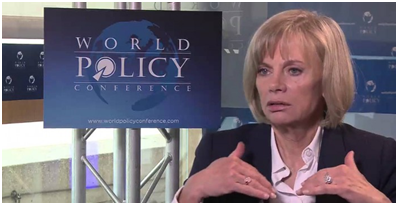
Toutes les sessions de travail de la World Policy Conference à Montreux se sont focalisées sur les dossiers ayant un lien direct avec le terrorisme mondial en passant par le Moyen-Orient, a révélé le quotidien libanais l’Orient Le Jour.
Rien n’a été omis lors des travaux de cette 8e édition de la Conférence sur la gouvernance mondiale (la World Policy Conference) qui s’est tenue du 20 au 22 novembre à Montreux, au bord du lac Léman, en présence d’une centaine de personnalités du monde politique, diplomatique, académique, économique, financier et de la presse. Tout les dossiers liés au terrorisme ont été évoqués et largement débattus, notamment la situation au Moyen-Orient, la guerre syrienne, les rapports avec l’Iran et le blocage du processus de paix israélo-palestinien, selon L’Orient-Le Jour.
Cette session placée sous le thème de «l’avenir du Moyen-Orient» a axé ses débats sur la propagation inquiétante du terrorisme et les moyens pour éradiquer ce fléau. Lors des débats, tous les participants ont été unanimes à déclarer qu’il est devenu nécessaire la mise en place d’une action commune contre ce terrorisme. Un point sur lequel a insisté la présidente de la commission parlementaire française des Affaires étrangères, Élisabeth Guigou, appelant «l’Europe, l’Afrique et le monde arabe, jusqu’au Liban, à agir ensemble pour faire face à l’ennemi commun». «Les avenirs de l’Europe, du monde arabe et de l’Afrique sont liés», a-t-elle affirmé. Il en est de même pour la lutte contre la pauvreté et le chômage «qui sont le terreau de l’extrémisme». Appuyant les actions militaires, Mme Guigou a relevé qu’«une action au sol sera en définitive nécessaire afin de lutter contre le terrorisme de Daech», précisant toutefois qu’«une telle opération ne pourrait pas être l’œuvre de la France, mais elle devrait être du seul ressort des puissances de la région».
Abondant dans le même sens, plusieurs participants ont déclaré que la responsabilité des efforts visant à lutter contre le terrorisme qui constitue une menace pour le monde, doit être partagée par l’ensemble des pays.
Le conflit syrien a été également évoqué lors de cette conférence par plusieurs participants qui ont souligné la volonté conjointe des différents acteurs internationaux et régionaux, de trouver une solution politique en mettant en place notamment un cessez-le-feu durable. A ce sujet, Vitaly Naumkin, membre de l’Académie des sciences russe et directeur scientifique de l’Oriental Studies Institute, a relevé que «cette volonté commune s’est exprimée lors de la dernière conférence de Vienne consacrée à la Syrie». «Mais comment parvenir à cette cessation des combats?», s’est-il interrogé.
Le problème de l’afflux sans précédent de réfugiés qui a incontestablement favorisé la vague de terrorisme en l’Europe ces derniers jours, a été soulevé par la plupart des intervenants. Ce sujet a poussé de nombreux responsables et de commentateurs politiques à prendre des mesures strictes pour faire face à ce problème, notamment rétablir un contrôle draconien aux frontières de la zone Schengen.
23.11.15
IRIB- Pour le vice-ministre iranien des Affaires étrangères chargé du département arabo-africain, la situation actuelle du Moyen-Orient traduit une transition politique et sécuritaire pour passer à un nouvel ordre.
S’exprimant lors de la Conférence sur la gouvernance mondiale (World Policy Conference, WPC), à Montreux en Suisse, le vice-ministre iranien des Affaires étrangères, Hossein Amir-Abdollahian a déclaré que de nombreux problèmes du passé restaient encore non-réglés dont le plus important était l’ingérence récurrente des puissances extrarégionales dans les affaires des pays du Moyen-Orient. « Le Moyen-Orient se trouve actuellement dans la phase de transition vers le nouvel ordre sécuritaire et le secret de l’efficacité de ce nouvel ordre est la coopération collective des gouvernements et la prise en compte des revendications légitimes des peuples de la région », a déclaré Amir-Abdollahian. Dans une autre partie de son discours consacré au terrorisme, il a affirmé que les crimes commis par Daech confirmaient le fait que le grand danger principal contemporain était la mutation des organisations terroristes en de gouvernement terroriste.
23.11.15
MONTREUX, Nov. 23 (MNA) – Iranian deputy FM Amir-Abdollahian speaking at World Policy Conf. on Sun. said the current situation in the Middle East is the sign of a transition from the old political order toward a new one.
Iranian deputy Foreign Minister for Arab-African Affaris Hossein Amir-Abdollahian made the remarks on Sunday during his speech on the topic of ‘Iran and Crises in West Asia’ at the World Policy Conference (WPC) in the Swiss city of Montreux.
He added that in spite of the new shift in the political order in the region, some long-standing issues have remained the same, the most important of which is the repeated intervention of trans-regional powers in the Middle East affairs; “these interferences are often in the form of military intervention which only makes the situation in West Asia all the more complicated,” he said.
“The Middle East in its current transitional phase needs a new security order which can be effective only via endogeneity, collective efforts by all governments and consideration of regional people’s legitimate demands,” said the Iranian diplomat.
Amir-Abdollahian voiced his regret over the fact that national and pro-democratic uprisings in the region had been offset by terrorists and due to the inaccurate understanding of some neighboring countries’ leaders of domestic developments, ‘weapon and terror’ have become the deciding factor for nations’ future as opposed to ‘ballot boxes.’
Elsewhere in his speech, the Iranian official focused on the crisis of terrorism in the region, saying “the atrocities committed by the ISIL bear testament to the fact that the gravest threat in today’s world is if terrorist organizations should turn into terrorist governments.”
“The Takfiri terrorism that has tarnished world security and targeted all nations and religions is the result of interventionist and irresponsible behavior of some regional and trans-regional players in the Middle East and North Africa,” he said.
Amir-Abdollahian stressed that following Iran’s nuclear accord and Syrian government’s agreement to chemical weapons disarmament, now it is time for the international community to ‘seriously put on agenda the demand for the disbarment of the occupying Zionist regime.”
Elsewhere, the Iranian diplomat noted that all countries were needed to put forward a common plan for rooting out terrorism, adding “terrorists’ access to financial resources, advanced weapons and military training camps must be blocked and eliminated. »
Amir-Abdollahian then leveled harsh criticism at Saudi Arabia for its military aggression in Yemen, saying the Islamic Republic backs Geneva talks and UN measures for holding Yemeni-Yemeni dialogues and the formation of an all-inclusive government of national unity in the war-stricken country.
23.11.15
Tehran, Nov 23, IRNA – Iranian Deputy Foreign Minister for Arab-African Affairs Hossein Amir-Abdollahian said the Middle East region is passing from an old political and security order to a new one with many pervious problems including interference of extra-regional powers still unchanged.
Amir-Abdollahian who is in Montreux, Switzerland to deliver a speech at the 8th edition of World Policy Conference (WPC) said such meddlings which are often in the form of military and hardware intervention have perplexed the situation in West Asia.
‘In the current transitory period, Middle East needs a new security order and the password for an efficient new order in the region is paying attention to the legitimate demands of the people. One of the best ways to help settle the problems in Middle East is strengthening regional convergence at state and popular levels,’ he said in his speech themed ‘Iran and West Asia Crises’.
Referring to the menace of terrorism in the region, the Iranian high-ranking diplomat said, ‘Acts of terror by Daesh confirm that the world’s main danger happens when terrorist organizations transform to terrorist states.’
‘To deal with the major problem of terrorism requires software solutions including reducing the number of alienated citizens, ending occupation, finding poverty reduction ways, and improving the political, social and economic infrastructures in the Middle East,’ he added.
He introduced Syria, Iraq, Yemen, and Libya as the centers of crisis in West Asia and as the outcome of interventionist behaviors instead of responsible acts toward domestic issues of the countries.
‘Tehran believes that the regional crises cannot be settled by military options,’ he added, ‘There is no solution to political challenges except the political procedure.’
Amir-Abdollahian also criticized the countries behind the recent non-binding UN General Assembly resolution on the situation of human rights in Syria and said its sponsors are angry that terrorists have failed in Iraq, Syria, and Lebanon.
23.11.15
Montreux (IRIB/IRNA) – Der iranische Vizeaußenminister für arabische und afrikanische Angelegenheiten Hossein Amir-Abdollahian und Wolfgang Amadeus Bruelhart, der Staatssekretär für Nordafrika- und Nahost-Angelegenheiten im schweizerischen Außenministerium haben sich am Sonntag auf ein trilaterales Treffen der Schweiz, Irans und Syriens geeinigt.
Das Treffen sollte in naher Zukunft in Teheran stattfinden, betonten Amir-Abdollahian und Bruelhart bei ihrem Treffen in Montreux. Sie erörterten dabei die aktuelle Lage im Jemen und in Syrien. Der iranische Vizeaußenminister, der zur Teilnahme an der jährlichen Sitzung der World Policy Conference (WPC) in die Schweiz gereist ist, sprach sich ferner für eine Beschleunigung und Verstärkung humanitärer Hilfeleistungen in Syrien aus.
Als Sondergast bei der Schlusszeremonie der WPC-Sitzung hielt Amir-Abdollahian eine Rede über Krisen in Westasien und beantwortete zahlreiche Fragen der teilnehmenden Diplomaten und Universitätsdozenten aus Europa und Westasien über die Entwicklungen in der Nahost-Region.
23.11.15
High-ranking officials from Iran, Switzerland and Syria plan to hold a trilateral meeting in Tehran in the near future to discuss ways to help resolve Syria’s more than four-year-old conflict.
In a meeting between Deputy Foreign Minister for Arab and African Affairs Hossein Amir Abdollahian and his Swiss counterpart in Montreux, the two sides exchanged views on a range of issues, including the latest developments in war-hit Syria, Tasnim reported on Monday.
During the session, it was agreed that Iran, Switzerland and Syria hold trilateral talks on the Arab country’s crisis in Tehran.
Amir Abdollahian traveled to the Swiss city of Montreux to attend an annual meeting of the World Policy Conference (WPC) to express Tehran’s stances on regional developments in a special meeting of the conference on the West Asia situation.
Syria has been gripped by civil war since March 2011 with Takfiri terrorists from various groups, including the ISIL, currently controlling parts of it.
23.11.15
Deputy Foreign Minister Hossein Amir-Abdollahian arrived in the Swiss city of Montreux late Saturday to attend the Eighth World Policy Conference on Sunday. The senior diplomat also was to speak on West Asian developments from the viewpoint of the Islamic Republic in a special session on the sidelines of the conference, Mehr News Agency reported. Amir-Abdollahian was expected to review the situation in Palestine, Syria, Yemen and other crisis-hit regional countries.
23.11.15
Iran and Switzerland agreed on organizing a trilateral meeting on Syrian crisis in Tehran in near future.
Iran’s Deputy Forein Minister for Arab-African Affairs, who is visiting Switzerland to take part in the 8th edition of World Policy Conference (WPC), had a meeting with Swiss Secretary of State for Middle East and North African Affairs Wolfgang Amadeus Bruelhart in Montreux on Sunday.
Reviewing the latest developments of Syria and Yemen, Amir-Abdollahian underlined the need to increase the humanitarian assistance to the people of Syria.
The diplomats agreed upon holding a trilateral meeting in Tehran in few months, which will be held at the presence of Iranian, Swiss, and Syrian officials to discuss the Syrian crisis.
23.11.15
MONTREUX, Switzerland- Iran’s Deputy Foreign Minister for Arab and African Affairs Hossein Amir-Abdollahian has stressed that using terrorism as a tool to serve certain agendas and dividing it into good and bad have worsened the security situation in the Middle East and the entire world.
Abdollahian made the remarks while addressing the annual meeting of the World Policy Conference (WPC) in the Swiss city of Montreux on Sunday.
Press TV reported that Abdollahian described the potential establishment of “terrorist regimes” as the direst threat facing the world today.
“The acts of Daesh confirm that the great and main threat in today’s world is the transformation of terrorist organizations into terrorist regimes,” the Iranian diplomat said.
“It is regrettable that over the past years, the national and democratic uprisings of the people of the region have been derailed by terrorists,” he said, adding that due to certain regional governments’ poor leadership and imprecise understanding of their respective countries’ internal developments, “weapons and terror and not ballot boxes are determining the fate of the nations.”
Takfiri terrorism, which threatens world security and targets all governments, nations and religions, is “the product of the interventionist and irresponsible behavior of certain regional and extra-regional players in the Middle East and North Africa region,” he said.
Deash has nothing to do with divine religions
The Iranian official described Daesh as an “artificial group,” which has nothing to do with any divine religions.
He added that certain countries, due to their “strategic miscalculations,” have tried to use Daesh as an instrument to advance their objectives, but have instead imposed a hefty price on the international community.
Global unity is needed to root out terrorism
Abdollahian said that global unity is needed to root out terrorism. Extremism, terrorism, Takfiri dogma and sectarianism are the major challenges threatening the whole world, said the Iranian diplomat, calling for a collective campaign to address these issues.
The Iranian deputy foreign minister further ruled out military approaches for the settlement of regional crises, including those in Syria, Yemen, Iraq, Lebanon and Libya, saying that the conflicts should be resolved only through diplomatic channels.
H. Mustafa
Swiss FC, D. Burkhalter, urges partners & private sector to support @thegcerf while addressing the @WorldPolicyConf http://bit.ly/1PVxaeq
23.11.15
On November 20, the United Nations Security Council passed a resolution submitted by France on fighting Islamic State. It idealistically calls on UN member states to take ‘all necessary measures’ to fight the terror group and ‘eradicate the safe haven’ it has established in Iraq and Syria. The Russians had submitted a more realpolitik-based and inclusive resolution that would have sought the cooperation of the Assad government, but this was rejected by the United States, the United Kingdom and France, writes Prince Michael of Liechtenstein.The French resolution does not cite Chapter 7 of the UN charter, which allows for the use of military force. And while it does little to change the situation on the ground, the measure does represent movement in the perception of the international community.Islamic State, originally based in Iraq, spun off from al-Qaeda in 2013 and consolidated its presence in Syria as that country spiralled into chaos. The threat it posed was really only recognised in 2014, when it overran the Sunni Arab parts of Iraq, occupied Mosul and committed numerous atrocities, including genocide against the Christians and Yazidis.GIS has repeatedly explained why the US and Iraqi military responses to Islamic State were bound to fail: the US refused to send in boots on the ground and the Iraqi army was not motivated to fight for a failed state represented by the Baghdad government.The real underlying problems in the Middle East have so far been ignored. Nearly all US or European political and military operations in the region have only made the situation worse.These have mostly served as attempts to either enforce structures and principles on Middle Eastern countries that were not tailored to the specific local realities. Examples include attempts to institute ‘Shia democracy’ in Iraq or to bring about regime change in Syria, with disastrous results, or in Egypt, where disaster was only avoided by a military takeover.In the case of Syria, President Bashar al-Assad was identified as the enemy. Under the misguided principle of ‘the enemy of my enemy is my friend,’ the US and Europe supported opposition groups, some of them extremist. This created the ideal environment for the al-Nusra Front, Islamic State and other detestable movements.Circumstances changed with Russia’s military involvement in Syria. There was movement on the diplomatic front and efforts to resume negotiations on Syria re-materialised. The US began to talk about sending in ground troops.The Europeans, especially France, have decided to become more active. It may be we have reached a tipping point. Russia, Europe, the United States – and also Turkey, an essential regional player – have all now become involved.These and other important players in the region, including Iran and Saudi Arabia, joined in the Vienna summit on Syria in mid-November.Finally, they seem to have agreed (mainly based on insistence from Russia and Iran) to include the Assad government in the continuing negotiations. The countries also resolved that national elections should be held under UN supervision once the negotiations have concluded.But democratisation in Syria will only be sustainable in a federal system which ensures that the Sunni majority cannot subjugate the Christian, Alawite and Kurdish minorities. A powerful central government would only risk a repeat of the disaster in Iraq.Russia’s actions have given it significant influence in how events in the Middle East will play out. That may or may not be a positive development, depending on one’s point of view. But the good news is that for the first time since its civil war began, a ray of hope for peace in Syria has broken through.
Itamar Rabinovich on Israeli-Palestinian dialogue – current impasse means moving from 2-state to 1-state solution

23.11.15
High-ranking officials from Iran, Switzerland and Syria plan to hold a trilateral meeting in Tehran in the near future to discuss ways to help resolve Syria’s more than four-year-old conflict.
In a meeting between Deputy Foreign Minister for Arab and African Affairs Hossein Amir Abdollahian and his Swiss counterpart in Montreux, the two sides exchanged views on a range of issues, including the latest developments in war-hit Syria, Tasnim reported on Monday.
During the session, it was agreed that Iran, Switzerland and Syria hold trilateral talks on the Arab country’s crisis in Tehran.
Amir Abdollahian traveled to the Swiss city of Montreux to attend an annual meeting of the World Policy Conference (WPC) to express Tehran’s stances on regional developments in a special meeting of the conference on the West Asia situation.
Syria has been gripped by civil war since March 2011 with Takfiri terrorists from various groups, including the ISIL, currently controlling parts of it.
Source: IRAN-Daily
23.11.15
TEHRAN (Tasnim) – High-ranking officials from Iran, Switzerland and Syria plan to hold a trilateral meeting in Tehran in the near future to discuss ways to help resolve Syria’s more than four-year-old conflict.
In a meeting between visiting Iranian Deputy Foreign Minister for Arab and African Affairs Hossein Amir Abdollahian and his Swiss counterpart on Sunday, the two sides exchanged views on a range of issues, including the latest developments in war-hit Syria.
During the session, it was agreed that Iran, Switzerland and Syria hold trilateral talks on the Arab country’s crisis in Tehran.
Amir Abdollahian has paid an official visit to the Swiss city of Montreux to attend an annual meeting of the World Policy Conference (WPC).
The ranking Iranian diplomat was going to express Tehran’s stances on regional developments in a special meeting of the conference on the West Asia situation.
Syria has been gripped by civil war since March 2011 with Takfiri terrorists from various groups, including the ISIL, currently controlling parts of it.
According to the United Nations, more than 220,000 people have been killed and one million wounded during the conflict.
In the meantime, Iran has remained a close ally of Syria and supports its legitimate government in the face of foreign-backed militancy.
23.11.15
Iran and Switzerland agreed on organizing a trilateral meeting on Syrian crisis in Tehran in near future.
Iran’s Deputy Forein Minister for Arab-African Affairs, who is visiting Switzerland to take part in the 8th edition of World Policy Conference (WPC), had a meeting with Swiss Secretary of State for Middle East and North African Affairs Wolfgang Amadeus Bruelhart in Montreux on Sunday.
Reviewing the latest developments of Syria and Yemen, Amir-Abdollahian underlined the need to increase the humanitarian assistance to the people of Syria.
The diplomats agreed upon holding a trilateral meeting in Tehran in few months, which will be held at the presence of Iranian, Swiss, and Syrian officials to discuss the Syrian crisis.
23.11.15
Iranian Deputy Foreign Minister for Arab-African Affairs Hossein Amir-Abdollahian said the Middle East region is passing from an old political and security order to a new one with many pervious problems including interference of extra-regional powers still unchanged.
Amir-Abdollahian who is in Montreux, Switzerland to deliver a speech at the 8th edition of World Policy Conference (WPC) said such meddlings which are often in the form of military and hardware intervention have perplexed the situation in West Asia.
In the current transitory period, Middle East needs a new security order and the password for an efficient new order in the region is paying attention to the legitimate demands of the people. One of the best ways to help settle the problems in Middle East is strengthening regional convergence at state and popular levels, he said in his speech themed Iran and West Asia Crises.
Referring to the menace of terrorism in the region, the Iranian high-ranking diplomat said, Acts of terror by Daesh confirm that the worlds main danger happens when terrorist organizations transform to terrorist states.
To deal with the major problem of terrorism requires software solutions including reducing the number of alienated citizens, ending occupation, finding poverty reduction ways, and improving the political, social and economic infrastructures in the Middle East, he added.
He introduced Syria, Iraq, Yemen, and Libya as the centers of crisis in West Asia and as the outcome of interventionist behaviors instead of responsible acts toward domestic issues of the countries.
Tehran believes that the regional crises cannot be settled by military options, he added, There is no solution to political challenges except the political procedure.
Amir-Abdollahian also criticized the countries behind the recent non-binding UN General Assembly resolution on the situation of human rights in Syria and said its sponsors are angry that terrorists have failed in Iraq, Syria, and Lebanon.
23.11.15
TEHRAN, Nov. 23 (MNA) – Iran and Switzerland agreed on organizing a trilateral meeting on Syrian crisis in Tehran in near future.
Iran’s Deputy Forein Minister for Arab-African Affairs, who is visiting Switzerland to take part in the 8th edition of World Policy Conference (WPC), had a meeting with Swiss Secretary of State for Middle East and North African Affairs Wolfgang Amadeus Bruelhart in Montreux on Sunday.
Reviewing the latest developments of Syria and Yemen, Amir-Abdollahian underlined the need to increase the humanitarian assistance to the people of Syria.
The diplomats agreed upon holding a trilateral meeting in Tehran in few months, which will be held at the presence of Iranian, Swiss, and Syrian officials to discuss the Syrian crisis.
23.11.15
A senior Iranian diplomat has described the potential establishment of “terrorist regimes” as the most dire threat facing the world today.
“The acts of Daesh confirm that the great and main threat in today’s world is the transformation of terrorist organizations into terrorist regimes,” Iran’s Deputy Foreign Minister for Arab and African Affairs Hossein Amir-Abdollahian said on Sunday.
He made the remarks while addressing the annual meeting of the World Policy Conference (WPC) in the Swiss city of Montreux on Sunday.
“It is regrettable that over the past years, the national and democratic uprisings of the people of the region have been derailed by terrorists,” he said, adding that due to certain regional governments’ poor leadership and imprecise understanding of their respective countries’ internal developments, “weapons and terror and not ballot boxes are determining the fate of the nations.”
Takfiri terrorism, which threatens world security and targets all governments, nations and religions, is “the product of the interventionist and irresponsible behavior of certain regional and extra-regional players in the Middle East and North Africa region,” he said.
The Iranian official described Daesh as an “artificial group,” which has nothing to do with any divine religions.
He added that certain countries, due to their “strategic miscalculations,” have tried to use Daesh as an instrument to advance their objectives, but have instead imposed a hefty price on the international community.
Amir-Abdollahian said that global unity is needed to root out terrorism. Extremism, terrorism, Takfiri dogma and sectarianism are the major challenges threatening the whole world, said the Iranian diplomat, calling for a collective campaign to address these issues.
The Iranian deputy foreign minister further ruled out military approaches for the settlement of regional crises, including those in Syria, Yemen, Iraq, Lebanon and Libya, saying that the conflicts should be resolved only through diplomatic channels.
23.11.15
En marge de la World Policy Conference qui a eu lieu ce week end à Montreux, Hervé Mariton a été interviewé pour parler des liens entre la France et la Russie dans le contexte actuel en Syrie. (En anglais) ==> Vidéo
http://www.herve-mariton.net/herve-mariton-a-la-world-policy-conference/
23.11.15
VIDEO – Interview with Arkebe Oqubay, PhD
Ajoutée le 23 nov. 2015
Ethiopia
World Policy Conference TV: Interview with Arkebe Oqubay, PhD
© World Policy Conference TV
23.11.2015
Dans une conférence internationale à Montreux ce week-end, l’ancien ministre français Hubert Védrine a estimé que l’alliance de circonstance avec la Russie au Moyen-Orient signe la fin de l’après-guerre froide. Récit de François Nordmann
Le terrorisme, les réfugiés, le Moyen-Orient et la situation économique et sécuritaire en Asie, tels ont été les thèmes principaux de la huitième «World Policy Conference» réunie à Montreux le week-end dernier.
Présidée par Thierry de Montbrial, son fondateur, la conférence a été ouverte par le conseiller fédéral Didier Burkhalter. Elle a tenté de dresser un ordre de priorité dans l’enchaînement des crises qui surgissent simultanément dans le monde.
La lutte contre Daech s’intensifie et donne naissance à une nouvelle coalition entre grandes puissances. C’est peut-être un tournant majeur, le plus important depuis la fin de la guerre froide. Pour Hubert Védrine, ancien ministre français des affaires étrangères, l’Occident, qui a bien réagi à la fin de la guerre froide, n’a pas su gérer ensuite l’après-guerre froide. La nouvelle donne qui se dessine avec la Russie permet de sortir de cette époque. Elle découle notamment de l’accord nucléaire avec l’Iran – même si les difficultés de sa mise en œuvre demeurent. Elle laisse bien augurer de la recherche en commun d’une solution politique à la guerre de Syrie, selon la formule esquissée à Vienne.
A la guerre comme à la guerre: l’urgence au Moyen-Orient relègue au second plan les efforts pour régler les conflits tels que celui d’Ukraine. Il s’agit d’abord de détruire Daech et de s’en donner les moyens.
Autre urgence, la crise des réfugiés: il faut avant tout rassurer les Européens qui, bien au-delà de l’extrême droite, ont le sentiment d’être envahis. Pour Hubert Védrine, le rétablissement des contrôles aux frontières de l’Europe, la coopération accrue des polices et un renforcement de Frontex, l’organisme chargé de la sûreté extérieure sont indispensables. On ne doit laisser passer que les réfugiés persécutés. Il faut en finir avec la confusion actuelle, source d’inquiétude pour l’opinion publique, surtout quand on invoque le déficit démographique en Europe pour justifier l’accueil des migrants, ou que l’on appelle à relancer le débat sur l’Europe fédérale, ou encore que l’on veuille remodeler le Moyen-Orient. Ce sont de fausses pistes: c’est le pire moment pour les aborder.
La générosité est évidemment indispensable – sans cela l’Europe n’existe plus – mais elle ne suffit pas: faute de maîtriser la crise migratoire, c’est le droit d’asile lui-même qui sera remis en cause. Schengen reflète les idéaux qui prévalaient à sa création en 1985 mais le système ne fonctionne plus. Il faut donc se concentrer sur le problème de sécurité sans laisser la panique s’installer.
La construction européenne est fragile: les responsables de l’analyse politique des ministères des affaires étrangères de France, de Grande-Bretagne et d’Allemagne en conviennent, tout en soulignant aussi sa résilience à travers les crises. Les partenaires de Londres feront toutes les concessions possibles pour éviter le Brexit qui affaiblirait l’UE. Le referendum était nécessaire, car le débat sur l’Europe a atteint une telle intensité en Grande-Bretagne que la politique du gouvernement en Europe était menacée de paralysie. Mais – comble du cynisme – même si le non l’emporte, les Britanniques souhaitent que l’UE reste forte…
L’Asie se montre apaisée et toute à son développement économique, en dépit des tensions: le ralentissement en Chine est maîtrisé et d’ailleurs relatif. La Chine et ses voisins cherchent une issue à la contestation des frontières maritimes en mer de Chine, et de leur côté les Etats-Unis et la Chine sont tombés d’accord pour empêcher toute escalade si leurs marines devaient s’affronter. D’ailleurs, les deux puissances sont en train de définir un nouvel équilibre durable dans leurs relations. Les présidents chinois, coréen et japonais se sont récemment rencontrés, démarche sans précédent et positive pour la région.
22.11.15
TEHARN, Nov. 22 (MNA) – Iranian deputy FM Hossein Amir-Abdollahian arrived in the Swiss city of Montreux late Sat. to attend the 8th edition of World Policy Conference (WPC).
Iranian deputy Foreign Minister for Arab-African Affaris Hossein Amir-Abdollahian is slated to attend the 8th edition of World Policy Conference (WPC) on Sunday held at Fairmont Le Montreux Palace in the Swiss city of Montreux.
The Iranian diplomat will also elucidate developments in West Asia from the viewpoint of the Islamic Republic in a special and independent session.
Amir-Abdollahian is scheduled to assess and review the situation in Palestine, Syria, Yemen and other crisis-hit countries in the region.
He will also answer questions of political officials, diplomats, professors of the European universities and those of the Western Asia gathered in the conference.
The 8th edition of World Policy Conference began on Nov. 20 and will run through Nov. 22, 2015 in Montreux, Swizerland. The conference covers a wide range of topics including global economic order, Israeli-Palestinian dialogue, Europe’s refugee crisis, and the future of the Middle East, among others.
World Policy Conference (WPC), founded in 2008, is an independent organization which aims to contribute to improving all aspects of governance, with a view to promoting a world that is more open and more prosperous of the diversity of nations. Its annual meeting, which is on a human scale, brings together leading figures from all five continents – political and business leaders, representatives of civil society, academics and journalists – to examine, discuss and suggest constructive solutions to major regional and international challenges.
22.11.15
TEHRAN (ISNA)- Iranian Deputy Foreign Minister for Arab and African Countries Hossein Amir-Abdollahian arrived in Switzerland to join ‘World Policy Conference.’
He is scheduled to outline Iran’s views regarding developments in western Asia.
He would also discuss and evaluate Palestine, Syria and Yemen situations as well developments in other crisis-hit countries.
The Iranian official is going to answer questions of political officials, diplomats as well as university lecturers of Europe and West
Asia attending the conference.
22.11.15
Iman Chairman Ribal Al-Assad recently took part in the final debate at the World Policy Conference in Montreux, Switzerland. The panel was chaired by Dominique Moïsi, Special Advisor at the Paris based Institut Français des Relations Internationales.
Other participants included:
Miguel Ángel Moratinos, former Spanish Minister of Foreign Affairs
Bilahari Kausikan, Policy Advisor in the Ministry of Foreign Affairs of Singapore and Ambassador-at-Large
Narendra Taneja, Chairman of the Energy Security Group FICCI (Federation of Indian Chambers of Commerce and Industry) and President of World Energy Policy Summit
Meir Sheetrit, former Israeli Minister of the Interior, Minister of Housing & Construction, Minister of Finance, Minister of Justice, Minister of Transportation and Minister of Education, Culture & Sport
Renaud Girard, journalist at ‘Le Figaro’ and editor at ‘Questions Internationales’
Mona Makram Ebeid, Egyptian Senator and Member of the Senate Constitutional Committee.
Ribal’s speech covered the topics of Islamic extremism and the ongoing crises in Syria and the Middle East. After speaking, Ribal made the following statement:
« I would like to express my regret that His Excellency the Qatari Foreign Minister was not in the room for the final session as I would have liked him to hear what I have to say but apparently he refuses to be in the same room as me ! And this is Qatar’s top diplomat!
This is despite the fact that I was exiled from my country as a child and have been a vocal critic of the regime all my adult life.
I’m afraid this kind of narrow-mindedness must cast doubt on Qatar’s claims to be committed to democracy in Syria and to inclusive dialogue rather than sectarian division and conflict.
It’s true that I have been critical of Qatar precisely because of its support for extremist groups like al-Nusra, the Muslim Brotherhood and others in my country.
I believe it shows that they are not interested in democracy at all.
On the contrary, they are afraid of a domino effect bringing democracy home to Qatar so they prefer to stoke sectarian conflict in Syria and the region.
So while I regret the absence of His Excellency, these are things that have to be said as I hope all true pluralists and democrats will agree. »
Santé et gouvernance mondiale: C Bréchot B Badré, L Fresco #worldpolicyconf
Total est la seule grande « major » mondiale présente au Moyen-Orient qui n’y dispose pas d’une base de ressources domestiques. – Vahid Salemi/AP/SIPA
Total n’ayant aucune base de ressources domestiques au Moyen-Orient, il est régulièrement amené à trouver des accords avec les pays producteurs.
Des pays du Moyen-Orient en voie de « libanisation », d’autres comme le Yemen, la Libye ou l’Irak où l’Etat a disparu, des rivalités politico-religieuses qui s’exacerbent avec le retour de l’Iran dans le jeu diplomatique et partout une menace terroriste accrue… « Je n’ai jamais vu une situation d’instabilité aussi grande », reconnaît Patrick Pouyanné, le patron de Total. La quatrième « major » mondiale présente la particularité d’être la seule grande à ne pas disposer d’une base de ressources domestiques. « Nous sommes donc amenés à trouver en permanence des accords avec les pays producteurs », ajoute le directeur général du groupe qui s’exprimait à l’occasion de la World Policy Conference réunie cette année à Montreux, en Suisse.
Dans cet environnement instable, le patron de Total avance avec deux boussoles : l’histoire et la géographie. La géographie de l’énergie renseigne sur les rapports de force : seulement cinq pays détiennent les deux-tiers des réserves de pétrole de la planète, le Venezuela, l’Arabie Saoudite, le Canada, l’Iran et l’Irak. « Avec la Russie, le Koweit et les Emirats Arabes Unis, on arrive à 80% des réserves mondiales », rappelle-il. A eux seuls, les pays du Moyen Orient détiennent la moitié des réserves même s’ils ne comptent que pour 30% de la production mondiale. « Ils ne “surproduisent” pas, ce qui fait qu’ils ont le temps devant eux », ajoute Patrick Pouyanné.
La géographie du gaz est également éclairante car deux pays, Iran et Russie, détiennent un tiers des réserves mondiales. « Avec le Qatar et le Turkmenistan, on arrive à 60% », ajoute le patron de Total. Le Moyen-Orient aujourd’hui traversé par des tensions extrêmes possède 40% des réserves mondiales de gaz, l’énergie appelée à croître le plus dans les années à venir. Mais là encore, la région ne « surproduit » pas : ce sont les Etats-Unis et la Russie qui, avec 40% de la production mondiale, sollicitent le plus leurs réserves.
Le poids du Moyen-Orient sur le marché du pétrole et du gaz et l’instabilité politique qui y règne devraient propulser les cours de l’or noir vers les sommets. Pourtant, il n’en est rien et il faut cette fois faire appel à l’histoire pour le comprendre ce paradoxe. « L’Opep a été créée en 1960 pour permettre aux pays producteurs d’échapper à la tutelle des grandes compagnies pétrolières, les fameuses « sept soeurs », qui maintenaient le prix du pétrole très bas, autour de 2 dollars le baril », dit Patrick Pouyanné. Cette stratégie a fonctionné : entre 1973 et 1979, le baril passe de 3 à 40 dollars le baril et les pays du Golfe acquièrent un poids politique inédit.
Mais cette stratégie de l’Opep a « trop bien marché », en quelque sorte, ce qui fait que dans les années 1980 et 1990, la demande chute. « Le pétrole cher a cassé le marché et les pays consommateurs se sont mis à développer des sources d’énergie alternatives ou à développer les zones off shore comme en Mer du Nord ». Le baril atteint un point bas à 10 dollars en 1986 et reste peu cher pendant quinze ans, jusqu’à la fin du XXème siècle.
« Le prix n’est remonté qu’au début des années 2000 du fait du développement de la Chine », poursuit Patrick Pouyanné. S’en est suivie une décennie (2005-2015) de pétrole cher, autour de 80-100 dollars qui a produit le même scénario que trente ans plus tôt : le prix élevé a encouragé la recherche de nouvelles technologies avec le pétrole et le gaz non conventionnel. D’où la division des prix par deux en un an. « Ce n’est pas la géopolitique mais tout simplement l’économie, le niveau de la demande, qui explique le niveau des prix du pétrole », insiste le patron de Total.
Les tensions extrêmes auxquelles on assiste vont-elles changer la donne ? Compte tenu des investissements déjà lancés, les capacités de production vont continuer de croître jusqu’à la fin de la décennie. En revanche, plusieurs pays vont rester en marge du marché de manière durable: à cause des destructions opérées par Daech, la Libye ne produit qu’un tiers de ce qu’elle pourrait extraire. A 40 ou 50 dollars le baril, l’Irak ne peut financer aucun investissement nouveau pour développer ses champs. Au Yemen, la production de gaz a dû être pratiquement stoppée à cause de l’avancée d’Al Qaeda… « Tout le monde s’est tellement souvent trompé sur les prix que je ne fais aucune prévision… », dit le patron de Total.
Nicolas Barré