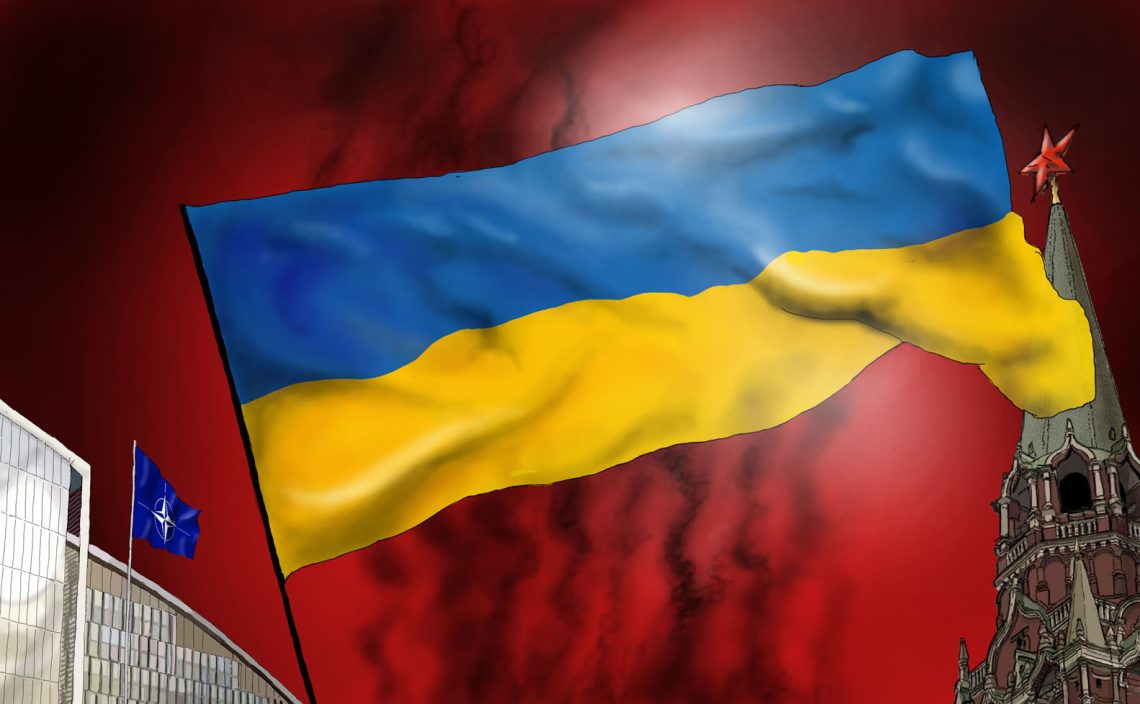
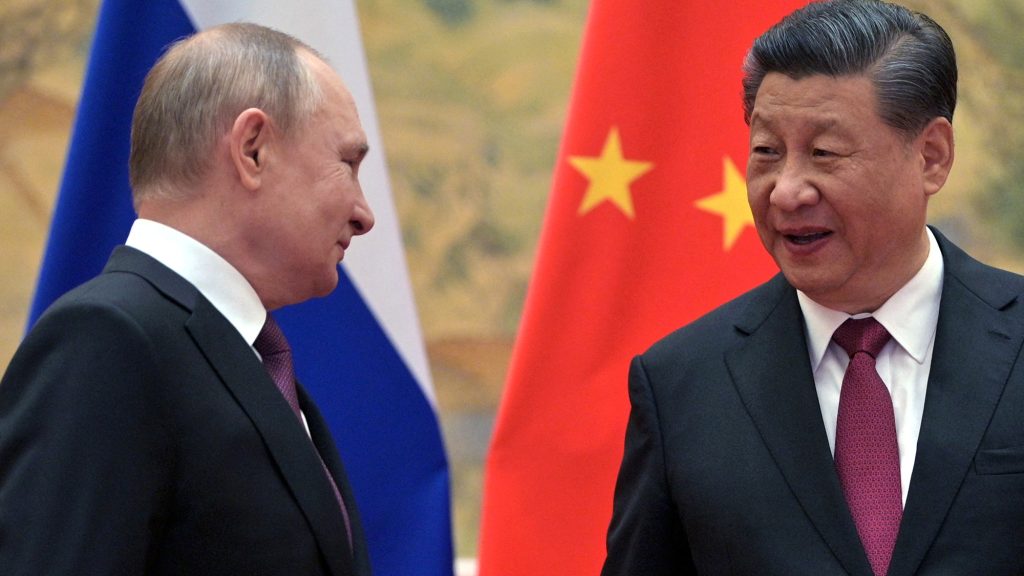
Le Conseil a instauré aujourd’hui de nouvelles mesures restrictives en réponse à l’agression militaire non provoquée et injustifiée commise par la Russie contre l’Ukraine. En vertu de ces mesures, l’UE suspendra d’urgence les activités de diffusion de Sputnik et de RT/Russia Today (RT English, RT UK, RT Germany, RT France et RT Spanish) dans l’UE ou en direction de l’UE, jusqu’à ce que l’agression contre l’Ukraine prenne fin et jusqu’à ce que la Fédération de Russie et ses médias associés cessent de mener des actions de désinformation et de manipulation de l’information contre l’UE et ses États membres.
“La manipulation de l’information et la désinformation systématiques par le Kremlin sont utilisées comme un outil opérationnel dans son agression contre l’Ukraine. Il s’agit également d’une menace importante et directe pour l’ordre et la sécurité publics de l’Union. Aujourd’hui, nous prenons une mesure importante contre l’opération de manipulation menée par Vladimir Poutine et nous fermons les vannes aux médias russes contrôlés par l’État dans l’UE. Nous avons déjà imposé des sanctions aux dirigeants de RT, y compris à la rédactrice en chef, Margarita Simonyan; il est donc logique de cibler également les activités exercées par ces organisations au sein de notre Union.”
— Josep Borrell, haut représentant de l’Union pour les affaires étrangères et la politique de sécurité
Sputnik et Russia Today sont sous le contrôle permanent, direct ou indirect, des autorités de la Fédération de Russie et sont essentiels et indispensables pour faire progresser et soutenir l’agression militaire contre l’Ukraine et pour la déstabilisation des pays voisins.
La Fédération de Russie a entrepris une campagne internationale systématique de désinformation, de manipulation de l’information et de distorsion des faits afin de renforcer sa stratégie de déstabilisation des pays voisins, de l’UE et de ses États membres. En particulier, la désinformation et la manipulation de l’information ont pris pour cible de manière répétée et constante les partis politiques européens, notamment en période électorale, la société civile, les minorités ethniques et minorités de genre russes, les demandeurs d’asile et le fonctionnement des institutions démocratiques dans l’UE et dans ses États membres.
Pour justifier et soutenir son agression militaire contre l’Ukraine, la Fédération de Russie a lancé des actions continues et concertées de désinformation et de manipulation de l’information à destination des membres de la société civile dans l’UE et les pays voisins, en faussant et en manipulant gravement les faits.
Les décisions prises aujourd’hui complètent l’ensemble de mesures annoncé par le haut représentant à l’issue de la vidéoconférence des ministres des affaires étrangères de l’UE du 27 février. Cet ensemble de mesures comprend également la fourniture d’équipements et de matériels aux forces armées ukrainiennes par l’intermédiaire de la facilité européenne pour la paix, l’interdiction du survol de l’espace aérien de l’UE et de l’accès aux aéroports de l’UE pour tous les types de transporteurs russes, ainsi que l’interdiction des transactions avec la Banque centrale russe et l’exclusion de certaines banques russes du système SWIFT.
L’Union européenne condamne avec la plus grande fermeté l’agression militaire non provoquée et injustifiée commise par la Fédération de Russie contre l’Ukraine et appelle la Russie à cesser immédiatement ses actions militaires, à retirer sans condition toutes ses forces et tous ses équipements militaires de la totalité du territoire ukrainien et à respecter pleinement l’intégrité territoriale, la souveraineté et l’indépendance de l’Ukraine à l’intérieur de ses frontières reconnues au niveau international.
Les actes juridiques correspondants ont été publiés au Journal officiel (voir lien ci‑dessous).
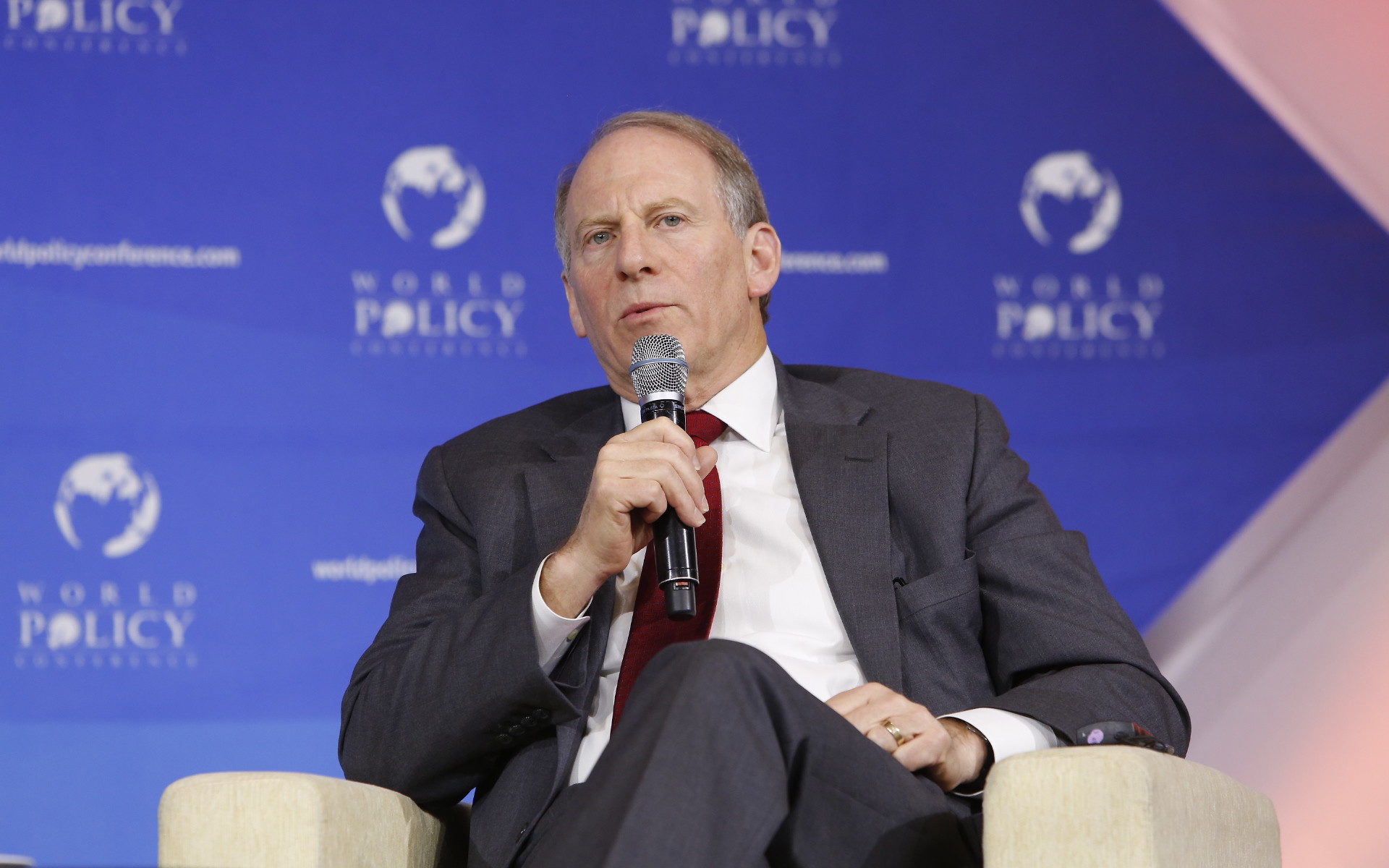
In this special episode, Why It Matters sits down with CFR President Richard Haass to ask the basic questions about the war in Ukraine, Russian President Vladimir Putin’s frame of mind, and his threat to world order.
Putin’s invasion of Ukraine shocked the world. His brazen brutality prompted tremendous backlash and an international debate about what to do. Simultaneously, Ukraine’s courage inspired and revitalized its Western allies. But as the Russian military intensifies its assault, Ukraine’s future is still unknown.
So, how did it come to war? To understand the conflict, Why It Matters Host Gabrielle Sierra turns to CFR President Richard Haass to discuss motivations, misassumptions, nuclear threats, and the potential for a new era of global instability.
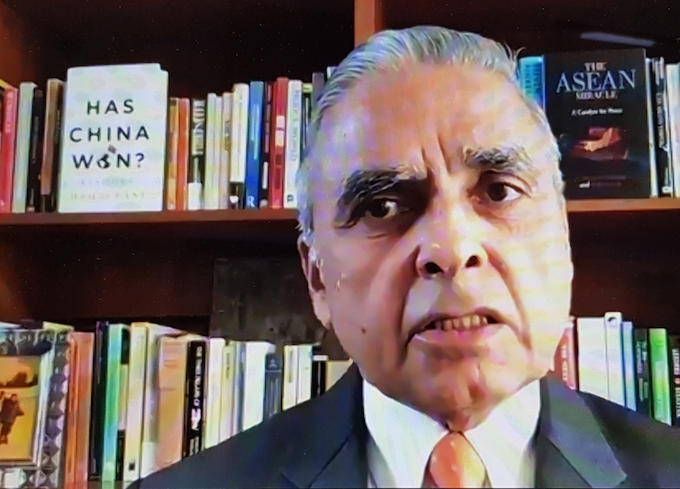
This week in Say More, PS talks with former Australian Prime Minister Kevin Rudd, President of the Asia Society and Chair of the International Peace Institute.
Project Syndicate: The title of your forthcoming book, The Avoidable War: The Dangers of a Catastrophic Conflict between the US and Xi Jinping’s China, refers specifically to “Xi Jinping’s China.” In a February 2020 commentary, you indicate why, observing that Xi wields “near-absolute political power.” Two years later, how have factors like the pandemic and real-estate scares affected Xi’s position? What is his biggest vulnerability?
Kevin Rudd: Xi Jinping is central to my book because it is simply impossible to understand fully what has happened to US-China relations over the last decade – and what might happen in what I call “the dangerous decade” ahead – without understanding both Xi himself and how he has transformed China since coming to power in 2012. The book dives into what drives him, and how he has secured such dominance in the Chinese system.
The Rwandan company has joined, at the last minute, the list of firms bidding to carry out preparatory work at the site of the Mozambique LNG project. French major TotalEnergies has a debt to pay to Rwanda for its role in restoring security in Cabo Delgado Province. […]
Jeudi 24 février, premier jour de l’invasion de l’Ukraine par les troupes russes, un cargo chargé de céréales quitte un port de la mer Noire, près d’Odessa. Le navire de la société Cargill n’ira pas loin : il est frappé par un missile. L’attaque ne provoque pas trop de dégâts, mais les effets économiques sont immédiats. « Il y a eu un vent de panique chez tous les armateurs », raconte Philippe Chalmin, professeur à Paris-Dauphine et président de Cyclope, une société spécialisée dans l’étude des marchés mondiaux des matières premières. Le problème, désormais, c’est que 15 millions de tonnes de blé (et autant de maïs) sont bloquées dans les ports de la mer Noire…
Depuis le début de la guerre en Ukraine, toutes les exportations de blé russes et ukrainiennes par voie maritime sont stoppées.
The Middle East is on the front lines of a global fight to secure a sustainable future for the world’s agricultural output. AFP
With global food prices skyrocketing and millions of people going to bed hungry every night, we all have a responsibility to build more resilient, sustainable food systems. The Food, Agriculture and Livelihoods Week at Expo 2020 Dubai left decision makers with plenty to chew on. While progress in many areas was made, the challenge is clear: collectively, all nations need to enhance food security to ensure a booming population – set to hit 10 billion by 2050 – has continuous access to safe, sufficient, nutritious and affordable food. Now is the time to sow the seeds of change.
Rising food demand requires a complete rethink of agricultural production. We need to develop and implement robust new policies and innovation-driven methods to boost sustainable agriculture, enhance resilience in the face of a changing climate, and reverse biodiversity loss caused by unsustainable practices.
Enhancing food security in a way that avoids putting undue pressure on our natural resources and supports our fight against climate change is one of the areas where we can excel. The UAE’s efforts are governed by the National Food Security Strategy 2051, which aspires to position our nation at the top of the Global Food Security Index.
To translate it into reality, we have established the Emirates Food Security Council to unite public and private sector entities towards a common goal – ensuring that all citizens and residents have access to safe, sufficient, and nutritious food at affordable prices at all times.
Based on our forward-looking vision for the next 50 years, we are proactively adopting strategies to strengthen our already-world-class logistics infrastructure in preparation for potential crises. We rely on building strong partnerships to attract investments in agricultural R&D and support climate action.
To this end, we formed the Supreme Committee for Global Economic Partnerships that intends to step up economic cooperation with eight influential foreign markets as part of the Projects of the 50.
The UAE recently announced the creation of the Emirates Food Security Council. Khushnum Bhandari / The National
We are proactively adopting strategies to strengthen logistics infrastructure in preparation for potential crises
In this context, we recently witnessed the inception of a partnership with India aimed at establishing a food security corridor between our two countries. The move will reinforce the UAE’s position as a gateway for trade between international markets and contribute to the recovery of the global economy amid a stubborn pandemic.
Our approach to the food sector is intrinsically linked to the nation’s economic diversification and sustainable development agenda. As we set our eyes on the next 50 years of growth and human development, we are working to enhance our competitiveness in global markets, facilitate global trade and attract foreign direct investment. Farming is where our commitment to building a knowledge economy comes to life. Through R&D and digitalisation of supply chains, we work to mitigate the impacts of climate change with an innovation-led food security strategy.
The legacy of the UAE’s Founding Father, Sheikh Zayed, who championed living in harmony with nature, has contributed to the country’s affinity for sustainable agriculture. Our geographic location as a desert nation has driven our desire to develop and deploy modern technologies to tackle climate change and food insecurity. Our commitment to innovation has already yielded immense results, and that’s why consumers today can find leafy greens and vegetables grown in vertical farms proudly labelled “Made in UAE”.
To fast-track the implementation of our innovation-driven food security strategy, we have launched the Food Tech Valley in Dubai, a first-of-its kind AgTech city that intends to serve as a testbed for pioneering agricultural solutions.
In line with its deeply entrenched philosophy of forging productive partnerships for the benefit of humankind, the UAE is keen to join forces with the rest of the world to build a food-secure future for all. Last year, we teamed up with the US to launch the Agriculture Innovation Mission for Climate (AIM for Climate), a global initiative that seeks to stimulate and accelerate investment in climate-smart agriculture and food systems innovation between 2021 and 2025.
AIM for Climate has garnered a strong coalition of support that currently comprises over 140 government and non-government partners, and continues to grow. At its launch at the 26th UN Climate Change Conference (Cop26) in Glasgow, it announced an “early harvest” of $4 billion in increased investments. The Food, Agriculture and Livelihoods Week at Expo 2020 Dubai provided a stage for the first ministerial meeting of the initiative, where the partners decided to double the investment commitment target to $8bn by Cop27 this November.
We can only harness the full potential of innovation to tackle global challenges if we work together to achieve our common goals. Our current efforts herald a new era of collaboration that will enable us to make great strides in enhancing food security, advancing sustainable development, and combating climate change. The Food, Agriculture and Livelihoods Week was an opportunity to sow the seeds of change for climate-resilient, innovation-driven food security.
Published: March 03, 2022, 05:00
Mariam Al Mheiri
Mariam Al Mheiri is the UAE Minister of Climate Change and Environment and Minister of State for Food Security
Le mois dernier, le Président sud-africain, Cyril Ramaphosa, et le Premier Ministre norvégien, Jonas Gahr Støre – en leur qualité de coprésidents du Conseil de facilitation de l’accélérateur ACT – ont appelé 55 pays à soutenir conjointement les efforts mondiaux visant à mettre fin à la crise provoquée par la COVID-19, et à verser une « juste contribution » afin de réunir une somme de 16,8 milliards USD pour répondre aux besoins urgents des organismes de l’Accélérateur ACT et mettre fin à la crise due à la COVID-19.
Ces « justes contributions » sont calculées en fonction de la taille de l’économie nationale et de ce que le pays gagnerait grâce à une reprise plus rapide de l’économie et du commerce mondiaux.
L’engagement – annoncé aujourd’hui par le Ministre des finances Christian Lindner pendant la réunion des Ministres des finances du G7 – correspond à la « juste contribution » de l’Allemagne pour ce cycle budgétaire et il s’accompagne d’une somme supplémentaire de 253 millions USD destinée à financer des mesures complémentaires de riposte à la COVID-19 au niveau national, en plus de la mission de l’Accélérateur ACT.
Cet engagement financier indispensable renforce le soutien déjà solide que l’Allemagne apporte à l’Accélérateur ACT depuis sa création en 2020. En outre, l’Allemagne a dépassé sa juste contribution pour le cycle budgétaire 2020-2021 car elle a versé 2,5 milliards USD pour l’ensemble des domaines d’activité de l’Accélérateur ACT, une contribution vitale pour sauver des vies, protéger les systèmes de santé et éviter l’apparition de nouveaux variants dangereux.
Le Dr Tedros Adhanom Ghebreyesus, Directeur général de l’OMS, a déclaré : « Je tiens à remercier l’Allemagne d’avoir fait preuve d’un tel leadership en s’engageant très tôt à répondre aux besoins urgents de l’Accélérateur ACT. Nous appelons les autres pays à suivre l’exemple de l’Allemagne en apportant leur juste contribution, alors que nous cherchons à mettre fin à la phase aiguë de la pandémie cette année. Ce n’est qu’en agissant ensemble que nous pourrons atteindre cet objectif. »
La répartition détaillée de l’allocation du financement aux organismes de l’Accélérateur ACT sera confirmée ultérieurement.
Les Envoyés spéciaux de l’OMS pour l’Accélérateur ACT, la Dre Ayoade Alakija et M. Carl Bildt, se sont félicités du soutien précoce apporté par l’Allemagne.
La Dre Ayoade Alakija, qui préside également l’African Vaccine Delivery Alliance (AVDA), a déclaré : « La COVID-19, la crise climatique et l’intensification des conflits sont le reflet d’une crise sanitaire multidimensionnelle qui met l’humanité à rude épreuve et exige une action d’une ampleur inédite. Nous devons suivre le principe énoncé par Paul Farmer selon lequel toutes les vies ont la même valeur, et je me félicite du soutien croissant de l’Allemagne en faveur d’un accès plus rapide aux vaccins, aux tests, aux traitements et aux équipements de protection individuelle essentiels pour lutter contre la COVID-19. »
Carl Bildt a déclaré: « Ce leadership clair de l’Allemagne est indispensable à un moment où le monde est confronté à des crises sur plusieurs fronts. Nous ne devons pas oublier que tant que l’accès aux vaccins, aux tests et aux traitements contre la COVID-19 ne sera pas équitable, la pandémie continuera de sévir. Nous espérons que d’autres pays prendront des engagements similaires dans les semaines à venir. »
Lire la déclaration originale sur le site de l’OMS.
Early in the morning on February 24, Russia invaded Ukraine from different directions. After initial rapid progress, the patriotic resistance of the Ukrainian forces, with extensive support from volunteers and the civilian population, managed to slow the Russian troops.
Ukraine is resisting. Russia’s blitzkrieg attempt might not work out as planned. Ukrainian volunteers – even Russian speakers – have lined up to be trained for resistance. Households in Kyiv are preparing Molotov cocktails to destroy Russian tanks in street fights. Others are donating blood to the medical services. During interrogations, Russian prisoners of war appear taken aback not to have been welcomed as liberators, but met with resistance. Ukraine deserves profound respect for its bravery and determination.
But, Ukraine’s courage notwithstanding, Russia’s military is stronger. The Ukrainian side has received diplomatic and materiel support, but no direct military assistance from NATO. Moscow insists on demilitarizing the country.
Moscow has proposed holding “peace” talks in Minsk, while Kyiv has suggested Warsaw. Preconditions are to be set by Russia – meaning they will likely be unacceptable. President Zelensky may allegedly agree to demilitarization. One hope is that Turkey will be able to negotiate a summit without preconditions.
Ukraine’s courage notwithstanding, Russia’s military is stronger.
Two weeks ago, GIS published the following statement:
“Unfortunately for Ukraine, the country is a chip in a bigger geopolitical poker game between the West and Russia. Instability in areas of Ukraine will prevent it from joining NATO, fulfilling Moscow’s strategic goals as long as it cannot obtain a commitment that the country will not accede to the alliance. The Minsk protocol, meant to end the violence in eastern Ukraine, had many inconsistencies. It might have worked in an atmosphere of consent and good faith, but not under the climate of contention that prevailed. By openly moving its troops into the breakaway Ukrainian regions, Russia has now officially contravened the Minsk agreements, which call for all foreign forces to leave the area.
The West tends to view the conflict through the prism of the Helsinki Accords, while Moscow has not forgotten the philosophy of the Yalta agreement. Both sides interpret agreements reached at the time of German unification and NATO enlargement differently.”
This is still valid. Unfortunately, the consequences of these conflicting positions, and of the West’s indecisiveness, is a wide-ranging military conflict. Ukraine needs all the help it can get.
I was wrong to doubt the United States assertions that there would be a full-scale invasion. Russia has invaded. Whatever happens this week, the situation will result in a new European security architecture emerging.
The Ukrainian lesson
Europe’s defense is weak, and many European states are unwilling to invest in their military. There is also a lack of cooperation between countries.
Today, Ukraine is paying the price for these inadequacies. Tomorrow, it could be another state. The illusion of a rule-based world order according to vaguely defined Western values has proven unrealistic. Big powers like China, Russia and Iran are not playing along. Supranational institutions like the United Nations have failed.
These issues in the European security architecture have to be acknowledged. If Europe realizes its impotence, then hopefully it can realign. The invasion of Ukraine should be a wake-up call.
By now it should be clear to everybody that Europe needs a credible defense. Improved military capabilities will also be needed to handle problematic situations in neighboring areas like North Africa and the Middle East, as well as to protect European interests worldwide. Germany especially has to realize that peace comes at a price. The European Union has proven ineffective. It is already overburdened and the present attempts to create a European budget and transfer union might prove the final nail in the coffin. The only valid reason that would justify a European budget and tax is defense.
It is possible that larger countries could enter into a closer defense collaboration within NATO, creating a European legion of sorts. Such plans have existed for a long time. To keep this structure separate from the EU would allow the United Kingdom to take part. A group consisting of France, Germany, Poland, the UK and a southern country would constitute a powerful force.
The West’s most urgent challenge is to lend all the assistance it can to Ukraine. But in the longer term, it will also have to draw lessons from the situation.
German investments in defense may convince Russia of Europe’s willingness to improve its security. Already during the 2014 crisis, we wrote that the best way to discourage Russia from further disruptions would be investing in the Bundeswehr, not sanctions. But the opposite happened.
Right now, the West’s most urgent challenge is to lend all the assistance it can to Ukraine. But in the longer term, it will also have to draw lessons from the situation.
GIS has long argued that the key to more equitable relations between Europe and Russia is not hypocritical value-driven policy but credible military deterrence and civil defense.
La guerre en Ukraine et les menaces nucléaires de Vladimir Poutine visent à terroriser lesUkrainiens et à effrayer les Occidentaux. Elles percutent l’équilibre des forces à l’échelle detoute l’Eurasie, explique l’historien dans un entretien au « Monde ».
Propos recueillis par Marc Semo
L’historien Thomas Gomart. YANN LEGENDRE
Directeur de l’IFRI (Institut français des relations internationales), l’historien Thomas Gomart, auteur notamment de Guerres invisibles (Tallandier, « Texto », 2021), analyse la stratégie de Vladimir Poutine et ses répercussions sur les équilibres mondiaux.
L’invasion de l’Ukraine est-elle une « guerre totale » différente des autres conflits qui ont secoué l’est de l’Europe depuis la fin de la guerre froide ?
Sur le plan strictement militaire, elle vise à créer le « choc et l’effroi ». C’est un tournant en raison de l’ampleur des moyens militaires et de la conduite politique de la guerre. Membre permanent du Conseil de sécurité des Nations unies, puissance nucléaire et spatiale de tout premier plan, la Russie agresse l’Ukraine dans sa totalité, huit ans après avoir annexé la Crimée et déstabilisé le Donbass.
Depuis 2014, la Russie conduit principalement des guerres invisibles, c’est-à-dire sous le niveau de la guerre, par des moyens indirects. Ce qui la caractérise désormais, c’est la combinaison entre l’hybridité – cyber à haute dose, désinformation, opérations spéciales, coercition militaire, tout enjouant la diplomatie – et l’invasion mécanisée à grande échelle de son voisin. Vladimir Poutine menace « de conséquences comme il n’en a jamais vu dans son histoire » tout pays qui se mettrait en travers de sa route. Ce faisant, le président russe délivre un message nucléaire explicite, mais attire aussi notre attention vers l’espace ou la haute mer.
Le risque est-il réel ?
Evidemment. Tout d’abord pour les Ukrainiens, qui jouent la survie de leur Etat, et leur indépendance. Ensuite, cette guerre a déjà de multiples effets, notamment de modifier la grammaire nucléaire. Pour la France, l’arme nucléaire est fondamentalement une arme de non-emploi. Or, les doctrines nucléaires d’autres pays, comme la Russie, évoluent depuis plusieurs années en envisageant des formes de bataille nucléaire, c’est-à-dire d’éventuels usages tactiques de l’arme. Cela doit aussi nous conduire à penser latéralement, c’est-à-dire envisager « ces choses que personne n’a jamais connues » évoquées par Vladimir Poutine.
En novembre 2021, la Russie a, par un tir de missile, détruit en orbite l’un de ses vieux satellites pour montrer qu’elle était prête désormais à la guerre dans ou via l’espace exo-atmosphérique. Ainsi, montre-t-elle son refus de voir son territoire scanné en permanence par les Occidentaux. Quelles seraient les conséquences de la destruction d’un nombre X de satellites qui nous rendrait aveugles et sourds ? Quelles seraient les conséquences de la coupure de, par exemple, 20 % des câbles sous-marins par où transitent les données ? On ne le sait pas.
Avez-vous été surpris par l’offensive russe ?
Je n’ai pas été surpris par l’invasion, mais par son ampleur. Le but est manifestement de terroriser les Ukrainiens pour les faire rompre immédiatement. Ce n’est pas du tout le cas. Le deuxième but est d’effrayer les Occidentaux pour les inhiber. Ce n’est pas non plus le cas. Le troisième objectif du Kremlin est d’embarquer le peuple russe dans une guerre qui n’est pas la sienne. C’est difficile d’apprécier les choses sur ce plan. Ce qui est frappant, c’est la montée en puissance et en intensité des opérations extérieures russes depuis la Géorgie. Il semblerait que le Kremlin envisage de se comporter en Ukraine comme il s’est militairement comporté en Tchétchénie ou en Syrie. La Russie rêve de reproduire la manière américaine de faire la guerre pour imposer du « changement de régime » sous les yeux des Occidentaux. Elle est, à son tour, prise par la spirale interventionniste en passant d’une logique de guerre limitée à une logique de guerre totale.
Une nouvelle phase s’ouvre-t-elle dans les relations internationales ?
Je pense que oui. C’est une crise pivot pour le système international car elle percute l’équilibre des forces à l’échelle non seulement de l’Europe, mais aussi de l’Eurasie, qui va de Brest à Vladivostok. Pour la Russie, l’Ukraine est un théâtre parmi d’autres. Le cycle des interventions occidentales s’est achevé à Kaboul en août 2021 avec la déroute américaine. Au Conseil de sécurité, l’action de la Russie n’est condamnée ni par la Chine, ni par l’Inde, ni par les Emirats arabes unis. Notons au passage que ces deux pays sont les « partenaires stratégiques » de la France dans la région Indo-Pacifique. Plus profondément, le rapprochement entre la Chine et la Russie ne peut que s’accélérer à mesure de la mise en œuvre des sanctions occidentales à l’encontre de Moscou. En voulant annexer l’Ukraine, la Russie a un besoin de plus en plus évident de la Chine, comme alternative économique, financière et technologique. La nouvelle phase est ouverte par une guerre d’invasion européenne, tristement classique, mais annonce sans doute des coalitions géoéconomiques en concurrence, ainsi qu’une réorganisation mondiale des flux maritimes, financiers et de données.
Avec une intensification des rivalités de puissances ?
Il y a une accélération de la lutte pour la suprématie mondiale entre les Etats-Unis et la Chine. Grâce à la Russie, cette dernière peut obliger Washington à avoir deux fronts ouverts : mer de Chine et mer Noire-mer Baltique. En fait, la déformation du triangle entre Etats-Unis, Chine et Russie continue à affecter indirectement les équilibres régionaux, notamment au Moyen-Orient et en Afrique. A partir de 1972, Washington s’est rapproché de Pékin pour affaiblir Moscou ; depuis 2008, Moscou cherche à se rapprocher de Pékin pour affaiblir Washington. Mais il faut bien comprendre la complexité de la situation en raison des interdépendances. A l’époque de la guerre froide, les économies du bloc socialiste et des pays capitalistes n’avaient que peu de relations.
Aujourd’hui, elles sont intensément connectées en premier lieu avec la Chine et aussi avec la Russie. D’où l’importance du contrôle des bordures maritimes de cet ensemble continental. La plus grande tension s’exerce à la jointure entre l’Europe et la zone entre la Baltique et la mer Noire (pays baltes, Moldavie, Ukraine, Géorgie) limitrophe de la Russie. Côté Pacifique, ce sont la mer de Chine, Taïwan, les Corées, le Japon qui sont la zone de friction. Au passage, rappelons que l’Aukus (Australie, Royaume-Uni et Etats-Unis) se présente comme une alliance des « démocraties maritimes ». On retrouve l’opposition géostratégique entre la terre et la mer, à ceci près que la Russie et la Chine développent significativement leurs capacités navales.
Un succès de Poutine en Ukraine inciterait-il Xi Jinping à tenter une action similaire sur Taïwan, ou du moins à augmenter la pression ?
A propos de Taïwan, les Chinois disent : « Un pays, deux systèmes. » Sur l’Ukraine, Vladimir Poutine clame : « Deux pays, un seul peuple.» Sur le fond, cela veut dire la même chose : l’intégration à la loi du plus fort. Mais les calendriers sont désormais différents. Pour Pékin, la réunification n’est qu’une question de patience. Pour Poutine, c’est une opportunité d’exploiter le désarroi stratégique occidental. Autre différence : les positions diplomatiques des uns et des autres sur le dossier de Taïwan. La Chine comme la Russie veulent contrebattre l’influence occidentale au sein des organisations internationales, tout en œuvrant à des formats expurgés de cette influence. En Europe, tout se passe comme si la Chine utilisait la Russie comme bélier idéologique pour affaiblir le lien transatlantique. Mais la vigueur de la réaction occidentale est en train de rebattre les cartes au niveau global.
Les fronts d’une nouvelle guerre froide se précisent-ils ?
Ce terme me semble trompeur car il fait écho à la confrontation soviéto-américaine. A part l’OTAN, il n’y a pas de blocs militaires constitués ; se dessinent des coalitions géoéconomiques à géométrie variable, selon les segments. L’enjeu, c’est la maîtrise de l’appareil productif mondial dans un contexte d’accentuation des contraintes environnementales et d’accélération de la mise en données du monde. Il n’y a pas de remise en cause du capitalisme mondial, mais au contraire une lutte aussi brutale que diffuse entre les Etats-Unis et la Chine pour en devenir le boss.
Pourquoi l’Ukraine est-elle si importante pour Poutine ?
La culture stratégique russe, y compris à l’époque soviétique, repose sur le principe de la profondeur stratégique contre toute menace venant de l’ouest. A cela s’ajoute, depuis l’effondrement de l’Union soviétique, la crainte de voir la Russie réduite, par les puissances extérieures, aux frontières du grand-duché de Moscovie. Reconstituer ce glacis protecteur et retrouver son statut de puissance implique de reconstituer l’unité slave – la grande Russie, la petite Russie (l’Ukraine) et la Russie blanche(Biélorussie) – qui était le pilier de l’empire sous les tsars, comme à l’époque soviétique.
S’ajoute aussi une imbrication des populations et une forme de condescendance, voire de mépris, des élites russes pour lesquelles l’Ukraine est tenue par une dizaine d’oligarques totalement corrompus, et donc manipulables, ce d’autant plus aisément qu’à leurs yeux la nation ukrainienne n’existe pas. Pour le Kremlin, les aspirations démocratiques des Ukrainiens ne sont que le résultat d’opérations des services de renseignement occidentaux. La guerre est en train de leur montrer que la fraternité slave à coups de bombes oblige la nation ukrainienne à résister à tout prix pour sa survie.
Où Poutine s’arrêtera-t-il ? Va-t-il maintenant s’en prendre à la Géorgie ou la Moldavie ?
Pour l’Ukraine, il s’agit selon les mots de Vladimir Poutine de la
« démilitariser » avant de la « dénazifier ». Autrement dit, il faut la faire rompre par tous les moyens. Cependant, son rêve néo-impérial pourrait tourner au cauchemar identitaire. En écrasant les Ukrainiens, il annonce un nouveau malheur russe. C’est un idéologue réaliste qui poursuit des chimères historiques tout en recalculant en permanence le rapport de forces. Il l’a montré, il est tout à fait capable de longues pauses stratégiques. Après l’annexion de la Crimée, en 2014, et le soutien aux rebelles prorusses de l’Est de l’Ukraine, il a préparé, pas à pas, pendant huit ans, l’invasion. Tout dépend, à court terme, de la résistance ukrainienne et, à moyen terme, des effets des sanctions occidentales.
La guerre n’est jamais un processus linéaire, elle produit toujours des effets paradoxaux pour l’ensemble des belligérants. S’il réussit à installer un régime à sa botte, même si la situation demeurait instable, le message serait clairement : ce que j’ai fait en Ukraine, je peux le faire maintenant en Moldavie, en Géorgie ou en Asie centrale… Vis-à-vis des pays baltes, la situation est différente car ils sont membres de l’OTAN. Mais il tentera probablement de tester la cohésion occidentale avec des actions hostiles, cyber ou autres, tout en restant sous le seuil d’activation de l’article 5, garantissant l’assistance mutuelle, mais avec de la pression nucléaire et navale. Des pays neutres comme la Finlande ou la Suède s’en rapprochent ouvertement. Vladimir Poutine a redonné sa raison d’être à l’OTAN en Europe. Mais il ne faut jamais oublier que le Kremlin en a aussi besoin pour justifier une organisation du pouvoir ayant les forces armées et les services de sécurité pour colonne vertébrale. L’Etat russe s’est construit sur son armée.
Le pouvoir de Poutine en Russie est-il absolu ?
Il n’y a plus de séparation des pouvoirs en Russie, mais une fusion des pouvoirs exécutif, législatif et judiciaire. En outre, le militaire et l’économique sont sous contrôle présidentiel. La scène de la réunion du conseil de sécurité russe lundi 21 février le montrait crûment. La Russie aujourd’hui, c’est un président, tsar, historien et guébiste et quarante-neuf boyards. Ces derniers se divisent entre les quatorze membres du conseil de sécurité que l’on voyait à l’écran, humiliés, tenus à distance et les trente-cinq oligarques convoqués ensuite. Le message de Vladimir Poutine est simple : j’écris l’histoire russe et vous m’êtes tous redevables, en particulier pour vos fortunes personnelles. Chef suprême, il est hanté par l’idée de finir comme Kadhafi.
“Dans cette atmopshère de guerre froide, peut-on évoquer les responsabilités occidentales dans la crise actuelle sans être taxé de suppôt de Poutine ?”, s’interroge Hugues Le Paige, journaliste et réalisateur. Ce sympathisant du PTB revient sur ce qu’il estime être une “véritable chasse aux sorcières” envers le parti d’extrême gauche.
Le peuple ukrainien qui se bat contre l’agression russe a droit à toute notre solidarité et cela sans la moindre restriction. La condamnation de la guerre nationaliste et impérialiste menée en ce moment par Vladimir Poutine ne souffre aucune réticence. Cela ne se discute pas.
Faut-il pour autant accepter que l’on mène une véritable “chasse aux sorcières” à l’encontre de ceux qui s’opposent aux discours “va-t-en-guerre” d’une classe politique qui n’hésite pas à instrumentaliser la solidarité avec le peuple ukrainien pour d’évidentes manœuvres politiciennes ou électoralistes ?
On l’a vu en France avec la caricature que les candidats socialiste et écologiste ont faite des positions de Jean-Luc Mélenchon qui a le grand tort de les devancer dans la course à la présidentielle. On l’a vu en Belgique avec le déchaînement des représentants des partis traditionnels, toutes tendances confondues, à l’encontre du discours du PTB qui condamne pourtant sans équivoque la guerre menée par la Russie.
Dans cette atmosphère de guerre froide, il ne peut plus être question d’évoquer les responsabilités occidentales dans la crise actuelle sans être aussitôt taxé de suppôt de Poutine. Rappeler les menées américaines et plus largement occidentales pour pousser l’Ukraine à adhérer à l’OTAN (et ensuite, l’abandonner à son sort…) n’équivaut en rien à mettre agresseur et agressé sur le même plan ni à justifier en quoi que ce soit la politique de Moscou. Cette question est fondamentale pour la recherche d’une solution diplomatique.
Hubert Védrine, l’ancien ministre des Affaires étrangères de François Mitterrand le rappelait il y a quelques jours quand il déclarait “C’était une provocation dangereuse d’annoncer l’entrée de l’Ukraine dans l’OTAN (en plus sans le faire…)“. Provocation dangereuse et inutile, ajoutait Védrine dont on connaît la modération politique et la défense des intérêts européens et occidentaux.
On peut en tous cas espérer que Paul Magnette ne le joindra pas à ceux qu’il assimile désormais au souvenir du pacte germano -soviétique. Le PS est en grande difficulté face au PTB et tente de discréditer la gauche radicale en lui faisant endosser des positions qui ne sont pas les siennes. La polémique a ses exigences et le cynisme a ses ressorts. Pour répondre aux unes et aux autres, le président du PS a endossé les habits de son glorieux prédécesseur, Paul Henry Spaak qui durant des décennies fit des socialistes belges les défenseurs les plus ardents de l’atlantisme. Étrange attitude qui serait indigne si elle n’était pas d’abord ridicule de la part d’un intellectuel qui sait pourtant quelque chose de l’histoire.
Mais il ne faut pas se tromper, au-delà de cette instrumentalisation du drame ukrainien, se dessine un étrange climat ne supportant plus la moindre contestation ou critique. Le concert politique et médiatique unanimiste est à l’ordre du jour : la droite joue son rôle, les socialistes surenchérissent avec l’appui des chevaux légers de l’écologie qui en deux décennies sont passés de leur pacifisme historique à un atlantisme assumé.
L’expression de la solidarité avec le peuple ukrainien comme la condamnation sans appel de la guerre menée par la Russie ont d’autres exigences que ces rodomontades.
Lire l’article original sur le site du journal Le Vif.
L’invasion russe de l’Ukraine constitue la plus grande césure de l’histoire de l’après-Guerre froide. Elle dépasse de loin le choc des attentats du 11 septembre. L’agression russe modifiera en profondeur l’architecture de sécurité européenne et aura un très lourd impact sur les politiques de défense et de sécurité de pays membres de l’OTAN. Elle changera également l’équilibre entre l’Allemagne, de la France et de la Pologne. Cette dernière se verra pleinement confirmée dans son attitude de méfiance vis-à-vis de Moscou qu’elle observe depuis la fin de l’URSS et qu’elle partage avec ses voisins baltes. La France ne pourra que constater l’échec de sa politique d’ouverture envers la Russie et les résistances auxquelles se heurte son engagement dans le Sahel pourraient se traduire par un redéploiement partiel de ses forces militaires en Europe centrale, une tendance qui se traduit déjà par un engagement renforcé en Roumanie. L’Allemagne enfin voit tous les principes de sa politique étrangère post-Guerre froide remis en question. L’ordre européen qu’elle voulait contribuer à bâtir sur les principes du libre-échange, du multilatéralisme et de l’interdépendance entre l’UE et la Russie a vécu. Pendant longtemps entourée de pays qu’elle croyait sûrs, elle s’est permis des réviser à la baisse ses dépenses militaires pendant trois décennies. Elle doit désormais revoir en profondeur les postulats de sa politique de défense et revoir à la hausse ses dépenses militaires. Dans un contexte d’enchérissement conséquent de ses approvisionnements énergétiques (Berlin a suspendu la mise en route de Nord Stream 2).
Un héritage en demi-teinte
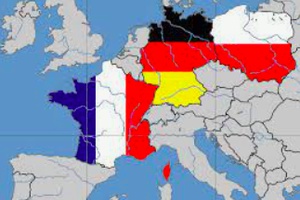
Sur cette base et face à un président russe qui estime que les frontières de la Russie éternelle doivent être identiques à celles de la défunte URSS, la renaissance du « Triangle de Weimar » semble s’imposer. Rappelons que ce dernier a été créé il y a trente ans par l’Allemagne, la France et la Pologne avec l’ambition de contribuer à surmonter la division de l’Europe et de rapprocher les États d’Europe centrale et orientale à la fois de l’UE et de l’OTAN. Cet objectif a été atteint en plusieurs étapes, pour l’essentiel entre 1999 et 2009. Ce qui n’a pas manqué ensuite de poser la question de la raison d’être du « Triangle de Weimar ». Ce dernier a toutefois souffert des rapports asymétriques entre les trois pays, la Pologne ne pouvant évidemment pas se mesurer à la France et à l’Allemagne quant au niveau de vie ou du PIB, sans parler de son rayonnement extérieur. Les relations entre les trois pays souffrent encore de bien d’autres facteurs. La relation franco-polonaise est handicapée par le peu d’investissement (et d’intérêt) politique et économique de la France dans la région. S’y ajoutent le scepticisme que la France a maintes fois manifesté face au bien-fondé de l’élargissement à l’Est de l’UE et face au transatlantisme des Polonais, jugé excessif par Paris. Sans oublier la primauté que la France a accordée aux enjeux de sécurité du Sud par rapport à ceux de l’Est. La relation germano-polonaise est quant à elle pour l’essentiel marquée par l’asymétrie de la puissance économique entre les deux pays, mais aussi, voire surtout, par le souvenir de Seconde Guerre mondiale. Pendant les six années de la terreur allemande, entre 1939 et 1945, la Pologne a perdu près de six millions de citoyens, dont la moitié furent des citoyens juifs. Les Nazis avaient détruit l’élite polonaise et destiné le pays et son peuple à l’esclavage et à une extermination progressive. Plus de 700 villages polonais ont été victimes de massacres collectifs allemands. Aujourd’hui encore, cette mémoire est profondément enracinée dans la conscience collective polonaise. Jaroslaw Kaczynski a grandi à Varsovie, dans les ruines de la capitale polonaise, qui a été presque entièrement rasée en 1944. La Wehrmacht et les SS ont à ce moment assassiné des centaines de milliers de personnes. Du point de vue intérieur polonais, le nationalisme militant du gouvernement PiS est une conséquence de cette expérience collective de mort imminente.
Le caractère autoritaire de son système politique, sa tendance à placer le pouvoir au-dessus de la liberté, découle de la conviction que seul un État dirigé de manière stricte et rigoureuse peut s’affirmer dans un monde plein de dangers existentiels. Le partage des pouvoirs n’y a pas sa place. D’où les dérives du gouvernement polonais qui, vu de l’extérieur, apparaissent comme l’expression d’un nationalisme d’un autre âge. Ce qui place l’Allemagne et la France, sinon toute l’UE, devant un vrai dilemme. D’une part, un pays dont le gouvernement sape l’autorité de la loi et le principe de la séparation des pouvoirs, remet en question la primauté du droit européen et s’empare du contrôle des médias publics ne devrait pas pouvoir rester membre de l’UE. D’autre part, l’idée que la Pologne puisse à nouveau se retrouver dans une zone grise, dépourvue de la protection d’alliances fiables, entre l’Allemagne, la Biélorussie de Lukaschenko et l’État russe en quête d’expansion, est une perspective cauchemardesque. La crise migratoire à la frontière polono-biélorusse a amplement démontré ce dilemme, puisque l’UE, obligée qu’elle fut de se montrer solidaire de Varsovie, n’a pas pu dénoncer, ni empêcher la mise à l’écart de Frontex, ni surtout les actions illégales de push-back de réfugiés menées par les forces douanières polonaises.
Un avenir commun dicté par l’urgence
Si, pour toutes ces raisons, le « Triangle de Weimar » ne s’est jamais affirmé en tant que force politique sur la scène européenne, il semble aujourd’hui renaître de ses cendres. Le 8 février à Berlin, lors d’une conférence de presse venant conclure deux jours d’intenses débats avec les présidents russe et ukrainien, le chancelier allemand et les présidents français et polonais « ont souligné leur unité » face à la Russie, qui subirait des « conséquences de grande envergure » si elle attaquait l’Ukraine. L’unité franco-germano-polonaise face à la Russie est suffisamment rare pour être soulignée. Mais surtout, elle va loin cette fois-ci. Berlin, Paris et Varsovie sont tombés d’accord pour estimer qu’en cas d’invasion russe de l’Ukraine, l’Acte fondateur de Russie – OTAN de 1997 ne s’appliquerait plus. S’ils n’ont pas rendu public leur accord, Scholz souligne qu’une agression n’aurait pas seulement des conséquences économiques, mais « certainement aussi géostratégiques ». Cet accord est confirmé à l’OTAN, où on considère qu’une invasion russe en Ukraine ébranlerait si fondamentalement l’architecture de sécurité européenne que l’Acte fondateur ne serait plus applicable. Cela fait partie des « messages forts » transmis à Moscou ces derniers jours. Un abandon de l’Acte fondateur – qui avait stipulé que l’OTAN n’a « ni l’intention, ni le projet, ni la raison d’établir des dépôts d’armes nucléaires sur le territoire de ces États membres » – aurait des répercussions sur la doctrine nucléaire de l’OTAN. Des armements nucléaires américains pourraient dorénavant être installés à l’Est, perspective esquissée par Jens Stoltenberg en novembre 2021 déjà. Rappelons aussi que l’Acte fondateur avait pour but d’amortir l’élargissement à l’Est, l’Alliance s’étant engagée à ne pas déployer sur une base permanente des forces de combat substantielles à l’Est. L’OTAN s’est sentie liée par cette règle, même après l’annexion de la Crimée, ce qui a notamment été une préoccupation de l’Allemagne et de la France, tandis que la Pologne a insisté pour qu’elle soit modifiée. C’est la raison pour laquelle seules des forces au nombre inférieur à une brigade ont été déployées jusqu’à présent dans les trois Etats baltes et en Pologne. Et sur une base rotative. Tout ceci appartient désormais au passé. Et les trois pays partenaires du « Triangle de Weimar », en dépit de tout ce qui les sépare, semblent s’accorder sur cette révision lourde de conséquences. Cette unité de vue est aussi la traduction de l’unité occidentale face à Moscou. Reste toutefois à savoir si Paris et Berlin peuvent et doivent faire confiance à la Pologne de Kaczynski dans un domaine aussi sensible que la sécurité en Europe et alors que les relations entre Bruxelles et Varsovie ne cessent de se dégrader.
La hausse brutale des prix de l’énergie, qui risque de s’accélérer avec la guerre déclenchée par la Russie contre l’Ukraine, est au centre des préoccupation des électeurs. Comment éviter que les enjeux de long terme de la transition climatique ne soient marginalisés par les revendications sur le pouvoir d’achat et négligés par les responsables politiques ?
Par Jean Pisani-Ferry
Publié le
Dans un sondage récent, 52 % des Français citaient le pouvoir d’achat comme leur préoccupation principale. 29 % seulement mentionnaient l’environnement, reléguant ce thème à peu près au niveau du système de santé (30%) et de l’immigration (28 %). Dans ce contexte, il n’est guère surprenant que la transition vers une économie neutre en carbone n’ait pas été mise en avant dans la première phase de la campagne présidentielle.
Avec le déclenchement de la guerre en Ukraine, les questions de politique internationale et de Défense vont, pour une fois, s’imposer dans le débat national. Parallèlement, la hausse du prix du gaz va certainement accroître l’inquiétude relative au pouvoir d’achat. Ces préoccupations ont toute chance de reléguer la politique climatique aux marges du débat politique.
Pourtant, la France, tout comme le reste de l’Union européenne, s’est engagée à baisser environ de moitié ses émissions de gaz à effet de serre d’ici 2030 – soit une diminution trois fois plus rapide qu’au cours de la décennie passée. La capacité du pays à atteindre cet objectif extraordinairement exigeant dépendra des décisions qui seront prises pendant le prochain quinquennat. Approcher seulement la cible demandera d’accélérer une transformation qui va toucher tous les secteurs et tous les aspects de la vie économique et sociale.
Dans ces conditions, le bon fonctionnement de la démocratie voudrait que les décisions d’urgence en matière d’action climatique soient la priorité des programmes électoraux. Mais les candidats qui, à Gauche, mettent l’accent sur cette thématique sont largement distanciés, tandis que ceux de Droite préfèrent éviter le sujet, ou même plaident pour interrompre l’installation d’éoliennes en raison de leurs conséquences pour les paysages. Le seul débat significatif concerne les parts relatives du nucléaire et des renouvelables dans le mix électrique en 2050 : un choix important sans aucun doute, mais qui ne déterminera pas la capacité de la France à remplir ses objectifs pour 2030.
Tous les pays européens ne manifestent pas la même indifférence. L’action climatique, par exemple, a figuré en bonne place dans la campagne électorale pour les législatives de septembre 2021 en Allemagne, puis dans l’accord de coalition qui y consacre 40 pages.
Mais dans la plupart des pays, la hausse brutale des prix de l’énergie depuis l’automne et la reprise de l’inflation ont suscité de vives protestations et ont détourné l’attention des responsables politiques des enjeux de long terme. Partout, les gouvernements se sont précipités pour introduire diverses formes de compensations, dans l’espoir de modérer la hausse des prix. D’après une enquête publiée par le think tank Bruegel, beaucoup de pays ont abaissé les taxes sur l’énergie, réduisant de fait le prix du carbone dans une période où il faudrait au contraire l’augmenter.
Une telle situation suscite trois interrogations. Premièrement, comment expliquer une telle myopie sur les enjeux climatiques ? Deuxièmement, comment les gouvernements devraient-ils réagir ? Troisièmement, existe-t-il une méthode pour faire en sorte que le débat démocratique se centre sur les choix déterminants pour l’avenir ?
Dans un contexte où la meilleure protection contre des prix élevés de l’énergie serait de réduire notre dépendance aux combustibles fossiles, il est tentant d’attribuer la myopie actuelle à la domination grandissante des réseaux sociaux sur le débat public et à l’érosion des institutions politiques établies, à commencer par les partis eux-mêmes.
Mais il y a également des raisons économiques. Depuis la crise financière globale de 2008, de nombreux ménages européens ont subi des difficultés en série. Si leurs revenus ont été dans l’ensemble protégés contre les effets de l’épidémie de COVID-19, leur niveau de vie n’a que peu progressé depuis les débuts de la crise financière. Avec l’augmentation des prix de l’énergie, celles et ceux qui ont du mal à boucler leurs fins de mois ont subi une nouvelle érosion de leur pouvoir d’achat. Et les ménages plus aisés dont les économies sont placées sur des comptes d’épargne ont vu diminuer la rémunération de leurs avoirs en raison des faibles taux d’intérêt. Avec le retour brutal de l’inflation, ils craignent désormais une érosion de la valeur réelle de leur actif.
L’instabilité des prix de l’énergie est probablement appelée à durer – voire à s’aggraver. Indépendamment même des soubresauts géopolitiques, la transition d’une économie brune à une économie verte ne se fera pas sans difficultés. La réallocation des capitaux des énergies fossiles aux renouvelables sera un processus chaotique qui comportera des phases de pénurie énergétique aussi bien que des périodes d’offre excessive.
C’est pourquoi les gouvernements doivent se préparer à ces scénarios. Plus précisément, ils doivent expliciter leurs objectifs climatiques, assumer et annoncer une progression graduelle du prix (explicite ou implicite) du carbone, et procurer un soutien substantiel aux ménages qui ne peuvent pas assumer le coût de l’isolation de leur maison ou de l’achat d’une voiture moins polluante. Personne ne doit être protégé des changements imposés par le prix de l’énergie, mais personne ne doit être privé de la possibilité de s’y adapter.
C’est aussi le rôle des gouvernements de protéger les ménages les plus fragiles contre les augmentations du coût de l’énergie. Ils doivent le faire par des programmes qui visent de façon ciblée le bas de la distribution des revenus, sans procurer des avantages à l’ensemble des consommateurs. De telles mesures ne doivent pas affaiblir les incitations à investir dans la rénovation thermique des logements ou de nouveaux équipements. Parce que le soutien budgétaire et les protections contre les fluctuations tarifaires doivent aider les ménages à se repérer dans un brouillard d’instabilité, les responsables politiques doivent clairement expliquer les deux objectifs et s’assurer que chaque instrument est consacré à chacun des objectifs.
La troisième question est la plus difficile. La capacité d’une société à identifier les défis de long terme et à concentrer ses efforts pour y faire face dépend d’une série de conditions. L’honnêteté (au sujet des défis et de leur coût), la clarté (sur les choix politiques), la transparence (sur les conséquences des décisions politiques) et l’équité (dans la répartition de l’effort) sont indispensables. Mais ils ne sont pas suffisants.
L’action en faveur du climat ne mobilisera et ne motivera les électeurs que si la peur laisse place à l’espoir. Les électeurs, en Europe du moins, n’ont plus besoin qu’on leur explique la menace climatique mais ils ont besoin d’entendre qu’on pourra y arriver, d’être galvanisés par un Yes, we can. Ils ne doivent plus se voir comme les victimes potentielles du changement climatique ou des politiques mises en place pour y répondre mais comme des acteurs de la transformation en cours, et trouver un rôle positif dans la construction d’un avenir désirable.
C’est une ambition de taille dans des sociétés de « post-vérité » au sein desquelles la confiance dans les institutions est à son étiage. Mais quiconque réussira à créer cette dynamique en tirera un bénéfice politique à la hauteur de ses efforts.
Lire l’article original sur le site de Terra Nova.
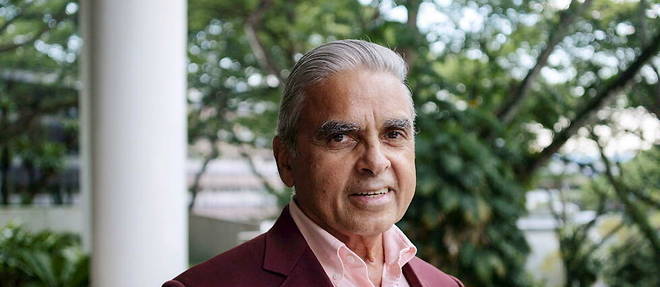
ENTRETIEN. Le diplomate singapourien Kishore Mahbubani déplore que l’Occident ait perdu toute vision stratégique et l’appelle à lâcher du lest envers Moscou.
Attachée au respect de l’intégrité et de la souveraineté territoriale de tous les États, la Chine appelle à la retenue dans la guerre d’agression déclenchée par la Russie contre l’Ukraine. Elle affiche une attitude de neutralité entre les belligérants et se prononce pour une reprise des négociations. Mais beaucoup d’experts occidentaux la soupçonnent de soutenir en sous-main Vladimir Poutine qui s’est rendu à Pékin le 4 février, où il a été reçu par le président Xi Jinping à l’occasion de l’ouverture des Jeux olympiques d’hiver.
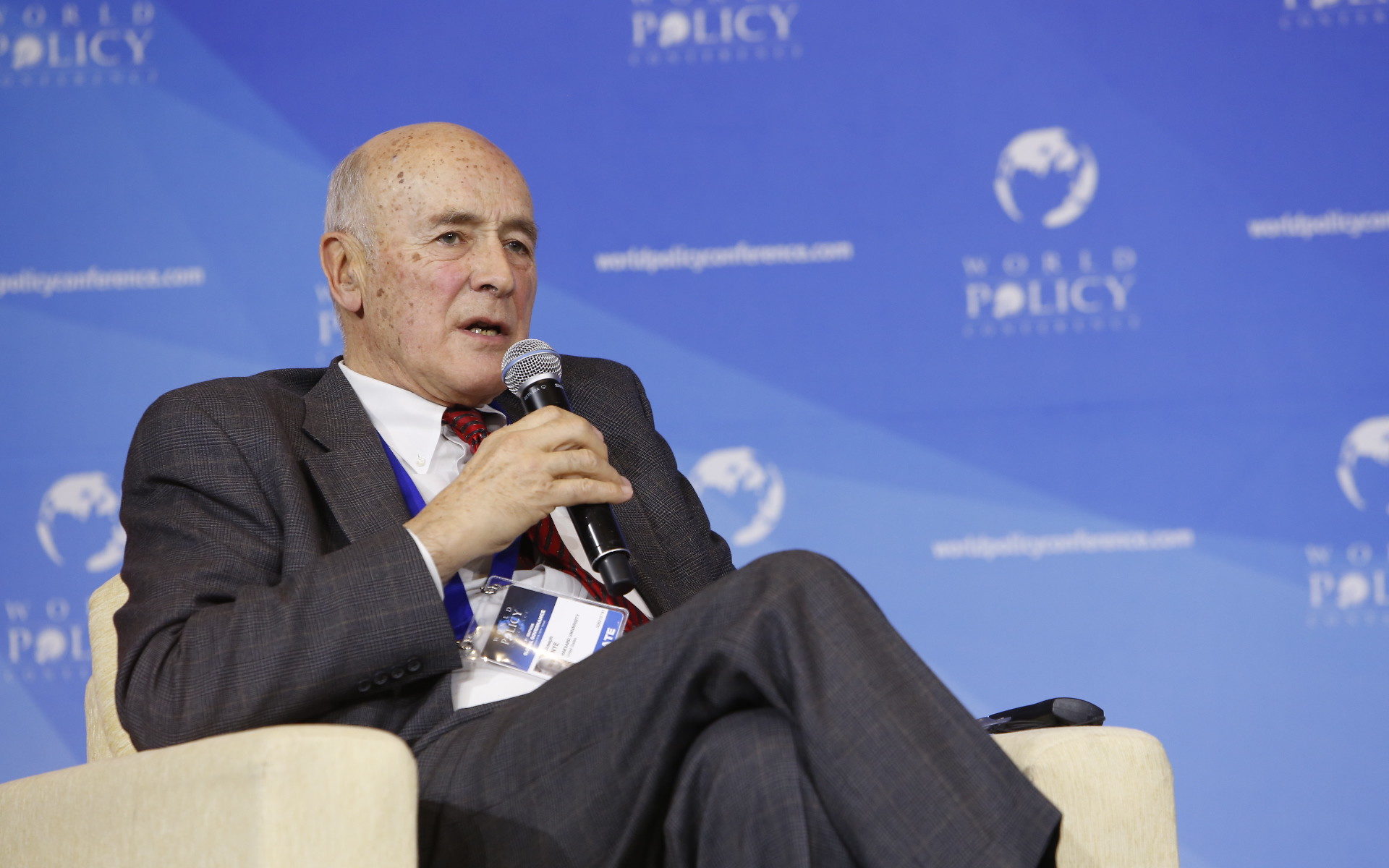
As the war between Russia and Ukraine continues, our panel of IAI contributors offer their analysis of the situation. Lawrence Freedman, Hew Strachan, Domitilla Sagramoso and Joseph Nye on what to expect in the short and long run, the role of nuclear weapons, and how to make sense of Putin.
Lawrence Freedman
Emeritus Professor of War Studies at King’s College London. He was a member of the Iraq Inquiry and was the official historian of the Falklands War.
For those of us who have long wondered why Putin would embark on an aggressive war, the core puzzle has been what he could hope to achieve politically. A limited campaign in Eastern Ukraine made some sense as it would carve out an area that could be sustained and defended over time. The current scale of operations makes less sense because it essentially requires regime change in Kyiv. In Iraq and Afghanistan the US and the UK learned through bitter experience how difficult this can be.
The point about wars (and I have studied many) is that they rarely go according to plan. Chance events or poorly executed operations can require sudden shifts in strategy. The unintended consequences can be as important as the intended. These are the pitfalls surrounding all wars and why they should only be embarked upon with good reason (of which the most compelling is an act of self-defence).
The decision to embark on this war rests on the shoulders of one man. As we saw last week, Putin has become obsessed with Ukraine, and prone to outrageous theories which appear as pretexts for war but which may also reflect his views. So many lives have already been lost because of the peculiar circumstances and character of this solitary individual, fearful of Covid and a Ukraine of his imagination. At times in democracies we lament the flabbiness, incoherence, short-sightedness and inertia of our decision-making, compared with autocrats who can outsmart us by thinking long-term and then taking bold steps without any need to convince a sceptical public, listen to critics, or be held back by such awkward constraints as the rule of law. Putin reminds us that that autocracy can lead to great errors, and while democracy by no means precludes us making our own mistakes, it at least allows us opportunities to move swiftly to new leaders and new policies when that happens. Would that this now happens to Russia.
This is an edited excerpt from Lawrence Freedman’s Substack, published here with the author’s permission.
Hew Strachan
Professor of International Relations at St. Andrews, and world-renowned expert on war, military strategy and the British Army.
The campaign plan which the Russians are putting into effect points to a rapid encirclement of Kyiv and the installation of a puppet Ukrainian government. A short war ending in a clear-cut victory may produce a decisive political outcome. Putin has the initiative for now, but this, like so many other wars that have promised quick results, looks destined to be long. The longer it is the less certain its possible outcomes.
As the war lengthens, both sides will have to accommodate the major economic consequences of sanctions. For Russia, they could inflame the domestic dissent that is already evident. Putin’s Russia is more open than the Soviet Union and his decision to go to war seems to have left him isolated, even among senior elites. His political future now depends on the war’s outcome. The presidents of both the United States and Ukraine have spoken over his head to the people of Russia. But dead Russian soldiers could also rally the Russian people to support the war and so to Putin.
The challenge for the international community is how to contain the war and strengthen the multilateral order, not just in Europe but also globally, while supporting Ukraine short of a direct military commitment. These aims may have been clarified by Russia’s invasion but they are no easier to put into effect than they were before the fighting began.
Putin has threatened those who rush to support Ukraine with nuclear attack. Moreover, intervention could also foment civil war within Ukraine. Playing it long is sensible but will be difficult, as domestic public opinion demands quick responses to Russian outrages but then turns inward to focus on shortages of key commodities and soaring energy prices. The need for clear statesmanship is paramount: Putin has gambled on it being in short supply.
Domitilla Sagramoso
Senior lecturer in Security and Development at the Department of War Studies at King’s College London, and a noted expert on Russian foreign and security policy.
The fact that Russia has nuclear weapons lies at the heart as to why the West cannot fully intervene militarily. There is danger and risk involved in escalating the conflict to a nuclear level. Putin has already sent an unveiled threat that he would escalate to a nuclear level if NATO intervened.
This invasion should finally lay to rest the argument that Putin is a rational actor who measures his actions carefully. If we look at Russia’s actions in the North Caucasus in the early 2000s, it was clear that he had a complete disregard for civilian casualties. Russia’s military operation was very brutal; it included mass abuses of human rights, attacks of civilians fleeing from conflict zones, disappearances of people, and indiscriminate bombing. The same applies to Russia’s intervention in Syria, with the carpet bombing of Aleppo. Putin is acting emotionally in Ukraine; he has a strong attachment to the USSR and to the former Russian Empire, of which Ukraine were important parts.
As to the theory that NATO is to blame for making Russia feel threatened by expanding into regions formerly controlled by the USSR, it might have made sense in the past (in the 1990s or in 2008 when talks of Georgia and Ukraine joining NATO were ongoing) but no longer. Furthermore, the presence of NATO forces in the eastern flank, near Russia, was extremely slim, almost symbolic, compared to the forces Russia had amassed on the border, although NATO is significantly reinforcing its presence on the eastern flank now. This war, in fact, shows how wrong Russia was to feel threatened by NATO’s supposed interest to expand into Ukraine, because NATO had no presence in Ukraine and European countries are only now starting to provide military equipment to Kyiv. So, this argument that Russia was being encircled by NATO and had to react is no longer valid.
Putin, it seems to me, has lost touch with reality. Before this operation started, he was obsessing with the idea that Ukraine was going to attack Russian minorities in the Donbas region, and that the USA was manipulating the Ukrainian leadership into such an operation. His whole worldview is so removed from the West’s understanding of the events in Eastern Europe that we can’t exclude the risk of escalation.
Joseph Nye
Chairman of the National Intelligence Council under Clinton, and former Dean of Harvard’s Kennedy School of Government, Nye coined the term ‘neoliberalism’.
What’s ahead? Distinguish between the short and medium term. In the short term, it seems that the Russian army will overpower the Ukrainian army. But long term is likely to be more difficult for the Russian invaders. The US military was able to overcome Saddam Hussein’s military quite quickly, but “mission accomplished” proved to be misleading regarding Iraq over the long term. Ruling a mobilized nationalistic population is much more difficult than defeating an army.
Russia’s possession of nuclear weapons has deterred the US and NATO sending troops into Ukraine, but that still leaves the problem described above. Nuclear weapons do not change that at all. And in the meantime, Russia’s actions seem to have strengthened NATO.
La crise en Ukraine aura eu pour mérite de faire sortir l’Allemagne du sommeil stratégique dans lequel elle était plongée depuis la chute de l’Union soviétique.
Nicolas Barré (Dessin Kim Roselier pour « Les Echos »)
Publié le 28 févr. 2022 à 17:10 | Mis à jour le 28 févr. 2022 à 19:38
Enfin, l’Allemagne s’éveille au XXIe siècle. Vladimir Poutine aura réussi l’exploit de la sortir du grand sommeil stratégique dans lequel elle était douillettement plongée depuis Gerhard Schröder, devenu chancelier en 1998, puis Angela Merkel. « Nous avons failli face à l’histoire » : cet aveu terrible de l’ancienne ministre de la Défense de la chancelière, Annegret Kramp-Karrenbauer, dit tout.
Engourdie comme d’autres Etats européens dans le mythe des « dividendes de la paix », l’Allemagne d’Angela Merkel n’a pas perçu la montée des périls. Ironie de l’histoire, il revient désormais à son successeur, Olaf Scholz, imprégné de culture pacifiste mais aiguillonné par les événements et sentant le souffle de l’histoire , de réussir ce réveil stratégique.
Un rôle pour l’histoire
C’est le moment d’endosser des rôles plus grands que soi. Dans Kiev assiégé, l’ex-acteur comique Volodymyr Zelensky le prouve chaque jour , usant avec talent des réseaux sociaux – face à l’envahisseur, toutes les armes sont bonnes à prendre. Devant le Bundestag en fin de semaine dernière, Scholz fut à la hauteur du changement d’ère que l’on attendait de Berlin.
Depuis la fin de la guerre froide, jamais l’Allemagne n’a porté ses dépenses militaires à 2 % du PIB. Elle s’engage désormais à aller au-delà et reconnaît de facto l’échec de sa stratégie de sécurité vis-à-vis de la Russie qui, depuis la chute de l’Union soviétique, avait consisté à miser sur une coopération économique renforcée.
Naïveté
Solder ces années de naïveté va coûter cher. Il y a quelques jours encore, la ministre des Affaires étrangères Annalena Baerbock justifiait son refus d’exclure les banques russes du système Swift par la nécessité de continuer à importer du charbon et du gaz. Pour la ministre écologiste, brûler du charbon russe était donc plus important que de sanctionner l’écrasement de la démocratie ukrainienne !
De même, Berlin s’accrochait à sa doctrine officielle de ne pas livrer d’armes à des régions en guerre, doctrine qui n’a toutefois pas empêché son industrie de défense de livrer l’Arabie saoudite face au Yémen…
Servitude volontaire
Solder ces années de naïveté, c’est aussi admettre que la stratégie de sortie à marche forcée du nucléaire, sans aucune concertation avec ses partenaires européens, a plongé l’Allemagne, et avec elle tout notre continent, dans un état de dépendance préoccupant à l’égard de Moscou. Et si l’on élargit la focale, en finir avec la naïveté, c’est également reconnaître qu’au nom de la défense de son industrie, notamment automobile, l’Allemagne n’a pas poussé l’Europe à exiger de la Chine une vraie réciprocité dans l’accès à son marché.
Que ce soit vis-à-vis de la Russie, de la Chine ou des autres grandes puissances, l’Europe n’a pas pour destin de s’accommoder d’un état de servitude volontaire. Il était temps que cela soit admis dans toutes les capitales du continent.
OPINION. En ordonnant une invasion, Poutine affiche un mépris éhonté à l’encontre des traités internationaux et du droit international. Il n’y a pas eu d’événement comparable en Europe depuis Hitler, écrit Joschka Fischer, ancien ministre allemand des Affaires étrangères et vice-chancelier de 1998 à 2005
Le président russe Vladimir Poutine a fait son choix. Il a amené la guerre en Ukraine. C’est un moment décisif pour l’Europe. Pour la première fois depuis les guerres des Balkans des années 1990, qui se sont limitées à la région de la Yougoslavie à l’heure de sa désintégration, le continent est une fois de plus confronté à des bombardements de villes et à des divisions de chars en mouvement. Sauf que cette fois-ci, c’est une superpuissance nucléaire qui a ouvert les hostilités.
What Putin is doing is a violation of the basic principles of human coexistence. This is the moment to stand up and to speak out.
Josep Borrell, EU high representative for foreign affairs and security policy. Photograph: Anadolu Agency/Getty Images
At this dark hour, when we see Russia’s unprovoked and unjustified invasion of Ukraine and massive disinformation campaigns and information manipulation, it is essential to separate lies – invented to justify what cannot be justified – from facts.
The facts are that Russia, a major nuclear power, has attacked and invaded a peaceful and democratic neighbouring country, which posed no threat to it, nor provoked it. Moreover, president Putin is threatening reprisals on any other state that may come to the rescue of the people of Ukraine. Such use of force and coercion has no place in the 21st century.
What Putin is doing is not only a grave violation of international law, it is a violation of the basic principles of human coexistence. With his choice to bring war back to Europe, we see the return of the “law of the jungle” where might makes right. The target is not only Ukraine, but the security of Europe and the whole international rules-based order, based on the UN system and international law.
His aggression is taking innocent lives, crushing people’s wish to live in peace. Civilian targets are being struck, clearly violating international humanitarian law, forcing people to flee. We see a humanitarian catastrophe developing. For months, we pursued unparalleled efforts to achieve a diplomatic solution. But Putin lied to the faces of all who met him, pretending to be interested in a peaceful solution. Instead, he opted for a full-scale invasion, a fully fledged war.
Russia must cease its military operations immediately, and unconditionally withdraw from the entire territory of Ukraine. The same goes for Belarus, which has to immediately stop its involvement in this aggression and respect its international obligations. The European Union is united in offering its strong support to Ukraine and its people. This is a matter of life and death. I am preparing an emergency package to support the Ukrainian armed forces in their fight.
The international community will now in response opt for a full-scale isolation of Russia, to hold Putin accountable for this aggression. We are sanctioning those who finance the war, crippling the Russian banking system and its access to international reserves.
The EU and its partners have already imposed massive sanctions on Russia that target its leaders and elites and strategic sectors of the Kremlin-run economy. The aim is not to harm the Russian people, but to weaken the Kremlin’s ability to finance this unjust war. In doing this, we are closely aligned with our partners and allies – the US, Canada, the United Kingdom, Japan, South Korea and Australia. We also see many countries from around the world rallying to protect the territorial integrity and sovereignty of Ukraine, including the United Kingdom. We stand together on the right side of history in the face of Russia’s horrifying attack on a free and sovereign country.
To justify its crimes, the Kremlin and its supporters have engaged in a massive disinformation campaign, which started already weeks ago. We have seen Russian state media and their ecosystem peddling untruths in social media networks with the aim of deceiving and manipulating.
The Kremlin propagandists call the invasion “a special operation”, but this cynical euphemism cannot hide the fact that we witness a fully fledged invasion of Ukraine, with the aim to crush its freedom, legitimate government and democratic structures. Calling the Kyiv government “neo-Nazi” and “Russophobic” is nonsense: all manifestations of nazism are banned in Ukraine. In modern Ukraine, extreme rightwing candidates are a fringe phenomenon with minimal support, without passing the barrier to enter the parliament. The Ukrainian government did not cut the Donbas off and it has not prohibited the use of Russian language and culture. Donetsk and Luhansk are no republics, they are Ukrainian regions controlled by Russia-backed and armed separatist groupings.
We know this – and many Russians know this. There have been courageous protests in cities across Russia since the invasion started, demanding the end of the aggression against a peaceful neighbouring nation. We hear their voices and recognise their courage in speaking out, and we also see many prominent public figures in Russia protesting this senseless invasion.
I continue to work with our partners around the world to ensure the joint action of the international community against the Kremlin’s behaviour. On 25 February, only Russia vetoed a UN security council Resolution on Russia’s aggression against Ukraine, with China, India and the United Arab Emirates abstaining. From all over the world, countries condemn Russia’s attacks, and at the General Assembly the entire international community needs to join forces and help to end Russia’s military aggression by adopting the related UN resolution.
With this war on Ukraine, the world will never be the same again. It is now, more than ever, the time for societies and alliances to come together to build our future on trust, justice and freedom. It is the moment to stand up and to speak out. Might does not make right. Never did. Never will.
Read the original article on the site of The Guardian.
Le banquier Jean-Claude Meyer appelle, dans une tribune au « Monde », à un allègement massif de la dette des pays africains, dont la stabilité économique, déjà mise à mal par la pandémie, va subir le choc de l’inflation et de la hausse des taux d’intérêt
Publié le 18 février 2022 à 10h00 | Lecture 4 min.
Tribune. Le fossé entre les pays développés et les pays en voie de développement et émergents s’est creusé avec la pandémie. Il va certainement s’amplifier, à cause de nos deux « virus » que nous allons exporter chez eux : l’inflation et la hausse des taux d’intérêt. Notre inflation va naturellement réduire le pouvoir d’achat des pays les plus pauvres (en particulier à cause de la hausse des denrées alimentaires) et l’épargne des classes moyennes.
L’inflation est un accélérateur de pauvreté, et l’on sait que, contrairement à ce que les banquiers centraux ont dit pour nous « endormir » ou par manque de lucidité, elle ne sera pas transitoire, mais durable. En même temps, la hausse des taux, déjà amorcée sur les bons du Trésor à 10 ans, va durement frapper ces pays, grevés pour la plupart par leurs déficits budgétaires et le risque de surendettement.
Même si les taux d’intérêt réels resteront faibles, cette hausse, annoncée en mars par la Réserve fédérale américaine et sans doute bientôt par la Banque centrale européenne, rendra plus difficile et plus onéreux leur appel aux marchés internationaux pour se refinancer, boucler leur budget, et financer leurs projets de développement.
L’importance de l’inflation
Elle accroîtra la volatilité et l’incertitude de leurs flux de capitaux ; le dollar se renforçant, leurs monnaies vont être dévaluées, entraînant de sorties massives de capitaux : déjà 50 milliards de dollars viennent de sortir du Chili, 15 milliards de dollars du Pérou.
« En 2022, les pays les plus pauvres devront payer 80 milliards de dollars au titre du service de leur dette. Compte tenu de cette charge, les pays vulnérables auront plus de mal à affecter des ressources à la santé, à l’éducation, à la protection sociale et au climat », s’est inquiété David Malpass, président de la Banque mondiale, dans son dernier rapport (janvier 2022).
En outre, le « gap d’infrastructures » est estimé à 100 milliards de dollars par an en Afrique ; en Côted’Ivoire, le plan national de développement 2021-2025 requiert près de 90 milliards d’eurosd’investissement, dont deux tiers sont attendus du secteur privé. Depuis mars 2020, le Fonds monétaire international (FMI) a approuvé une aide totale de 170 milliards de dollars à 90 pays, outre des droits de tirage spéciaux (DTS) de 21 milliards.
L’initiative de suspension de la dette (ISSD) lancée par le G20 et le Club de Paris a permis à 48 pays les plus fragiles de suspendre le remboursement de 13 milliards de dollars, mais il a pris fin en décembre 2020. Le Sri Lanka, le Ghana, le Salvador et la Tunisie sont au bord du défaut de paiement ;l’Argentine vient de restructurer avec le FMI sa dette de 44,5 milliards de dollars ; le Tchad, l’Ethiopie et la Zambie sont engagés dans une restructuration de leur dette au sein du cadre commun mis en place par le G20.
Un risque de déflagration
En plus de ces endettements inquiétants, les trajectoires de croissance se sont inversées entre les pays développés et pays en voie de développement et émergents. D’ici 2024, les premiers auront accru leur produit national brut de 0,9 %, tandis que les seconds l’auront vu chuter de 5,5 %. Depuis 2020, au moins 70 millions de personnes sont tombées sous le seuil de pauvreté, vient de révéler Gita Gopinath, directrice générale adjointe du FMI.
Véritable scandale, seulement 4 % de la population des pays pauvres est vaccinée. La pandémie a fait des ravages en Amérique latine et en Afrique subsaharienne, particulièrement chez les jeunes, dont l’éducation a pâti des fermetures d’école. Dans les pays pauvres, l’inflation importée et la hausse des taux vont s’ajouter à la hausse de l’endettement et la chute de la croissance.
Prenons garde : une crise financière de ces pays pourrait propager une déflagration sur nos marchés financiers florissants. Il est d’une urgence vitale que le FMI, la Banque mondiale, le G20, le Club de Paris, la Chine et les créanciers privés prolongent la suspension du remboursement de la dette des pays les plus pauvres, notamment en Afrique, apportent de nouvelles sources de financement bonifiées avec la réallocation des DTS des économies développées, et accélèrent le rééchelonnement de leurs dettes.
Une question de survie
Surtout au moment où, dans certains Etats d’Afrique de l’Ouest, le djihadisme s’abreuve de la faiblesse des structures étatiques et de la pauvreté ; et où la pression démographique accrue par la récession et les incertitudes politiques risque d’entraîner d’importantes vagues migratoires. Le plan d’investissement public et privé de 150 milliards d’euros annoncé jeudi 10 février par la Commission européenne dans le cadre du volet Afrique-Europe de l’initiative « global gateway », répond en grande partie à notre cri d’alarme.
Espérons que le sommet Europe-Afrique qui se termine à Bruxelles vendredi 18 février confirmera ce plan et contribuera ainsi à apporter, pour l’Afrique en tout cas, des solutions solidaires et concrètes. Ily va de la survie de ces pays. Il y va aussi de notre intérêt.
Jean-Claude Meyer (Vice-président International de Rothschild et Cie)
Lors du sommet Europe-Afrique de Bruxelles, jeudi et vendredi, les dirigeants des deux continents devront se mettre d’accord sur la prise en charge des investissements énergétiques
Par Pascal Airault
17 février 2022 à 6h00
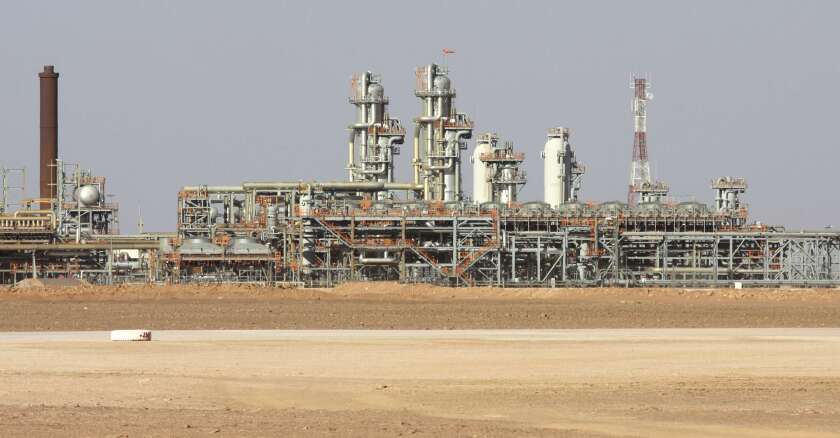
Le site gazier de Krechba, au sud d’In Salah en Algérie. Sipa Press
Les faits – Les dirigeants de l’Union européenne et de l’Union africaine se réunissent à Bruxelles les 17 et 18 février 2022 à l’occasion du sixième sommet UE‑UA afin de jeter les bases d’un nouveau partenariat. Pour contrecarrer le projet chinois des Routes de la Soie, l’Europe prévoit d’investir 150 milliards d’euros sur le continent africain d’ici à 2027, dont une partie dans la transition énergétique. Mais les Africains souhaitent le maintien des financements pour les énergies fossiles…
L’Europe sera-t-elle au rendez-vous du gaz africain ? C’est l’un des enjeux du sommet des dirigeants européens et africains de jeudi et vendredi à Bruxelles. « Il existe un fossé entre la façon dont les Africains considèrent la question du climat et de l’énergie et celle dont nos amis Européens les considèrent », estime Mo Ibrahim, co-créateur de la Fondation Afrique-Europe et président de la Fondation Mo Ibrahim.
Selon lui, l’Europe ne peut continuer à produire et à se fournir en énergies fossiles (gaz, charbon) sur le continent africain alors qu’elle refuse de financer ses projets gaziers. Il estime que c’est « moralement indéfendable ».
La conférence des Nations unies sur le changement climatique (COP 26), en novembre dernier à Glasgow, a laissé un goût amer aux responsables africains. Les bailleurs de fonds ne sont pas au rendez-vous des promesses, alors qu’ils s’étaient engagés à lever 100 milliards de dollars de financement climatique. La question est sensible. Environ 600 millions d’Africains n’ont pas accès à l’électricité dont la demande croît d’environ 6 % par an sur le continent.
« Injustice climatique ». Le 10 février, l’Union européenne a annoncé un plan de 150milliards d’euros dans le cadre de sa nouvelle stratégie d’investissement baptisée « GlobalGateway ». Une partie est destinée à la transition verte à travers une aide au développement desénergies renouvelables. Mais Bruxelles rechigne toujours à financer les énergies fossiles. Président en exercice de l’Union africaine, le Sénégalais Macky Sall a récemment demandé aux Européens de revoir leur copie. « Les économies africaines sont celles qui polluent le moins, mais c’est la partie du monde qui subit le plus les conséquences du changement climatique, justifie-t-il. Il ne faudrait pas rajouter une injustice climatique à l’Afrique en décidant de ne plus financer les énergies fossiles. » Futur producteur de gaz, le Sénégal est particulièrement concerné.
« L’UE considère le gaz comme un pont vers la neutralité climatique, mais seulement s’il remplace le charbon et si les investissements sont prêts pour l’hydrogène »
Du côté de la Commission européenne, Frans Timmermans, vice-président exécutif pour le Green Deal, semble aujourd’hui faire un pas vers les dirigeants du continent, même s’il assure que la transition verte restera au cœur des programmes de coopération pour les dix prochaines années. « L’UE considère le gaz comme un pont vers la neutralité climatique, mais seulement s’il remplace le charbon et si les investissements sont prêts pour l’hydrogène », explique-t-il.
Bruxelles compte sur les pays du Sud afin de sortir de sa trop grande dépendance au gaz en provenance de Russie. Premier fournisseur de l’UE, ce pays exporte annuellement 160 milliards de mètres cubes de gaz vers le Vieux continent, soit 40 % des importations européennes et 55 %des besoins de l’Allemagne. Une des alternatives est la fourniture d’hydrogène à prix compétitifs, selon Frans Timmermans. L’Allemagne prospecte les capacités du Nigeria et de l’Angola en la matière. Le Mali a aussi des gisements.
Contingences politiques. Africains et Européens devraient aborder ces questions lors de la table ronde consacrée au sujet lors du sommet UE-UA. « On étudiera les questions un peu plus subtiles sur la manière dont se fait la transition énergétique des pays qui ont remplacé le charbon et le fioul par du gaz en tant qu’énergie de transition », confie une source élyséenne.
Les fournitures de gaz africain à l’Europe ont été soumises aux contingences politiques ces dernières années. Le gazoduc Greenstream, qui relie la Libye et l’Italie, a rouvert en octobre dernier après des mois de fermeture. Il permettait d’exporter neuf milliards de mètres cubes de
gaz par an en Italie, soit 12 % des besoins du pays, avant le début du conflit.
L’Algérie continue à fournir l’UE via ses gazoducs reliés à la Sicile et à l’Espagne mais a suspendu, en novembre dernier, les approvisionnements via la bretelle connectée au Maroc puis à l’Espagne en raisonde la crise politique avec Rabat.
Alger, qui exporte plus de 40 milliards de mètres cubes de gaz par an, prévoit d’augmenter ses capacités d’acheminement vers l’Europe. L’Algérie et le Nigeria ont discuté, début février, de la construction d’un gazoduc reliant leurs deux pays, en passant par le Niger. Sa réalisation permettrait d’augmenter sensiblement les livraisons au continent européen. Et le Nigeria et le Mozambique devraient enfin augmenter leurs exportations de GNL dans le futur grâce à la construction de complexes de liquéfaction. Les réserves prouvées de gaz naturel de l’Afrique sont de 14,9 milliards de mètres cubes, soit plus de 33 fois celles de l’UE.
Governments’ irresponsible fiscal policies and the monetary measures of central banks, in clear breach of statutory law, have long been paving the way for inflation. Such dangerous practices have been taking place in democratic and authoritarian regimes all over the world. They are the result of populist tactics from politicians seeking approval from their clientele.
Dangerous gift
The appalling consequence of all this is that political systems have bought voters with their own money. This form of corruption takes place through redistribution. A classic example of this is: take money from Peter (the alleged rich) and give it to Paul. Paul (the majority) is grateful and votes for those who give him money. However, Peter is the one who invests in the economy, either by working harder or thanks to savings, and therefore in such situations, capital is taken out of the economy and economic activity is adversely affected because of wrong incentives.
Governments and administrations, whose function should be to provide services to citizens, have rather taken on the role of an authority figure that watches and controls the population, all under the guise of benevolence. But most often this “benevolence” amounts to buying votes in democracies or boosting regime approval in autocracies.
Politicians have so far preferred to ignore or minimize the problem, since the austerity measures needed to solve the issue would take away the tool to appease voters with money.
Former British Prime Minister Margaret Thatcher once said the problem with socialism is that “you eventually run out of other people’s money.” And here we are now. Over the last 20 years, both conservative and liberal parties have joined the social democrats in resorting to populism and started implementing socialist policies. And then, more recently, short-term politics began dictating central banks’ actions. This started with measures like zero-to-negative interest rates and quantitative easing to release an unlimited flood of money. In parallel, some economists began promoting Modern Monetary Theory, stating that governments can incur unlimited debt without adverse consequences. These claims defy all empirical economic science and sheer common sense – they are no more than fraud.
Inflation was the unsurprising result. Asset inflation has long been rocketing, but the trend went unnoticed because the focus is on consumer price indexes (CPI). But suddenly, with supply chain problems CPIs started to rise rapidly in the United States and Europe.
Complete corruption
Inflation is a hidden tax. It affects every layer of society. It leads to misery and unrest.
This is an issue that has to be addressed. Politicians have so far preferred to ignore or minimize the problem, since the austerity measures needed to solve the issue would take away the tool to appease voters with money. But this money is not a gift from a “benevolent government,” it is capital that is being misappropriated from others.
In the U.S., the Federal Reserve has at least acknowledged the issue and is starting to tighten the money supply. Six months ago, the European Central Bank (ECB) declared that inflation would be kept in the desired two percent range. Now CPI inflation in the eurozone exceeds 5 percent. Christine Lagarde, ECB President, and main guardian of the stability of the euro, is trying to lull the public by declaring this is a momentary phenomenon, caused by short-term supply chain problems. She claims this will not trigger the wages-price spiral that normally drives inflation. But she hypocritically omits to mention the other underlying reasons for inflation, like huge public deficits and irresponsible overspending. And wages will have to increase.
The situation requires honesty and common sense. But they are in short supply.
Europe is clinging to its illusions and the public is being misled by governments and the Central Bank. Green economy, global warming and Covid relief have provided perfect excuses to continue this madness. It is possible that Ms. Lagarde does not realize what she is doing – her past experience is in politics, not in central banking. She may be insufficiently familiar with the principles of monetary and fiscal policy, or overly concerned with preserving the current political power setup, at least in the short term. After all, her own appointment was political. Let us assume this is what lies at the heart of the problem – rather than a coordinated attempt to establish a centralized technocratic system that will harm market efficiency, and limit prosperity and individual freedom. But the end result remains the same. European democracies are on the path to complete political corruption. And the ECB is leading the way.
Pour Thierry de Montbrial, président de l’Institut français des relations internationales (Ifri), les pays de l’Union européenne n’ont d’autre choix que de serrer les rangs au sein de l’Alliance atlantique
Thierry de Montbrial, président de l’Ifri. (AFP)
Voici sa tribune. Au moment où Vladimir Poutine, seul décideur en Russie de la guerre et de la paix, vient de choisir la guerre, l’heure n’est pas à se disputer sur les erreurs commises par les Occidentaux dans leur approche de la sécurité européenne depuis la fin de la guerre froide. L’exercice devra être mené le moment venu, dans un esprit constructif. Dans l’immédiat, les pays de l’Union européenne n’ont d’autre choix que de serrer les rangs au sein de l’Alliance atlantique, et de prendre des sanctions économiques dont ils auront à subir eux-mêmes les lourdes conséquences à court et moyen termes, notamment dans le domaine énergétique. Le but est que les Russes paient effectivement un prix très élevé pour leur agression. En attendant, une chose est certaine : l’Ukraine est la grande victime de ce monumental échec du système de la sécurité européenne.
La France – elle n’est pas la seule – avait depuis longtemps oublié que, sous le vernis de la diplomatie du spectacle à des fins de politique intérieure autant qu’extérieure, les relations internationales reposent sur les rapports de force face aux situations géopolitiques telles qu’elles se présentent dans le temps. Il ne sert à rien de polémiquer sur les tentatives d’Emmanuel Macron à Moscou, mais aussi à Beyrouth ou ailleurs. On n’a jamais tort d’essayer de bonne foi d’éviter le pire, même quand on a peu de cartes dans sa main. Encore faut-il regarder la réalité en face. En tendance, le poids de la France n’a cessé de diminuer depuis la fin de la guerre froide, notamment sur les flancs de l’Europe, à l’Est ou au Sud. Nous ne sommes plus un acteur majeur au Moyen-Orient et les opinions publiques nous sont de plus en plus défavorables en Afrique francophone, alors même que la « Françafrique » n’existe plus et que nous avons fait du bon travail contre les djihadistes au Mali. La Russie n’a plus pour la France la considération que lui manifestait l’Union soviétique. Un demi-siècle après la fameuse question de Kissinger sur le numéro de téléphone de l’Europe, Poutine lui répond en substance que c’est celui de la Maison-Blanche. Et trop souvent en effet au cours des dernières décennies, les Européens ont dû subir sans broncher les conséquences de décisions contraires à leurs intérêts, prises par Washington.
Le poids de la France n’a cessé de diminuer depuis la fin de la guerre froide
Quoi qu’il en soit, après le coup de force de Poutine, il est indispensable que l’UE mette au premier rang de ses préoccupations une réflexion autonome sur l’avenir de la sécurité du continent. D’autant plus que le retour de Trump ou d’un trumpiste à la Maison-Blanche est possible. À ce niveau, il s’agit de savoir de façon précise ce que nous voulons nous préparer à défendre, avec qui et avec quels moyens. En bref, nous devons identifier clairement nos intérêts, sans hésiter à employer ce terme. Mais en disant nous, qui sommes-nous ? La France doit reconnaître qu’aucune grande politique, en particulier en Afrique du Nord et de l’Ouest ou au Moyen-Orient, ne sera plus possible sans coopération étroite avec au moins certains de ses partenaires de l’UE. Ces coopérations devront être pensées à long terme et assorties d’institutions dotées de moyens proportionnés aux enjeux. On gagnerait à aborder les problèmes de sécurité en s’inspirant de la méthode de Jean Monnet, comme pour la Communauté européenne du charbon et de l’acier (CECA). Point ne serait besoin, pour cette refondation, de subordonner toutes les initiatives à l’accord unanime des pays membres. Chacune d’elles devrait être portée par un noyau de volontaires, au sein duquel figureraient idéalement les six pays fondateurs.
Pareille approche à long terme ne serait pas aux dépens de l’Alliance atlantique, que Vladimir Poutine a réussi à remettre en selle. Mais, face aux nuages qui s’accumulent, les plus influents de ses membres européens devront désormais, le plus possible en amont des crises concevables, être au clair sur la compatibilité entre les intérêts européens et américains. En agressant l’Ukraine, la Russie a aussi fait le choix de se rapprocher encore davantage de la Chine, et nul ne sait quel parallèle Poutine et Xi Jinping ont pu mener entre l’Ukraine et Taïwan. Une bonne partie du monde, en particulier en Asie, veut éviter d’avoir à choisir entre les États-Unis et la Chine. Sur ce point majeur également, l’Union européenne doit clarifier lucidement ses intérêts, sans nécessairement rechercher l’unanimité de ses membres.
Je suis convaincu que, dans une perspective longue, la refondation de la politique étrangère de la France, dont les lignes principales ont été fixées sous la IVe République, devra passer par un retour à la source de la construction européenne, avec le remarquable mélange d’ambitions et de modestie qui la caractérisa.
As the poet Shelley once hopefully wrote, ‘if winter comes, can spring be far behind?’ When it comes to China–US relations now, it seems that spring is quite far behind.
At the beginning of 2021, there were modest hopes. The good news was that Joe Biden had won the US presidential election. Trump’s trade war had sent the relationship into a deep dive. His manipulation of the China question for domestic political gain contributed to its further deterioration. His handling of the Taiwan issue towards the end of his term increased the risk of accidental conflict across the Taiwan Strait.
Biden is the polar opposite of Trump. He belongs to the US policy mainstream, characterised as professional, decent and cool-headed. Some believed this was a positive sign for China–US relations and held prospect a more pragmatic approach toward China. The Chinese government shared this view and signalled its willingness to work with the new administration.
After the Biden administration officially took office, Yang Jiechi, in charge of China’s foreign relations, said ‘it is a task for both China and the United States to restore the relationship to a predictable and constructive track of development and build a model of interaction between the two major countries that focuses on peaceful coexistence and win-win cooperation’.
But many in Washington interpreted Yang’s message as an effort to blame the United States for the problems between the two countries instead of an expression of goodwill. On assuming office, Secretary of State Antony Blinken defined the new administration’s approach towards China as a mixture of competition, confrontation and cooperation.
It soon became clear that competition would continue to dominate US policy towards China. Washington blasted China’s behaviour on a range of issues, including Hong Kong, Xinjiang, Taiwan, the South China Sea and human rights. Blinken labelled China’s policies in Xinjiang as a ‘genocide’. The Biden administration also stepped up efforts to rally its allies to ‘push back’ on China.
Washington’s uncompromising posture drew frustration and anger from Beijing. Many in China concluded that the Biden administration’s China policy was worse than the Trump administration’s since it sought to create an international anti-China front. A tit-for-tat exchange between Beijing and Washington followed. At the two countries’ first high-level face-to-face meeting in Alaska on 13 November 2021, there was a heated exchange.
Despite some cooperation on particular issues, like climate change, the conflict between the two sides has increased. The issue that drew the most attention turned out to be Taiwan. Taiwan authorities’ efforts to push for independence coupled with increasing US endorsement and support elicited a tougher stance from China, which included sending military aircraft to patrol the vicinity of Taiwan. The vicious cycle of interactions between Beijing, Taipei and Washington increased the likelihood of a military showdown.
Against this background, the virtual summit meeting between Chinese President Xi Jinping and Biden on 16 November was more about how to set guard rails for the relationship than exploring the possibility of substantive cooperation. Despite the summit, the relationship between Beijing and Washington continues to slide. The most recent bickering includes a US official boycott of the Beijing Winter Olympics, sanctions over Xinjiang and Chinese retaliation.
Why has the relationship evolved in this way?
The rise of China has elevated security concerns among US realists about China’s strategic intentions, especially in the light of China’s military moves to defend its proclaimed territorial sovereignty in the South China Sea and the Taiwan Strait. Political developments in China have also disappointed US liberals who had banked on the hope of encouraging political reform in China through engagement.
Trump’s race-to-the-bottom anti-China rhetoric provided a vent for frustration with China for both US realists and liberals alike and contributed to a political atmosphere in the United States in which being tough is the right and only posture when it comes to China.
Given the anti-China consensus in the US Congress and the slim majority the governing Democrats enjoy, Biden has had to remain tough on China to get anything done at home. This includes the appointment of cabinet officials, passing bills to contain COVID-19 and rebuilding infrastructure.
How the two countries interacted with each other, which was characterised by megaphone diplomacy for domestic consumption, undermined any goodwill that remained for stabilisation and improvement of the relationship.
In the short run, these factors are unlikely to change. The 2022 mid-term elections bode ill for China–US relations because the Republicans who stand on an even tougher policy toward China appear likely to win.
Under these circumstances, the Biden administration is unlikely to be able to advance a pragmatic approach toward China. Ahead of the 20th Party Congress, China is also unlikely to compromise.
The stabilisation and improvement of China–US relations is likely to remain a distant prospect for some time yet.
Dr. Volker Perthes, Special Representative of the UN Secretary General for Sudan, discusses the role of UN diplomacy, as well as the impact of the Oct. 25, 2021 coup and the Ethiopian civilian war on Sudan’s transition.
We talk to the former Norwegian politician who wants to make sure that energy doesn’t get wasted
by Peter Judge
Ingvil Smines Tybring-Gjedde is a puzzle. She’s proud of her environmental credentials – but she’s had a career in the petroleum industry, and even represented it in the Norwegian government.
She’s entered the data center world as the CEO of Earth Wind & Power, a company that says it can help with the climate crisis. But EW&P offers fossil-powered data centers running on natural gas burnt at oil wells.
– Earth Wind & Power
All that takes some explaining, but she says it all comes down to efficiency, getting off your high horse, and “looking at the facts.”
A climber
“I started out hating the [petroleum] industry,” she tells us over Zoom. “I was a professional climber, and I loved the outdoor life. I didn’t want people to have any footprint. I was really eager to stop the oil and gas industry. I was on the outside, and I only saw the negative part of it.”
Climbing was how she started, and it’s clearly still in her bones. Each step of her career she’s found the next handhold, and tested it before transferring her weight.
As a climbing instructor, she taught soldiers “how to survive, how not to be taken out in avalanches, and how to rescue your colleagues.”
From there she got involved in rope access: “I was doing maintenance on bridges. Instead of using scaffolding, we said we can do it with ropes – and we can do it in like 10 minutes instead of building this scaffolding.”
“I started a company, called in Norwegian Ut-veg, It’s directly translated as ‘a way out’, but a way out is also a way into something new, out of the house and into nature.”
At this point, her attention turned to oil – and she began working within the Norwegian oil industry, not against it.
Climbing onto oil rigs
Around 1990, Smines Tybring-Gjedde noticed something. Across the North Sea, oil rigs in the British oil fields were using climbers.
“There were actually British climbers on the British [continental] shelf,” she says, “and we thought, if they can do it on the British shelf, we should do it on the Norwegian shelf instead of scaffolding.”
She pioneered rope access on Norway’s oil rigs, starting with a job request to change some bolts on an onshore oil rig.
“I said yes, I can do it,” she tells us, but before she could take the job, she had to get approval. Statoil could not give her a permit for rope access on their oil rigs, “so I traveled to Scotland and got two certificates there.”
Back in Norway, she became a rope access entrepreneur: “I got a job painting the legs of a platform offshore. It was a test. So I climbed down to do the sandblasting and painting, and they used a scaffolding company on the other legs.
“And you know, my team was finished with the whole work before the scaffoldings were built. It was quite a nice job, we got a lot of money, and I still liked being a climber.”
After that, she alternated climbing mountains round the world, with earning money on oil rigs to fund the expeditions. Gradually her opinion of the industry changed.:
“I saw that the oil and gas industry was very eager to reduce its footprint in the environment. So, from not liking it at all, I had a huge transition. I saw that the people working there and the industry as a whole did have some very good morals or ethics – or the needs of doing a good job.”
Fueling global warming
In the big picture, there is plenty to dislike about Norwegian oil. The country has a large, nationalized petroleum industry, which is undeniably fuelling global warming. It supplies roughly two percent of the oil burnt worldwide.
The Intergovernmental Panel on Climate Change’s recent report, and subsequent studies have found that the only way to hit our climate change target of 1.5C global warming is to stop using fossil fuel. We must leave 60 percent of the world’s oil reserves in the ground (and 90 percent of the coal).
But the Norwegian government won’t be doing that, funded as it is from oil fields run by government-run Statoil.
The sector is expected to make the government 277 billion Krone ($30 billion) in 2020. For comparison, that’s roughly one-tenth of Norway’s GDP or $6,000 for each of the country’s five million population.
At home, Norway is very virtuous, with all its electricity coming from renewable sources. It’s making fast progress at electrifying its transport fleet too. But it’s the fourteenth largest oil exporter in the world (and the third largest gas exporter), with a climate change policy that was rated insufficient by Climate Action Tracker.
And far from calling a halt or slowing down, the new center-left government, which replaced the previous Conservative/Progress alliance, is actually planning to grow Norway’s oil industry.
Smines Tybring Gjedde sees a good side to the oil industry. It may be burning the planet, but Norway’s oil companies are concerned for marine life conservation, an area where it’s actually been “at the forefront,” she claims.
“When oil was found on the Norwegian shelf,” she says, “it was immediately put into laws and regulations that this new industry shouldn’t destroy what the other industries were living off – and that was fisheries and shipping.
“It was completely new, but they said that we need to take care of the fisheries, the industries and the environment of the ocean, at the same time as developing the oil and gas industry in such a way that it is it will not destroy the living of the sea, and at the same time also develop the shipping industry to be contributors to the oil and gas industry.”
Norway was lucky to strike oil, she says, but it handled it well: “We are lucky to have oil, but it was not luck that made us put the oil to our pension fund. That was that was just good management and clever people.
“They were really looking years ahead,” she says. “I am having goosebumps now just talking about it. The oil and gas belong to the Norwegian people.”
Climbing into politics
In 2005, she began a traverse into politics. “I didn’t have any wishes to become a politician,” she told us, but she got involved in a campaign for fathers’ access to their children: “I was writing articles in the newspapers, because I was really into how fathers were treated when they divorced. In an equal country like Norway, dads and mums should have equal rights to see their children after they divorced.”
This was around the time she got re-acquainted with her childhood sweetheart, the far-right politician Christian Tybring-Gjedde. The two both have children from previous marriages, and married in 2009.
She also got in touch with Norway’s right-wing, anti-immigration Progress Party. Her husband Christian Tybring-Gjedde is on the extreme end of the party, never a Minister though he was its first (and, for a time its only) MP. He denies the existence of man-made climate change, and twice nominated Donald Trump for the Nobel Peace Prize.
We don’t mention her husband.
At the 2013 election, the Progress Party won more seats, becoming the third-largest party in the Norwegian Parliament, and formed a coalition government with the Conservative Party.
It was then that she got a phone call: “The prime minister called me and asked if I would consider to join them as a deputy minister in the ministry of petroleum and energy. Having been working there for 25 years, I thought, well, a politician with a background for what you should do in the ministry would be nice. So of course I accepted.”
Although not an elected member of parliament, she was appointed state secretary in the Ministry of Petroleum and Energy in 2015.
In 2019 she was appointed Minister of Public Security in the Ministry of Justice and Public Security, serving till the coalition disintegrated in 2020.
How to use flare gas
When her political career ended, she joined some former oil company executives to set up Earth Wind & Power, an energy company with the goal of using energy that would otherwise be wasted.
The company’s first target is oil rigs, at sea and on land, which “flare” natural gas, burning it off because it is considered unprofitable to transport and use. The practice has been banned in Norway from the start of its oil business in 1972, except in emergencies, so Norway pipes its gas to shore.
“It’s like spaghetti on the ground underneath the water,” she says. “The Norwegian continental shelf is quite small, and we have a lot of activity all over it. So the gas pipes are all over. So either they put their gas into the gas pipes and sell it, or they pump it back down into the earth to increase oil recovery.”
Environmentalists would reject any idea of getting more oil out of the ground, but she thinks it’s good use of resources: “Just taking out a little bit of what the reservoir contains is poor resource management. You’ve done all the investments, so it’s really important to get as much as you possibly can out of the reservoirs.”
As an oil minister, she found that other countries aren’t so scrupulous about using flare gas. Flying into oil-producing countries, she looked down and was shocked: “It looks like a birthday cake, you know, with all the flares, and I thought what a waste!”
Oil producers flare off their gas because they can’t find anything better to do with it, but the International Energy Agency wants this to change: “It’s estimated by the IEA, that 30 percent of total global energy production was lost or wasted in 2021. And the World Bank has estimated that up to 150 billion cubic meters of gas is flared every year.”
That much gas, she says, “could power the continent of Africa, or the entire fleet of cars in Europe, and it’s about 150 percent of what Norway exports every year. It’s poor management, and it’s really, really devastating for the environment.”
As well as this it’s a misuse of resources: “It’s horrible, when we know that 60 percent of people across the African continent are without any access to electricity, and we are flaring all this gas. It’s horrible.”
Earth Wind & Power wanted to fix this: “We tried to find solutions of how we can stop the flaring. How could you make it into a product that somebody needed?”
One idea was to bottle the flare gas, and distribute it in energy-poor areas. “One of the founders, his family has been trying to help African women create jobs. We thought that we could take the flare gas, put it into containers, give micro loans to the women and have them sell containers instead of burning coal and wood.”
Firewood is often collected by children, who can’t go to school, she said: “So we could reduce flaring, give the women a job, and improve the health of women who die of cancer from making food at wooden ovens – and help their children go to school, and then come back to the villages and make industry and business for themselves.”
That idea failed: “We couldn’t find a way to do it economically. That’s why nobody does it.”
A foothold in data
Next, the fledgling business picked up on the “megatrend” of digitization: “We know that in 2016, about one percent of the total electricity in the world was used by the data center industry – and there’s an assumption that by 2025 or 2030, 20 percent of the total electricity utilization will go to the data center industry” [according to estimates by Huawei researcher Anders Andrae].
“This is happening when the world needs more and more energy. How can we do it? We need more energy in general, we need to have reduced emissions from the energy, and we need more and more energy for the digitalization of the world. And we also know that 150 billion cubic meters of gas is flared each year.”
If transporting the gas was a problem, she said, “maybe instead we could move the mountain to Mohammed, and put the data centers where the energy is produced.”
EW&P’s idea is to “take the flare gas, make electricity by it, have a cable and put it into the data centers we have made in forty-foot containers.”
The data centers themselves communicate over fiber if it’s available but “very often, if there’s no infrastructure in the rural areas where they are flaring, we can communicate or sell it or transport it by satellites. It’s like a Kinder egg, with a lot of layers.”
– Earth Wind & Power
Make no mistake, these data centers are run on fossil electricity. But they are reducing emissions compared with flaring the gas, she says: “We’re not just transferring the emissions from the flare gas to another industry, because by burning it as we do, we reduce the methane by approximately 100 percent and the NOx and VOCs [volatile organic compounds] by 98 percent.
“We’re not reducing the CO2 – not yet,” she says. “But we are looking into that as well. We might have a solution. We don’t know yet, but we are really putting a lot of emphasis in finding a solution for that also.” It’s a nice aside – in 2016, as junior energy minister, she launched one of the world’s first full-scale carbon capture and storage (CCS) projects.
Even without CCS, she believes a data center run on flare gas can satisfy the definitions of environmental, social and corporate governance (ESG). because of the reduction in other GHGs and pollutants: “So we are also making an ESG data center service.”
Off-grid data centers also potentially reduce the need for generation capacity, she says. “When everything in society is to be electrified, you need more electricity at some times of the day, like eight o’clock in the morning and four o’clock in the evening. You have to make the grid bigger to take the peaks, and then you have to pay for all the grid capacity that you don’t use during the rest of the day. Being outside the grid, using energy that is stranded, is a double positive effort on the environment.”
Why not leave it in the ground?
Making oil wells greener might sound like a good idea, but environmentalists would disagree. The science is clear: the world needs to stop oil producers in their tracks, and wean our infrastructure off fossil energy.
Using flare gas may make some oil wells more profitable, actually prolonging the use of oil. So it’s not surprising that oil companies seem to be welcoming the idea.
Surprisingly, there is a Net-Zero Producers Forum of oil-producing nations, which includes Norway, Canada, the USA, Qatar, and Saudi Arabia. A truly net-zero oil industry would be an oxymoron, however. So the group is diverting attention to smaller issues like flaring.
“They have to stop the flaring. And Earth Wind & Power is the only solution. So they’re really eager to talk to us, both to stop flaring, and to use the excess energy as much as we can.”
She has a few arguments for continuing with fossil fuels, starting with global equity. The idea of an easy, hard stop to fossil fuel exploitation is an easy illusion for the privileged world, she says: “I believe that it’s really important for us in the Western world to look at the situation in for example, Africa, where 60 percent don’t have energy at all.
Sadly, that’s a line big oil companies often take, but GHGs emitted by poor people are just as deadly as those from the developed world. The real answer is to fund the development of sustainable energy in those countries – an issue the rich world failed to address at the recent COP26 climate conference.
She also deploys the “bridge” argument – that natural gas is less polluting than coal.
Africans burn a lot of coal, and export gas, she says: “If you change that coal and use gas instead, you reduce the emissions a lot, and it’s much better energy efficiency to burn gas than coal. So that’s a huge step.”
“Who are we to say that these people should not reduce their energy emissions by using gas instead of coal? I think it’s really difficult to sit on my high horse here in Norway, warm, and with 98 percent renewables in my electricity system. I think it’s really important to look at the facts and help.
“To have the energy transition to more renewables, you need something that can be a bridge,” she says. “And gas is really, really good at doing that. Especially in the African continent, I think we should applaud them for using gas instead of coal.”
Climbing into renewables
Norway already uses resources efficiently, so EW&P is looking abroad to find stranded resources to exploit: “Where they flare the most is in Africa, and Asia and the Middle East.”
And it’s also already operating in renewables as well: “We saw after a little while that there’s excess energy in all kinds of energy production. It’s in solar, it’s in wind, it’s on geothermal. And what’s really good is that because we don’t need a grid, we can be the birth giver to new renewable energy production.”
Providing a ready customer for power can help get renewable projects started in countries with less reliable grids, she says: “Say you’re going to build a geothermal station. As long as you have a hole and power coming out of it, we can put our container on top of that. We can buy your energy so you can invest in building infrastructure which is really, really expensive. Developing a new renewable energy plant will be better economically with EW&P than without, because we can be off-takers of the energy immediately.”
“The cheapest way to develop more energy is in Africa is extra solar,” she says. “They have a huge possibility because it’s cheap. But you need to make it economically viable. We can help them do that. They can install the solar panels, and start the solar firm, and we can help with the takeoff of that power, while they are building the grid or the mini-grid.
“Solar and wind are on track to become the cheapest form of energy in the coming years. And the IEA has estimated that 70 percent of the total investment in this space needs to occur in developing countries.”
The company will start with gas flares, and its first projects are coming in 2022, the CEO tells us: “We have started with some small projects in Africa, just to show that it’s possible. We will have our first container in operation in March.”
EW&P is using a container developed by German efficient hardware company Cloud&Heat: “It’s highly energy efficient, with 30 percent better energy efficiency than the average – and we can also operate in temperatures from -30C to up to 50C.”
That reliability is important. Among other things, a liquid cooled container is easier to seal, to keep out salt sea water or desert sand: “When you place a container offshore, you don’t want any breakage. You really need to double check everything. Cloud&Heat looks a very good solution.
“We’ve done feasibility studies with oil and gas offshore sites – and they concluded very successfully. And we are working with a world leader in wind and solar to provide integrated solutions for offshore renewables.”
Being a swing arm
EW&P is entering a contract for more than ten flare sites in Oman, and has done a pilot project to be part of a solar mini-grid in Uganda, she told us: “It was a very, very small unit, just to see that it’s actually possible. In Africa, with 60 million people not having access to any form of energy, it is really, really important to have mini-grids that can contribute what the local society needs. But the possibility to pay for it is also very low, so you need to find solutions for that as well.”
Solar and wind farms sometimes make extra energy, and an EW&P micro data center can act as a “swing arm” to use that excess, or enable investment to put in more turbines or solar panels: “We can buy that energy, and in that way help the economy go around for renewable investment.”
But is a data center the best use of that electricity, we ask her. Given that the world needs more electricity to decarbonize society, wouldn’t it be better to store the energy for use elsewhere, instead of consuming it in data centers?
EW&P has looked into this but most solutions are too complex, says Smines Tybring-Gjedde. For instance, electrolysis could generate hydrogen, but this just installs a lot more hardware and leaves the energy company with the same problem: storage and transport of a different gas.
“The reason they are burning 150 billion cubic meters of gas is because nobody has found a solution. We have found the solution that we think is the best as per now. Because this is easy. And it’s movable. And it’s stackable. We don’t leave any footprint – because when there’s no gas left, or when they need more of the energy that we have been helping them have an off-take for, we can put our containers on the truck and go to the next station.“
But is this processing worth doing?
There’s another important question: the flare gas energy may be turned into processing, but what if the processing is itself wasted?
The Cloud&Heat container which EW&P is using was co-designed by BitFury, a leading light in Bitcoin and cryptocurrency mining hardware – a global industry which consumes more electricity than a sizable country, for no environmental benefit.
EW&P’s site includes a “Fact Center” with some bullish predictions, including a suggestion that blockchain may be running 20 percent of the global economic infrastructure by 2030 – even though most technology commentators acknowledge that the structure of blockchain makes it massively energy-hungry and unlikely to scale in this way.
But Smines Tybring-Gjedde says blockchain is just one of many options for using EW&P’s output.
“It depends on the site. What kind of interconnections are there? Are they high bandwidth, with a consistent power supply? Is it low bandwidth with a consistent power supply? Or is it low bandwidth with an inconsistent power supply?” she says. “It’s the circumstances that determine what’s possible.”
It’s not possible to say how much EW&P capacity will go to crypto mining, as it’s in an early stage: “It’s feasibility studies, and it [depends on] the bandwidth, the power supply, and the circumstances. Some countries may ban Bitcoin. And some don’t. So it’s really impossible to say. We are a data center service company. And we will look at each site and offer what can be done on that site.”
In Africa, locally-powered data centers could be used for local clouds to enable digital sovereignty: “Cybersecurity is really, really important. And having your own cloud is highly interesting for several of our potential customers. Instead of buying an American cloud, you can produce your own, with your own energy produced in your own country. That is one of the services that we can provide.”
Where there’s no consistent connection, then different work would be done: “It could be blockchain, it could be long term storage, which doesn’t require continuity of service. It could be general HPC for commercial industries, or CFD modeling or AI training.”
She goes on: “I think it’s really important to use excess, ‘stranded’ energy. When there’s low bandwidth and an inconsistent power supply, then you do operations that don’t need anything more than that. In that way, you don’t interfere in the grid or use fiber that you don’t need.”
In most cases, even remote sites have enough connectivity to be useful: “You can transport the data center services by satellites. We have 5G all over the world now.”
It’s been a long climb for Ingvil Smines Tybring-Gjedde. And given the contradiction between reducing emissions and enabling oil exploitation, her latest course looks like a tricky, overhanging rockface.
The EW&P project may be more efficient, it may reduce greenhouse gas, and it could give compute power to developing countries. But it’s still burning fossil fuel in a world that desperately needs to stop burning.
Balakrishna (Bali) D.R., Executive VP, Head of AI and Automation Services, Infosys, explores the drivers of change in AI and Cloud and how it is impacting enterprise strategic development in an interview with Dr. Sally Eaves, a highly experienced chief technology officer, professor in advanced technologies, and a Global Strategic Advisor on digital transformation.
The Role and Adoption of AI has Changed
As many of us pause to reflect on the trends set to dominate 2022, it is clear that we have entered an Age of Convergence across technologies notably AI, Cloud, 5G, and IoT, and similarly, an Age of Experience too, where increasingly personalized expectations from consumer to employee have never been higher.
The pandemic clearly catalyzed acute disruption across sectors and across the world, accelerating digital transformation and adoption levels by up to a staggering seven years (McKinsey). The results of digitalization have largely shown the significant payoffs from that investment, further accelerating enterprise interest and influencing many businesses’ long-term digital strategies, especially around Artificial Intelligence. Infosys exemplifies this sustained commitment, having embedded AI into every area of the company and most notably training, legal, finance, and cybersecurity, whilst also continuing to evolve its offerings to customers to align with their changing behaviors, needs, and expectations. Speaking with Bali, seven drivers of change came to the fore:
Innovation in cloud-based services and computing power to better leverage AI and Data Science
The realization of powerful use cases enabled by integrative technologies with AI at the core
The pivotal role of AI and other technologies to manage the pandemic like contract tracing and creation of vaccination
Enhanced accessibility and democratization including ‘AI As-A-Service models’, advances in AI training, and rise in Open AI/APIs
Regulation starting to catch up with AI development including guideline collaborations
Increasing resonance of AI being a force for societal good has helped to ‘change the narrative’
AI and Cloud – Reimagining Experiences
Multi-channel and omnichannel are not the same thing! People expect seamlessness of experience across web, mobile and social apps alike and increasingly expect the same personalization of experience obtainable in their personal and consumer lives to be available in their working ones too, notably in productivity tools. Putting this into context, AI and appropriate technology integrations can now permeate and enhance every aspect of the consumer journey, from personalized demand generation, providing a curated set of products that fits the customer profile to enabling a frictionless purchasing process. AI can help engage with the customer in the right channels, at the right time, in the right way – from Virtual Agents to AR – and all the way through to affording the services for additional product supply post-sale. And for employees, there is a similar re-imagining occurring across the journey of hiring, onboarding, training, team integration, and organizational engagement. A great example of this change is undertaken within Infosys itself in relation to its talent management lifecycle, improving efficiency across its recruitment process.
‘We use AI to predict the demand, what kind of skills will be in demand, and the quantity of demand …. and to screen, process and review more than 2 million resumes a year and even to understand the speaking skills, tone, articulation of the perspective employee [interview process for contact centers] and then in terms of internal training we use something which we call ‘Infosys Digital Brain’ to find skills demand matches… AI also helps us figure out which employees are getting disengaged to predict churn …and what should we do in terms of interventions’ – Balakrishna (Bali) D.R. Executive VP, Head of AI and Automation Services
Broadening AI Uses and Democratization of Access
It is critical to make AI (and automation more broadly) available to a greater number of users within organizations and beyond traditional heavy technology-facing roles. As discussed with Bali, this starts with education, communication, and values, and I especially love his stated Infosys commitment to ‘invest in each of you’. This changes the narrative around AI potentially taking away jobs to enabling higher-order work activities and indeed opening up new role opportunities too.
As an example, Infosys uses AI within its digital learning platform Lex, an implementation of Wingspan, a next-generation learning solution accessible anytime, anywhere, and on any device to customize programs for both individuals and teams. And the results of increasing AI and automation across the organization have attracted a myriad of collective benefits including efficiency, cost reduction, experience improvement across the entire customer lifecycle, mean time to issue resolution, and even employee morale. This is the value that has been passed onto customers, including setting up specific projects to democratize AI usage into the line of business functions without the need for detailed technical knowledge and experience. The benefits of Infosys’ living labs and information network are also clear, being able to test and iterate with customers to lead into a Proof of Concept and supporting engagements with bleeding-edge start-ups too.
Strategic and Scalable Evolution – Cloud and AI
The trajectory of AI and cloud strategy is interwoven. With cloud the foundational layer for digital transformation from infrastructure, to the services available to clients to transform quickly, AI helps to reduce the complexity of migration processes notably technology refreshes. This may range from the database itself, through to legacy languages, with developers leveraging AI to translate them into modern code thereby expediting the end-to-end development process, improving productivity, and freeing up time for value-added activity such as creative problem-solving. And once migrated, AI helps support the management of operations to optimize ‘Return on Cloud’ by affording visibility and clarity on metrics such as spend and consumption, for example identifying seasonal patterns on load and helping move beyond reactive to a more proactive and always-on active intelligence.
‘We have a platform called Leap – through that we are able to analyze issues before they actually happen, whether it is infrastructure, application-level issues, we are able to respond’ – Balakrishna (Bali) D.R. Executive VP, Head of AI and Automation Services
And in tandem with this, the cloud significantly supports the adoption of AI and API services, especially those available from the hyperscalers, enabling both easier consumption and the capacity to scale AI workloads up and down at speed. Indeed, scalability is a critical part of cloud enablement with many organizations starting to adopt AI in a few use cases or Proofs of Concept but not scaling across their entire entity. A cloud platform-based approach supports this critical ‘moving beyond’ with all the benefits of standardization, curated services, pre-trained models, and lifecycle management too. Clearly AI and cloud feed off each other and where they amplify well they do so both reciprocally and significantly – creating an interlinked strategic focus imperative. This is especially critical when we consider the fact that AI-demand is outpacing supply, fueled by accelerated demands from the pandemic and other resource challenges, and leading to supply chain delays and chip shortages.
Enterprises must therefore optimize their extant resources, which can be supported by the cloud service providers who can pull resources and automate infrastructure to ease AI adoption and enable data centers to be utilized at almost 100% capacity. Infosys Applied AI is an integrative flexible offering that allows businesses to access, deploy, and contextualize cloud services and harnesses the power of convergence across cloud, AI, and analytics to enable new business solutions, manage risks and efficiently scale AI investment enterprise-wide. And as the democratization of AI continues, such an embedded approach to future-proofing technology investment is fast becoming business-critical.
AI for Good and Ecosystem Collaboration
And finally, when we reflect on the future of AI and cloud, one further aspect comes to the fore and that is the shared value benefits their evolution and convergence can bring, further supported by the power of education, research, and partnership. The new Infosys AI Innovation Centre exemplifies this approach, attracting universities, startups, and large enterprises alike with its ready-to-use applications for various industries supported by the combination of Infosys Applied AI, Infosys Cobalt and a depth and breadth ecosystem of digital technologies.
An additional example is the collaboration between Infosys and BP known as ‘Energy As A Service’ and originally announced here. It aims to collect data from multiple energy assets and apply AI to systemically optimize supply and demand for cooling, heating, power, and EV charging. This can help companies maximize their entire energy consumption and utilize more sustainable energy sources. The specifics will vary by industry sector and as highlighted by Bali, the advance of 5G makes an interesting case in point, with AI the key enabler to make connected and efficient choices.
‘We can actually optimize the entire energy consumption [asking ourselves] – When is the peak? When do you need to scale up and scale down the energy requirement in the tower – to know how much coverage you need and how much bandwidth that you have to do based on being able to predict when the load is right. You can look at the whole area around the tower and you can look at how you can use solar panels, wind turbines, etc to be able to generate power to actually run the tower, you can use battery storage to be able to consume the power during the night. And then actually, during peak hours you actually consume from the battery. And that way you reduce the load on the grid’ – Balakrishna (Bali) D.R. Executive VP, Head of AI and Automation Services
This brings to the fore that not only can AI, cloud, and tech convergence more broadly deliver enhanced experiences and new product and service innovations for customers and employees alike, but this integration can also deliver on vital Environmental, Social, and Governance (ESG) outcomes. With consumers and ecosystem stakeholders increasingly conscious and ensuring enterprise transparency, commitment, and accountability for social impact outcomes now a key organizational differentiator, its importance cannot be overstated. Underpinning this, the vision of Global IT Services Leader Infosys in this space is key – aiding enterprise partners to adopt a comprehensive and holistic roadmap approach to scaling AI and ensuring ‘Return on Cloud’, whilst supporting the critical balance of advancing innovation while protecting existing investments at the same time.
MOSCOW (AP) — With Russia carrying out a massive military buildup near Ukraine and the West roundly rejecting Moscow’s security demands, a window for diplomacy in the crisis appears to be closing.
But even as Moscow continues to bolster its forces and holds sweeping war games, President Vladimir Putin is keeping the window open for more negotiations in a calculated game of brinkmanship intended to persuade Washington and its allies to accept Russia’s demands.
The West fears that a Russian invasion of Ukraine may be imminent, while Russia maintains it has no plans to do so but wants its security concerns addressed.
Here is a look at the Kremlin’s strategy in the standoff:
DEMANDS AND RESPONSES
Russia wants the U.S. and its allies to keep Ukraine and other former Soviet nations from joining NATO, refrain from putting any weapons near Russia, and roll back alliance forces from Eastern Europe.
Washington and NATO reject those demands as “nonstarters,” but they also are offering to discuss possible limits on missile deployments, a greater transparency of military drills and other confidence-building measures.
Putin has yet to deliver Moscow’s formal response to the Western proposals, but he has already described them as secondary and warned that he wouldn’t take “no” for an answer on his main demands. He countered the Western argument about NATO having an open-door policy by arguing that it threatens Russia and violates the principle of the “indivisibility of security” enshrined in international agreements.
MILITARY MUSCLE-FLEXING
With the West rejecting its key demands, the Kremlin has raised the stakes by massing over 100,000 troops near Ukraine and carrying out a series of military maneuvers from the Arctic Ocean to the Black Sea.
As part of the show of force, Moscow has moved trainloads of troops, tanks and weapons from the Far East and Siberia to Belarus for joint war games, drawing Western concerns that Russia could use them as a cover for an invasion.
Washington and its allies are raising the prospect of unprecedented sanctions in the event of an invasion, including a possible ban on dollar transactions, draconian restrictions on key technology imports like microchips, and the shutdown of a newly built Russian gas pipeline to Germany.
President Joe Biden’s administration also has deployed additional U.S. troops to Poland, Romania and Germany in a show of Washington’s commitment to protect NATO’s eastern flank. The U.S. and its allies have delivered planeloads of weapons and munitions to Ukraine.
CALCULATED ESCALATION
By concentrating troops that could attack Ukraine from many directions, Putin has demonstrated a readiness to escalate the crisis to achieve his goals.
“Putin appears overconfident and is exhibiting a high level of risk-tolerance,” said Ben Hodges, who served as commanding general of the U.S. Army Europe and now works at the Center for European Policy Analysis. “He seems intent on applying maximum pressure on the West in this self-manufactured crisis, in hopes that Ukraine or NATO will eventually make concessions.”
Some observers expect Putin to further ratchet up tensions by expanding the scope and area of the military drills.
Fyodor Lukyanov, head of the Moscow-based Council for Foreign and Defense Policies who closely follows the Kremlin’s thinking, predicted a Western refusal to discuss Russia’s main demands would trigger a new round of escalation.
“Logically, Russia will need to raise the level of tensions,” Lukyanov said. “If the goals set are not being achieved, then you need to increase pressure — first of all through a demonstration of force.”
Lukyanov said that while invading Ukraine is not what Putin wants, he may challenge the West by other means.
“The whole idea as envisaged by Putin … was not to solve the Ukrainian crisis by means of war, but to bring the West to the negotiations table about principles of European security arrangements,” Lukyanov noted. “The moment Russia starts a war against Ukraine, the whole previous game will be over and the new game will happen at an absolutely different level of risk. And all we know about Mr. Putin is that he is not a gambler. He is a calculated player.”
POTENTIAL PATHS FOR COMPROMISE
While Putin and his officials have insisted they expect the U.S. and NATO to bow to Russia’s demands — a prospect that looks all but impossible — some Kremlin-watchers expect Moscow to eventually accept a compromise that would help avoid hostilities and allow all sides to save face.
Even though Western allies won’t renounce NATO’s open-door policy, they have no intention to embrace Ukraine or any other ex-Soviet nation anytime soon. Some analysts floated an idea of a potential moratorium on expanding the alliance.
Gwendolyn Sasse, a Carnegie Europe fellow who heads the Centre for East European and International Studies in Berlin, voiced skepticism, saying that “the worst would be to signal that there are divisions in NATO,” noting that Putin might not be satisfied with it either.
Another possibility is the “Finlandization” of Ukraine, meaning that the country would acquire a neutral status, the way Finland did after World War II. The policy helped it maintain friendly ties with the Soviet Union throughout the Cold War.
Such a move would represent a sharp revision of Kyiv’s course toward NATO membership and likely fuel strong domestic criticism, but the Ukrainian public could eventually welcome the policy twist as a lesser evil, compared with a Russian invasion.
Asked about the “Finlandization” idea, French President Emmanuel Macron told reporters Monday that “this is one of the models on the table,” but he backtracked the next day when he visited Kyiv.
Another potential compromise would likely include steps to defuse tensions in eastern Ukraine, which has been controlled by Russia-backed separatists since a rebellion flared up there in 2014 shortly after Moscow’s annexation of Ukraine’s Crimean Peninsula.
Russia has urged the West to press Ukraine to fulfill its obligations under a 2015 peace deal that was brokered by France and Germany and required Kyiv to offer self-rule to the rebel-held territories. The deal has been seen by Ukrainians as a betrayal of the country’s national interests and its implementation has stalled.
Macron this week described the agreement as “the only path allowing to build peace … and find a sustainable political solution.”
___
Associated Press writers Lorne Cook in Brussels and Sylvie Corbet in Paris contributed.
There’s been a “quantum shift” in the relationship between the world’s two largest authoritarian powers, said former Australian Prime Minister Kevin Rudd.
The shift is represented by the 5,300-word joint statement by China’s Xi Jinping and Russia’s Vladimir Putin outlining their intended collaboration to redistribute global power. Former US National Security Advisor Stephen Hadley—who joined Rudd at an Atlantic Council Front Page event co-hosted by the Asia Society and the Council’s Global China Hub—called the statement a “manifesto for their global leadership,” warning that Russia and China are making the case for taking charge of the international system—assuming a role they believe the United States has abdicated.
But as the crisis in Eastern Europe continues, just how far is China willing to go to help Russia? Are there parallels between Ukraine and Taiwan? And what should the United States do about this? Hadley and Rudd dove into those challenging questions at Thursday’s event, moderated by Susan Glasser of the New Yorker. Here are more highlights from the discussion:
Depends on your definition of ‘democracy’
Three aspects of the joint statement jumped out to Rudd: First, by coming out against NATO expansion it is “the first time” that China has issued “direct commentary” on the topic. Second, it amounts to an “explicit” China-Russia position opposing the AUKUS defense pact that will send nuclear-powered submarines to Australia. Third, it includes China’s endorsement for Russia’s proposed “long-term, legally binding security guarantees” in Europe. Taken together, the repositioning represents “China becoming a global security actor in a way which I personally have not seen them do before,” said Rudd.
Hadley noted that, contrary to public perception, the countries claim they are supporters of the international order as defined by the United Nations and even claim that they are democratic. “It shows the power of the democratic principle, that even Russia and China have to say that they embrace it,” he explained, arguing that while they certainly have “a different definition of democracy” than the West, they don’t plug authoritarianism as the new or better global model.
While the partnership has “good running room,” according to Hadley, China and Russia are going to “bump up against ultimately some constraints” over the Arctic, Central Asia, and nuclear capability, where their interests conflict. Rudd agreed but warned that it would be wrong to “assume that this will not get bigger and broader in scope over time,” and that it “behooves” the West to “see this as being enduring and consequential” for foreign policy.
Reading the Ukraine tea leaves
Hadley believes that if Russia were to invade Ukraine, “China will not formally endorse it” because it recognizes the Ukrainian government and largely opposes foreign interventions. But Hadley predicted that in such a scenario China would “blame the United States and blame the West for provoking it and for failing to take into account Russia’s legitimate security interests.”
And if the United States and Europe slap on sanctions, Hadley said that China will likely help Russia “circumvent or avoid or overcome” them. Rudd agreed, saying that Putin’s “principal concern with China” is to build financial support and access to financial markets if it is removed from the SWIFT international banking transaction system.
Hadley gave the Biden administration credit for “being very public about what Putin is doing” and for “the way [it] rallied the allies.” But he wished the United States “had left more ambiguity” about the possibility of a military response for Ukraine. He also said he thought the United States “should have moved heavier equipment [into Eastern Europe] earlier.”
Is a Russian invasion even likely? “Putin is not a bluffer,” Hadley said. “He may gradually pull back, but he’s pretty far out on this one.” Hadley added that the sheer magnitude of Russia’s troop movements makes it “very difficult for [Putin] to back down.”
Tracking Taiwan
Rudd noted that China is “not looking to Ukraine for… a template” of what it can achieve in Taiwan. “We shouldn’t overread the significance of [US] actions or non-actions vis-à-vis the Ukraine scenarios,” in Xi’s calculations on Taiwan.
China will wait until “they nationally believe they are militarily ready,” Rudd said, which would require the People’s Liberation Army to certify to Xi that its forces will defeat the US and Taiwanese militaries in a Taiwan crisis in which Washington intervenes. “Probable is not a word that Xi Jinping wants to hear,” Rudd said. “He wants to hear ‘definitely win.’” According to Rudd, that isn’t likely in the next year or even decade: It “lies in the 2030s.” Until then, China will be watching global crises like the one over Ukraine to update their analysis about American power, and Rudd added that he was concerned about “the aggregation of any perception of American lack of strategic resolve long-term.”
Friends and foes
Hadley explained that when Russia invaded Georgia in 2008, the view in the George W. Bush administration was: “tomorrow will be Ukraine, and the day after it will be the Baltic States.” So “we threw US-Russia relations in the toilet,” he added. Now, Russia and China “have a better relationship with each other than either of them has with the United States. And that is our problem.”
But that isn’t attributable to anything the United States did, Hadley argued. “What really brings them together is a common threat not by what America did, but in some sense what America is. Their narrative is [that] the United States does not accept the legitimacy of either regime… and that they need to resist America and its democratic proselytization.”
While addressing these strategically aligned partners, the United States will have to be wary of “the real challenge,” as Hadley put it: Overstretching. “If we have to be engaged in a substantial way” in Europe, Asia, and the Middle East, “the only way we’re going to manage is to do it with friends and allies,” he said.
Putin’s mostly manufactured crisis risks leaving Russia worse off.
Article by Richard Haass
February 2, 2022
Russian President Vladimir Putin trains with members of the Russian national judo team in Sochi on February 14, 2019. Photo by MIKHAIL KLIMENTYEV/SPUTNIK/AFP via Getty Image
Russian President Vladimir Putin regularly showcases his skills in judo and other martial arts. Success in these sports often depends on what the Japanese call kuzushi –unbalancing one’s opponent by employing techniques designed to disrupt their physical and mental equilibrium.
Putin has sought to throw the United States and its NATO allies off balance by mobilizing more than 100,000 Russian troops on Ukraine’s border. Having made no secret of his view that Russia and Ukraine are organically tied, Putin may well see re-establishing such a relationship as a way to cement his legacy by removing the perceived ignominy suffered by Russia in the decades following the collapse of the Soviet Union.
Putin may have believed that threatening Ukraine might destabilize the country and provide an opportunity to replace the current, pro-Western government with one much more deferential to the Kremlin. Even more likely, Putin judged that his troop mobilization would intimidate the US and its relatively new president, Joe Biden, into accepting Ukraine’s return to Russia’s sphere of influence.
After all, the US had just carried out a chaotic and near-unconditional withdrawal from Afghanistan. Putin had largely gotten away with annexing Crimea in 2014. And Chinese President Xi Jinping had paid little if any price for rolling back democracy in Hong Kong. From afar, therefore, the US appeared weak, divided, and inward-looking.
Add to that Putin’s lack of respect for America’s European allies. Germany, having unwisely decided to phase out nuclear power, had allowed itself to become more dependent on Russian gas and, as was often true of West Germany during the Cold War, is uncomfortable confronting the Kremlin. Moreover, Putin began his military buildup as winter was approaching, when low temperatures and high fuel prices would give the Kremlin added leverage. The French were focused on their upcoming presidential election, while the United Kingdom was preoccupied with COVID-19, Brexit, and Prime Minister Boris Johnson’s behavior.
In addition, Putin took steps to reduce Russia’s own vulnerabilities, especially to economic sanctions. The country’s foreign-exchange reserves reached a record $630 billion in December 2021, while high oil prices have generated significant government revenue. And China, already providing diplomatic backing, could offer financial help if the Kremlin were to need it.
But while Putin manufactured the Ukraine crisis believing he held a clear advantage vis-à-vis the West, he committed an error that can prove dangerous even for a skilled martial-arts practitioner: he underestimated his opponent.
While Biden and NATO have said they will not intervene directly on behalf of Ukraine, this is not the same as accepting Russian dominance. In fact, the US has organized a comprehensive response. It has sent arms to Ukraine to increase the costs to Russia of any invasion and occupation. There are plans to fortify NATO member countries closest to Russia. Substantial economic sanctions are being prepared. And rerouting gas to Europe would partly offset the possible loss of Russian supplies.
All of which is to say that Putin’s initial thrust failed to score a decisive blow. Those who say that Russia’s president has the West where he wants it have things backwards. Putin has placed himself in an unenviable position: he must either escalate or find a face-saving way to back down.
The US has wisely provided Putin with a diplomatic off-ramp. This could entail a new structure to help underpin European security, as well as arms-control arrangements that would limit the scale and location of a range of systems. A revitalized and revised Minsk process would seek a political settlement in eastern Ukraine that would allow for considerable autonomy for the region’s inhabitants (many of whom are ethnic Russians) and the replacement of Russian soldiers by international peacekeepers. The US has also signaled that Ukraine will not enter NATO any time soon, and then some.
Whether such an outcome will be enough for Putin is uncertain. He is not going to hear what he wants – that Ukraine will never be able to join NATO, or that NATO forces will pull back to where they were more than two decades ago, before the Alliance expanded into Central and Eastern Europe. But Putin will probably have a few weeks to ponder his next steps. He will soon travel to Beijing for the opening of the Winter Olympics – and Xi has likely made it clear that he would not appreciate a war in Ukraine overshadowing the opportunity to showcase China ahead of the Communist Party congress this fall, where he will seek a third term.
Putin does have another option. He could increase Russia’s military presence in the Western Hemisphere, claiming to be doing to the US what it and NATO had done to Russia. But this would be risky, and would do nothing to deal with his concerns in Europe.
It is impossible to predict what Putin will do, and it may be that he has yet to decide. He may well opt for a so-called “minor incursion,” or limited intervention, possibly to increase Russia’s military presence in eastern Ukraine.
Such a course of action would give Putin something to show for his aggressive diplomacy without incurring major penalties, as NATO’s 30 members would be unlikely to reach a consensus on how to respond. It would also be consistent with the martial-arts approach of looking for tactical openings to unbalance one’s opponent.
But such a scenario highlights the limits of martial arts, which are more about tactics than strategy. This largely manufactured crisis in Ukraine risks leaving Russia worse off: controlling slightly more territory, but facing new sanctions, a stronger NATO, and a neighbor whose people have developed a more separate, anti-Russian identity.
When he returns to his dacha, therefore, Putin might be well advised to take up another game closely associated with Russia: chess, where the best players think several moves ahead and respect their opponent.
A l’occasion de la réunion de la BCE ce jeudi, Jean-Claude Trichet, ancien Président de la Banque Centrale Européenne, était l’invité de l’émission Ecorama du 3 février 2022, présenté par David Jacquot sur Boursorama.com.
Lebanon’s former prime minister Saad Hariri arrives for a press conference in the capital Beirut, Jan. 24, 2022. (AFP)
The Lebanese media last week reported the story of five young men from the north of the country who died while fighting for Daesh. Much emphasis and hype was placed on the citizens being from Tripoli.
Why this effort to demonize Tripoli, the capital of the north, as a hub of Sunni extremism? Actually, it is convenient for Hezbollah to do this, as Sunni extremism has been its greatest ally. The Sunni fundamentalist narrative is also convenient for Saad Hariri, the former prime minister, as he and his movement are supposed to represent “moderation.”
Far from being a hotbed of extremism, Tripoli has been at the forefront of combating terrorism. In 2007, its residents were the first to fight Shaker Al-Absi and his Fatah Al-Islam group in the Bared River battle. Young men from the towns of Bebnine and Al-Abda, close to the Nahr Al-Bared refugee camp, contained the terrorist group until the Lebanese Army arrived.
Tripoli has been home to some of the richest people in Lebanon, including the billionaire and current Prime Minister Najib Mikati. However, its people have been suffering from poverty and deprivation for decades. Tripoli used to be a center for culture and trade on the Mediterranean, but now it is one of the region’s poorest spots. Nevertheless, if you visit the city, you will meet kind, generous and welcoming people and you will realize that all negative propaganda has been created for political purposes.
To examine how Hezbollah uses Sunni terrorism, we need to go back to the beginning of the Syrian war. Initially, when Bashar Assad was losing and soldiers and officers were starting to defect, the dictator needed a helping hand to suppress his people. Hezbollah’s Hassan Nasrallah could not send young men to defend a dictator whose family had made Lebanon suffer for 30 years. The conflict in Syria also had nothing to do with the group’s original mandate, which was fighting Israel. So Nasrallah invented the excuse that Hezbollah had to protect the tomb of Zeinab from the march of the Umayyads — even though the last of the Umayyads perished during the Reconquista in Spain 600 years ago. The excuse was not convincing. Nasrallah showed confusion and gave contradictory explanations for the group’s intervention. Then Daesh emerged, which was a gift for Hezbollah. The terrorist group represented an existential threat to the Shiites. The Takfiris who consider Shiites and other sects to be apostates and want to annihilate them gave Hezbollah an excellent excuse to rally people around it.
Today, the group is facing scrutiny from its own constituency. Hezbollah has paralyzed the government and is holding the country hostage, just for Iran to have stronger bargaining power at the nuclear deal talks in Vienna. More and more people from the Shiite community are realizing that and asking themselves what has become of the “resistance” project. Ultimately, beyond the slogans, people’s main aim is to live with dignity. So now is the time for Hezbollah to highlight the perceived existential threat once again.
The Sunni fundamentalist narrative is needed to rally the Shiites and part of the Christian population. It allows Hezbollah to portray itself to the international community as the lesser of two evils. After all, didn’t the international community allow the creation of the Popular Mobilization Units in Iraq for the purpose of fighting Daesh? The world saw in the pro-Iran militias a lesser evil than Daesh. In fact, it created a monster that is every bit as bad.
As for Hariri, he is known to live a lavish lifestyle. In 2019, he transferred $16 million to a 20-year-old South African swimwear model at a time when he had not been paying his employees. Because of this and his spineless attitude toward Hezbollah, his popularity has faltered. This is visible in his support base on the street. When he said last month that he would not run in the elections in May, the number of his supporters who took to the streets was nothing compared with those who protested in February 2011, when his government fell following the resignation of 11 ministers. Saudi Arabia also stopped supporting him after he failed in terms of governance, as well as in containing Hezbollah.
The Sunni fundamentalist narrative is needed to rally the Shiites and part of the Christian population.
Dr. Dania Koleilat Khatib
The narrative of fundamentalism is convenient to Hariri as he can present himself to the Saudis and the wider international community as the lesser evil; incompetence is better tolerated than fundamentalism. However, the entire narrative of fundamentalism is not true. Tripoli is not a breeding ground for terrorism and the void created by Hariri’s departure will not be filled by fundamentalists. The city has a vibrant civil society and many patriotic activists who care about the well-being of the people. The international community should lend a helping hand and fund development projects in the city to alleviate its poverty. Most importantly, they should not be fooled by the cliche of Sunni fundamentalism.
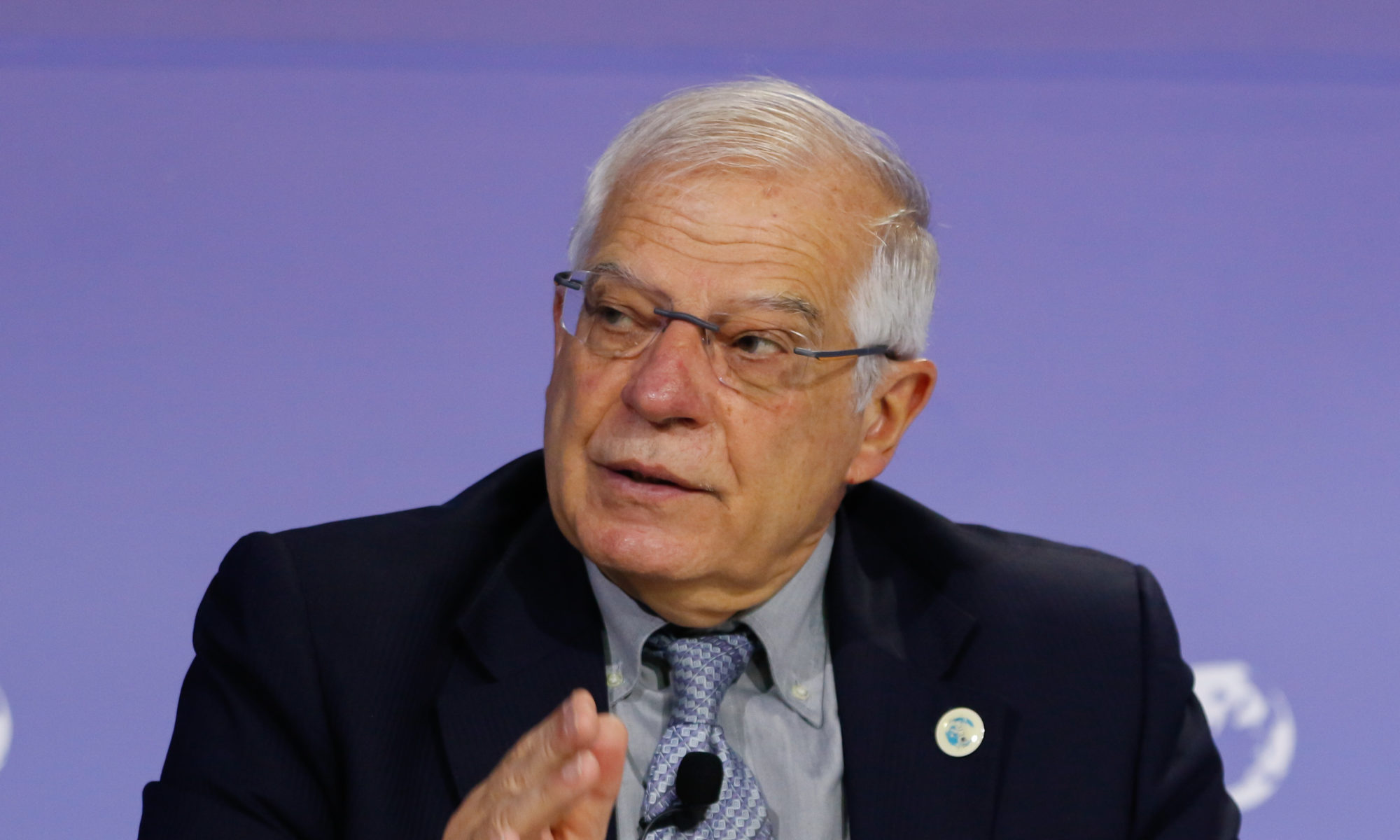

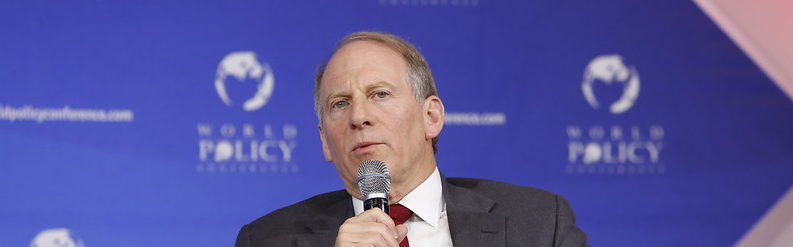



:quality(70)/cloudfront-eu-central-1.images.arcpublishing.com/thenational/3J26L6LA6JBSPKQTXQ6V3TR3QA.jpg)
:quality(70)/cloudfront-eu-central-1.images.arcpublishing.com/thenational/DIB3VTQ53ZE4TH2TNF3Q34Y2PE.jpg)
:quality(70)/s3.amazonaws.com/arc-authors/thenational/4956e84d-1fff-41f0-a546-f86f80757889.png)