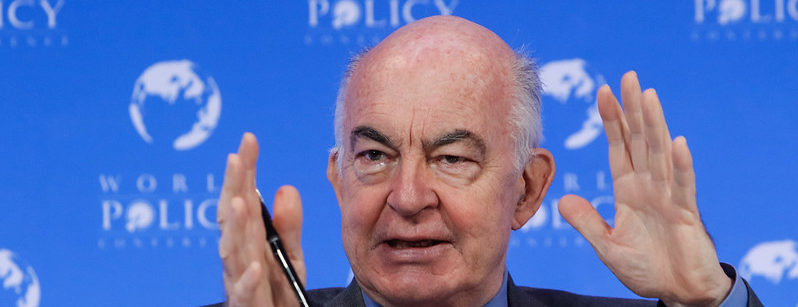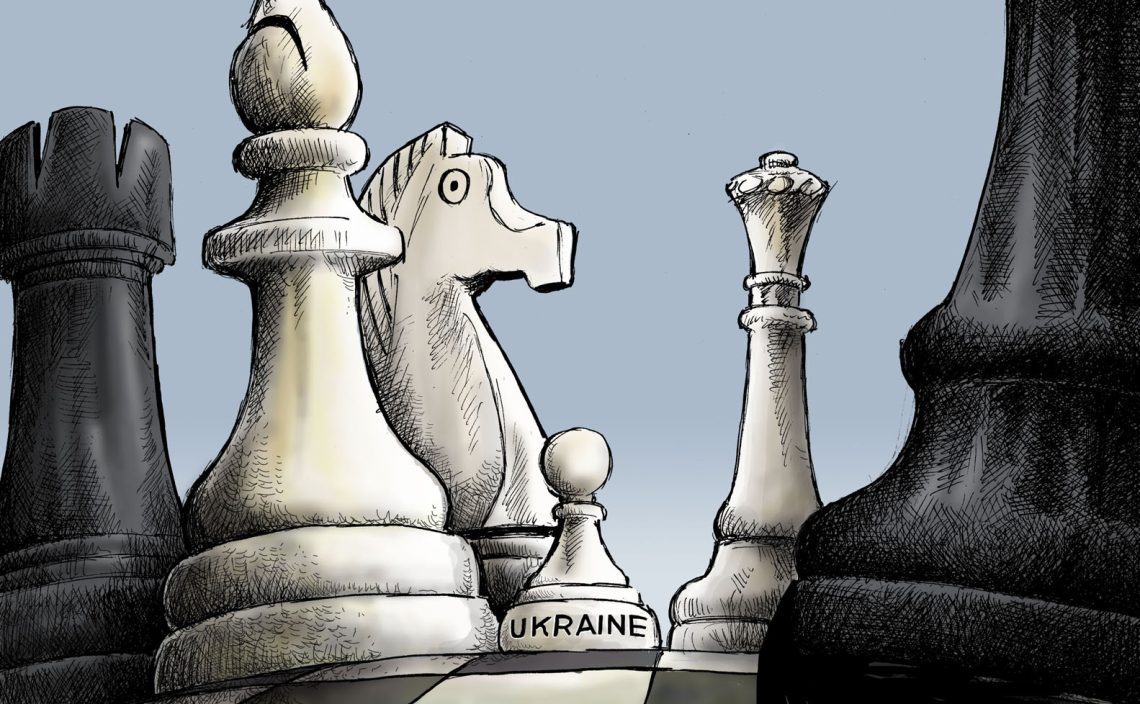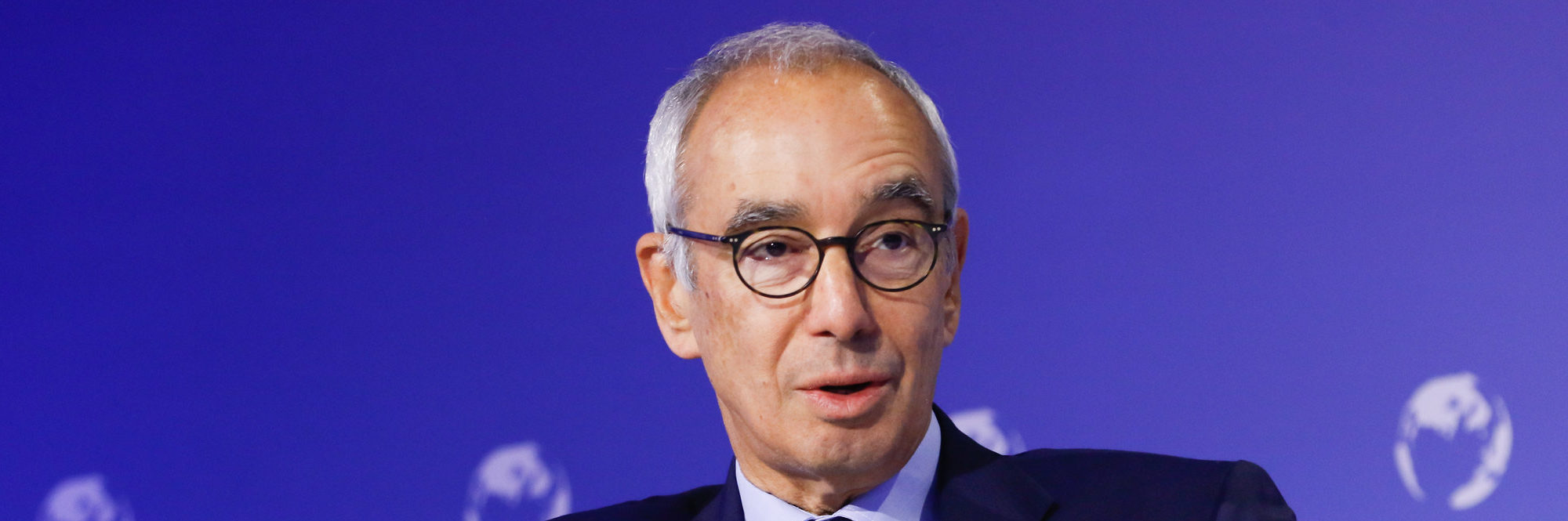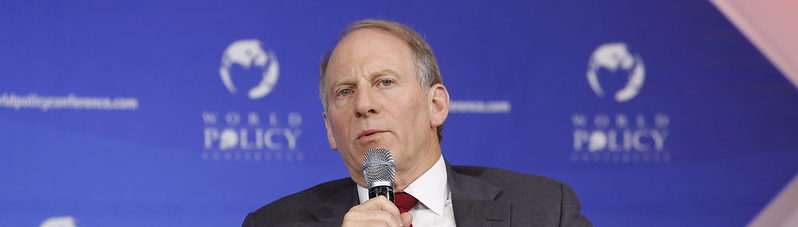
Fu Ying: China hopes next president keeps PHL ‘independent’

BY MALOU TALOSIG-BARTOLOME – JANUARY 19, 2022
In File Photo: Chinese President Xi Jinping (right) and President Duterte wave to the media following a welcome ceremony at Malacañang Palace on November 20, in Manila. Image credits: AP/Bullit Marquez

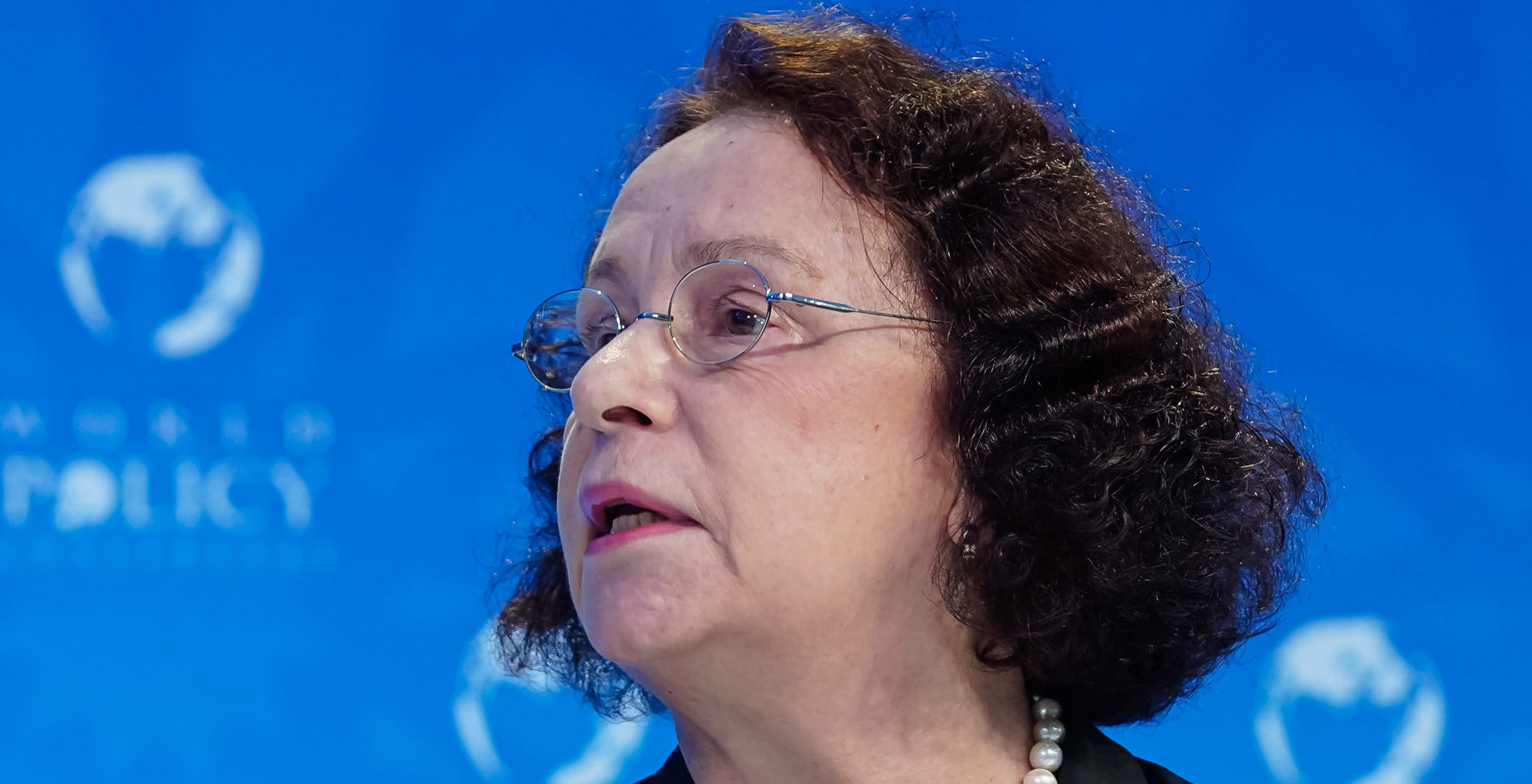
CHINA hopes the next Philippine president will continue President Duterte’s “independent foreign policy,” a senior ranking Chinese politician and retired diplomat said.

Madame Fu Ying, chairperson of the influential foreign affairs committee of the Chinese parliament, said China, the Philippines and the region benefited from Duterte’s pivot towards China when he assumed presidency in 2016.

“[Duterte’s] independent foreign policy has won him respect from countries in the region, including from China, and he is willing to face the difficult issues with China, and find proper solutions, and he was able to reach consensus with the Chinese leaders, and allowing the relationship to come out of a difficult time and gain vitality,” Fu Ying said during the recent virtual conference billed as the 5th Manila Forum for Philippine-China Relations.

“It’s not only good for the two countries, two peoples, but also good for the region. So I hope that in the future, whoever is succeeding him will be able to wisely, courageously, and responsibly carry out Philippine independent foreign policy,” Fu Ying added.

Fu Ying had served as the Chinese Ambassador to Manila for two years from 1998 to 2000, at the time when relations between Manila and Beijing were strained as a result of China’s increased occupation of the Panganiban Reef (international name: Mischief Reef) in the West Philippine Sea. She was also appointed as the Chinese ambassador to Australia and the United Kingdom, before being promoted as vice foreign minister of China. Now, she chairs the foreign affairs committee of the National People’s Congress, and US think tanks have described her as a “senior figure in a growing number of US-China interactions.”

China’s State Counsellor and Foreign Minister Wang Yi also noted that Duterte’s pivot to China was a “strategic decision to improve the relations” between Manila and Beijing.

“Rainbows appeared after the rainstorms,” Wang Yi said in a recorded speech played during the virtual forum.

Fu Ying said she has been watching the recent spat between the Philippines and China over the West Philippine Sea, referring to reports of Chinese Coast Guard firing water cannon on a Philippine boat that transported food to Filipino soldiers stationed at Ayungin Shoal (international name: Second Thomas Shoal) last November. Foreign Affairs Secretary Teodoro Locsin Jr. protested the incident in “strongest terms” to a point of mentioning the treaty alliance the Philippines has with the United States.

“I have been watching the recent occasional hyping up of the disputes caused by some incidents related to some shoals in China’s Nansha Islands [also known as the Spratly Islands] and feel a bit concerned, hoping the two sides would properly handle it and avoid rolling back the mutual trust that both sides have worked so hard to build in the past years,” Fu Ying said.

Fu Ying suggested that both sides “stay firmly on the positive side” of the relationship and put the Spratly Islands dispute “at an appropriate place and properly handled through dialogues.” The Chinese foreign minister went further, saying that both sides should prevent the Spratly island issue from affecting or “taking hostage” the overall bilateral relationship.

She warned that the West Philippine Sea dispute will be used as an election issue in the Philippines in the upcoming  presidential elections in May this year.

“I am aware that the election season is unfolding in Manila. The past experience shows that during such time, some people tend to bring up the disputes with China or try to stand tough against China which appear to be ‘politically correct.’

“Some Filipino scholars are expressing concerns of such tendency, stating that the disputes should not become a defining issue for our relations.

“I agree with such views and hope those who have foresight and stand for China-Philippines friendship can speak up and provide positive influence and we should work together to keep our relations on the right track,” Fu Ying said.

Wang Yi reassured the Philippines that “China will absolutely not use its strength to bully smaller countries, and we never believe in a winner-takes-all approach.”

“We hope to work with the Philippines to find ways to properly manage and resolve the issue in the spirit of goodwill and pragmatism. We need to come up with the resolve as soon as possible to advance joint development without prejudice to either side’s rights and claims, so that we can turn the South China Sea issue from a challenge into an opportunity and a positive factor conducive to the development of the Philippines and the friendship between our two peoples,” Wang Yi added.

Read the original article on the Business Mirror

5G, IoT, big data… A l’heure digitale, le plus rapide gagne

Si la France veut avoir une chance se réindustrialiser et de se doter d’un système productif efficace, elle n’a d’autre choix que de mettre les bouchées doubles dans les nouvelles technologies. Par Jacques Moulin, directeur général du think tank IDATE DigiWorld.

Jacques Moulin

Jacques Moulin, le directeur général de l’IDATE.

Jacques Moulin, le directeur général de l’IDATE. (Crédits : DR)

Plus de 4,5 milliards d’individus ont été confinés : jamais dans l’histoire de l’humanité, une crise sanitaire n’avait eu un tel impact. La pandémie a agi comme révélateur des fragilités de nos économies et de nos sociétés. Mais les confinements à répétition ont constitué aussi un accélérateur de l’hyperdigitalisation de notre civilisation. A tous les sceptiques du « big data », de l’IOT, de la 5G, le maintien de l’activité économique, de l’enseignement, de la médecine, – et bien sûr la recherche pour le vaccin – mais aussi des loisirs et du lien social, en bref de notre survie, aura été la preuve irréfutable de l’utilité du digital.

Selon Churchill, « il ne faut jamais gaspiller une bonne crise », et nous vivons actuellement un momentum qui offre l’opportunité de bâtir de nouveaux modèles. Il n’y aura pas de retour en arrière. Si le futur sera résolument digital, tout ce qui est digital ne fait pas sens. Encore faut-il que les transformations soient régies par une logique de progrès, d’inclusion économique et sociétale. Il nous faut bien sûr penser Europe. Un projet industriel digital européen inclusif, durable et responsable est la condition sine qua non pour échapper au déterminisme de la bipolarisation de l’échiquier mondial. L’Europe se doit de construire une alternative, empreinte de ses valeurs et forte de ses capacités d’innovation, aux modèles chinois et américains.

Cette voie se co-construira avec les territoires. La centralisation à outrance, la fracture numérique ont démontré leur logique d’exclusion. Nous ne pouvons plus feindre d’ignorer la fragilité des populations qui, par géographie ou par éducation, sont exclues d’internet. L’inclusion repose sur une infrastructure robuste. Nous pouvons pousser un cocorico pour le plan « Très Haut Débit » : la France est dans les premiers pays au monde et le premier pays d’Europe, à fibrer son territoire. Il nous faut désormais accompagner une offre de solutions régionales enrichies.

Le numérique, gage d’une France souveraine

Puisque tout ce qui peut être digitalisé sera digitalisé, seuls résisteront les entreprises, Etats et territoires qui mettent en action leur feuille de route digitale. Cela suppose de penser long terme car les investissements ne peuvent s’insérer dans la dimension temporelle du mandat électif. L’élu post-covid sera nécessairement visionnaire. Clé de voute de la réindustrialisation 4.0, le numérique est le gage d’une France et d’une Europe souveraines et compétitives. Souveraineté ne signifie ni repli sur soi ni protectionnisme mais partenariats lucides et équilibrés pour ne pas perdre en rapidité de transformation.

La « 5G Factory » de Mercedes est éclairante : l’utilisation de la 5G couplée au big data, à la robotique entraîne un gain de productivité de 25% et, grâce à la maintenance prédictive, permet d’assembler avec plus de fiabilité, différents modèles de véhicules sur une même chaine. Dans le secteur de la santé, le numérique affirme un véritable saut « quantique » : la transmission à distance de radios avec la 5G permet de sauver des vies dans des services d’urgence. Le couple « numérique et santé » contribue aussi à lutter contre les déserts médicaux si nombreux en France.

Or, force est de constater qu’encore trop d’industriels français sont frileux face aux investissements nécessaires pour accompagner la révolution 5G et engager la transition 4.0. Or, à l’heure digitale, le plus rapide gagne. L’industrie allemande, convaincue sans tergiversation de l’avantage concurrentiel de la 5G, s’est mobilisée pour être admise à l’attribution des fréquences. La France doit accélérer sa mue : il en va de la crédibilité de ses objectifs déclarés de ré-industrialisation. Est-ce anecdotique si Tesla et Toyota avec leur véhicule green rafle la mise des flottes de taxis parisiens ?

Réformer le capital-risque

Certes, il nous faut aussi réformer le capital-risque français trop timoré : une startup bénéficie de 8,3 fois plus de capital aux Etats-Unis qu’en Europe. Pire encore : la France, terre de médaillés Field, est à la traîne pour l’enseignement des mathématiques. Investir dans l’éducation et la recherche est vitale pour rester dans la course. La majorité des métiers dans les 10 prochaines années n’existe pas encore. Il nous faut repenser les modes d’apprentissage car désormais une vie professionnelle sera composée de 10 parcours différents.

La pandémie a banalisé le recours au télétravail. L’aspiration à travailler autrement – ne parle-t’on pas de néo-ruralité ? – est une opportunité inédite pour les territoires qui veulent développer leur attractivité, accompagner la création d’écosystèmes créateurs d’emploi. Le rôle de l’élu, agrégateur de ces écosystèmes, est dès lors central. Le projet que nous prônons au sein de l’IDATE DigiWorld est inclusif, responsable et durable. Pour cela, il doit tout d’abord s’exercer dans un cadre régulé. Les Digital Market Act/Digital Service Act européens, en sont un premier pas.
Le numérique est aussi le levier pour bâtir une société plus « green » et responsable. Le « green by design » intégrant nativement les préoccupations environnementale et énergétique est un impératif. Ainsi, le digital est-il la clé pour opérer notre « saut de grenouille » et « être absolument moderne ».

Il est temps que la France accompagne sa mutation en accélérant la modernisation de son système productif, en se dotant des « Humanités du numérique » : former chaque citoyen à la compréhension des enjeux du numérique, à l’utilité de ses actes digitaux au quotidien et investir dans la préparation aux emplois de demain, tout en favorisant la R&D au travers de projets européens. Et bien courons maintenant !

Lire l’article original sur le site de La Tribune

Josep Borrell: Ukraine : l’UE redoute l’intégration «de fait» à la Russie des régions non contrôlées par Kiev

Le chef de la diplomatie européenne, Josep Borrell. STEPHANE MAHE / REUTERS

Le chef de la diplomatie européenne Josep Borrell a déclaré lundi redouter une «intégration de fait» à la Russie des régions de l’Ukraine non contrôlées par Kiev. «Je suis de plus en plus préoccupé par la situation dans les régions non contrôlées par Kiev, car elles s’écartent de plus en plus de l’Ukraine et se rapprochent de plus en plus de la Russie», a-t-il expliqué lors d’une audition par la Commission des Affaires étrangères du Parlement européen.

La région du Donbass, dans l’est de l’Ukraine, pourrait notamment se voir progressivement intégrée «de fait» à la Russie, a expliqué Josep Borrell aux eurodéputés, réunis à Strasbourg pour une session plénière du Parlement. Depuis sept ans, cette zone est déchirée par une guerre entre Kiev et des séparatistes prorusses, et le règlement politique du conflit, prévu par les accords de Minsk de 2015, est dans l’impasse. «La concentration par la Russie de forces à la frontière de l’Ukraine est liée à cette intégration (…) Une attaque massive en Ukraine n’est pas le scénario le plus probable, mais il existe d’autres moyens d’attaquer, comme les cyberattaques», a commenté Josep Borrell.

L’Ukraine a justement été victime, dans la nuit de jeudi à vendredi, d’un vaste piratage informatique ciblant les sites internet de plusieurs ministères. Kiev a assuré dimanche avoir des «preuves» de l’implication de la Russie dans cette cyberattaque. «Nous travaillons sur au moins sept scénarios différents. Je ne pense pas que nous allons immédiatement passer au pire scénario, mais il y en a plusieurs dans lesquels la situation pourrait être suffisamment dangereuse pour nécessiter un état d’alerte permanent», a jugé Josep Borrell.

Les Européens espèrent encore convaincre le président russe Vladimir Poutine de renoncer à une invasion de l’Ukraine, mais ils ont commencé vendredi à préparer de «lourdes» sanctions pour l’en «dissuader», lors d’une réunion informelle jeudi et vendredi à Brest (ouest de la France). Souhaitant affirmer leur crédibilité vis-à-vis de l’allié américain, ils ont rappelé leur mise en garde contre les conséquences d’une nouvelle agression militaire russe contre l’Ukraine. «Elle aura des conséquences et un coût par le biais de sanctions», a souligné Josep Borrell. Ces dernières seront discutées lors d’une réunion des ministres européens des Affaires étrangères le 24 janvier à Bruxelles, a-t-il précisé.

Lire l’article original sur le site du Figaro

Cosmin Ghita, CEO Nuclearelectrica: “We aim to become a regional trendsetter in nuclear energy”

Nuclearelectrica has managed to continue or to develop major investment projects in 2021 whilst increasing its perspectives on the capitals market.

“2021 was a good year for Nuclearelectrica: financially, operationally, investment, human resources wise and innovation wise. (…) Most of my efforts in 2021 were directed towards Nuclearelectrica’s investment projects within the context of decarbonization coupled with Romania’s need for a robust and safe energy system,” Cosmin Ghita, CEO Nuclearelectrica told The Diplomat-Bucharest.

COMMITMENT TO PERFORMANCE | Business Evolution, Projects, PERFORMANCE, Figures 

How would you describe the evolution of your company in 2021?

“2021 was a good year for Nuclearelectrica: financially, operationally, investment, human resources wise and innovation wise. We have accomplished a lot in 2021, we have managed to continue or to develop major investment projects, to take the new human resource strategy to a new level, to digitalize significantly our company, to increase our position and perspectives on the capital market.

However most of my efforts in 2021 were directed towards Nuclearelectrica’s investment projects within the context of decarbonization coupled with Romania’s need for a robust and safe energy system. We continued the refurbishment of Unit 1, according to the schedule, and we are to complete the first stage of the project in early 2022, the feasibility study. The purpose is to have another 30 years of safe and clean operation after 2028, in a very efficient and cost-effective manner. Refurbishments of nuclear units are confirmed to have the lowest levelized cost of electricity of all energy sources, renewables included.

We also continued the Cernavoda Nuclear Power Plant Units 3 and 4 Project. We reoperationalized EnergoNuclear, the project company, and already signed one major contract with CANDU Energy as part of the first stage of the project. We are doing our best to develop the project within the established timeframe and have Unit 3 connected to the grid in 2030 and Unit 4 in 2031, just at the right time for Romania to meet its decarbonization targets in a reliable manner whilst phasing out coal-based capacities. According to the PNIESC, Romania’s aim is to generate 55% clean energy by 2030 and nuclear, as many international studies support, is an essential part of this objective.

Also, an equally important project for Romania’s meeting its decarbonation targets and energy security are the small modular reactors deployment. We have worked this year to achieve this intention with NuScale technology, around 2028. We have teamed up with NuScale, the US based company which owns the most advanced and the only licensed SMR technology, in order to provide a stable and clean energy alternative to areas where coal will no longer be an option and, at the same time, allow these areas to continue to socio-economically develop. We are looking at a 6 module power plant, with an installed capacity of 462 MWe, able to generate 193 permanent power plant jobs, 1.500 construction jobs, 2.300 manufacturing jobs and help Romania avoid 4 tons of CO2 emissions per year.

In addition to these benefits, Romania, based on its 25 years of nuclear expertise, has a huge opportunity to be at the forefront of SMR development in the region by developing a strong domestic supply chain that could further expand regionally and by training specialists given the fact that Romania will be the first country in the region to own and operate a SMR full scope simulator.”

What were your company’s business achievements in 2021?

“I will briefly state a few as last year we have set ourselves quite a busy agenda for 2021, and looking back today I can proudly say that Nuclearelectrica team has managed to achieve most of our objectives, even though it was a difficult year:

  • Maintain excellence in operation and nuclear safety and our top position worldwide in terms of capacity factor which is rewarding as in 2021 we celebrated 25 years of operation of Unit 1.
  • Increase in our financial results as part of a solid sales strategy
  • Near Completion of stage 1 of the Refurbishment project of Cernavoda Nuclear Power Plant Unit 1 according to the schedule, even if a major part of this stage unfolded throughout 2020 and 2021 difficult pandemic years
  • Continuation of Cernavoda NPP Units 3 and 4 Project and signing of the first contract with CANDU Energy
  • The teaming agreement with NuScale for the deployment of SMRs in 2028 and the $ 1,2 million grant from USTDA, in early 2021, to assess potential sites for SMR deployment
  • Implementation of the HR strategy, as we had an ambitious plan to hire 500 people by the end of 2021 and we succeeded in hiring more than 500. Besides this, we aim at growing a new generation of specialists and for this we offer as well scholarship programs, apprenticeship, internship, mentorship and dual learning systems.
  • The acquisition of a part of Feldioara’s assets, namely the processing line, which will allow us to develop our internal fuel processing and manufacturing capabilities and maintain Romania’s nuclear fuel integrated capabilities doubled by the diversification of the company’s raw material supply possibilities.
  • And of course, SNN’s positioning on the capital market with a constantly appreciating share price, market capitalization and increased interest from the investor community.
  • However, all of the above are the result of a great team of specialists to whom I would like to thank and acknowledge their professionalism every chance I get.”

STRATEGY & VISION | RETHINK STRATEGY & PRIORITIES

What challenges have you faced as a CEO/ leader during 2021?

“It was a very busy year, and somehow a tough continuation of 2020, so my first concern was the wellbeing of my colleagues, as they are the driving force of every project, idea, result of the company. Therefore, making sure that we stay safe and protected was a top priority and a challenge. Besides this, challenges are objectives and they are inherent to any significant endeavor that an organization goes through. Nonetheless, a significant factor that kept us moving forward at a rapid pace was an already build in resilience from previous years and people’s professionalism, their expertise, capability and adaptability to working in less than normal conditions.”

What priorities and business strategy focus do you have in 2022?

“Definitely the continuation of our strategic investment projects: refurbishment of Unit 1, Unit 3 and 4, small modular reactors and, in this context, training and growing our new nuclear generation. These 3 main projects are complementary: what large fleet reactors lack is added by SMRs, in terms of flexibility, remote access, backup for renewables. Our purpose is to become a regional trendsetter in nuclear – we will do this by showcasing nuclear energy clear benefits, the clean energy which is reliable, cost effective and stable, with outstanding socio-economic advantages; by develop Nuclearelectica, the Romanian supply chain; by exporting our expertise; by acting as a strategic supporter for decarbonization, energy security, consumer protection. By 2031, we aim to reach 66% contribution of clean nuclear energy in Romania’s energy mix. There’s no real, time and cost efficient decarbonization without nuclear energy.”

PEOPLE & COMMUNITY | FOCUS ON SAFETY, SOCIAL APPROACH, LEVERAGE THE POWER OF COMMUNITY

What initiatives & projects did the company run in 2021 in CSR and social projects?

“For 2021 we split our CSR budget into 2 major directions: half of it for the Cernavoda community as we are responsible for the wellbeing of the communities we activate in. We supported educational and medical programs, trying to provide the community with better educational tools and facilitate their access to reliable healthcare. Also, we offered as well as environmental support for the forestation of certain areas that needed such activities. The other half was directed for the rest of the country, proving financial support on educational, medical and environmental projects, since our CSR strategy for 2021 was tailored to include these three main areas based on an assessment of needs.”

KEEN ON GREEN | SUSTAINABLE, GREENER, COMMUNITY & ENVIRONMENTALLY FOCUS

“Nuclear energy is a big part of the decarbonization solution, therefore every project we develop has a definite clean environment and sustainability component. The reason nuclear is a solid decarbonization and friendly environmental solution is the lack of CO2 emissions, NOx emissions, NOx emissions. Actually, by operating two CANDU reactors we avoid the release of 10 million tons of CO2 per year and after 2031, with 4 CANDU reactors running, we will reach 20 millions tons of CO2 avoided each year, which will probably place us as the most important clean energy generator in Romania. If we add a 6 module SMR power plant, 4 million tons of CO2 avoided will be added every single year.

We are extremely responsible with our burnt fuel, which is stored onsite in a water pool for the first 6 years after its removal from the reactor and then for 50 years into a Fuel Storage which 24/7 monitored by AIEA. The environmental component is extremely regulated and our doses are way below the legal limits.

Furthermore, we are assessing and implementing every solution to enhance our environmental footprint and one of our investment project, the Tritium Removal Facility, a 190 million Euro Project is in full development process.

Corroborated, as mentioned, our CSR programs are very much in sync with our operational and investment projects since we are a keen supporter of clean air, hence our involvement in forestation.”

DIGITAL DNA | Grasping tech, digital innovation, customer -driven, building new bridges

“We started our digital innovation strategy in 2019, however the COVID19 pandemic forced us to accelerate the pace in 2020. Our purpose was to facilitate working processes, HR management, e-learning, procurement processes, uniformization of company processes, digitalization of certain production processes, internal infrastructure and provide cyber safety of the data and employees.

From 2019, throughout 2020 and 2021, we have managed to implement 12 digital innovation projects, we have 16 digital innovation projects under implementation process, so all together our strategy included 28 projects.

In future, very few companies will continue to work in the traditional manner. We are not looking towards digital innovation because this is a trend, but because our company needs are as such. Digital innovation protects employees, enables their work and time, protects company infrastructure and processes. The future is digital.”

2021 IN 3 KEY WORDS

“Resilience, Investments, Team”

2022 IN 3 KEY WORDS OR MORE

“Development, strength, cooperation, contribution, responsibility”

Read the original article on The Diplomat

Benoît Cœuré : Technology breakthroughs 2022: Markets vs. central banks

Could cryptocurrencies one day bring down the banking system? These decentralized technologies have already shown the potential for disrupting finance, which craves a faster, cheaper, and freer system. If people choose control over their money and identities over security, the fears of financial authorities may be realized.

European Central Bank President Christine Lagarde and former Executive Board member Benoit Coeure in 2019 cryptocurrencies banking system

With trust in financial institutions like the European Central Bank once again fraying amid the Covid-19 pandemic, ex-board member Benoit Coeure called on regulators to adapt to the rapidly changing technological landscape. © Getty Images

In a nutshell

  • The crypto boom is threatening conventional finance
  • Covid-19 has revived discontent with financial authorities
  • Central banks and regulators will not stand idly by

Could cryptocurrencies bring down the banking system – and, with it, the authorities who oversee it?  Two years ago, such a question would have made central bankers laugh.

It no longer does. During a September Eurofi conference in Ljubljana, seasoned European policymaker Benoit Coeure laid out an alarming scenario: “The financial system is shifting under our feet.” In a speech intended above all as a wake-up call for financial supervisors, the French economist insisted that “central banks have to act while the current system is still in place – and to act now.”

Unforeseen obsolescence

The centralized financial system as we know it could in fact disappear. Not in a tragic fight to the death, nor following a systemic collapse at a larger scale than the one that triggered the 2008 banking crisis. Rather, this time, the traditional banking system may be silently pushed to the margins after having become inadequate, irrelevant, and outdated – in other words, incapable of adapting to a drastically changing world.

What worries Mr. Coeure most is the crushing technological superiority of decentralized cryptocurrencies, which – after only a few years in existence – have proved they have the potential to disrupt finance.

The former European Central Bank (ECB) executive board member is no tech fearmonger. Since 2020, as the chair of the Innovation Hub at the Basel-based Bank of International Settlements (BIS), he has been on a mission to help policymakers and technocrats around the world develop central bank digital currencies (CBDCs).

The ex-central banker is convinced that CBDCs (i.e., digital versions of fiat currencies) are the only option central banks have today if they want to stay in the game – let alone to maintain their leading role in the financial system. The problem, Mr. Coeure recognizes, is that CBCDs will take years to be rolled out, while privately issued digital assets and stablecoins are already there.

Dangerous animals

Meanwhile, there are several thousand cryptocurrencies in existence; the top 20 make up about 90 percent of the market.

In spite of extreme price fluctuations of the top cryptocurrencies since their inception, more and more people are tempted to jump ahead. As of June 2021, there were already 221 million users worldwide, including 120 million using bitcoin alone. This boom has only just begun.

The pandemic played an important part in what appears to be a bandwagon effect. The hype surrounding crypto – or to be more precise, sugarcoated marketing playing down people’s legitimate fears and concerns – has fueled investors’ optimism bias: the overconfident belief, common to all gamblers, that they are going to win rather than lose big.

Despite their growing popularity, bitcoin and other cryptocurrencies are still far from being a conventional way to invest money. Investors are often blind to the fact that bitcoin, after all, has no intrinsic (i.e., real) value. Normally, investments are made in view of future income. This is not the case for bitcoin; as one financial analyst put it, “one cannot invest in BTC, one can only speculate in BTC.”

It is no coincidence that the pandemic has revived markets’ discontent with monetary authorities.

Stablecoins, for their part, appear less volatile and therefore less exposed to the risk of a brutal price crash. In contrast to bitcoin, they are tied to the value of fiat money (usually the United States dollar) or any other asset with real value (such as gold, silver, oil). Still, it remains difficult for the inexperienced investor to learn his or her way through a seemingly opaque and chaotic market.

Fabio Panetta, the Italian economist who replaced Benoit Coeure at the ECB’s executive board in 2020, has used harsh words to describe what he even refuses to call “currencies.” “Crypto-assets are very dangerous animals,” he said.

He is not wrong; but does it make sense to think that such high-risk assets could be the future of money? Is it really conceivable that the banking system, central bank money and their powerful guarantors of last resort – states and central banks — could be swept away? Perhaps only if a problem emerged, shaking the markets’ perceptions of central bank money and policy.

Broken trust

Indeed, such a problem may have come to light in 2008. Bitcoin’s inception in 2009 is often viewed as an act of defiance against the centralized banking system. The global financial crisis revealed that misconduct had for long become the norm in the banking industry, and that much of the regulatory frameworks in place had been a failure.

To repair those frameworks, central banks were given new assignments. Not only did they become intransigent banking supervisors and regulators; they aspired to become a new kind of fiscal power, in command of steering the economies in times of crises and beyond.

The ECB is a case in point. It stretched to breaking point its original, narrowly defined mandate of maintaining price stability in the eurozone. Unlike other central banks, it had to face a sovereign debt crisis – which, in 2012, almost brought down the EU’s common currency. Even if markets’ trust in sovereign money could be restored (through then-President Mario Draghi’s famous commitment to do “whatever it takes” to save the euro), it never fully recovered.

It is no coincidence that the outbreak of the Covid-19 pandemic and its host of authoritarian policy responses (previously unseen in democratic nations) revived markets’ discontent with monetary authorities. For instance, savers increasingly perceive the persistently low (or sometimes even negative) interest rates as an illegitimate tax on their deposits. For long, they meekly accepted the creeping expropriation as a necessary (and temporary) evil in times of crises. Their tolerance level is dropping as they suspect that central banks will monetize part of governments’ colossal Covid debt through inflation.

With inflation on the rise and no end to financial repression in sight, crypto attracts even low-risk-profile investors. Some adopt a devil-may-care attitude, weighing the probability of losing (but also gaining) money in a gambling game against the certainty of losing in the fiat system. In a way, they send a message to central banks: “you’ve gone too far.”

Freedom call

What the crypto rush reveals above all is that markets crave alternative finance. They want it to be faster, cheaper, more rewarding – and, above all, freer.

Safety is important too. But, as revealed by the ECB’s recent public consultation on a digital euro, privacy is valued very highly by customers these days. Maybe the stringent transparency requirements imposed by the current banking regulations – obsessed with money laundering, tax evasion and financing of terrorism – have simply become too intrusive for the taste of many citizens.

Crypto entrepreneurs have heard the message. As one prosperous start-up advertises its financial offering: “Our goal is to disrupt the financial industry, one happy user at a time, and introduce financial freedom through crypto.”

Unbank the world

Newcomers have recently challenged commercial banks’ business models by creating open-source protocols that replicate existing financial instruments within a decentralized architecture. Their blockchain- and smart contract-based services promise to revolutionize payments, savings, lending, trading, asset management, derivatives, and insurance.

The pioneers of decentralized finance (DeFi) share a common goal: knock off their pedestal the middlemen and gatekeepers that have domineered centralized finance so far. Today, DeFi is among the fastest-growing sectors in the crypto world. According to one of the players involved, its market size is already measured in the trillions.

Facts & Figures

A chart of overall global crypto users and those who have ever held bitcoin and Ethereum, January-June 2021 cryptocurrencies banking system
The number of overall global crypto users continued to surge in 2021 – reaching 221 million users worldwide by June – along with the growth of those who have ever held bitcoin and Ethereum, the two top cryptocurrencies. © macpixxel for GIS

Yet it may still only be in its infancy. For the moment, DeFi is a playground essentially for experienced investors, with knowledge barriers remaining high.

Technology might soon render possible a large-scale investor revolution. Once access to DeFi gets easier, retail bankers might have a real reason to worry. DeFi markets could attract virtually anyone who has a smartphone and an internet connection.

Moreover, 1.7 billion adults worldwide are excluded from the traditional banking sector. DeFi could provide microfinance solutions to those unbanked, usually low-income individuals, opening up new prospects. In the world of DeFi, no credit amount is too small to be granted. Financing opportunities might arise that so far would have been unthinkable.

One can only imagine the positive impact on developing countries – not to mention those where authoritarian or irresponsible governments destroy the value of national currencies and the wealth of citizens.

Bridge builders

So far, DeFi is largely unregulated. Permissionless and censorship-resistant ecosystems enable perfectly anonymous users to interact on peer-to-peer trading platforms – at their own risk. None of the compliance procedures or mandatory disclosure requirements at the heart of today’s banking system, such as Know Your Customer (KYC) or Anti-Money Laundering (AML), need to be applied in those settings.

This scares off many potential users, notably in Western countries, where regulation is highly valued. Some companies are currently exploring a new market niche by providing crypto-services to those who want to take a safer road, preferring to turn to “regulated” institutions that trade and store crypto-assets on their behalf.

Market leaders Celsius and BlockFi present themselves as “centralized” blockchain-based companies, which perform KYC and comply with AML. In a way, their platforms create a bank-like environment meant to give crypto-beginners a sense of security – albeit a distorted one, as the companies’ accounts have been hacked more than once.

In order to provide investors with more secure and easy access to cryptoassets, other DeFi platforms seek to bridge the gap between blockchain-based finance and traditional capital markets. For example, Defi Technologies Inc. offers so-called digital-asset-exchange-traded-products (ETPs), listed on regulated stock exchanges.

Central banks and regulators will not stand idly by while decentralized finance cuts the ground from under their feet.

Crypto-banks” and digital asset investment firms currently have the wind in their sails. They are the ones that could precipitate society’s move to digital finance.

The question is, for how long?  Sooner or later, big incumbent banks might challenge them, building blockchain infrastructures of their own. But only a few have so far been able to get a foot into crypto, let alone disrupt the disrupters.

recent study revealed a widening of the gap between leading banking institutions and those lagging behind. It looks as though crypto is already sorting out winners from losers.

Scenarios

Central banks and regulators will not stand idly by while decentralized finance cuts the ground from under their feet. They will come up with new regulations.

Already, in September 2020, the European Commission published a proposal for a regulation of the “Markets in Crypto-Assets” (MiCA). The document was drafted largely in reaction to Facebook’s Libra announcement, perceived as a threat to national currencies. In the meantime, Libra (rebranded Diem) was watered down to a simple dollar-backed stablecoin and is nowhere close to being issued. DeFi, on the other hand, gained momentum precisely in 2020-2021 – and is at risk of becoming MiCA’s first collateral damage.

Fortunately or not, MiCA is expected to enter into force only in late 2024. By then, many of its provisions may be obsolete. Compared to regulators, crypto innovators move at lightspeed.

Policymakers are “increasingly worried about being left behind,” Benoit Coeure admitted during a conference in Geneva. Could CBDCs get them back into the race? Mr. Coeure seems skeptical: “The time has passed for central banks to get going,” he said in Ljubljana.

2021 BIS study confirmed that even though most central banks have a keen interest in CBDCs (and some already “experiment” with the technology), only a handful are actually running pilot programs.

The People’s Bank of China is a front-runner. The ECB is among those that still “investigate;” it recently stated it wanted to get “ready” to launch a digital euro, but will not necessarily do so.

A host of technical (notably security-related) issues remain unsolved. The potential disintermediation of banks is another tricky problem. For the banking sector, a retail CBDC – if not well managed – could become a threat far greater than DeFi.

Finally, there is the question of why consumers would prefer CBDCs to decentralized cryptocurrencies.

The likes of Mr. Coeure hope that if privacy and safety principles were to rule, central banks will come out on top. The precise opposite might happen: the fact that digital cash gives central banks the power to track end-users’ spending in real time may in fact have a deterrent effect. Citizens today may be used to a high level of surveillance, but CBDCs could become the straw that breaks the camel’s back.

At some point, people might want to regain control over their money and identities. Many will desert centralized finance and turn to privacy-protecting DeFi platforms. Self-sovereign identity at consumer scale could become a pillar of the future financial landscape.

Read the original article on GIS

Josep Borrell : L’UE veut peser face aux Etats-Unis et à la Russie dans le dossier ukrainien

Le chef de la diplomatie européenne, Josep Borrell, se rend en Ukraine pour soutenir Kiev face à l’agressivité de Moscou. Pour l’Union européenne, il s’agit d’un véritable test de crédibilité de son action extérieure.

Le chef de la diplomatie européenne, Josep Borrell, au dernier Sommet européen de décembre 2021, où il fut beaucoup question de la Russie.

Le chef de la diplomatie européenne, Josep Borrell, au dernier Sommet européen de décembre 2021, où il fut beaucoup question de la Russie. (Kenzo Tribouillard/Pool via REUTERS)

Publié le 4 janv. 2022 à 17:20

Pour son premier déplacement de 2022, Josep Borrell tient visiblement à faire passer un message aux Etats-Unis et à la Russie. En se rendant du 4 au 6 janvier en Ukraine, jusque sur la ligne de front où s’opposent les forces de Kiev aux séparatistes prorusses, le chef de la diplomatie européenne espère signaler à Moscou et à Washington qu’ils ne peuvent s’entretenir de l’avenir de cette région sans les Européens – des pourparlers entre responsables américains et russes sur l’Ukraine doivent avoir lieu les 9 et 10 janvier à Genève.

« Toute discussion sur la sécurité européenne doit se faire en coordination avec l’UE et avec sa participation», a déclaré le Haut Représentant de l’UE. «Nous ne voulons pas et ne devons pas être un spectateur non impliqué, avec des décisions prises au-dessus de nos têtes», a-t-il ajouté, un an après l’ humiliation diplomatique que lui avait infligée le ministre russe des Affaires étrangères. Lors d’une conférence de presse, Sergueï Lavrov avait fustigé l’arrogance des Européens, après avoir expulsé trois diplomates de l’Union sans en avertir son homologue.

Souveraineté

Accompagné du ministre ukrainien des Affaires étrangères, Josep Borrell compte visiter, lors de sa visite, la zone critique qui jouxte les territoires tenus par les séparatistes prorusses. Il ira ensuite à Kiev pour rencontrer d’autres responsables ukrainiens et, selon ses équipes, « souligner le soutien ferme de l’UE à la souveraineté et à l’intégrité territoriale de l’Ukraine à un moment où le pays est confronté au renforcement militaire et aux actions hybrides de la Russie ».

Sanctions

Depuis plusieurs semaines, les Occidentaux s’inquiètent sérieusement du déploiement de plus de 100.000 soldats russes à la frontière orientale de l’Ukraine et redoutent une nouvelle agression . En décembre dernier, les Vingt-Sept ont menacé Moscou de lourdes sanctions économiques si jamais il passait à l’acte. « Mais le Russes s’y sont préparés, ils ne craignent pas vraiment les armes économiques », estime Gustav Gressel, chercheur de l’ECFR. Le secrétaire général de l’Otan, Jens Stoltenberg, a prévu d’organiser le 12 janvier une réunion spéciale des pays alliés avec des responsables russes dans le but d’éviter un conflit ouvert.

Test de crédibilité

L’enjeu est très élevé. Selon Cyrille Bret, de l’Institut Jacques-Delors, « l’Ukraine à bien des égards est le laboratoire de l’action extérieure de l’UE, un vrai test de sa crédibilité ». Le chercheur reconnaît des mérites à l’Union, qui « affiche depuis l’annexion de la Crimée en 2014 une position forte et constante à l’égard de la région, confirmée régulièrement par le renforcement ou l’extension des sanctions infligées à certains citoyens russes ou ukrainiens ». D’après lui, « qu’Emmanuel Macron, Angela Merkel et Ursula von der Leyen aient réussi à maintenir les Vingt-Sept soudés autour de l’instrument des sanctions est déjà une énorme réussite. A cela s’ajoute un soutien budgétaire de l’UE, certes conditionné, à Kiev ». Reste que, bien évidemment, « cela ne forme pas une stratégie complète, puisqu’il manque un volet militaire que les Etats-Unis, eux, pourraient actionner ».

Karl De Meyer (Bureau de Bruxelles)

Lire l’article sur Les Echos

Scott Morrison’s dereliction of duty over rapid Covid tests is a threat to Australians’ public safety

PM’s hogwash arguments against free rapid tests range from hypocritical to obscene

Wed 5 Jan 2022 05.26 GMT

‘At every stage of the pandemic, prime minister Scott Morrison has had to be dragged into action.’
‘At every stage of the pandemic, prime minister Scott Morrison has had to be dragged into action.’ Photograph: Lukas Coch/AAP

Scott Morrison’s bloody-minded refusal to fund rapid Covid-19 tests is misguided, expensive and dangerous. It is just one more example of the Liberal leader putting his own crude political interests ahead of public safety.

There are no silver bullets to end a pandemic. The public understand that. Vaccines are an important weapon. But only because they let us move from the blunt instrument of citywide lockdowns to a combination of other, more targeted and inter-locking public health measures.

This includes an effective regime of testing, tracing, isolation and quarantine. All these elements must work together.

Morrison’s dereliction of leadership responsibility for Australia’s testing regime, with queues snaking through city streets and rapid antigen tests being hawked online at extortionate prices, is one more addition to the many errors that have come before it.

At every stage of the pandemic, Morrison has had to be dragged into half-hearted action – with catastrophic consequences.

Morrison has been obsessed with picking political fights instead of his government’s core responsibilities like quarantine and aged care. Almost 1,000 Australians have now died in commonwealth-regulated aged care homes that were meant to keep them safe.

In this pivotal stage of the pandemic, it is in everyone’s interest to ensure every Australian, regardless of their income, has access to free at-home rapid antigen test kits. This is because every time a positive case is identified, it provides the chance to staunch a chain of infection and keep bending the curve so that our hospitals aren’t overrun.

Morrison’s myriad arguments against free rapid tests range from the hypocritical to the obscene.

First, Morrison insists the Treasury cannot afford it. This is patently ridiculous. Let’s not forget how Morrison wasted an eye-watering $40bn in JobKeeper payments to companies that didn’t need it – enough to buy every Australian household a dozen tests every month into 2024!

Morrison’s position on rapid tests is ultimately a false economy because mass-testing saves money in the long run. Public hospitals can easily spend more than $100,000 invasively ventilating an intensive care patient, or the chain of infection can be detected and halted weeks earlier using a cheap rapid test.

Second, Morrison points to conventional PCR laboratory tests as fully subsidised alternative. Apart from the mammoth queues to access a PCR test, these tests are much more expensive to taxpayers. For every PCR test conducted by a private laboratory, Medicare is charged $85; by comparison, rapid tests generally cost about $10 (even less when the government is buying millions of units in bulk). Put another way, for every rapid test that displaces a PCR test, taxpayers would save at least $70.

Third, Morrison draws a distinction between medicine, which he says should be funded, and tests, which he says shouldn’t. This is hogwash.

Since 1991, successive federal governments have funded free breast and cervical cancer screenings. John Howard expanded on these programs by including at-home bowel cancer tests. The fact that Morrison’s own government is conducting a feasibility study on free lung cancer screenings suggests he has no objection.

Australia’s world-leading response to HIV/Aids also hinged on providing vulnerable groups with free testing, treatment, condoms and clean needles.

Fourth, the government warns it cannot possibly meet Australians’ insatiable appetite for free tests – a statement that is grounded in a deeply elitist perspective on public health behaviours by lower income Australians.

Federal health minister, Greg Hunt, and Morrison talk down to Australians as though they are either hypochondriacs addicted to shoving cotton swabs up their nostrils, or charlatans determined to cheat government programs. They suddenly insist on price signals to ensure people don’t seek help unless they are truly desperate.

Morrison might find this hard to imagine, but not every household has an extra $25 saved for a rapid test when they need it. This is a recipe for massive undetected spread among those Australians least able to pay.

Finally, Morrison says he won’t “undercut” businesses trying to make a buck out of these tests. This is a total abrogation of responsibility, leaving public health at the mercy of price-gouging companies who – unlike Morrison – listened to experts’ warnings of a looming spike in demand.

The fundamental principle of Medicare is that Australians deserve access to healthcare based on their needs, not their ability to fulfil the needs of the market.

If Morrison wants to ensure Australians can find rapid tests at their local shops, that’s good; he should involve those businesses in delivering publicly funded testing kits. But since Morrison’s stated motivation is to avoid “undercutting” their profits, it seems he’s forgotten who he works for.

One of the few things that unites most Australians is our revulsion at the hideous inequities of the American health system; Morrison’s apparent fondness for mingling business with healthcare suggests he doesn’t share that view.

Why then has Morrison taken this hypocritical and unsustainable position? I suspect three reasons.

Morrison may be trying to ease fears ahead of the election. Australians are watching rising case numbers with trepidation and soaring positive test rates – now more than 20% in most states – suggest there are many more cases lurking beneath the surface.

If Morrison cannot reduce the numbers in reality, he can reduce the numbers that are announced in the media each day. As Donald Trump once claimed, “if you don’t test, you won’t have any cases”.

Morrison also knows voters have now seen through the myth of Liberals being superior economic managers. Morrison is now the biggest-spending postwar prime minister with record debt and record deficit.

National debt is set to reach $1.3tn – more than seven-times the Labor government’s supposed “debt bomb” of $189bn in 2013 – equivalent to 55% of GDP, compared with 12% when we left office. Morrison’s performative austerity on rapid tests is a feeble attempt to regain some fiscal credibility.

Finally, Morrison now stakes this public position on a thread-bare ideology of “personal responsibility”. He’s borrowed this from his British counterpart, Boris Johnson, who thought he could politically skate through the latest UK debacle. But it’s also political code language for a Darwinian survival-of-the-fittest contest in which the weak, the poor and the vulnerable are cast aside.

Perhaps that’s what Morrison really meant when he said of rapid tests, “someone’s always going to pay for it, and it’s going to be you”. Once we had Medicare. Now we have MorrisonCare.

Read the original article on The Guardian

Omar Lazrak

Managing Director at BNP Paribas, Middle East and Africa. He is Senior Banking Executive with a 20-year experience in leading coverage, structured finance and product platforms within top-tier international and regional Corporate and Investment Banks.

Drissa Coulibaly

Ambassador of Côte d’Ivoire to Saudi Arabia. He previously served as Director of the Asia-Pacific Region at the Ministry of Foreign Affairs of Côte d’Ivoire.

Xavier Chatel

Ambassador of France to the United Arab Emirates. He was posted to the French Permanent Representation to the United Nations as a negotiator on nuclear non-proliferation and disarmament. He served as Political Advisor at the French Embassy in London and as Diplomatic Advisor to the Minister for the Armed Forces.

Waleed A. Elkhereiji

Vice Minister of Foreign Affairs of Saudi Arabia and Engineer. He has held various positions in the Saudi government, including Minister of Agriculture, as well as Ambassador of Saudi Arabia to the Netherlands and Turkey.

Eric Canal Forgues Alter

Dean of Academic Affairs at Anwar Gargash Diplomatic Academy. Before assuming his current role, he has worked as an associate lecturer of international law for diplomats at the Academy. He previously served as Head of the Faculty of Law, Economics and Management at Sorbonne University Abu Dhabi.

Amine Bel Hadj Soulami

Head of Middle East and Africa of BNP Paribas Middle East & Africa for Corporate and Institutional Banking (CIB). He has worked for BNP Paribas for 32 years in a number of global roles, including leadership positions in Paris, New York & London. Prior to taking the position as Head of BNP Paribas Middle East & Africa, Amine was Senior Advisor to Global Markets. His previous roles also include Global Head of Sustainable Finance in Global Markets and Global Head of Research and Sustainable Investments within Corporate Institutional Banking. Amine also served as Global Head of Commodity Derivatives, and Head of Equity & Derivatives for the Americas. After studying at the Ecole Polytechnique in France, Amine joined BNP Paribas in 1987. He started his career as a precious metals options trader in 1990 in Paris and then New York, where he later headed up energy options trading (oil and natural gas). In 2005 Amine was named by Financial News among the 20 most influential Europeans in America. He is fluent in French, Arabic and English.

Ali Rashid Al Nuaimi

Chairman of Hedayah. Leading international expert on Extremism and Education, he is a member of the UAE Federal National Council for the Emirate of Abu Dhabi and Chairman of the Defense Affairs, Interior and Foreign Affairs Committee at the Council.

Ali Al Ahmed

Former Ambassador of the United Arab Emirates to France and Germany. Prior to that, he was Director of the European Affairs Department in the Ministry of Foreign Affairs looking after bilateral relations. Before joining the Ministry, he held major positions in the field of Media and Communications.

America Is Up—and China Is Down—in Asia

Michael Fullilove, Executive Director of the Lowy Institute, speaking at the 2018 WPC in Rabat, Morocco.

“Time and momentum are on our side,” declared Chinese President Xi Jinping in January. But developments this year have not borne out Xi’s confidence about China’s inexorable rise. A number of structural weaknesses have been dragging down China’s prospects: a rapidly aging population, climate change vulnerability, a heavy debt load, and an increasingly inward-looking political system. The United States’ power, by contrast, has grown by a more substantial margin in the past year than that of any other Indo-Pacific country.

In 2021, according to the Lowy Institute’s Asia Power Index—a data-driven annual assessment that measures national resources and international influence to rank the relative power of the states in the Indo-Pacific—Beijing lost ground in half of the index’s measures of power, including diplomatic influence, cultural influence, economic capability, and future resources. In the same period, Washington registered its first annual gain in comprehensive power since the launch of the index in 2018.

The United States exerts greater, more multidimensional power—from military capabilities and defense networks to diplomatic and cultural influence—than any other country in the world. Just as significant, the United States has this year outranked China in the index’s measure of future resources, a combined assessment of the projected distribution of economic and military capabilities and demographic strength in the future. Whether the United States remains the top power in the Indo-Pacific for decades to come depends on how it plays its cards. Yet it is already clear that China will never be as dominant as the United States once was. A bipolar future beckons.

INDO-PACIFIC POWER BEGINS AT HOME

Much of the improvement in the United States’ performance in 2021 is the result of domestic renewal and successful coalition building. President Joe Biden has stressed that foreign policy success starts at home. The new administration has made significant progress on dealing with COVID-19, investing in infrastructure, and boosting the U.S. economy—the only major global economy now predicted to be larger in 2030 than was forecast prior to the pandemic.

The faster-than-expected U.S. economic recovery has coincided with growing headwinds in China. China’s economic growth is slowing, from eight percent annually a decade ago to a “new normal” of just over four percent annually predicted by the end of this decade. Even at that rate, China’s GDP at market exchange rates will still overtake that of the United States. But there are inherent limits on the speed at which China can continue to grow beyond 2030. Its workforce is projected to contract by almost 20 percent from current levels by midcentury, and there are few policy levers to turn around the decline in China’s working-age population. Productivity growth is slowing, and China’s investment-heavy approach for driving the economy will produce diminishing returns over time. What is more, by some estimates, Beijing spends more on projecting power inward, on domestic security, than outward, on military expenditure.

But domestic strength is only half the story. Just as important as what a superpower has is what it does with what it has. Washington has redoubled its emphasis on allies and partners as a force multiplier for U.S. power. The Biden administration has strengthened long-standing bilateral alliances, such as those with Japan and South Korea, and refreshed defense ties with the Philippines. New multilateral partnerships such as the Quadrilateral Security Dialogue (with Australia, India, and Japan) and AUKUS (with Australia and the United Kingdom) offer Washington its best hope of upholding a military balance in its favor despite the declining margin of U.S. military superiority in the region.

The U.S. has the only major global economy predicted to be larger in 2030 than it was before the pandemic.

China may be building the world’s largest navy at a fearsome clip and investing in signature military capabilities, including an expanded nuclear deterrent. It has intimidated Taiwan, jostled with India, and pressed its claims aggressively in the East China and South China Seas. But rather than enhancing Beijing’s influence, such behavior undermines its ability to replace Washington as the regional security guarantor.

Washington has also seized the diplomatic initiative on issues from COVID-19 vaccines to development and infrastructure finance and climate action. By October 2021, the United States had donated and delivered more than 90 million vaccine doses to the Indo-Pacific region—twice as many as China, the next-largest donor in aggregate terms—and had been more generous on a per capita basis than any other donor in the Indo-Pacific. The net result has improved the United States’ diplomatic standing markedly. Biden is judged by regional experts to be the most effective Indo-Pacific leader, up ten places from President Donald Trump’s ranking in 2020.

Biden’s reputation was not significantly diminished by the chaotic withdrawal of U.S. troops from Afghanistan in August 2021 nor by France’s anger at the AUKUS announcement. In fact, Washington’s push to end the forever war in Afghanistan and bolster Australia’s sovereign capabilities were taken as tangible signs in many Asian capitals that the United States is focusing on this region and betting on its allies.

ASIA IS NOT WAITING

If there is one factor that threatens the United States’ strong position it is the decline in its regional economic influence. Here, U.S. policymakers should be alarmed. The rate of deterioration points to the risk of growing American irrelevance in the political economy of Asia.

Beijing’s economic power in the region is built on a narrow but deep foundation. China is virtually on par with the United States in terms of overall economic capacity but is vastly ahead in terms of regional economic relationships. China’s ability to connect with and influence the choices of other countries in Asia through economic interdependencies underlies this power, just as U.S. defense partnerships are the mainstay of U.S. military power. Trade flows between China and the rest of Asia are now three times the size of those between the United States and the region. China has also become the primary foreign investor in as many countries in the Indo-Pacific as the United States and Japan, the next-largest investor, combined.

China is vastly ahead of the U.S. in regional economic relationships.

The disparity in regional economic relationships has been a chronic weakness for the United States for many years. The Trans-Pacific Partnership (TPP), signed between 12 Pacific countries in 2016, was a centerpiece of the Obama administration’s strategic pivot to Asia and was meant to redress this weakness, countering the growing influence of China’s state-capitalist model in the region. But the United States withdrew in 2018, and without Washington anchoring the successor agreement, the Comprehensive and Progressive Agreement for Trans-Pacific Partnership, the grouping risks underachieving on the original goal of strengthening and deepening the “rules of the road” of the regional trading system. Yet there seems to be little hope of a president from either party joining the CPTPP or a similar agreement anytime soon. The anti-trade consensus in U.S. politics is preventing the formation of an effective multilateral hedge against China’s economic power. It remains to be seen whether the Biden administration’s forthcoming “economic framework for the Indo-Pacific” can overcome domestic U.S. opposition to free trade and offer the region anything of substance.

In the meantime, Asia is not waiting. Alternative models for a rules-based regional trade environment are well underway. The Regional Comprehensive Economic Partnership, for instance, led by the Association of Southeast Asian Nations, will enter into force next month. The RCEP, unlike the CPTPP, has few commitments on labor, the environment, intellectual property, and state-owned enterprises. But it will result in more trade, investment, and supply chain integration for its 15 Asian partners—first among them, China.

The limitations on U.S. economic leadership in the Indo-Pacific point to the deeper problem: just as the United States’ resurgence in the past year stems from events at home, so do the biggest threats to the sustainability of this resurgence. The U.S. position will be threatened without a new commitment to economic engagement with the region, which in turn depends on American domestic dynamics. The other big danger for the United States is the polarization of its domestic politics and the threat this poses to the stability of the United States’ democratic institutions—and ultimately, its reliability as an ally and partner. It may be that the biggest risk to U.S. power in Asia lies not in Beijing but in Washington.

  • MICHAEL FULLILOVE is Executive Director of the Lowy Institute in Sydney, Australia.
  • HERVÉ LEMAHIEU is Director of Research at the Lowy Institute.

Read the original article on Foreign Affairs

مؤتمر الحوكمة في أبو ظبي: أي شرق أوسط جديد يرتسم؟

04.10.2021

سابين عويس


#أبو ظبي– سابين عويسفيما يغرق اللبنانيون في يومياتهم البائسة بحثاً عن مقومات عيش كريم، من دون أي أفق واضح لمستقبل يكتنفه غموض حول ما تحمله المعادلات الجديدة التي ترتسم في المنطقة، كان مستقبل #الشرق الأوسط والدول الدائرة في فلكه محور جلسات نقاش استضافها مؤتمر السياسات العالمية “world Policy Conference ” في طبعته الرابعة عشرة التي انعقدت على مدى ثلاثة أيام في مدينة أبو ظبي الاماراتية، حيث اجتمعت اكثر من ٣٠٠ شخصية من عالم الاقتصاد الجيوسياسي ومراكز الابحاث والدراسات للبحث بأجندا محفوفة بالملفات الساخنة التي اقلقت وشغلت العالم على مدى العامين الماضيين.لم يكن الملف الصحي غداة جائحة كورونا التي شلت العالم، الهاجس الوحيد على طاولة قصر المؤتمرات، بقدر ما كانت مسألة التعاطي والخروج منها امراً أكثر اهمية في ضوء التداعيات السلبية للاقفال التي ترافقت مع متغيرات مهمة جداً في المشهد السياسي الاقليمي والدولي.لم يغب عن المجتمعين هاجس الصراع الاميركي الصيني الذي بدأ يتحول الى ما يشبه الحرب الباردة بين العملاقين على قيادة العالم. وليس خافياً ان التغير او ما سُمي هنا بالمزاجية الاميركية المتقلبة تجاه اولويات السياسة…

Read the article on An Nahar

US-China rivalry forces Arab Gulf states to make impossible choices, UAE’s Anwar Gargash tells World Policy Conference

By arabnews.com

US-China rivalry forces Arab Gulf states to make impossible choices, UAE’s Anwar Gargash tells World Policy Conference

Anwar Gargash, the UAE’s presidential diplomatic adviser and former ​minister of state for foreign affairs, was speaking at the World Policy Conference in Abu Dhabi. (Screenshot) China has emerged as a powerful economic player in the region and is the Gulf’s biggest buyer of crude oil China offers lucrative partnerships to Gulf states…

Read Full Story

Read the article on Opera News

How Egypt turned the page with a comeback on the regional stage

25.10.2021

By KATERYNA KADABASHY AND ROBERT EDWARDS


General view of vehicles stuck in a traffic jam amidst street vendors in the central Attaba district of Egypt’s capital Cairo on This picture taken on Feb. 22, 2021. (File/AFP) (1/2)


Nabil Fahmy, Egypt’s former foreign minister, speaks on the fringes of the World Policy Conference in Abu Dhabi. (Supplied) (2/2)

  • Egypt is emerging from a decade of upheaval that began with the overthrow of Mubarak
  • From Libya to Arab-Israeli peace, Cairo is reasserting its authority on the regional stage

BOGOTA/ABU DHABI: Egypt has experienced a decade of upheaval since the overthrow of Hosni Mubarak in 2011, contending with two revolutions, environmental pressures, and more recently the economic challenges of COVID-19.

And yet, this most populous of Arab countries, straddling the African and Asian continents, has emerged from the turbulence with a new sense of purpose and a desire for greater engagement with the region and the world.

It has been announced that Egypt is a nominee to host the COP27 UN climate conference for 2022 — a distinction that seemed unthinkable just a few years ago.

This October not only marks the 48th anniversary of the 1973 war with Israel; 40 years ago on October 6, President Anwar Sadat was assassinated by Islamist extremists during the annual victory parade in Cairo.

For many in the Middle East, Sadat’s positive legacy is a work in progress: The Egypt-Israel peace process, Egyptian economic development and political liberalization, the Palestinian peace process, and overcoming the challenge of violent extremism.

“What I have seen recently, in this last year in particular, is that Egypt is much more engaged in trying to determine movement on regional issues,” Nabil Fahmy, former Egyptian foreign minister, said during a discussion at the World Policy Conference held earlier in October in Abu Dhabi.

“Egypt faced a couple of hurdles. But (look at) the strength of its system. I doubt very few countries in the region, and some abroad, frankly, could have survived two revolutions in three years and come out standing.”

The latest economic forecasts show that Egypt is now entering the recovery phase following the blows of the COVID-19 pandemic. “There’s clear evidence of economic progress,” Fahmy said. “Even post-pandemic we’re looking at 4 to 5 percent growth this coming year, which is significant.”

His observations were echoed by Egyptian politician and academic Mona Makram-Ebeid at the same conference.

“Now there is a ray of hope emerging and it comes in the form of natural gas discovery, with a potential to boost Egypt’s limping economy and build a new commercial alliance with eastern Mediterranean countries and Israel.

“Egypt struck the jackpot in 2015 with the discovery of a giant reservoir known as Zohr, which has developed into one of the largest single gas fields in the Middle East.”

To date, Zohr is the biggest gas field discovered in the Mediterranean region, with nearly 30 trillion cubic feet of reserves. The field — which is operated by Italian Eni — started production in December 2017.

From all accounts, there has been marked progress in more than just the economic field. Egypt is also making strides in institutional reform, bolstering the rule of law and addressing international concerns over its rights record.

“Just three weeks ago, we issued a new human rights doctrine,” Fahmy said. “It’s not perfect. Human rights doctrines and applications anywhere in the world are not perfect. But it’s tremendous progress. And it’s a reflection that we want to move forward.

People shop from a stall selling Ramadan lanterns along a main street in the in the northern suburb of Shubra (home to a large Christian population) of Egypt’s capital Cairo on April 12, 2021, at the start of the Muslim holy fasting month of Ramadan. (Photo by Khaled DESOUKI / AFP)

“Short term, it’s going to be a challenge. Medium term, I’m much more confident. But, as Egyptians, given our weight, given the role we have to play, I also want us to be able to look long term and engage with our neighbors.”

Makram-Ebeid praised the new doctrine, saying that it would have a positive impact on several aspects of Egyptian life.

“It will give access to job opportunities, education, healthcare and religious freedoms,” she said.

Egypt’s latest decade of upheaval began on Jan. 25, 2011, when thousands of protesters spilled onto the streets of Cairo to demand change. Aggressive police tactics to quell the protests culminated in calls for Mubarak’s removal.

Egyptian demonstrators tear a portrait of President Hosni Mubarak during a protest against his rule in the northern port city of Alexandria on January 25, 2011. AFP PHOTO/STR (Photo by – / AFP)

When he was finally toppled from power, young Egyptians felt their moment had come to create a fairer society. In reality, it was only the beginning of a fresh period of discontent and uncertainty. The country was rocked by new economic calamities and the rise to power of Mohamed Morsi — an Islamist politician affiliated with the now-outlawed Muslim Brotherhood.

The “second Egyptian revolution” came in 2013, a year after Morsi’s inauguration. The resumption of street protests that summer saw Morsi forced from office and the Muslim Brotherhood designated as a terrorist organization.

The following year, Morsi’s defense minister, Abdel Fattah El-Sisi, won the presidential election and was sworn into office.

“The basic challenge between the Muslim Brotherhood and the rest of the Egyptian system was about our identity,” Fahmy told the WPC event.

“Are we Egyptians including some Muslim Brotherhood, or are we the Muslim Brotherhood that has some Egyptians? That’s an existential threat and that’s why the clash happened quickly. Not only political influencers, but also the middle class were actually against the form of government that was being formed by the Muslim Brotherhood when they came into power.”

Egypt’s deposed Islamist president Mohamed Morsi sists behind the defendants cage during a trial at the police academy court in Cairo on November 5, 2014. Morsi is on trial in several cases and faces a death sentence if convicted of espionage and terrorism related charges. AFP PHOTO / STR (Photo by STR / AFP)

The Brotherhood was founded in 1928 in Egypt by Hassan Al-Banna, and later spread throughout the Middle East into Sudan, Syria, Palestine and Lebanon and across North Africa, where its affiliates have had varying degrees of success.

“The Muslim Brotherhood was born in Egypt, so there will be some trends in Egypt. But the reality is, if you try to build for the future, then our youth want to be engaged in the world,” Fahmy said.

“A dogmatic ideology doesn’t fit Egypt. We need to engage with the world, and I think that ideology is a threat to modernity.

“The influence of the Brotherhood today in Egypt is highly diminished and the government, currently — whether one agrees or disagrees with some details of policy is irrelevant — is an activist government trying to respond to the basic, immediate needs of the people.”

Egypt’s greater emphasis on regional and global engagement has been evident in recent months. Besides recent talks with senior Iraqi and Syrian officials, Egypt has also made diplomatic headway with its rivals. “We have engaged in a dialogue with Turkey,” Fahmy said. “It’s slow, (so) don’t be overly optimistic.”

One diplomatic front where Egypt has made noteworthy progress in the last year is Libya, which in the past decade has become a haven for human smugglers and religious extremists.

During the same revolutionary wave that overthrew Mubarak, the Libyan people rose up against their long-time ruler Muammar Gaddafi. However, a decade on from his downfall, the oil-rich country remains mired in chaos and political gridlock.

Since the two countries share a porous desert border, the extremists based in Libya have, time and again, succeeded in carrying out attacks against Egyptian security forces and Christians.

In recent months, Egypt has engaged with Libya’s feuding parties to ensure that national elections are held in December as scheduled. Cairo believes a fair and transparent election will help put its war-torn neighbor on the path to stability and recovery.

Fahmy says there has been good progress on the Libya issue, but he doubts the elections scheduled for Dec. 24 by the country’s recently installed Government of National Unity will go ahead as planned. “I would love to be proven wrong,” he said.

Fahmy is well regarded after his years as a career diplomat and academic. He is the founding dean of the School of Global Affairs and Public Policy and Distinguished University Professor of Practice in International Diplomacy at the American University in Cairo. He has dedicated many years of study to Arab-Israeli diplomacy, making him a leading authority on the peace process.

Last summer, the UAE became the first Arab country to sign the Abraham Accords, a series of US-brokered diplomatic agreements inked between Israel and Arab states. The Aug. 13, 2020 signing marked the first time an Arab country had publicly established relations with Israel since Egypt in 1979 and Jordan in 1994.

Egyptian President Anwar al-Sadat (L), Israeli Premier Menachem Begin (R) and US President Jimmy Carter (C) shake hands after a press conference in the East Room of the White House, on September 17, 1978. Egypt began peace initiatives with Israel in late 1977. A year later, with the help of Carter, terms of peace between Egypt and Israel were negotiated at Camp David. A formal treaty, signed 26 March 1979 in Washington, D.C., granted full recognition of Israel by Egypt, opened trade relations between the two counties, and limited Egyptian military buildup in the Sinai. Israel agreed to return to final portion of occupied Sinai to Egypt. (Photo by – / FILES-CONSOLIDATED NEWS PICTURES / AFP)

Although the agreements have shown potential, critics say they have done little to bring the Palestinians any closer to statehood. And while several governments have embraced the accords, the normalization of ties with Israel has been harder to sell to Arab publics.

“You can’t overemphasize that the Palestinian issue, per se, is a very emotional issue throughout the Arab world and therefore reactions to it tend to be very strong in either way,” Fahmy said.

“My point is the following — and I have said this to my Palestinian colleagues — I understand your concern, I understand your fear, but focus on building your case rather than on criticizing somebody. Because, in the case of those who signed the accords, even if we don’t agree with them, they have all committed to helping establish and support a Palestinian state.

“So, my recommendation to Arabs: Be a bit sensitive in the steps you take. You will have to face that this is sensitive, you will get some criticism.

“I would tell my Arab colleagues, I would tell the Palestinians, come up with ideas on how to move forward politically, and don’t let the political process die.”


Mona Makram Abed with President El-Sisi, Dec. 4 2016. (Facebook)

Given Egypt’s renewed assertiveness on the regional stage, Fahmy hopes other Arab countries will follow Egypt’s lead and come to the negotiating table to speak frankly about the way forward. “Arabs are lovely in their ability to agree. Our problem is our inability to disagree,” he said.

“Let me seize this occasion to call on Egypt and the Arab countries: We should all speak much more about our vision for the future, for the region, and what we want to see for the Middle East as a whole in concrete terms.

“We don’t have to agree, but we need to engage in a dialogue and let’s see how much agreement and how much disagreement we have. Because allowing others to set the agenda is very dangerous.”

Read the article on The Toysmatrix

法專家看中美在印太對抗的戰略戰術 有一個難解之迷

18.10.2021

國際縱橫

國際縱橫國際縱橫 RFI

作者:艾米

本台法廣法語部的地緣政治欄目本月初做的一個題為正在發生變化的全球化節目中指出世界已經變得複雜難以破譯而且比以往任何時候都更加相互關聯。面對不斷變化的全球化,在美中關係史無前例的分裂和推動下,人們越來越感到集體知識和合作的必要性。記者 Marie France Chatin 對世界政策會議的創始人和主席 ,同時也是法國智庫,法國國際關係研究(IFRI)的創始人和所長德蒙比亞(Thierry de Montbrial)以及法國費加羅報的高級記者和外交政策編輯 雷諾 吉拉爾德(Renaud Girard)進行了專訪,這次訪問的後半部分談到了中美關係以及台海局勢等主題,其中有些比較獨特的觀察點,在本次國際縱橫節目中與大家分享。


記者:目前有沒有避免中美之間對抗的可能性?

德蒙比亞: 避免競爭的可能性絕對沒有,競爭一定會發生,中國希望成為在本世紀成為全球的第一強國,這是世人皆知的事實,時間點或許是2049年,也就是中共建政一百周年的時候,這也是正在發生的事實。但現在中國一定不希望發生戰爭,而是更希望通過中國的方式來實現,也就是說不戰而勝,這一點也是無可置疑的,但這並不是說在通往這個目標的路上不會發生事故,有不少人認為最大的危險就是發生擦槍走火的意外。這裡就會有一個很難預測事態發展前景,但令人感到非常疑惑的問題,沒有人能夠給出一個準確的答案,這個問題就是:為什麼習近平堅持要在台灣問題上冒險?他不僅強化了語氣,甚至也非常明確地說要在自己執政期間解決台灣問題,我們都知道他採取措施修改了憲法讓他至少可以再多執政一次,但時間還是很短的,而這就是一個非常具有挑釁性的動作。這樣就會引發與1962年古巴的導彈危機相似的局勢,在這種情況下,要麼採取正確的措施,也就是和古巴導彈危機一樣,危機結束後建立進行武器控制和互相信任的機制等,要麼就是發生擦槍走火的意外,出現完全失控的局面,這些都是可能發生的局面,但很難預測其可能性有多大。

記者:目前中美兩個陣營都在運作,其戰略也越來越清晰了,中國對台灣虎視眈眈,但最近美國澳大利亞和英國建立起來一個名為奧庫斯Aukus的共同軍事安全合作夥伴關系,澳大利亞也撕毀了與法國簽署的常規潛艇世紀合同,轉而向美國購買核動力潛艇,如何看這種局面?

吉拉爾德:是的,我認為現在可以說這是第二次太平洋戰爭的開端,這場戰爭可能持續40年的時間,但這場戰爭和之前的那些都不同,不再是魚雷戰,而是網絡駭客戰,是威懾戰,如果可以將其比作是一場五局比賽的話,我認為中國現在輸掉了第一局。三四年前,澳大利亞還是和中國非常友好的國家,中國也是它最大的貿易夥伴,而今天很清楚的一點是,澳大利亞人害怕中國,他們被北京採取的魯莽措施震驚了,而原因竟是堪培拉要求對新冠疫情的起源進行國際調查,實際上,大當一場瘟疫在全球範圍內爆發之後,做出這樣的要求應該說是再正常不過的事了,但中國方面卻做出了異常激烈的反應,隨後就開始針對澳大利亞進行網絡攻擊等。而現在美英澳達成的這個協議很明顯就是針對中國而來的,另外我們還知道有美印日澳之前已經組成的四國對話機制。但應該說中國人沒有完全輸掉這場比賽,因為中國很會採取耐心戰術,他們在等待時機成熟,因為如果他們回頭看看歷史的話,就知道需要等待的是等美國人自己放棄。美國人1955年曾經到東南亞去想代替歐洲人,但是1975年也在放棄西貢離開越南而結束,美國人2003年到伊拉克,但2011年也撤退了,中國人當然也看到美國人2001年進駐到阿富汗,但2021年也完全撤軍。

因此,這也是中國人希望在印度太平洋上打的戰役,中國人已經在某些領域取得了優勢,他們佔有並在南海的島礁上建立了基地,而如果按照國際法的話,這些地方之前並不隸屬於任何國家。通過這種方式,中國已經在南海獲得了比地中海面積更加寬大的海域,他們同時也大力發展海軍,而這些都是因為習近平的某種“癡迷”,他希望自己在台灣回歸“祖國懷抱”之後才離開政權,但這可能會導致局面失控。

首先台灣人已經看到了香港人的例子,他們希望堅持自己 民主和自由體制。同時我們也注意到,和第一次太平洋戰爭期間一樣,俄羅斯在這個問題上選擇了保持中立的態度。

德蒙比亞先生補充說道:“剛才他提到這場比賽的第一輪,中國在這個問題上可以說是輸掉了,這是一種說法,但我認為他們對澳大利亞美國和英國組成的奧庫斯聯盟首先是感到非常震驚,沒有想到對方會在這麼短的時間內就做出回應,在歐洲也一樣,因為中國在中東歐和巴爾幹地區的國家組建了16+1機制,通過這種方式滲透到歐洲的一些國家,但美國也同樣做出了反應,這也是中國始料未及的。

另外一點,我認為習近平的態度非常奇怪,因為這和“耐心的戰術”不相符,在這個問題上有些令人不解的地方。”

記者:美國和中國對抗的同時,與歐洲的關係也變得更加微妙了,澳大利亞取消與法國的世紀潛艇合同一度引發與美國和澳大利亞的外交危機,但同時歐洲也意識到應該建立自己的防衛能力,在美國的重心轉向印太地區的情況下,如何看待法國與美國的關係?美國的國務卿布林肯最近也到了巴黎訪問,這是一種姿態嗎?

德蒙比亞: 布林肯的確來法國訪問了,我們都知道布林肯,但他畢竟是美國的國務卿,我認為潛艇危機還是有其好處的,因為至少它讓我們看到一點,那就是,我們和美國可以繼續成為跨大西洋的盟友,但不要忘記的是,面對巨大的威脅時,每個國家都是孤獨的,必須自己面對問題。

記者:但在這個問題上,也有必要讓歐洲跟隨法國的步伐?

吉拉爾德:但是也不要抱任何幻想,現在看起來歐洲防衛是一個遊戲,或許兩百年後可以得到實現吧。因為說到防衛就不得不提到軍隊,不能不需要戰士,而戰士就是隨時準備為了一個原因殺人或獻身的。在歐洲的國家中,可以說只有英國和法國有戰士,如果你們知道歐洲還有哪個國家有戰士,請你們告訴我,因為我的確不知道。我看到德國軍人在科索沃或阿富汗執行任務,但他們不是戰士,荷蘭軍人也不是,當然另外還有其他一些國家,比如波蘭,波蘭人不介意說他們就是美國的奴隸,他們認為這樣感覺很好,也不需要其他的身份,目前的局面對他們來說也非常合適。 因此不要抱任何幻想,至於如何做,我認為應該建立聯盟,儘管澳大利亞在潛艇合同問題上在我們背後捅了一刀,但實際上也並不是太過嚴重的問題,而且法國海軍集團也不缺訂單。我認為應該繼續和英國結盟,因為英國與我們很近,可以採取聯合行動。而且,如果認為法國有能夠保護澳大利亞去面對中國的威脅也是不可能的,澳大利亞當然要回歸到美國那一邊,我們之前沒有看到這一點,這是我們的錯誤,在這個問題上不夠聰明。

但對法國來說,目前最急迫的問題是地中海,當法國面對土耳其在利比亞的擴張主義做出反應時,所有的歐洲國家都拋棄了我們,我們應該建立ADOC聯盟,支持和強化希臘對抗土耳其總理埃爾多安的後奧斯曼帝國的野心,或許土耳其的政權以後會發生變化,但現在很明顯的是,他們有在地中海擴張的決心,我對法國在這個事情上孤軍奮戰的局面感到遺憾。

Read the article or listen to the podcast on RFI

UAE officials discuss solutions to global challenges at World Policy Conference

03.10.2021

Babatunde Lucas

UAE officials discuss solutions to global challenges at World Policy Conference

ABU DHABI, 3rd October 2021 (WAM) – A number of ministers and officials from the United Arab Emirates have participated in the World Policy Conference, hosted in Abu Dhabi, to share the geopolitical, cultural, and economic priorities of the country.

Founded in 2008 by Thierry de Montbrial, Chairman of the French Institute of International Relations, the World Policy Conference held its fourteenth edition from October 1-3, 2021 in the UAE for the first time. The World Policy Conference brings together top-level decision-makers, academics, and opinion leaders from over 40 countries to discuss solutions to contemporary global challenges and forge bonds between key international actors.

UAE officials participating in the World Policy Conference included Dr. Anwar Gargash, Diplomatic Advisor to President His Highness Sheikh Khalifa bin Zayed Al Nahyan and UAE officials from the Ministry of Foreign Affairs and International Cooperation; Sheikh Shakhbout bin Nahyan bin Mubarak Al Nahyan, Minister of State; Khalifa Shaheen Almarar, Minister of State; Reem bint Ibrahim Al Hashemy, Minister of State for International Cooperation; and Salem Mohammed Al Zaabi, Director of the International Security Cooperation Department at the Ministry of Foreign Affairs and International Cooperation.

Dr. Gargash participated in a discussion with Thierry de Montbrial on geopolitical issues on Saturday, October 2. During his participation, Gargash addressed regional and international challenges, noting “Confrontation is not the way forward. Rather, conversation is the way forward. The UAE is exerting all efforts to maintain dialogue between states. The Abraham Accords are emblematic of this: the Accords have been a success in breaking the psychological barrier to peace and strengthening the economic and people-to-people benefits that all can reap.”

“The UAE has historically played a significant role as a mediator and facilitator, and our priority is on maintaining the fabric of trust in the international community in order to encourage positive engagement between states,” Dr. Gargash added.

In his participation in a workshop on Africa held on Saturday, Sheikh Shakhbout Al Nahyan reviewed the UAE’s efforts to strengthen partnerships throughout the African continent, pointing to the ways in which the UAE has expanded economic and political relations with African states in recent years.

Sheikh Shakhbout remarked, “We are excited to enter a new era, post COVID-19, when we will be able to build stronger partnerships across Africa with the hopes of creating a better future for our countries and regions a future built on stability, security, and sustainability. We understand that the only way to achieve this is through dialogue, open channels of communication, the exchange of information and knowledge, and above all, the development of strategic partnerships that are mutually beneficial.”

Almarar, during a session entitled “Middle East and External Powers” held on Sunday, October 3, underscored the UAE’s commitment to reinforcing regional stability and security through a multilateral, rules-based approach in coordination with its international partners.

In his remarks, Almarar stated, “We have to acknowledge that there are legitimate concerns and legitimate interest among world powers in the development of the Middle East insofar as security and stability are concerned There is consensus among Arab countries that any malicious intervention in crises in the region can make a very complex situation more complex. Therefore, we feel it is necessary to promote stability, security, and the peaceful resolution of conflicts.”

Al Hashemy attended virtually to highlight the UAE’s hosting of Expo 2020 Dubai, stating, “I am proud to share with you all that yesterday’s opening of Expo 2020 Dubai was one that exemplified the years of hard work and aspirations of the UAE and all participating countries and organizations. With 192 participating countries, Expo 2020 Dubai will act as a global platform dedicated to bringing people, nations, and communities together to build bridges, enable action, and inspire real-life solutions to real-world challenges for the first time since the beginning of the pandemic. It is also an opportunity for humanity to convene in the spirit of hope, optimism, and positive change for the future.”

Al Zaabi participated in a session on “Afghanistan and the Sahel” on Sunday. During his participation, Al Zaabi reviewed the UAE’s efforts to address the humanitarian and security situations in areas currently experiencing conflict, remarking, “The historic importance of Afghanistan cannot be understated, nor can its impact on the regional climate for security and stability.”

Read the article on TDPel Media

«آراب نيوز» تشيد برحلة مصر في استعادة دورها الإقليمي بعد نبذ الإخوان


25.10.2021

الاخوان


سلطت صحيفة «أراب نيوز» الضوء على خروج مصر من مواجهة الاضطرابات المختلفة وإعادة نفسها من جديد كقوة لايستهان بها في الساحة الإقليمية.

وقالت الصحيفة إن مصر شهدت عقدًا من الاضطرابات منذ 2011 ، حيث واجهت ثورتين وضغوطًا بيئية، ومؤخراً التحديات الاقتصادية لفيروس كورونا كوفيد -19 ومع ذلك فإن مصر الدولة العربية الأكثر اكتظاظًا بالسكان، وتمتد عبر القارتين الأفريقية والآسيوية، خرجت من الاضطرابات بمزيد من المشاركة مع المنطقة والعالم، حيث تم الإعلان عن ترشيح مصر لاستضافة مؤتمر المناخ للأمم المتحدة COP27 لعام 2022 – وهو أمر لم يكن متاح لمصر من قبل.

وقال نبيل فهمي وزير الخارجية المصري السابق، خلال مناقشة في مؤتمر السياسة العالمية الذي عقد في وقت سابق: «ما رأيته مؤخرًا، في العام الماضي على وجه الخصوص، هو أن مصر أكثر الدول انخراطًا وبشكل إيجابي في  القضايا الإقليمية».

وتظهر أحدث التوقعات الاقتصادية أن مصر تدخل الآن مرحلة التعافي بعد ضربات وباء كوفيد -19.

وأضاف: «هناك دليل واضح على التقدم الاقتصادي، حتى في فترة ما بعد الجائحة نتطلع إلى تحقيق نمو بنسبة 4 إلى 5% في العام المقبل وهو أمر مهم».

كما قالت منى مكرم عبيد أستاذة العلوم السياسية بالجامعة الأمريكية بالقاهرة في نفس المؤتمر: «هناك الآن بصيص من الأمل يظهر في اكتشاف للغاز الطبيعي، مع إمكانية تعزيز الاقتصاد المتعثر في مصر وبناء تحالف تجاري جديد مع دول شرق البحر المتوسط»​​.

وتابعت: «حتى الآن “ظهر” هو أكبر حقل غاز تم اكتشافه في منطقة البحر الأبيض المتوسط، مع ما يقرب من 30 تريليون قدم مكعب من الاحتياطيات، وبدأ الحقل – الذي تديره شركة إيني الإيطالية – الإنتاج في ديسمبر 2017».

وأضافت: «هناك تقدم ملحوظ ومصر تخطو خطوات واسعة في الإصلاح المؤسسي، وتعزيز سيادة القانون».

وأشادت بالوثيقة الجديدة في مجال حقوق الإنسان، قائلة: “سيكون لها تأثير إيجابي على جوانب عديدة من الحياة المصرية”.

فترة حكم الإخوان

وتابعت الصحيفة أن فترة حكم الإخوان في مصر شهدت عدة كوارث هزت البلاد مع صعود المخلوع محمد مرسي إلى السلطة.

وفي عام 2013، وبعد عام من تنصيب مرسي خرج الشعب المصري لرافض حكم الإخوان، مجبرا مرسي على التنحي وتصنيف جماعة الإخوان المسلمين كمنظمة إرهابية.

الدور المصري في حل أزمة ليبيا

كانت ليبيا إحدى الجبهات الدبلوماسية التي أحرزت مصر فيها تقدمًا ملحوظًا العام الماضي، حيث تحولت ليبيا في العقد الماضي إلى ملاذًا لمهربي البشر والمتطرفين

Read the article on El Dostor

World Policy Conference à Abu Dhabi: Le plaidoyer de Patrick Achi

03.10.2021

Le Premier ministre ivoirien Patrick Achi a participé à l’ouverture de la 14ème édition de la World Policy Conference, le 1er octobre 2021 à Abu Dhabi (Émirats Arabes Unis). Représentant le Président Alassane Ouattara, le chef du gouvernement a plaidé pour un financement important des économies africaines.
La World Policy Conference est une initiative de l’Ifri, l’Institut français des relations internationales créé par le professeur émérite français, Thierry de Montbrial en 1979. Elle réunit des personnalités de haut niveau venues des quatre coins du monde dont les dirigeants politiques et économiques, chercheurs et journalistes, dans l’esprit de tolérance seul propice à la recherche du bien commun.
Dans son discours au cours de cette conférence d’ouverture, Patrick Achi a expliqué les enjeux du financement des pays africains qui ont subi les affres sociaux-économiques de la crise sanitaire : «Les pays du continent sont dans
une situation post-Covid encore plus exigeante avec la baisse tendancielle de la croissance. Il faut permettre aux pays africains d’accéder à des ressources de grande ampleur et à faible coût», a-t-il indiqué.

Selon le chef du gouvernement, ces ressources permettront d’investir dans les secteurs sociaux et dans les infrastructures, afin de créer un écosystème favorable à l’accélération du développement de l’Afrique.

Rappelons que les assises de la WPC qui se tiennent du 1er au 3 octobre 2021 dans la capitale des Emirats Arabes Unis et portent essentiellement sur les politiques économiques pratiquées dans le monde. La Côte d’Ivoire qui est sur la voie de la transformation profonde de son économie est très attendue à ce rendez-vous mondial.

Ahmed Coulibaly

Lire l’article sur Nord Sud

Shakhbout bin Nahyan receives Ivory Coast’s PM

06.10.2021

ABU DHABI, 6th October, 2021 (WAM) — Sheikh Shakhbout bin Nahyan Al Nahyan, Minister of State, has received Patrick Achi, Prime Minister of Ivory Coast, to discuss ways of enhancing bilateral ties and a host of issues of mutual interest.

The Ivory Coast’s Prime Minister is in Abu Dhabi to participate in the World Policy Conference.

Sheikh Shakhbout said UAE-Ivory Coast relations were progressing steadily, noting tremendous potential and opportunities to push them forward in the best interest of the two countries.

For his part, Patrick Achi expressed his pride in the strong relationship that binds his country with the UAE, pointing out that there are many opportunities to advance bilateral ties.

WAM/Tariq alfaham/Esraa Ismail

Read the article on the Emirates News Agency (WAM)

How Egypt turned the page with a comeback on the regional stage

25.10.2021

By KATERYNA KADABASHY AND ROBERT EDWARDS


General view of vehicles stuck in a traffic jam amidst street vendors in the central Attaba district of Egypt’s capital Cairo on This picture taken on Feb. 22, 2021. (File/AFP) (1/2)


Nabil Fahmy, Egypt’s former foreign minister, speaks on the fringes of the World Policy Conference in Abu Dhabi. (Supplied) (2/2)

  • Egypt is emerging from a decade of upheaval that began with the overthrow of Mubarak
  • From Libya to Arab-Israeli peace, Cairo is reasserting its authority on the regional stage

BOGOTA/ABU DHABI: Egypt has experienced a decade of upheaval since the overthrow of Hosni Mubarak in 2011, contending with two revolutions, environmental pressures, and more recently the economic challenges of COVID-19.

And yet, this most populous of Arab countries, straddling the African and Asian continents, has emerged from the turbulence with a new sense of purpose and a desire for greater engagement with the region and the world.

It has been announced that Egypt is a nominee to host the COP27 UN climate conference for 2022 — a distinction that seemed unthinkable just a few years ago.

This October not only marks the 48th anniversary of the 1973 war with Israel; 40 years ago on October 6, President Anwar Sadat was assassinated by Islamist extremists during the annual victory parade in Cairo.

For many in the Middle East, Sadat’s positive legacy is a work in progress: The Egypt-Israel peace process, Egyptian economic development and political liberalization, the Palestinian peace process, and overcoming the challenge of violent extremism.

“What I have seen recently, in this last year in particular, is that Egypt is much more engaged in trying to determine movement on regional issues,” Nabil Fahmy, former Egyptian foreign minister, said during a discussion at the World Policy Conference held earlier in October in Abu Dhabi.

“Egypt faced a couple of hurdles. But (look at) the strength of its system. I doubt very few countries in the region, and some abroad, frankly, could have survived two revolutions in three years and come out standing.”

The latest economic forecasts show that Egypt is now entering the recovery phase following the blows of the COVID-19 pandemic. “There’s clear evidence of economic progress,” Fahmy said. “Even post-pandemic we’re looking at 4 to 5 percent growth this coming year, which is significant.”

His observations were echoed by Egyptian politician and academic Mona Makram-Ebeid at the same conference.

“Now there is a ray of hope emerging and it comes in the form of natural gas discovery, with a potential to boost Egypt’s limping economy and build a new commercial alliance with eastern Mediterranean countries and Israel.

“Egypt struck the jackpot in 2015 with the discovery of a giant reservoir known as Zohr, which has developed into one of the largest single gas fields in the Middle East.”

To date, Zohr is the biggest gas field discovered in the Mediterranean region, with nearly 30 trillion cubic feet of reserves. The field — which is operated by Italian Eni — started production in December 2017.

From all accounts, there has been marked progress in more than just the economic field. Egypt is also making strides in institutional reform, bolstering the rule of law and addressing international concerns over its rights record.

“Just three weeks ago, we issued a new human rights doctrine,” Fahmy said. “It’s not perfect. Human rights doctrines and applications anywhere in the world are not perfect. But it’s tremendous progress. And it’s a reflection that we want to move forward.

People shop from a stall selling Ramadan lanterns along a main street in the in the northern suburb of Shubra (home to a large Christian population) of Egypt’s capital Cairo on April 12, 2021, at the start of the Muslim holy fasting month of Ramadan. (Photo by Khaled DESOUKI / AFP)

“Short term, it’s going to be a challenge. Medium term, I’m much more confident. But, as Egyptians, given our weight, given the role we have to play, I also want us to be able to look long term and engage with our neighbors.”

Makram-Ebeid praised the new doctrine, saying that it would have a positive impact on several aspects of Egyptian life.

“It will give access to job opportunities, education, healthcare and religious freedoms,” she said.

Egypt’s latest decade of upheaval began on Jan. 25, 2011, when thousands of protesters spilled onto the streets of Cairo to demand change. Aggressive police tactics to quell the protests culminated in calls for Mubarak’s removal.

Egyptian demonstrators tear a portrait of President Hosni Mubarak during a protest against his rule in the northern port city of Alexandria on January 25, 2011. AFP PHOTO/STR (Photo by – / AFP)

When he was finally toppled from power, young Egyptians felt their moment had come to create a fairer society. In reality, it was only the beginning of a fresh period of discontent and uncertainty. The country was rocked by new economic calamities and the rise to power of Mohamed Morsi — an Islamist politician affiliated with the now-outlawed Muslim Brotherhood.

The “second Egyptian revolution” came in 2013, a year after Morsi’s inauguration. The resumption of street protests that summer saw Morsi forced from office and the Muslim Brotherhood designated as a terrorist organization.

The following year, Morsi’s defense minister, Abdel Fattah El-Sisi, won the presidential election and was sworn into office.

“The basic challenge between the Muslim Brotherhood and the rest of the Egyptian system was about our identity,” Fahmy told the WPC event.

“Are we Egyptians including some Muslim Brotherhood, or are we the Muslim Brotherhood that has some Egyptians? That’s an existential threat and that’s why the clash happened quickly. Not only political influencers, but also the middle class were actually against the form of government that was being formed by the Muslim Brotherhood when they came into power.”

Egypt’s deposed Islamist president Mohamed Morsi sists behind the defendants cage during a trial at the police academy court in Cairo on November 5, 2014. Morsi is on trial in several cases and faces a death sentence if convicted of espionage and terrorism related charges. AFP PHOTO / STR (Photo by STR / AFP)

The Brotherhood was founded in 1928 in Egypt by Hassan Al-Banna, and later spread throughout the Middle East into Sudan, Syria, Palestine and Lebanon and across North Africa, where its affiliates have had varying degrees of success.

“The Muslim Brotherhood was born in Egypt, so there will be some trends in Egypt. But the reality is, if you try to build for the future, then our youth want to be engaged in the world,” Fahmy said.

“A dogmatic ideology doesn’t fit Egypt. We need to engage with the world, and I think that ideology is a threat to modernity.

“The influence of the Brotherhood today in Egypt is highly diminished and the government, currently — whether one agrees or disagrees with some details of policy is irrelevant — is an activist government trying to respond to the basic, immediate needs of the people.”

Egypt’s greater emphasis on regional and global engagement has been evident in recent months. Besides recent talks with senior Iraqi and Syrian officials, Egypt has also made diplomatic headway with its rivals. “We have engaged in a dialogue with Turkey,” Fahmy said. “It’s slow, (so) don’t be overly optimistic.”

One diplomatic front where Egypt has made noteworthy progress in the last year is Libya, which in the past decade has become a haven for human smugglers and religious extremists.

During the same revolutionary wave that overthrew Mubarak, the Libyan people rose up against their long-time ruler Muammar Gaddafi. However, a decade on from his downfall, the oil-rich country remains mired in chaos and political gridlock.

Since the two countries share a porous desert border, the extremists based in Libya have, time and again, succeeded in carrying out attacks against Egyptian security forces and Christians.

In recent months, Egypt has engaged with Libya’s feuding parties to ensure that national elections are held in December as scheduled. Cairo believes a fair and transparent election will help put its war-torn neighbor on the path to stability and recovery.

Fahmy says there has been good progress on the Libya issue, but he doubts the elections scheduled for Dec. 24 by the country’s recently installed Government of National Unity will go ahead as planned. “I would love to be proven wrong,” he said.

Fahmy is well regarded after his years as a career diplomat and academic. He is the founding dean of the School of Global Affairs and Public Policy and Distinguished University Professor of Practice in International Diplomacy at the American University in Cairo. He has dedicated many years of study to Arab-Israeli diplomacy, making him a leading authority on the peace process.

Last summer, the UAE became the first Arab country to sign the Abraham Accords, a series of US-brokered diplomatic agreements inked between Israel and Arab states. The Aug. 13, 2020 signing marked the first time an Arab country had publicly established relations with Israel since Egypt in 1979 and Jordan in 1994.

Egyptian President Anwar al-Sadat (L), Israeli Premier Menachem Begin (R) and US President Jimmy Carter (C) shake hands after a press conference in the East Room of the White House, on September 17, 1978. Egypt began peace initiatives with Israel in late 1977. A year later, with the help of Carter, terms of peace between Egypt and Israel were negotiated at Camp David. A formal treaty, signed 26 March 1979 in Washington, D.C., granted full recognition of Israel by Egypt, opened trade relations between the two counties, and limited Egyptian military buildup in the Sinai. Israel agreed to return to final portion of occupied Sinai to Egypt. (Photo by – / FILES-CONSOLIDATED NEWS PICTURES / AFP)

Although the agreements have shown potential, critics say they have done little to bring the Palestinians any closer to statehood. And while several governments have embraced the accords, the normalization of ties with Israel has been harder to sell to Arab publics.

“You can’t overemphasize that the Palestinian issue, per se, is a very emotional issue throughout the Arab world and therefore reactions to it tend to be very strong in either way,” Fahmy said.

“My point is the following — and I have said this to my Palestinian colleagues — I understand your concern, I understand your fear, but focus on building your case rather than on criticizing somebody. Because, in the case of those who signed the accords, even if we don’t agree with them, they have all committed to helping establish and support a Palestinian state.

“So, my recommendation to Arabs: Be a bit sensitive in the steps you take. You will have to face that this is sensitive, you will get some criticism.

“I would tell my Arab colleagues, I would tell the Palestinians, come up with ideas on how to move forward politically, and don’t let the political process die.”


Mona Makram Abed with President El-Sisi, Dec. 4 2016. (Facebook)

Given Egypt’s renewed assertiveness on the regional stage, Fahmy hopes other Arab countries will follow Egypt’s lead and come to the negotiating table to speak frankly about the way forward. “Arabs are lovely in their ability to agree. Our problem is our inability to disagree,” he said.

“Let me seize this occasion to call on Egypt and the Arab countries: We should all speak much more about our vision for the future, for the region, and what we want to see for the Middle East as a whole in concrete terms.

“We don’t have to agree, but we need to engage in a dialogue and let’s see how much agreement and how much disagreement we have. Because allowing others to set the agenda is very dangerous.”

Read the article on Arab News

There’s a ‘mutual wish to further intensify EU Saudi cooperation,’ EU foreign affairs chief Josep Borrell tells Arab News

02.10.2021

NOOR NUGALI

Josep Borrell used a blog post to describe his visit to Riyadh, with stops in Doha and Abu Dhabi for the World Policy Conference (pictured). (Supplied)

  • Main objective of visit to GCC capitals is “to advance EU’s strategic cooperation with Gulf
  • Borrell expresses EU’s “support for ongoing normalization of relations within the Gulf family”

RIYADH: A trained aeronautical engineer, economist and professor of mathematics, Josep Borrell entered politics in the 1970s during Spain’s turbulent transition to democracy. Before he was appointed high representative of the European Union for foreign affairs in December 2019, he held a number of ministerial posts in the socialist governments of Felipe Gonzales.

In a blog post on Thursday, Borrell described his visit to Riyadh, with stops in Doha and Abu Dhabi, as an opportunity to explore the response to “significant political change” in “a dynamic region” and “develop new forms of cooperation” between the EU and the Gulf Cooperation Council.

Below is the full transcript of an interview he gave to Arab News on the eve of his visit.

Q: Can you tell us about the main issues on the agenda of your visit to the GCC and, in particular, your meetings with the Saudi leadership?

A: Saudi Arabia, Qatar and the UAE are very important partners for the EU. I already met or spoke to many of my counterparts from the Gulf, but this my first visit to the region as EU high representative.

My main objective is to advance the EU’s strategic cooperation with Gulf partners on global, regional and bilateral matters of common interest. This includes climate change, but also global access to vaccines and supporting the “green economy.”

I also want to stress the EU’s unwavering support for the ongoing normalization of relations within the Gulf family after a rift that lasted three long years and ended last January at the AlUla summit.

The GCC is one of our oldest partners. After more than 30 years of EU-GCC partnership, we should use the current momentum to give our cooperation a more strategic orientation.

Foreign Policy chief of the European Union Josep Borrell holds a press briefing alongside Qatari Foreign Minister (unseen) in Doha, on September 30, 2021. (Photo by KARIM JAAFAR / AFP)

In my meetings with Gulf partners in New York last week on the margins of the UN General Assembly, I shared my intention to convene a joint cooperation council at ministerial level early next year — during the Saudi presidency of the GCC.

My meetings in Riyadh will be an essential part of my visit. Saudi Arabia is an important actor on the global and multilateral stage, and I trust that its robust commitments at the upcoming COP26 will inspire other energy producers.

We will discuss how best to support Saudi Arabia’s domestic transformation and economic diversification, in line with the objectives of Vision 2030 and with the involvement of European companies.

With Saudi Foreign Minister Prince Faisal bin Farhan Al-Saud, I intend to sign a cooperation arrangement that reflects our mutual wish to further intensify our cooperation, and will be a useful instrument to do so.

Q: You recently met Iranian Foreign Minister Hossein Amir-Abdollahian in New York. What assurances did he give you about Iran’s compliance with the 2015 nuclear pact?

A: As coordinator of the Joint Comprehensive Plan of Action (JCPOA), I have always been clear: We must go back to full implementation of the deal, which means a return of the US into the agreement with the lifting of related US sanctions and Iran’s full compliance with its nuclear commitments.

The nuclear deal remains a key security achievement. Without it, Iran could have developed nuclear weapons by now, adding yet another source of instability to the region.

Obviously, I am concerned about the negative trajectory of Iranian nuclear activities. That is why it is crucial to resume negotiations in Vienna as soon as possible and from where we left off on June 20.

My message to Foreign Minister Amir-Abdollahian in New York City was simple: Diplomacy is the solution; let’s go back to Vienna without delay.

European High Representative of the Union for Foreign Affairs Josep Borrell gives a doorstep statement as he arrives for the informal meeting of EU foreign affairs ministers in Brdo pri Kranju on September 2, 2021. (Photo by Jure Makovec / AFP)

Borrell, seen here in September, told Arab News he was concerned about the negative trajectory of Iranian nuclear activities. (AFP/File Photo)

Q: Do you get a sense that the new Iranian government, despite its hardline reputation, wants to improve its relations with its Gulf Arab neighbors as well as the West?

A: Diplomacy offers the only real path to address the open issues in the Gulf and among neighbors. I cannot speak for the intentions of other governments, but I have noted more dialogue between countries in the region.

The Baghdad Conference (for Cooperation and Partnership) on August 28 and the bilateral talks between Saudi Arabia and Iran are such examples. These are welcome developments and I was happy to participate in the follow-up event to the conference in New York recently.

The EU is ready to support the countries in the Gulf region to build a shared sense of security and cooperation. In this sense, the (Iran) nuclear deal is also crucial.

I am still convinced that if we do manage to preserve the JCPOA and ensure its full implementation, it can become a stepping stone toward addressing other shared concerns, including those related to regional security.

Q: AUKUS — the recently formed trilateral security pact between Australia, the UK and the US — was badly received by some in the EU. How could it have been handled better?

A: There was clear disappointment in Europe about the way this issue was handled. We are friends and allies. And friends and allies talk to each other.

Since the announcement of AUKUS, we have talked to our US partners. I had a good meeting with US Secretary of State Antony Blinken last month in New York City.

We now consider this situation clarified. Proof of this is the joint statement between (French) President (Emmanuel) Macron and US President (Joe) Biden, in which the US acknowledged that the situation would have benefited from open consultations among allies.

Josep Borrell used a blog post to describe his visit to Riyadh, with stops in Doha and Abu Dhabi for the World Policy Conference (pictured). (Supplied)

We now have to move forward. The EU and the US cannot afford to be divided. We are unique partners working side by side on many important global topics such as health and climate change, working for our democracies.

These recent events also clearly underline the strength of European unity and remind us once again of the need to reflect on how to build, strengthen and advance European strategic autonomy.

Europe must be more united in terms of security and defense. If the European Union pooled its defense capabilities, and avoided overlaps, we would be a lot more efficient in many of the world’s crises.

Q: The chaotic military withdrawal from Afghanistan has created an image of the West as uncoordinated, divided and unreliable. Do you think the solution lies in higher European defense spending instead of continued reliance on American firepower?

A: It is not a question of choosing one or the other, but, certainly, Afghanistan has shown in a striking way that deficiencies in EU capacity to act autonomously come at a price.

I want to be clear: Acting autonomously does not equal moving away from our transatlantic partnership. On the contrary, a stronger European Union in defense means a stronger partner for the US and for NATO. It means being more capable of acting together with partners wherever possible, and alone when necessary if our interests and values we stand for are at stake. The only way forward is to combine our forces and strengthen not only our capabilities, but also our will to act.

High Representative of the European Union for Foreign Affairs and Security Policy Josep Borrell removes his face mask prior to speaking during a press conference following the informal EU Foreign Ministers meeting, with a main focus on Afghanistan at the EU Delegation on September 20, 2021 in New York City. (Photo by Angela Weiss / AFP)

During his interview with Arab News, Borrell said Saudi Arabia remains an important actor on the global and multilateral stage. (AFP/File Photo)

This means enhancing our capacity to respond to hybrid challenges, covering key capability gaps, including logistic transport, raising the level of readiness through joint military training and developing new tools.

We have discussed these kinds of proposals for many years. I hope that, paired with recent developments, this will create enough common understanding of the challenges and threats we are facing to mobilize the common will of the member states.

Q: You have said there is still ‘a wide demand and compelling need for Europe to speak up and back up its positions with the instruments and forms of leverage we have.’ Has such an approach worked in Libya, for instance? Will it work with the Taliban?

A: Libya and Afghanistan are very different. With regard to Libya, the EU and its member states agree on the need to hold elections on December 24 and to implement the ceasefire agreement, including the withdrawal of all foreign forces. To this end, we have aligned a number of instruments, including technical support for elections and civilian missions in support of the ceasefire agreement and to implement the arms embargo.

Afghanistan finds itself at a crossroads after decades of conflict. We have to provide strong support to the Afghan people, including those present in the region. EU countries have set clear conditions that will determine the level of engagement with the Taliban. Talks with the Taliban are necessary to prevent a humanitarian tragedy and assist in the protection of the vulnerable.

Those talks do not equal recognition. This will be an operational engagement and how much we engage will depend on the behavior of this caretaker government.

Q: Do you think the EU and the GCC are more or less on the same page on the major Middle Eastern and Central Asian issues of the day — from Iran and Middle Eastern refugees to Yemen and Afghanistan?

A: I think we all are interested in the stability, security and well-being of our own citizens and our neighbors. This should be a common objective of all our efforts and cooperation.

When it comes to Yemen, the international community, including the GCC, is unanimous: We want to see an end to the fighting and to the suffering of the Yemeni people. I will engage thoroughly on Yemen during my (Riyadh) visit.

On Afghanistan there is a broad international consensus that the country cannot become an exporter of instability, terrorism and migration flows. And it is the countries in the region who are affected first by any negative spillover of the situation (in Afghanistan).

This is why the EU tries to engage and coordinate its engagement and activities with partners in affected regions. Big challenges can be effectively and sustainably solved only by joint efforts.

Read the article on Arab News

Qatari foreign minister visits UAE in new sign of warming ties

06.10.2021

The Qatari top diplomat discussed with Abu Dhabi’s crown prince “ways to enhance ties to serve the interests of their nations.”

Qatari foreign minister Sheikh Mohammed bin Abdulrahman al-Thani. (Reuters)
Qatari foreign minister Sheikh Mohammed bin Abdulrahman al-Thani. (REUTERS)

DUBAI–Qatar’s foreign minister visited the United Arab Emirates (UAE), where he met Abu Dhabi’s Crown Prince Sheikh Mohamed bin Zayed al-Nahyan on Wednesday, state news agency WAM reported, as the two Gulf states work on improving bilateral ties after years of a bitter rivalry.

Sheikh Mohammed bin Abdulrahman al-Thani was received by the crown prince in Abu Dhabi and discussed “ways to enhance them (ties) to serve the interests of their nations,” WAM reported.

Wednesday’s meeting followed a similar visit in August by Sheikh Tahnoun bin Zayed al-Nayhan, UAE’s National Security Adviser and a brother of Sheikh Mohamed, to Doha where he met Qatar’s emir.

Saudi Arabia, the UAE, Bahrain and Egypt agreed in January to end the dispute that had led them to sever ties with Qatar in 2017 over accusations that Doha supported “terrorism”, a reference to Islamist groups. Doha denied the charges.

Riyadh and Cairo have led efforts to mend ties and appointed ambassadors to Qatar, while Abu Dhabi and Manama have yet to do so. All but Bahrain have restored travel and trade links.

The Gulf states have been pursuing a more moderate approach to defuse regional tensions, including with their rivals Iran and Turkey, as the United States reduced its military power in the Middle East.

Saudi Arabia and the UAE rely heavily on Washington for their security.

Earlier last week, Anwar Gargash, diplomatic adviser to the UAE president, told a conference in Abu Dhabi that there was uncertainty about the United States commitment to the region and concern over a “looming cold war” between Washington and Beijing.

He said the UAE is trying to manage long-running rivalries with Iran and Turkey through dialogue to avoid any new confrontations in the region as the Arab Gulf state homes in on its economy post COVID-19.

“We will see in the coming period really what is going on with regards to America’s footprint in the region. I don’t think we know yet, but Afghanistan is definitely a test and to be honest it is a very worrying test,” Gargash said.

“Part of what we need to do is manage our region better. There is a vacuum and whenever there is a vacuum, there is trouble,” he told the World Policy Conference.

The UAE has moved to reduce tensions by engaging with Qatar, Iran and Turkey, whose influence it had moved to counter in conflicts in Yemen, Libya and elsewhere in the region.

The UAE and Saudi Arabia believe the 2015 nuclear pact was flawed for not addressing Iran’s missiles programme and its network of regional proxies. The UAE has also moved to combat Islamist groups such as the Muslim Brotherhood which Gulf states see as a threat to their dynastic system of rule.

“Turkey’s recent re-examination of its policies towards Egypt, the Brotherhood and towards Saudi Arabia and others is very welcome. And I think for us to come mid-way and reach out is very important,” Gargash said.

“The Turks have been very positive about what we are saying to them,” he said. “Am I very positive about the reach out to Iran? Yes I am. Am I very positive that Iran will change its regional course? I have to say I am more realistic here, but I am betting Iran is also concerned about vacuum and escalation.”

Gargash said the pandemic placed non-political priorities at the forefront and that a main concern now was being caught in between the United States and China.

“We are all worried very much by a looming cold war. That is bad news for all of us, because the idea of choosing is problematic in the international system, and I think this is not going to be an easy ride,” he said.

Read the article on The Arab Weekly

At World Policy Conference in Abu Dhabi

*Prime Minister Edi Rama’s address at formal opening ceremony of World Policy Conference in Abu Dhabi:

Dear friends!

As you can imagine, I am among the tallest prime ministers in the world and therefore the temptation to talk about the world is so big, but my country is among the smallest in the world. So, the need to talk about it very big too.

I would try to resist the temptation and fulfil this need without being boring and I hope for your patience to have a certain success.

I very much believe that the globalization is here to stay as long as we live in the same planet, as long as we are warmed under the same sun, as long as dependence on deepening our interconnections has become unstoppable.

Our genuine interest in beyond the borders cooperation is growing bigger despite the reluctances and rejections and multilateralism is and will remain the instrument for cooperation.

The problems we are dealing with today are increasingly more inter-related. Let’s us consider the climate change and, by the way, you all know that global warming is not just a climate issue; it is a development issue, it is a security issue, an issue that affects the strength or the weakening of the world peace as a whole and peace in various regions. It is an issue with a long-term impact. Therefore, the more effectively we deal with it, the better to prevent the natural disasters, fires, floods, prolonged drought, rising water levels, loss of land etcetera.

The COVID-19 pandemic of today, a global issue, has taken so many lives compared to the losses in the world wars. Are we able as isolated nations to fight this plague of modern time?

We saw it and the answer is of course, we are not. The same logic, in my view, applies to the security issue, the fight against international terrorism, the cyber war, to the drinking water and food supply to all, to the goals for a sustainable and long-term development with the aim of leaving no one behind and so on and so forth.

At these times of global challenges, which are also times for trust challenges, a global approach is required. The commitment of all of us within the structures we have set up is required. And for sure, adapting these structures to meet the today’s challenges is a must and not in a homogeneous but rather in a harmonic way, I might say.

Albania believes that the renewal of a profound commitment to impact this multilateralism is more necessary than ever before for us to deliver on peace, democracy, the human rights and development. Within this frame, we strongly support the vision and the ambitious reform agenda of the United Nations system and that of the Security Council as well. With a firm commitment to the principles of multilateralism, Albania successfully chaired the OSCE last year, providing a lasting contribution to peace, human rights and equality.

Under our leadership, the OSCE Ministerial Council agreed on several new commitments on combating transnational organized crime, countering corruption and preventing torture in the OSCE area. We delivered much needed progress in all dimensions of the OSCE security and as a believer in multilateralism at a global level, Albania will for the first time in its UN membership history be a member of the UN Security Council for the term 2022-2023. Fully aware of the responsibilities trusted upon us by the United Nations family, we will bring to the Security Council the perspective of a small country, with a constructive foreign policy and a consistent commitment to multilateralism. With a group of like-minded people we have undertaken to launch a treaty against the pandemic, in order to face successfully such costly pandemic situations.

We are also concerned about the negative consequences of the infodemic in the context of COVID-19, which can heighten the risk of conflicts, violence, human rights violation and the mass atrocities.

We need greater integration for the sustainable development agenda, peace and security and as well as human rights. Albania considers that achievement of the sustainable development goals and implementation of the 2030 Agenda is a shared responsibility.

We are in a full track with the European Union’s policies and the international documents and the decision to develop the energy sector in full harmony and friendly with the environment.

The Albanian government has started to reform its power sector since 2014 through actions undertaken to complete the legal and regulatory framework in compliance with the European Union’s third pacage on energy  and in full compliance with the EU directives on energy. We are focused on diversification of the power generation always based on the renewable, like water, sun and wind. This will definitely reduce the country’s high dependency on the weather conditions as currently almost all the production is based on hydro sources. The government is developing the new national energy and climate plan according to the new policy guidelines and the energy community agenda on decarbonisation in the energy sector. This plan projects power generation based on the domestic installed capacities for the period 2021-2030. So Albania is expected to become a net electricity exporter within this decade. However, talking about the challenges of our times in this city, I can’t avoid speaking about the role model of the United Arab Emirates regarding peace, multilateral cooperation and human solidarity. The signature of the Abraham Accords between the United Arab Emirates and Israel was a shockingly positive development of discontinuity with ages of a stalemate of one of the longest and deepest conflicts in our world, undertaking a huge step towards reaching out to the historical enemy. UAE lead by example towards a completely new direction of addressing the future, not by forgetting the past, but by looking forward to the future. And by doing so, making the future the basis of dealing with the past and not let the past anymore dictate the future. This major development in the history of peace-making is a true source of inspiration for the world, as well as for us in the Balkan region, where so for a long time bloody wars and conflicts have prevented people of different nations from seeing themselves as humans and deal with each other humanely.

On the other hand, we in Albania have experienced first-hand the UAE human solidarity in the aftermath of the devastating earthquake in November 2019, when 15,000 families lost their homes in less than a minute. His Highness Sheik Mohammed bin Zayed was among the first among a vast number of international leaders, who expressed their solidarity, not just through words, but also through their deeds and thanks to Him and the government of UAE a brand new residential neighbourhood is being built for the families that lost everything in that tragedy.

I am very proud to conclude my speech by telling you that Albania stood strong in protection of the Afghan people at risk following the course of events in Afghanistan and the spirit of solidarity I talked about a little while ago, Albanian government took right away the decision to host up to 4000 Afghan citizens in Albania. It is a very big number compared to much bigger and richer countries, whose contribution didn’t reach the bar of the challenge. During all these days, many people have asked me “why?” And my answer is very simple: first of all, by doing so we honour our history and our tradition. One of the most beautiful pages of our history has been the salvation of Jews during World War II, when Albania was the only country in Europe with more Jews after the war than before it, because not a single Jew was handed over to the Nazis.

Secondly, we may not be rich, but our memory can’t be short. We were the Afghans just 30 years ago, when leaving our own hell, escaping our own Taleban, who were not Islamic fundamentalists, but they were fundamentalists of Stalin, back then we had to cross the sea and appear on the shores of Italy and Europe like aliens of which nobody knew how we looked like. And if we were not to be provided sheltered and given help and hope 30 years ago, we wouldn’t be here today, a country with the EU candidate status, aspiring to become one of the Union members.

And thirdly, and probably most importantly, we did it because we owe it to our children. They shouldn’t be raised in an environment, where they are told to shut the door, to live in fear, and to turn the back to those in need. They should learn by deeds, not by words, that in this life there is a time to ask and there is a time to give. Thank you very much!

*Simultaneous interpretation

Read the speech on the Albanian Prime Minister’s Office website

世界政策会議、第14回開催 (World Policy Conference, 14e tenue) ビジネスの「米中分断」議論

21.10.2021

アラブ首長国連邦(UAE)のアブダビで10月上旬、著名シンクタンクのフランス国際関係研究所(IFRI)が主催する国際会議「世界政策会議(WPC)」が開かれた。産官学の登壇者が議論の中心としたのは米中の覇権争いで、世界のデカップリング(分断)がビジネスに及ぼす影響の行方についても発言が相次いだ。

世界政策会議は2021年で14回目。約300人が参加し、スイス・ダボス会議のようにテーマごとに議論する形

Article for subscribers only

Read the article on Nikkei

ECB元総裁、仏・南欧は「債務削減を」火種に懸念

20.10.2021

欧州中央銀行(ECB)のジャンクロード・トリシェ元総裁は、新型コロナウイルス対策によってフランスや南欧で政府債務残高が急増していることに「コロナ禍が終わったら、目に見える形で債務を減らしていかなければいけない」と警鐘を鳴らした。先進国の債務は高止まりするとの見方があり、次の経済危機の火種になり得るとして危機感を示した。

シンクタンクのフランス国際関係研究所(IFRI)が主催する「世界政策会議」(W…

Article for subscribers only

Read the article on Nikkei