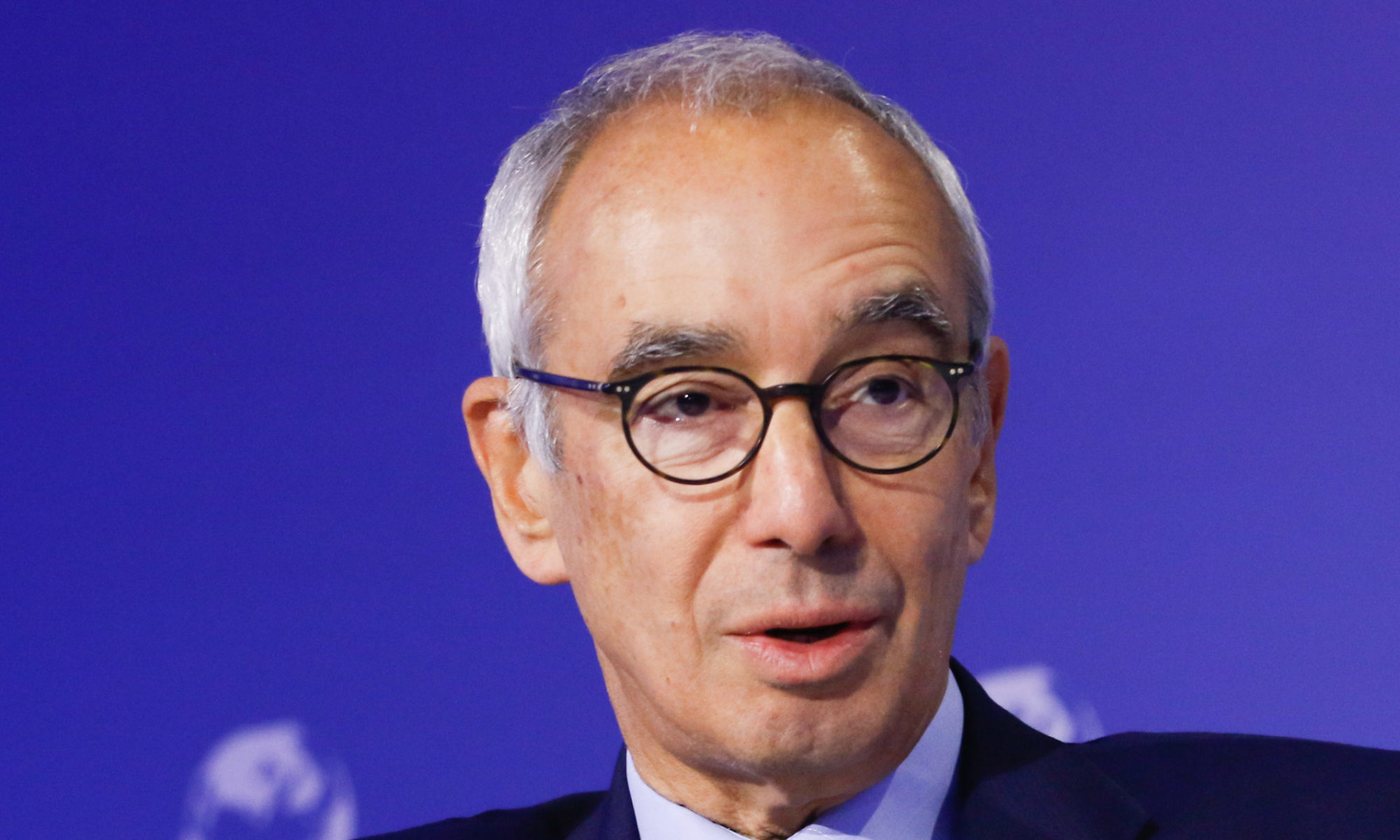
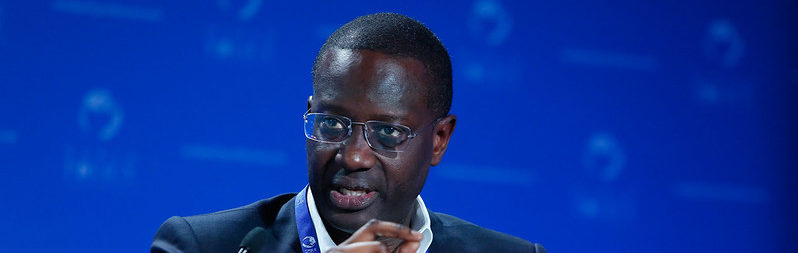
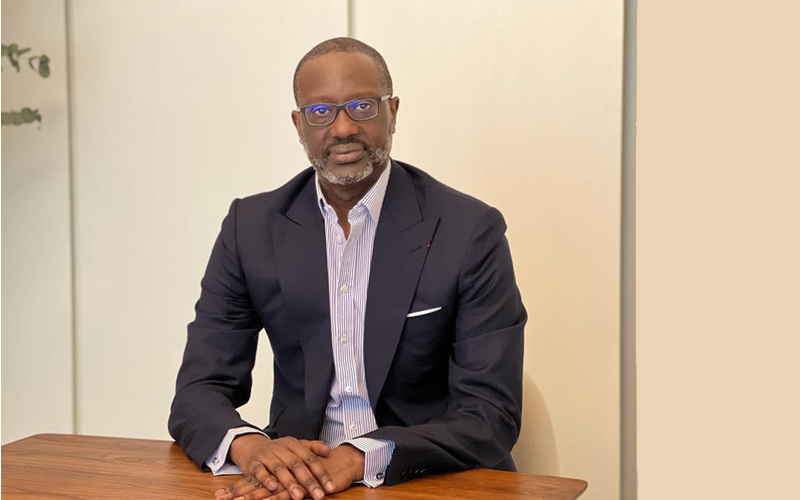
In an exclusive interview with Hichem Ben Yaïche and Nicolas Bouchet, leading financier Tidjane Thiam, now executive chairman of the investment company Freedom Acquisition, relates his vision of Africa and his belief in building more on the human capital of the continent.
You have done so many things in your career that it is difficult to know where to begin. What are you doing at the moment?
The situation of each of us is always the result of a will and of circumstances. Sometimes the will prevails over the circumstances and sometimes it is the opposite. My career began in the private sector, by choice. I wanted to get to know the business world in depth, hence my years in consulting.
After that, following the death of President Houphouët-Boigny at the end of 1993, I was called back to Côte d’Ivoire in 1994 by President Bédié to the Department of Control of Major Works (DCGTx). I left my career in the West to go and do that for a few very rewarding years. I learned a lot there and, I hope, also brought a little to the country. Circumstances again dictated that there was a coup in Côte d’Ivoire at the end of 1999.
The adventures associated with this event brought me back to the West and to consulting. In 2002, I was called by a headhunter who offered me a senior position in the City, London, with Aviva. I accepted it because it was really interesting and because Richard Harvey, for whom I was going to work, was someone quite extraordinary. A few years later, in 2007, another insurance group, Prudential, then called me and I became its managing director from 2009 to 2015, as later at Credit Suisse. All this is already more or less known.
I am now entering the second half of a career that began in 1986. After 36 years spent in both the public and private sectors, I am now in a moment of pause and reflection, but also of commitment since it coincided with the Covid-19 crisis, in which I had to play a role.
Today, I have a portfolio of activities that all fascinate me. I have commercial activities with my company Freedom Acquisition Corporation, where I raised 345 million dollars, the board of directors of Kering which owns brands like Gucci, Yves-Saint-Laurent, Boucheron, Balenciaga and of which I chair the audit committee. And more generally, I have a role of mentor since some entrepreneurs are sometimes kind enough to ask me for advice and I am always very happy to discuss with them.
I also have a number of activities more in the nature of public service missions. Thus, I am consulted on various issues by heads of state and governments. I help President Kagame and Rwanda to make Kigali an international financial center. I belong to a number of think tanks like the Council of Foreign Relations in Washington. I also carry out more specific missions such as my participation in 2020, at the request of David Malpass, head of the World Bank, in the committee which appointed the new director general of the IFC, Makhtar Diop. Sport is one of my passions and I have the great pleasure and honor of having been elected a member of the IOC (International Olympic Committee).
In short, I am not unemployed!
How would you sum up your extremely rich and varied background?
I was born in Africa. Genetically and culturally, I am African. I have never put my culture in my pocket, which has a cost that I assume. I have never deprived myself in my public statements of making abundant reference to my African culture. Everyone who has worked with me knows a number of Ivorian or Senegalese proverbs that have come into common use with them.
After the years spent in Côte d’Ivoire at the head of the DCGTx then the BNETD and the many projects carried out during this period, I have never stopped leading an action for Africa. I had the honour in 2003-2004 to be associated by Prime Minister Tony Blair with the Commission for Africa, which was really a very important moment. This work later led to the G8 at Gleneagles and all the debt forgiveness that drove African growth in the 2010s. I am proud to have been able to take part in this.
I had the pleasure, at Prudential, which was not present in Africa before my arrival, to create Prudential Africa. A football lover, I was watching the AFCON a few weeks ago and I saw the Prudential Africa commercials taking place there, which gave me a certain satisfaction. I couldn’t resist sending a message to Matt Lilley, whom I had appointed at the time boss of Prudential Africa, because the little discussion we had had in my office in London had an impact on reality. But I don’t want to multiply the examples…
You move at the highest level. What have you learned there about decision-making, methods and perspectives that is not open to the rest of us?
One of the things that this experience teaches you for me is the permanence and importance of the human element in everything that we do.
I had a basic scientific training but I must admit that I have evolved a lot compared to my convictions at the start of my career. I believed then, like many people who have this type of training, in equations. My faith in equations has only diminished since then and my awareness of the importance of the human element in everything we do has only grown.
In the end, we can only act through men and women, their conviction, their motivation, their hearts and minds. Unfortunately, in classic Cartesian-type training, we are taught above all to speak to the mind – to the brain – and not at all to the heart, that is to say to the heart, to the guts. In the end, people only act and are moved by emotions, by the heart.
I love this well-known and almost overused anecdote of John Fitzgerald Kennedy visiting NASA when it was planning the mission to the Moon. Meeting a sweeper, he stops and asks him: “And you, what are you doing?” The street sweeper replies: “Mr. President, I am helping to put a man on the Moon!”
That sense of mission and vision is really, really important. Good for them, human beings are ultimately only motivated by such things. That’s what I learned.
What can be done to lead Africa towards a virtuous circle?
To make the link with the importance of the human element, the answer belongs and can only belong to Africans themselves.
The challenges are many and real. What we Africans have in the face of these challenges is our intelligence, our capacities, our emotions, our determination and our convictions. It is the only material we have to work with.
Raw materials are good, but they are only worth if we are able, first, to extract them and, second, to manage them well. It always comes back to the human element and human capital. So you have to manage to combine three things.
The first is private initiative. For me, to trust someone is to trust the human race. Human beings, faced with a situation of pressure, are endowed by nature with the ability to rise, to be creative, to act. Rather than preaching, we must trust African men and women. In a nutshell, let the private sector, private initiative develop.
The second, closely linked to the first – and which is not possible without it – is to invest in this human capital. Which brings us to the issue of health and education. The two elements feed and reinforce each other.
For the third element, creating a favourable environment, it is important to make a distinction between the “hard” components and the components that I will call “soft”, in a way the hardware and the software. They must both be adequate. The “hard” environment is what we talk about every day and what I was doing in Côte d’Ivoire: roads, wells, bridges, airports, container terminals, thermal power stations, hydroelectric dams, solar panels… infrastructure in the broad sense. The “soft” is actually what matters most.
I include in the list of these “soft” elements fundamental things such as respect for human rights and fundamental freedoms, the rule of law, the absence of corruption, the refusal of violence, etc. These elements, when present, provide a favourable framework for private initiative. If I had to sum up my thinking in one word, it is about culture. It’s the culture, what’s in people’s minds that guides their behaviour and ultimately it’s the behaviours that matter more, more than roads and bridges.
If it is necessary to acquire knowledge, to learn equations and to know how fluid mechanics works, in reality, the way you are going to organise your business, inside to be competitive, and outside outside to go and win in the markets, must deeply take into account what you are and reflect it. That is to say, take into account your culture.
We talked a lot at the beginning of the 21st century about soft power, which could be translated by influence, the fact that others seek to imitate you and are inspired by your example. All countries are engaged in a race for soft power. They realise, more and more, that this is the real power. Take, for example, what the United States has done in Silicon Valley through Facebook, Instagram, Netflix. They have changed the way we all live! The creation and then the success of Netflix had a direct impact on hundreds of millions of lives.
People settle in, binge and watch series. That is real influence. And we see that soft power today can slow down or even stop the advance of divisions and tanks…
We are moving towards a world where it is the intangibles that have the most value. If you look at the balance sheets of companies today, it is no longer the factories, the walls and the computers that make the bulk of their value. What matters more and more is what is called goodwill, i.e. the value of intangible or intangible assets of companies such as brands or intellectual property.
Can Africa prepare for this game-changing revolution? Can she fight this fight?
Yes, she has no choice! You have to participate, otherwise you will be progressively marginalised. We must not be mistaken in war. We rarely win the war with the techniques and technologies of the previous war. We must be aware today that we are all engaged, all countries on all continents, in a battle for innovation, for intellectual capital and for intangibles. This is what determines the value of an Apple or a Google. The latter has very few physical assets but is worth nearly $3 trillion thanks to the intelligence of employees that the group has been able to hire and motivate.
All of this may seem far removed from our African concerns. But I was recently talking to an entrepreneur I know in Silicon Valley and was surprised to learn that he has already made seven significant investments in Africa and the Middle East! It is developing pharmacies to distribute medicines to 400,000 registered patients in Ghana, and is also investing in South Africa, Kenya, Egypt, Nigeria, Saudi Arabia and Dubai.
Technology is to be seen as a lever that can allow us to win. States have long led efforts to foster African integration. At the same time, major progress is actually being made by the private sector with the motive of profit and economic success. I know seven or eight companies that are each already in about 15 African countries and allow money to be sent from one country to another in Africa in complete safety. This is economic integration achieved by people who have been well trained, for many, in Africa.
Africa is thus beginning to reap the dividends of the investment it has made in its human resources across the continent and in the diaspora. These women and men are putting everything they have learned at the service of the African economy. This is how we will win.
Are you satisfied at the rate things are being done in Africa?
In itself, satisfaction is always to be fought and I remain eternally dissatisfied, not only about Africa. Dissatisfaction is one of the most powerful engines of evolution!
On the contrary, we must go faster than the others. If we are less advanced than the others, it is not by working less that we will manage to catch up with them and even less to exceed them.
That said, you need a healthy appreciation of things and know how to motivate without discouraging. No complacency, therefore, but we must also know how to appreciate, given the challenges faced by previous generations, the path that they have enabled Africa to travel and which remains important.
Do donors take what you say into account in their approach to Africa?
Donors remain an important actor in Africa. They play a useful role and we are lucky to have an African, Makhtar Diop, at the head of the IFC and Kristalina Georgieva of Bulgarian origin, at the head of the IMF. They both understand the dynamics I have just described and provide significant support to the continent. The European Union and other donors are not left out.
That said, there is such a disproportion today between the resources of public actors and those of private sector actors that the most important challenge for Africa in the years to come is to benefit from the masses of private capital available in the world. Some are counted in tens of billions of dollars and others in hundreds of billions.
The development we are currently seeing in Africa is ahead of my expectations and that makes me rather optimistic. Twenty years ago, I could not call an investor from Silicon Valley and hear him speak to me spontaneously about Africa. Today, when I call them, they no longer speak of Africa but of Kenya, Nigeria and Egypt. It means that they have come down to the country level, put us on the map and a fundamental step has been taken. Now, when they call me, it’s no longer to ask me whether to invest in Africa or not, but where to invest in Africa. They want to be enlightened on the dynamics of the countries. It’s very positive.
How should African debt be treated today?
In the long run, the only real solution to debt is growth and that will come from the things I just told you about. To look at the debt is often to look at the symptom rather than the evil. Debt is not bad in itself if you have enough growth and pay it down. All the states that have taken off economically have gotten into debt at some point because they needed more capital than their own savings capacity.
The obsession must be economic growth. In this context, it is necessary at all costs to obtain better mobilisation of the domestic resources of African economies. The development of local financial institutions and in particular that of funded pension systems, given the youth of the population on the continent, is essential to finance and stimulate investment.
Economic growth is an imperative that is all the more important for Africa as population growth is very high there. This is a little less the case now, but back when there was 3.8% population growth in Côte d’Ivoire, every year the annual economic growth was less than 4%. We were backing up! It is still extraordinary when having 4% growth is a very good economic performance. This additional pressure in Africa is real but, as China has shown, it is possible to have explosive growth for a long time.
Could you give a personal mapping of the countries that are finding their trajectory and a method?
I don’t want to award good and bad points between countries. Things are happening that are working. In terms of opportunities, we must start with agriculture because one of the first economic opportunities is still to feed human beings, especially in the context of increasing urbanisation. You can see great dynamism throughout the agricultural sector.
African peasants sweat blood and water to produce an agricultural harvest in a very hostile environment where, very often, 40 to 60% of this harvest is destroyed by insects or rots on the edge of the field. We can see huge gains to be made all along the agricultural production chain. There are many companies that have been created in this field. For example, there are often tensions in West Africa between herders and farmers.
A young Ivorian entrepreneur makes mini-mills that allow the surplus of agricultural production to be transformed into animal feed. Suddenly, this company created a win-win situation. The cultivator’s harvest, which was rotting, is now valued. The herder who was always in conflict with him is happy because he can now feed his cattle. This is what I have in mind when I talk about innovation, human capital, creativity. This idea comes from an Ivorian engineer. He was in the region he knows and where he has friends. The combination of knowledge and local knowledge necessarily leads to innovations that improve things. Throughout agriculture, there are extraordinary opportunities. In town too.
In Egypt, there are companies that are developing a lot in local delivery. Financial services is another area where we know very well that there is a major problem with SME financing when it comes to small loans, in the order of $1,000 to $3,000. Many digital solutions are being put in place. In Nigeria, I have spoken to promoters who do referral-based lending and experience less than 1% loss. All of this is done digitally by taking advantage of the expansion of cell phones.
There are endless investment opportunities. One of the most interesting things about all these winning African companies is that they are expanding to 10, 14, 20 countries. There is a contagion of success when they manage to achieve something. This is done by osmosis, without major declarations or major conferences, but close to the ground.
Are you tempted to switch to politics? Translating all of this into action is also important.
No, I really prefer to stick, for now, to what I know. I’m quite busy as it is and I manage to talk to everyone and be listened to, which is an advantage. My goal right now is to have influence. For the rest, the future will tell.
Are you tempted to write your memoirs, to conceptualise and, above all, to push this analytical vision of the world further?
Yes, I’m working on something. I believe that we must strive to continue a very African tradition, which consists of the older ones sharing their experience with the younger ones. I have learned a lot in my life from my readings and I hope to never stop until the day I leave the planet. Here, I am currently reading Homo Migrans [not yet translated into English – editor], an extraordinary and fascinating book by Jean-Paul Demoule, where he explains that we are all descendants of migrants. He gives a statistic that I did not know: throughout the ages and everywhere in the world, only 3% of human beings migrate; 97% of human beings die where they were born. This is a very long-term statistic.
I encourage anyone who has an experience to write to share it. For a long time, I was in action and told myself “Actions speak louder than words”. I arrive at a more nuanced position today, with perhaps a better balance between “action” and “words”…
With your knowledge of the continents, which one inspired you the most?
It’s just a matter of circumstances. I think, if I had lived in the 19th century, it would have been America. The 20th century will have been largely, in its second half, the century of China. The scale of this transformation is unparalleled and unprecedented. Ezra Vogel, America’s foremost expert on China, describes in detail the transformation that Deng Xiaoping has achieved and says that never has one human being lifted so many human beings out of poverty. I think it’s true: 700 million Chinese have been lifted out of poverty. When I went to China for the first time in 1984, there was not enough to eat there. China had $259 billion in GDP for 1.2 billion people. This country is now creating $17 trillion. This transformation has extremely profound implications for everyone. No one in the world can think of being unaffected by such a major shift in the distribution of economic power on our planet.
We forget today that, in the 1970s, Asia was considered a vast disaster. We deplored the wars in Vietnam, Cambodia and Laos, the coups in the Philippines and Thailand. Many people then believed more in Africa than in Southeast Asia. Today is an ocean of prosperity. I had the chance to meet Lee Kuan Yew for a few hours that I will never forget. He told me, “Singapore’s goal is to spread prosperity.” At first there were only the four Tigers of South Korea, Taiwan, Singapore and Hong Kong, exceptions in a sea of misery. Now look at Vietnam where I have been very often, Thailand, the Philippines and Malaysia. All are extraordinary.
After two years of Covid and a year that has begun with a war, how do you see these developments?
The heavy trends that we designed together remain. I talked about intellectual capital. What got us out of the Covid crisis? The doctor who created BioNTech is the son of Turkish emigrants in Germany. The answer to this problem came out of a man’s brain. If there is one thing that the health crisis has vividly illustrated, it is the importance of intellectual capital and knowledge. We were all distraught, shutting ourselves up and hiding. This man, Uğur Şahin, and his wife, Özlem Türeci, liberated us.
Ask yourself, whenever a child does not go to school, where we would be if Mr. Uğur Şahin had not gone to school. Every time a child is out of school, you have to ask yourself this question. We may be cutting off an arm from humanity. This is why this question of investing in men, women and children is at the heart of everything. We can only get out of this. Whether it’s Covid or Ukraine, at the end of the day, it’s all about men and women.
There is, through what you say, a pressing appeal to this civilisation of humanism. But as we can see, today there is a war that is devastating a country.
There will always be tension. What I am saying is a call to put the long term before the short term. We have a natural propensity, nature made us like that, to do the opposite. This transition will only happen with a great conscious and deliberate effort at all times. It’s in everyone’s interest to raise children even if every dollar put into a child’s education doesn’t go to consumer spending, buying a TV or buying a steak. You have to deprive yourself to invest for the long term.
Your serenity and optimism are striking
You can’t be me and not be optimistic! My mother was illiterate and never went to school. I could have been illiterate too. I was put in school. I was able, by the grace of circumstances and of God, to manage two of the biggest companies in the world. And I was born in Abidjan! I am not an emigrant born in Paris. I passed my Baccalaureate at the Lycée Classique in Abidjan. And I got to do what I could do.
I’m not saying this out of false modesty, but it’s important that everyone understands that I’m not exceptional. There are many people like me in Africa. Every time I meet Westerners, Europeans and even you who give me all these compliments, I want to tell them that I am not unique. I do not have the ambition to be the exceptional “token black”. I think there are many Africans as talented if not more talented than me. They simply do not have the opportunity to express themselves and have not had the opportunity to access knowledge and express their talent. Yes, I am optimistic because I think any African of my generation can tell a story similar to mine. I think 99% of Africans have illiterate grandparents, like my mother was. My mother was born in 1931. Many Africans born in the 1930s did not go to school. We are all descendants of these generations. Look at how far we’ve come since on all fronts!
This is what determines my optimism, along with my love of my culture, which is never to the detriment of other cultures. Africa has a lot to bring to the world. What would music be without our input? What do people listen to, everyday, everywhere? In Beijing, in Rangoon, I hear our music. I hear the voice of Africa speaking everywhere. So why be shy and complexed? You have to take responsibility.
I say it, you can only succeed by being yourself. You have to be yourself, have confidence, set a goal and not give in to short-term temptations. We must put the long term before the short term and I am sure that, if not this generation, the following generations will see an Africa that the world will seek to imitate rather than teach it lessons.
The challenges are many and real. What we Africans have in the face of these challenges is our intelligence, our capacities, our emotions, our determination and our convictions. It is the only material we have to work with. This question of investing in men, women and children is at the heart of everything. We can only get out of this.
Read the article on the site of New African.














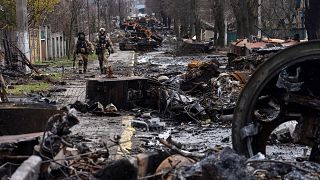
PARIS – Beyond the immense tragedy which Russian President Vladimir Putin’s war has brought upon Ukraine and its people, we are starting to grasp its potentially devastating consequences for the global sustainability agenda.
Already, the COVID-19 pandemic redirected global attention and resources away from the targets enshrined in the 2015 Paris climate agreement, as countries focused on their immediate public-health needs. Now, Putin’s war is intensifying the economic, social, and geopolitical pressures countries face, while deepening divisions among them. This does not bode well for efforts to address the shared challenge of climate change.