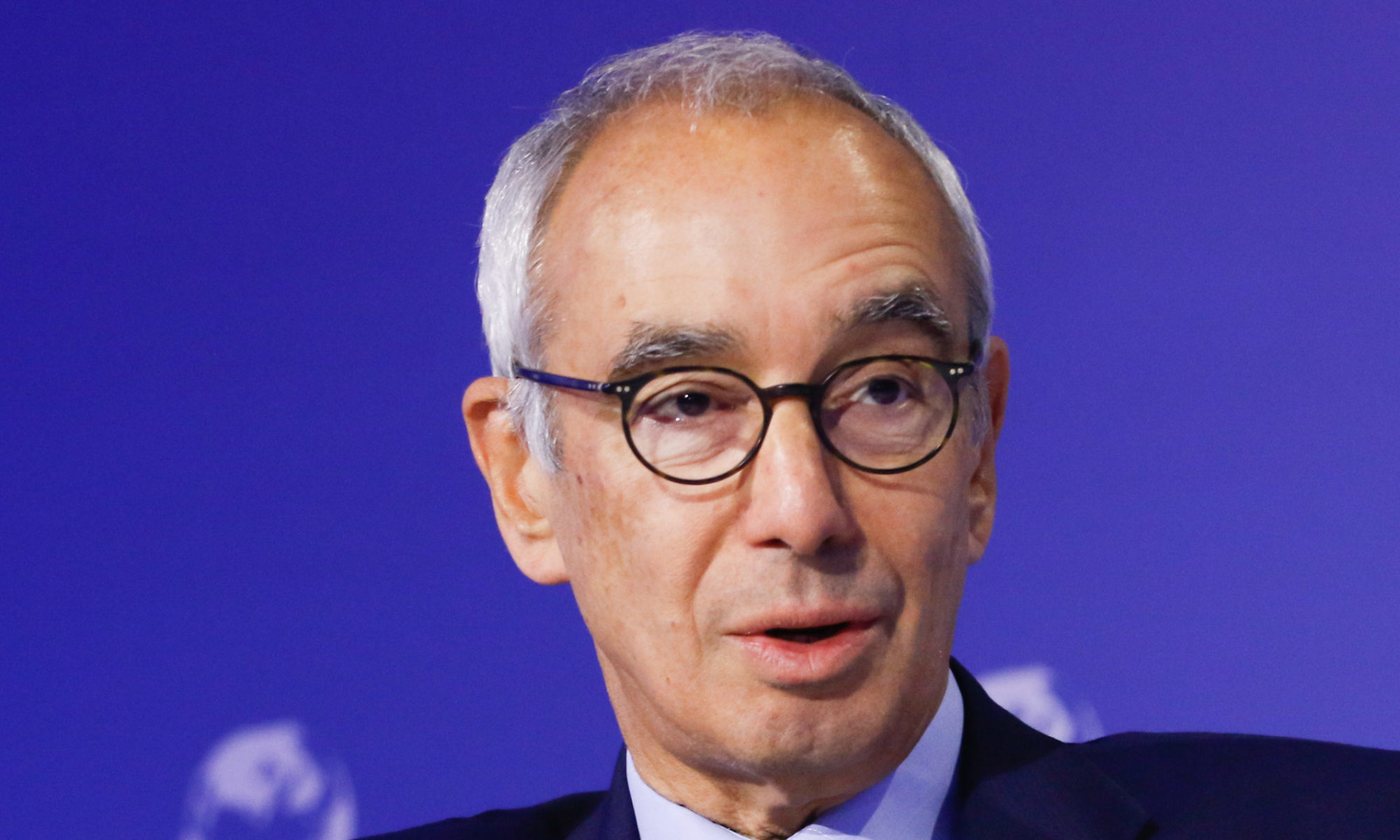
Who wins from US debt default? China.

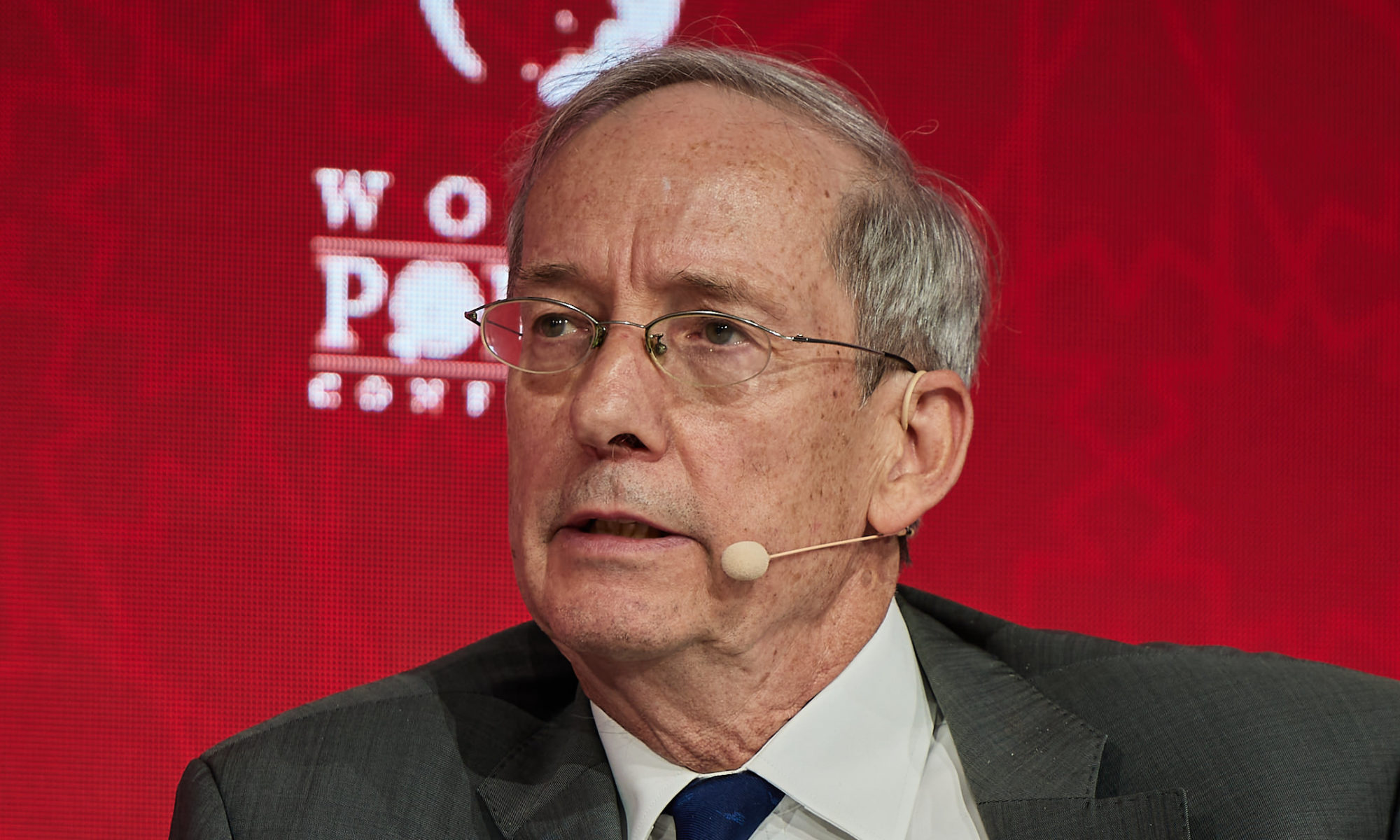
Marcus Noland participated at the WPC 2019 in Marrakech.

ARTICLE – As the US stumbles toward a possible debt default, the economic risks are clear. In the worst case, it could set off a global financial conflagration, given the role of US Treasury bonds as the risk-free anchor of a vast network of global financial transactions. Even a last-minute avoidance of default could result in a downgrading of US debt and upward pressure on US interest rates, further stressing an already fragile banking system.

But an additional, and possibly underappreciated, reason to avoid default would be its deleterious impact on the US dollar’s key currency role and America’s standing in the world broadly and vis-à-vis China.

US DOLLAR DOMINANCE WOULD ERODE

The US dollar is the dominant global currency. It accounts for around 60 percent of official reserves and is used most widely for trade invoicing and financial transactions, though the dominance has been declining. During the late 1980s and into the 1990s, some observers believed that the Japanese yen might have been on a trajectory to supplant the US dollar as the key currency of the international financial system; similar interest surrounded the euro when it was established in 1999.

Now the spotlight is on China. It is the dominant trade partner of the Association of Southeast Asian Nations (ASEAN) and Central Asia, and it is not hard to imagine that as those trade flows grow, there will be rising interest in invoicing them in Chinese renminbi (RMB). Currency invoicing data are fragmentary, but it appears that by 2015, a quarter of Chinese trade was invoiced in RMB, making it the world’s second-most frequently used invoicing currency. The currency in which a country’s trade is invoiced influences the funding structure in its banking system and in turn the currency composition in its central bank reserves. So, expanded use of the RMB in trade should induce greater use in these other areas as well. Ancillary policies such as the creation of RMB exchanges and the development of a Chinese alternative to the SWIFT bank messaging system could encourage even greater use of the RMB, as could development of the eCNY, a central bank digital currency. These developments could greatly undermine the ability of the US to implement financial sanctions and prevent sanctions evasion by actors such as North Korea.

With the continued development of the euro, the world could be headed toward a system in which several major currencies are used in parallel, akin to what existed before the First World War. Barry Eichengreen, Arnaud Mehl, and Livia Chiţu argue that advances in financial technology will reduce the advantages of incumbency and make it easier for market participants to move between currencies, maintaining diversified portfolios.

In simple macroeconomic terms, such a development would not necessarily be a bad thing for the US economy. As Paul Krugman has pointed out, evidence that dollar dominance allows the US to maintain lower interest rates or more easily run trade or current account deficits is not overwhelming. Indeed, it can be a case of too much of a good thing: Foreign countries’ reserve accumulation and sovereign wealth funds are the biggest drivers of persistent trade surpluses, with the US running the biggest associated deficit.

[…]

Read the full article written by Dr. Marcus Noland on the website of the Peterson Institute for International Economics.

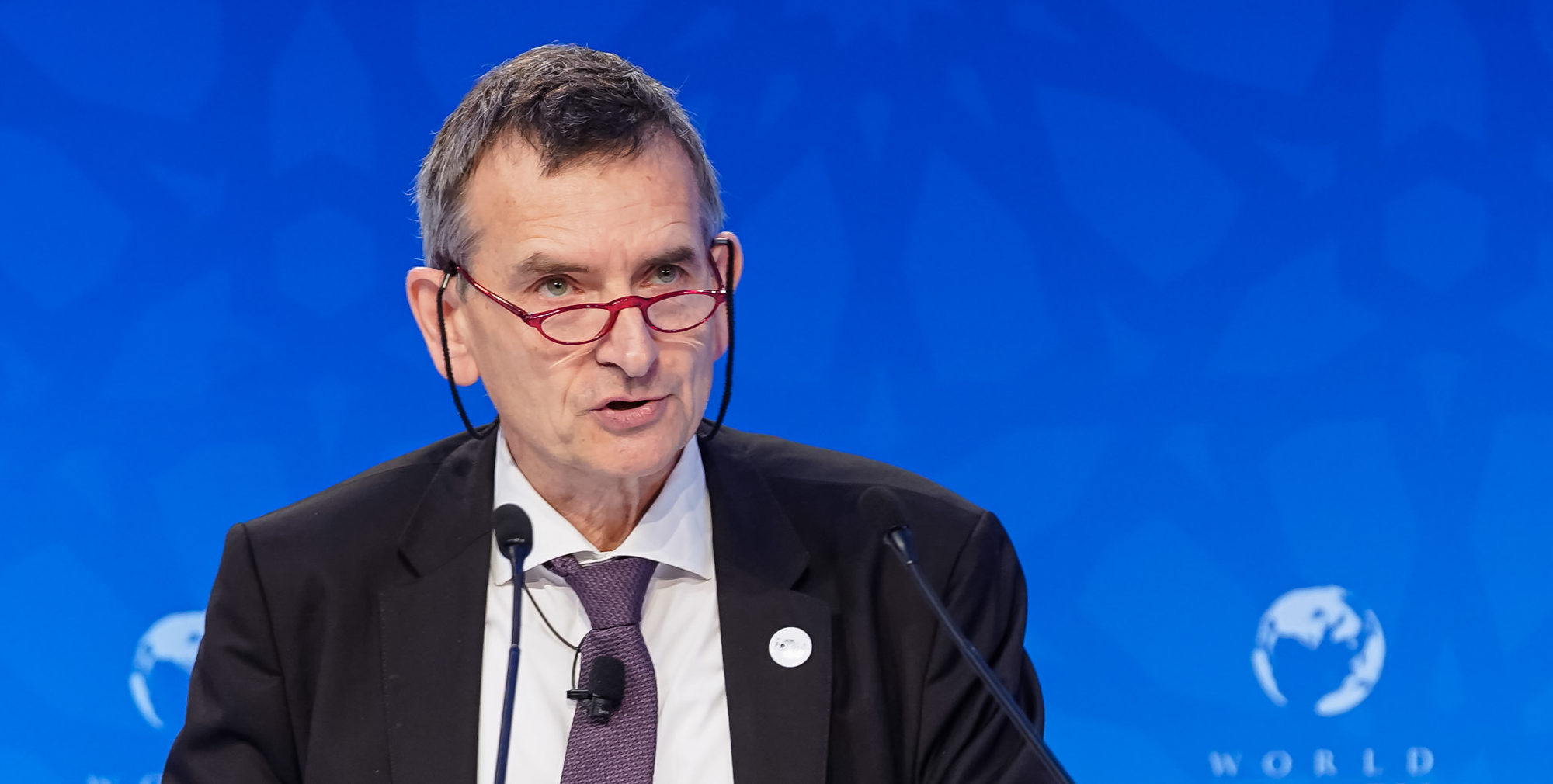
Volker Perthes: “We must make sure that this war does not drag on.”

INTERVIEW – UN special envoy to Sudan Volker Perthes rejects accusations that the West is to blame for the current crisis in Sudan. In this interview with Kossivi Tiassou, he warns of “fortune seekers” and mercenaries from abroad joining the conflict while tens of thousands of Sudanese citizens flee their country

Mr Perthes, you arrived a few days ago in the Sudanese port of Port Sudan, from where people are trying to flee the fighting by ship. Civilians in Sudan are very frustrated. You were greeted on arrival by demonstrations. What message did you take with you?

Volker Perthes: We were not greeted by demonstrators, but by the governor of the Red Sea State, the federal state in which Port Sudan is situated. But you are right: a few days previously, about 150 people from a certain political camp demonstrated against both the presence of the UN and my presence. This is part of the political dispute here in Sudan between Sudanese parties and forces.

There is fighting in the capital, Khartoum, and in other parts of the country like Darfur or Kordofan. American intelligence predicts a drawn-out conflict. Do you agree?

Perthes: We in the United Nations are working together with other international partners, and especially with Sudanese society, to make sure that this war does not drag on. The first step must be a solid cease-fire. Not just a declaration of cease-fires, but a cease-fire with a monitoring mechanism.

From there, the next step must be towards talks between the fighting parties in the hope of re-establishing a functioning government in a more stable situation. American intelligence has its own assessments; I will not comment on those. But our goal is to prevent just that: a long war that would likely bring the country to the brink.

What role do Sudan’s northern neighbours, Egypt and Libya, play in all this? Some observers assume that the conflict cannot be resolved without Egypt and the Libyan General Khalifa Haftar, two supporters of the belligerent Sudanese generals Abdel Fattah al-Burhan and Mohamed Hamdan Daglo.

Perthes: Haftar is the supporter of one of the two parties, but he has no decisive role in this war. You are right to ask about the neighbouring states: Egypt, South Sudan, and others too. We need the contribution of these neighbouring countries for a solid solution, a solution that stabilizes the country. South Sudan has already been very active. The current cease-fire — which is not, however, being fully observed — was negotiated by Salva Kiir, the South Sudanese president. Egypt is also pushing for a cease-fire as a first step towards ending the war.

There is also speculation that mercenaries from the Russian Wagner Group, which is present in the country, are involved in this conflict. What can you tell us about this?

Perthes: I have no concrete evidence that there are Wagner mercenaries fighting in this war. I can neither confirm nor deny that.

[…]

Read the full interview on Qantara.de.

Antoine Flahault : « Les non-vaccinés n’ont plus trop de soucis à se faire. »

ENTRETIEN avec Antoine Flahault, épidémiologiste et directeur de l’Institut de santé globale de l’université de Genève.

Considérez-vous, comme l’OMS, que le Covid n’est plus une urgence sanitaire mondiale ?

Oui, force est de constater, partout dans le monde, que le Covid n’est plus l’urgence de santé publique qu’elle fut un temps dans nos vies. Il n’y a plus de pays qui recourent aux confinements, aux quarantaines, ou imposent de contrôles sanitaires aux frontières vis-à-vis du Covid. L’urgence sanitaire mondiale aura duré trois ans ce qui fut particulièrement long. On estime que le Covid aura fauché près de 27 millions de vies pendant cette période, ce qui est considérable. Heureusement, le vaccin a changé la donne, et c’est l’une des raisons qui font qu’aujourd’hui on peut sortir de cette pandémie.

La situation est-elle la même sur tous les continents ?

La situation s’est beaucoup homogénéisée avec l’arrivée d’Omicron à la fin 2021 et sa kyrielle de sous-variants depuis. Actuellement les sous-variants de la série XBB dominent partout dans le monde, et continuent à causer des vagues de contaminations. Mais l’immunité vaccinale et celle laissée par les vagues répétées limitent beaucoup les formes graves qui conduisaient à une saturation des hôpitaux et parfois aussi des morgues. La situation épidémiologique est cependant moins précise aujourd’hui car la plupart des gouvernements ont levé la garde de la veille sanitaire et l’effondrement des tests ne permet plus de comparer la circulation virale actuelle avec celle des vagues précédentes.

Diriez-vous que la pandémie est terminée, ou pas ?

La notion de pandémie, même si cela peut surprendre, n’est pas dans le vocabulaire officiel du Règlement Sanitaire International, celui-là même qui régissait l’urgence de santé publique de portée internationale qui vient d’être levée par le directeur général de l’OMS à Genève. Le Dr Tedros avait cependant, sans réel fondement juridique, décidé de déclarer un état de pandémie le 11 mars 2020, notamment parce qu’il constatait que la communauté internationale ne se mobilisait alors pas suffisamment contre la vague pandémique partie de Chine. L’OMS aurait pu profiter de la fin de l’état d’urgence pour déclarer la fin de la pandémie, mais y a renoncé, probablement pour ne pas laisser croire que le virus était éliminé ou qu’il ne représentait plus de menace pour l’humanité. Le message de l’OMS est d’ailleurs très clair, si l’on est sorti de l’état d’urgence, en revanche on entre dans une phase postpandémique qui ne doit pas s’apparenter à la fin du problème causé par le SARS-CoV-2.

[…]

Retrouvez l’intégralité de l’entretien sur ladepeche.fr.

Josep Borrell : la Chine est le pays « qui exerce la plus grande influence sur la Russie »

ENTRETIEN – Plus d’un an après le début de la guerre lancée par Vladimir Poutine contre l’Ukraine, le chef de la diplomatie européenne réaffirme son soutien à Kyiv, estimant que l’envoi d’armes et de munitions de la part des 27 était indispensable, à défaut de quoi, l’Ukraine pourrait tomber en quelques jours et devenir une “seconde Biélorussie”.

Retrouvez, ci-dessous, l’interview accordée par Josep Borrell à notre journaliste Méabh McMahon, dans le cadre du douzième forum de “l’état de l’Union” de Florence, en Italie début mai.

Méabh McMahon : Le monde n’est peut-être pas plus sûr qu’il ne l’était l’année dernière à la même époque. Comment s’est déroulée l’année pour l’Union européenne, et pour vous ?

Josep Borrell : L’année a été difficile, sans aucun doute, car elle a été marquée par l’arrivée soudaine d’une nouvelle guerre à nos frontières. Nous avons été très occupés à essayer de soutenir l’Ukraine. Mais nous avons aussi assisté à l’émergence de la Chine en tant que grande puissance, une puissance affirmée, dans un monde qui est en train de se fragmenter. D’autres pays, de grands pays très peuplés, se développent rapidement et ne veulent pas prendre parti dans la guerre ukrainienne. Bien qu’ils aient voté aux Nations unies contre l’invasion, ils ont aussi envoyé un message politique montrant qu’ils ont le sentiment que cette guerre n’était pas la leur. Cela est très mauvais pour nous. Les prix de l’électricité, de l’énergie et des denrées alimentaires ont immédiatement grimpé. Je pense donc que pour nous, Européens, cette année a été l’occasion de faire le point sur une réalité très complexe, un monde fragmenté où les deux superpuissances, les États-Unis et la Chine, s’affrontent. Et une fois de plus, la réalité dramatique d’une guerre à nos frontières qui nous a coûté beaucoup d’argent et qui a coûté des vies aux Ukrainiens.

Méabh McMahon : Avez-vous l’impression d’être devenu un diplomate de guerre ? De donner la priorité à l’Ukraine, et ne plus avoir le temps de vous occuper d’autres questions ?

Josep Borrell : Nous faisons plus que de la diplomatie. Mais en Ukraine, malheureusement, le temps des conversations diplomatiques sur la paix n’est pas encore venu. Nous en sommes à l’étape du soutien militaire pendant la guerre. Je me sens donc diplomate, mais aussi une sorte de ministre de la Défense de l’Union européenne, car j’ai passé une grande partie de mon temps à parler d’armes et de munitions. Je n’aurais jamais pensé passer autant de temps à réfléchir au nombre de tirs d’artillerie que je peux fournir, que nous, Européens, pouvons fournir aux Ukrainiens.

Méabh McMahon : Effectivement, l’an dernier, à la même époque, nous parlions beaucoup de sanctions. Aujourd’hui, comme vous le dites, l’UE se concentre davantage sur la défense. Lorsque vous vous réunissez à huis clos avec les ministres, avez-vous l’impression que l’UE est en mode guerre ?

Josep Borrell : La guerre nous a unis. Il n’y a rien qui puisse vous unir plus qu’un ennemi, une menace, et le sentiment d’être confronté à une menace. C’est une menace existentielle réelle, nous a unis plus que n’importe quel discours, n’importe quelle approche théorique sur la nécessité de l’intégration. Et il a également uni l’Occident. La relation transatlantique n’a jamais été aussi forte qu’aujourd’hui.

[…]

Retrouvez l’intégralité de l’entretien sur Euronews.

2022 Conference proceedings

08:30 – 10:00 | Plenary session 1

Geoeconomics and Development in a Fragmented World

Masood Ahmed

President of the Center for Global Development, former Director of the Middle East and Central Asia Department of the IMF

International development and politics – international politics, geopolitics – have always been connected, so it is not as if this is something new. The question we will explore in this panel is how the relationship is changing and what that means for the way in which we think about development and development cooperation. I would like to propose that there are at least three ways in which that relationship is changing.

Read the full text

Aminata Touré

Representative of the Senegalese National Assembly, former Prime Minister, former President of the Economic, Social and Environmental Council of Senegal

We live in a deeply fragmented world. Even in wealthy countries, people feel left behind, and inequality is a major issue that needs to be addressed. It is clear to me that our concepts of international development need to be re-evaluated, so they reflect the reality of a fragmented society. This is particularly true in Africa, where the future of nutrition will be decided.

Read the full text

Jean-Marie Paugam

Deputy Director General of the WTO

There is not a clear trend towards de-globalization in trade figures. While there have been some trends, such as an apparent slowdown in the rate of openness or global trade on GDP, this can be attributed to various statistical phenomena, such as variations in commodity prices and the composition of GDP. However, there are new forces that will shape globalization and make it more complex, leading to increased transaction costs for businesses and governments.

Read the full text

Kim Heungchong

President of the Korea Institute for International Economic Policy

The fragmentation and “blocization” of global economies are now substantial. All of these hinder the stable provision of global public goods that the emerging economies have hitherto utilized for their growth. The digitalization of ODA will be the revolution for increasing the effective distribution of global public goods while responding to the climate crisis through green technology.

Read the full text

Bertrand Badré

Managing Partner and Founder of Blue like an Orange Sustainable Capital, former Managing Director and Chief Financial Officer of the World Bank Group

The convergence of traditional crises – economic, social, and energy – coupled with fundamental transformation across several domains has created a complex global situation. This transformation is geopolitical, with decarbonization and biodiversity at the forefront of discussions, and technological changes, such as artificial intelligence, rapidly evolving.

Read the full text

Jeffry Frieden

Professor of Government at Harvard University

The highlighted points here are the current geoeconomic and political situation and the constraints that they impose on developing countries. We are in the midst of a fundamental change in the constraints and opportunities faced by developing countries and that this is going to be a very challenging period to come.

Read the full text

Vincent Koen

Deputy Director of Country Studies at the OECD

China’s near closure during the three years of the pandemic has come on top of other factors working in the direction of deglobalization: the Made in China 2025 strategy, which seeks to reduce China’s dependence on foreign technology; Trump’s trade war, with titfor-tat tariff hikes starting in 2018; the US Chips and Science Act and the EU Chips Act; and the US Inflation Reduction Act. Against the backdrop of geopolitical tensions, all this translates into less FDI and knowledge exchange.

Read the full text

Debate

Read the full text

10:00 – 11:30 | Plenary session 2

Is the International Economic Order Collapsing?

Jean-Claude Trichet

Vice Chairman of the Académie des sciences morales et politiques, former Chairman of the European Central Bank, Honorary Governor of the Bank of France

The question is whether we should have a new international economic order and I guess the response is yes, because checking what has been said, all speakers, whether President of the US, President of all countries in the world or of China, they all say we need a new international order, implicitly or explicitly a new economic international order. The problem is, which one exactly, which international order that would be new and appropriate for the new world in which we live? Should it be multipolar or unipolar?

Read the full text

Taeho Bark

President of Lee&Ko Global Commerce Institute, former Minister for Trade of Korea

It may not be realistic or even feasible to suddenly cut off all trade between the US and China. I think we should consider limiting the US decoupling from China to a few technologically sensitive sectors, which are directly related to national security.

Read the full text

Yann Coatanlem

CEO of DataCore Innovations LLC, Founder and President of Club Praxis, Board member of GlassView and the Paris School of Economics

It would also be very useful to have some kind of extreme risk measure of the entire world economy, across many dimensions: market risk, credit risk, climate risk, cyber security, operational risk. Nothing new here: let’s reuse the same models and stress tests that are applied to institutions that are deemed too big to fail.

Read the full text

Gabriel Felbermayr

Director of the Austrian Institute of Economic Research (WIFO), former President of the Kiel Institute for the World Economy (IfW)

I think we should have a broader perspective on the institutions that matter, that is not just the IMF, the World Bank, the World Trade Organization, the World Health Organization, etc. We must bring in the big international enterprises. We need to mobilize them for the common good, public and civil society, NGOs and many more.

Read the full text

Motoshige Itoh

Professor Emeritus at the University of Tokyo, member of the Council on Economic and Fiscal Policy of Japan

I would like to particularly emphasize the importance of COP’s efforts to address climate change. It is necessary, of course, to address the issue of climate change by promoting initiatives on common human issues with the participation of all the world’s major countries.

Read the full text

John Lipsky

Senior Fellow of the Foreign Policy Institute at Johns Hopkins University’s Paul H. Nitze School of Advanced International Studies (SAIS), former First Deputy Managing Director of the IMF

I have concluded that renewed focus on a more cooperative and coherent approach toward setting macroeconomic and financial policy is needed to avoid creating new risks of protectionism and reduced efficiency of international financial markets. Such negative developments inevitably would reduce potential growth and increase economic volatility.

Read the full text

Qiao Yide

Vice Chairman and Secretary General of Shanghai Development Research Foundation

In the short-term, I guess it is very important for the US to do more cooperation on macroeconomic policy among other major economies. Also, many countries are currently experimenting for CBDC under the framework of BIS […]. I think it is good to facilitate the transaction and payment system.

Read the full text

Nicolas Véron

Senior Fellow at Bruegel, Senior Fellow at the Peterson Institute for International Economics

The Basel III accord on banking capital requirements, leverage, liquidity and stress testing, has been an extraordinary international success. It has been implemented in a more globally consistent way than the previous Basel II accord. Sadly, the European Union is still not compliant but most other jurisdictions are and I think that has led to great resilience in the financial system, in the banking system.

Read the full text

Debate

Read the full text

11:30 – 13:00 | Official Opening

Thierry de Montbrial

Founder and Executive Chairman of Ifri and the WPC

Our ambition remains unchanged. It continues to be to work in favor of a governance that safeguards the chances for a “reasonably open” world, away from the two extremes of, one the one hand, a return to division into blocks that are radically separated by ideology, and on the other hand, the Fukuyama-style “flat world” dreamed of following the Cold War by liberal globalist ideologues.

Read the full text

Reem Ibrahim Al Hashimy

Minister of State for International Cooperation of the United Arab Emirates

The path forward in the UAE is clear, it can only happen through constructive dialogue, but we do not meet with each other to simply talk to one another, we must meet to also ensure that we are bringing more to the table by being innovative and inventive and bold. We do have to look at ways where we also do not become echo chambers where we simply repeat and agree with one another about what the path forward needs to look like.

Read the full text

HH Bartholomew I

Archbishop of Constantinople – New Rome and Ecumenical Patriarch

The ethno-religious fanaticism inculcated in Russian youth stifles prospects for peace and reconciliation. The Orthodox world is divided and this fragmentation is projected onto poor countries, whose people hoped to find relief in the faith. Above all, it harms the Russian Church since sooner or later the people will realize the excesses of a Church subject to objectives that have nothing to do with its original mission.

Read the full text

Haïm Korsia

Chief Rabbi of France

All religions advocate the diversity that alone can lead to unity, which is actually the opposite of uniformity. Uniformity is an illusion, for we can never all be the same. To speak about unity, it is therefore necessary to speak about difference. Religions represent a way for everyone, each in his or her own way, to turn to the same person, to God, without wanting to get rid of others. No possibility of eliminating the faith of others has ever been imagined.

Read the full text

14:30 – 15:30 | Plenary session 3

The Future of Geopolitics and Business: Building Resilience and Adapting to a New Global Reality

Nikolaus Lang

Global Leader for the Global Advantage practice, Managing Director and Senior Partner of Boston Consulting Group

In my view, there are six dimensions in which business leaders must act in the emerging world, embedding geopolitics in corporate decision making, supply chain resilience, investing in people and strategy, innovation, cybersecurity, and accelerating climate action.

Read the full text

Abdullah Al Mazrui

Chairman of the United Arab Emirates Chambers of Commerce and Industry

“Geopolitical changes have a significant impact on the world economic ecosystem, and recent events such as the war in Ukraine and the Covid-19 pandemic have led to global economic challenges. To minimize geopolitical tensions, businesses can increase their flexibility and resilience, develop practical methodologies for risk management, and adapt to the economic reality.”

Read the full text

Maurice Gourdault-Montagne

Former Ambassador, former Permanent Under Secretary of the French Ministry of Foreign Affairs

“Multi-alignment” is the new behavior of countries which behave according to their own interests and India is a champion in that respect. The rest of the world is a swarm of middle-sized countries or smaller countries trying to survive because of inflation, security, grain, pesticides. Around 140 countries are following this pattern.

Read the full text

Helle Kristoffersen

President Strategy & Sustainability and member of the Executive Committee of TotalEnergies

In the recent reports on risks published by insurance companies and risk assessment specialists, we can notice that the top three risks identified across all regions are geopolitics, cybersecurity, and climate change. These three risks are inherently linked, and inaction on climate change will lead to geopolitical tensions, migrations, droughts, water conflicts, and more.

Read the full text

Sam Okwulehie

Chairman and CEO of LATC

Sustainability: protection of our future via sustainable business practices is now undoubtedly important in our global ecosystem and could be the natural resilience build that global supply chains require today and tomorrow.

Read the full text

Debate

Read the full text

15:30 – 16:30 | Plenary session 4

Innovative Leaders: Climate Crisis and Circular Economy

Lucia Sinapi-Thomas

Executive Director of CG

The climate warming limit translates into a need to drastically curb carbon emissions by the middle of the century and at this point, some would say that failing national commitments to make it happen, the next-zero by 2050 remains aspirational. As a matter of fact, adapting to climate change comes with a cost.

Read the full text

Andrew Brown

Junior Environmental Policy Analyst at the OECD

We break circular economy down into three particular parts. We think about efficiency, how we can use natural resources more efficiently and get more economic productivity out of a certain amount of resource use. How we can slow our resource use, meaning how we can use and keep products at the highest value possible for the longest period of time possible. Then we also want to close our economic systems.

Read the full text

Yim Hyo-sung

Vice President of the Corporate Strategy Center of Hyosung Corporation

The point I want to make here is that there are many recycled products out there already. The technology is there but the problem is, is there a demand for these products currently in the market? Sadly, the answer is no because no one is willing to pay for it.

Read the full text

Bruno Langlois

Business Development and Partnerships Director at Carbios

It is interesting to see that we have multiplied the quantity of waste by 12 in the last 50 years, when the population has been multiplied by less than three. We are obviously going in the wrong direction in terms of producing more and more at lower cost, making objects with lesser value that are quickly thrown away.

Read the full text

Lívia Ribeiro de Souza

Co-Founder and Chief Technology Officer at Mimicrete Ltd.

In the past 10 years or so at Cambridge, we have been investigating self-healing technology for cementitious materials, mimicking what happens in nature. If there is a scratch on a tree or our own skin, our bodies and nature have that intrinsic self-healing capacity. We can learn from nature and apply this ability in our infrastructure.

Read the full text

Florent Andrillon

Global Head of Sustainability Services at Capgemini Invent

A lot of the circular economy principles were just principles and were not easy to implement in the bast beyond burning waste to produce heat or energy. Now, with the development of a lot of new technology and the fact that everything is connected, it is possible to develop circularity.

Read the full text

Yim Hyo-sung

Vice President of the Corporate Strategy Center of Hyosung Corporation

I think government subsidies are undoubtedly the most important factor going forward to bring down the cost of hydrogen and make it affordable for customers.

Read the full text

Andrew Brown

Junior Environmental Policy Analyst at the OECD

I think that the average citizen’s first interaction with circular economy may be with the public sector in terms of their municipality, which are often doing recycling systems, so this starts at a very local stage. However, there are also policies at the national level as well as at international level that are quite important for circular economy.

Read the full text

Lívia Ribeiro de Souza

Co-Founder and Chief Technology Officer at Mimicrete Ltd.

It takes time to implement a new technology on a construction, and we are working with a company in the UK for investigate the pathways for this implementation. Currently, we need a departure from a standard, which can take from a couple of weeks to a couple of years.

Read the full text

Bruno Langlois

Business Development and Partnerships Director at Carbios

To move to circularity what is important, if I can say that, is that we square the circle. There are several issues everywhere, we need industrial strengths, investment in biotechnology, which is also close to the chemical sector at the level we see in the pharmaceutical industry, for instance.

Read the full text

Debate

Read the full text

16:30 – 17:30 | Plenary session 5

The Sahel and West Africa: Geopolitics and Geoeconomics

Thierry de Montbrial

Founder and Executive Chairman of Ifri and the WPC

To shed some light on the subject, we will address the economy, social problems and security issues, in that order. Since many analysts and commentators posit that the social and economic situation is the root cause of insecurity, we will discuss them first.

Read the full text

Romuald Wadagni

Senior Minister in charge of Economy and Finance of Benin

So we focused our efforts on laws and texts to have good governance and on the formation of human capital: training young people. With well-trained, well-educated young people who can use their hands, you create the conditions for better governance and less corruption.

Read the full text

Alain Tchibozo

Chief Economist of the West African Development Bank (BOAD)

Moreover, some people perceive other problems as being more urgent, such as food security. This is a complex issue. Output is insufficient; agricultural productivity is very low.

Read the full text

General Francis A. Behanzin

Co-Founder and Chairman of the Réseau mondial des professionnels de sécurité et de défense pour la prévention et la lutte contre le terrorisme, former Commissioner Political Affairs, Peace and Security of the Economic Community of West African States (ECOWAS)

The common denominator of all these rebellions lies in their denunciation of the inequalities in development between the regions of the South and the North in the countries concerned and the inability of the states to provide for the needs of the populations of the North.

Nshuti Manasseh

Minister of State in the Ministry of Foreign Affairs and International Cooperation in charge of East African Community of Rwanda

I must admit that sometimes bilateral engagements are more effective than multilateral ones but the two kind of work together, so you can have a blend of the two. Bilateral engagements can be effective because we respond in time to a problem we understand. Multilateral engagements take time with bureaucracy, when the problem is not bureaucratic, so we need a blend of the two types of interventions.

Read the full text

Debate

Read the full text

17:30 – 19:00 | Plenary session 6

The Rest of the World Facing the US-China Rivalry

Douglas Paal

Distinguished Fellow at the Asia Program Carnegie Endowment for International Peace, former Senior Director of Asian Affairs and Special Assistant to the President in the US National Security Council

I would propose this is a good time if China wants to changeits tactics. We are seeing, in various subtle ways, China pulling back on its aggressiveness in the South China Sea, the Senkaku Islands. They are not changing fundamental positions, but they are being less aggressive. Maybe that will be true on the Indian line of actual control as well.

Read the full text

John Andrews

Contributing Editor to The Economist and Project Syndicate

There are only 20 countries in the UN who name the US as their number one trading partner. You take how many countries name China as their lead trading partner, it is at least 120. If push comes to shove, what choice will countries make?

Read the full text

Jean-Pierre Cabestan

Senior Researcher Emeritus at the French National Centre for Scientific Research (CNRS) attached to the French Research Institute on East Asia (IFRAE) of the National Institute of Oriental Languages and Civilisations, Professor Emeritus at Hong Kong Baptist University

Another trend which has taken place for some years – even before these recent tensions in the Taiwan Strait – is the fact that the European Union itself has moved away from a kind of naïve and full engagement with China to a much more balanced China policy. We know the three pillars of this policy now – one is economic cooperation; the other one is economic competition; and the third one is the idea that China and we are systemic rivals.

Read the full text

Renaud Girard

Senior Reporter and International Columnist at Le Figaro

Obviously, France does not want to be stuck in the middle of the rivalry between China and the United States, the collateral victim of some Thucydides trap. That is certain. Moreover, France realizes that it no longer carries enough demographic, economic, trade or military weight to be a major player in the great global game.

Read the full text

Yuichi Hosoya

Professor of International Politics at Keio University in Tokyo

As the world’s third largest economy, Japan is considered a frontline state, vulnerable in the event of a war between the two great powers. However, Japan has close relationships with both countries and has developed two strategies to respond to this difficult question.

Read the full text

Lee Hye Min

Senior Advisor of KIM & CHANG, former G20 Sherpa of Korea

The intensifying and expanding tension between the US and China is a very serious issue to all of the world, but much more serious to Korea, because of history and geography. The international political order that Korea wants to pursue is non exclusive and we highly value cooperation with every country of the world, including China.

Read the full text

Samir Saran

President of the Observer Research Foundation of New Delhi

The lure of money, the lure of return, has made Europe incompetent and incapable of taking a unified position against China. If you think you are going to see a Russia style mobilization against China, we are all living in La La Land. Europe is the weak link for the US if it has to mobilize any sort of consortium against China.

Read the full text

Wang Jisi

President of the Institute of International and Strategic Studies at Peking University in Beijing, Peking University Boya Chair Professor

Europeans share a negative opinion of China regarding human rights, but Europe will maintain its strategic autonomy vis-à-vis China in economic and technological terms. In terms of ideology and geopolitics, the European Union and the United Kingdom will turn to the United States.

Read the full text

Panelists debate

Read the full text

Debate

Read the full text

19:30 | Dinner Debate

Kevin Rudd

President of the Asia Society Policy Institute, former Prime Minister of Australia

Xi Jinping’s visit to Riyadh is a significant one because China has embarked over the last five to seven years on an advanced economic diplomacy towards the Gulf states in particular. There is one background point, however, which is that China has a much longer standing relationship with Iran.

Read the full text

Debate

Read the full text

08:00 – 09:30 | Plenary session 7

The Future of EU and European Security After the Ukraine War

Ali Aslan

International TV Presenter and Journalist

This is one of the most pertinent and timely sessions of this year’s World Policy Conference. The title is, “The Future of the EU and European Security After the Ukraine War”. I wish we could sit here today and speak about the state of the world after the war in Ukraine, unfortunately we are not quite there. However, I could not have asked for a better panel and more esteemed speakers to dive into this very timely and important subject.

Read the full text

Peter Beyer

Member of the German Bundestag, Coordinator of Transatlantic Cooperation of the Federal Government

I do not buy that we are still lagging behind. Six months ago, we should have made the right political decisions quickly, like delivering heavy weaponry and air space defense, which we have now done.

Read the full text

Bogdan Klich

Senator in the Polish Parliament, Chairman of the Foreign and EU Affairs Committee in the Polish Senate

There are also two more operational goals that are important not only for Ukraine but also for the European and Atlantic communities, I would say the destabilization of the European Union and the paralysis of NATO. They were expressed just before the war began in Ukraine, in the famous ultimatum from President Putin to the West.

Read the full text

Hubert Védrine

Founder of Hubert Védrine Conseil, former Minister of Foreign Affairs of France

A West that shies away from assessing its policies in the 1990s is a West to be worried about. What military circles call “feedback” is essential.

Read the full text

Zaki Laïdi

Personal Advisor to the High Representative and Vice President of the Commission EEAS

We never had a Ukrainian policy, our Ukrainian policy was a by-product of our Russian policy. That led to a certain number of uncertainties, mistakes, and hesitations, including the question of NATO, which I am not personally in favor of in the case of Ukraine, but we did not give a clear precise indication.

Read the full text

Tsakhiagiin Elbegdorj

Former President of Mongolia

The global implications mean that the frontline of the Ukrainian is much wider, it is the frontline between the free and totalitarian worlds, and it even goes across Africa and Asia, everywhere. If Ukraine loses, I think it will encourage the autocrats but if it wins, those autocrats will be discouraged.

Read the full text

Peter Beyer

Member of the German Bundestag, Coordinator of Transatlantic Cooperation of the Federal Government

Support is high but there is certainly that concern. We not only have energy prices shooting through the roof and, I have to say, it is only just the beginning, next winter, by the end of next year, will be much more expensive. […] Taken together, this is really a challenge for any government, be it on a Federal or more regional or local level, to hold the side together.

Read the full text

Bogdan Klich

Senator in the Polish Parliament, Chairman of the Foreign and EU Affairs Committee in the Polish Senate

It is much better than at the beginning of the war. It means that there is a growing understanding in Europe, not just in some parts of Europe, of the role of Ukraine and the principle that the security of Europe depends on Ukraine’s independence. The security of the European Union, at least, depends on the sovereignty and territorial integrity of Ukraine.

Read the full text

Hubert Védrine

Founder of Hubert Védrine Conseil, former Minister of Foreign Affairs of France

About the future, I think Westerners, and Europeans, will stand their ground, and therefore, Putin cannot win. However, I do not think the Americans will help the Ukrainians attack Crimea, although I may be wrong about that of course. I believe that after various twists and turns there will be a stalemate.

Read the full text

Zaki Laïdi

Personal Advisor to the High Representative and Vice President of the Commission EEAS

We need to have a strong European pillar without NATO capable of dealing with what the French military said, to be prepared for a war of high intensity in Europe. This war is going to cause a sea-change in the perception and the strategic perception of our security, but we do indeed need to take more responsibility.

Read the full text

Debate

Read the full text

09:30 – 10:30 | Plenary session 8

The Relevance of “Indo-Pacific” as a Geostrategic Concept

Thierry de Montbrial

Founder and Executive Chairman of Ifri and the WPC

The Indo Pacific concept emerged relatively recently and the key question I would like to ask the four panelists is, is this new geopolitical concept meant to represent something like an alliance against China? Most people who partly think the answer is yes, would publicly say no. My question is simple: what do we mean by Indo-Pacific?

Read the full text

Hiroyuki Akita

Commentator of Nikkei, Japan

Then, the highest and most difficult approach is the sharing values approach. Under this approach, likeminded countries that can share values, maybe from the Western point of view, the value of democracy, and will cooperate with each other and try to promote common values.

Read the full text

Mayankote Kelath Narayanan

Executive Chairman of CyQureX Systems Pvt. Ltd., former Senior Advisor and National Security Advisor to the Prime Minister of India (Manmohan Singh

From India’s standpoint, it is the rapid pace at which China is pursuing its version of the Revolution in Military Affairs, largely driven by Artificial Intelligence Systems, that is cause for real concern for countries in the region. […] China’s disregard for international covenants, as also its willingness to use force to achieve its objectives in the South China Sea, are the reasons compelling India to revisit some of its earlier options.

Read the full text

Douglas Paal

Distinguished Fellow at the Asia Program Carnegie Endowment for International Peace, former Senior Director of Asian Affairs and Special Assistant to the President in the US National Security Council

APEC had its moment in the 1990s and then we went into the period of globalization, and we did not think so much in terms of Southeast Asia, East Asia or Africa, we thought in terms of movement of capital, global supply chains, seeking opportunities.

Read the full text

Panelists debate

Read the full text

Yim Sung-joon

Senior Advisor at Lee International IP & Law Group, former Deputy Minister for Foreign Affairs, former National Security Advisor to President Kim Dae-jung

From the beginning, the US sought to persuade South Korea to join the FOIP framework, but South Korea refrained from officially engaging in it. South Korea is by location an Indo-Pacific country and a middle power that wields influence as a strong democracy, unchanging ally to the US and the 3rd largest economy in East Asia.

Read the full text

Debate

Read the full text

10:30 – 12:15 | Plenary session 9

Space Governance: The Implications of Globalized Access to Space Technologies

Patrick Nicolet

Founder and Managing Partner of Linebreak Ltd., former Group Chief Technology Officer of Capgemini

The pace at which space technologies are advancing is unprecedented in the history of spacefaring, and the democratized access to such technologies implies that not only a handful of prominent actors are involved and competing, but that corporations, civil society and a plethora of new nations are now in the race too.

Read the full text

Amer Al Ghafri

Senior Director of the Space Engineering Department at the Mohamed bin Rashid Space Center in Dubai

The UAE looks at space as an important and critical sector driving the bigger goal, which is science and technology here in the UAE.

Read the full text

Kazuto Suzuki

Professor of Science and Technology Policy at the Graduate School of Public Policy at the University of Tokyo

Today, space 2.0 is all about the democratization and everyone is now a participant in space activities, including the UAE. The second is the commercialization. The third aspect is the militarization, with space now being used for military purposes and commercial services like Starlink also being used for military services.

Read the full text

Daniel Andler

Professor Emeritus at Sorbonne University, member of the Académie des sciences morales et politiques, Philosopher

While an update of the Five Treaties and international cooperation on such problems as debris and orbit management might help, a much more resolute ethical deliberation is required, one which involves all stakeholders, one in which all relevant factors, including the uncertainties and risks, are taken in due consideration.

Read the full text

Meir Sheetrit

Former member of the Israeli Knesset, former Minister of Intelligence Affairs and the Committee of Atomic Energy, former Minister of the Interior

A new invention from an Israeli company aims to clean up space. With an investment of between USD 100 million and USD 200 million, the first idea was to send a satellite that would push the parts away into deep space. Then they had a better idea to build a satellite that will move close to every satellite that has stopped working and recharge it so that it can work for many more years without just being space junk.

Read the full text

Patrick Trinkler

Founder and CEO of CYSEC

I will start by presenting space as a 3.0 evolution not 2.0. From my point of view, it is really the finalization of the digitalization of the world, to give access to the Internet to two to three billion people, to be able to connect a billion IoT devices in the world.

Read the full text

Geoffrey Bouquot

CTO and Group Vice President Strategy & External Relations at Valeo, former Technical Advisor for Industrial Affairs in the Cabinet of the French Minister of Defense

The blurred frontiers between the civilian and the military activities is very important when it comes to IoT devices and I think that is where we are all heading with the ownership of constellations by some private companies raising the problems you already mentioned. Therefore, independence of technology is still the new frontier, even in space.

Read the full text

François Barrault

Founder and Chairman of FDB Partners, Chairman of IDATE DigiWorld

I think satellites present fantastic opportunities because we have moved from defense and survey, to now giving everybody access. The solution will be a kind of hybrid between fiber, 4G and 5G and access to satellite and maybe, I will achieve my dream of having everybody in the world connected like water, food and electricity.

Read the full text

13:30 – 14:00 | Plenary session 10

Conversation avec Dmytro Kuleba

Dmytro Kuleba

Minister of Foreign Affairs of Ukraine

One of the outcomes of this war will be full integration of Ukraine into the European Union and NATO because we have to think strategically. Yes, the country is at war now and it is hard to imagine us joining NATO right now, but the future of Euro Atlantic security is being decided on the battlefield in Ukraine, and after the war, Ukraine will have one of the most capable armies in the world and definitely the most capable army in Europe, taking into account its combat experience, morale, and military equipment. Therefore, it would be very unwise for NATO to ignore or not to accommodate such a contributor to Euro Atlantic security.

Read the full text

14:00 – 15:00 | Plenary session 11

Eastern Europe, South Caucasus and Central Asia Facing the Ukraine War

Tatiana Kastouéva-Jean

Research Fellow and Director of the Russia/NIS Center of Ifri

Ukraine is the first victim of Russian aggression, but other neighboring countries are also suffering from shocks at different levels. I think about the flood of migrants, and I think about energy pressures from Russia.

Read the full text

Question 1

“Olga Rosca The post Soviet or former Soviet Union, that is the parts that we, Moldova, have not chosen and we do not necessarily see that it defines us now. Therefore, the preference is that we use the present and the future to define ourselves, so I would rather hear, instead of post Soviet Moldova, an EU hopeful Moldova, candidate for EU membership Moldova, reform oriented Moldova, western leaning Moldova or, shall I say, freedom loving Moldova.”

Read the full text

Question 2

“Lasha Darsalia Unfortunately, the situation on the ground is not even static but is fast deteriorating regarding the humanitarian and human rights situation. People who are living on the ground literally are used as hostages to put pressure on the government of Georgia. The situation on the ground is, therefore, deteriorating fast, and this is not only about the occupied territories. We see increased pressure on Georgia, and all of these hybrid tools, which were previously implied, have been brought to bear on the rest of Georgia as well.”

Read the full text

Question 3

“Roman Vassilenko In Kazakhstan we do have Russian channels available, but so is Euronews and so is the BBC and so is CNN. However, I will tell you that in Kazakhstan the media itself works in Kazakh and also in Russian, in addition to 10 other languages of some other ethnic groups, such as Germans who live in Kazakhstan. The challenge for us, therefore, is to strengthen the informational independence, if you will,”

Read the full text

Question 4

“Lasha Darsalia I just want to say that Georgia is strongly supporting Ukraine generally, but one of the dimensions of that is the help being given by the government of Georgia to the Ukrainian refugees who are in Georgia. It is several tens of thousands, which is actually a small amount, and there are different programs to support them, including not only physically supporting them, but, for example, several Georgian schools are operating in Ukrainian now for the children who are from Ukraine.”

Read the full text

Question 5

“Olga Rosca European integration and European membership is an absolute priority for the current government. This is also the mandate that the government got from the citizens, so we spare no effort to press on with the reforms despite all the challenges that I have described before. We are aware that there are no shortcuts. We are committed to hard work. We are committed to reforms.”

Read the full text

Question 6

“Roman Vassilenko If we talk about where we stand, we stand for democracy, for the market economy, for the international rule of law, international law primarily, written down, clearly spelled out, and that is also, by the way, a difference with the so called international rules based order. We stand for international law, a law that is written, that is agreed upon by everybody. We also stand for international cooperation.”

Read the full text

Debate

Read the full text

15:00 – 15:30 | Plenary session 12

Conversation with Khaldoon Khalifa Al Mubarak

Khaldoon Khalifa Al Mubarak

Chairman of the Executive Affairs Authority, Group Chief Executive Officer and Managing Director of Mubadala

Today, the UAE is home to three of the world’s largest and lowest-cost solar plants. Almost 25% of our power needs are met through clean energy, and we have clean energy projects spanning 70 countries.

Read the full text

15:30 – 16:00 | Plenary session 13

Conversation with Anwar Gargash

Anwar Gargash

Diplomatic Advisor to the President of the United Arab Emirates

I think it is very reductionist and very simplistic to say the UAE is neutral on Ukraine. The UAE is not neutral on Ukraine. The UAE is affected by the crisis in Ukraine and is trying to find the right balance between our principles and the necessity for a political solution and an end to the Ukraine war.

Read the full text

16:00 – 17:00 | Plenary session 14

Critical Raw Materials – How to Secure the Crucial Resources for our Industries?

Friedbert Pflüger

Director of the European Cluster for Climate, Energy and Resource Security (EUCERS) at the University of Bonn, Founding Partner of Strategic Minds Company GmbH

We need diversification and that is even more true when it comes to lithium, cobalt, copper, nickel, vanadium, and rare earths, which we all need for the devices we need daily in our modern lives. Therefore, this subject has an enormous geopolitical meaning. If we are not able to secure affordable, reliable raw materials, our industries cannot survive.

Read the full text

Philippe Chalmin

Founder of Cercle Cyclope, Professor at Paris-Dauphine University, Consultant for various International Organisations (OECD, EEC, UNCTAD)

For a long time, rare earths were not rare, and the center of rare earth metallurgy was in France. Today, we have all exported, delocalized our environmental problems and, of course, you know now about 80% of rare earths are produced in China.

Read the full text

Jonathan Cordero

Head of Corporate Development at Eurasian Resources Group

Where states and national policymakers find their national boundaries, global market participants need to take responsibility for protecting our environment, for enforcing human rights, for the host communities we operate in, in short transparent and responsible sourcing cradle to grave.

Read the full text

Ingvil Smines Tybring-Gjedde

Non-Executive Director at Norge Mining, former State Secretary for the Ministry of Petroleum and Energy of Norway

The EU has historically imported most of its phosphate from Russia and the invasion of Ukraine has created an urgent requirement to prevent dependency on Russia. There could not be any better time to develop the phosphate industry in a stable environment in the heart of Europe, in Norway. It will create security of supply in Europe and beyond, thereby contributing to food security and positively reflecting thousands of miles away.

Read the full text

Peter Handley

Head of the Energy-Intensive Industries and Raw Materials Unit in the European Commission’s Directorate-General for Internal Market, Industry, Entrepreneurship and SMEs

We will focus on the raw materials that are particularly strategic for the technologies the EU has decided it needs to develop fast for the energy transition, digitalization, and security. We want to encourage EU Member States to do much more systematic exploration.

Read the full text

Debate

Read the full text

17:00 – 19:30 | Parallel Workshops

Workshop #1 – Finance and Economy

Jean-Claude Trichet

Vice Chairman of the Académie des sciences morales et politiques, former Chairman of the European Central Bank, Honorary Governor of the Bank of France

What is the likelihood of central banks of the advanced economies succeeding in regaining control of inflation? […] Are we correctly assessing the divergences between the advanced economies, the developing world, and emerging countries? What about the fragility of the developing countries and the probability of major disruptive issues? What is the likelihood of a financial crisis triggered by major market corrections?

Read the full text

Serge Ekué

President of the West African Development Bank (BOAD)

The first [key policy objective] one is addressing food insecurity, which I think is a major threat we have to deal with in a region where the median age of the population is 20, and we all know that our population doubles every 25 years. That is a real threat in the context you previously described.

Read the full text

Raed Charafeddine

Central and Commercial Banker, former First Vice Governor of the Central Bank of Lebanon

The Lebanese economy is facing stressful conditions for the third year in a row, resulting from the multi-dimensional crisis it has been going through, aggravated by the global and regional economic turbulences. Lebanon’s crisis emerged after a decade of regional turmoil on the one hand and the difficulties in public finances in terms of deficit in the budget and the exacerbation of public debt and its service on the other hand.

Read the full text

Jeffry Frieden

Professor of Government at Harvard University

I think we face a very difficult time in the making of economic policy where monetary policy seems to have no choice but to focus on fighting inflation and fiscal policy that could dampen or soften some of the blows of that restrictive monetary policy is tightly constrained.

Read the full text

Akinari Horii

Special Advisor and member of the Board of Directors of the Canon Institute for Global Studies, former Assistant Governor of the Bank of Japan

China’s exports to the US stopped growing, but at the same time exports of Korea, India, and ASEAN countries are increasing. […] At the same time, US exports to China have continued to increase, and so has US direct investment in China. As long as it is in the interests of American companies to do business in Chinese markets, globalization seems unlikely to become deglobalization soon.

Read the full text

Kyung-wook Hur

President of the Korean Bretton Woods Club, Chairman of the Board of the Korea Center for International Finance, former Vice Minister for the Ministry of Strategy and Finance, former Senior Economist for the IMF

When you have seen such a big rollercoaster movement on the foreign exchange markets, I still think there must be some more structured way for non-convertible currency countries to have reasonable expectations of access to the Fed, which is still missing. The last one was given unilaterally during the pandemic so that may be something that is missing from international financial architecture up until now.

Read the full text

Pierre Jacquet

President of the Global Development Network, Professor at the École nationale des Ponts et Chaussées

What I would like to emphasize is that speculative crises are not new. What is new, in each crises, is that it has specific short-term causes that will differ from the previous one. What strikes me is the continuity of the profound reasons for crises, which are very basic: they result from periods of overinvestment followed by periods of excessive disillusion.

Read the full text

André Lévy-Lang

Founder and Chairman of the Louis Bachelier Institute

The fact that finance is used as a weapon has implications in terms of systemic risk, the behavior of financial institutions and the markets, and it is not clear to us, and we are working on that, how finance in general can support and make it feasible to accomplish these huge investments without creating systemic risk, breaking the system of creating major, unmanageable situations.

Read the full text

John Lipsky

Senior Fellow of the Foreign Policy Institute at Johns Hopkins University’s Paul H. Nitze School of Advanced International Studies (SAIS), former First Deputy Managing Director of the IMF

We have experienced a period of slow growth, low investment, lower than anticipated labor force participation and at the same time, unexpectedly strong corporate profits. That combination has been associated with sustained, unexpectedly low real interest rates.

Read the full text

Jean-Claude Meyer

Vice Chairman International of Rothschild & Cie

Central bankers live in a tragic dilemma because their measures have adverse collateral effects, – such as medicines for doctors –, and therefore fine tuning is difficult for them. Their key question is how much can they increase interest rates to reduce inflation and avoid a recession.

Read the full text

Jean-Claude Trichet

Vice Chairman of the Académie des sciences morales et politiques, former Chairman of the European Central Bank, Honorary Governor of the Bank of France

The fact that we have the same level of underlying inflation, core inflation on both sides of the Atlantic and not the same level of headline, underlines what many of us have said, namely that there are differences between the US and Europe because in Europe it is very much more of a supply problem and in the US more of a demand problem.

Read the full text

Debate

Read the full text

Workshop #2 – Energy and Environment

Olivier Appert

Chairman of France Brevets, Scientific Advisor of the Center for Energy & Climate of Ifri, former President of the French Energy Council

The European Union rapidly took embargo measures on coal and oil. We may question the real impact of these measures on the Russian economy. The coal and oil markets are both deep and Russia has been able to redirect its exports. For example, India increased its imports of oil from Russia by a factor of 10. However, the situation is fundamentally different for natural gas. Clearly, therefore, in the near future we may anticipate geopolitical tension on the oil and gas market.

Read the full text

Narendra Taneja

Chairman of the Independent Energy Policy Institute of New Delhi, Founder President of the World Energy Policy Summit (WEPS)

Now we are even thinking of looking at using LNG wherever we can. What we basically need to look at are energy transitions. Transitions: it may depend on your situation, your reality on the ground, your circumstances. In Germany they may do it faster. Good luck to them. In Norway they may do it even faster. However, in India and some other economies it may take longer.

Read the full text

Florent Andrillon

Global Head of Sustainability Services at Capgemini Invent

Green hydrogen is on everyone’s lips. As you know, it is very trendy. There is a lot of money out there. It will probably not reach the level required to decarbonize the economy, which is 15% – we are not on that path – one of the reasons being the lack of green electricity available. That means that large amounts of green electricity will need to be imported from other regions, so the geopolitics will have to change a bit because clearly some regions will be in a new position of exporting energy through the hydrogen carrier.

Read the full text

Igor Yurgens

Scientific Director of MGIMO Centre for Sustainable Development and ESG Transformation

Russia actually has to start renewables from scratch. We had such cheap gas, oil and coal that we didn’t have motivation to use other sources. However, I would say that the prerequisites are all there. Yakutia, which is in the extreme north of Russia and which has temperatures of minus 40 degrees in winter, has more sunny days than France, for example. Russia is a pretty solar area. Winds are no problem at all and of course, plenty of water is available. From this point of view, 20% of the world production of hydrogen was the target for the Russian Federation according to this decarbonization plan.

Read the full text

Marc-Antoine Eyl-Mazzega

Director of the Center for Energy & Climate of Ifri

We mentioned the electricity systems. I mean, frankly, with the inflation that we have, with the money all going to the US, are we realistically going to be able to lay out all the solar panels that we are talking about? I doubt it. However, what is for sure is that even the numbers and the trajectory we are on – that is 2 trillion in investments by 2030 versus 1.2 last year – are two times less than what is needed for a 1.5-degree trajectory. In any case, therefore, we are missing the targets, but then what are the consequences of failure?

Read the full text

Workshop #3 – Africa

Robert Dossou

President of the African Association of International Law, former Minister of Foreign Affairs of Benin, former President of the Constitutional Court of Benin

The first need was to build a nation-state and then the new societies’ socio-economic foundations. Sixty years on, has the mission been accomplished? What are the challenges? Nothing is out of bounds.

Read the full text

Alain Antil

Director of the Sub-Saharan Africa Center of Ifri

There is indeed the question of international terrorism. Nonetheless we can read these revolts as uprisings of the peripheries against the political centers. We can read them as revolts of the countryside against the cities. We can read them as uprisings of yesterday’s dominated […].

Read the full text

Cheikh Tidiane Gadio

President of the Institute for Pan-African Strategies, Peace-Security-Governance, Special Envoy of the OIF, former Minister of Foreign Affairs of Senegal

The other big problem today is that there are two foxes in the chicken coop. There are the terrorists, but there are also our Russian friends. Things must be called by their name. Our Russian friends have entered the game, almost without our knowing it. They have occupied the Internet. They have sometimes activated some of their local supporters, who have abundantly used the weapon of fake news.

Read the full text

Elisabeth Guigou

Founding President of Europartenaires, former President of the Anna Lindh Foundation for the Dialogue between Cultures, former President of the Foreign Affairs Committee of the French National Assembly

What should the European Union do to help Africa better? First, I think it should devote as much attention and as many priorities to Africa as it does to Eastern Europe. This is obviously very difficult. It has become even harder since the fall of the Berlin Wall. There was already an imbalance well before the war in Ukraine, but the war has made it even worse.

Read the full text

Aminata Touré

Representative of the Senegalese National Assembly, former Prime Minister, former President of the Economic, Social and Environmental Council of Senegal

Statistics show that if Africa’s 54 countries were taken as a whole, it would be the world’s eighth largest economy. This means that Africa generates wealth and could generate more if we managed to make our voices heard.

Read the full text

Juliette Tuakli

Chief Executive Officer of CHILDAccra Medical, United Way Worldwide Chair Immediate Past (IP), Mercy Ships Africa Ambassador, Medical Director

The impact of inequitable distribution of energy and shortages of energy on health and education is considerable in our continent. An estimated 600 million people in Africa have had no experience of electricity, that is half of the entire population of Africa. In addition, there is growing recognition of our vulnerability to climate shocks and the impact on the livelihoods of our youth, both present and in the future.

Read the full text

Lionel Zinsou

Co-Founder and Co-Chair of SouthBridge, Chairman of Terra Nova think tank, former Prime Minister of Benin, former Chairman of PAI Partners

The percentages show that progress is being made. Only half the population is still in darkness. Only half of people give birth with flashlights. Half of the children are no longer poisoned by kerosene lamps. But the number of people without power has risen from two to six million.

Read the full text

Debate

Read the full text

20:00 | Gala Dinner with Laurent Fabius

Laurent Fabius

President of the French Constitutional Council, President of the COP 21, former Prime Minister of France

COP21 was a success, not only thanks to French diplomacy but because there was an extraordinary conjunction between what I call the “three planets”: the scientific planet – scientists, engineers –, the civil society planet – cities, regions, public opinion, private companies, financial institutions – and the governments planet.

Read the full text

Debate

Read the full text

08:00 – 09:00 | Reports from parallel workshops

Pierre Jacquet

President of the Global Development Network, Professor at the École nationale des Ponts et Chaussées

Our debate this year has pointed to some differences between the United States and Europe, with the demand component of the inflationary shock more potent in the United States, while in Europe inflation seems more supply driven, notably given Europe’s dependency on Russian energy. It was observed that monetary policy is a poor instrument to react to supply driven inflationary shocks because it does not act on supply but can only restrain demand to adjust to the new supply equation.

Read the full text

Marc-Antoine Eyl-Mazzega

Director of the Center for Energy & Climate of Ifri

Another point that was raised was how we democratize global energy and climate governance. The view was expressed that this governance was weighted towards the North and that some of the leading institutions are based in the North, driven notably by the OECD or the IEA. Obviously, there is need for rebalancing there and there was a consensus that somehow that needs to be democratized and more dialogue was needed among all the stakeholders. The idea of setting up an energy security council was raised, which is quite interesting although if you start thinking in practical terms you immediately come up with a number of questions and issues.

Read the full text

Robert Dossou

President of the African Association of International Law, former Minister of Foreign Affairs of Benin, former President of the Constitutional Court of Benin

La solution est qu’il faut massivement investir sur les jeunes, dans la formation, dans les débouchés, mais également investir sur les femmes. Cette double donnée est essentielle. Pour investir sur les jeunes et sur les femmes, il faut nécessairement des capitaux et des garanties pour pouvoir orienter les investissements vers le continent africain. C’est en cela que la promotion du secteur privé sur le continent a été soulignée comme une nécessité.

Read the full text

09:00 – 10:00 | Plenary session 15

Perspectives on Covid-19 and Other Pandemic Threats

Michel Kazatchkine

Special Advisor to the World Health Organization Regional Office for Europe, Senior Fellow at the Global Health Centre of the Graduate Institute for International and Development Studies in Geneva

The pandemic is not over. As we speak, hospitalizations are increasing again, at least in Europe and the US. The pandemic continues to have a profound impact on lives and livelihoods as economies slowly begin to recover in at least the wealthiest countries, but still falter in low-income countries.

Read the full text

Antoine Flahault

Director of the Institute of Global Health at the University of Geneva, Deputy Director of the Swiss School of Public Health, former Founding Director of EHESP

Fine particle air pollution is an important determinant of Covid-19 and its severity. The role of fine particles in outdoor air pollution, whether from fossil fuel combustion or desert sands, was already recognized in influenza epidemics. It has been shown to be a major determinant of Covid-19 epidemics, increasing contamination and severity of infection.

Read the full text

Juliette Tuakli

Chief Executive Officer of CHILDAccra Medical, United Way Worldwide Chair Immediate Past (IP), Mercy Ships Africa Ambassador, Medical Director

Vaccine production facilities were developed. There were some existing facilities available, but they have been considerably strengthened and enhanced across six African countries. We have 12 facilities based primarily in Algeria, Egypt, Morocco, Senegal, Rwanda and South Africa and these have been particularly effective and strong in their output.

Read the full text

Maha Barakat

Director General of the Frontline Heroes Office and Senior Advisor at Mubadala

The UAE started clinical trials on vaccination as early as summer 2020, by September there was emergency use of vaccination and by June 2022, the United Arab Emirates had achieved 100% vaccination of its target groups. I think this is a key component of a country’s ability to reduce hospitalizations and death.

Read the full text

Qiao Yide

Vice Chairman and Secretary General of Shanghai Development Research Foundation

Transparency should be the first principle of dealing with an unknown virus or X disease in the future. By this I mean giving an alert on the virus, gene sequence, evolution and the possible harms to human beings and all this information should be released to the public, government departments and the CDC on time.

Read the full text

Christian Bréchot

President of the Global Virus Network, Senior Associate Dean for Research in Global Affairs and Associate Vice President for International Partnerships and Innovation at USF Health Morsani College of Medicine, former President of Institut Pasteur

The coalition for epidemic preparedness and innovation has been a progress for vaccines but still not sufficient for several reasons and we lack support for antivirals and diagnostics. In fact, I personally believe that the importance of diagnostics has been very much underappreciated in this Covid-19 crisis.

Read the full text

Debate

Read the full text

10:00 – 11:00 | Plenary session 16

Global Governance and Public Health

Michel Kazatchkine

Special Advisor to the World Health Organization Regional Office for Europe, Senior Fellow at the Global Health Centre of the Graduate Institute for International and Development Studies in Geneva

As the pandemic progressed, health moved from being a sort of soft power agenda to becoming a critical economic and security issue, that took up last parts of the deliberations of regional summits, like the European Council, the G20, the G7, the World Trade Organization. No meeting of the G7, G20 or the European Council in the last two years did not include or had the issue of health as a dominant component.

Read the full text

Anders Nordström

Ambassador for Global Health at the Ministry for Foreign Affairs of Sweden

The agenda needs to change. I do not think we need a global platform for vaccines in the future, we need stronger regional platforms, but we still need global cooperation to share information, the data, but also ways of working, the management, the flow of then access to products. We need to rethink the global functions based on the fact that we have stronger regions today.

Read the full text

Lionel Zinsou

Co-Founder and Co-Chair of SouthBridge, Chairman of Terra Nova think tank, former Prime Minister of Benin, former Chairman of PAI Partners

While the use of vaccines has become widespread in Africa, Africa produces only 1% of them. While recently there have been major strides in treatments and the use of drugs, a record-breaking 95% of those drugs are imported. On the other hand, the WHO says that Africa accounts for 40% of the volume of counterfeit drugs in the world, a topic that would bring us into a discussion on organized crime.

Read the full text

Haruka Sakamoto

Project Researcher at the Department of Global Health Policy of the University of Tokyo, Senior Fellow at the National Graduate Institute for Policy Studies

In the field of pharmaceuticals, which is a major industry for many countries, there is a desire to continue to protect the industry through intellectual property, but there are also moves to restrain rule-making by China in this field. How to handle IP and technology transfer, especially in times of emergency, will continue to be an important issue to consider.

Read the full text

Farida Al Hosani

Official Spokesperson for Health sector of the United Arab Emirates

Talking about innovation and research is very important because we should not stop in terms of accelerating research. Time was critical during Covid and our governance in terms of research approvals and prioritizations are really very slow and do not match the global needs.

Read the full text

Jacques Biot

Board member and Advisor to companies in the field of digital transformation and artificial intelligence, former President of the École Polytechnique in Paris

Another level of international governance pertains to intellectual property, this one comes under heavy fire, I will not elaborate on related issues today in the interest of time, but this subject will resurface relentlessly in the future. Going down the geographical scale, we have to recognize the fact that all countries, albeit along very different models, do maintain the principle of a national health governance.

Read the full text

11:00 – 12:15 | Plenary session 17

Food Security in a Fragmented World

Jean-Michel Severino

President of Investisseurs & Partenaires, former Director General of the French Development Agency, former Vice President for Asia at the World Bank

There is an underlying global fear of a shortage of production in the world and I think we will address whether this is fantasy or reality, especially in the long run. It also shows how political this market remains. It is not just about exchanging goods it is about being in international relations.

Read the full text

Máximo Torero Cullen

Chief Economist and Assistant Director General for the Economic and Social Development Department of the FAO

Addressing the challenges to move away from business as usual implies facing contrasting objectives. Just to mention a few of them, we have to increase agricultural output while reducing its environmental footprint, pursuing sustainable deals while minimizing land use expansion, and increasing productivity while preserving employment. We need an agricultural system transformation that brings future sustainability and resilience, or these trade-offs will create a great imbalance.

Read the full text

Pierre Jacquet

President of the Global Development Network, Professor at the École nationale des Ponts et Chaussées

So we need to think of trade as a way to increase food availability outside the realm of free-trade ideology. A mechanism must be found to make the amounts of food necessary for life available. I think this is the right way to think about it and that trade rules must be designed with this in mind.

Read the full text

Bayu Krisnamurthi

Associate Professor in the Department of Agribusiness the Faculty of Economics and Management of the Bogor Agricultural University, former Vice Minister of Trade and former Vice Minister of Agriculture of the Republic of Indonesia

I think we need to do something more drastic than business as usual in dealing with this problem. I would recommend that we should strengthen global food governance. First, let us do our utmost to resume and maintain open food trade, build trust again that food is not just a business but part of a shared moral obligation, it is a part of humanity.

Read the full text

Mariam Al Mheiri

Minister of Climate Change and Environment of the United Arab Emirates

Countries must plan because food security, which is not just agriculture by the way, is food and loss, waste, nutrition, food safety, the way we consume, what we buy in the supermarket, what ends up in the bin, that all has a huge influence on our food systems today. Most of us always think agriculture, agriculture but there is actually a huge part on the demand side as well and changing and reflecting on how we are consuming.

Read the full text

Debate

Read the full text

12:15 – 13:15 | Plenary session 18

New Technologies for New Geopolitics of Energy

John Andrews

Contributing Editor to The Economist and Project Syndicate

This is a panel on new technologies and the new geopolitics of energy. I have to make an immediate confession, what is my qualification for being here? I am not a technologist, I am not a scientist, so my only real qualification for being here is that I am […] a human being. Therefore, I do have a vested interest in what is happening to our planet and to this energy future. Also, of course, as a human being I consume energy, so I am part of the problem, and I hope this panel will be part of the solution.

Read the full text

Frank Obrist

CEO of OBRIST Powertrain

Since the 1950s CO2 concentration has been rising from 300 to 421ppm and it keeps going up like hell. But the good news is, if we do have a technology to reduce it just as quickly as released then we can get rid of or biggest problem, in only 100 years.

Read the full text

Franklin Servan-Schreiber

Co-Founder and CEO of Transmutex

What do we want? Of course, energy security but also reduction in CO2. It is very clear that for energy security nuclear is more scalable and it is also more scalable for CO2 reduction; there is no contest.

Read the full text

Nicolas Piau

Co-Founder and CEO of TiLT Capital Partners

The real challenge we are experiencing, which is fundamental to the way we think about the energy system, is that we are moving away from those energy-dense technologies to energy “undense” technologies. That means it is no longer a matter of production, it becomes a matter of logistics and optimization.

Read the full text

Friedbert Pflüger

Director of the European Cluster for Climate, Energy and Resource Security (EUCERS) at the University of Bonn, Founding Partner of Strategic Minds Company GmbH

What can we do in this situation? I think we have embarked on the wrong path and that path is goals and government micromanagement, which forbids certain technologies and interferes in markets and that will not go anywhere. What we have to do is to unleash technologies, and there we are.

Read the full text

Debate

Read the full text

14:15 – 15:45 | Plenary session 19

The Middle East in the New Geopolitical Context

Steven Erlanger

Chief Diplomatic Correspondent, Europe, for The New York Times

There is so much to talk about: the impact of Russia’s return to the region, China’s Belt and Road, the notion of US retrenchment and whether it is real or not, intensified regional competition. What does it mean for these countries to have a green carbon-free world? […] Then there is the quite interesting question of the return of Bibi Netanyahu at the head of a very different Israeli government. What does this new coalition mean for Israel, for the Palestinians, for Israel’s reputation, frankly?

Read the full text

Memduh Karakullukçu

Founding Board member of the Global Relations Forum, Founding Partner of Kanunum, Chairman of Kroton Consulting

I think we are now at a stage where Middle Eastern players including my country, Saudi Arabia, and GCC, are empowered for different reasons and have taken a hyper-pragmatic approach to regional challenges. That means swift maneuvers, deals, bargains have become the currency of the moment.

Read the full text

Gilles Kepel

Director of the Middle East-Mediterranean Chair of the École normale supérieure, Professor at Paris Sciences et Lettres, Special Envoy of President Macron for the Middle East

What is happening in Iran, regardless of what happens with JCPOA, no JCPOA, pause JCPOA, etc., is now significantly different from whatever happened in the past, with the green revolution or whatever it was called where the police arrested a number of people, sentenced, put them in jail and then it was put down. This is not happening […].

Read the full text

Mona Makram Ebeid

Egyptian Senator, Advisor to the UN High Representative for the Alliance of Civilizations

After the region was reduced to global war on terror and for two decades we heard nothing but that; this is their claim to fame. However, today the Middle East is now seen through the lens of the great power competition narrative. Increasingly, the Middle East is defined as a battleground between the US and China, and to a lesser extent Russia. What is new is the trend towards Middle Eastern strategic autonomy […].

Read the full text

Itamar Rabinovich

Vice Chairman of the Institute for National Security Studies (INSS) in Tel Aviv, Distinguished Fellow at the Brookings Institution, former Chief Negotiator with Syria

Internationally, we will have to see what the implications of the Ukraine war for its position in Syria and its ability to be effectively active in the Middle East. The US always raises the familiar question of whether it is pivoting away or not. In fact, the number of US troops in the region has not declined but the message is not very clear.

Read the full text

Abdulaziz Othman Sager

Founder and Chairman of the Gulf Research Center

It is also interesting that the region has started making its own sovereign decisions without waiting for the superpowers’ instructions, which is a clear signal. You can see it in the UAE, Saudi Arabia, Egypt, Algeria, and many other countries in the Arab world that are starting to say that we need to protect our interests. This is another crucial dimension.

Read the full text

Debate

Read the full text

15:45 – 17:00 | Plenary session 20

The End of Illusions?

Thierry de Montbrial

Founder and Executive Chairman of Ifri and the WPC

Instead of the session that usually ends the World Policy Conference, we will give the floor to five members of our club and ask each of them to talk about an issue of their choice that, in their opinion, has not been sufficiently addressed or that they want to look at from a different angle.

Read the full text

Michel Foucher

Member of the Center for Higher European Studies, former French Ambassador in Latvia

Ukraine is the scene of the fratricidal and deadly revenge of Russia’s leaders for the collapse of their empire upon itself, three decades earlier, as if it were an expiatory victim. Unable to analyze the real causes of the collapse of the Russian-Soviet form of their State, they understood even less about the national consolidation of Ukraine and the other peripheral republics, which they thought was only the insidious result of a US plot.

Read the full text

Cheikh Tidiane Gadio

President of the Institute for Pan-African Strategies, Peace-Security-Governance, Special Envoy of the OIF, former Minister of Foreign Affairs of Senegal

The consequence is that we have not moved African unity forward. We have found ourselves saddled with an enormous amount of problems and in a battle where African youth just about everywhere has stood up against what is called sovereignty and independence. They deny everything and denounce everything today.

Read the full text

Marc Hecker

Director of Research and Communications at Ifri, Editor-in-Chief of Politique étrangère

The war in Ukraine can be seen as a shock of illusions. There were an enormous amount of misperceptions and mistaken analyses on both sides. In the West, many leaders and analysts got it wrong. They thought that Russia would never invade Ukraine. In the end, they did.

Read the full text

Holger Mey

Vice President of Advanced Concepts Airbus Defence and Space

Most of the younger officers who write for military journals and magazines often begin their article with “we are the army, the air force, the navy” and systematically prepare for the most likely scenarios. I think this is a big mistake, because one should prepare for risk, and risk is the combination or the product of likelihood times damage level.

Read the full text

Fathallah Oualalou

Senior Fellow at the Policy Center for the New South, former Minister of Economy and Finance of Morocco

So we have a sort of fragmentation. This fragmentation is ominous. Bipolarization is dangerous. The world needs something new; the world needs multipolarity. I think Europe can fill those shoes, but under three conditions, which might be an illusion.

Read the full text

17:00 – 18:00 | Plenary session 21

US Foreign Policy After the Midterm Elections

Jim Bittermann

Senior European Correspondent in Paris for CNN

You would think with that makeup of Congress that the next two years could be a disaster. They might be, but it may not be as bad as everybody predicts, especially given Mr. Biden’s deftness at negotiating and handling things. Also, given the fact that there is a lot of bilateral agreement on the main two issues that the US views are confronting the world today, China and Russia-Ukraine.

Read the full text

Stuart Eizenstat

Senior Counsel at Covington & Burling LLP, former Chief White House Domestic Policy Advisor to President Jimmy Carter

With respect to China, even with the midterm elections there is bipartisan support for a hard-line position against China. I think this will continue and Biden going into a potential Presidential race, does not want to be seen or criticized by the Republicans as being weak on China.

Read the full text

Josef Joffe

Professor of Practice at Johns Hopkins, Editorial Advisory Council of the German weekly Die Zeit

On the one hand, Biden did cozy up to Europe. On the other, the Inflation Reduction Act is protectionism with a fancy new label. The gist is that non-US companies will not profit from lavish subsidies, which puts them at a competitive disadvantage on the U.S. market. Worse, the Act may force Europeans to export production and jobs to the U.S.

Read the full text

Jean-Claude Gruffat

Vice Chairman of the American Hospital of Paris Foundation, member of the Leadership Council of United Way Worldwide, Chairman of the Competitive Enterprise Institute

NATO, which the previous administrations had questioned, is also now strengthened by the inclusion of Sweden and Finland, which would have been unthinkable if we had not had the conflagration in Ukraine. We are in a situation where effectively the US has greatly benefitted from this conflict in Europe, this is only a part of it, but this is the reality.

Read the full text

Renaud Girard

Senior Reporter and International Columnist at Le Figaro

Germany no longer respects France because it has not met its own obligations, in particular financial obligations with respect to the euro. Its public finances are in a mind-boggling mess, which means the Germans do not see it as a serious partner. I think we have forgotten that.

Read the full text

Debate

Read the full text

18:00 | Closing

Prince Faisal bin Farhan Al Saud

Minister of Foreign Affairs of Saudi Arabia

Last year we actually signed a strategic framework with the European Union, between the GCC and the European Union, which has already brought significant progress. We restarted our FTA talks after they had been stalled for many years, which is a positive sign and I think Europe is still one of our main trade partners and a very important technological partner. There is a lot we can do with Europe, and I would say that Europe needs to be more engaged in this region. We have a lot to offer Europe and of course, we are already a very important energy partner, but we are also a very important partner for the energy transition. Europe cannot achieve its carbon neutrality goals without this region because you cannot produce enough renewable energy in Europe.

Read the full text

Gilles Kepel : « La crise au Soudan, signe de la fin du leadership américain dans la région »

TRIBUNE -Le directeur de la chaire Moyen-Orient Méditerranée à l’École normale supérieure analyse les conséquences de la guérilla qui a débuté le 15 avril. Selon lui, ce conflit met en doute la capacité des Etats-Unis à assurer la sécurité de ses alliés au Moyen-Orient.

La guérilla soudanaise, qui fait rage entre deux factions militaires depuis le 14 avril et a tourné au désastre humanitaire dès la première semaine d’affrontements, témoigne du désordre qui se répand au Moyen-Orient dans la foulée du conflit ukrainien ainsi que de l’affaiblissement croissant du leadership américain. Le Soudan avait galvanisé les espoirs des démocrates du monde entier quand son peuple fit tomber en avril 2019 le dictateur Omar al-Bashir, après un quart de siècle de pouvoir durant lequel il fut incriminé par la Cour Internationale de Justice pour crimes de guerre, génocide et crimes contre l’humanité.

Retrouvez la tribune complète de Gilles Kepel sur le site de FigaroVox.

Local solutions should come first in Syria

ARTICLE – Since Saudi Foreign Minister Prince Faisal bin Farhan’s visit to Damascus last week, the discourse in the international community has centered on whether or not to talk to Bashar Assad. Actually, what the international community should do is move from a normative discourse to a more practical one. It should talk to whoever makes a difference on the ground.

The UN-backed meetings in Geneva are not representative of the people, nor can they make a difference on the ground. Assad, despite the claim he has control over 70 percent of the country, in reality has no real control over any part of the country. His army is nothing but a collection of gangs and fragments ruled by Assad-affiliated warlords that take the name “shabiha.” The only two legions that have a cohesive command and control structure are the 4th Armored Division of Maher Assad, which is under Iranian control, and the Tiger Forces commanded by Suhail Al-Hassan that take orders directly from the Russian base of Hmeimim.

So, even if Assad agreed to anything, would he be able to enforce it? Not really. On the other hand, the opposition that meets in Geneva, how much are they in touch with the people on the ground? Again, if they agree to anything, could they enforce it on the ground? Is the armed opposition accountable to them? Not really, the armed opposition is as fragmented as the Syrian army and is only accountable to its foreign backers.

This is only regarding the domestic actors. If we talk about the regional and global players, the situation gets even more complicated. Can we have an agreement whereby the US, Russia, Turkey, Saudi Arabia, Jordan, Israel and Iran are all on the same page regarding Syria? Very unlikely.

There is no one solution for the entirety of Syria simply because the landscape is not the same in the different parts of the country. The landscape in the northeast is different from Idlib, which is also different from the southwest and the areas bordering Lebanon. The actors are also different. Jordan is very active in the southwest because it is next to its borders, whereas it has no presence in Idlib.

[…]

Read the article written by Dania Koleilat Khatib on Arabnews.

Antoine Flahault : « Il est probable que la diffusion de ce nouveau variant soit très sous-estimée. »

CITATION – Covid-19 : le variant baptisé “Arcturus” détecté en France, attention à ce nouveau symptôme observé chez des enfants

C’est un ennemi silencieux qui fait toujours parler de lui. Le Covid-19 n’est pas près de “disparaître”. Parole de l’Organisation Mondiale de la Santé qui indiquait cette semaine que “plusieurs pays constatent un regain et, au cours des quatre dernières semaines, 14 000 personnes ont succombé à cette maladie”, même si le nombre de décès causés par le virus a chuté de 95% depuis le début de l’année.

Le SARS-CoV-2 se rappelle désormais à notre – mauvais – souvenir avec l’apparition d’un nouveau variant. Cette nouvelle souche, détectée en premier lieu en Inde descend de la lignée désormais connue d’Omicron. XBB.1.16 – aussi baptisé “Arcturus” – a été observé pour la première fois en Inde en janvier dernier. Selon les autorités sanitaires sur place, ce variant est à l’origine d’un rebond viral particulièrement important, incitant par ailleurs le pays à relancer la production de vaccins. Par ailleurs, le port du masque est de nouveau de rigueur dans les lieux clos…

Détecté dans une trentaine de pays

Cette nouvelle souche a été détectée dans une trentaine de pays du monde entier. Des cas de contaminations ont été identifiés aux États-Unis, au Japon, en Australie… et même en France, comme l’indiquent nos confrères de TF1. Dans l’Hexagon, dix personnes auraient été infectées par cette nouvelle souche selon la base de données publique Gisaid (pour “Global Initiative on Sharing Avian Influenza Data”). “Il est probable que la diffusion de ce nouveau variant soit très sous-estimée, commente pour sa part le Pr. Antoine Flahault, épidémiologiste et directeur de l’Institut de Santé globale à l’université de Genève. L’OMS suit la propagation de ce nouveau variant d’Omicron d’aussi près que possible, ce qui n’est pas aisé, tout le monde ayant largement baissé la garde de sa veille sanitaire.”

[…]

Retrouvez l’intégralité de l’article sur le site de Ladepêche.fr.

The Economic Threat of Undisciplined Geopolitical Primacy

ARTICLE – Over the past few years, national-security experts and economic policymakers have found themselves at odds over the best approach to international relations. While geopolitical considerations are currently dominating the discussion, economists must continue to voice their concerns about the long-term costs of fragmentation.

PARIS – In recent weeks, there has been no shortage of speeches by prominent leaders discussing their countries’ relationships with China and the potential economic fallout of geopolitical fragmentation. This is a welcome, if much-belated, discussion. But it must address a fundamental question: Can rivalry and economic integration coexist and, if so, under which terms? The answer will determine the fate of the global economy.

In February 2020, Jennifer Harris and Jake Sullivan published an article highlighting the need for a shift in economic thinking. When it came to managing globalization, they noted, foreign-policy professionals have largely deferred to the “small community of experts who run international economic affairs.” They urged national-security specialists to step up, recommended a proactive stance on public investment, and advocated a more guarded approach to trade opening.

Geopolitics and international economics have long operated under two distinct paradigms. Foreign-policy experts often see global politics as a zero-sum game in which one country’s gain is another’s loss. By contrast, economists tend to focus on the potential for mutual gains from multilateral cooperation and market-led integration. These contradictory paradigms were married to each other by the shared belief that trade and openness were in the best interest of the United States. America’s hegemonic status had its drawbacks, but the benefits outweighed the costs.

[…]

Read the article written by Jean Pisani-Ferry on the Project Syndicate website.

Renaud Girard : « Les deux guerres de Vladimir Poutine »

Publié 

Renaud Girard. Jean-Christophe MARMARA/Le Figaro

CHRONIQUE – L’Occident est à fond avec l’Ukraine, mais le reste du monde s’abstient de condamner la Russie, quand il ne souhaite pas secrètement sa victoire.

Le 24 février 2022, la Russie de Vladimir Poutine s’est lancée dans une guerre d’invasion, afin de soumettre l’Ukraine à ses vues. Cette guerre ne s’est pas déroulée comme le président russe l’avait imaginé. L’armée ukrainienne a résisté avec une vaillance que Poutine n’avait pas anticipée, tandis que l’armée russe montrait au monde entier sa désorganisation, son indiscipline. Les Russes n’ont pas réussi une seule avancée significative depuis le mois de mars 2022.

Les Ukrainiens, équipés et renseignés par les Occidentaux, se révélant imbattables sur le terrain, Poutine a alors lancé une deuxième guerre, cette fois idéologique, médiatique et diplomatique. Elle est dirigée contre ce qu’il appelle l’«Occident collectif».

Comme l’armée russe ne l’emporte pas, comme Vladimir Poutine n’atteint pas le but affiché de son «opération militaire spéciale» (la «dénazification» du gouvernement de Kiev, c’est-à-dire un changement de régime), on peut dire qu’il est en train de perdre sa première guerre.

Lire l’article en entier sur le site du Figaro.

Volker Perthes cited in “No sign Sudan warring parties ready to ‘seriously negotiate’”

UN envoy to Sudan says that both sides in the conflict believe that ‘a military victory over the other is possible’.

There are no signs that the warring parties in Sudan are ready to seriously negotiate an end to fighting, the UN envoy to the country has said, as a shaky 72-hour ceasefire was partially holding, though armed clashes were reported in strategic locations in the capital Khartoum and elsewhere.

UN envoy to Sudan Volker Perthes told a UN Security Council meeting in New York City on Tuesday that both sides in the conflict believe that they can secure a victory.

[…]

Read the full original article on AlJazeera.

Why Japan and the G7 must take notice of the Global South

With Japan set to host the Group of Seven summit in May in the atomic-bombed city of Hiroshima, abolishing nuclear weapons will be one of the key agenda items, alongside various other issues.

The most pressing issue will be for G7 leaders to show their commitment to uniting and continuing to support Ukraine. However, the ties among G7 nations and the group’s global influence are not necessarily self-evident. Japan must make efforts to demonstrate these.

Growing significance of G7

In the past 40 years or so, the G7’s presence in the global economy has constantly been declining due to the stable economic growth of emerging countries in regions such as Asia and Africa.

The G7 countries occupied 61% of the global economy in 1980, but that proportion dropped to 43% in 2021.

Furthermore, among the Group of 20 nations, if you compare the combined gross domestic product of the G7 major industrialized countries — Britain, Canada, France, Germany, Italy, Japan and the United States — with the combined GDP of the so-called Emerging Seven (E7) countries — Brazil, China, India, Indonesia, Mexico, Russia and Turkey — the G7 was 3.2 times bigger than the E7 in 2008 when the G20 was set up. But it is estimated that the GDP of the E7 will exceed that of the G7 in 2030.

The G7’s shrinking share of the global economy inevitably means the group’s influence will weaken.

However, it is also true that the value of the G7 is being recognized again.

This is because the U.N. Security Council is not functioning fully to stop Russia’s invasion of Ukraine, with Moscow having veto powers over any resolution put to the U.N. as one of the five permanent members of the council.

[…]

Read the comment written by Yuichi Hosoya on Japan Times.

When ‘liberal democracies’ turn against freedom

Prince Michael of Liechtenstein at 2015 WPC

Will a wave of civil disobedience push back technocracies’ turn toward state dominance?

Winston Churchill once famously said that “democracy is the worst form of government except for all those other forms that have been tried.” It is a privilege to live in countries that uphold democratic values, where individuals can freely express themselves without fear of arrest. However, democracy and freedom, like any valuable asset, are not inherent or guaranteed. They require constant vigilance from a free populace to protect them.

In today’s increasingly technocratic world, there is a growing tendency to categorize systems, developments and events. This may seem convenient: it saves us from the effort of thinking critically and analyzing situations from multiple perspectives, and seemingly frees us from assuming burdensome responsibilities. When things do not go as planned, it is easy to avoid accountability by saying, “Nobody could have known.” Furthermore, this categorization often sidesteps meaningful debate, as distinctions between what is necessary or unnecessary, right or wrong, and good or bad become blurred.

In the realm of governance systems, we often see categorizations such as “good” liberal democracies, “illiberal” democracies considered renegades, and “bad” authoritarian systems. Within Europe, most EU member states are viewed as liberal democracies, while Hungary and Poland are sometimes singled out as renegades. Russia and Belarus, on the other hand, are often labeled as authoritarian systems.

Democracy’s goal

A robust democracy goes beyond just holding elections every four years. It is crucial that there are effective checks and balances among the three branches of government – judicial, legislative and executive. A democracy is only worthwhile when it safeguards those principles so eloquently set in the United States Declaration of Independence: life, liberty and the pursuit of happiness. Upholding individual freedoms, as well as fostering trust between the people and their elected representatives, are essential ingredients.

[…]

Read the full comment written by Prince Michael of Liechtenstein on GIS reports.

Emiratos exige un mayor compromiso europeo en el Golfo: “Necesitamos ver acciones”

12.12.2022

Anwar Gargash, asesor diplomático del presidente emiratí, celebra la aproximación regional de los socios comunitarios, pero advierte de que las relaciones “no deben ser transaccionales”

Emiratos Árabes Unidos quiere más. El país del Golfo, rico en reservas energéticas, exige a sus socios europeos la adopción de un nuevo enfoque de acción exterior a escala regional que trascienda el marco del comercio y los hidrocarburos. A Abu Dabi no le basta con exportar gas y petróleo como lo ha hecho hasta ahora, pretende que los miembros de la Unión Europea refuercen su compromiso en la región y extiendan el radio de colaboración bilateral hacia otro tipo de áreas, especialmente en materia de seguridad y defensa ante las amenazas recurrentes del vecino Irán.

“Lo que estamos escuchando, sobre todo de los alemanes y otros, acerca de volver a comprometerse con el Golfo, me alienta, pero advertiría que no debe ser transaccional”, expresó el diplomático Anwar Gargash, asesor del presidente de emiratí Mohamed bin Zayed, en referencia al reciente acuerdo energético firmado por Qatar y Alemania para suministrar hasta 2 millones de toneladas anuales de gas al país teutón para los próximos 15 años.

La nueva retórica de Berlín y el resto de capitales europeas “obedece en parte a intereses propios: tratar de encontrar nuevos proveedores de gas o de petróleo”, reconoció Gargash durante su intervención en la Conferencia Política Mundial de Abu Dabi. La claridad con la que se expresó el que fuera ministro para Asuntos del Consejo Nacional Federal emiratí le llevó a enviar un mensaje nítido a sus socios europeos: “Necesitamos ver acciones… tiene que ser a largo plazo y estratégico”.

La Unión Europea sigue buscando alternativas al gas ruso para afrontar el invierno con la mira puesta en sortear los cortes de electricidad y otras medidas drásticas de ahorro energético con las que está amenazando, por ejemplo, el Ejecutivo francés de Élisabeth Borne. En esta tesitura, países como Emiratos o Qatar han acabado canalizado el grueso de las demandas europeas para sustituir los hidrocarburos procedentes de Rusia, en otro tiempo asequibles y fáciles de importar.

La batería de sanciones occidentales, motivadas por la invasión rusa de Ucrania, y que desembocaron la semana pasada en el tope de precios al gas ruso suministrado por vía marítima, alteraron los mercados energéticos y empujaron a las delegaciones europeas a desfilar por Doha o Abu Dabi. El contexto empujó a las monarquías del Golfo a sacar el máximo partido posible. Por un lado, estrechando lazos con los socios comunitarios; por otro, cerrando filas con Rusia en el seno de la OPEP+ para aprobar, entre otras cuestiones, la reducción del volumen de producción en 2 millones de barriles diarios. Todo ello a pesar de las presiones occidentales.

[…]

Read the article on Atalayar entre dos orillas.

Risques de violence au Proche-Orient


Publié le 10 janvier 2023 par François Nordmann

CHRONIQUE. La guerre en Ukraine prend toute la lumière, pourtant le Proche-Orient reste une cocotte-minute. Le Conseil de sécurité de l’ONU – avec la Suisse à bord – s’en préoccupe mais les signaux ne sont pas bons, analyse notre chroniqueur François Nordmann.

Thierry de Montbrial, président de la World Policy Conference récemment réunie à Abou Dhabi, interroge le prince Faisal bin Farhan Al Saoud, ministre saoudien des Affaires étrangères: «Que pensez-vous des Accords d’Abraham?» Le ministre: «Quelle est la question? Peu importe d’ailleurs la question, ajoute-t-il. Je vais vous donner la réponse: c’est l’Etat palestinien.» S’il n’y a pas d’Etat palestinien, il sera difficile à l’Arabie saoudite de se joindre aux Emirats arabes unis et autres signataires desdits accords. Peu auparavant, M. Itamar Rabinovich, professeur d’université et ancien diplomate israélien, avait déclaré lors d’une table ronde que les Accords d’Abraham n’avaient eu qu’une portée limitée: ils ont donné lieu à des échanges économiques, mais n’ont pas structuré la politique régionale, contrairement à ce que prévoyaient ses promoteurs il y a deux ans. On pouvait alors considérer la situation avec un certain optimisme. Aujourd’hui, les perspectives sont plus sombres.

La guerre d’Ukraine domine la scène internationale ; la Turquie et l’Iran – partenaires plus ou moins liés à la Russie – s’impliquent comme jamais dans la politique régionale. Le centre de gravité de la région s’est déplacé de l’Egypte vers les Etats du Golfe. Enfin, la politique israélienne vit des temps troublés. La coalition dont faisait partie pour la première fois un parti arabe israélien a été remplacée par un gouvernement comportant l’extrême droite. C’est un développement négatif pour la société israélienne et pour les Palestiniens.

L’orateur exprime des doutes sur la durée de vie de ce nouveau gouvernement : il implosera sous l’effet des exigences des extrémistes, ou sera l’objet de protestations massives de l’opinion publique. Mais l’année qui s’ouvre sera difficile. Et il ne faut pas oublier que le premier ministre Netanyahou est poursuivi pour corruption et qu’il fera tout pour éviter la prison.

[…]

Read the article on Le Temps.

Mubadala looking at ‘tough’ 2030 through lens of opportunity, says CEO

10.12.2022

The chief executive of Abu Dhabi state investor Mubadala (MUBDEV.UL) said on Saturday that 2023 would be a tough year for the global economy, but that the fund would be focused on opportunities serving a longer horizon.

“If I look at the one-year horizon, yes 2023 is going to be tough… with more headwinds than tailwinds in most places around the world,” Khaldoon Al Mubarak told the World Policy Conference in Abu Dhabi.

“There’s going to be big adjustments on valuations, recessionary pressures in many places around the world… but I see it in the lens of opportunity” under a 5-10 year horizon, he added.

Mubadala, Abu Dhabi’s second-biggest sovereign wealth fund, had $284 billion in assets under management at the end of last year, according to an investor presentation.

Mubarak said as a global investor, Mubadala would continue to follow an “agnostic” investment approach looking at growth patterns and long-term sustainable returns, and would continue to focus on sectors such as renewable energy and technology.

Read the article on Reuters.

Saudi foreign minister: ‘All bets off’ if Iran gets nuclear weapon

11.12.2022

Saudi Arabia’s foreign minister said on Sunday that Iran’s Gulf Arab neighbours would act to shore up their security if Tehran were to obtain nuclear weapons.

Indirect U.S.-Iranian talks to salvage a 2015 nuclear pact between global powers and Iran, which Washington exited in 2018, stalled in September. The U.N. nuclear chief has voiced concern over a recent announcement by Tehran that it was boosting enrichment capacity.

“If Iran gets an operational nuclear weapon, all bets are off,” Prince Faisal bin Farhan Al Saud said in an on-stage interview at the World Policy Conference in Abu Dhabi when asked about such a scenario.

“We are in a very dangerous space in the region…you can expect that regional states will certainly look towards how they can ensure their own security.”

The nuclear talks have stalled with Western powers accusing Iran of raising unreasonable demands, and focus shifting to the Russia-Ukraine war as well as domestic unrest in Iran over the death in custody of 22-year-old Mahsa Amini.

Read the article on Reuters.

UAE asks state entities to buy local in food security push

11.12.2022

The United Arab Emirates has directed government entities such as the armed forces and hospital authorities to buy locally grown produce to support agri-tech efforts in the desert country, the minister of climate change and environment said on Sunday.

The UAE, which imports 90% of its food, took the decision at an annual government meeting last month to support local production while continuing to embrace open trade policy, Mariam Al Mheiri told the World Policy Conference in Abu Dhabi.

“We want to let the trade keep going, but where you have hands on your procurement and what you can buy, this is where you can encourage that a certain percentage of certain food items are bought locally,” she said, without providing details.

The Gulf Arab oil producer, which will host the COP28 climate conference next year, is making a big push on food security in the region and beyond.

At home, Mheiri noted that an Abu Dhabi accelerator programme has invested more than $150 million to attract agri-tech companies to operate in the UAE, which faces water scarcity and has little arable land.

Among initiatives is a vertical farm producing leafy greens under a joint venture between Emirates Flight Catering and U.S.-based Crop One. Vertical farming uses a series of stacked levels to produce crops.

The Emirati minister said berries, salmon and quinoa were also being farmed in the UAE, and that the country has ambitions to grow grains in closed-system farms where water is recycled.

Read the article on Reuters.

Fierbe Orientul Mijlociu – Arabii se tem că Iranul poate obține arme nucleare. Prințul Faisal bin Farhan Al Saud trage un semnal de alarmă

12.12.2022

Ministrul de externe al Arabiei Saudite a declarat duminică că vecinii arabi ai Iranului din Golf vor acționa pentru a-și consolida securitatea în cazul în care Teheranul ar obține arme nucleare, transmite agenția Reuters.

Discuțiile indirecte americano-iraniene pentru salvarea pactului nuclear din 2015 dintre puterile globale și Iran, din care Washingtonul a ieșit în 2018, s-au blocat în septembrie. Șeful ONU pentru probleme nucleare și-a exprimat îngrijorarea cu privire la un anunț recent al Teheranului potrivit căruia își sporește capacitatea de îmbogățire a uraniului.

“Dacă Iranul obține o armă nucleară operațională, situația este imprevizibilă”, a declarat prințul Faisal bin Farhan Al Saud într-un interviu acordat pe scenă la World Policy Conference din Abu Dhabi, când a fost întrebat despre un astfel de scenariu.

“Ne aflăm într-un spațiu foarte periculos în regiune… vă puteți aștepta ca statele regionale să se uite cu siguranță la modul în care își pot asigura propria securitate.”

Negocierile nucleare au intrat în impas, puterile occidentale acuzând Iranul că a ridicat cereri nerezonabile, iar atenția s-a mutat pe războiul dintre Rusia și Ucraina, precum și pe tulburările interne din Iran din cauza morții în custodie a lui Mahsa Amini, în vârstă de 22 de ani.

Deși Riadul a rămas “sceptic” cu privire la acordul nuclear iranian, prințul Faisal a declarat că susține eforturile de a revigora pactul “cu condiția ca acesta să fie un punct de plecare, nu un punct final” pentru un acord mai puternic cu Teheranul.

Statele arabe din Golf, guvernate de sunniți, au făcut presiuni pentru un acord mai puternic care să abordeze preocupările lor cu privire la programul de rachete și drone al Iranului șiit și aliații săi regionali.

“Semnele din acest moment nu sunt foarte pozitive, din păcate”, a declarat prințul Faisal.

“Auzim de la iranieni că nu sunt interesați de un program de arme nucleare, ar fi foarte reconfortant să putem crede asta. Avem nevoie de mai multe asigurări la acest nivel”.

Iranul afirmă că tehnologia sa nucleară este destinată exclusiv unor scopuri civile.

Un oficial de rang înalt din Emiratele Arabe Unite a declarat sâmbătă că există o oportunitate de a revizui “întregul concept” al pactului nuclear, având în vedere că în prezent armele Teheranului sunt în centrul atenției, statele occidentale acuzând Rusia că a folosit drone iraniene pentru a ataca obiective din Ucraina. Iranul și Rusia neagă acuzațiile.

Read the article on Stiripesurse.

Władze ZEA: jeśli Iran uzyska broń nuklearną może, zdarzyć się wszystko

12.12.2022

Szef dyplomacji Arabii Saudyjskiej książę Faisal bin Farhan oświadczył w niedzielę, że jeśli Iran uzyska broń nuklearną, “może zdarzyć się wszystko” – podała agencja Reutera. W listopadzie Międzynarodowa Agencja Energii Atomowej potwierdziła, że Iran rozpoczął wzbogacanie uranu do 60 procent. Teheran utrudnia też inspekcje swych instalacji nuklearnych.

– Wszyscy znajdujemy się w niebezpiecznej sytuacji w naszym regionie (…). Można oczekiwać, że państwa regionu zaczną szukać sposobu na zapewnienie sobie bezpieczeństwa – oznajmił Faisal, odnosząc się do krajów Zatoki Perskiej, podczas konferencji World Policy Conference w stolicy Zjednoczonych Emiratów Arabskich, Abu Zabi.

Rozmowy między zachodnimi mocarstwami a Teheranem dotyczące odnowienia porozumienia nuklearnego z 2015 roku utknęły we wrześniu w martwym punkcie. Umowa ta gwarantowała Iranowi zniesienie sankcji w zamian za ograniczenie jego programu nuklearnego, w tym niewzbogacanie uranu do poziomu wyższego niż 3,67 proc. W 2018 roku ówczesny prezydent USA Donald Trump wycofał Stany Zjednoczone z tego porozumienia.

W listopadzie Międzynarodowa Agencja Energii Atomowej (MAEA) potwierdziła, że Iran rozpoczął wzbogacanie uranu do 60 proc. Teheran utrudnia też inspekcje swych instalacji nuklearnych.

[…]

Read the article on tvn24.

Bartolomeo I condanna la Russia e la sua guerra di religione

16.12.2022

Il patriarca ecumenico di Costantinopoli in un raro intervento denuncia il “panslavismo” russo e l’aura religiosa che Mosca, con l’appoggio del Patriarcato, ha conferito alla guerra contro Kiev.

Il patriarca ecumenico di Costantinopoli, Bartolomeo I (Archontonis), è intervenuto il 9 dicembre scorso ad Abu Dhabi, durante la 15ma edizione della World Policy Conference, organizzata dall’Institut français des relationes internationales (Ifri), che ha visto la partecipazione di molte alte personalità della politica, del mondo diplomatico e della cultura. Per l’occasione il “primus inter pares” dell’Ortodossia mondiale ha proposto un’interpretazione delle relazioni con la Chiesa patriarcale di Mosca, che segnano con profonde motivazioni religiose il conflitto in atto in Ucraina, come riportato da AsiaNews il 14 dicembre.

La condanna dell’invasione dell’Ucraina

Bartolomeo aveva condannato l’invasione russa subito dopo il suo inizio, lo scorso 24 febbraio, rivolgendosi al capo della Chiesa autocefala di Kiev, il metropolita Epifanij (Dumenko), che egli stesso aveva riconosciuto ufficialmente con il tomos di autocefalia il 6 gennaio del 2018. Confessando il suo sgomento per l’aggressione delle forze armate moscovite, il patriarca aveva poi emesso un comunicato dalla sua sede del Fanar di Istanbul, esprimendo il suo «profondo dolore per questo atto di palese violazione di qualsiasi legittimità internazionale» e il suo sostegno al popolo ucraino, «che sta lottando per l’integrità della propria patria».

Proprio la scelta di benedire l’autonomia della Chiesa ucraina aveva suscitato le ire di Mosca, costituendo una delle principali motivazioni ideali del conflitto. Bartolomeo aveva ricevuto la visita del patriarca russo Kirill (Gundjaev) ad agosto del 2017, e il colloquio non aveva sortito l’effetto sperato di una riconciliazione in merito alla questione ucraina, che si trascinava da molto tempo. Non a caso, nell’ultimo intervento il patriarca di Costantinopoli ha fatto riferimento all’ideologia medievale della “Terza Roma”, da cui ebbe origine il conflitto tra le due anime dell’Ortodossia, quella “ecumenica” e quella “militante”.

La “seconda” e la “terza Roma”

Fu proprio un predecessore di Bartolomeo, il patriarca Ieremias II di Costantinopoli, che nel 1589 fu costretto a concedere l’istituzione a Mosca di un nuovo patriarcato, dopo essere stato tenuto agli “arresti domiciliari” nel fasto dei palazzi del Cremlino per diversi mesi dall’allora reggente del regno di Mosca, Boris Godunov, in seguito nominato zar anche grazie a quell’iniziativa di “imperialismo ecclesiastico”. Nel documento fatto firmare a Ieremias si proclamava appunto la missione di Mosca in quanto “terza Roma” e unico regno ortodosso non sottomesso alla dominazione degli “agareni”, i musulmani dell’Impero ottomano che avevano conquistato la “seconda Roma” di Costantinopoli oltre un secolo prima.

Si trattava in quel caso di uno strappo evidente alle regole antiche dell’Ortodossia universale, che riservava il titolo di “patriarca” ai capi delle Chiese apostoliche originarie come Gerusalemme, Antiochia e Alessandria d’Egitto, che insieme alla prima Roma di san Pietro, e alla seconda Roma sul Bosforo, evangelizzata dal fratello sant’Andrea, costituivano la “pentarchia” ortodossa.

Le divisioni dell’Ortodossia

Non era mai stata attribuita una dignità “universale” a una Chiesa etnica e la svolta di Mosca ha poi aperto la strada alla suddivisione dei patriarcati nazionali autocefali, realizzati nell’Ottocento con la disgregazione dell’Impero ottomano. Lo stesso Ieremias, liberato da Godunov, sulla strada del ritorno in patria si fermò presso i russi del regno di Polonia, per incitarli a costituire a propria volta un patriarcato di Kiev, in modo da bilanciare le pretese moscovite, riportando l’ordine storico della prima “Chiesa-madre” sempre rimasta sotto il controllo di Costantinopoli, dopo il Battesimo del principe Vladimir di Kiev nel 988.

Il regno di Polonia-Lituania era però rivolto a Occidente e al papa di Roma, e grazie soprattutto all’influenza dei gesuiti, da poco costituiti e rappresentati da uno dei suoi più autorevoli esponenti, il polacco padre Petr Skarga, invece di un nuovo patriarcato fu decisa l’Unione con Roma, sancita nel concilio di Brest-Litovsk del 1596, come vera risposta a Mosca in un’altra “faccia della medaglia”: non la terza Roma, ma il ritorno alla prima. Questo evento può essere considerato come il vero atto di fondazione di quella che in seguito sarebbe stata chiamata Ucraina, nome che indica le “terre di confine” dei cosacchi e dei russi che non volevano più stare sotto il re di Polonia, illudendosi di trovare maggiore libertà sotto lo zar di Mosca.

[…]

By Stefano Caprio.

Read the article on Tempi.

Ideology fueling Ukraine war is hurting Orthodox unity, says patriarch

16.12.2022

Ecumenical Patriarch of Constantinople Bartholomew calls out Moscow Patriarch Kirill’s support of Putin’s world vision.

The ideology known as the “Russian World,” embraced by Russian President Vladimir Putin and Patriarch of Moscow Kirill, is driving a wedge between the Orthodox Christian world, said Ecumenical Patriarch Bartholomew I – a wedge that has serious consequences for Church and society globally.

Bartholomew, Archbishop of Constantinople, criticized the president of Russia and the Patriarch of Moscow during a speech at an international meeting dealing with policy issues. The meeting, hosted by the “World Policy Conference – For a Reasonably Open World,” took place in Abu Dhabi.

Patriarch Bartholomew, who holds a place of honor among the world’s Orthodox primates, called Putin’s war in Ukraine an “unjust aggression” which “constitutes the worst European geopolitical and humanitarian crisis since the end of the Second World War.”

His speech last week took aim at the ideology known as the Russian World, or Russkiy Mir, which, according to a declaration drafted by the Orthodox Christian Studies Center at Fordham University, states that there is a “transnational Russian sphere or civilization, called Holy Russia or ‘Holy Rus,’ which includes Russia, Ukraine and Belarus (and sometimes Moldova and Kazakhstan), as well as ethnic Russians and Russian-speaking people throughout the world. It holds that this ‘Russian world’ has a common political center (Moscow), a common spiritual center (Kyiv as the ‘mother of all Rus’), a common language (Russian), a common Church (the Russian Orthodox Church, Moscow Patriarchate), and a common patriarch (the Patriarch of Moscow), who works in ‘symphony’ with a common president/national leader (Putin) to govern this Russian world, as well as upholding a common distinctive spirituality, morality, and culture.”

Not the first time

But the ideology is not the first time Russian thought has presented problems, Bartholomew said. Even in the 19th century, Moscow instrumentalized religion and developed an “ideology of Pan-Slavism” as an organ of Russian foreign policy. That ideology acquired a religious component, he said.

“This is the idea that churches should organize themselves according to the principle of ethnicity, the central marker of which would be language,” the Ecumenical Patriarch said. “It is this approach that the Ecumenical Patriarchate of Constantinople denounced in 1872 as heresy (the heresy of ethnophyletism, a form of ecclesial racism). It is in flagrant contradiction with the universalism of the Gospel message, as well as the principle of territorial governance which defines the organization of our Church.”

However, this “heresy” was useful to Moscow’s objectives since it distanced Slavic-speaking believers from the influence of the Ecumenical Patriarchate, said Bartholomew. “The aim of this strategy was to create, within the Ottoman Empire, and later in the form of an independent state, a separate political force, at the service of the Russian thrust towards the warm seas,” he said, in an apparent reference to campaigns under Peter the Great and Catherine the Great to expand Russia to the Black Sea.

[…]

By John Burger.

Read the article on Aleteia.

Public sector bodies in UAE ‘asked to buy local food’

By Reuters

Published: 12 Dec 2022

Public sector bodies such as the military and hospitals in the UAE are being encouraged to buy locally-grown food.

Mariam Al Mheiri, UAE minister of climate change and environment, said a decision had been taken to support local production while embracing an open trade policy, according to Reuters.

Speaking at the World Policy Conference in Abu Dhabi, Al Mheiri said: “We want to let the trade keep going, but where you have hands on your procurement and what you can buy, this is where you can encourage that a certain percentage of certain food items are bought locally.”

She said more than $150m had been invested to attract agri-tech companies to operate in the UAE, which imports 85% of the food it consumes, according to a report by the Australian government.

Last week Abu Dhabi National Oil Company said it had struck deals worth more than $272m to obtain catering services over the next five years, with contractors encouraged to source locally.

In July what was claimed to be the world’s largest vertical farm opened in Dubai with a capacity to produce 1m kg of fresh produce each year.

[…]

Lire l’article sur le site de Supply Management.

Bartholomew: Russian Church has sided with Putin, promotes actively the ideology of Rousskii Mir

14.12.2022

Ecumenical Patriarch Bartholomew made a resounding condemnation of the war in Ukraine in his speech at the opening of the International Conference “World Policy Conference – For a Reasonably Open World”, which was being held in Abu Dhabi the previous days, Bartholomew underlined that the ongoing war has led to the death of thousands of people, Ukrainians and Russians, while the destruction of infrastructure on the territory of Ukraine is incalculable.

The Ecumenical Patriarch, in his extensive speech, before representatives from all over the world, referred to the historical spiritual ties of the Kievan Rus with the Ecumenical Patriarchate, from which they received baptism into Christianity, in the 10th century, and the Russian attempts to undermine the Orthodox Church of Constantinople and its role in the Orthodox world, after the Fall of Constantinople, and especially from the 19th century, when in combination with the doctrine of pan-Slavism, Moscow instrumentalized the religious sentiment to achieve political and military purposes alien to it.

This attitude, which aimed at the removal of the Slavonic believers from their Mother Church and the promotion of Moscow as the “Third Rome”, led the Ecumenical Patriarchate to condemn it, in 1872, as a heresy, the heresy of ethno-phyletism, which comes in flagrant contradiction with the universalism of the Gospel message, aw well as but also to the ancient tradition of organization and administration of our Church.

This heresy of ethno-phyletism, with its vehicle of Pan-Slavism and the division of the Patriarchate’s flock, was useful for Moscow’s goals and the cause of the hatred among the Orthodox Christians of the Balkans, manifested during the Balkan wars and the atrocities that occurred in the early 20th century.

In his speech, the Ecumenical Patriarch referred to the marginalization of religion during the period of the Soviet Union, and its re-instrumentalization in the years that followed its fall. As he said, the Russian Orthodox Church has sided with Vladimir Putin, especially after the election of Patriarch Kiril, in 2009.

“He is actively involved in promoting the ideology of Rousskii Mir, the Russian World, according to which language and religion make it possible to define a coherent whole that will include Russia, Ukraine, Belarus as well as the other territories of the former Soviet Union and the diaspora.

Moscow (both political and religious power) would be the center of this world, whose mission would be to combat the decadent values of the West. This ideology is an instrument of legitimization of Russian expansionism and the basis of its Eurasian strategy.

The connection with the past of ethno-plyletism and the present of the Russian World is obvious. Faith thus becomes the backbone of the ideology of the Putin regime.”

[…]

Read the article on OrthodoxTimes.

Saudi foreign minister: ‘All bets off’ if Iran gets nuclear weapon

By Reuters

Published: 12 Dec 2022

Saudi Arabia’s foreign minister said on Sunday that Iran’s Gulf neighbours would act to shore up their security if Tehran were to obtain nuclear weapons.

Indirect US-Iranian talks to salvage a 2015 nuclear pact between global powers and Iran, which Washington exited in 2018, stalled in September. The UN nuclear chief has voiced concern over a recent announcement by Tehran that it was boosting enrichment capacity.

“If Iran gets an operational nuclear weapon, all bets are off,” Prince Faisal bin Farhan Al Saud said in an on-stage interview at the World Policy Conference in Abu Dhabi when asked about such a scenario.

“We are in a very dangerous space in the region…you can expect that regional states will certainly look towards how they can ensure their own security.”

Though Riyadh remained “sceptical” about the Iran nuclear deal, Prince Faisal said it supported efforts to revive the pact “on condition that it be a starting point, not an end point” for a stronger deal with Tehran.

“The signs right now are not very positive unfortunately,” he said.

[…]

Lire l’article sur le site de Khaleej Times.

Abu Dhabi’s Mubadala looking at ‘tough’ 2030 through lens of opportunity, says CEO

By Reuters

Published: Sat 10 Dec 2022

The chief executive of Abu Dhabi state investor Mubadala said on Saturday that 2023 would be a tough year for the global economy, but that the fund would be focused on opportunities serving a longer horizon.

“If I look at the one-year horizon, yes 2023 is going to be tough… with more headwinds than tailwinds in most places around the world,” Khaldoon Al Mubarak told the World Policy Conference in Abu Dhabi.

“There’s going to be big adjustments on valuations, recessionary pressures in many places around the world… but I see it in the lens of opportunity” under a 5-10 year horizon, he added.

Mubadala, Abu Dhabi’s second-biggest sovereign wealth fund, had $284 billion in assets under management at the end of last year, according to an investor presentation.

Mubarak said as a global investor, Mubadala would continue to follow an “agnostic” investment approach looking at growth patterns and long-term sustainable returns, and would continue to focus on sectors such as renewable energy and technology.

While Europe presented a “challenging picture”, he said India — with its huge population, growing middle class and economic trajectory — was “a picture where you see growth”.

[…]

Lire l’article sur le site de Khaleej Times.

Στην Ελληνική Πρεσβεία στο Αμπού Ντάμπι ο Οικουμενικός Πατριάρχης

12.12.2022

Στο Αμπού Ντάμπι βρέθηκε ο Οικουμενικός Πατριάρχης κ.κ. Βαρθολομαίος στο πλαίσιο του Διεθνούς Συνεδρίου “World Policy Conference – For a Reasonably Open World”. Κατά την παραμονή του στα Ηνωμένα Αραβικά Εμιράτα ο Παναγιώτατος είχε σειρά επαφών.

Επίσης, Οικουμενικός Πατριάρχης κ.κ. Βαρθολομαίος κατά την επίσκεψή του στο Αμπού Ντάμπι επισκέφθηκε την Ελληνική Πρεσβεία και ευλόγησε το δείπνο που παρετέθη προς τιμήν του στην Πρεσβευτική κατοικία.

Κατά την ομιλία του στην έναρξη του συνεδρίου, το οποίο ολοκληρώθηκε χθες με την εισήγηση του του Υπουργού Εξωτερικών της Σαουδικής Αραβίας, Α.Υ. Πρίγκηπος Faisal bin Farhan Al Saud, ο Οικουμενικός Πατριάρχης προχώρησε σε νέα ηχηρή καταδίκη του πολέμου στην Ουκρανία.

[…]

Read the article on Orthodoxi a news agency.

Saudi Arabia’s Foreign Minister warns of Iran nuclear weapon risk

Dec 11, 2022

Saudi Arabia’s Foreign Minister Prince Faisal bin Farhan has said Iran’s ongoing nuclear research had created a “very dangerous” situation in the region. He made the remarks at the World Policy Conference in Abu Dhabi on Sunday.

International efforts led by the US, EU, Russia and China to revive a 2015 nuclear deal with Iran — which would see UN inspectors monitor Iran’s nuclear programme in exchange for relaxing trade sanctions — have largely broken down.

“If Iran gets an operational nuclear weapon, all bets are off,” Prince Faisal bin Farhan said in an on-stage interview.

“We are in a very dangerous space in the region…you can expect that regional states will certainly look towards how they can ensure their own security.”

Prince Faisal said the kingdom might still be open to an agreement with Iran, “on condition that it be a starting point, not an end point” for a stronger deal with Tehran.

“We hear from the Iranians that they have no interest in a nuclear weapons programme, it would be very comforting to be able to believe that. We need more assurance on that level,” he said.

[…]

Lire l’article sur le site de The National.

Political solution the only way to restore peace in Ukraine, says UAE official

Nick Webster

Dec 10, 2022

A political solution is required to restore peace in Ukraine, Dr Anwar Gargash has told the World Policy Conference in Abu Dhabi.

Political leaders and analysts have met for the three-day forum to discuss international issues and promote a fairer, more prosperous world.

Russia’s conflict with Ukraine is estimated to have caused more than 200,000 deaths, with both countries suffering severe economic damage — and the rest of the world has felt the fallout.

Dr Gargash, diplomatic adviser to the UAE President, said talks were the only way to restore peace and begin the global economic recovery.

“This Ukraine war has been an earthquake in international politics,” he said.

“Our position on Ukraine is clear. It is too simplistic to say we are neutral on Ukraine. The UAE is not neutral.

“The UAE is affected by the crisis and it is trying to find the right balance between our principles of security, stability and prosperity, and the necessity to find a political solution to the war.

“We do not think the crisis can be resolved militarily. We have seen this in World War One with the Versailles Treaty, when a country is defeated but rises again to change the international order.

“From this perspective, it is necessary to find a solution to the war in Ukraine.”

Dr Gargash said evolving threats to stability and security in the region changed the way the UAE viewed its strategic allies, with diplomacy a more important tool in maintaining peace than ever before.

Drone attacks on the UAE and Saudi Arabia, along with emerging threats to cyber security, have presented major challenges.

“The world today is more dangerous and more complicated. We are less assured of stability,” said Dr Gargash.

“We have always had a US support for security in the region, but is that going to be assured for the next 30 years?

“That is one of the big challenges. The region is more concerned of specific threats now.

“I don’t see a scenario like what happened with Kuwait, but more specific threats like terrorism, Afghanistan and Yemen, as well as cyber warfare, drones and missiles.”

[…]

Lire l’article sur le site de The National.