Le rassemblement des forces contre Daech marque un changement d’époque

23.11.2015

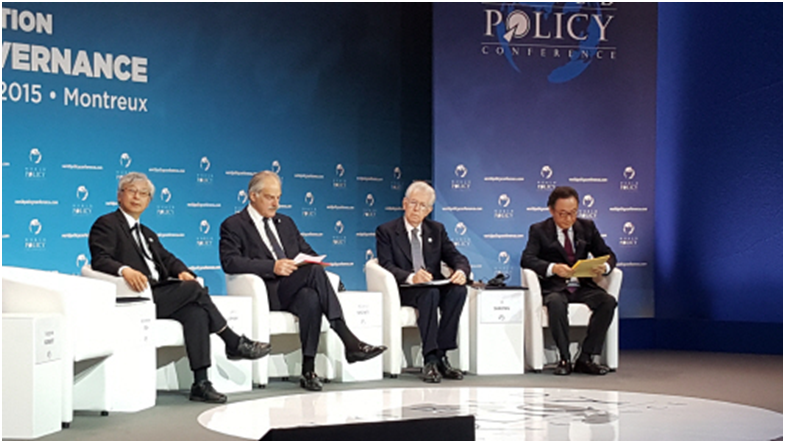
Dans une conférence internationale à Montreux ce week-end, l’ancien ministre français Hubert Védrine a estimé que l’alliance de circonstance avec la Russie au Moyen-Orient signe la fin de l’après-guerre froide. Récit de François Nordmann

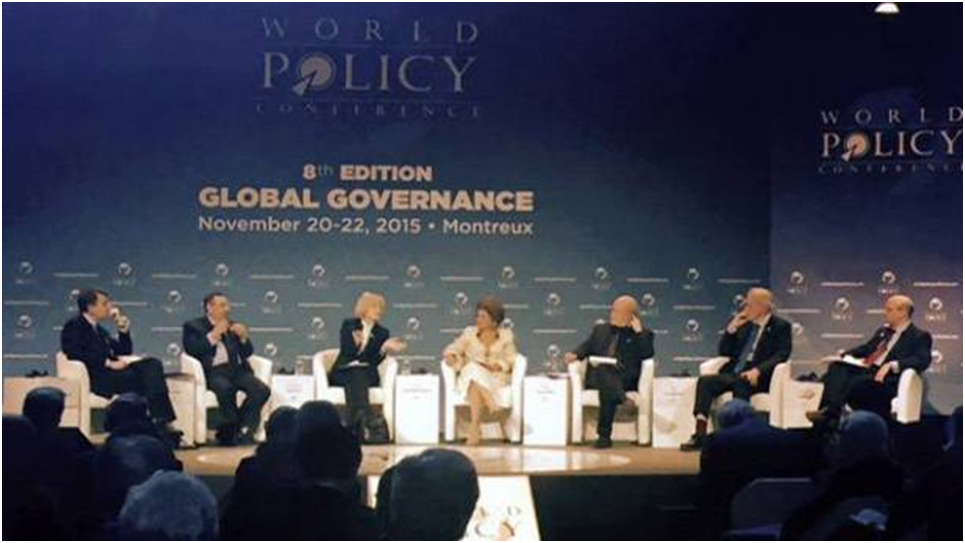
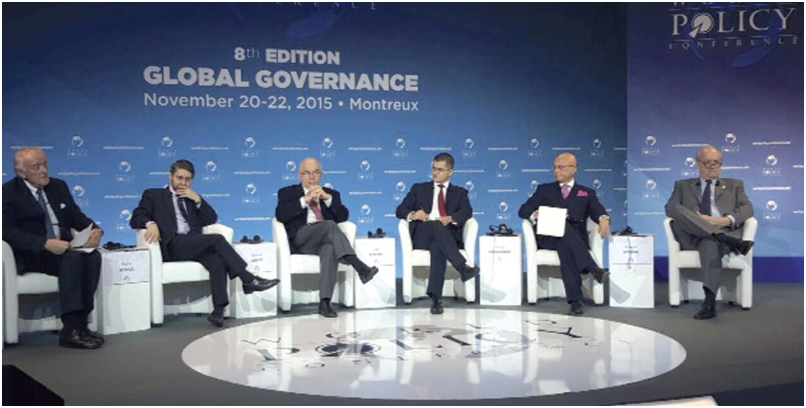
Le terrorisme, les réfugiés, le Moyen-Orient et la situation économique et sécuritaire en Asie, tels ont été les thèmes principaux de la huitième «World Policy Conference» réunie à Montreux le week-end dernier.

Présidée par Thierry de Montbrial, son fondateur, la conférence a été ouverte par le conseiller fédéral Didier Burkhalter. Elle a tenté de dresser un ordre de priorité dans l’enchaînement des crises qui surgissent simultanément dans le monde.

La lutte contre Daech s’intensifie et donne naissance à une nouvelle coalition entre grandes puissances. C’est peut-être un tournant majeur, le plus important depuis la fin de la guerre froide. Pour Hubert Védrine, ancien ministre français des affaires étrangères, l’Occident, qui a bien réagi à la fin de la guerre froide, n’a pas su gérer ensuite l’après-guerre froide. La nouvelle donne qui se dessine avec la Russie permet de sortir de cette époque. Elle découle notamment de l’accord nucléaire avec l’Iran – même si les difficultés de sa mise en œuvre demeurent. Elle laisse bien augurer de la recherche en commun d’une solution politique à la guerre de Syrie, selon la formule esquissée à Vienne.

Détruire Daech et de s’en donner les moyens

A la guerre comme à la guerre: l’urgence au Moyen-Orient relègue au second plan les efforts pour régler les conflits tels que celui d’Ukraine. Il s’agit d’abord de détruire Daech et de s’en donner les moyens.

Autre urgence, la crise des réfugiés: il faut avant tout rassurer les Européens qui, bien au-delà de l’extrême droite, ont le sentiment d’être envahis. Pour Hubert Védrine, le rétablissement des contrôles aux frontières de l’Europe, la coopération accrue des polices et un renforcement de Frontex, l’organisme chargé de la sûreté extérieure sont indispensables. On ne doit laisser passer que les réfugiés persécutés. Il faut en finir avec la confusion actuelle, source d’inquiétude pour l’opinion publique, surtout quand on invoque le déficit démographique en Europe pour justifier l’accueil des migrants, ou que l’on appelle à relancer le débat sur l’Europe fédérale, ou encore que l’on veuille remodeler le Moyen-Orient. Ce sont de fausses pistes: c’est le pire moment pour les aborder.

Générosité indispensable mais insuffisante

La générosité est évidemment indispensable – sans cela l’Europe n’existe plus – mais elle ne suffit pas: faute de maîtriser la crise migratoire, c’est le droit d’asile lui-même qui sera remis en cause. Schengen reflète les idéaux qui prévalaient à sa création en 1985 mais le système ne fonctionne plus. Il faut donc se concentrer sur le problème de sécurité sans laisser la panique s’installer.

La construction européenne est fragile: les responsables de l’analyse politique des ministères des affaires étrangères de France, de Grande-Bretagne et d’Allemagne en conviennent, tout en soulignant aussi sa résilience à travers les crises. Les partenaires de Londres feront toutes les concessions possibles pour éviter le Brexit qui affaiblirait l’UE. Le referendum était nécessaire, car le débat sur l’Europe a atteint une telle intensité en Grande-Bretagne que la politique du gouvernement en Europe était menacée de paralysie. Mais – comble du cynisme – même si le non l’emporte, les Britanniques souhaitent que l’UE reste forte…

L’Asie se montre apaisée et toute à son développement économique, en dépit des tensions: le ralentissement en Chine est maîtrisé et d’ailleurs relatif. La Chine et ses voisins cherchent une issue à la contestation des frontières maritimes en mer de Chine, et de leur côté les Etats-Unis et la Chine sont tombés d’accord pour empêcher toute escalade si leurs marines devaient s’affronter. D’ailleurs, les deux puissances sont en train de définir un nouvel équilibre durable dans leurs relations. Les présidents chinois, coréen et japonais se sont récemment rencontrés, démarche sans précédent et positive pour la région.

Diplomat arrives in Switzerland for World Policy Conf.

22.11.15

Mehr1

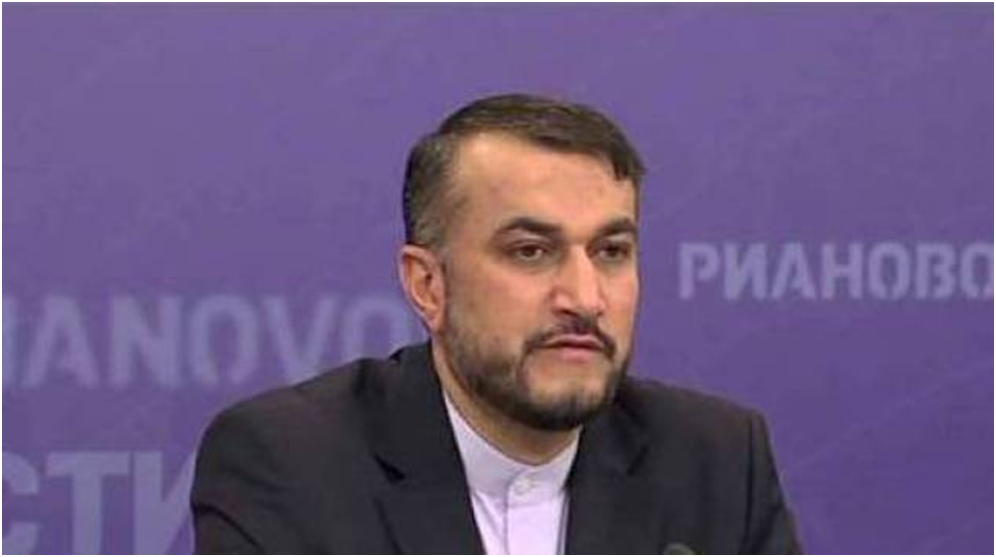
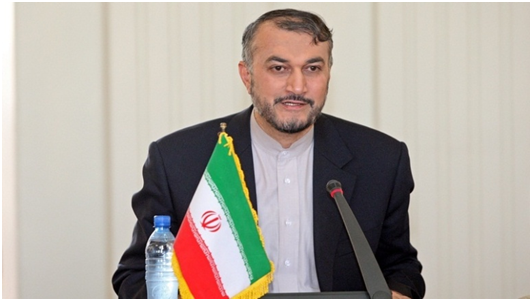
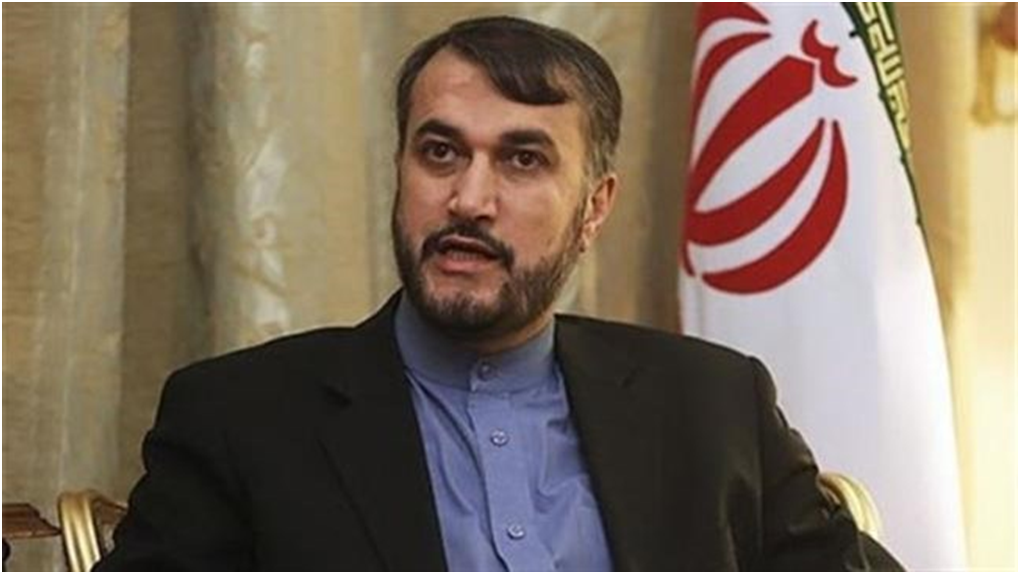
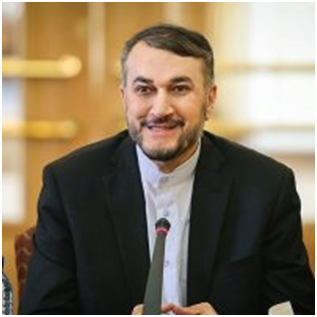
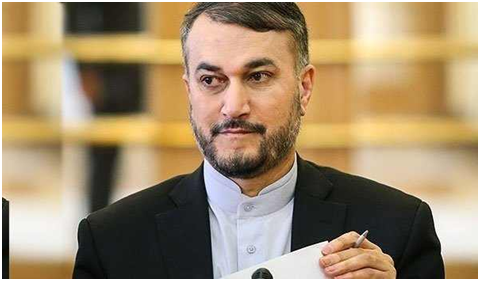
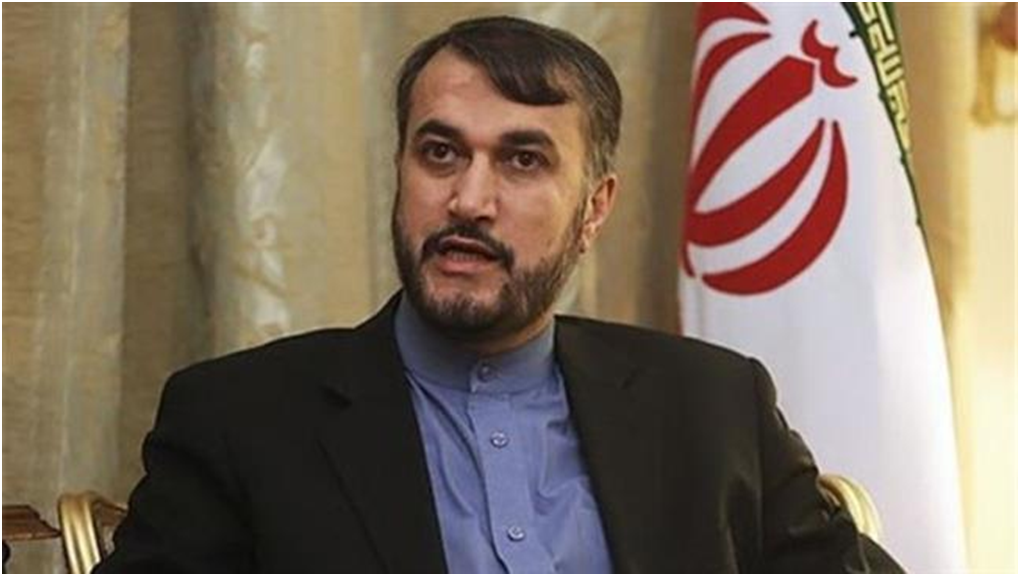
TEHARN, Nov. 22 (MNA) – Iranian deputy FM Hossein Amir-Abdollahian arrived in the Swiss city of Montreux late Sat. to attend the 8th edition of World Policy Conference (WPC).

Iranian deputy Foreign Minister for Arab-African Affaris Hossein Amir-Abdollahian is slated to attend the 8th edition of World Policy Conference (WPC) on Sunday held at Fairmont Le Montreux Palace in the Swiss city of Montreux.

The Iranian diplomat will also elucidate developments in West Asia from the viewpoint of the Islamic Republic in a special and independent session.

Amir-Abdollahian is scheduled to assess and review the situation in Palestine, Syria, Yemen and other crisis-hit countries in the region.

He will also answer questions of political officials, diplomats, professors of the European universities and those of the Western Asia gathered in the conference.

The 8th edition of World Policy Conference began on Nov. 20 and will run through Nov. 22, 2015 in Montreux, Swizerland. The conference covers a wide range of topics including global economic order, Israeli-Palestinian dialogue, Europe’s refugee crisis, and the future of the Middle East, among others.

World Policy Conference (WPC), founded in 2008, is an independent organization which aims to contribute to improving all aspects of governance, with a view to promoting a world that is more open and more prosperous of the diversity of nations. Its annual meeting, which is on a human scale, brings together leading figures from all five continents – political and business leaders, representatives of civil society, academics and journalists – to examine, discuss and suggest constructive solutions to major regional and international challenges.

Iran’s Deputy FM in Switzerland for int’l policy conference

22.11.15

IranianStudentsNewsAgency

TEHRAN (ISNA)- Iranian Deputy Foreign Minister for Arab and African Countries Hossein Amir-Abdollahian arrived in Switzerland to join ‘World Policy Conference.’

He is scheduled to outline Iran’s views regarding developments in western Asia.

He would also discuss and evaluate Palestine, Syria and Yemen situations as well developments in other crisis-hit countries.

The Iranian official is going to answer questions of political officials, diplomats as well as university lecturers of Europe and West

Asia attending the conference.

Iman Chairman takes part in WPC Final Debate

22.11.15

Iman Chairman Ribal Al-Assad recently took part in the final debate at the World Policy Conference in Montreux, Switzerland. The panel was chaired by Dominique Moïsi, Special Advisor at the Paris based Institut Français des Relations Internationales.

Other participants included:

Miguel Ángel Moratinos, former Spanish Minister of Foreign Affairs

Bilahari Kausikan, Policy Advisor in the Ministry of Foreign Affairs of Singapore and Ambassador-at-Large

Narendra Taneja, Chairman of the Energy Security Group FICCI (Federation of Indian Chambers of Commerce and Industry) and President of World Energy Policy Summit

Meir Sheetrit, former Israeli Minister of the Interior, Minister of Housing & Construction, Minister of Finance, Minister of Justice, Minister of Transportation and Minister of Education, Culture & Sport

Renaud Girard, journalist at ‘Le Figaro’ and editor at ‘Questions Internationales’

Mona Makram Ebeid, Egyptian Senator and Member of the Senate Constitutional Committee.

Ribal’s speech covered the topics of Islamic extremism and the ongoing crises in Syria and the Middle East. After speaking, Ribal made the following statement:

“I would like to express my regret that His Excellency the Qatari Foreign Minister was not in the room for the final session as I would have liked him to hear what I have to say but apparently he refuses to be in the same room as me ! And this is Qatar’s top diplomat!

This is despite the fact that I was exiled from my country as a child and have been a vocal critic of the regime all my adult life.

I’m afraid this kind of narrow-mindedness must cast doubt on Qatar’s claims to be committed to democracy in Syria and to inclusive dialogue rather than sectarian division and conflict.

It’s true that I have been critical of Qatar precisely because of its support for extremist groups like al-Nusra, the Muslim Brotherhood and others in my country.

I believe it shows that they are not interested in democracy at all.

On the contrary, they are afraid of a domino effect bringing democracy home to Qatar so they prefer to stoke sectarian conflict in Syria and the region.

So while I regret the absence of His Excellency, these are things that have to be said as I hope all true pluralists and democrats will agree.”

La leçon de géopolitique du patron de Total

22.11.15
 
Echos2
Total est la seule grande « major » mondiale présente au Moyen-Orient qui n’y dispose pas d’une base de ressources domestiques. – Vahid Salemi/AP/SIPA
 

Total n’ayant aucune base de ressources domestiques au Moyen-Orient, il est régulièrement amené à trouver des accords avec les pays producteurs.

Des pays du Moyen-Orient en voie de « libanisation », d’autres comme le Yemen, la Libye ou l’Irak où l’Etat a disparu, des rivalités politico-religieuses qui s’exacerbent avec le retour de l’Iran dans le jeu diplomatique et partout une menace terroriste accrue… « Je n’ai jamais vu une situation d’instabilité aussi grande », reconnaît Patrick Pouyanné, le patron de Total. La quatrième « major » mondiale présente la particularité d’être la seule grande à ne pas disposer d’une base de ressources domestiques. « Nous sommes donc amenés à trouver en permanence des accords avec les pays producteurs », ajoute le directeur général du groupe qui s’exprimait à l’occasion de la World Policy Conference réunie cette année à Montreux, en Suisse.

Dans cet environnement instable, le patron de Total avance avec deux boussoles : l’histoire et la géographie. La géographie de l’énergie renseigne sur les rapports de force : seulement cinq pays détiennent les deux-tiers des réserves de pétrole de la planète, le Venezuela, l’Arabie Saoudite, le Canada, l’Iran et l’Irak. « Avec la Russie, le Koweit et les Emirats Arabes Unis, on arrive à 80% des réserves mondiales », rappelle-il. A eux seuls, les pays du Moyen Orient détiennent la moitié des réserves même s’ils ne comptent que pour 30% de la production mondiale. « Ils ne “surproduisent” pas, ce qui fait qu’ils ont le temps devant eux », ajoute Patrick Pouyanné.

La géographie du gaz est également éclairante car deux pays, Iran et Russie, détiennent un tiers des réserves mondiales. « Avec le Qatar et le Turkmenistan, on arrive à 60% », ajoute le patron de Total. Le Moyen-Orient aujourd’hui traversé par des tensions extrêmes possède 40% des réserves mondiales de gaz, l’énergie appelée à croître le plus dans les années à venir. Mais là encore, la région ne « surproduit » pas : ce sont les Etats-Unis et la Russie qui, avec 40% de la production mondiale, sollicitent le plus leurs réserves.

Le poids du Moyen-Orient sur le marché du pétrole et du gaz et l’instabilité politique qui y règne devraient propulser les cours de l’or noir vers les sommets. Pourtant, il n’en est rien et il faut cette fois faire appel à l’histoire pour le comprendre ce paradoxe. « L’Opep a été créée en 1960 pour permettre aux pays producteurs d’échapper à la tutelle des grandes compagnies pétrolières, les fameuses “sept soeurs », qui maintenaient le prix du pétrole très bas, autour de 2 dollars le baril », dit Patrick Pouyanné. Cette stratégie a fonctionné : entre 1973 et 1979, le baril passe de 3 à 40 dollars le baril et les pays du Golfe acquièrent un poids politique inédit.

Mais cette stratégie de l’Opep a « trop bien marché », en quelque sorte, ce qui fait que dans les années 1980 et 1990, la demande chute. « Le pétrole cher a cassé le marché et les pays consommateurs se sont mis à développer des sources d’énergie alternatives ou à développer les zones off shore comme en Mer du Nord ». Le baril atteint un point bas à 10 dollars en 1986 et reste peu cher pendant quinze ans, jusqu’à la fin du XXème siècle.

« Le prix n’est remonté qu’au début des années 2000 du fait du développement de la Chine », poursuit Patrick Pouyanné. S’en est suivie une décennie (2005-2015) de pétrole cher, autour de 80-100 dollars qui a produit le même scénario que trente ans plus tôt : le prix élevé a encouragé la recherche de nouvelles technologies avec le pétrole et le gaz non conventionnel. D’où la division des prix par deux en un an. « Ce n’est pas la géopolitique mais tout simplement l’économie, le niveau de la demande, qui explique le niveau des prix du pétrole », insiste le patron de Total.

Les tensions extrêmes auxquelles on assiste vont-elles changer la donne ? Compte tenu des investissements déjà lancés, les capacités de production vont continuer de croître jusqu’à la fin de la décennie. En revanche, plusieurs pays vont rester en marge du marché de manière durable: à cause des destructions opérées par Daech, la Libye ne produit qu’un tiers de ce qu’elle pourrait extraire. A 40 ou 50 dollars le baril, l’Irak ne peut financer aucun investissement nouveau pour développer ses champs. Au Yemen, la production de gaz a dû être pratiquement stoppée à cause de l’avancée d’Al Qaeda… « Tout le monde s’est tellement souvent trompé sur les prix que je ne fais aucune prévision… », dit le patron de Total.

Nicolas Barré

Ribal Al-Assad speaks at the World Policy Conference in Montreux, Switzerland

22.11.15

Iman

Chairman of the IMAN Foundation, Ribal Al-Assad, recently attended the 2015 World Policy Conference in Montreux, Switzerland, which was opened by Didier Burkhalter, Federal Councillor, Head of the Federal Department of Foreign Affairs, Switzerland.

The World Policy Conference was founded by Mr. Thierry de Montbrial in 2008 and is an independent organisation which aims to contribute to improving all aspects of governance, with a view to promoting a world that is more open, more prosperous, fairer and more respectful of the diversity of States and nations.

Its annual meeting, which is on a human scale, brings together leading figures from all five continents – political and business leaders, representatives of civil society, academics and journalists – in a climate of trust and a spirit of tolerance to examine, discuss and suggest constructive solutions to major regional and international challenges.

Ribal’s speech covered the topics of Islamic extremism and the crisis in the Middle East. After speaking, Ribal made the following statement:

“I would like to express my regret that His Excellency the Qatari Foreign Minister was not in the room for the final session as I would have liked him to hear what I have to say but apparently he refuses to be in the same room as me ! And this is Qatar’s top diplomat!

This is despite the fact that I was exiled from my country as a child and have been a vocal critic of the regime all my adult life.

I’m afraid this kind of narrow-mindedness must cast doubt on Qatar’s claims to be committed to democracy in Syria and to inclusive dialogue rather than sectarian division and conflict.

It’s true that I have been critical of Qatar precisely because of its support for extremist groups like al-Nusra, the Muslim Brotherhood and others in my country.

I believe it shows that they are not interested in democracy at all.

On the contrary, they are afraid of a domino effect bringing democracy home to Qatar so they prefer to stoke sectarian conflict in Syria and the region.

So while I regret the absence of His Excellency, these are things that have to be said as I hope all true pluralists and democrats will agree.”

The World Policy Conference is always attended by prominent politicians, diplomats and leaders. Those who attended this year included:

Soumeya Abdelatif: First Vice President of North/South dialogue for Arab countries and the Mediterranean at the Robert Schuman Institute for Europe.

Jean Abiteboul: President of Cheniere Marketing Ltd, a 100% subsidiary of Cheniere Energy, Inc., a Houston based company specializing in liquefied natural gas importation and exportation.

Masood Ahmed: Director of the IMF’s Middle East and Central Asia Department since November 2008.

Shameem Ahsan: Ambassador of Bangladesh to the Swiss Confederation and Permanent Representative to the United Nations Office and other International Organizations in Geneva.

Saliou Akadiri: Minister of Foreign Affairs, African Integration, Francophonie and Beninese Diaspora.

Abdulmajeed Al-Shatti: Member of the Supreme Petroleum Council in Kuwait.

Meshal Bin Hamad Al-Thani: Ambassador of the State of Qatar to France since 2013.

Mariam Aladji Boni Diallo: Diplomat, Special Advisor, Diplomatic Affairs, to the President of the Republic of Benin since 2007.

Manaf Alhajeri: Chief Executive Officer of Kuwait Financial Center, better known as Markaz since March 2004, one of the leading asset management and investment banking entities in the Middle East with a strategic focus to achieve regional leadership.

Patrick Allard: Consultant on international economic issues to the Policy Planning Staff, Ministry of Foreign Affairs, France.

Hossein Amirabdollahian: Deputy Foreign Minister for Arab and African Countries, Islamic Republic of Iran, since 2011.

Youssef Amrani: Chargé de mission, Royal Cabinet, Morocco.

Simeon Anguelov: Advisor to the President of the Bulgarian Academy of Sciences.

Marie-Claire Aoun: Director of the Center for Energy at the French Institute for International Relations (Ifri) and lecturer at Paris Dauphine University.

Olivier Appert: Chairman of the Conseil Français de l’Energie and the French committee of the World Energy Council.

Bertrand Badré: Managing Director and World Bank Group Chief Financial Officer.

Thomas Bagger: Head of Policy Planning at the German Federal Foreign Office.

Taeho Bark: Professor and former Dean at the Graduate School of International Studies (GSIS) of Seoul National University.

François Barrault: Chairman and founder of FDB Partners SPRL an investment and advisory firm in TMT and publishing.

Nicolas Barré: Managing Editor of Les Echos. He served as Deputy Managing Editor at Le Figaro (2005-2008).

Marek Belka: President, Narodowy Bank Polski and Professor of Economics.

Arié Bensemhoun: Executive Director, ELNET, since 2011.

Marie-Roger Biloa: CEO, The Africa International Media Group, Media Consultant and Adviser on African Affairs.

Khalid Bin Mohammed Al Attiyah: Minister of Foreign Affairs of the State of Qatar since 2013.

Georgi Bliznashki: Former Prime Minister of Bulgaria (2014).

Prince Boadu: CEO and co-founder of MapTech Logistics Limited, a company that uses the power of Geographic Information Systems (GIS) to solve business problems by developing and deploying GIS based applications.

Matthias Bonning: Chief Operating Officer and Head of Research, oekom research AG.

Othman Bouabid: Interior Ministry of the Kingdom of Morocco.

Charles-Edouard Bouée: CEO of Roland Berger.

François-Xavier Bouis: Founder and President of Compagnie Financière Jacques Cœur – CFJC.

Christian Bréchot: President of the Institut Pasteur.

Boro Bronza: Ambassador of Bosnia and Herzegovina to Switzerland since 2013.

Wolfgang Amadeus Bruelhart: Ambassador, Head Middle East and North Africa Division, Swiss Foreign Ministry since 2012.

François Bujon de l’Estang: President, FBE International Consultants.

Jean Burelle: Chairman & CEO of Burelle and Honorary Chairman of Plastic Omnium.

Didier Burkhalter: Federal Councillor, Head of the Federal Department of Foreign Affairs (FDFA), Switzerland, since 2012.

André Caillé: Director of several corporations, including Junex Inc., an oil and gas exploration corporation, for which he is a Senior Strategic Advisor.

Jean-Yves Carfantan: Senior Consultant, he runs AgroBrasConsult, a Brazilian consulting company specializes in agricultural markets and investments and based in São Paulo.

Yigal B. Caspi: Ambassador of Israel to Switzerland and Liechtenstein since 2012.

François Chabannes: Co-President of the Fondation Alcen pour la Connaissance des Energies (raising awareness and knowledge of energies).

Philippe Chalmin: Professor of Economic History and Director of the Master of International Affairs at Paris-Dauphine University, Founder of the Cercle Cyclope, main european research institute on raw materials markets.

Korn Chatikavanij: Former Finance Minister of the Kingdom of Thailand (2008-2011).

Mohamed Cherkaoui: Emeritus University Professor and Emeritus Research Director, National Centre for Scientific Research (CNRS), Paris.

Seán Cleary: Executive Vice-Chairman of the FutureWorld Foundation and Chairman of Strategic Concepts (Pty) Ltd.

Laurent Cohen-Tanugi: Founder and managing partner, Laurent Cohen-Tanugi Avocats.

Corinne Colloc’h: Head of Corporate Development, Airbus Group.

Bertrand Collomb, Honorary Chairman of Lafarge, who has just merged to form LafargeHolcim.

Richard Cooper: Maurits C. Boas Professor of International Economics at Harvard University since 1981.

Nelson W. Cunningham: President and Co-founder of McLarty Associates.

Daniel Dăianu: Professor of economics, The School of Political and Administrative Studies in Bucharest and member of the Board of the Central Bank of Romania.

Pierre Dassas: Chairman of The House of the Rising Stars Foundation (Geneva, Switzerland), Chairman of the European Leadership Network (Diplomacy & Defense issues, USA – Europe – Middle East).

Dominique David: Advisor to the Executive Chairman, Ifri, and Editor of Politique étrangère. Former Executive Vice-President of Ifri.

Alain Dejammet: Ambassador of France. He began to work at the French Ministry of Foreign Affairs as Head of the Press and Information Department (1981-1985) and then became Head of the North Africa and Middle-East Department (1985-1989).

Kemal Dervis: Vice President and Director of Global Economy and Development at the Brookings Institution and Senior Advisor at Sabanci University.

Jean Desazars de Montgailhard: Special Adviser of LafargeHolcim General Manager.

Christine Desouches: Honorary lecturer at the Université de Paris I (Panthéon-Sorbonne) and expert-consultant to international organisations.

Marième Diop: Desk Manager, President’s Delivery Unit, Senegal.

Božidar Djelić: Managing Director at Lazard Sovereign Group since 2014.

François Drouin: Chairman of the Board for the Autoroutes et Tunnel du Mont Blanc and of Société Française du Tunnel Routier du Fréjus, Vice President of the French Public Investment Bank (BPI), President of ETI FINANCE. Former CEO of OSEO (the French Agency for Innovation and SMEs financing).

Sandrine Duchêne: Group Head of Public Affairs, Axa Group.

Karim El Aynaoui: Managing Director of OCP Policy Center and advisor to the CEO and Chairman of OCP.

Andrea Elscheková Matisová: Ambassador of the Slovak Republic to the Swiss Confederation and the Principality of Liechtenstein since 2014.

Emmanuelle Fauchart: Professor in entrepreneurship and innovation management at the University of Strasbourg.

Dominique Flavio: CEO & Founding Partner of DynaGrow Fair Trade, DynaGrow (SL) and DynaCorp Investment, an agribusiness group specializing in fair trade and sustainable agriculture in countries with low development index and focused on producing and trading cocoa, coffee & rice in West Africa.

Eve Fofana: Deputy Country Manager, General Electric, Côte d’Ivoire.

Michel Foucher: Chair of applied Geopolitics at College of World Studies (FMSH-ENS) since 2013.

Jacob Frenkel: Chairman of JPMorgan Chase International and Chairman of the Board of Trustees of the Group of Thirty (G-30).

Louise Fresco: President of Wageningen University and Research Centre, in The Netherlands since 2014.

Jonathan T. Fried: Canada’s Ambassador and Permanent Representative to the World Trade Organization (WTO).

Lorenzo Gascón: Academician and Vice-Chairman of the Royal Academy of Economic and Financial Sciences of Spain.

Alexandra Gatej: Executive Director of Maldon & Wat since 2011.

Jean-Louis Georgelin: Grand Chancellor of the Legion of Honor and Chancellor of the National Order of Merit since 2010.

Nicolas (de) Germay: Chief Operating Officer WPC.

Renaud Girard: Senior reporter and war correspondent at Le Figaro.

Thomas Gomart: Director of Ifri. Former Vice President for Strategic Development at Ifri (2010-2015).

Jean-Claude Gruffat: Managing Director Galileo Global Associates New York since 2014.

Gilles Guerin: Managing Partner, EFG Bank, Geneva.

Elisabeth Guigou: Member of the French Parliament and President of the Commission of Foreign Affairs at the Assemblée nationale.

Traian Halalai: President of Banca de Import Export a Romaniei – EximBank SA since 2012.

Kerry Halferty Hardy: Lecturer and consultant.

Jean-Pierre Hansen: Chairman of the Political and Prospective Energy Committee of ENGIE, Honorary Chairman of Electrabel, Chairman of the FOREM (Walloon Public Service for Employment and Training) and of SNCB Logistics and Director of Compagnie Maritime Belge (Anvers), Koninklijke BAM Groep (Utrecht).

Philippe Hardouin: Founder of CSPH International, a public affairs & communications consultancy company with a focus on energy, environment, industry matters and creative industries and in particular a strong involvement in digital economy.

Peter Harling: Special advisor Middle-East (based in Beirut and Riyadh), International Crisis Group since 2014.

Manuel Hassassian: Ambassador from Palestine to London.

Henri Hié: Vice President, Strategy & Parnerships in China, Air France.

Peter Hill: Director for Strategy, Foreign and Commonwealth Office.

Akinari Horii: Special Advisor and a member of the Board of Directors of the Canon Institute for Global Studies, a research think tank in Tokyo, Japan.

SaKong Il: Chairman of the Institute for Global Economics; former Minister of Finance (1987-1988).

Yusuf Ziya Irbec: Former Member of the Turkish Parliament.

Mugur Isărescu: Governor of the National Bank of Romania since 1990.

Motoshige Itoh: Professor of international economics at the Graduate School of Economics, University of Tokyo.

Peter Jankowitsch: Member of the Directorate of the Austro-French Centre for Rapprochement in Europe.

Sabine Jansen: Senior lecturer at Conservatoire national des arts et metiers (CNAM), Paris, and Research Fellow at Centre d’histoire de Sciences Po (CHSP), Paris.

Vuk Jeremić: President of the Center for International Relations and Sustainable Development (CIRSD).

Qingguo Jia: Dean of the School of International Studies of Peking University.

Krishan Jindal: Chief Executive Officer of NABARD Consultancy Services (NABCONS).

Mohamed Kabbaj: President of Lafarge Morocco, Chancelor of Euro-Mediterranean university of Fès and member of the Hassan II Academy of Science and Technology.

Karl Kaiser: Adjunct Professor at the Kennedy School and Director of the Program on Transatlantic Relations of the Weatherhead Center for International Affairs, Harvard University.

Labib Kamhawi: Chairman and CEO of several firms, including CESSCO, Chemical Supplies & Services Co. and Delta Energy Services Co.

Sergei Karaganov: Honorary Chairman of the Presidium of the non-governmental Council on Foreign and Defense Policy.

Bilahari Kausikan: Ambassador-at-Large and Policy Advisor in the Ministry of Foreign Affairs of Singapore.

Jean (de) Kerguiziau de Kervasdoué: Emeritus Professor of Economy and Health Management at the Conservatoire National des Arts et Métiers and founder of the Pasteur/CNAM School of Public Health, member of the French Academy of Ingeneering.

Anne-Laure Kiechel: Partner, Sovereign Advisory, Rothschild & Cie.

Mari Kiviniemi: OECD Deputy Secretary-General since August 2014.

Christian Koch: Director of the Gulf Research Center Foundation in Geneva, Switzerland.

Hervé Koffi: Country Manager for Côte d’Ivoire, General Electric, since 2014.

Haïm Korsia: Chief Rabbi of France since 2014.

Pawel Kowal: Assistant professor in the Institute of Political Studies at the Polish Academy of Sciences.

Bruno Lafont: Co-chairman of the Board of Directors, LafargeHolcim since 2015.

Mohamed Laichoubi: Former Minister of Labor and Social protection and Minister of Youths and Sports, Algeria.

Otto Lampe: Ambassador of the Federal Republic of Germany to Switzerland and Liechtenstein.

Liliane Lebron de Wenger: Ambassador of Paraguay to Switzerland and Liechtenstein since 2014.

Hye-min Lee: G20 Sherpa and Ambassador for International Economic Affairs, Republic of Korea.

Bernardino Leon Gross: Special Representative of the Secretary-General and Head of the United Nations Support Mission in Libya since 2015.

Jean-David Levitte: Distinguished fellow, Brookings Institution and member of the International Advisory Board of the Atlantic Council of the United States. Former Senior Diplomatic Adviser and sherpa of President Nicolas Sarkozy.

André Lévy-Lang: Member of the board of Institut français des relations internationales (Ifri), affiliate emeritus professor in Finance at Paris-Dauphine University, non-executive Chairman of Les Echos, vice-chairman of the supervisory board ofRothschild et Cie ,chairman of Fondation du Risque and Institut Louis Bachelier.

Susan Liautaud: Founder of Susan Liautaud & Associates Limited (SLA), a consultancy in ethics matters internationally.

His Serene Highness Prince Michael of Liechtenstein: H.S.H. Prince Michael of Liechtenstein is the founder and chairman of Geopolitical Information Service AG, as well as president of the think tank ECAEF (European Centre of Austrian Economics Foundation).

John Lipsky: Senior Fellow, Foreign Policy Institute at Johns Hopkins University’s Paul H. Nitze School of Advanced International Studies (SAIS).

Hubert Loiseleur des Longchamps: Senior Vice President Public Affairs, Total since 2010.

James Lowenstein: Co-Founder of the French American Foundation.

Fyodor Lukyanov: Founding editor of Russia in Global Affairs, journal published with participation of Foreign Affairs.

Daniela Lulache: Chief Executive Officer of Nuclearelectrica, the only nuclear energy producer in Romania, since 2013.

Mona Makram-Ebeid: Egyptian Senator and Member of the Senate Constitutional Committee since 2012.

Manu Mallikarjun: Social entrepreneur working in the fields of International Relations & Development.

Hervé Mariton: French Member of Parliament, former Minister and Mayor of Crest.

Tatsuo Masuda: Visiting professor at the NUCB Graduate School on energy-climate nexus and geopolitics, and board member of SOC Corporation in Tokyo, chairman of FairCourt Capital in London and senior advisor to Elion House in Singapore.

Jean-Claude Meyer: Vice-chairman of Rothschild Europe.

Dominique Moïsi: Special Adviser at Ifri.

Michael Moller: Director-General of the United Nations Office at Geneva.

Thierry (de) Montbrial: Thierry de Montbrial is Executive Chairman of the French Institute of International Relations (Ifri), which he founded in 1979.

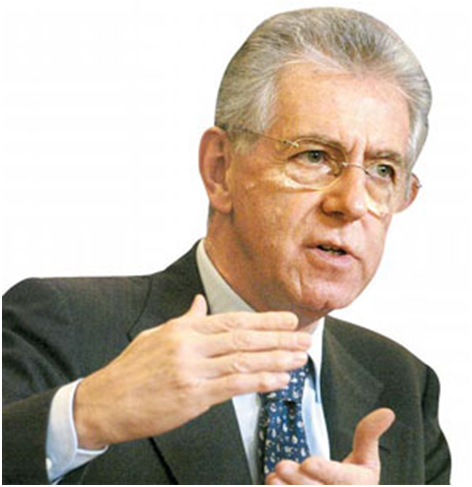
Mario Monti: Chairman of the High Level Group on Own Resources, European Commission. Former Prime Minister of Italy and President of Bocconi University, Milan.

Miguel Ángel Moratinos: Former Minister of Foreign Affairs and Cooperation of Spain (2004-2010).

Pierre Morel: Director of the Pharos Observatory of cultural and religious pluralism.

Yassine Moustanjidi: Architect and Urban Planner, Klaus Müller GMBH, Germany.

Mayankote Kelath Narayanan: Former Governor of the State of West Bengal, Director of the Intelligence Bureau and Chairman of the Joint Intelligence Committee.

Samir Nasr: President, ECE Capital.

Vitaly Naumkin: Director, Institute of Oriental Studies, Russian Academy of Sciences (RAS) since 2009.

Patrick Nicolet: Member of the Group Management Board, Capgemini.

Yukari Niwa Yamashita: Board Member, Director, The Institute of Energy Economics, Japan (IEEJ).

François Nordmann: Former Ambassador of Switzerland to France (2002-2007).

Dan Oiknine: Chairman, Chamber of Commerce and Industry France India, since 2009.

Yukio Okamoto: President of Okamoto Associates.

Arkebe Oqubay: Minister and special Advisor to the Prime Minister of Ethiopia.

Shotaro Oshima: Chairman of the Institute for International Economic Studies (IIES) and Visiting Professor at the Graduate School of Public Policy, University of Tokyo.

Fathallah Oualalou: Economist and Moroccan politician.

In-kook Park: President of the Korea Foundation for Advanced Studies.

Pericles-Paul Petalas: Chief Executive Officer, EFG Bank European Financial Group SA.

Jean-Louis Platteau: EFG Bank, Geneva.

Benoit Pleska: Seasoned Executive operating in Eastern Europe since the early ’90 (Hungary, Bulgaria, Ukraine & Romania).

Patrick Pouyanné: Chief Executive Officer and President of the Executive Committee, Total.

Catalin Predoiu: First Vice President National Liberal Party, member EPP.

Pierre Prieux: President of Alcen, group composed of high technology companies in the fields of defense, energy, medical machines and aeronautics.

Yide Qiao: Vice Chairman & Secretary General of Shanghai Development Research Foundation (SDRF).

Mireille Quirina: Senior Executive Coach and Business Consultant.

Itamar Rabinovich: President of the Israel Institute (Washington and Jerusalem).

Rasvan Radu: CEO, UniCredit România.

Françoise Rauser: Executive Secretary of the IEC Affiliate Country Programme, a free programme that comprises 83 developing countries – half of all countries that participate in the IEC.

Anita Ricquier: Singaporean entrepreneur.

Antoine Rostand: Senior Advisor, Schlumberger, after serving as President of Schlumberger Business Consulting, an independent business unit of Schlumberger that he founded in 2004.

Jean-Pierre Roth: Chairman of the Board of Directors, Cantonal Bank of Geneva.

René Roudaut: French Ambassador to Switzerland and Liechtenstein since 2014.

Henry Roux-Alezais: Managing director of Sogeric and honorary consul of Ecuador in Marseille.

Arthur Rutishauser: Editor in chief of SonntagsZeitung since two years (December 2013).

Marcelo Sanchez Sorondo: Chancellor of the Pontifical Academy of Sciences and the Pontifical Academy of Social Sciences since 1998.

Tadakatsu Sano: Attorney-at-law at Jones Day.

Louis Schweitzer: General Commissioner for Investment.

Narcís Serra: President of IBEI, Institut Barcelona d’Estudis Internacionals.

Riccardo Sessa: Italian Ambassador (rtd.), former career diplomat.

Meir Sheetrit: Member of the Israeli Knesset for the Hatnua Party.

Olivier Sigg: Partner in the Geneva private client practice of Froriep, one of Switzerland’s main law firms with offices in Geneva, Zurich, Zug, Lausanne, London and Madrid.

Pierre Sigonney: Chief Economist, Corporate Strategy of Total.

Bernard Siman: Senior Fellow and Adviser to the Board of Geopolitical Information Service AG.

Eugen Simion: President of the National Science and Art Foundation.

Maya Simionescu: President of the Section of Biological Sciences of the RomanianAcademy.

Tobby Simon: Founder and President of Synergia Foundation.

Jean-Marc Simon: French Ambassador.

Jaromir Sokolowski: Ambassador of Poland to Switzerland since 2015.

Thierry Soret: Focal point and policy advisor at UNDP for all G20 related matters.

Kostas G. Stamoulis: Director, Strategic Programme Leader, Food Security and Nutrition in FAO.

Julien Steimer: Secretary-General of AXA France.

Marius Stoian: President of Club România. He started his career in journalism in 1990 as editor of the Tineretul Liber newspaper.

Riad Tabet: President of Berit International Holding SA, President of Batiliban-France, Franco-Arab Consortium for development, board member of the executive committee of the Franco-Arab Chamber of Commerce, Paris, board member and founding member of the Lebanese American Chamber of Commerce, Beyrouth.

Kelvin Tan: Deputy Director, Monetary Authority of Singapore.

Nobuo Tanaka: President of The Sasakawa Peace Foundation since 2015.

Narendra Taneja: Chairman of Energy Security Group of the Federation of Indian Chambers of Commerce and Industry (FICCI).

Karen Tang: Executive Director of The Better Hong Kong Foundation since 2006.

Mostafa Terrab: Chairman and CEO of OCP Group.

Agnès Touraine: CEO of Act III Consultants, a management consulting firm dedicated to digital transformation.

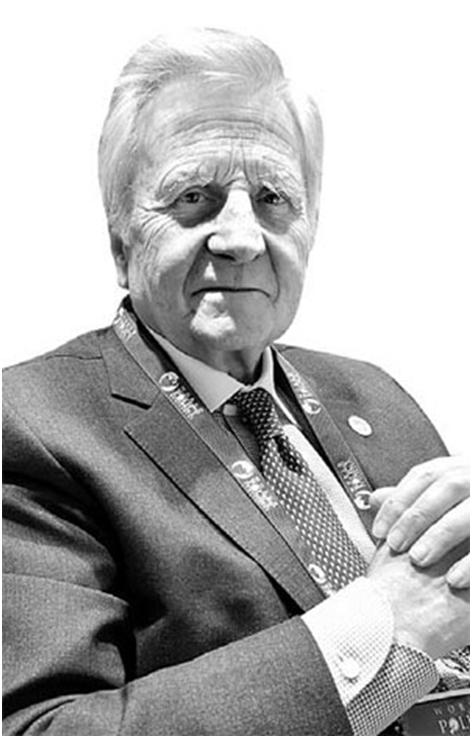
Jean-Claude Trichet: Former President of the European Central Bank and Honorary Governor of Banque de France.

Antonio Trombetta: Ambassador of Argentina to Switzerland since 2013.

Sophie Turrettini: General Secretary of the Fondation Dr Henri Dubois-Ferrière Dinu Lipatti and board member of several charity foundations in Geneva. Member of the board of the WPC Foundation since 2013.

Justin Vaïsse: French historian and the current Director of Policy Planning at the French Ministry of Foreign Affairs.

Hubert Vedrine: Founder of Hubert Védrine Conseil, a public affairs consultancy that specializes in foreign, economic, and geopolitical affairs.

Franciscus Verellen: Member of the Institut de France, former director of the Ecole Française d’Extrême-Orient (2004-2014), where he holds the chair in History of Daoism and currently serves as director of the Hong Kong Centre.

Gabriela von Habsburg: Professor at VADS, Free University, Tbilisi since 2014.

François Wat: Senior Partner, Co-Head of Global Equity Advisory, Rothschild Paris since 2008.

Bruno Weymuller: Member of Total Professeurs Associés, of the French Energy Council and of the board of directors of the Economic Institute Research Coe-Rexecode.

Thomas Wilhelm: Doctor of Laws, lawyer, Founder and Partner in the law firm Wilhelm & Büchel Rechtsanwälte since 1992.

Estelle Youssouffa: Independent broadcast journalist, TV reporter and news presenter.

Igor Yurgens: Chairman of the Management Board of the Institute of Contemporary Development.

Salim Zeeni: Chairman of the American Lebanese Chamber of Commerce (AmCham Lebanon).

Yunling Zhang: Professor, Academy Member and Director of International Studies, Chinese Academy of Social Science (CASS), Director of Center of Regional Security, CASS, Member of National Committee of Chinese Political Consultant Conference (since 2002), President of China Association of Asia-Pacific Studies.

Lionel Zinsou: Prime Minister in charge of economic development, evaluating public policy and promoting good governance in Benin.

Mbuih Zukane: Teacher, University of Dschang and CEO ICAD – Cameroon.

Jeremić Speaks at the World Policy Conference

22.11.15

The President of the Center for International Relations and Sustainable Development (CIRSD) Vuk Jeremić took part in the prestigious World Policy Conference (WPC). This annaual high-level event, organized by French Institute for International Relations (IFRI), took place in Montreux, Switzerland between November 20 and 22, 2015.

cirsd

Jeremić spoke on one of the central panels devoted to the refugee crisis in Europe.

The CIRSD President reiterated that Europe has to play a leading role in the ongoing diplomatic efforts to find a political solution for Syria’s future, as well as create conditions for a much needed ceasefire. Jeremić said that setting up barbed wire fences along the borders of the Schengen space is neither an optimal solution nor will it be enough to solve the refugee crisis. On the other hand, this contributes to more tension in the Balkans and further delays the arrival at a solution.

“The refugee crisis can be permanently resolved only by tackling the source of the crisis in the Middle East, and Europe should be the one to demonstrate unity, leadership, and capacity for decisive action,” Jeremić said. “If Europe, and Germany and France as its leaders, fail to undertake decisive steps towards launching a coordinated and inclusive international action—one that would include both the U.S. and Russia—no one else will do it instead. The crisis will thus continue to destroy the fabric of Europe, eventually resulting in unfathomable consequences for the very future of the EU.”

Besides the CIRSD President, the panel featured remarks by the honorary president of the German Council on Foreign Relations Karl Kaiser, Turkey’s former minister of economy Kemal Derviş, the honorary president of the Council on Foreign and Defense Policy of Russia Sergey Karaganov, and France’s former minister for foreign affairs Hubert Védrine.

This year’s World Policy Conference gathered several hundred high-level participants, many of which included business leaders, influential public intellectuals, activists, and policymakers.

Aside from the refugee crisis, other important topics raised during the conference included the future of the Middle East, the future of the global economy, and the increasingly turbulent political and economic outlook of East Asia

Michel Foucher : « Il ne faut pas tomber dans le piège d’une opération au sol »

22.11.15

Echos1

Pour Michel Foucher, il est urgent de réfléchir aussi à la diffusion des images de propagande – DR
 

La question du terrorisme a largement dominé la huitième édition de la World Policy Conference, organisée à Montreux. Michel Foucher, titulaire de la chaire de géopolitique appliquée au Collège d’études mondiales explique les différentes stratégies de lutte contre les groupes terroristes.

Michel Foucher (Géographe et titulaire de la chaire de géopolitique appliquée au Collège d’études mondiales)

Après les attentats au Cameroun, au Mali, et la mise en alerte maximum, comment doit-on lutter contre la mondialisation des actes terroristes ?

Il n’y a pas de mondialisation du terrorisme islamiste. On note des actions régionales, comme au Cameroun, perpétrées par Boko Haram qui est en difficulté en raison de la coordination des armées des Etats africains affectés et soutenus par la France. De même AQMI agit au Mali à partir de la Libye. Au Sahel, le traitement militaire doit se poursuivre pour consolider ce qui a été acquis depuis deux ans avec les opérations Serval et Barkhane.

Mais les groupes terroristes sortent pourtant de leur territoire ?

Al Qaïda et ses filiales ainsi que Daech mènent des opérations transnationales, le plus souvent dans une surenchère de propagande. Leur objectif est double. D’abord attirer les troupes occidentales au sol en Syrie et en Irak et ensuite continuer leur recrutement tous azimuts par la mise en scène de leurs atrocités. Il convient de ne pas tomber dans le piège d’une action au sol. Et il est urgent de réfléchir à un boycott par nos télévisions et nos réseaux sociaux des images de propagande qui attirent des jeunes radicalisés. Si nous restons sidérés par les images, nous serons statufiés comme la femme de Loth.

Comment combattre Daech sur leur territoire?

Le pseudo proto-Etat islamique a trois bases territoriales, deux en Irak et une en Syrie. Il faut une stratégie pour chacune d’entre elles.

Dans le triangle sunnite (Ramadi, le sud de Tikrit et l’est de Bagdad) qui fut la base territoriale du régime minoritaire de Saddam Hussein, Daech a liquidé des élites et offre de l’argent, des emplois et des armes aux classes pauvres. Il faudrait ramener les tribus sunnites dans le camp de Bagdad.

De son côté, Mossoul a été conquise en juin 2014 car elle n’était pas défendue par l’armée irakienne. C’est une ville de trois millions d’habitants et on ne discerne pas pour l’instant les forces capables de reprendre cette ville, ni les milices kurdes ni les milices chiites. Dans cette ville il n’y a pas de forces sunnites assez fortes et efficaces. Une tactique d’asphyxie et d’isolement est envisageable. La coalition devra bombarder les centres de Daech à Mossoul.

Enfin, en Syrie, Daech occupe des villes donnant accès à la frontière turque mal sécurisée et le long des villes de l’Euphrate moyen. Les avancées militaires des Kurdes à Kobane et à Sinjar vont se poursuivre. Les actions militaires de la coalition semblent efficaces. Une solution militaire peut ici réduire l’emprise de Daech en parallèle aux réunions diplomatiques de Vienne, et bientôt de Paris, sur la Syrie.

Quelles sont les motivations des terroristes à Bamako ?

L’attaque contre le Radisson Blu a Bamako intervient alors que l’Etat Islamique occupe le devant de la scène avec les attentats du 13 novembre à Paris. Mokhtar Belmokhtar,d’origine algérienne et responsable du carnage de janvier 2013 à In Amenas dans le sud algérien, a revendiqué l’attentat. Il est le représentant d’Al Qaïda au Maghreb Islamique (AQMI). Ces attaques n’ont donc rien à voir avec Daech. En revanche, c’est une attaque contre le pouvoir malien et sa capacité à faire appliquer les accords d’Alger signés cette année avec la rébellion touareg. L’objectif est également de fixer au sud l’armée malienne et l’empêcher ainsi de se déployer au nord du Mali. Ce qui pourrait gêner le passage de certains trafics dans cette région.

Daech est pourtant en train de s’implanter en Afrique ?

C’est un problème nouveau. Il s’installe en Libye entre le gouvernement de Tripoli et le gouvernement de Tobrouk dans les bastions kaddhafistes de Syrte, pas très loin des terminaux pétroliers. Daech a une filière francophone, pas seulement française et belge, mais aussi en Afrique de l’Ouest où l’on parle français. On peut très bien imaginer –et Boko Haram a commencé à le faire- qu’il y ait des phénomènes d’allégeance et que s’ouvre, c’est une hypothèse, un troisième front pour la France.

Quel troisième front ?

Le premier est en France, on vient de s’en rendre compte. Le deuxième, c’est la Syrie et l’Irak. Le troisième c’est le Sahel. C’est un scénario qu’il serait déraisonnable de négliger. Même des mouvements régionaux locaux intra-maliens peuvent choisir des allégeances pour renforcer leur main. On a raison en France de s’inquiéter de ce qui se passe en Libye, sur le trou noir du Fezzan où il y a des tensions extrêmement fortes entre Touaregs et Toubou, chacun ne soutenant pas le même gouvernement et où pourraient s’installer des cellules instrumentalisées par la filiale de Daech qui est basée à Syrte. Il faut éviter que se poursuive la connexion entre les différents mouvements. Il faut disperser tout ça. Et cela veut dire que l’on est engagé pour longtemps. On a besoin, pour un certain nombre de missions -logistique, ravitaillement, entraînement, transport de troupes- de nos alliés européens. Nous, on doit se concentrer sur ce qu’on sait faire, le renseignement et l’action de force.

La situation peut-elle se stabiliser au Mali?

La réponse n’est pas militaire car il y a des questions socio-économiques et foncières structurelles. Il faut savoir qu’au 19ème siècle, il y a eu six djihads dans la bande sahalienne qui ont été stoppées par la colonisation britannique et française. Ces mouvements, comme ceux d’aujourd’hui, s’expliquent par des questions foncières et la volonté des Peul d’avoir les même droits que les Touaregs dans un pays, le Mali, essentiellement dirigé par les gens du Sud. Il faut donc un plan de développement. La France doit mobiliser l’union européenne. Notre effort collectif doit avoir une vision de stabilisation géopolitique.

(1) Auteur de Frontières d’Afrique. Pour en finir avec un mythe. Editions du CNRS.

Jacques Hubert-Rodier et Virginie Robert

Jeremić učestvovao na Konferenciji o globalnoj politici

22.11.15

Predsednik CIRSD-a Vuk Jeremić učestvovao je na prestižnoj tradicionalnoj Konferenciji o globalnoj politici (World Policy Conference-WPC), koja se u organizaciji Francuskog instituta za medjunarodne odnose (IFRI) održala ove godine u Montrou (Montreux), Švajcarska, u periodu 20-22 novembar.

cirsd

Jeremić je nastupio na jednom od centralnih panela, koji je bio posvećen izbegličkoj krizi u Evropi. 

Predsednik CIRSD-a je podvukao da Evropa mora imati odlučujuću ulogu u diplomatskim naporima da se iznadje političko rešenje za budućnost Sirije i stvore uslovi za hitnu obustavu ratnih dejstava u njoj. Jeremić je upozorio da podizanje bodljikavih žica u Evropi i na granicama Šengenskog prostora nije optimalno a ni dovoljno da bi se rešila izbegliča kriza, podižuci tenzije na Balkanu i odlazuci suštinsko rešavanje ovog fenomena.

“Izbeglička kriza se može suštinski i trajno resiti jedino delovanjem na uzroke te krize, na Bliskom istoku, a Evropa na ovom polju mora pokazati svoje jedinstvo, liderstvo, kao i kapacitet za odlučujuće delovanje”, istakao je predsednik CIRSD-a. “Ukoliko Evropa, predvodjena Nemackom i Francuskom,‎ ne preduzme odlucne korake u cilju pokretanja koordinirane medjunarodne akcije koja bi ukljucila sve vazne aktere u regionu, pre svega SAD I Rusiju, niko drugi to nece uciniti I kriza ce nastaviti da razara evropsko tkivo, sa potencijalno nesagledivim posledicama po buducnost EU”.

Pored Jeremića, na panelu su učestvovali, između ostalih, Karl Kaizer, počasni predsednik Nemačkog saveta za medjunarodne odnose; Kemal Dervis, bivši ministar ekonomije Turske I glavni ekonomista MMF; Sergej Karaganov, počasni predsednik Saveta za spoljnu i odbrambrenu politiku Rusije, kao i Iber Vedrine, nekadasnji francuski ministar spoljnih poslova.

Konferencija o globalnoj politici ove godine okupila je vise stotina ucesnika, međju kojima predstavnike političkih elita iz svih krajeva sveta, poslovne lidere, uticajne intelektualce i aktiviste.

Pored izbegličke krize u Evropi, glavne teme konferencije ove godine bile su budućnost Bliskog istoka, perspektive globalne ekonomije, kao i turbulentna političko-ekonomska situacija u istocnoj Aziji.

« En Syrie et en Irak, il faut que chiites et sunnites trouvent un équilibre politique stable »

22.11.15

L’avenir du Proche-Orient était au centre de la 8e  édition du World policy conference à Montreux.

Nelson Cunningham, ancien conseiller spécial du président Clinton pour les affaires occidentales.

Ancien conseiller spécial du président Clinton, Nelson Cunnigham détaille la réaction du président Barack Obama aux événements dans cette région.

 Comment analysez-vous la réaction de l’administration Obama aux attentats de Paris le 13 novembre dernier ?

 Nelson Cunningham : L’approche du président Obama est ce que l’on appelle un « statu quo + ». Cela signifie faire ce que les États-Unis ont fait jusqu’à présent : s’efforcer de constituer une coalition avec les pays européens et du Moyen-Orient pour combattre Daech. À cela s’ajoute l’opération diplomatique d’ampleur lancée par le secrétaire d’État John Kerry pour réunir la Russie, l’Iran, les puissances européennes, la Turquie et les pays voisins pour trouver une solution en Syrie. Qui passerait par un accord avec Bachar Al Assad, un effort pour vaincre Daech et une solution à long terme pour l’avenir de la Syrie.

 Quel pourrait être l’accord avec Assad ?

 N. C. : Assad ne veut pas quitter le pouvoir. Il a des alliés, la Russie et l’Iran, qui ne veulent pas qu’il parte. La question est : qu’est-ce que les États-Unis peuvent leur offrir pour qu’ils forcent Assad à quitter le pays ou le pouvoir. Je pense que la solution pourrait être que Bachar al Assad nomme un gouvernement intérimaire et obtienne un sauf-conduit pour lui-même. Cela a déjà été fait par le passé.

 Et sur le plan militaire ?

 N. C. : Je pense que les Français vont être extrêmement agressifs contre Daech. C’est ce qu’il faut dans cette situation. Les Français n’ont cessé de prouver qu’ils étaient excellents pour les opérations aériennes, et pour celles effectuées par des forces spéciales ou des opérations ponctuelles, menées par des forces concentrées. Ce qu’ils ont fait en République centrafricaine et au Mali est tout simplement superbe. Ce qu’ils peuvent faire conjointement avec les forces spéciales américaines, la CIA et l’appui aérien peut être très efficace contre Daech, en Syrie et en Irak.

 Peut-on éviter d’envoyer des troupes au sol ?

 N. C. : L’expérience des États-Unis en Irak montre qu’envoyer des troupes au sol en grand nombre, nécessite un large soutien de la société et que cela n’apporte pas nécessairement la stabilité dans le pays. Les Français peuvent envisager d’envoyer des commandos en nombre limité pour frapper des objectifs très ciblés. En Syrie et en Irak, il faut que chiites et sunnites trouvent un équilibre politique stable. Et que parmi les sunnites, d’autres groupes que les combattants de Daech prennent en charge leur avenir.

 L’Otan pourrait-elle jouer un rôle dans la lutte contre Daech ?

 N. C. : La France pourrait invoquer l’article 5 du Traité de l’Atlantique Nord stipulant qu’une attaque armée contre un de ses membres sera considérée comme une attaque dirigée contre tous. C’est ce qu’ont fait les États-Unis après les attaques du 11 septembre 2001, ce qui a conduit à lancer la guerre contre les Talibans en Afghanistan. Mais la France ne l’a pas fait jusqu’ici. François Hollande a préféré avoir recours à un article similaire du Traité de Lisbonne. Je pense qu’il y a de bonnes raisons à cela, notamment stratégiques.

 Y a-t-il un risque de remise en cause des frontières au Proche-Orient, notamment en Syrie et en Irak ?

 N.C. : C’est une question très intéressante. Les accords Sykes-Picot qui sont à l’origine de la création de l’Irak et de la Syrie, ont aujourd’hui cent ans. Peut-être que cette guerre montre qu’ils ne signifient plus rien désormais. Je sais que l’Iran veut garder à tout prix telles quelles les frontières régionales. Je pense que la Turquie aussi, car elle craint que d’une remise en cause de ses frontières émerge un Kurdistan indépendant. Il y aura une forte pression pour garder la situation telle quelle.

 Est-il possible de reconstruire le Proche-Orient sans accord israélo-palestinien ?

 N. C. : Ce qui se passe actuellement en Irak et en Syrie est déconnecté du conflit israélo-palestinien. Le printemps arabe en Tunisie, en Égypte ou en Syrie avait sa logique propre. Mais cela pourrait offrir une opportunité pour résoudre cette question. Je pense que le secrétaire d’État John Kerry veut faire une nouvelle démarche en vue de la paix. Je ne sais pas si le gouvernement israélien y est prêt. Mais j’ai noté qu’en fin de semaine dernière, les États-Unis ont libéré l’espion israélien Jonathan Pollard. Je dirais que cela a un lien avec le voyage de Benyamin Netanyahou à Washington la semaine précédente. Si Obama a alors promis de relâcher Pollard, qu’a promis Netanyahou en échange ? On peut être optimiste et se dire qu’il peut s’agir d’une stratégie de paix à long terme.

Recueilli par Vincent de Féligonde (à Montreux)

Pétrole: Le prix du baril se stabilisera autour de 50$ jusqu’en 2020

22.11.15

Dans le cadre de la 8ème édition du World Policy Conference tenue à Montreux, en Suisse, l’expert en matières premières, Philippe Chalmin, revient en vidéo sur le cour du pétrole et parle d’une stabilisation du prix du baril autour de 50$ jusqu’en 2020…sauf conflit majeur en zones de production.

ODFS Director Participates in Final Debate at World Policy Conference

22.11.15

Iman Chairman Ribal Al-Assad recently took part in the final debate at the World Policy Conference in Montreux, Switzerland. The panel was chaired by Dominique Moïsi, Special Advisor at the Paris based Institut Français des Relations Internationales.

Other participants included:

Miguel Ángel Moratinos, former Spanish Minister of Foreign Affairs

Bilahari Kausikan, Policy Advisor in the Ministry of Foreign Affairs of Singapore and Ambassador-at-Large

Narendra Taneja, Chairman of the Energy Security Group FICCI (Federation of Indian Chambers of Commerce and Industry) and President of World Energy Policy Summit

Meir Sheetrit, former Israeli Minister of the Interior, Minister of Housing & Construction, Minister of Finance, Minister of Justice, Minister of Transportation and Minister of Education, Culture & Sport

Renaud Girard, journalist at ‘Le Figaro’ and editor at ‘Questions Internationales’

Mona Makram Ebeid, Egyptian Senator and Member of the Senate Constitutional Committee.

Ribal’s speech covered the topics of Islamic extremism and the ongoing crises in Syria and the Middle East. After speaking, Ribal made the following statement:

“I would like to express my regret that His Excellency the Qatari Foreign Minister was not in the room for the final session as I would have liked him to hear what I have to say but apparently he refuses to be in the same room as me ! And this is Qatar’s top diplomat!

This is despite the fact that I was exiled from my country as a child and have been a vocal critic of the regime all my adult life.

I’m afraid this kind of narrow-mindedness must cast doubt on Qatar’s claims to be committed to democracy in Syria and to inclusive dialogue rather than sectarian division and conflict.

It’s true that I have been critical of Qatar precisely because of its support for extremist groups like al-Nusra, the Muslim Brotherhood and others in my country.

I believe it shows that they are not interested in democracy at all.

On the contrary, they are afraid of a domino effect bringing democracy home to Qatar so they prefer to stoke sectarian conflict in Syria and the region.

So while I regret the absence of His Excellency, these are things that have to be said as I hope all true pluralists and democrats will agree.”

Ribal Al-Assad attends World Policy Conference in Montreux, Switzerland

ODFS Director Ribal Al-Assad, recently attended the 2015 World Policy Conference in Montreux, Switzerland, which was opened by Didier Burkhalter, Federal Councillor, Head of the Federal Department of Foreign Affairs, Switzerland.

The World Policy Conference was founded by Mr. Thierry de Montbrial in 2008 and is an independent organisation which aims to contribute to improving all aspects of governance, with a view to promoting a world that is more open, more prosperous, fairer and more respectful of the diversity of States and nations.

Its annual meeting, which is on a human scale, brings together leading figures from all five continents – political and business leaders, representatives of civil society, academics and journalists – in a climate of trust and a spirit of tolerance to examine, discuss and suggest constructive solutions to major regional and international challenges.

Ribal’s speech covered the topics of Islamic extremism and the ongoing crises in Syria and the Middle East. After speaking, Ribal made the following statement:

“I would like to express my regret that His Excellency the Qatari Foreign Minister was not in the room for the final session as I would have liked him to hear what I have to say but apparently he refuses to be in the same room as me ! And this is Qatar’s top diplomat!

This is despite the fact that I was exiled from my country as a child and have been a vocal critic of the regime all my adult life.

I’m afraid this kind of narrow-mindedness must cast doubt on Qatar’s claims to be committed to democracy in Syria and to inclusive dialogue rather than sectarian division and conflict.

It’s true that I have been critical of Qatar precisely because of its support for extremist groups like al-Nusra, the Muslim Brotherhood and others in my country.

I believe it shows that they are not interested in democracy at all.

On the contrary, they are afraid of a domino effect bringing democracy home to Qatar so they prefer to stoke sectarian conflict in Syria and the region.

So while I regret the absence of His Excellency, these are things that have to be said as I hope all true pluralists and democrats will agree.”

The World Policy Conference is always attended by prominent politicians, diplomats and leaders. Those who attended this year included:

Soumeya Abdelatif: First Vice President of North/South dialogue for Arab countries and the Mediterranean at the Robert Schuman Institute for Europe.

Jean Abiteboul: President of Cheniere Marketing Ltd, a 100% subsidiary of Cheniere Energy, Inc., a Houston based company specializing in liquefied natural gas importation and exportation.

Masood Ahmed: Director of the IMF’s Middle East and Central Asia Department since November 2008.

Shameem Ahsan: Ambassador of Bangladesh to the Swiss Confederation and Permanent Representative to the United Nations Office and other International Organizations in Geneva.

Saliou Akadiri: Minister of Foreign Affairs, African Integration, Francophonie and Beninese Diaspora.

Abdulmajeed Al-Shatti: Member of the Supreme Petroleum Council in Kuwait.

Meshal Bin Hamad Al-Thani: Ambassador of the State of Qatar to France since 2013.

Mariam Aladji Boni Diallo: Diplomat, Special Advisor, Diplomatic Affairs, to the President of the Republic of Benin since 2007.

Manaf Alhajeri: Chief Executive Officer of Kuwait Financial Center, better known as Markaz since March 2004, one of the leading asset management and investment banking entities in the Middle East with a strategic focus to achieve regional leadership.

Patrick Allard: Consultant on international economic issues to the Policy Planning Staff, Ministry of Foreign Affairs, France.

Hossein Amirabdollahian: Deputy Foreign Minister for Arab and African Countries, Islamic Republic of Iran, since 2011.

Youssef Amrani: Chargé de mission, Royal Cabinet, Morocco.

Simeon Anguelov: Advisor to the President of the Bulgarian Academy of Sciences.

Marie-Claire Aoun: Director of the Center for Energy at the French Institute for International Relations (Ifri) and lecturer at Paris Dauphine University.

Olivier Appert: Chairman of the Conseil Français de l’Energie and the French committee of the World Energy Council.

Bertrand Badré: Managing Director and World Bank Group Chief Financial Officer.

Thomas Bagger: Head of Policy Planning at the German Federal Foreign Office.

Taeho Bark: Professor and former Dean at the Graduate School of International Studies (GSIS) of Seoul National University.

François Barrault: Chairman and founder of FDB Partners SPRL an investment and advisory firm in TMT and publishing.

Nicolas Barré: Managing Editor of Les Echos. He served as Deputy Managing Editor at Le Figaro (2005-2008).

Marek Belka: President, Narodowy Bank Polski and Professor of Economics.

Arié Bensemhoun: Executive Director, ELNET, since 2011.

Marie-Roger Biloa: CEO, The Africa International Media Group, Media Consultant and Adviser on African Affairs.

Khalid Bin Mohammed Al Attiyah: Minister of Foreign Affairs of the State of Qatar since 2013.

Georgi Bliznashki: Former Prime Minister of Bulgaria (2014).

Prince Boadu: CEO and co-founder of MapTech Logistics Limited, a company that uses the power of Geographic Information Systems (GIS) to solve business problems by developing and deploying GIS based applications.

Matthias Bonning: Chief Operating Officer and Head of Research, oekom research AG.

Othman Bouabid: Interior Ministry of the Kingdom of Morocco.

Charles-Edouard Bouée: CEO of Roland Berger.

François-Xavier Bouis: Founder and President of Compagnie Financière Jacques Cœur – CFJC.

Christian Bréchot: President of the Institut Pasteur.

Boro Bronza: Ambassador of Bosnia and Herzegovina to Switzerland since 2013.

Wolfgang Amadeus Bruelhart: Ambassador, Head Middle East and North Africa Division, Swiss Foreign Ministry since 2012.

François Bujon de l’Estang: President, FBE International Consultants.

Jean Burelle: Chairman & CEO of Burelle and Honorary Chairman of Plastic Omnium.

Didier Burkhalter: Federal Councillor, Head of the Federal Department of Foreign Affairs (FDFA), Switzerland, since 2012.

André Caillé: Director of several corporations, including Junex Inc., an oil and gas exploration corporation, for which he is a Senior Strategic Advisor.

Jean-Yves Carfantan: Senior Consultant, he runs AgroBrasConsult, a Brazilian consulting company specializes in agricultural markets and investments and based in São Paulo.

Yigal B. Caspi: Ambassador of Israel to Switzerland and Liechtenstein since 2012.

François Chabannes: Co-President of the Fondation Alcen pour la Connaissance des Energies (raising awareness and knowledge of energies).

Philippe Chalmin: Professor of Economic History and Director of the Master of International Affairs at Paris-Dauphine University, Founder of the Cercle Cyclope, main european research institute on raw materials markets.

Korn Chatikavanij: Former Finance Minister of the Kingdom of Thailand (2008-2011).

Mohamed Cherkaoui: Emeritus University Professor and Emeritus Research Director, National Centre for Scientific Research (CNRS), Paris.

Seán Cleary: Executive Vice-Chairman of the FutureWorld Foundation and Chairman of Strategic Concepts (Pty) Ltd.

Laurent Cohen-Tanugi: Founder and managing partner, Laurent Cohen-Tanugi Avocats.

Corinne Colloc’h: Head of Corporate Development, Airbus Group.

Bertrand Collomb, Honorary Chairman of Lafarge, who has just merged to form LafargeHolcim.

Richard Cooper: Maurits C. Boas Professor of International Economics at Harvard University since 1981.

Nelson W. Cunningham: President and Co-founder of McLarty Associates.

Daniel Dăianu: Professor of economics, The School of Political and Administrative Studies in Bucharest and member of the Board of the Central Bank of Romania.

Pierre Dassas: Chairman of The House of the Rising Stars Foundation (Geneva, Switzerland), Chairman of the European Leadership Network (Diplomacy & Defense issues, USA – Europe – Middle East).

Dominique David: Advisor to the Executive Chairman, Ifri, and Editor of Politique étrangère. Former Executive Vice-President of Ifri.

Alain Dejammet: Ambassador of France. He began to work at the French Ministry of Foreign Affairs as Head of the Press and Information Department (1981-1985) and then became Head of the North Africa and Middle-East Department (1985-1989).

Kemal Dervis: Vice President and Director of Global Economy and Development at the Brookings Institution and Senior Advisor at Sabanci University.

Jean Desazars de Montgailhard: Special Adviser of LafargeHolcim General Manager.

Christine Desouches: Honorary lecturer at the Université de Paris I (Panthéon-Sorbonne) and expert-consultant to international organisations.

Marième Diop: Desk Manager, President’s Delivery Unit, Senegal.

Božidar Djelić: Managing Director at Lazard Sovereign Group since 2014.

François Drouin: Chairman of the Board for the Autoroutes et Tunnel du Mont Blanc and of Société Française du Tunnel Routier du Fréjus, Vice President of the French Public Investment Bank (BPI), President of ETI FINANCE. Former CEO of OSEO (the French Agency for Innovation and SMEs financing).

Sandrine Duchêne: Group Head of Public Affairs, Axa Group.

Karim El Aynaoui: Managing Director of OCP Policy Center and advisor to the CEO and Chairman of OCP.

Andrea Elscheková Matisová: Ambassador of the Slovak Republic to the Swiss Confederation and the Principality of Liechtenstein since 2014.

Emmanuelle Fauchart: Professor in entrepreneurship and innovation management at the University of Strasbourg.

Dominique Flavio: CEO & Founding Partner of DynaGrow Fair Trade, DynaGrow (SL) and DynaCorp Investment, an agribusiness group specializing in fair trade and sustainable agriculture in countries with low development index and focused on producing and trading cocoa, coffee & rice in West Africa.

Eve Fofana: Deputy Country Manager, General Electric, Côte d’Ivoire.

Michel Foucher: Chair of applied Geopolitics at College of World Studies (FMSH-ENS) since 2013.

Jacob Frenkel: Chairman of JPMorgan Chase International and Chairman of the Board of Trustees of the Group of Thirty (G-30).

Louise Fresco: President of Wageningen University and Research Centre, in The Netherlands since 2014.

Jonathan T. Fried: Canada’s Ambassador and Permanent Representative to the World Trade Organization (WTO).

Lorenzo Gascón: Academician and Vice-Chairman of the Royal Academy of Economic and Financial Sciences of Spain.

Alexandra Gatej: Executive Director of Maldon & Wat since 2011.

Jean-Louis Georgelin: Grand Chancellor of the Legion of Honor and Chancellor of the National Order of Merit since 2010.

Nicolas (de) Germay: Chief Operating Officer WPC.

Renaud Girard: Senior reporter and war correspondent at Le Figaro.

Thomas Gomart: Director of Ifri. Former Vice President for Strategic Development at Ifri (2010-2015).

Jean-Claude Gruffat: Managing Director Galileo Global Associates New York since 2014.

Gilles Guerin: Managing Partner, EFG Bank, Geneva.

Elisabeth Guigou: Member of the French Parliament and President of the Commission of Foreign Affairs at the Assemblée nationale.

Traian Halalai: President of Banca de Import Export a Romaniei – EximBank SA since 2012.

Kerry Halferty Hardy: Lecturer and consultant.

Jean-Pierre Hansen: Chairman of the Political and Prospective Energy Committee of ENGIE, Honorary Chairman of Electrabel, Chairman of the FOREM (Walloon Public Service for Employment and Training) and of SNCB Logistics and Director of Compagnie Maritime Belge (Anvers), Koninklijke BAM Groep (Utrecht).

Philippe Hardouin: Founder of CSPH International, a public affairs & communications consultancy company with a focus on energy, environment, industry matters and creative industries and in particular a strong involvement in digital economy.

Peter Harling: Special advisor Middle-East (based in Beirut and Riyadh), International Crisis Group since 2014.

Manuel Hassassian: Ambassador from Palestine to London.

Henri Hié: Vice President, Strategy & Parnerships in China, Air France.

Peter Hill: Director for Strategy, Foreign and Commonwealth Office.

Akinari Horii: Special Advisor and a member of the Board of Directors of the Canon Institute for Global Studies, a research think tank in Tokyo, Japan.

SaKong Il: Chairman of the Institute for Global Economics; former Minister of Finance (1987-1988).

Yusuf Ziya Irbec: Former Member of the Turkish Parliament.

Mugur Isărescu: Governor of the National Bank of Romania since 1990.

Motoshige Itoh: Professor of international economics at the Graduate School of Economics, University of Tokyo.

Peter Jankowitsch: Member of the Directorate of the Austro-French Centre for Rapprochement in Europe.

Sabine Jansen: Senior lecturer at Conservatoire national des arts et metiers (CNAM), Paris, and Research Fellow at Centre d’histoire de Sciences Po (CHSP), Paris.

Vuk Jeremić: President of the Center for International Relations and Sustainable Development (CIRSD).

Qingguo Jia: Dean of the School of International Studies of Peking University.

Krishan Jindal: Chief Executive Officer of NABARD Consultancy Services (NABCONS).

Mohamed Kabbaj: President of Lafarge Morocco, Chancelor of Euro-Mediterranean university of Fès and member of the Hassan II Academy of Science and Technology.

Karl Kaiser: Adjunct Professor at the Kennedy School and Director of the Program on Transatlantic Relations of the Weatherhead Center for International Affairs, Harvard University.

Labib Kamhawi: Chairman and CEO of several firms, including CESSCO, Chemical Supplies & Services Co. and Delta Energy Services Co.

Sergei Karaganov: Honorary Chairman of the Presidium of the non-governmental Council on Foreign and Defense Policy.

Bilahari Kausikan: Ambassador-at-Large and Policy Advisor in the Ministry of Foreign Affairs of Singapore.

Jean (de) Kerguiziau de Kervasdoué: Emeritus Professor of Economy and Health Management at the Conservatoire National des Arts et Métiers and founder of the Pasteur/CNAM School of Public Health, member of the French Academy of Ingeneering.

Anne-Laure Kiechel: Partner, Sovereign Advisory, Rothschild & Cie.

Mari Kiviniemi: OECD Deputy Secretary-General since August 2014.

Christian Koch: Director of the Gulf Research Center Foundation in Geneva, Switzerland.

Hervé Koffi: Country Manager for Côte d’Ivoire, General Electric, since 2014.

Haïm Korsia: Chief Rabbi of France since 2014.

Pawel Kowal: Assistant professor in the Institute of Political Studies at the Polish Academy of Sciences.

Bruno Lafont: Co-chairman of the Board of Directors, LafargeHolcim since 2015.

Mohamed Laichoubi: Former Minister of Labor and Social protection and Minister of Youths and Sports, Algeria.

Otto Lampe: Ambassador of the Federal Republic of Germany to Switzerland and Liechtenstein.

Liliane Lebron de Wenger: Ambassador of Paraguay to Switzerland and Liechtenstein since 2014.

Hye-min Lee: G20 Sherpa and Ambassador for International Economic Affairs, Republic of Korea.

Bernardino Leon Gross: Special Representative of the Secretary-General and Head of the United Nations Support Mission in Libya since 2015.

Jean-David Levitte: Distinguished fellow, Brookings Institution and member of the International Advisory Board of the Atlantic Council of the United States. Former Senior Diplomatic Adviser and sherpa of President Nicolas Sarkozy.

André Lévy-Lang: Member of the board of Institut français des relations internationales (Ifri), affiliate emeritus professor in Finance at Paris-Dauphine University, non-executive Chairman of Les Echos, vice-chairman of the supervisory board ofRothschild et Cie ,chairman of Fondation du Risque and Institut Louis Bachelier.

Susan Liautaud: Founder of Susan Liautaud & Associates Limited (SLA), a consultancy in ethics matters internationally.

His Serene Highness Prince Michael of Liechtenstein: H.S.H. Prince Michael of Liechtenstein is the founder and chairman of Geopolitical Information Service AG, as well as president of the think tank ECAEF (European Centre of Austrian Economics Foundation).

John Lipsky: Senior Fellow, Foreign Policy Institute at Johns Hopkins University’s Paul H. Nitze School of Advanced International Studies (SAIS).

Hubert Loiseleur des Longchamps: Senior Vice President Public Affairs, Total since 2010.

James Lowenstein: Co-Founder of the French American Foundation.

Fyodor Lukyanov: Founding editor of Russia in Global Affairs, journal published with participation of Foreign Affairs.

Daniela Lulache: Chief Executive Officer of Nuclearelectrica, the only nuclear energy producer in Romania, since 2013.

Mona Makram-Ebeid: Egyptian Senator and Member of the Senate Constitutional Committee since 2012.

Manu Mallikarjun: Social entrepreneur working in the fields of International Relations & Development.

Hervé Mariton: French Member of Parliament, former Minister and Mayor of Crest.

Tatsuo Masuda: Visiting professor at the NUCB Graduate School on energy-climate nexus and geopolitics, and board member of SOC Corporation in Tokyo, chairman of FairCourt Capital in London and senior advisor to Elion House in Singapore.

Jean-Claude Meyer: Vice-chairman of Rothschild Europe.

Dominique Moïsi: Special Adviser at Ifri.

Michael Moller: Director-General of the United Nations Office at Geneva.

Thierry (de) Montbrial: Thierry de Montbrial is Executive Chairman of the French Institute of International Relations (Ifri), which he founded in 1979.

Mario Monti: Chairman of the High Level Group on Own Resources, European Commission. Former Prime Minister of Italy and President of Bocconi University, Milan.

Miguel Ángel Moratinos: Former Minister of Foreign Affairs and Cooperation of Spain (2004-2010).

Pierre Morel: Director of the Pharos Observatory of cultural and religious pluralism.

Yassine Moustanjidi: Architect and Urban Planner, Klaus Müller GMBH, Germany.

Mayankote Kelath Narayanan: Former Governor of the State of West Bengal, Director of the Intelligence Bureau and Chairman of the Joint Intelligence Committee.

Samir Nasr: President, ECE Capital.

Vitaly Naumkin: Director, Institute of Oriental Studies, Russian Academy of Sciences (RAS) since 2009.

Patrick Nicolet: Member of the Group Management Board, Capgemini.

Yukari Niwa Yamashita: Board Member, Director, The Institute of Energy Economics, Japan (IEEJ).

François Nordmann: Former Ambassador of Switzerland to France (2002-2007).

Dan Oiknine: Chairman, Chamber of Commerce and Industry France India, since 2009.

Yukio Okamoto: President of Okamoto Associates.

Arkebe Oqubay: Minister and special Advisor to the Prime Minister of Ethiopia.

Shotaro Oshima: Chairman of the Institute for International Economic Studies (IIES) and Visiting Professor at the Graduate School of Public Policy, University of Tokyo.

Fathallah Oualalou: Economist and Moroccan politician.

In-kook Park: President of the Korea Foundation for Advanced Studies.

Pericles-Paul Petalas: Chief Executive Officer, EFG Bank European Financial Group SA.

Jean-Louis Platteau: EFG Bank, Geneva.

Benoit Pleska: Seasoned Executive operating in Eastern Europe since the early ’90 (Hungary, Bulgaria, Ukraine & Romania).

Patrick Pouyanné: Chief Executive Officer and President of the Executive Committee, Total.

Catalin Predoiu: First Vice President National Liberal Party, member EPP.

Pierre Prieux: President of Alcen, group composed of high technology companies in the fields of defense, energy, medical machines and aeronautics.

Yide Qiao: Vice Chairman & Secretary General of Shanghai Development Research Foundation (SDRF).

Mireille Quirina: Senior Executive Coach and Business Consultant.

Itamar Rabinovich: President of the Israel Institute (Washington and Jerusalem).

Rasvan Radu: CEO, UniCredit România.

Françoise Rauser: Executive Secretary of the IEC Affiliate Country Programme, a free programme that comprises 83 developing countries – half of all countries that participate in the IEC.

Anita Ricquier: Singaporean entrepreneur.

Antoine Rostand: Senior Advisor, Schlumberger, after serving as President of Schlumberger Business Consulting, an independent business unit of Schlumberger that he founded in 2004.

Jean-Pierre Roth: Chairman of the Board of Directors, Cantonal Bank of Geneva.

René Roudaut: French Ambassador to Switzerland and Liechtenstein since 2014.

Henry Roux-Alezais: Managing director of Sogeric and honorary consul of Ecuador in Marseille.

Arthur Rutishauser: Editor in chief of SonntagsZeitung since two years (December 2013).

Marcelo Sanchez Sorondo: Chancellor of the Pontifical Academy of Sciences and the Pontifical Academy of Social Sciences since 1998.

Tadakatsu Sano: Attorney-at-law at Jones Day.

Louis Schweitzer: General Commissioner for Investment.

Narcís Serra: President of IBEI, Institut Barcelona d’Estudis Internacionals.

Riccardo Sessa: Italian Ambassador (rtd.), former career diplomat.

Meir Sheetrit: Member of the Israeli Knesset for the Hatnua Party.

Olivier Sigg: Partner in the Geneva private client practice of Froriep, one of Switzerland’s main law firms with offices in Geneva, Zurich, Zug, Lausanne, London and Madrid.

Pierre Sigonney: Chief Economist, Corporate Strategy of Total.

Bernard Siman: Senior Fellow and Adviser to the Board of Geopolitical Information Service AG.

Eugen Simion: President of the National Science and Art Foundation.

Maya Simionescu: President of the Section of Biological Sciences of the RomanianAcademy.

Tobby Simon: Founder and President of Synergia Foundation.

Jean-Marc Simon: French Ambassador.

Jaromir Sokolowski: Ambassador of Poland to Switzerland since 2015.

Thierry Soret: Focal point and policy advisor at UNDP for all G20 related matters.

Kostas G. Stamoulis: Director, Strategic Programme Leader, Food Security and Nutrition in FAO.

Julien Steimer: Secretary-General of AXA France.

Marius Stoian: President of Club România. He started his career in journalism in 1990 as editor of the Tineretul Liber newspaper.

Riad Tabet: President of Berit International Holding SA, President of Batiliban-France, Franco-Arab Consortium for development, board member of the executive committee of the Franco-Arab Chamber of Commerce, Paris, board member and founding member of the Lebanese American Chamber of Commerce, Beyrouth.

Kelvin Tan: Deputy Director, Monetary Authority of Singapore.

Nobuo Tanaka: President of The Sasakawa Peace Foundation since 2015.

Narendra Taneja: Chairman of Energy Security Group of the Federation of Indian Chambers of Commerce and Industry (FICCI).

Karen Tang: Executive Director of The Better Hong Kong Foundation since 2006.

Mostafa Terrab: Chairman and CEO of OCP Group.

Agnès Touraine: CEO of Act III Consultants, a management consulting firm dedicated to digital transformation.

Jean-Claude Trichet: Former President of the European Central Bank and Honorary Governor of Banque de France.

Antonio Trombetta: Ambassador of Argentina to Switzerland since 2013.

Sophie Turrettini: General Secretary of the Fondation Dr Henri Dubois-Ferrière Dinu Lipatti and board member of several charity foundations in Geneva. Member of the board of the WPC Foundation since 2013.

Justin Vaïsse: French historian and the current Director of Policy Planning at the French Ministry of Foreign Affairs.

Hubert Vedrine: Founder of Hubert Védrine Conseil, a public affairs consultancy that specializes in foreign, economic, and geopolitical affairs.

Franciscus Verellen: Member of the Institut de France, former director of the Ecole Française d’Extrême-Orient (2004-2014), where he holds the chair in History of Daoism and currently serves as director of the Hong Kong Centre.

Gabriela von Habsburg: Professor at VADS, Free University, Tbilisi since 2014.

François Wat: Senior Partner, Co-Head of Global Equity Advisory, Rothschild Paris since 2008.

Bruno Weymuller: Member of Total Professeurs Associés, of the French Energy Council and of the board of directors of the Economic Institute Research Coe-Rexecode.

Thomas Wilhelm: Doctor of Laws, lawyer, Founder and Partner in the law firm Wilhelm & Büchel Rechtsanwälte since 1992.

Estelle Youssouffa: Independent broadcast journalist, TV reporter and news presenter.

Igor Yurgens: Chairman of the Management Board of the Institute of Contemporary Development.

Salim Zeeni: Chairman of the American Lebanese Chamber of Commerce (AmCham Lebanon).

Yunling Zhang: Professor, Academy Member and Director of International Studies, Chinese Academy of Social Science (CASS), Director of Center of Regional Security, CASS, Member of National Committee of Chinese Political Consultant Conference (since 2002), President of China Association of Asia-Pacific Studies.

Lionel Zinsou: Prime Minister in charge of economic development, evaluating public policy and promoting good governance in Benin.

Mbuih Zukane: Teacher, University of Dschang and CEO ICAD – Cameroon.

Iranian Diplomat in Switzerland for World Policy Conference

22.11.15

Tasnim

TEHRAN (Tasnim) – Iran’s Deputy Foreign Minister for Arab and African Affairs Hossein Amir Abdollahian travelled to the Swiss city of Montreux to attend an annual meeting of the World Policy Conference (WPC).

The ranking Iranian diplomat is going to express Tehran’s stances on regional developments in a special meeting of the conference on the West Asia situation.

Amir Abdollahian is also scheduled to present an assessment of the situation in Palestine, Syria, Yemen and other countries in the Middle East that are beset with conflicts.

Moreover, he will answer the questions of the political officials, diplomats, and academics from Europe and West Asia attending the conference.

Founded in 2008, the World Policy Conference is an independent organization which aims to contribute to improving all aspects of governance, with a view to promoting a world that is more open, more prosperous, fairer and more respectful of the diversity of states and nations, according to its official website.

Its annual meeting brings together political and business leaders, representatives of civil society, academics and journalists from all over the world.

«Le langage guerrier donne satisfaction aux thèses de Daech, qui se targue d’être un Etat»

21.11.15

Miguel Angel Moratinos a été ministre des affaires étrangères espagnol de 2004 à 2010, dans le gouvernement du socialiste José Luis Zapatero. Il revient sur l’impact des attentats de Paris, en marge de la World Policy Conference, organisée à Montreux, et consacrée aux grands enjeux géopolitiques du moment.

Le Monde : L’Europe peut-elle être en guerre contre l’Etat islamique comme le dit François Hollande pour le compte de la France après les attentats de Paris ?

Miguel Angel Moratinos : Se déclarer « en guerre » contre Daech donne une forme de légitimité à ses actions. Des actions militaires sont sans aucun doute nécessaires pour vaincre cette organisation. Mais je crois que l’on doit donner une autre terminologie à ce qui doit être absolument entrepris pour éradiquer la menace.

Le langage guerrier donne satisfaction aux thèses de Daech, qui se targue déjà d’être un Etat doté d’une armée, alors que ce sont avant tout des terroristes qui nous imposent leur agenda.

L’escalade, sur le plan militaire, est-elle souhaitable ou craignez-vous qu’elle n’amplifie les représailles de l’EI ?

Désormais, il faut aller jusqu’à la défaite de l’Etat islamique. Il ne s’agit plus de s’arrêter en route. Il ne faut pas reculer. Mais il faut accompagner les actions militaires par des initiatives diplomatiques. Il faut avancer sur la transition politiqueen Syrie, mais aussi progresser sur des conflits plus anciens, à commencer par le processus de paix entre Palestine et Israël.

Lors des attaques du 11 septembre 2001 aux Etats-Unis, j’étais au côté du dirigeant palestinien Yasser Arafat et j’ai tout de suite estimé que ces événements allaient changer l’équilibre du monde. C’est la même chose depuis les attentats de Paris, qui risquent d’avoir des effets énormes pour l’ensemble de l’Europe et pour nos relations avec le monde arabe.

Croyez-vous que la « grande coalition » désormais prônée par la France pour lutter contre l’EI soit possible, en particulier entre les Etats-Unis et laRussie ?

Après les attaques de Paris, il n’existe plus d’excuse pour considérer que la stratégie doit être collective. Les circonstances exigent une action commune des pays les plus importants dans le cadre d’une résolution des Nations unies. Les Etats-Unis ont certes amorcé ces dernières années un mouvement de retrait dans la région, tandis que les Russes sont décidés à y défendre leurs intérêts.

Mais le jeu des grandes puissances est primordial pour constituer un front commun. L’Europe ne doit pas non plus être absente : voilà un siècle, ce sont les Français et les Britanniques qui ont redessiné la carte de la région. La première des priorités est de vaincre Daech, mais sans oublier le contexte de la guerre civile en Syrie. Un cessez-le-feu doit être négocié dans ce pays. C’est indispensable et urgent, avant, à terme, de mettre en place une transition politique.

Le sort du dirigeant syrien, Bachar Al-Assad, est-il toujours aussi central ?

Le problème n’est pas de savoir si Bachar Al-Assad doit rester ou pas. Jusqu’ici, les uns et les autres, on a multiplié les préconditions et les lignes rouges pour ne rien décider. Celles-ci sont difficiles à tenir, et n’ont fait que retarder les choses. Entretemps, la guerre se prolonge depuis plus de quatre ans.

Le pays est détruit, et l’Etat islamique contrôle une partie de son territoire. Au lieu de continuer à perdre du temps, il nous faut dégager une solution politique dans le cadre d’une transition menée par les Syriens. Les négociations de Vienne vont dans ce sens. Elles peuvent amener quelque chose, en particulier parce que l’Irany participe.

Est-ce judicieux de la part de François Hollande de recourir à la clause d’assistance mutuelle prévue dans les traités européens (article 42.7) ?

Oui, c’est une très bonne idée. Elle s’inscrit dans l’esprit fondateur de l’Union européenne, puisqu’il s’agit d’afficher notre solidarité. Un sommet extraordinaire des chefs d’Etat et de gouvernement européens devrait être convoqué.

Cela peut permettre aussi de raffermir la mobilisation des Européens, sans brandirl’éventualité d’un recours à l’OTAN afin de ne pas casser le dialogue naissant avec les Russes…

Mais rien n’existe pour concrétiser cette assistance au niveau européen ?

C’est l’occasion de construire une Europe de la défense, ou de créer une agence européenne de renseignement. Ce n’est pas le moment de se replier sur soi, derrière nos frontières nationales, car la menace concerne tout le monde. L’espace Schengen doit ainsi demeurer un élément clef, le pendant naturel du marché unique, afin de favoriser la libre circulation des personnes.

Il ne faut pas oublier que ce sont des Français, et pas des étrangers non européens, qui ont pour la plupart commis les attaques de Paris. Cela n’aurait pas de sens de sacrifier ce dispositif en raison de la menace terroriste. Il est donc nécessaire de renforcer les contrôles aux frontières extérieures, mais on ne peut pas renoncer à Schengen. Il doit être préservé tout en étant adapté.

  • Philippe Ricard (Montreux, envoyé spécial)
    Journaliste au Monde

La 8e session de la WPC à Montreux axée sur le terrorisme, la guerre syrienne et la crise des réfugiés

21.11.15

LLJ1

CONFÉRENCE INTERNATIONALE

La Conférence sur la gouvernance mondiale (« World Policy Conference », WPC) a ouvert les travaux de sa 8e édition annuelle hier matin à Montreux, en Suisse. Les deux discours de la séance inaugurale ont été axés sur la dernière vague de terrorisme, le ministre suisse des AE qualifiant « d’actes de barbarie » les récents attentats à Paris et Beyrouth.

Michel TOUMA (à MONTREUX) | OLJ

Tout un symbole : c’est dans le cadre historique – et idyllique – de Montreux, au Montreux Palace, sur les bords du magnifique lac Léman, que s’est ouverte hier la 8e édition de la Conférence sur la gouvernance mondiale (World Policy Conference, WPC), en présence de nombreuses personnalités (triées sur le volet) du monde politique, diplomatique, académique, économique et de la presse. Le cadre est historique, car c’est dans ce somptueux établissement hôtelier que se sont déroulées certaines séances des pourparlers internationaux sur la crise syrienne ainsi que sur le dossier nucléaire iranien. L’emplacement est symbolique du fait que, précisément, les travaux de cette rencontre internationale de la WPC sont axés sur les retombées multiples de ces deux dossiers, concernant notamment l’expansion du terrorisme, la coexistence pacifique entre les religions, la crise des réfugiés ou les rapports entre l’Iran et le Moyen-Orient.

Pendant trois jours – par le biais de panels et de divers ateliers de travail –, hauts responsables politiques et économiques, diplomates, universitaires, chercheurs, journalistes et représentants de la société civile débattront de ces dossiers d’une brûlante actualité, mais aussi de problèmes plus récurrents, tels que l’ordre économique mondial, la situation au Moyen-Orient en général (sous l’angle du conflit israélo-palestinien), la sécurité alimentaire, le problème de l’eau, l’énergie, les défis des technologies numériques, la santé, le climat et l’environnement.

La World Policy Conférence est un forum international qui a été lancé en 2008 par Thierry de Montbrial, président de l’Institut français des relations internationales (Ifri) et membre de l’Académie des sciences morales et politiques de l’Institut de France. L’objectif de ces rencontres annuelles est d’engager des échanges entre « des personnalités de haut niveau originaires des cinq continents, dans un climat de confiance et un esprit de tolérance, pour réfléchir, débattre, et proposer des solutions constructives aux grands enjeux régionaux et internationaux », comme l’a souligné Thierry de Montbrial dans son discours d’ouverture des travaux de la conférence hier matin (voir ci-dessous). Un discours qui a été axé, entre autres, et avec beaucoup d’émotion, sur les attentats terroristes du 13 novembre à Paris. Des attentats qualifiés « d’actes de barbarie » par le conseiller fédéral de la Suisse et chef du département fédéral des Affaires étrangères (ministre des AE), Didier Burkhalter, qui a souligné que la Suisse condamne avec « la plus grande fermeté » les attaques portées « contre la liberté, l’égalité, les droits de l’homme, contre les valeurs fondamentales de l’humanité, à Paris, à Beyrouth, au Sinaï, au Nigeria ou à Bagdad » (voir ci-dessous le discours d’ouverture de M. Didier Burkhalter).

Au terme des deux discours qui ont marqué le coup d’envoi de cette 8e édition de la WPC, les sessions tenues hier matin ont porté principalement sur des thèmes économiques, notamment l’état des lieux de l’ordre économique mondial et l’avenir de la mission des Banques centrales, l’accent étant mis sur la « géo-économie » (l’intersection de l’économie internationale et de la géopolitique).
Évoquant l’évolution de l’ordre économique mondial, notamment à la suite de la crise de 2008, le premier directeur général adjoint du FMI, John Lipsky, a souligné que la principale réponse à la crise économique internationale a été la formation du G 20 qui avait pour but de relancer le commerce international, mais cette instance n’a pas de structure interne et n’est pas dotée de l’autorité qu’ont les institutions internationales, a-t-il précisé. De ce fait, le G 20 mine en quelque sorte le fonctionnement des institutions internationales existantes, a relevé M. Lipsky.
L’ancien ministre des Finances de la République de Corée, Il Sakong, a lui aussi relevé le caractère informel du G 20, soulignant que cette instance devrait être plus opérationnelle « car le monde a besoin d’accroître le libre-échange ».
Ancien chef du gouvernement italien, Mario Ponti a relevé de son côté que la mondialisation a progressé aux niveaux commercial et technologique mais stagne sur les plans politique et institutionnel.

Le rôle des Banques centrales
Les intervenants lors de la session sur le rôle des banques mondiales, dont notamment l’ancien président de la BCE, Jena-Claude Trichet, ont mis l’accent de leur côté sur le fait que les Banques centrales sont sur la première ligne de front pour régler les crises internationales, comme c’est le cas de la Fed et de la BCE qui assurent la liquidité sur les marchés. Les participants à ce panel ont souligné la nécessité que d’autres secteurs, comme le secteur privé et les ministères des Finances, stimulent des réformes structurelles qui permettraient à la croissance de reprendre et au chômage d’être résorbé.
L’une des personnalités présentes à cette session a évoqué le cas d’école que constitue dans ce cadre le Liban, relevant que la Banque centrale à Beyrouth est devenue quasiment le seul acteur local au niveau de la mise en œuvre de plans de stimulation de l’économie, du fait que les autres acteurs institutionnels sont quasiment paralysés.
Il ressort du débat, auquel ont participé le gouverneur de la Banque nationale de Pologne, Marek Belka, le bouverneur de la Banque nationale de Roumanie, Mugur Isarescu, et l’ancien gouverneur de la Banque d’Israël, Jacob Frenkel, que cette situation déséquilibrée concernant le rôle des Banques centrales devrait prendre fin d’ici au début de l’année prochaine, la Fed devant, notamment, en toute vraisemblance, relever les taux et sortir de la situation de taux zéro. M. Mario Ponti a affirmé dans ce contexte que la politique devrait dans ce domaine reprendre ses droits et que les technocrates ne devraient plus être en première ligne dans les efforts visant à résorber les crises.

Débat avec le ministre qatari des AE
Les deux sessions d’ordre économique ont été suivies d’un déjeuner-débat dont l’hôte de marque était le ministre des Affaires étrangères du Qatar, Khaled ben Mohammad al-Attiyah, qui a axé son intervention sur la crise syrienne « qui ne concerne plus uniquement les pays arabes, mais le monde entier, désormais, du fait de ses retombées aux niveaux du terrorisme et de l’afflux des réfugiés ». « Notre stabilité dans la région est vitale pour chacun d’entre vous, a-t-il relevé. Il existe 1,5 milliard de musulmans modérés dans notre région, qu’il faut mettre en évidence. Nous sommes les mieux placés pour combattre le terrorisme, mais nul ne peut mener à bien cette mission seul, d’autant que nous sommes tous sur le même bateau. »

Évoquant la récente conférence de Vienne sur la Syrie, le chef de la diplomatie qatari a souligné que le cessez-le-feu projeté doit s’accompagner d’une manière concomitante d’un mécanisme de solution politique « car la population en Syrie est prise entre la tyrannie du régime et la sauvagerie du terrorisme ». « Il faut écouter la voix du peuple syrien, les voix de ceux qui ont combattu le régime, a ajouté M. Attiyah. On ne peut pas être à des milliers de kilomètres de la Syrie et dicter des solutions parachutées. Bachar el-Assad a tué des centaines de milliers de personnes et d’aucuns cherchent encore à le maintenir en place, cela est inconcevable. Combattre le terrorisme et provoquer le départ de Bachar el-Assad doivent aller de pair, car les deux sont des terroristes. Il faut combattre les deux en même temps. Il faut écouter la voix de la population au lieu de miser sur un cheval perdant qui est condamné à disparaître. »
Le ministre qatari a par ailleurs insisté sur le fait que « les chrétiens du Moyen-Orient sont les piliers de la région, ils sont la pierre angulaire de la Syrie, et de ce fait, il faut tout mettre en œuvre pour les empêcher de quitter la région ».
Après s’être interrogé sur « le sérieux du combat mené contre le terrorisme », le chef de la diplomatie qatari a rendu un hommage marqué à l’Arabie saoudite en tant que facteur de stabilité dans le Golfe.

L’ensemble de la conjoncture géopolitique au Moyen-Orient, notamment sous l’angle des rapports israélo-palestiniens, des relations avec l’Iran et du dialogue des religions sera, entre autres, au centre des sessions prévues durant le week-end, la conférence devant s’achever demain après-midi par un débat général qui sera précédé d’une session sur la crise des réfugiés en Europe.

Le ministre suisse des AE stigmatise les « actes de barbarie » commis à Paris et à Beyrouth

La séance d’ouverture de la 8e édition de la World Policy Conference a été marquée par un discours du ministre suisse des Affaires étrangères, Didier Burkhalter, qui a axé son intervention, notamment, sur les défis posés par la montée de la violence et du terrorisme dans le monde.
« Les attaques de ces derniers temps ont été portées contre la liberté, l’égalité, les droits de l’homme ; contre les valeurs fondamentales de l’humanité. À Paris, comme à Beyrouth, au Sinaï, à Yola au Nigeria, à Bagdad ou ailleurs encore…, a déclaré le chef de la diplomatie. La Suisse condamne avec la plus grande fermeté ces actes de barbarie (…). Nous ne céderons pas aux intimidations terroristes et sommes déterminés à travailler encore plus dur pour protéger nos populations et défendre les valeurs fondamentales de l’humanité. À nos yeux, il faut donner la première priorité à la prévention de l’extrémisme violent. »
Et d’ajouter : « Aujourd’hui, notre monde est devenu plus instable, plus complexe, plus dangereux. La résurgence de la violence armée – des conflits violents et du terrorisme – affecte toutes nos sociétés. Une barrière de feu s’est embrasée sur les flancs sud et est de l’Europe, qui allume des foyers jusqu’au cœur de notre continent. »
M. Burkhalter a d’autre part souligné : « Il n’y a pas que les conflits et le terrorisme qui occupent les chancelleries de nos jours. Une seconde dynamique se dessine clairement : le retour de la géopolitique. Ces deux facteurs conjugués – la géopolitique et la violence armée – marquent notre monde d’une empreinte profonde. Depuis un quart de siècle au moins, c’est la mondialisation qui façonne le destin du monde; et cette grande tendance perdurera. Mais ces deux éléments – la géopolitique et la violence armée – redéfinissent les contours de cette mondialisation, avec une incidence nette sur la politique étrangère. »
Le ministre suisse a par ailleurs souligné que « les écarts de développement entre les pays du monde se sont resserrés ». « Le nombre de personnes vivant dans l’extrême pauvreté dans les pays en développement est tombé de 47 % en 1990 à 14 % aujourd’hui. Nous sommes donc passés, en vingt-cinq ans, d’une personne sur deux à une personne sur sept ! a-t-il relevé. Mais il y a le revers de la médaille. La mondialisation a également favorisé de nouvelles inégalités. Le progrès économique demeure inégal. C’est en Chine et en Inde qu’a eu lieu l’essentiel du recul de la pauvreté, tandis que l’Afrique subsaharienne reste encore à la traîne. »

Thierry de Montbrial : La coexistence pacifique des religion sest désormais une question géopolitique majeure

Dans son discours prononcé à l’ouverture de la 8e édition de la Conférence sur la gouvernance mondiale (World Policy Conference, WPC), M. Thierry de Montbrial, fondateur de la WPC, a dénoncé « la manipulation politique de l’islam » qui est devenue « une menace planétaire ».
Après avoir évoqué avec émotion les attentats terroristes du 13 novembre à Paris, M. de Montbrial a déclaré : « On ne vaincra pas le terrorisme en se cantonnant dans le registre des émotions. Seul l’apprentissage d’une politique authentiquement internationale permettra au monde de franchir le XXIe siècle sans retomber dans des drames comparables en ampleur à ceux qui l’ont tant bouleversé au XXe. Tel est l’état d’esprit qui nous a animés en lançant la WPC de l’autre côté du lac, à Évian, en 2008. Notre objectif est de contribuer à améliorer la gouvernance dans tous ses aspects, afin de promouvoir un monde plus ouvert, plus prospère, plus juste et respectueux de la diversité des États et des nations. Le respect est essentiel. Toute forme d’idéologie conquérante, même au nom des droits de l’homme, est nuisible à la paix. Chaque peuple a son histoire. Chaque peuple a sa culture, ses traditions. Chaque peuple mûrit à son propre rythme et élabore ses propres solutions. C’est pourquoi nous cherchons à rassembler un nombre toujours limité de personnalités de haut niveau originaires des cinq continents – dirigeants politiques et économiques, représentants de la société civile, chercheurs et journalistes – dans un climat de confiance et un esprit de tolérance, pour réfléchir, débattre et proposer des solutions constructives aux grands enjeux régionaux et internationaux. »
Après avoir souligné que « la Suisse joue un rôle unique dans le monde contemporain », M. de Montbrial a relevé que « la neutralité peut rester un atout important et l’expérience de la confédération helvétique est à cet égard un bien commun de l’humanité ».
Et d’ajouter : « La coexistence pacifique des religions est désormais une question géopolitique majeure. Mais le fait est que la manipulation politique de l’islam, cynique, haineuse et monstrueuse, par des leaders sataniques qui endoctrinent des jeunes sans repère pour en faire des kamikazes, est devenue une menace planétaire. » Et de conclure en affirmant la nécessité de « garder toujours la préoccupation éthique à l’esprit, quand on traite de la construction progressive d’une gouvernance mondiale capable de maintenir un monde raisonnablement ouvert et tolérant ».

Opening speech of the 8th edition of the World Policy Conference, Montreux, Switzerland

Montreux, 20 November 2015

The eighth World Policy Conference, or WPC as we call it, opens exactly one week after the so-called “Islamic State” committed the terrorist attacks in Paris. The civilised world, in all its forms that have come down through history, with all its diversity and richness, weeps over and is outraged by this barbarism. Indignation can bring out the best in human aspirations, but it is not enough. Neither terrorism nor any of the contemporary world’s other ills will be defeated by expressing emotions alone. Only a genuinely international policy in the highest sense of the term will allow the world to make it through the 21st century without repeating tragedies on the scale of those that wracked the 20th.

These thoughts led us to launch the WPC on the other side of the lake, in Evian, in 2008. Our goal is to help to improve governance, in all its aspects, in order to foster the emergence of a world that is more open, more prosperous, more just and respectful of the diversity of States and nations. Respect is essential. Any ideology bent on conquest, even in the name of human rights, is harmful to peace. Every people has its own history. Every people has its culture and traditions. Every people develops at its own pace and devises its own solutions. That is why we seek to gather senior figures from the five continents, always a limited number — political and economic leaders, representatives of civil society, researchers and journalists — in a climate of trust and a spirit of tolerance to think about, debate and put forward constructive solutions to major regional and international challenges. We give the floor to representatives of medium-sized powers, whose views are too often not heard enough in the debates, even though we need to know more about them in order to avoid making the same kinds of historic mistakes that have occurred in the recent past. Last year we met in Seoul, where Park Geun-hye, the President of South Korea, gave a landmark speech. This year takes us to Montreux. I would like to thank Didier Burkhalter, the Federal Councillor, the President of the Swiss Confederation in 2014 and the head of the Federal Department of Foreign Affairs, for agreeing to deliver the opening address. Switzerland’s position, stemming from an extraordinary history in the heart of Europe, allows it to play a unique role in the contemporary world. I think it is a prime example of the richness of the idea of a medium-sized power that we hold so dear. In a very broad sense, Switzerland has the ability to exert a positive, stabilising influence on the global or at least the regional environment. I believe in particular that today, as in the past, neutrality can still be a major asset. In this regard, the experience of the Swiss Confederation is a common good of humankind.

The first WPC took place in Evian at the beginning of October 2008, just a few days after Lehman Brothers collapsed, a context illustrating the need to strengthen global governance. It was also a time when the Georgian crisis stoked serious tensions in Europe. Dmitry Medvedev, then President of the Russian Federation, used our conference as a sounding board to develop a proposal to update the Helsinki Charter. In my opinion, this idea is more relevant than ever. Many economic and political crises have rocked the world since 2008. Organising its governance always lags behind growing, poorly controlled interdependencies. That is why our WPC project will never be too ambitious.

As the eighth WPC opens, we are still reeling from the Paris attacks. The peaceful coexistence of religions is now a major geopolitical issue. We will talk about this with President Thomas Boni Yayi. But the fact is that the cynical, hateful and monstrous political manipulation of Islam by satanic leaders who indoctrinate alienated young people to turn them into suicide bombers has become a global threat. This scourge has just plunged France into mourning, but it can strike anywhere, any time. However, nobody can deny that its main victim is the Muslim world, which it is slowly undermining. This is not the place to examine policing, judicial or intelligence measures or, more generally, the adjustments many countries have to make to deal with this form of warfare, which experts rightly call asymmetrical and low-intensity. On the other hand, here we must address the diplomatic conditions necessary to reverse the trend, uninterrupted since the end of the Cold War, towards increasing chaos in the Middle East. No State in the region can hope to remain unscathed if this continues. I hope the nuclear agreement with Iran has made a reversal possible. It must still be made probable. Many efforts, shared between the main powers concerned both inside and outside the region, are necessary to achieve that goal.

Rebuilding a viable order in the Middle East will take a long time. The endeavour will not succeed without settling the Israeli-Palestinian conflict, now over 70 years old. Meanwhile, the influx of refugees pouring into the European Union is putting it to a severe test. The conjunction of the euro zone crisis, which can flare up again, the prospect of Brexit, the refugee crisis and the rise of populism pose potentially existential threats to the Union. But ensuring its survival, and even strengthening it, are essential for bolstering global governance as a whole. We will obviously discuss the refugee crisis, which to a great extent demonstrates the need for a new order in the Middle East, but also the development of Africa, on which I would like the WPC to focus increasing attention. I would also like to stress that education is of primary importance for solving all these problems.

The Middle East in the broadest sense is certainly the main geopolitical concern right now, but there are others. I am thinking of Russia and Ukraine, of course, but also of the tensions in East Asia, which we talked about a lot in Seoul, and that will also be discussed in Montreux. It seems to me that some encouraging signs can be made out on both fronts. But as the French proverb says, one, and I would even say two, swallow does not mean spring is here.

Growing interdependence means that international politics and the global economy increasingly overlap. The usual issues of economic and monetary cooperation are still very important, all the more so since, despite the progress that has been made, the potential for instability from the 2007-2008 crisis lingers on. But it seems to me that we at the WPC must also focus on issues of “geo-economics”, in other words issues where States use economic means to achieve geopolitical ends. I am thinking about sanctions, energy policy — especially oil and gas pipelines —and, typically, the rising number of bilateral or multiregional trade agreements at the expense of the multilateral paradigm of the WTO. That is the context in which the TPP, which has just been concluded, or the TTIP, which has yet to be, should be debated. I am also thinking about China’s vision of the Silk Road and about the creation of the AIIB, which is sending ripples through the Western-dominated order that emerged after the Second World War.

The purpose of these introductory remarks is not to lay out the detailed agenda of the next three days. We will take up many other crucial issues, such as energy, food, water, health and digital technology. All of them have an impact on global governance and, consequently, on the gradual building of a genuine desire to live together on the planetary scale. But I would like to conclude by stressing the need to always keep ethics in mind when dealing with issues involving the gradual construction of a global governance capable, as I said at the beginning, of keeping the world reasonably open and tolerant. In the short term, that project requires stakeholders to act realistically and pragmatically. It can never be said enough how much ideology is a bad advisor in this area. On the other hand, the conditions for any organisation’s long-term viability are fundamentally ethical. Ideology divides, whereas ethics must bring us closer together. Decision-makers, who must always navigate between more or less compatible and competing demands, take the medium term as their timeframe. That is why we would like the WPC to increasingly take ethical considerations into account, starting this year with the way we take up digital technology and climate change, since we are meeting on the eve of COP21.

Speaking of COP21, there is still one aspect of global governance that should be stressed: the unprecedented political and technical complexity of negotiations that address truly global issues. Despite a thousand years of experience between them, diplomats are still feeling their way, and the climate talks are also vitally important from that point of view.

“There is nothing new under the sun,” it says in Ecclesiastes. Nothing, and certainly not the coexistence of civilisation and barbarism. Nothing, if not an unprecedented acceleration of history, in the heart of which the greatest technological revolution the world has ever seen is continuing to unfold, bringing us, full of trepidation but also hope, into uncharted waters.

Thank you.

8e édition de la World Policy Conference

20.11.15

Après Évian, Marrakech, Vienne, Cannes, Monaco et Séoul, l’édition 2015 de la World Policy Conference (WPC) dont le président et fondateur est Thierry de Montbrial, se tient à Montreux, Suisse du 20 au 22 novembre prochains.

La WPC est une organisation indépendante, particulièrement attachée au point de vue des puissances moyennes, qui a pour objectif de contribuer à améliorer la gouvernance dans tous ses aspects, afin de promouvoir un monde plus ouvert, plus prospère, plus juste et respectueux de la diversité des Etats et des Nations.

La conférence de Montreux réunira environ 250 décideurs, hautes personnalités, des cinq continents, représentants de la société civile, chercheurs et journalistes, avec cette année une forte participation asiatique (Chine, Japon, Corée, Inde, Singapour), mais aussi de Russie, d’Afrique et du Moyen-Orient. Les travaux porteront principalement sur l’économie internationale et l’avenir des banques centrales, la situation au Moyen-Orient, les tensions en Asie de l’Est, la coexistence pacifique des religions, le problème des refugiés, la santé, ainsi que le climat et l’environnement à la veille de la COP 21.

Fondée en 2008, la World Policy Conference (WPC) est une organisation indépendante qui a pour objectif de contribuer à améliorer la gouvernance dans tous ses aspects, afin de promouvoir un monde plus ouvert, plus prospère, plus juste et respectueux de la diversité des États et des nations.

Lire le discours d’ouverture de Thierry de Montbrial, 20 novembre 2015

Lire l’interview de Thierry de Montbrial parue dans Les Echos, partenaire de la WPC, le 17 novembre 2015

Adresse: 

Fairmont Le Montreux Palace

La montée du terrorisme et la crise des réfugiés conduisent les puissances à repenser leurs alliances

20.11.15

Les attaques terroristes à Paris et la volonté de contrer Daech rebattent les cartes des alliances entre les puissances. L’Europe doit gérer la plus grande crise humanitaire depuis la Seconde Guerre mondiale avec l’exode des réfugiés.

Alors que le monde tente de prendre la mesure du choc provoqué par la série d’attentats terroristes à Paris, à Beyrouth et dans le Sinaï, quelque 250 experts des relations internationales et du monde économique se réunissent du 20 au 22 novembre à Montreux, sur les rives du lac Léman. La World Policy Conference, dont « Les Echos » sont partenaires, se veut un lieu d’échange et de réflexion sur toutes les questions économiques et géopolitiques.

A peine remise de la crise financière grecque, l’Europe doit faire face à l’exode massif de réfugiés des guerres de Syrie et d’Irak. L’Allemagne est en première ligne pour assumer la plus grande partie du fardeau, au risque d’affaiblir la chancelière Angela Merkel. Ces conflits ont amené les grandes puissances à mener des opérations militaires pour bombarder l’Etat islamique et venir en soutien aux peshmergas irakiens comme à l’opposition de Bachar Al Assad. Les dernières actions terroristes les obligent à revoir leurs alliances. Barack Obama et François Hollande ont ainsi ouvert la porte à Vladimir Poutine, mis à l’écart et puni par l’Europe et les Etats-Unis depuis l’annexion de la Crimée (lire ci-contre l’interview d’Hubert Védrine), et qui soutient le régime syrien.

Mais ces crises ne peuvent faire oublier les autres grands dossiers. Le ralentissement de la croissance chinoise met en danger le dynamisme économique de toute la planète. Cette perspective intervient au moment où les prix du pétrole sont bas, pesant lourdement sur les pays producteurs.

L’Europe doit aussi gérer l’hypothèse d’une sortie du Royaume-Uni. Dans les mois qui viennent, le monde connaîtra de nouvelles incertitudes avec un changement de tête à la Maison-Blanche. De même, le retour de l’Iran dans le jeu diplomatique régional et mondial ouvre de nouveaux scénarios. Tour d’horizon des grands enjeux.