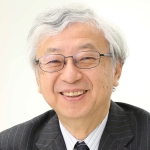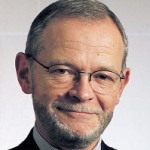
Simeon Anguelov

Former Executive Director of the Balkan Political Club (2005-2014). He was Secretary for the International Cooperation, Office of the President of the Bulgarian Academy of Sciences (2005-2012), Adviser to UNESCO on the Scientific Co-operation among the Countries of Southeast Europe (1999-2004) and Representative to UNESCO’s Executive Board (1993-1997). He also served as Bulgarian Ambassador to France (1991-1997) and permanent delegate to UNESCO (1992-1998). He was Senior Research Fellow, Institute of General and Inorganic Chemistry, Bulgarian Academy of Sciences (1981-1990). He holds a PhD in Chemistry.

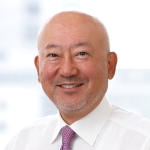
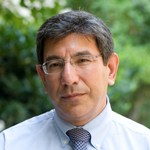
Hossein Amirabdollahian

Deputy Foreign Minister for Arab and African Countries, Islamic Republic of Iran, since 2011. Previoulsy, he was Director General for the Persian Gulf and the Middle-East (2010). He was also Iran’s Ambassador to Bahrain (2007-2010), Head of the Special Department for Iraq (Foreign Ministry) (2006-2007), Deputy Director General for the Persian Gulf and the Middle-East (2006), Special Assistant of the Foreign Minister for Iraqi Affairs (2003-2006), Deputy of the First Persian Gulf Political Department (2001) and Political Expert and Deputy Ambassador in the Iranian Embassy in Baghdad (1997-2001). He is a Founding Member of the West Asia Research Center. He holds a PhD. in International Relations from Tehran University.

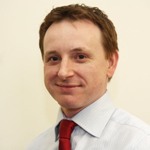
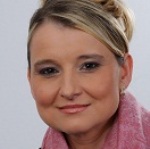
Mariam Aladji Boni Diallo

Diplomat, Special Advisor, Diplomatic Affairs, to the President of the Republic of Benin since 2007. Previously, she was Minister of Foreign Affairs (2006-2007). She served as Ambassador, Secretary-General of the Ministry of Foreign Affairs and African Integration (2004-2006), Ambassador, Deputy Secretary-General of the Ministry of Foreign Affairs and African Integration (2002-2004) and analyst at the Permanent Secretariat of the Strategic Analyses Cell at the Ministry of Foreign Affairs and African Integration (2001-2002). She held various positions at the Embassy of Benin in Bonn. She graduated from the University of Yaoundé, Cameroon.

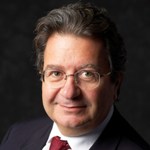
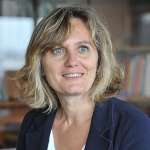
Saliou Akadiri

Minister of Foreign Affairs, African Integration, Francophonie and Beninese Diaspora. Previously, he served as Mayor of the Municipality of Pobè (2008-2015). He was Foreign Affairs Inspector (2006-2008), Director of Europe Department (1996-1998) and Director of Legal affairs, Analysis and Forecasting (DAJAP) (1986). From 1998 to 2006, he was Chief of Staff of the General Administrator at the International Francophone Organization (OIF). He graduated from the Faculty of Law, Economics and Politics (FASJEP), Cotonou, University of Dahomey, the Centre of Administrative Training and Refresher’s Course for Public Administration Executives (CEFAP), the International Institute of Public Administration (IIAP) Paris and the Paris I Panthéon Sorbonne University.

Shameem Ahsan

Ambassador of Bangladesh to the Swiss Confederation and Permanent Representative to the United Nations Office and other International Organizations in Geneva. Former Ambassador of Bangladesh to Brazil. Former High Commissioner of Bangladesh to Brunei Darussalam (2009-2012). From 2005 to 2008, he served as Ambassador to the Islamic Republic of Iran with concurrent accreditation to Turkmenistan and Tajikistan. He joined the Bangladesh Foreign Service in 1986. He is a medical graduate of the University of Rajshahi, Bangladesh. He was also awarded the post-graduate “Diplôme d’etudes Supérieures Specialisés (DESS)” in Diplomacy and Administration of International Organizations from the Jean Monnet-Sceaux Law Faculty of the University of Paris XI.

Thomas Boni Yayi

President of the Republic of Benin since 2006. He is also President of the West African Economic and Monetary Union (WAEMU). He served as Chairperson of the African Union (2012-2013). He was President of the West African Development Bank (1994-2006). He was also Technical Advisor to the President of Benin for monetary and bank affairs, member of the Macroeconomic Analysis Cell of the President’s Office (1992-1994). He graduated from the National University of Benin, the University of Dakar, Senegal and from the West African Center for Banking Studies of the Central Bank of West African States, also based in Dakar. He also holds a PhD in Economics from the University of Orleans, France, and a PhD in Economics from the University of Paris-Dauphine, France.

Chun Yungwoo

Chun Yungwoo is a Senior Advisor at the Asan Institute for Policy Studies. He is also the Chairman and Founder of the Korean Peninsula Future Forum (KPFF). Previously, he served as the National Security Advisor to President Lee Myung-Bak, from 2010 to 2013. In his 33 years of service in the Ministry of Foreign Affairs, He served as Second Vice Foreign Minister (2009-2010), Korean Ambassador to the United Kingdom (2008-2009) and Head of the ROK Delegation to the Six-Party Talks (2006-2008). He received a Master of International Affairs from the School of International and Public Affairs at Columbia University.

Zoran Kazazovic

Ambassador of the Republic of Serbia to the Republic of Korea. Previously, he had worked at the Serbian Ministry of Foreign Affairs, first as Head of the Department for Regional Initiatives (2011-2012), then as Head of the Department for Europe (2012-2013).  He has also been Ambassador to the Kingdom of Thailand, to the Republic of Singapore, to the Kingdom of Cambodia, to the Republic of the Philippines and to the Socialist Republic of Vietnam. He graduated from the Faculty of Law of the University of Belgrade.

Jindal Krishan

Chief Executive Officer of NABARD Consultancy Services (NABCONS). He has been working at the National Bank for Agriculture and Rural Development for 30 years. He has published two books on microfinance and written on rural banking for several papers. He holds an MBA from the Indian Institute of Management, in Ahmedabad, India, and a master’s degree in Agriculture and Rural Development from the University of Western Sydney, in Hawkesbury, Australia.

Lee Seung-Hoon

Professor of economic development at Seoul National University and Tübingen University. Formerly, he taught the same course at the Moscow Higher School of Economics. He has also taught economics at Seoul National University since 1977, as assistant, associate, and full professor until 2010, and is now a professor emeritus of the same university. He served as Director of the Institute of Social Sciences at Seoul National University, first Chairman of the Korean Electricity Commission and Co-Chairman of the Green Growth Committee of the Korean government. He holds a BE degree in electronics from Seoul National University and a PhD in economics from Northwestern University. He also studied energy economics and economic development.

Réchauffement climatique : la carte des risques pour la santé

VIDEO – Le World Policy Conference à Séoul s’est intéressé au réchauffement climatique. Si des solutions techniques propres sont testées pour remplacer les énergies fossiles, les risques sur la santé apparaissent bien réels.

«Un accord lors de la conférence de Paris est possible, nous allons dans la bonne direction.» Vuk Jeremic, président du Centre pour les relations internationales et le développement durable et ancien président de la 67e session de l’assemblée générale des Nations unies, est modérément optimiste. Il juge «les chances de succès raisonnables». Alors que se tient à Lima la conférence sur le climat , dernière étape avant la réunion de Paris en 2015, le World Policy Conference réuni actuellement à Séoul sous l’égide de l’IFRI a choisi d’inscrire le réchauffement climatique à son agenda.

A dessein, car les tendances ne plaident pas en faveur du respect des objectifs fixés pour limiter la hausse des températures. «Les émissions de CO2 continuent à progresser», indique William Ramsay, ancien directeur adjoint de l’Agence internationale de l’énergie (AIE). C’est en effet l’un des sujets de préoccupation, l’incapacité qu’ont les principaux acteurs à transformer suffisamment rapidement le système énergétique pour limiter l’émission de gaz à effets de serre. Ces derniers, d’ici à 2040, devraient encore augmenter d’un cinquième et conduire à un réchauffement de la planète de 2° C.

L’initiative de Total avec le programme Awango

Le rapport de l’AIE publié en novembre ne dit pas autre chose. Le document s’alarme de la hausse (+37%) de la demande mondiale en énergie d’ici 2040. Faut-il pourtant voir là une bonne nouvelle ? Sur les trois énergies fossiles (pétrole, gaz, charbon), la demande pour deux d’entre elles – le charbon et le pétrole – devrait toutefois atteindre un plateau d’ici à 2040. Cela alors que la puissance nucléaire installée devrait faire un bond de 60%, principalement en Chine, en Inde, en Corée et en Russie. Cette échéance de 2040 est suffisante pour permettre aux technologies des énergies renouvelables de gagner en efficacité. Elles progressent rapidement grâce aux aides massives dont elles bénéficient (120 milliards de dollars en 2013). Sauf revirement, les énergies renouvelables devraient compter pour la moitié dans l’augmentation de la production énergétique d’ici 2040 et dépasser ainsi le charbon.

A moins d’un baril durablement bas, les industriels devraient continuer à investir dans ces nouvelles technologies. Parallèlement aux efforts développés pour limiter les effets du changement climatique, des initiatives sont lancées comme celle de Total. Le groupe pétrolier a ainsi lancé en 2012 le programme Awango qui propose des solutions solaires photovoltaïques innovantes et fiables pour résoudre les problèmes quotidiens de populations qui vivent sans électricité, avec de faibles revenus. En Afrique essentiellement, le groupe pétrolier a ainsi distribué 1.000 lampes solaires et considère qu’il apporte la lumière à 4.000 personnes. «L’objectif d’ici à 2020 est de toucher 50 millions de personnes» explique Bertrand de la Noue, représentant du groupe Total en Chine.

Cancer du foie, Ebola, hépatites…

Le réchauffement climatique a des prolongements sur la santé aussi. «La santé n’a jamais été autant prise en compte dans le réchauffement climatique qu’aujourd’hui», explique Christian Bréchot, président de l’Institut Pasteur, qui dresse une carte des risques en expliquant comment le climat agit sur les organismes. «Il y a une évolution importante actuellement. A côté des maladies infectieuses comme Ebola ou le VIH, les causes de mortalité sont de plus en plus liées aux maladies chroniques comme les cancers. Elles sont en train de prendre le pas partout, dans les pays développés, les émergents comme les plus pauvres.» Il y a des maladies chroniques qui ont des liens avec des agents infectieux comme en Corée le cancer du foie et l’hépatite B et C par exemple.

Si l’on schématise, on s’aperçoit que d’ici à 2050, le réchauffement climatique va exacerber des problèmes que l’on connaît déjà (problèmes de nutrition, d’incendies, etc.). Au-delà, en partant de l’hypothèse d’un réchauffement entre 4 et 7° C, les prévisions deviennent littéralement catastrophiques. «Le travail à l’extérieur devient impossible et il devient difficile à l’être humain de s’adapter», conclut le professeur. Les enjeux pour un accord à la conférence de Paris sont posés.

VIDEO Quelles sont les conséquences du réchauffement climatique sur la santé ? L’interview de Christian Bréchot, directeur général de l’Institut Pasteur à Paris

刘琛教授参加第七届世界政策大会并做发言

12月8日至10日,第七届世界政策大会(The World Policy Conference)在韩国首尔召开,韩国总统朴槿惠致开幕词。我校国际新闻与传播学院教授刘琛作为国内唯一受邀学者参加大会并作了题为“中国走向全球化”的发言。

 
刘琛分析了中国改革开放三十余年所经历的全球化选择与路径,指出在新的大时代背景下中国走向全球化不仅惠及中国也有利于世界,中国与世界的合作前景是广阔的。刘琛的发言得到与会者的高度评价,并获2015年在韩国主办的第十六届世界知识论坛(The World Knowledge Forum)主旨发言邀请。
会议期间,刘琛向与会嘉宾介绍了我校在国际新闻与传播、国别区域研究与教学等方面的情况,并就今后合作进行了交流。
世界政策大会被誉为“聚集全球杰出精英”,来自世界各国的国家政要,联合国、国际货币基金组织、世界贸易组织、经合组织(OECD)、东盟等国际或地区组织的领导人,以及美国哈佛大学、耶鲁大学、斯坦福大学、英国伦敦政治经济学院、法国巴黎政治学院等国际著名大学和研究机构的学者参加了大会。


Landry Signé

Landry Signé is a David M. Rubenstein Fellow in the Global Economy and Development Program at the Brookings Institution and Founding Chairman of the Global Network for Africa’s Prosperity. He is also fellow at Stanford University’s Center for African Studies, chair of the Faculty Senate Committee on Research and Creative Activity and assistant professor of political science at UAA, and lecturer in Emerging Markets at Stanford University’s Continuing Studies. His research and policy work focuses on the transformation of African economies, governance, political processes, development, and the role of international actors in Africa. He is the recipient of 2014 Chancellor’s Award for Excellence in Research and Creative Activity and the Governor General of Canada Award.

Hervé Koffi

Country Manager for Côte d’Ivoire, General Electric, since 2014. Prior to joining General Electric, he worked 12 years for Citi where he held various positions, including CFO for West and Central Africa based in Côte d’Ivoire. From 2012 to 2013, he was Acting General Manager for Citi’s operations in Côte d’Ivoire. He also served as board member and vice president of Citibank Cote d’Ivoire S.A. He has also been a lecturer at the National school of statistics and applied Economics (E.N.S.E.A.) in Côte d’Ivoire for the past 10 Years. He graduated from the National school of statistics and applied Economics (E.N.S.E.A.) in Côte d’Ivoire, and he holds a MBA TRIUM, an alliance of New York Stern University, London School of Economics, and H.E.C. Paris.

Karim El Aynaoui

Executive President of the Policy Center for the New South, and Dean of the Faculty of Economics and Social Sciences and Executive Vice-President of the Mohammed VI Polytechnic University. From 2005 to 2012, he worked at the Central Bank of Morocco as the Director of Economics, Statistics and International Relations. Prior to this, he served as an economist at the World Bank. He holds scientific and advisory positions in various institutions, including the Malabo-Montpellier Panel, the Moroccan Capital Market Authority, and the French Institute of International Relations. He is also advisor to the CEO and Chairman of the OCP Group, and serves as a board member of the OCP Foundation and as a global member of the Trilateral Commission. He holds a PhD in Economics from the University of Bordeaux.

Le repli américain est-il dangereux ?

Le dégagement des Etats-Unis rend-il la situation internationale plus dangereuse? La réponse de François Nordmann

Le dégagement des Etats-Unis rend-il la situation internationale plus dangereuse? Le monde était-il plus sûr quand Washington y assumait pleinement son leadership? Ce thème a occupé la World Policy Conference qui s’est tenue au début du mois à Séoul sous la direction de M. Thierry de Montbrial, directeur de l’Institut français des relations internationales. Trois anciens hauts responsables américains ont été invités à s’exprimer sur cette question centrale. Richard Haas, ancien chef du service de planification politique du Département d’Etat, à l’époque de la présidence de George W. Bush, et président du Council on Foreign Relations en a débattu avec Joseph Nye, ancien membre de l’administration démocrate des présidents Carter et Clinton devenu professeur à Harvard – l’inventeur de la notion de «soft power», c’est lui! Puis Robert Gates, ancien ministre de la Défense, a également livré ses vues sur le sujet.

La politique étrangère américaine obéit à des cycles d’extension suivis de phases d’isolement, ou plutôt de repli sur soi, comme ce fut le cas après la guerre du Vietnam. Si George W. Bush pratiquait le triomphalisme, Obama est plus prudent dans l’usage de la force. Les guerres d’Irak et d’Afghanistan, qui sont en train de se terminer ont engendré le repli actuel de la politique américaine. Mais il faut le replacer dans son contexte historique: ce n’est pas de l’isolationnisme, comme au lendemain de la Première Guerre mondiale. Le leadership américain n’a jamais été absolu: en 1945, il fut incapable d’empêcher Staline d’acquérir la bombe atomique ou de répandre l’idéologie communiste, et dès 1949, il ne contrôlait plus l’espace comprenant la Russie, l’Inde et la Chine. Dans la période actuelle, on remarque plus facilement les décisions de ne pas agir que celles d’intervenir…

Mais voyons aussi ce qui se passe dans le monde, réplique Richard Haas. On assiste à une diffusion du pouvoir entre Etats et acteurs non étatiques, la décentralisation est la marque de la décision politique et il y a bien un manque de confiance en les Etats-Unis.

Les aléas de la vie politique interne pèsent sur la capacité d’agir du gouvernement américain, même si la prééminence de l’exécutif sur le Congrès reste intacte, ce qu’on perçoit mal à l’étranger.

Il n’en demeure pas moins qu’une administration en a fait trop et qu’une autre n’en fait pas assez. Les événements d’Europe (Ukraine), du Moyen-Orient et d’Asie du Sud-Est ont interféré avec la politique de repli. Ils constituent un facteur de risque pour 2015-2016. On ne peut écarter la survenance d’un «accident majeur» en politique étrangère d’ici à la fin du mandat d’Obama, en 2016 : le caractère de ce dernier, brillant analyste, mais décideur complexe, dans une situation internationale chaotique, amène Richard Haas à s’interroger: le président sera-t-il en mesure de prendre les décisions courageuses que les circonstances pourraient exiger, ou va-t-on au-devant de deux années dangereuses?

Sur l’Ukraine, les choses ne vont pas évoluer en un ou deux ans. L’Europe et les Etats-Unis coopèrent étroitement, mais il incombe au premier chef à l’Europe d’aider l’Ukraine sur le plan économique: en a-t-elle les moyens? L’état de l’économie européenne – stagnation-déflation – est en lui-même préoccupant. La reconstruction d’une économie viable en Ukraine ne suffira pas à tenir tête à Poutine, il faut aussi être en mesure de mieux protéger les Etats baltes. L’Europe aura-t-elle la capacité d’aider l’Ukraine et de remplir ses obligations à l’égard de l’OTAN, ce qui est tout aussi nécessaire?

Poutine est un homme du passé, en proie à la nostalgie de l’empire perdu et attaché à préserver les droits des 25 millions de Russes vivant hors de Russie. Il est rationnel: la chute du prix du pétrole le fera davantage plier que les sanctions.

Avec l’Iran, Richard Haas et Bob Gates sont d’avis qu’un accord est peu probable, et en tout cas peu souhaitable: il incombe désormais à l’Iran de faire le plus grand pas en renonçant aux trois quarts de ses centrifugeuses. Le P5 + 1 est allé au-delà des résolutions du Conseil de sécurité en acceptant que l’Iran conserve une capacité d’enrichissement limitée. Mais l’Iran n’a pas besoin de 19 000 centrifugeuses pour faire face à ses besoins légitimes d’uranium enrichi, 4000 ou 5000 suffiraient. Cependant, les ayatollahs ont refusé cette concession fondamentale. Même si un accord intervenait in fine, on ne serait jamais sûr de la manière dont il serait appliqué. Dans ces conditions, l’absence de traité ne signifierait pas la fin du monde. Joseph Nye admet que dans la meilleure des hypothèses, le potentiel de coopération politique entre l’Iran et les Etats Unis serait assez faible.

Robert Gates rappelle que le Moyen-Orient est le théâtre de quatre conflits simultanés: les chiites contre les sunnites; les réformistes contre les régimes autoritaires; les séculaires contre les islamistes, les Etats créés artificiellement contre une partie de leur population (Irak, Syrie).

Enfin, en Asie, mise à part la montée en puissance de la Chine, les Américains ont deux sujets de préoccupation: les tensions qui subsistent entre leurs alliés japonais et coréens sous le poids de l’histoire, et le caractère belliqueux et imprévisible de Kim Jong-un, le dictateur nord-coréen, que les Chinois renâclent à encadrer avec plus de fermeté comme ils le pourraient.

Samira Kristina Azzam

Associate Director, Government Relations – Growth Markets at Accenture. Previously, she handled U.S. federal and state government relations based in Washington, DC. She joined Accenture in 2007 from government relations firm Fabiani & Company, where she advocated on behalf of clients before the U.S. Congress and federal agencies. She holds a bachelor degree in international economics from Georgetown University’s Edmund A. Walsh School of Foreign Service, United States.

Nikoloz Apkhazava

Ambassador of Georgia to the Republic of Korea since February 2012. He has also been Minister-Counselor at the Embassy of Georgia in Japan (2008-2011), Ambassador-at-large at the Ministry of Foreign Affairs of Georgia (2008), Deputy Head of the Legal Unit at Hagler Bailly Consulting (1997), and Deputy Head of the Legal Department of the Georgian International Oil Corporation (1996). He has studied in Georgia, Italy, and Japan, and holds a LLD from the Graduate School of Social Sciences, Yokohama National University.

Fabian Călin

Ambassador of Romania to the Republic of Korea. Previously, he had served as Ambassador of Romania to the Kingdom of the Netherlands (2007-2012), Diplomatic Advisor to the Prime Minister’s Office of Romania (2005-2007), and Vice-president of the Danube Commission (2002-2005).  He has also been Visiting Professor to the University for Political Sciences in Bucharest (2006-2007), Counselor and Head of the Department for Central and South-East European Affairs (DECSE) at the Ministry of Foreign Affairs, and Visiting professor to the University Babes-Bolyai, in Cluj (2001-2002). He holds a BS in geological sciences from that same university and a PhD.

Sylvestre Kouassi Bile

Ambassador of Côte d’Ivoire to the Republic of Korea since 2012. Prior to that, H.E. Mr. Kouassi Bile served at the Ministry of Foreign Affairs of Côté d’Ivoire as Ambassador of the Director of the Africa Department, Deputy Director in Charge of Inter-African Cooperation Organizations and Deputy Director of West Africa. He started his career at the Ministry of Foreign Affairs in 1977. He graduated in politics and social sciences at the University of Leuven in Belgium, and in Diplomacy at the National School of Administration of Abidjan.

La RACEF participa en la World Policy Conference

El Vicepresidente de la Real Academia de Ciencias Económicas y Financieras (RACEF), Lorenzo Gascón, ha participado este fin de semana en la séptima edición de la World Policy Conference (WPC), que se ha celebrado en Seúl. También se han sumado a la cita los Académicos Correspondientes Thierry de Montbrial, fundador y Presidente de la WPC, y Mohamed Laichoubi.

Fundada en 2008, la WPC es una organización independiente que tiene como objetivo contribuir a la mejora de todos los aspectos de gobierno internacional para promover un mundo más abierto, más próspero, más justo y más respetuoso dentro de la diversidad. Su cita anual reúne a líderes políticos, empresariales y de la sociedad civil de los cinco continentes.

Entre los participantes se encontraban Geun-hye Park, Presidenta de la República de Corea, país anfitrión; el Príncipe Turki Al Faisal, Embajador de Arabia Saudí en Estados Unidos; Jean-Claude Trichet, ex Presidente del Banco Central Europeo; Pascal Lamy, ex Director general de la Organización Mundial del Comercio; Robert Gates, ex Secretario de Defensa de Estados Unidos. Completaba la delegación española el ex Ministro de Asuntos Exteriores y Cooperación Miguel Ángel Moratinos.


Les acteurs du miracle asiatique ne doivent pas jouer avec le feu

On assiste en Asie à une montée des nationalismes. Fondé sur l’antagonisme historique et culturel entre les grandes puissances locales, il fait planer une menace sourde sur l’équilibre à terme de cette région du monde.

de Dominique Moïsi

Les sous-marins nucléaires chinois ont des missiles de croisière qui peuvent atteindre les cinquante Etats des Etats-Unis. » C’est à Séoul, en jouant sur la télécommande de mon téléviseur, que, sur la chaîne chinoise CCTV4, je suis tombé sur un programme très instructif, en mandarin, mais avec quelques surimpressions en anglais, de peur que le message ne soit perdu pour le téléspectateur occidental. « Les forces navales chinoises sont l’équivalent, en mer de Chine, de ce que sont les forces terrestres russes sur le territoire de l’Ukraine. » A la septième édition de la WPC (World Policy Conference) qui se tenait la semaine dernière à Séoul, l’un des participants japonais, lui non plus, ne mâchait pas ses mots.

On assiste en Asie à une montée des nationalismes qui se traduit d’abord par une radicalisation du langage, sinon des images. C’est peu dire que le passé ne passe pas. Il y a quelques jours, à Paris, un diplomate japonais de haut rang – encouragé, peut-être, par le ton nationaliste du gouvernement Abe -, me tenait des propos presque racistes à l’encontre de la Corée et de la Chine. Ses critiques étaient moins basées sur la politique de ses deux voisins que sur leurs fondamentaux historiques et culturels, en bref, sur leurs identités. Il est vrai que sur ce terrain, les Coréens ne sont pas en reste sur les Japonais. « Un peuple de samouraïs qui nous envahit, à la recherche de femmes belles, contrairement aux leurs… »

Certes, comparée aux drames du Moyen-Orient, l’Asie du Nord-Est vieillissante paraîtrait presque un oasis de stabilité, de prospérité et même de sécurité, en dépit des rodomontades nucléaires nord-coréennes. Pourtant ces « mémoires douloureuses », qui semblent s’aggraver avec le temps, font peser comme une ombre dangereuse sur l’ensemble de la région. On peut bien sûr, à l’inverse, souligner le lien de causalité qui peut exister dans l’Asie du Nord-Est entre absence de réconciliation et croissance économique. Comme humiliés par le fait que le « miracle asiatique » se soit d’abord incarné dans la réussite du Japon, un pays qu’ils ne perçoivent pas comme asiatique, la Chine et la Corée du Sud ont voulu se prouver qu’elles pouvaient faire mieux encore que leurs anciens envahisseurs nippons. La mollesse, c’est le moins que l’on puisse dire, de la croissance européenne ne tiendrait-elle pas, pour partie au moins, à l’éclatante réussite d’une réconciliation qui amoindrit l’esprit de compétition entre ses membres ? Il serait dangereux de pousser trop loin cette hypothèse. Le nationalisme peut, certes, constituer un aiguillon à la croissance. Ses excès conduisent trop souvent à des conséquences catastrophiques.

Dans un contexte régional caractérisé par la montée des nationalismes, la Corée du Sud n’en maintient pas moins une forme de modération basée sur un mélange de modestie et d’optimisme prudent. Entourée par l’ombre séculaire de deux géants qui l’ont, tour à tour, envahie et occupée, consciente du fait qu’elle a besoin d’amis, sinon de protecteurs, la Corée du Sud s’inquiète d’un pivot américain vers l’Asie, qui, selon elle, se traduit plus dans les discours que dans les actes. Et ce précisément au moment où Tokyo semble tenté par une certaine forme de révisionnisme historique.

Modérément rassurés par l’Amérique, carrément inquiets de l’évolution du Japon, les Coréens du Sud se tournent, au moins partiellement, vers les Chinois. Un choix qui ne fait pas que traduire l’intensité des relations économiques et commerciales entre les deux pays. Certes, pour les Coréens du Sud, Pékin pourrait, devrait en faire beaucoup plus à l’encontre du régime de Pyongyang et de son dirigeant, si jeune, si peu expérimenté et plus imprévisible encore que ses prédécesseurs. Des encouragements à la sagesse que Pékin pourrait également distiller à Moscou. Qui d’autre que la Chine est capable d’exercer une quelconque influence sur la Russie de Poutine ?

En réalité, vu de Séoul, Xi Jinping apparaît comme beaucoup plus pragmatique, sinon rationnel, que son alter ego russe. Les Coréens seraient presque tentés de s’apitoyer sur le sort des Européens : « Vous n’avez pas de chance d’avoir la Russie de Poutine à vos frontières plutôt que la Chine ! »

Quelle est la part de méthode Coué dans ce raisonnement ? En fait, en termes de stabilité, sinon de sécurité, les Coréens que j’ai pu rencontrer à Séoul m’ont semblé plus préoccupés de l’évolution intérieure de leur pays que de toute autre chose. Et cela inclut également l’avenir d’une réunification avec le Nord, qui me semble être perçue comme tout aussi inévitable à moyen terme qu’improbable à court terme. L’histoire politique récente de la Corée peut certes légitimer un tel ordre des priorités. L’actuelle présidente de la Corée, Madame Park-Geun-hye, n’a-t-elle pas connu l’assassinat de sa mère, puis de son père, Park Chung-hee (dont la présidence autoritaire dura de 1963 à 1979), avant d’arriver au pouvoir ? Aujourd’hui encore, on semble lire dans son regard intense, sinon inquiet, comme l’héritage de ce passé tragique. La Corée du Sud est une démocratie, mais est-elle aussi stable politiquement que prospère économiquement ?

Plus ouverts que les Japonais, plus organisés que les Chinois, les Coréens sont certes entrés, grâce au succès de leur économie, dans la cour des grands, sinon dans celle des très grands. En réalité, la Corée d’aujourd’hui, prise entre la Chine et le Japon, est à l’Asie – toute proportions gardées, bien sûr – ce que l’Europe (le dynamisme économique en moins) est au monde. Une Europe qui, prise entre les Etats-Unis et la Chine, est, elle aussi, un mélange de raffinement et de vieille civilisation qui laisse la réalité du pouvoir à d’autres.

Dominique Moïsi

Shigeo Iwatani

Former Secretary-General of the Trilateral Cooperation Secretariat (TCS). His latest posts include Ambassador Extraordinary and Plenipotentiary to Austria (2010-2013) and Kenya (2007-2010), and Consul-General of Japan in Honolulu (2005-2007). He has also been Director for Abandoned Chemical Weapons Office at the Cabinet Office (2002-2004), and Minister to the Embassy of Japan in China, in charge of cultural affairs (1996-1998). He graduated from Hitotsubashi University Faculty of Law.

Tomasz Kozlowski

Ambassador, Head of the Delegation of the European Union to the Republic of Korea (since January 2011). Since 2004, he has been working for the European Union Institutions in Brussels as Head for Asia at the Office of the EU High Representative Javier Solana and later as Principal Adviser for Asia at the European Commission. He was the Ambassador of Poland to Pakistan (concurrently accredited to Afghanistan) in 2001 – 2003, and the Asia Director at the Ministry of Foreign Affairs in Warsaw in 2003 – 2004.

Mohammed Chraibi

Ambassador of Morocco to the Republic of Korea. Prior to that, H.E. Mr. Chraibi was Director of Direction of Financial Affairs, Chairman of the Group of 77 for the year 2003 at Nairobi, and Permanent Representative of the Kingdom of Morocco to the United Nations Environment Programme (UNEP). He was also Ambassador of His Majesty the King to the Republic of Kenya, to the Union of Comoros, to the Republic of Seychelles. He graduated from the National School of Public Administration, Diplomatic section, Rabat.

Lim Hyung-Joon

Head of the World Food Programme (WFP) Korea office since November 2011. He joined the WFP in 2002 as a Junior Professional Officer in several countries before moving to WFP headquarters in Rome, Italy, where he served as a donor relations officer in charge of Asia. He contributed to newspapers, including a weekly column to Hankyoreh, one of the major Korean dailies, from 1997 to 1998, and a monthly column to Hanwoolan in the mid 2000s. He holds a BA in language and diplomatic science, an MA in political science from Hankuk University of Foreign Studies (HUFS) and an MPA from John F. Kennedy School of Government, Harvard University.

Filimone Kau

Republic of Fiji’s resident Ambassador to the Republic of Korea since 2012. Prior to that, H.E. Mr. Filimone Kau was Permanent Secretary of the Ministry of Lands & Mineral Resources, Head of the Public Relations and Media Team of the National Council for Building a Better Fiji, Director of Information at the Ministry of Information, and Deputy Permanent Representative and Chargé d’Affaires at the Ministry of Foreign Affairs & External Trade – Fiji Mission to the United Nations. He holds a B.A. in History and Politics, University of the South Pacific.

Vasyl Marmazov

Ambassador of Ukraine to the Republic of Korea. Previously, he had been Deputy Dean of the Faculty of Law of Taras Shevchenko National University of Kyiv, Lawyer at the European Court of Human Rights, in Strasbourg, and a Partner of the Ukraine-based law firm Yuris Law Offices. He has also served as Deputy Minister at the Ministry of Justice, Ministry of Internal Affairs and Ministry of Economy of Ukraine. He holds a PhD in Law from Taras Shevchenko National University of Kyiv. He also studied at the London School of Economics (UK), Sidney Sussex College (Cambridge, UK), International Institute of Human Rights (Strasbourg) and Stanford University (USA).

Ganbold Baasanjav

Ambassador of Mongolia to the Republic of Korea. Formerly, he  served as Director-General of the Asia and the Pacific Department at the Ministry of Foreign Affairs and Trade of Mongolia (2008-2013). He has also been Ambassador of Mongolia to Vietnam (2004-2008), State Secretary at the Ministry of Foreign Affairs of Mongolia (2001-2003) and Director-General of the Public Affairs Department at the Ministry of External Relations of Mongolia (1998-2000). He has studied at the Pedagogical Institute of Russian Language, at the Moscow State Institute of International Relations and at the University of Hawaii at Manoa, Honolulu, United States.

Korea, Poland celebrate silver jubilee of relations

Poland and South Korea first made official contact during the 1988 Seoul Olympic Games under the watchful eyes of their governments. Polish youth and sports minister Aleksander Kwasniewski, who later became the country’s president, visited South Korea unofficially to discuss “pragmatic politics” befalling his communist nation.

Their shared desires for freedom and democracy soon paved the way for a vibrant East-West partnership into the 21st century. According to Polish Ambassador to South Korea Krzysztof Ignacy Majka, Poland’s political and economic transition and historical reconciliation with neighboring countries can provide inspirations to both South and North Korea.

“I am sure many of you remember the Hodori Tiger ― the mascot for the 1988 Seoul Games. That symbol became Asia’s economic tiger,” Majka said during a reception celebrating the 25th anniversary of relations between Poland and South Korea and the Polish Army Day.

In his keynote speech delivered at the Millennium Seoul Hilton hotel on Dec. 8, the ambassador noted, “Poland is South Korea’s largest investment destination in Central Europe; South Korea is Poland’s second largest economic partner in Asia after China.”

Since diplomatic relations were established in November 1989, bilateral trade volume has multiplied 60-fold to reach $4.3 billion last year. More than 150 South Korean firms, concentrated in the electronics and automobile sectors, are operating in Poland with accumulated investments of over $1.4 billion.

The two countries became strategic partners last year and economic cooperation has expanded to areas of information communication technology, defense, renewable energy and transport infrastructure.

The National Bank of Poland president and former Polish Prime Minster Marek Belka said in an improvised speech, “South Korea is a household name in Poland. Poles watch television with Korean TV sets produced in our country.”

Belka quipped, “During the 2002 Korea-Japan World Cup, we duly lost to South Korea to pave the way for your fantastic success in reaching the semifinals. Once again, congratulations!”

Military officers in green, black and blue uniforms paid tribute to Poland’s victory in the 1920 Battle of Warsaw, also known as the “Miracle on the Vistula River.”

Polish soldiers have served on U.N., NATO and EU missions around the world, the ambassador said; they were on the Neutral Nations Supervisory Commission duty in Korea’s Demilitarized Zone for the last 61 years.

Ministry of Foreign Affairs Ambassador Lee Sang-kyu explained that establishing relations with Poland helped South Korea’s Nordpolitik policy, aimed at normalizing ties with former communist bloc. Lee emphasized the strong investments in education and human resources, which enabled Poles and Koreans to pull through times of turbulent change.

Majka highlighted the Polish language faculty at the Hankuk University of Foreign Studies in Seoul ― Asia’s largest since being launched in 1987. Korean students are opening their eyes to educational opportunities in Poland, which offer musical and engineering excellence.

Polish artists have regularly been featured at film, jazz and performing arts festivals in South Korea. The city of Daegu ― home of the Polish Honorary Consulate as of last week ― will host the third Asia-Pacific International F. Chopin Piano Competition next year.

In a separate interview with The Korea Herald, Belka shed light on his country’s transition from a socialist command economy to a free market economy. He came to South Korea to serve as a panelist at the 2014 World Policy Conference in Seoul from Dec. 8-10.

“Throughout former Eastern Europe, the overwhelming aspiration was to go back to where we belonged originally, to be integrated into Western Europe,” Belka said. “The years of communism were unnatural for us. It was an intermission in our political and economic development.”

Belka said that the Poles’ desire to “catch up” with their Western European counterparts was a catalyst for change: “Poles were hungry for success. There was a natural drive to make up for our lost years, to improve our standard of living.” He added, “People understood perfectly well that they had to work longer, harder and smarter.”

Poland has since joined the EU, NATO and OECD, closing much of the gap with the West, Belka said. He explained that joining the European Union made his country pursue sound economic policies and structural reforms to make the economy “more resilient, flexible and adaptive.”

“Poland now has a stable and competitive economy,” according to Belka, who underscored Poland’s world-class engineering expertise and inexpensive labor force for foreign investment.

Poland and Germany ― at gunpoint during WWII ― developed “very good partnership, even friendship” after the war, largely due to Germany’s contrition, Belka said. “It was all built on clearing the past. Europeans don’t have a problem saying ‘I’m sorry. Forgive me for my past wrongdoings.’ It’s also normal to accept apologies.”

“In a sense we have grown out of these problems despite differences in our opinions,” Belka stressed. “There has been a real sense of being united in our common interest, in being European. If there’s anything from our experience that may be of use to East Asia, it would be our reconciliation and normalization.”