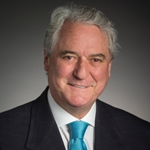
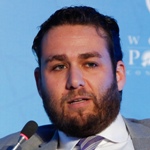
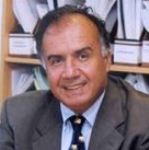
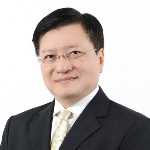
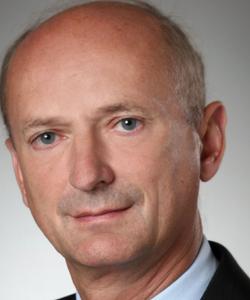
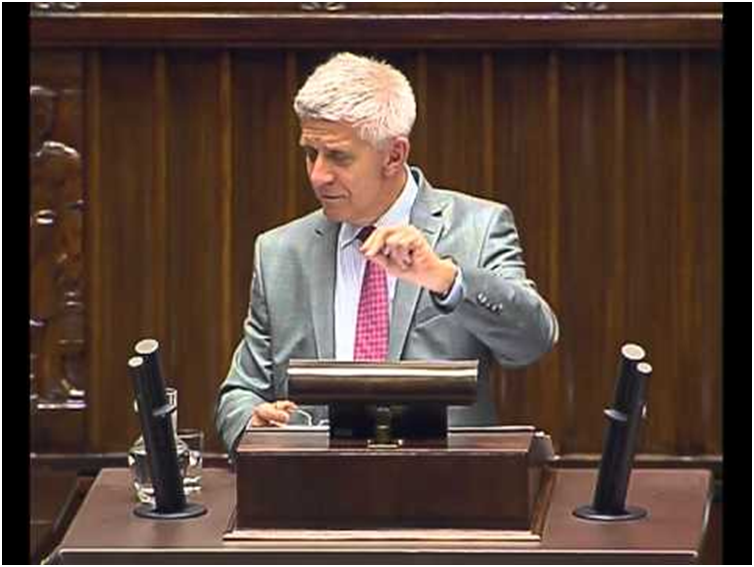
Ryszard Czarnecki

Polish politician, Vice-President of the European Parliament responsible for Eastern Policy and the Eastern Partnership. He served as Minister of European Affairs, Minister without Portfolio and Deputy Minister of Culture and Arts.  He has been a member of the European Parliament since 2004. He is Vice-President of the Euronest Parliamentary Assembly, as well as interparliamentary forum with national parliaments of Ukraine, Moldova, Belarus, Armenia, Azerbaijan and Georgia. He is also Coordinator in Committee on Budget Control (CONT), member of the Foreign Affairs (AFET) committee in the EP and the Delegation EU – Ukraine. He graduated from the University of Wroclaw.

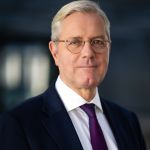
Norbert Röttgen

Deputy Chairman of the CDU/CSU Parliamentary Group in the German Bundestag with responsibility for foreign affairs, defence, European security, and human rights. He is a member of the Foreign Affairs Committee in the German Bundestag. He was chairman of the committee from 2014 to 2021.From 2009 to 2012, he was Federal Minister for the Environment, Nature Conservation and Nuclear Safety. He has been a Member of the German Parliament since 1994. During his mandate Dr. Röttgen has fulfilled key functions within the Christian Democratic Party (CDU). Dr. Röttgen, who is a lawyer by profession, holds a PhD in Law from Bonn University. He is the Co-Chair of the European Council on Foreign Relations (ECFR) and Board Member of various institutions, such as the Atlantik-Brücke, Asia House, Club of Three, the Hertie School of Governance Berlin and the German Council on Foreign Relations (DGAP).

Photo : Jonas Makoschey

Ula Nairne

Executive Director of StarFinder Investment Fund, Board Member of the Institute of Economic Development Europe-Latin America (IDE EAL), owner/director of Nairne Ltd, a UK-based strategic economic development consultancy, and previously Director of Global Advisory Services at Geopolitical Intelligence Services AG, Liechtenstein. She has worked on United Nations assignments, co-ordinated cross border co-operation projects and supported businesses’ global expansion. She had a key role in reactivating Visegrad Group cooperation. She is a University of Warsaw International Relations graduate and she holds an Executive MBA from the University of Quebec in Montreal, Warsaw School of Economics and the China University of Mining and Technology.

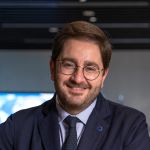
Manuel Muñiz

As Provost of IE University and Dean of IE School of Politics, Economics & Global Affairs, he is responsible for the university’s international expansion through strategic alliances and for research and teaching in Public Policy, Global Affairs and Economics. He is also the Chair of the Board of the IE New York College. In 2023 Dr. Muñiz was elected President of the Association of Professional Schools of International Affairs (APSIA), the preeminent organization bringing together the world’s top schools of global affairs and public policy. He is a Senior Fellow at Brookings’ Foreign Policy Program, a member of the Royal European Academy of Doctors, a member of the Advisory Committee of the Club of Madrid, and a council member of the European Council on Foreign Relations. He served as State Secretary (Vice Minister) at the Spanish Ministry of Foreign Affairs (2020-2021). In this role, he was responsible for the ministry’s Strategy and Foresight Unit, the Economic Diplomacy Team, and the Communications Department. He coordinated Spain’s 2021–2024 Foreign Policy Strategy, and led the work on the National Strategy on Technology and Global Order. He holds a PhD in International Relations from the University of Oxford, a Master in Public Administration from Harvard University, a Master in Financial Markets from the Instituto de Estudios Bursatiles in Madrid, and a Bachelor in Law from Universidad Complutense de Madrid.

Shivshankar Menon

Chairman of the Advisory Board of the Institute of Chinese Studies in New Delhi, and is a Distinguished Fellow at the Brookings Institution, Washington. He served as national security advisor to the Prime Minister of India (2010-2014), and previously as Foreign Secretary of India (2006-2009). He served as Ambassador or High Commissioner of India to Israel (1995-1997), Sri Lanka (1997-2000), China (2000-2003), and Pakistan (2003-2006). He studied at the Scindia School, Gwalior and at St. Stephens College, Delhi University, where he studied ancient Indian history and Chinese.

Claude Mandil

Former Executive Director of the International Energy Agency (2003-2007). Before joining the IEA in 2003, he was Chairman and CEO of the Institut Français du Pétrole and, previous to that, Managing Director of Gaz de France. Earlier posts have included Director General for Energy and Raw Materials at the Ministry of Industry (1990-1998), Director General of Bureau of Mines and Geology (BGRM) (1988-1990), CEO of the Institute for Industrial Development (IDI) (1983-1988) and Technical Advisor in the French Prime Minister’s cabinet (1981-1982). He is a graduate of France’s Ecole Polytechnique and Ecole des Mines.

Anne Lauvergeon

Founder and CEO of A.L.P an advisory and investment company, she is also co-Chairman of the Innovation Committee of the MEDEF. She is Chairman of the Board of Sigfox and IB2. She is member of the Board of American Express, Koç Holding, Suez and Avril. she was Chairman of Innovation 2030 National Committee from 2013 to 2018. She was Founder and CEO of AREVA (2001-2011). In 1997, she worked at Alcatel as Senior Executive Vice President, member of the Executive Committee, in charge of International business and industrial holdings. She was Partner of Lazard Frères & Cie (1995-1997). From 1990 to 1995 she worked for the French President’s office, in charge of international economy and foreign trade missions in 1990, then Deputy Chief of Staff and Personal Representative to the French President, in charge of the G7/G8 Summits’ from 1991. She is a graduate of the Ecole Normale Supérieure and the French National School of Mining Engineer. She holds an advanced degree in Physics & Chemistry.

Ashwani Kumar

Senior Advocate at the Supreme Court of India. He was a Parliamentarian for the State of Punjab for 14 years and served in the Union Government as Minister of State in the Departments of Industrial Policy & Planning, Parliamentary Affairs, Planning, Science, Technology and Earth Sciences (2006-2012). He later served as the Cabinet Minister for Law & Justice in the UPA II (2013). He represented India at the United Nations several times. He graduated from St. Stephen’s College, Delhi.

Ido Kiyoto

Vice Chairman at the Institute for International Economic Studies, which is the research institute established by Toyota Motor Corporation. After joining the Japanese Ministry of Finance in 1973, he engaged mainly in the international issues. Afterwards, he joined The Bank of Japan as Executive Director. He studied Mathematics at Tokyo Institute of Technology and Business Administration at Saarland University in Germany.

Marc Hecker

Deputy Director of Ifri and Editor-in-Chief of Politique étrangère. He holds a Ph.D. in Political Science from University Paris 1 Panthéon-Sorbonne and taught for many years a course on Terrorism at Sciences Po. He published several books including La Guerre de vingt ans (Robert Laffont, 2021 with Elie Tenenbaum), Intifada française ? (Ellipses, 2012) and War 2.0: Irregular Warfare in the Information Age (Praeger, 2009 with Thomas Rid; translated in Chinese in 2011). His articles appeared in major journals (Policy Review, Internationale Politik, Commentaire, Études, etc.).

Juan Gallardo

Chairman of Organización Cultiba, Grupo Azucarero Mèxico (Sugar Mills) and of GEPP. He is also a board member of Caterpillar Inc., Santander Mexico and a member of the International Advisory Council of Bombardier and Rabobank. He has served as CEO of COECE, Mexico`s Trade Coalition for NAFTA and Free Trade agreements since 1992. He was also President of Industrial Minera Mexico (Mexico’s largest mining company). He graduated from the Escuela Libre de Derecho in Mexico City.

Ryan Evans

Founder, CEO, and editor-in-chief of War on the Rocks, a digital outlet on strategy, defense, and foreign affairs. He has written for The Washington Post, The New York Times, Studies in Conflict & Terrorism, the CTC Sentinel of West Point. He deployed to Helmand Province, Afghanistan (2010-2011) as a civilian social scientist on a U.S. Army Human Terrain Team. He worked as assistant director at the Center for the National Interest, as a research fellow at the Center for National Policy, and for the International Centre for the Study of Radicalisation and Political Violence in London. He has lectured, among others at the U.S. Army War College, American University, John Hopkins University. He received his MA from the King’s College London War Studies Department.

Uri Dadush

Senior Fellow at the OCP Policy Center in Rabat, Morocco and a non-resident scholar at Bruegel. He teaches graduate courses on globalization and on international trade policy at the School of Public Policy at the University of Maryland and in the executive program of the Ecole des Hautes Etudes Commerciales (HEC). He was previously Director of the International Trade, Economic Policy, and Development Prospects Departments at the World Bank. He was also President of the Economist Intelligence Unit, Group Vice President of Data Resources, Inc., and a consultant with McKinsey and Co.

Kriengsak Chareonwongsak

Former Prime Ministerial Advisor of Thailand, Senior Fellow Harvard University and Chairman, Nation-Building Institute. President of the Institute of Future Studies for Development and Honorary Consul General in Thailand. He was also a Fellow at the University of Oxford. He was a Member of Parliament. He is also an Executive Chairman Adviser to CP ALL, the largest listed flagship of the largest Conglomerate in Thailand and a Director of Singapore’s listed company ASTI Holdings. He graduated from Monash University, Australia, Harvard University, Cambridge University and Oxford University, including a PhD in Economics and DPhil in Management.

Angel Barchini

Ambassador of the Republic of Paraguay to the State of Qatar since 2014. Prior to that, he served as a Member of the MERCOSUR Parliament (2008-2013) and was notably Vice President and then President of the Committee on the Euro-Latin American Parliamentary Assembly (Eurolat). He was also a Professor of International Public Law at the American University of Asuncion, Paraguay (2006) and a Member of the House of Representatives of Paraguay (1998-2003). He obtained a lawyer degree from the American University of Asuncion, Paraguay.

John Anyanwu

Lead Research Economist in the Development Research Department of the African Development Bank. Prior to joining the AfDB, he was full Professor of Economics,, University of Benin, Nigeria. He was also Health Economist/Economic Adviser to Resident Representative, World Health Organization, Lagos, Nigeria and Consultant to the AfDB and International Health Policy Program. He holds a Ph.D. in Economics from the University of Ibadan, Nigeria.

Eric Hoesli

Adjunct Professor at the Ecole Polytechnique Fédérale de Lausanne and Visiting Professor at the Global Studies Institute (GSI) of the University of Geneva since 2014. He has been a journalist for thirty years and worked for most of the Swiss written press. He served as chief editor of l’Hebdo in 1996 and then, in 1997, he founded the daily newspaper Le Temps and was its first chief editor and director. He was also editorial editor of the group Edipresse and then Tamedia (2005-2014).

Hak-joon Kim

Distinguished Professor, Dankook University since 2015. Former President of the Northeast Asian History Foundation (2012-2015). He was Chairman of the Board of Trustees, Dankook University (2011-2013), Chairman of Donga-Ilbo (East Asian Daily Newspaper) (2001-2011) and President of the Korean Political Science Association (2000). He also served as President of The Korean Federation of Teachers’ Associations (1999-2001) and Chancellor of University of Incheon (1996-2000). He graduated from Seoul National University and Kent State University. He holds a Ph. D. in Political Science from the University of Pittsburgh.

José Desfilis

Partner, Desfilis. He is the Senior Partner of the firm that he joined in 1986 and became its managing partner in 1990. He can handle complex operations involving finance and taxation. He has a strong expertise in governance issues as well as business succession. He holds a Master’s Degree in Corporate Law (Institut du Droit des Affaires, University of Paris II – Assas) and a Master’s Degree from the Institut d’Economie Appliquée in Paris.

Ambassador Hassassian at the World Policy Conference in Montreux, Switzerland

03.12.15

His Excellency Manuel Hassassian was invited to speak at the World Policy Conference (WPC), the annual forum of the French Institute of International Relations, in Switzerland last week.

The WPC aims to create a forum of discussion and reflection for global and international relations with the aim to improve all aspects of global governance. It brings together political and business leaders, representatives of civil society, academics and journalists to suggest constructive solutions to major regional and international challenges.

His Excellency Hassassian was invited to contribute and debate in the plenary session, ‘Israeli and Palestinian dialogue’ with Itamar Rabinovich. Ambassador Hassassian expressed the view, in no uncertain terms, that justice for Palestine and resuming negotiations is pivotal for the future of the Middle East. American attempts to broker a solution have utterly failed. This is why new strategies and new players are needed. One such player which can play a definitive part, at this juncture, is the United Nations. It can help broker a peace which is fair and lasting based on UN resolutions and international law.

The Ambassador stated that if new positive strategies are not adopted, Israel will continue its uncompromising aggressive policies. These, however, will never make the Palestinians kneel to dictat. What is desperately needed is a political solution which results in two independent states, Palestine and Israel side by side. Israel, however, has shown no sign of making a two state solution a reality and has even done its best to sabotage it with its continued land expropriation and policies of occupation. This will create a politik real on the ground where a two state solution will no longer be possible.

Video Statement: Prince Michael of Liechtenstein – World Policy Conference Interview

01.12.15

For the second year running, in 2015, Prince Michael of Liechtenstein attended the World Policy Conference and participated in a number of discussions.

Founded in 2008, the World Policy Conference (WPC) is an independent organization which aims to contribute to improving all aspects of governance, with a view to promoting a world that is more open, more prosperous, fairer and more respectful of the diversity of States and nations.

Its annual meeting, which is on a human scale, brings together leading figures from all five continents – political and business leaders, representatives of civil society, academics and journalists – in a climate of trust and a spirit of tolerance to examine, discuss and suggest constructive solutions to major regional and international challenges.

During the conference, Prince Michael was interviewed and asked about his greatest geopolitical concerns.

Do companies have a nationality?

01.12.15

Since the 1980s, several phenomena have diluted the notion of nationality for companies, especially large ones: the emergence of a VUCA world, the growing internationalization of value chains, and digitization. At the same time, the loss of control of public authorities over the companies’ nationality became palpable.

Paradoxically, more than ever, even international companies express a worldview, which is linked to their original culture, that of the soil in which they grew.

What does this mean for politicians and other decision-makers, especially in Europe? Roland Berger CEO Charles-Edouard Bouée spoke about this topic in an video interview at the World Policy Conference 2015 in Montreux:

Charles-Édouard Bouée interviewed at the World Policy Conference from Roland Berger on Vimeo.

The interview was conducted by John Andrews, editor of The Economist. Learn more about the conference and find further interviews at worldpolicyconferencetv.com.

Populism, nationalism are big threats to Europe: Former Italian PM Mario Monti

29.11.15

Italian economist, Mario Monti was sworn in as Prime Minister of Italy in November 2011, in the wake of the eurozone debt crisis to succeed Silvio Berlusconi. His government had introduced austerity packages to change the fundamentals of the country’s economy, and he is considered to have paved the way for Italy’s reforms that are being pushed forward by current Prime Minister Matteo Renzi. Former Italian Prime Minister Monti hoped the country’s latest reforms could reinstate “competitiveness of Italy’s economy, which is badly needed.” Maeil Business Newspaper met him for an interview at the 8th World Policy Conference (WPC) held from Nov. 20 – 22 in Montreux, Switzerland, and here is the Q&A:

Q: How do you see the future of the EU amid lingering concerns about one Euro because of terrorism, Grexit and Brexit?

▷A: I think that the European integration has always been built through reactions to crisis…. I don’t believe that we will see a GREXIT or BREXIT, so I don’t fear disintegration in this sense that one member of the eurozone leaving the eurozone or one member of the EU leaving the EU…. I am more concerned about the possible disintegration from within. That is not one member state, leaving, but each member state’s growing pressure by nationalistic, populistic, protectionist movement of political parties that seem no longer to appreciate the advantages of close cooperative working together or integrating with each other, which has been in my view, the key factor of post-developments in Euro. But see they want to give priority to the local, regional, national differences, and so on.

Q: In terms of the economy, what do you think about the future of Europe?

▷A: (Europe) in fact still is in a slow growth, partly because there was a financial crisis of many member states of the eurozone that has been surmounted. There has been big progress in domestic economic policies of each countries and improvements in the governance of Eurozone but they have been implemented slowly in town. Domestic demand of course is not helping growth. Terrorism, per se, fear comes from terrorism does not necessarily hamper economic growth. We’ve seen after the September 11 (attacks) in fact strong growth, also sustained by the long years of the very accommodating monetary policy conducted by (Alan) Greenspan of the Fed, (which) also created positive climate after terrorism…. But really crucial things … for the economy of the eurozone are concerns about refugees, migrants.

Q: What do you expect possible U.S. rate hikes to affect the global economy?

▷A: The global economy is likely to suffer shortly from the deceleration of China’s economy and sooner or later, probably sooner rather than later from an increase in U.S. interest rates…. So what seems to be the greatest danger for the economy and finances of emerging countries. Even Korea’s strength is likely to feel the impact of this…. So it is more and more important that there should be effective coordination of policies through existing mechanisms in formal ones like the G7, G8, G20 as well as the formal ones like the IMF.

Q: Do you think the biggest factor that could affect the global economy is China? Or US interest rate hikes?

▷A: The global economy is interrelated so there is no single isolated issue. But if I were to pick one, a little discussed biggest issue of all underlying problems of the global economy is increasingly the short-term horizon in making political decisions in most countries…it is the case in many countries, it is the case in the U.S., so the more short-term political horizon there is, the less…the leaders think long term.

Q: How do you assess the achievement of Prime Minister Matteo Renzi’s reform initiatives in Italy?

▷A: He is pursuing economic reforms vigorously, he has obtained parliamentary approval…, his government is in the stage of implementation of these reforms and I think they are going in the right directions. They should favor greater competitiveness Italy’s economy, which is badly needed. So I basically support this and I hope that he’s able to pursue this reform agenda whilst not deviating too much from budgetary discipline that Italy will have to pursue for several years.

By Lim Sung-hyun

Fabius à la conférence de Montreux : Les gouvernements ne sont pas les seuls concernés par la COP21

26.11.15

8E ÉDITION DE LA WPC

Les travaux de la WPC qui se sont tenus à Montreux, en Suisse, ont porté, parallèlement aux grands dossiers politiques et économiques, sur le problème du changement climatique, à la veille de la COP21. Aussi bien Laurent Fabius que Jean-David Levitte se sont montrés prudemment optimistes au sujet du succès du sommet de Paris qui s’ouvrira à la fin du mois.

Michel TOUMA (à Montreux) | OLJ

La géopolitique et les grands axes de la conjoncture internationale et moyen-orientale ont, certes, occupé une place prépondérante lors des travaux de la 8e édition sur la gouvernance mondiale organisée à Montreux par la World Policy Conference. À quelques jours de la tenue à Paris, fin novembre, du sommet mondial sur le changement climatique, ce volet de l’actualité – crucial pour le devenir de l’humanité – ne pouvait, à l’évidence, être relégué aux oubliettes par la WPC.

La session plénière qui a été consacrée à ce thème a été ouverte par une intervention en vidéoconférence du ministre français des Affaires étrangères, Laurent Fabius, qui était en déplacement au Brésil. Relevant que la COP21 allait s’ouvrir dans un contexte difficile, en allusion à la vague d’attentats terroristes, le chef du Quai d’Orsay a souligné que le maintien de ce sommet s’imposait du fait qu’il représente une rencontre « vitale pour le devenir de la planète ». « Les chefs d’État et représentants de 195 nations seront rassemblés au cours de ce sommet qui sera l’aboutissement de nombreux mois de discussions, a notamment déclaré M. Fabius. D’intenses efforts restent encore à déployer. Nous avons devant nous un projet d’accord. De nombreux points sont encore mis entre parenthèses, mais il y a une volonté d’aboutir. »

Le chef du Quai d’Orsay a rappelé sur ce plan les principaux objectifs qui ont été définis dans ce domaine : la limitation du réchauffement climatique à 2 ou 1,5 degrés ; et l’octroi par les pays riches d’une aide financière substantielle aux pays pauvres pour que ces derniers puissent contribuer à la lutte contre le réchauffement climatique. « Nous devons montrer que les pays riches sont déterminés à respecter leur engagement visant à verser à partir de 2020 des transferts de 100 milliards de dollars par an aux pays pauvres pour lutter contre le réchauffement et nous devons garantir que ces efforts seront maintenus. »
Mettant l’accent sur l’importance de passer d’un « développement carboné à un développement décarboné », M. Fabius a affirmé que « le succès à Paris est à notre portée ». « Mais les gouvernements ne sont pas les seuls concernés, a-t-il précisé. Les entreprises privées, les collectivités, les associations doivent être, elles aussi, impliquées. Nous comptons sur vous pour la réussite de ce compromis. La COP21 devra être vraiment historique car il y va de l’avenir de la planète. »

Abondant dans le même sens que le chef du Quai d’Orsay, le directeur de l’Institut japonais de l’économie énergétique, Yukari Niwa Yamashita, a mis l’accent lui aussi sur l’importance du rôle des entreprises privées, notamment pour ce qui a trait aux technologies innovantes qui devraient être mises en place pour aboutir à l’objectif fixé pour la lutte contre le réchauffement climatique.

Le rôle et la position du secteur privé dans ce domaine a d’ailleurs été exposé par le coprésident de LafargeHolcim, Bruno Lafont, qui a souligné que la plupart des entreprises européennes privées souhaitent un accord qui aille au-delà de la COP21. Déplorant le fait que la question du changement climatique ait été reléguée au deuxième plan en raison de la crise économique mondiale, M. Lafont a souligné qu’il est apparu au cours des 20 dernières années que ce problème revêt un caractère vital et nécessite des efforts de longue haleine. « Pour les entreprises privées, il est important de résoudre cette question, d’autant que limiter le réchauffement à 2 degrés aura des retombées technologiques et donc structurelles au niveau des entreprises. Sans ces dernières, il ne saurait y avoir de changement dans les émissions de gaz à effet de serre car ce sont elles qui apportent les innovations adéquates dans ce domaine. »
M. Lafont a affirmé dans ce cadre que certaines entreprises ont commencé il y a sept ans à réduire les émissions nocives. « Nous avons mobilisé le secteur du ciment en adoptant une approche sectorielle », a précisé le coprésident de Lafarge-Holcim, qui a relevé que « les villes qui existeront en 2050 n’existent pas aujourd’hui ». L’importance de cette donnée réside dans le fait que 60 pour cent des émissions de gaz carbonique sont dus aux transports.

Du nucléaire au réchauffement
C’est à un survol historique succinct du problème du réchauffement climatique que s’est livré pour sa part M. Jean-David Levitte, ancien conseiller diplomatique du président Nicolas Sarkozy et membre du conseil consultatif international de l’Atlantic Council of the United States. « Depuis la Seconde Guerre mondiale, l’humanité a découvert que nous avons la capacité de détruire la planète au moyen des armes nucléaires ou par le biais du réchauffement climatique, a notamment déclaré, en guise d’introduction à son intervention, M. Levitte. En ce qui concerne l’arme nucléaire, des accords de non-prolifération ont été négociés en 1968, puis les États-Unis et l’Union soviétique ont conclu un accord pour réduire les stocks d’armes nucléaires. Donc le processus de réduction de l’arsenal nucléaire est bien maîtrisé. »

M. Levitte a précisé dans ce contexte qu’en ce qui concerne le réchauffement climatique, le problème est différent, d’autant que la question ne se posait pas lorsque les institutions internationales ont été créées. C’est lorsqu’un groupe de scientifiques a été formé en 1988 pour plancher sur la question que les gouvernements et les experts ont pris conscience de la gravité du problème. « Le sommet de Rio en 1992 a constitué le point de départ de la grande aventure » de lutte contre le réchauffement climatique, a indiqué M. Levitte qui a précisé qu’au début de ce processus, nombre d’experts soulignaient que ce sont les grandes puissances industrielles qui devaient financer l’essentiel des efforts déployés dans ce domaine du fait qu’elles étaient, elles, responsables du réchauffement. Les États-Unis ainsi que la Chine – qui était en pleine croissance économique – ont toutefois rejeté cette approche.
Et M. Levitte d’indiquer que c’est lors du sommet de Copenhague, en 2009, que les objectifs de la lutte contre le réchauffement ont été fixés, à savoir : limiter à 2 degrés au maximum le réchauffement climatique, et octroyer aux pays pauvres, à partir de 2020, une aide de 100 milliards de dollars par an (assurés par les pays riches) afin de leur permettre de lutter contre le réchauffement.

M. Levitte s’est montré prudemment optimiste quant aux chances de succès de la COP21 du fait que les États-Unis et la Chine ont affirmé qu’ils souhaitaient faire un effort dans ce domaine. Dans un souci de demeurer réaliste et lucide, M. Levitte a tenu à souligner que le sommet de Paris « ne sera pas la fin de l’histoire ». « Il faudra convenir d’un rendez-vous dans cinq ans, a-t-il déclaré. Beaucoup de chemin reste à parcourir. Avec des représentants de 195 pays, c’est très difficile de négocier, d’où l’importance de la création de structures semblables au G20 qui regroupe en définitive les principaux pollueurs. La COP21 sera un succès limité, mais ce sera un bon pas en avant », a conclu en toute transparence M. Levitte.

Pour clore cette session, la parole a été donnée à un homme de religion pour refléter précisément le point de vue de l’Église au sujet de ce dossier. Mgr Marcelo Sanchez Sorondo, chancelier des Académies pontificales des sciences et des sciences sociales, a ainsi relevé, en substance, que le règlement du problème du réchauffement climatique n’est pas uniquement d’ordre scientifique, mais il revêt aussi un aspect moral et d’éthique du fait qu’il met en évidence dans ce contexte l’importance de l’individu et de la dignité humaine, dans toute l’acception du terme.
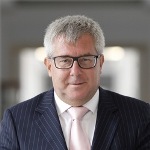
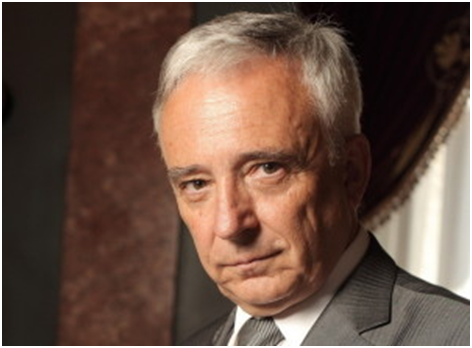
Mugur Isărescu, Răsvan Radu, Marius Stoian, Daniel Dăianu, Eugen Simion, Cătălin Predoiu, Traian Halalai, Daniela Lulache, Maya Simionescu şi Alexandra Gătej la World Policy Conference

25.11.15

Ora Noua2

EIGHTH EDITION / Nov. 20-22, 2015

Fairmont Le Montreux Palace

Montreux, Switzerland

Romania was represented by Mugur Isărescu, Răsvan Radu, Marius Stoian, Daniel Dăianu, Eugen Simion, Cătălin Predoiu, Traian Halalai, Daniela Lulache, Maya Simionescu and Alexandra Gătej.

For more details:

http://www.worldpolicyconference.com/2015-invited-guests/